
- Quick Answer
- Our Findings
- Why You Should Trust This Review
- Our Verdict
- How We Scored It
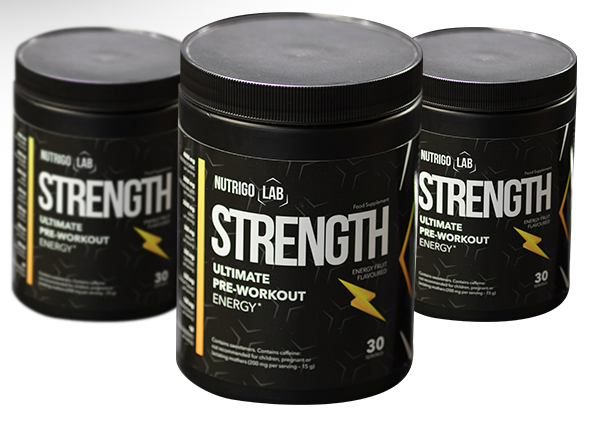
- What Is Nutrigo Lab Strength?
- How to Take Nutrigo Lab Strength (Dosage, Mixing, and Timing)
- The Ingredients
- 1. The Creatine Pair: Tri-Creatine Malate (3,000 mg) and Creatine Hydrochloride (1,000 mg)
- 2. Citrulline Malate 2:1 (3,000 mg)
- 3. Caffeine Anhydrous (200 mg)
- 4. Beta-Alanine (1,000 mg)
- 5. RedNite™ Beet Root Extract (250 mg; 1.5–2.75% Nitrate)
- 6. Bitter Orange Extract (100 mg; 6% Synephrine)
- 7. The Supporting Cast: AAKG, Focus Extracts, Cocoa, B-Vitamins, and Peppers
- Dose Audit
- The Creatine Calendar Problem
- The Evidence, Read Properly
- How Nutrigo Lab Strength Works in Practice
- How Long Does It Take to Work?
- Clock 1: The Acute Stimulant and Pump Window (15 to 60 Minutes)
- Clock 2: The Daily Creatine Saturation Window (3 to 4 Weeks)
- Is It Safe?
- Side Effects: What Is Actually Known
- When Fatigue or Workout Symptoms Need a Doctor, Not a Pre-Workout
- Is It a Scam?
- Price and Packs
- Purchase Options
- How It Compares
- 1. Nutrigo Lab Strength vs Coffee Before a Workout
- 2. Nutrigo Lab Strength vs Plain Creatine Monohydrate
- 3. Nutrigo Lab Strength vs Stimulant-Free Pre-Workouts (and Related Brand Shelves)
- Who Should Buy — and Who Should Skip It
- Who should buy Nutrigo Lab Strength
- Who should skip it
- Frequently Asked Questions
- What is Nutrigo Lab Strength used for?
- Does Nutrigo Lab Strength actually work?
- How much creatine does Nutrigo Lab Strength actually contain?
- What is the recommended dosage for Nutrigo Lab Strength, and how do I take it?
- Can I take Nutrigo Lab Strength on non-training rest days — and is the creatine in it enough on its own?
- How long does it take to see results or feel the effects of Nutrigo Lab Strength?
- Are there any side effects of Nutrigo Lab Strength, and is it safe?
- Why does Nutrigo Lab Strength make my skin tingle or flush?
- Can I take Nutrigo Lab Strength before bed or for an evening workout?
- Can I stack Nutrigo Lab Strength with coffee, energy drinks, or other supplements?
- Is the RedNite™ in Nutrigo Lab Strength enough beetroot to matter?
- Is 3,000 mg of citrulline malate enough for a muscle pump?
- Can Nutrigo Lab Strength be used for weight loss, or how does it differ from Nutrigo Lab Burner?
- Where can I buy Nutrigo Lab Strength, and what does it cost?
- Does Nutrigo Lab Strength have a money-back guarantee or a returns policy?
- How does Nutrigo Lab Strength compare with just drinking coffee before a workout?
- Sources & Method
- Read This Next
Disclosure: This article contains affiliate links. If you buy through them, we may earn a commission at no extra cost to you. It never changes our conclusions.
Most pre-workout powders hide their formula inside a proprietary blend, leaving you to guess how much caffeine, citrulline, or creatine sits in the scoop. Nutrigo Lab Strength, a powdered pre-workout made by NuviaLab Limited for adult trainees, breaks that habit by printing all 18 active ingredient amounts in full on its label. Full disclosure is a genuine rarity on this shelf, and it earns the formula real credit before we check a single study.
Printing the numbers is only the start of an audit. Once you compare those 18 doses against human clinical trials, a clear split appears. Two core ingredients hit studied territory on workout days, one sits at half the studied dose, and several heavily promoted extracts fall far short.
Quick Answer
Nutrigo Lab Strength scores 6.1/10 on our rubric because it prints every milligram on the tub and delivers an honest core on training days. One 15 g serving (two scoops in water) provides 200 mg of caffeine anhydrous for acute alertness and 3,012.12 mg of actual creatine, which sits inside the 3–5 g/day maintenance band on the days you drink it. It also supplies 3,000 mg of citrulline malate 2:1, or about half the dose used in lifting trials.
Three caveats keep the score at 6.1. First, the maker's sales headline advertises "4,000 mg of creatine", which counts the combined weight of two creatine salt compounds rather than the 3,012.12 mg of actual creatine printed on its own Supplement Facts panel. Second, beta-alanine (1,000 mg) and RedNite™ beetroot extract (250 mg, yielding about 4–7 mg of nitrate) sit far below studied doses, and taking a pre-workout on training days only leaves weekly creatine intake short unless you take plain creatine on rest days. Third, a single tub costs $68.99 plus $12 shipping, and the maker publishes no money-back guarantee.
Best for: Lifters who read labels and train several times a week, who want citrulline, creatine, and caffeine in one transparent serving.
Nutrigo Lab Strength — Our Score: 6.1/10
Score: 6.1/10 · Best for: lifters who read labels and train several times a week, who want citrulline, creatine and caffeine in one transparent serving. Main caution: the "4,000 mg of creatine" headline counts compounds — the actual creatine is 3,012 mg — and no money-back guarantee is published. Fair trial: one tub first — judge it after a month of training days, with plain creatine on rest days.
Single bottle$68.99
Best pack$206.97 — 6 tubs ($34.49 per tub)
Cost per day$1.15–$2.30
FormatPowder (450 g tub, ~30 servings)
Directions2 scoops (15 g) in water, 15 minutes before a workout
Doses publishedFull
Our Findings
What we like
- Full label transparency: Every single one of the 18 active ingredients carries an exact milligram amount on the Supplement Facts panel, with no proprietary blend.
- Genuine training-day creatine dose: The panel prints 3,012.12 mg of actual creatine per serving, which meets the bottom of the 3–5 g/day maintenance range on workout days.
- Studied caffeine engine: Each serving supplies 200 mg of caffeine anhydrous (roughly 2.9 mg/kg for a 70 kg adult), sitting at the low edge of the main studied performance band.
- Meaningful partial citrulline dose: At 3,000 mg of citrulline malate 2:1 (roughly 2 g of L-citrulline), the formula delivers half the studied pre-workout dose rather than a token dusting.
- Explicit store-page safety rules: The maker clearly bars use by people with cardiovascular disease or caffeine hypersensitivity, pregnant or breastfeeding women, children, and anyone close to bedtime.
What gives us pause
- No finished-product trial: Clinical evidence exists for individual ingredients only; the blended Nutrigo Lab Strength powder itself has never been tested in a human trial.
- Compound-weight creatine headline: The sales copy claims "4,000 mg of creatine", which is the combined weight of tri-creatine malate (3,000 mg) and creatine hydrochloride (1,000 mg) before accounting for 3,012.12 mg of actual creatine.
- The training-day calendar gap: Creatine and beta-alanine work through daily tissue saturation, so taking this powder four days a week averages only about 1.7 g/day of creatine across the week unless you take plain creatine on rest days.
- Under-dosed secondary lines: Beta-alanine (1,000 mg vs 3.2–6.4 g/day studied) and RedNite™ beetroot extract (250 mg, delivering about 4–7 mg of nitrate vs 300–500 mg studied) cannot reproduce their trial results.
- Multi-stimulant stack: Combining 200 mg of caffeine with about 6 mg of bitter-orange synephrine and 24 mg of cocoa theobromine requires strict limits on other daily caffeine sources.
- High entry price and no guarantee: A single tub costs $68.99 plus $12 shipping (~$2.30 per serving before shipping), and the maker publishes no money-back guarantee.
Why You Should Trust This Review
To build this review, we audited NuviaLab Limited's official store page, the full 18-line Supplement Facts panel, and the live affiliate order page against the peer-reviewed trial and position-stand records for creatine, caffeine, citrulline malate, beta-alanine, dietary nitrate, and p-synephrine — and we print the findings that complicate the sales pitch, including the 3,012.12 mg actual creatine total behind the "4,000 mg" compound headline, the rest-day saturation gap, and the absent refund policy. Every score on SuppChecked comes from one fixed rubric applied to every product we review and never moves for a brand. We earn an affiliate commission through our links and are never paid to place or praise a product.
Our Verdict
Nutrigo Lab Strength earns 6.1/10 because its label treats the buyer like an adult who can read milligram figures. You can see exactly what you are paying for: 200 mg of caffeine to drive same-day focus and effort, 3,012.12 mg of actual creatine to support high-intensity strength work, and 3,000 mg of citrulline malate 2:1 for a partial pump effect.
That transparency also lets you see what the formula cannot do on its own. It will not keep your muscles saturated with creatine if you only drink it three or four days a week and take nothing on rest days. Its 1,000 mg of beta-alanine and 250 mg of RedNite™ beetroot extract are too small to match clinical trials.
If you want caffeine, creatine, and citrulline in one pre-mixed scoop and do not mind paying a premium for convenience, this powder does an honest job on workout days. Start with a single tub ($68.99 plus $12 shipping) rather than a multi-tub bundle, because no money-back guarantee protects your order, and pair it with inexpensive plain creatine monohydrate on your days off.
How We Scored It
Every product on SuppChecked is graded on the same five-part weighted rubric: Ingredients (30%), Evidence (25%), Maker Credibility (20%), Safety (15%), and Value (10%). The table below shows the four published sub-scores for the formula, evidence, safety, and pricing, followed by our assessment of the maker's credibility in prose.
| Criterion | Weight | Score | Why |
|---|---|---|---|
| Ingredients | 30% | 6.5 | All 18 active doses are printed in full; actual creatine (3,012.12 mg) and caffeine (200 mg) reach studied ranges on training days and citrulline malate (3,000 mg) reaches half, while beta-alanine (1,000 mg) is low and RedNite™ nitrate (~4–7 mg) is negligible |
| Evidence | 25% | 5.5 | Creatine, caffeine, and citrulline malate rest on strong human meta-analyses and position stands, whereas supporting extracts (enXtra™, tyrosine, rhodiola, AAKG) rely on small, preliminary, or disappointing studies, and no clinical trial tests the finished powder |
| Safety | 15% | 6.0 | One serving stacks 200 mg of caffeine with about 6 mg of bitter-orange synephrine and 24 mg of cocoa theobromine; the maker prints clear cardiovascular, caffeine-sensitivity, and bedtime exclusions on its store page, though its sales copy still claims "no recorded side effects" |
| Value | 10% | 5.5 | At $68.99 for a 30-serving tub (~$2.30 per serving before $12 shipping), a single tub is expensive compared with plain caffeine and creatine; bundle packs cut the per-tub price to $45.99 or $34.49, but no money-back guarantee is published |
Maker Credibility carries the remaining 20% of the grade — 6.5/10 here — treated in prose rather than as a table score. NuviaLab Limited earns above-average marks for publishing an unblended 18-active panel and printing the exact 3,012.12 mg actual creatine sub-total on its Supplement Facts table. We dock points for three preventable habits: leading the sales page with a "4,000 mg of creatine" compound-weight headline, running a marketing line that misnames the hydrochloride form that the Supplement Facts panel lists correctly as Creatine Hydrochloride, and selling a $68.99 tub with no published money-back guarantee.
What Is Nutrigo Lab Strength?
Nutrigo Lab Strength is a powdered pre-workout supplement sold via the official website by NuviaLab Limited as part of its Nutrigo Lab sports range. It is a powder packaged in a 450 g tub containing about 30 servings — never capsules. The maker positions the formula for adult trainees looking to support training strength, muscle pump, and pre-workout energy, stating on its sales page that the Nutrigo Lab line was "created with the participation of professional athletes".
On its sales page, the maker groups the 18 active ingredients into four named complexes: Strong VASCULAR Booster, CREATINE Cellular Energy Complex, NEURO Stimulant & Adaptogenic Blend, and Absorption Herbal Enhancer. Unlike brands that use complex names to hide individual milligram amounts, NuviaLab prints the exact weight of every ingredient inside each group.
On flavour and taste, the maker publishes no flavour name on its official sales page. Because we audit labels and clinical evidence rather than running subjective taste tests, we have not taste-tested the powder and offer no taste verdict.
How to Take Nutrigo Lab Strength (Dosage, Mixing, and Timing)
The published directions on the tub and official store page are straightforward. Dissolve 1 serving — 2 scoops (15 g) — in 200 ml of water and drink it once a day, 15 minutes before a workout. Although the maker's sales copy mentions milk as a mixing option in passing, the 200 ml water direction governs.
Two practical timing details matter for lifters. First, while the label says 15 minutes before training, ingested caffeine typically peaks in the bloodstream closer to 60 minutes after drinking, which is the dosing window used in the International Society of Sports Nutrition (ISSN) caffeine position stand (see our timing guide). Second, never swallow the dry powder straight from the scoop: it is formulated to be diluted in water, and dry-scooping adds choking and concentrated-stimulant risks with zero performance upside.
Nutrigo Lab Strength at a Glance
- Our score: 6.1/10
- Brand: Nutrigo Lab Strength
- Company: NuviaLab Limited
- Product type: pre-workout powder (450 g tub)
- Primary purpose: pre-workout strength, pump and energy
- Formula: 18 ingredients, every amount published
- Clinical research: ingredient-level only; no trial of the finished product
- Research limitation: headline counts compound weight (actual creatine 3,012 mg); beta-alanine, nitrate and synephrine far below studied doses
- Recommended use: 2 scoops (15 g) 15 minutes before training
- Money-back guarantee: None published
The Ingredients
Every 15 g serving (2 scoops) of Nutrigo Lab Strength contains 18 active ingredients with no proprietary blends. On the maker's Supplement Facts table, an additional italicized line reads "of which total creatine 3,012.12 mg" directly beneath the two creatine compounds. That line is a helpful mathematical sub-total of the two creatine salts above it, not an extra ingredient.
| Ingredient (per 15 g / 2-scoop serving) | Published Amount |
|---|---|
| Citrulline Malate 2:1 | 3,000 mg |
| Tri-Creatine Malate | 3,000 mg |
| L-Arginine Alpha-Ketoglutarate (AAKG 2:1) | 2,000 mg |
| Beta-Alanine | 1,000 mg |
| Creatine Hydrochloride | 1,000 mg |
| of which total creatine (sub-total of the two creatine salts) | 3,012.12 mg |
| Taurine | 750 mg |
| N-Acetyl-L-Tyrosine | 750 mg |
| enXtra™ Thai Galangal Rhizome Extract | 300 mg |
| RedNite™ Beet Root Extract (1.5–2.75% nitrate) | 250 mg |
| Caffeine Anhydrous | 200 mg |
| Rhodiola Extract (3% rosavins) | 100 mg |
| Bitter Orange Extract (6% synephrine) | 100 mg (~6 mg synephrine) |
| Cocoa Seed Extract (24% theobromine) | 100 mg (~24 mg theobromine) |
| Niacin | 16 mg (100% NRV) |
| Pantothenic Acid | 6 mg (100% NRV) |
| Vitamin B6 | 1.4 mg (100% NRV) |
| Cayenne Pepper Fruit Extract (10% capsaicin) | 10 mg |
| Black Pepper Extract (95% piperine / BioPerine®) | 5 mg |
1. The Creatine Pair: Tri-Creatine Malate (3,000 mg) and Creatine Hydrochloride (1,000 mg)
The sales page advertises a headline figure of "4,000 mg of creatine", which is the combined weight of 3,000 mg of tri-creatine malate plus 1,000 mg of creatine hydrochloride. Because part of each salt's weight is the malate or hydrochloride molecule attached to the creatine, 4,000 mg of creatine compounds yields 3,012.12 mg of actual creatine, a figure the maker's own Supplement Facts panel prints openly. Always evaluate this formula at 3,012.12 mg (about 3 g) of creatine, never 4,000 mg.
Creatine has the strongest evidence file in sports nutrition. In the 2017 ISSN position stand on creatine (Journal of the International Society of Sports Nutrition, Kreider et al.), researchers concluded that creatine is the most effective nutritional supplement available to athletes for increasing high-intensity exercise capacity and lean body mass during training. Once muscle stores are saturated, 3–5 g/day maintains those stores, so 3,012.12 mg sits right at the bottom edge of the maintenance band on the days you take it. Neither tri-creatine malate nor creatine hydrochloride has been shown superior to plain creatine monohydrate in the clinical record (and while one marketing line on the sales page misnames the second salt, the panel's Creatine Hydrochloride entry governs).
2. Citrulline Malate 2:1 (3,000 mg)
Citrulline malate is the formula's primary muscle-pump and blood-flow ingredient. It has genuine human trial support, but at roughly double the dose shipped in this tub.
A 2020 systematic review and meta-analysis by Rhim et al. (Journal of Sport and Health Science), pooling 13 randomised trials, found that citrulline supplementation significantly reduced post-exercise rated perceived exertion and muscle soreness. However, those trials used 3–4 g of pure L-citrulline or about 8 g of citrulline malate (commonly 6–8 g before exercise). Because Nutrigo Lab Strength uses 3,000 mg of a 2:1 ratio, one serving supplies roughly 2 g of L-citrulline itself — about half the studied amount, pointing to a partial effect rather than the full trial result (see our citrulline malate guide).
3. Caffeine Anhydrous (200 mg)
After creatine, caffeine anhydrous is the best-supported ingredient on the label and the real driver of what you feel on day one. In the 2021 ISSN position stand on caffeine and exercise performance (Guest et al.), reviewers concluded that caffeine acutely improves muscular endurance, muscular strength, sprinting, jumping, and aerobic endurance.
Those benefits appear most consistently at doses of 3–6 mg per kilogram of body mass (roughly 210–420 mg for a 70 kg trainee), with minimal effective doses starting around 2 mg/kg. At 200 mg per serving — roughly 2.9 mg/kg for a 70 kg adult — Nutrigo Lab Strength lands right on the low edge of the main studied performance band.
4. Beta-Alanine (1,000 mg)
Beta-alanine is famous as the pre-workout tingle ingredient, and it holds a strong clinical file when dosed properly. A 2017 meta-analysis by Saunders et al. (British Journal of Sports Medicine, pooling 40 studies) and the 2015 ISSN position stand show that beta-alanine improves high-intensity exercise lasting roughly 0.5 to 10 minutes.
The catch is the mechanism and the dose. Beta-alanine works by slowly loading muscle carnosine stores at 3.2–6.4 g/day taken every day for at least several weeks. Providing 1,000 mg on training days only is less than a third of the daily dose on an intermittent schedule that cannot reproduce the trial results. Although the maker claims the powder works "without the effect of the 'caffeine crash' and unpleasant skin tingling", a 1,000 mg single dose sits above the roughly 800 mg threshold where harmless skin tingling (paresthesia) begins in many users — and feeling that tingle proves nothing about muscle carnosine loading (see why pre-workout makes you tingle).
5. RedNite™ Beet Root Extract (250 mg; 1.5–2.75% Nitrate)
The maker states on its sales page that RedNite™ beetroot extract is "proven to increase physical performance during high intensity exercise". While dietary nitrate from beetroot has real human evidence — primarily for submaximal endurance and short high-intensity efforts — the dose maths on this label does not hold up. (Note also that despite claims circulating on some supplement blogs, there is no ISSN position stand on nitrate or beetroot.)
Human beetroot trials typically use roughly 300–500 mg of dietary nitrate (with acute study doses spanning 310–925 mg). Here, 250 mg of RedNite™ standardised to 1.5–2.75% nitrate yields only about 4–7 mg of nitrate per serving — roughly one-fiftieth of a studied dose, making it a label decoration rather than a functional ergogenic aid (see beetroot before a workout).
6. Bitter Orange Extract (100 mg; 6% Synephrine)
One serving includes 100 mg of bitter orange extract standardised to 6% synephrine, which delivers about 6 mg of p-synephrine. In human exercise trials measuring fat oxidation during workouts (such as Gutiérrez-Hellín & Del Coso 2016 and Ruiz-Moreno 2021), researchers used 2–3 mg of p-synephrine per kilogram of body mass — roughly 140–210 mg for a 70 kg adult.
At roughly 6 mg, this ingredient provides only a tiny fraction of those studied fat-oxidation doses. Its real significance in this formula is not fat loss or workout power, but the fact that it adds a second stimulant on top of 200 mg of caffeine.
7. The Supporting Cast: AAKG, Focus Extracts, Cocoa, B-Vitamins, and Peppers
The remaining 11 lines round out the maker's vascular, neuro-stimulant, vitamin, and absorption complexes:
L-Arginine Alpha-Ketoglutarate (AAKG 2:1, 2,000 mg): Included in the maker's vascular complex, but oral arginine compounds have repeatedly disappointed in human exercise trials compared with citrulline and are not part of the proven core.
Taurine (750 mg) and Rhodiola Extract (100 mg, 3% rosavins): Both have modest, mixed fatigue and endurance literature, usually at higher doses than the amounts shipped here.
N-Acetyl-L-Tyrosine (750 mg): Tyrosine's human cognitive literature comes mainly from small studies conducted under acute stress or sleep deprivation — potentially relevant to an exhausted lifter training after a hard day, but not proof of a focus boost in a well-rested one.
enXtra™ Thai Galangal Rhizome Extract (300 mg): The maker claims this extract supports mental alertness for up to 5 hours and prevents a caffeine crash. The published research is preliminary, small-scale, and developer-linked, so we treat that as an attributed maker claim rather than an established finding.
Cocoa Seed Extract (100 mg, 24% theobromine → ~24 mg theobromine): Supplies a small dose of theobromine, a gentler methylxanthine relative of caffeine that adds slightly to the total stimulant load.
Niacin (16 mg), Pantothenic Acid (6 mg), and Vitamin B6 (1.4 mg): All three sit at exactly 100% of the European Nutrient Reference Value (NRV). Vitamin B6 at 1.4 mg is a normal dietary reference amount and sits nowhere near the European Food Safety Authority (EFSA) 12 mg/day adult upper limit, while 16 mg of niacin can cause a harmless warm red skin flush in sensitive users.
Cayenne Pepper Extract (10 mg, 10% capsaicin) and Black Pepper Extract (5 mg, 95% piperine / BioPerine®): Cayenne at 10 mg is a trace inclusion with no plausible performance effect, while 5 mg of BioPerine® is the standard piperine dose used to support nutrient absorption.
Dose Audit
A transparent label allows a direct side-by-side check between the milligram amounts in two scoops of Nutrigo Lab Strength and the doses used in human exercise research.
| Ingredient | Dose the Research Used | This Label Provides (per 15 g serving) |
|---|---|---|
| Creatine (actual) | 3–5 g/day maintains saturated muscle stores (ISSN 2017, Kreider et al.) | 3,012 mg (3,012.12 mg) — inside the maintenance band on training days only |
| Caffeine | 3–6 mg/kg body mass (~210–420 mg at 70 kg); minimal effective doses ~2 mg/kg (ISSN 2021, Guest et al.) | 200 mg (~2.9 mg/kg at 70 kg) — the low edge of the studied performance band |
| Citrulline malate | 6–8 g before training; Rhim et al. 2020 meta-analysis found benefits at 3–4 g L-citrulline or ~8 g citrulline malate | 3,000 mg (2:1) — half the studied malate dose, supplying roughly 2 g of L-citrulline |
| Beta-alanine | 3.2–6.4 g/day taken daily for weeks (Saunders et al. 2017, 40 studies; ISSN 2015) | 1,000 mg, training days only — under one-third of the daily dose on the wrong schedule |
| Nitrate (via RedNite™) | Roughly 300–500 mg in beetroot research (acute range 310–925 mg) | ~4–7 mg (from 250 mg extract at 1.5–2.75% nitrate) — roughly one-fiftieth of a studied dose |
| Synephrine (via bitter orange) | Fat-oxidation effects at 2–3 mg/kg (~140–210 mg at 70 kg; Gutiérrez-Hellín & Del Coso 2016; Ruiz-Moreno 2021) | ~6 mg (from 100 mg extract at 6%) — a small fraction as an active; matters for the stimulant stack |
The Creatine Calendar Problem
Even though 3,012.12 mg of actual creatine meets the 3 g/day maintenance floor on the day you drink it, creatine does not work like caffeine. It works by keeping your muscle phosphocreatine stores saturated every day of the week.
A stimulant pre-workout is taken on training days only. If you lift four days a week and take two scoops before each session, your weekly creatine intake is roughly 12,048 mg — an average of only about 1.7 g/day across seven days, which falls below the 3–5 g/day maintenance band. Never drink a caffeinated pre-workout on rest days or double-scoop the powder to chase extra creatine or citrulline; instead, take a cheap scoop of plain creatine monohydrate on your non-training days (see whether the creatine in a pre-workout is enough).
The Evidence, Read Properly
When grading any supplement, the first question is whether the finished product itself has been tested in a controlled human trial. For Nutrigo Lab Strength, the answer is no: NuviaLab Limited publishes no clinical trial on the blended powder, so every evidence claim rests on studies of individual ingredients.
How Nutrigo Lab Strength Works in Practice
Multi-ingredient pre-workout supplements are often sold on the promise that blending a dozen compounds creates a special synergy. Controlled research tells a more sober story: when multi-ingredient blends are tested head-to-head against the same milligram dose of caffeine alone, the blends generally do not outperform caffeine on acute endurance and add only small effects on strength or power (Southward et al. 2018 meta-analysis; see whether pre-workouts actually work).
Read through that lens, Nutrigo Lab Strength divides cleanly into three evidence tiers:
Tier 1 (Strong human evidence at or near studied doses): Caffeine anhydrous (200 mg) provides reliable same-day alertness and effort support, and actual creatine (3,012.12 mg) supports strength and lean mass over time if you maintain daily saturation on rest days.
Tier 2 (Real human evidence, partial or conditional dose): Citrulline malate 2:1 (3,000 mg) delivers roughly half the dose used in soreness and perceived-exertion trials, while N-acetyl-L-tyrosine (750 mg) has support mainly under stress or sleep loss.
Tier 3 (Under-dosed, preliminary, or label furniture): Beta-alanine (1,000 mg) on workout days cannot match daily carnosine loading, RedNite™ (250 mg) provides ~1/50th of a studied nitrate dose, AAKG (2,000 mg) has a weak trial record, and enXtra™ (300 mg) rests on small developer-backed studies.
How Long Does It Take to Work?
On its official page, the maker states that "you can observe the first effects after only a few weeks of use". In reality, a pre-workout that combines stimulants with creatine runs on two separate physiological clocks.
Clock 1: The Acute Stimulant and Pump Window (15 to 60 Minutes)
You do not wait weeks to feel 200 mg of caffeine. Caffeine enters the bloodstream within 15 to 45 minutes and typically reaches peak plasma levels around 60 minutes after ingestion (Guest et al., ISSN 2021). That acute window — paired with the partial 3,000 mg citrulline malate dose and any harmless skin tingling from 1,000 mg of beta-alanine — happens on your very first workout.
Clock 2: The Daily Creatine Saturation Window (3 to 4 Weeks)
The strength and training-volume gains tied to creatine follow a slower saturation schedule. The maker directs no 20 g/day loading phase (which is optional in the ISSN 2017 record because daily maintenance reaches the same saturation point, just more gradually). Taking 3–5 g of creatine every single day saturates muscle stores in roughly 3 to 4 weeks — provided you bridge your rest days with plain creatine so your weekly average does not drop to 1.7 g/day (see how long muscle building actually takes).
Is It Safe?
For healthy adults who tolerate stimulants well and follow the label exclusions, a single 15 g serving sits within mainstream regulatory caffeine limits. Both the European Food Safety Authority (EFSA) and the US Food and Drug Administration (FDA) cite up to 400 mg/day of caffeine as an intake not generally associated with adverse effects in healthy adults, and EFSA places single doses of up to 200 mg in the no-concern range before exercise.
However, one serving of Nutrigo Lab Strength uses up the entire 200 mg single-dose allowance and half the 400 mg daily allowance in one drink — before you count a morning coffee, tea, cola, or energy drink. It also stacks that caffeine with about 6 mg of p-synephrine (from 100 mg bitter orange extract) and about 24 mg of theobromine (from 100 mg cocoa seed extract).
A 2012 review by Stohs et al. (International Journal of Medical Sciences, covering more than 20 human studies and roughly 360 subjects) reported that bitter orange extract and p-synephrine, alone or in combination, generally produced no significant rise in heart rate or blood pressure. Two caveats apply to that record: several reviews in that literature are industry-linked, and published case reports of cardiovascular events in this category mostly involve multi-ingredient stimulant stacks. Keep a strict rule of one stimulant product per workout session.
Side Effects: What Is Actually Known
Because no clinical trial of the finished Nutrigo Lab Strength powder exists, no product-specific side-effect rate exists either. On its sales page, the maker claims the product has "no recorded side effects". Treat that phrase strictly as a marketing slogan, not a clinical finding: the absence of a public adverse-event register is not evidence that a 200 mg caffeine blend causes no side effects, and the maker's own store FAQ directly contradicts the slogan by barring users with cardiovascular conditions.
In practice, the side effects to watch for come from the stimulant stack (200 mg caffeine + ~6 mg synephrine + ~24 mg theobromine) and two skin sensations:
Stimulant effects: Jitters, rapid heart rate, raised blood pressure in sensitive users, stomach discomfort, and disrupted sleep. Caffeine has an average half-life of about five hours, so a serving taken at 6 p.m. still leaves roughly 100 mg of caffeine circulating at 11 p.m.
Two distinct skin sensations: A temporary pins-and-needles tingle on the face, neck, or hands is harmless paresthesia from 1,000 mg of beta-alanine, whereas a warm, red skin flush is more likely caused by 16 mg of niacin (100% NRV). If either sensation is accompanied by hives, rash, swelling, chest pain, palpitations, breathlessness, or dizziness, stop use immediately and seek medical care (see our pre-workout side-effects guide).
The maker's hard exclusions: Per the official label and store page, do not use this product if you have cardiovascular disease or caffeine hypersensitivity, do not combine it with other caffeine-containing products, do not take it before bedtime, and never give it to children or pregnant or breastfeeding women.
When Fatigue or Workout Symptoms Need a Doctor, Not a Pre-Workout
A pre-workout powder is an acute training aid, not a medical treatment. Persistent daily fatigue, declining gym performance, or needing heavy stimulants just to get through an ordinary workout is a symptom to get checked by a doctor — not a supplement category — because ongoing exhaustion can signal sleep apnoea, thyroid disorders, anaemia, depression, or underlying cardiovascular disease. Exertion symptoms such as chest pain, heart palpitations, dizziness, or unusual breathlessness during exercise are an immediate stop signal that requires clinical evaluation, never a different scoop. Finally, this powder contains no hormone-active drug and is not a hormone treatment or an alternative to steroids, SARMs, or any prescribed therapy (where a hormone problem is suspected, blood tests and a doctor come first), and anyone in the maker's cardiovascular exclusion group should speak with a clinician about safe exercise rather than shopping for another pre-workout.
Is It a Scam?
No — Nutrigo Lab Strength is not a scam. A scam hides trace dustings inside a mystery blend or spikes a powder with undeclared stimulants, whereas NuviaLab Limited publishes every single milligram across 18 active ingredients and even prints the exact 3,012.12 mg actual creatine sub-total on its Supplement Facts panel.
Where the brand invites scepticism is its sales-page framing and its checkout risk. The marketing copy leads with "4,000 mg of creatine" (the compound weight), promises no caffeine crash or skin tingling despite shipping 200 mg of caffeine and 1,000 mg of beta-alanine, and displays unverified user satisfaction claims alongside three unnamed testimonials with no independent body of customer reviews behind them. Combined with a $68.99 single-tub price, $12 shipping, and no published money-back guarantee, it is an overpriced convenience blend if you buy blindly — but a legitimate, verifiable formula if you read the panel first.
Price and Packs
On the official order page, Nutrigo Lab Strength is sold in three package tiers, with a flat $12 shipping fee added per order and no subscription trap.
| Package Option | Total Price (Before Shipping) | Price Per Tub | Cost Per Serving (~30 servings/tub) | Shipping & Guarantee |
|---|---|---|---|---|
| 1 Tub (~1 month supply) | $68.99 | $68.99 | ~$2.30 | +$12 shipping · No guarantee published |
| Buy 2, Get 1 Free (3 tubs) | $137.98 | $45.99 | ~$1.53 | +$12 shipping · No guarantee published |
| Buy 3, Get 3 Free (6 tubs) | $206.97 | $34.49 | ~$1.15 | +$12 shipping · No guarantee published |
The most important financial fact on this page is that NuviaLab Limited publishes no money-back guarantee for Nutrigo Lab Strength on its sales or order pages. Several third-party review sites falsely claim a refund window exists, so do not rely on them. Because a first order carries the full financial risk, our fair-trial rule is strict: buy one tub first, test how you tolerate the 200 mg caffeine stack over a month of workouts, and only consider multi-tub bundles after the powder has earned your repeat business.
Purchase Options
Nutrigo Lab Strength is sold via the official website rather than general high-street supplement chains. To keep your upfront risk as low as possible while there is no published money-back guarantee, start with the single 450 g tub ($68.99 plus $12 shipping) and pick up a basic tub of plain creatine monohydrate for your non-training days.
How It Compares
Rather than lining Nutrigo Lab Strength up against equally hyped multi-ingredient tubs, the cleanest way to judge its value is by comparing it against the three practical alternatives that do the same jobs in the gym.
1. Nutrigo Lab Strength vs Coffee Before a Workout
One 15 g serving of Nutrigo Lab Strength delivers 200 mg of caffeine, which is roughly equivalent to two standard cups of brewed coffee. Because controlled trials show that caffeine drives most of the acute alertness and perceived-effort benefit of a multi-ingredient pre-workout, coffee wins hands-down on price if same-day energy is the only job you care about (see pre-workout vs coffee). What the Nutrigo tub adds over coffee is 3,012.12 mg of actual creatine and a half-dose (3,000 mg) of citrulline malate in the same drink.
2. Nutrigo Lab Strength vs Plain Creatine Monohydrate
Plain creatine monohydrate provides a full 3–5 g daily maintenance dose every day of the week — including rest days — for just a few dollars a month, with zero stimulants. Nutrigo Lab Strength is not a replacement for plain creatine because you only drink a stimulant pre-workout on training days. The two products actually work best together: use Nutrigo Lab Strength before lifting sessions if you want the combined scoop, and use plain creatine monohydrate on rest days to close the weekly saturation gap (see what supplements to take to gain muscle and creatine vs protein).
3. Nutrigo Lab Strength vs Stimulant-Free Pre-Workouts (and Related Brand Shelves)
If you train in the evening or are sensitive to caffeine, Nutrigo Lab Strength does not compete with dedicated stimulant-free pump powders (see whether non-stimulant pre-workouts work). Trying to tame the 200 mg caffeine load by taking a single half-scoop (7.5 g) cuts every other ingredient in half too, dropping actual creatine to about 1,506 mg and citrulline malate to 1,500 mg. Within the wider fitness catalogue on our site, other products target different shelves altogether — including Nutrigo Lab Burner (5.0/10) (see our Nutrigo Lab Burner review), Bulk Extreme (5.3/10), and Testolan (6.0/10).
Who Should Buy — and Who Should Skip It
Who should buy Nutrigo Lab Strength
- Label-reading daytime lifters who train several times a week and refuse to buy proprietary blends.
- Trainees who tolerate 200 mg of caffeine well and want their pre-workout caffeine, training-day creatine (3,012.12 mg actual), and a partial citrulline malate dose (3,000 mg) combined in one scoop.
- Buyers willing to follow the two-part rule: test a single tub first and take plain creatine monohydrate on rest days.
Who should skip it
- Anyone with cardiovascular disease, high blood pressure, or caffeine hypersensitivity, as well as children and pregnant or breastfeeding women (all excluded by the maker's own warnings).
- Evening trainees who lift within roughly six hours of bedtime, where a 200 mg caffeine dose will disrupt sleep.
- Value-first lifters and guarantee seekers who want a money-back guarantee or prefer buying plain creatine monohydrate, coffee, and a full 6–8 g dose of citrulline malate separately for a fraction of the $68.99 price (see our pre-workout guide for beginners).
Frequently Asked Questions
What is Nutrigo Lab Strength used for?
Nutrigo Lab Strength is a powdered pre-workout supplement made by NuviaLab Limited and packaged in a 450 g tub (~30 servings). It is positioned for adult trainees to support training strength, muscle pump, and pre-workout energy when taken before exercise.
Does Nutrigo Lab Strength actually work?
No clinical trial has tested the finished powder, so its effects depend on the doses of its individual ingredients. Its 200 mg of caffeine reliably supports acute alertness and workout effort on day one, and its 3,012.12 mg of actual creatine supports strength over weeks if you also take plain creatine on rest days. Its 3,000 mg of citrulline malate 2:1 is half the studied dose, while 1,000 mg of beta-alanine and 250 mg of RedNite™ beetroot extract (~4–7 mg nitrate) are too small to deliver their trial effects.
How much creatine does Nutrigo Lab Strength actually contain?
Each 15 g serving contains 3,012.12 mg of actual creatine, a figure printed directly on the maker's Supplement Facts panel. The maker's "4,000 mg of creatine" sales headline counts the combined weight of the two creatine salt compounds (3,000 mg of tri-creatine malate plus 1,000 mg of creatine hydrochloride) before subtracting the attached malate and hydrochloride molecules.
What is the recommended dosage for Nutrigo Lab Strength, and how do I take it?
Mix 2 scoops (15 g) in 200 ml of water and drink it once daily, about 15 minutes before a workout. Keep in mind that ingested caffeine typically peaks closer to 60 minutes after drinking, and never dry-scoop the undiluted powder.
Can I take Nutrigo Lab Strength on non-training rest days — and is the creatine in it enough on its own?
Do not take a stimulant pre-workout on rest days just to get your daily creatine. If you only drink Nutrigo Lab Strength four training days a week, its 3,012.12 mg of creatine averages roughly 1.7 g/day across the seven-day week — below the 3–5 g/day ISSN maintenance band — so take inexpensive plain creatine monohydrate on your rest days instead.
How long does it take to see results or feel the effects of Nutrigo Lab Strength?
The formula runs on two separate timelines. You will feel the 200 mg of caffeine (and likely harmless skin tingling from 1,000 mg of beta-alanine) within 15 to 60 minutes of your very first serving. By contrast, saturating your muscles with 3–5 g/day of creatine for measurable strength and training-volume support takes roughly 3 to 4 weeks of consistent daily intake.
Are there any side effects of Nutrigo Lab Strength, and is it safe?
No clinical trial of the finished powder exists, and the maker's "no recorded side effects" line is a marketing claim, not a clinical finding. Because one serving combines 200 mg of caffeine, ~6 mg of bitter-orange synephrine, and ~24 mg of cocoa theobromine, it can cause jitters, rapid heart rate, raised blood pressure, or insomnia in sensitive users. The maker explicitly bars use by people with cardiovascular disease or caffeine hypersensitivity, children, pregnant or breastfeeding women, and anyone close to bedtime.
Why does Nutrigo Lab Strength make my skin tingle or flush?
A temporary pins-and-needles tingling sensation (paresthesia) comes from 1,000 mg of beta-alanine, which crosses the ~800 mg single-dose threshold where harmless nerve-ending tingling starts. A warm, red skin flush is a separate reaction caused by 16 mg of niacin (100% NRV). If either sensation occurs alongside rash, swelling, chest pain, palpitations, breathlessness, or faintness, stop taking the powder and seek medical care.
Can I take Nutrigo Lab Strength before bed or for an evening workout?
No — the maker's official warnings explicitly state not to take the powder before bedtime. Caffeine has an average half-life of about five hours, meaning a serving taken at 6 p.m. still leaves roughly 100 mg of caffeine active in your system at 11 p.m., alongside bitter-orange synephrine.
Can I stack Nutrigo Lab Strength with coffee, energy drinks, or other supplements?
Never combine Nutrigo Lab Strength with coffee, energy drinks, fat burners, or any other caffeine-containing product on the same day, which violates a hard maker safety rule. One serving already provides 200 mg of caffeine plus synephrine and theobromine. Non-stimulant staples such as plain whey protein or rest-day plain creatine monohydrate contain no stimulants and do not duplicate the caffeine stack (see whether you can take pre-workout every day).
Is the RedNite™ in Nutrigo Lab Strength enough beetroot to matter?
No. Each serving contains 250 mg of RedNite™ beetroot extract standardised to 1.5–2.75% nitrate, which delivers only about 4–7 mg of dietary nitrate. Human beetroot exercise trials typically use roughly 300–500 mg of nitrate — about fifty times more than this label provides.
Is 3,000 mg of citrulline malate enough for a muscle pump?
It is roughly half the clinically studied dose. The trials pooled in the Rhim et al. (2020) meta-analysis used 3–4 g of L-citrulline or about 8 g of citrulline malate (typically 6–8 g pre-workout). At a 2:1 ratio, 3,000 mg of citrulline malate supplies about 2 g of actual L-citrulline, so you should expect a partial effect rather than the full trial result.
Can Nutrigo Lab Strength be used for weight loss, or how does it differ from Nutrigo Lab Burner?
Nutrigo Lab Strength is a pre-workout powder built for training strength, muscle pump, and workout energy, not weight loss — its ~6 mg of synephrine is a small fraction of the 2–3 mg/kg (~140–210 mg at 70 kg) doses used in fat-oxidation studies. Nutrigo Lab Burner (5.0/10) is a separate fat-burner product in the same range.
Where can I buy Nutrigo Lab Strength, and what does it cost?
It is sold via the official website at $68.99 for 1 tub (~$2.30/serving), $137.98 for 3 tubs (Buy 2, Get 1 Free; $45.99/tub or ~$1.53/serving), and $206.97 for 6 tubs (Buy 3, Get 3 Free; $34.49/tub or ~$1.15/serving). Every order carries a $12 shipping fee, and no subscription is published.
Does Nutrigo Lab Strength have a money-back guarantee or a returns policy?
The maker publishes no money-back guarantee and no returns policy on its sales or order pages. You should treat any purchase as final. Because a first order carries the full financial risk, start with one tub rather than a multi-tub bundle.
How does Nutrigo Lab Strength compare with just drinking coffee before a workout?
One serving of Nutrigo Lab Strength supplies 200 mg of caffeine, which equals roughly two standard cups of coffee and accounts for most of the immediate alertness boost. The powder adds 3,012.12 mg of actual creatine and 3,000 mg of citrulline malate 2:1, but if pre-workout alertness is your only goal, black coffee and plain daily creatine monohydrate cost far less.
Nutrigo Lab Strength — Our Score: 6.1/10
Score: 6.1/10 · Best for: lifters who read labels and train several times a week, who want citrulline, creatine and caffeine in one transparent serving. Main caution: the "4,000 mg of creatine" headline counts compounds — the actual creatine is 3,012 mg — and no money-back guarantee is published. Fair trial: one tub first — judge it after a month of training days, with plain creatine on rest days.
Sources & Method
This review is based on the sports-science position stands and trials for the formula's core ingredients — the ISSN position stand on creatine, the ISSN position stand on caffeine, Saunders et al. on beta-alanine and Rhim et al. on L-arginine — and the maker's official label, price and guarantee pages, read in November 2026. Every dose, price and claim was checked against those records before scoring.
Last reviewed: November 2026. This article is educational and is not medical advice.
