
- Quick Answer
- How Nitrate Works: the Pathway With a Mouth in It
- The Evidence by Sport
- The Endurance Core (Why the Reputation Exists)
- The Lifting Evidence, Without the Pump Marketing
- Dose and Timing: the Protocol the Studies Actually Used
- Getting Nitrate From Food: the Vegetable League Table
- Juice, Shots, Powders, Capsules: a Buyer's Comparison
- How to Self-Test Beetroot Honestly
- The Label Audit: 200 mg of Extract Is Not 300 mg of Nitrate
- Beetroot vs Creatine: the Comparison That Calibrates Everything
- Safety
- Frequently Asked Questions
- How much beetroot do I need before a workout?
- Does beetroot help with lifting and the pump?
- Why does mouthwash matter?
- Can I take beetroot every day?
- Beetroot or creatine — which first?
- Read This Next
Disclosure: This article contains affiliate links. If you buy through them, we may earn a commission at no extra cost to you. It never changes our conclusions.
Quick Answer
Dietary nitrate — from beetroot juice, concentrates or nitrate salts — is one of the few pre-workout ingredients with a real performance literature, and its rules are unusually precise: ~300–500 mg of nitrate (roughly 5–9 mmol), taken 2–3 hours before exercise, so blood nitrite peaks when you train.
The strongest evidence is for endurance (a small but replicated reduction in the oxygen cost of submaximal work, and time-trial benefits in recreational athletes) For lifting, the evidence is thinner and mixed — some bench-press and muscular-endurance findings, no established effect on maximal strength or muscle growth.
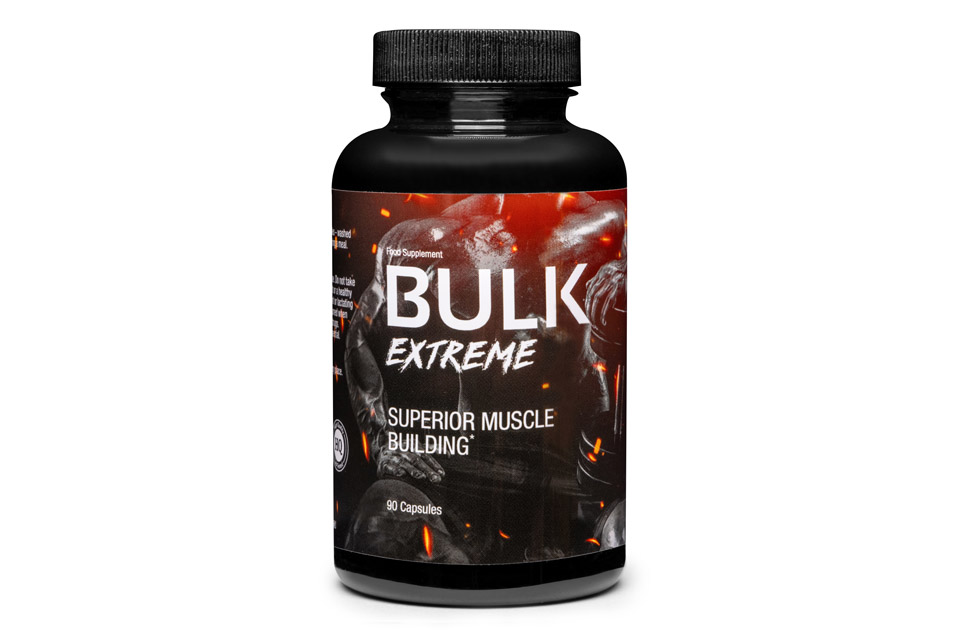
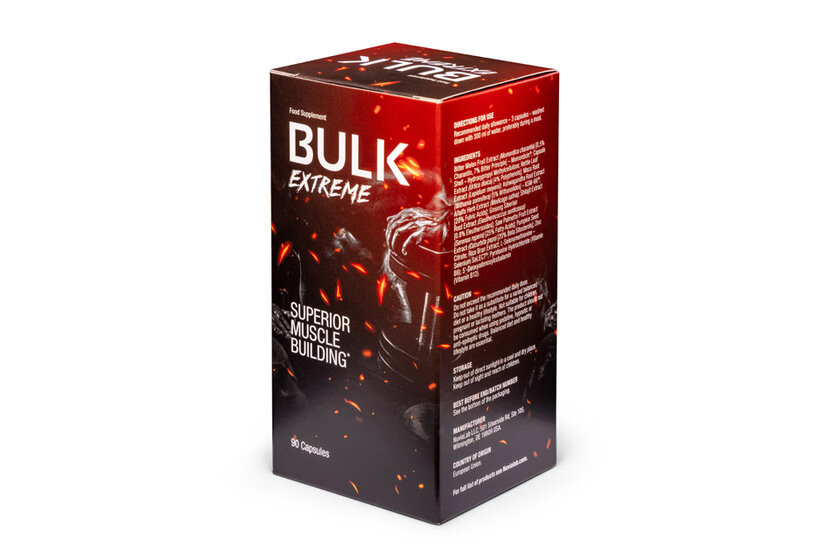
Two practical landmines: antibacterial mouthwash blunts the effect (the pathway runs through oral bacteria), and most "beetroot" capsules deliver a fraction of the studied nitrate — including the 200 mg of beetroot extract in the maker's store listing for the formula this site reviews, Bulk Extreme — a line its box panel prints as a different ingredient entirely (the split is audited below), and whose nitrate content is in any case not the studied 300–500 mg of nitrate itself.
How Nitrate Works: the Pathway With a Mouth in It
The nitrate story is one of sports science's better mechanisms, and it begins outside your body. Dietary nitrate (NO₃⁻) is absorbed and concentrated in saliva. Bacteria on the tongue reduce it to nitrite (NO₂⁻)
Swallowed nitrite is then converted to nitric oxide (NO) — the signalling molecule that dilates blood vessels and, the efficiency data suggest, improves the economy of muscle contraction and mitochondrial respiration. Every practical rule in this article hangs off that chain: the 2–3 hour gap exists because blood nitrite peaks on that timescale after ingestion.
The mouthwash warning exists because killing the tongue's bacteria breaks the chain's second link (studies confirm antibacterial mouthwash suppresses the nitrite rise and the performance effect) And the dose being quoted in nitrate milligrams — not beetroot milligrams — exists because beets are merely the delivery vehicle, and vehicles vary wildly in payload.
It also explains why the effect is real but bounded: you are nudging a regulated signalling system, not flooring an accelerator, and trained elites — whose systems are already optimised — show the smallest benefits in the literature.
The Evidence by Sport
| Domain | What the literature shows | Grade |
|---|---|---|
| Endurance (cycling/running, submaximal) | Reduced oxygen cost of exercise (~3–5% in several studies); small time-trial/time-to-exhaustion benefits, largest in recreational athletes | Supported — small effect, many trials |
| High-intensity intervals / team sport | Mixed-positive: some sprint-repeatability benefits, protocol-dependent | Preliminary |
| Muscular endurance (reps to failure) | Some positive bench-press and total-repetitions findings at proper nitrate doses | Preliminary — promising, unsettled |
| Maximal strength (1RM) | No established benefit | Unsupported |
| Muscle growth (hypertrophy) | No direct evidence; any route would be indirect via training volume | Unsupported |
| "The pump" | Vasodilation is mechanistically plausible; cosmetic pump is a sensation, not an outcome, and no trial grades it | Marketing territory |
The Endurance Core (Why the Reputation Exists)
Beetroot's fame was earned on bicycles.
The founding studies (the Exeter group's work from 2009 onward) showed beetroot juice reducing the oxygen cost of submaximal cycling and extending time to exhaustion — effects traced to the nitrate pathway and replicated often enough that sports-nutrition consensus now treats nitrate as a legitimate ergogenic for endurance contexts, with effect sizes in the small range (a few percent) that matters at recreational and competitive margins alike.
Two honest moderators: benefits shrink as athlete calibre rises (elite endurance athletes show the least, plausibly because their nitric-oxide systems and efficiency are already near ceiling), and the literature's protocols overwhelmingly use juice or concentrate delivering a measured nitrate dose — typically ~300–500 mg nitrate, sometimes more in loading protocols over several days — not capsules of beetroot powder with undisclosed nitrate content.
A reader whose sport is endurance has the category's clearest supplement use-case. A reader whose sport is the squat rack has a hypothesis, and the next sections keep those two readers' expectations separate.
The Lifting Evidence, Without the Pump Marketing
For resistance training the file is younger and thinner.
The findings that exist cluster on muscular endurance: studies using proper nitrate doses have reported more total repetitions and improved bench-press performance metrics in some protocols, with nulls in others, and the proposed mechanism is coherent — type II fibre perfusion and contractile economy matter most exactly when sets extend and fatigue accumulates.
Maximal strength is a different question and the answer so far is no: a single maximal effort is not oxygen-cost-limited in the way the nitrate mechanism addresses, and 1RM studies have not produced a reliable effect. Hypertrophy has no direct trial at all.
The indirect argument (more reps → more volume → more growth) is reasonable speculation that no one has run to ground in a longitudinal study. So the lifting verdict, in one sentence: beetroot nitrate is a plausible, partially-evidenced tool for high-rep training quality, marketed — dishonestly — as a strength and pump product.
Our muscle-supplements guide places it accordingly: Tier 2 for endurance, Tier 3 for lifting, behind training, protein and creatine by a distance neither finding closes.
Dose and Timing: the Protocol the Studies Actually Used
Dose: ~300–500 mg of nitrate (≈5–9 mmol) per occasion. In beetroot terms, that is roughly 500 ml of beetroot juice or a 70 ml commercial concentrate shot (the study standard) — food and drink quantities, not a 500 mg capsule of powder, whose nitrate content is typically a small and usually unlabelled fraction.
Timing: 2–3 hours pre-workout, matching the nitrite peak. Daily loading for 3–6 days before an event is the alternative protocol in several endurance studies. The mouthwash rule: skip antibacterial mouthwash (and be aware of strong antiseptic oral products) around your nitrate window — you would be paying for a pathway and then disinfecting it.
Chronic dietary background: habitual nitrate-rich vegetables (rocket, spinach, beetroot) contribute the base layer. The supplement dose is a spike on top of it.
And the form warning that completes the protocol: salts (sodium/potassium nitrate) deliver the molecule directly and are used in research, but home dosing of nitrate salts is a safety-sensitive business (see below) — juice and concentrates exist precisely to keep the dose in the food range.
Getting Nitrate From Food: the Vegetable League Table
| Food | Approximate nitrate content | Practical note |
|---|---|---|
| Rocket (arugula) | Very high — among the richest common sources (several hundred mg per 100 g) | A large rocket salad can rival a supplement dose |
| Spinach | High (commonly a few hundred mg per 100 g) | Big cooked portions concentrate the dose |
| Beetroot | Moderate-high (roughly 100–300 mg per 100 g, variable) | Juice/concentrate is how studies standardise it |
| Lettuce, celery, Chinese cabbage | Moderate | Background contributors across a normal diet |
| Most other vegetables | Low | Fine foods; not nitrate vehicles |
Contents vary with soil, season and fertiliser, so treat the table as a ranking, not a prescription.
Its strategic point stands: a vegetable-rich diet already runs a low-dose nitrate background, which is one proposed reason supplement effects are clearest in recreational athletes on ordinary diets — and it gives the food-first reader a legitimate route to most of the pathway's benefit before any product is opened.
The studied pre-workout spike, though, is a dose a salad reaches only deliberately.
Juice, Shots, Powders, Capsules: a Buyer's Comparison
Juice (500 ml class): the original study vehicle — effective dose range, food-matrix safety, and a taste that divides humanity. Concentrate shots (70 ml class): the standardised modern form. The label to check is milligrams of nitrate per shot (reputable shots print it, ~300–400 mg).
Powders: wildly variable — some are juice powders with declared nitrate, most are beetroot powder whose nitrate content is a fraction and unlabelled. The ingredient list's wording ("beetroot juice powder, standardised to X% nitrate") is the entire audit.
Capsules of extract inside mult-ingredient formulas: the weakest performance form — sub-dose, wrong timing by design (taken with meals, daily), and included for label breadth. That is the Bulk Extreme listing situation quantified next.
The buying rule compresses everything above: if the label does not state nitrate milligrams, the product is not selling the studied intervention, whatever the beet on the bottle is doing.
How to Self-Test Beetroot Honestly
Because the expected effect is small, casual impressions cannot detect it — a protocol can. Pick a repeatable session (a fixed cycling time-trial, or a fixed high-rep bench protocol with total reps as the score). Run it four times over two weeks, alternating beetroot-protocol days (full dose, 2.5 hours prior, no mouthwash) with control days, same time, same warm-up, same caffeine.
Compare totals blind to your hopes — write the numbers before deciding which day felt better. If the nitrate days win by a consistent small margin, you have found your few percent. If not, you have saved a subscription.
This is the same fair-trial discipline we apply to stress ingredients, scaled to a stopwatch — and it is the only honest way an individual can audit an effect size this size.
The Label Audit: 200 mg of Extract Is Not 300 mg of Nitrate
Apply the protocol to the shelf and the familiar arithmetic appears. The maker's store listing for Bulk Extreme prints Sabeet™ beetroot extract at 200 mg per daily serving — a branded extract with its own (blood-pressure-oriented) research at 500 mg-class doses in its own studies — taken, per the maker's directions, with a meal, as part of a daily muscle formula. The product's box panel — the label of record — prints no beetroot at all: that line is ashwagandha (KSM-66®) at 200 mg. The nitrate audit below therefore applies to the formula as the maker lists it online, and the box-versus-store split is itself one of the findings in our Bulk Extreme review.
Stacked against the performance literature, every parameter differs: the dose (200 mg of extract, nitrate content not the headline figure, versus 300–500 mg of nitrate itself), the timing (with food daily versus 2–3 hours pre-workout), and the context (a chronic formula versus an acute ergogenic window).
None of this makes the ingredient decorative in intent — beetroot extract at low doses may have gentle vascular effects — but it means the sports-performance literature cannot be quoted for that product, and our review does not: the gap is one of the audited deductions in its 5.3/10.
The general rule for buyers: a nitrate claim needs milligrams of nitrate printed on the label. Beetroot milligrams are a different currency, and the exchange rate is rarely published.
Beetroot vs Creatine: the Comparison That Calibrates Everything
| Nitrate (beetroot) | Creatine monohydrate | |
|---|---|---|
| Primary domain | Endurance efficiency; muscular-endurance support | Strength and lean mass alongside training |
| Effect size | Small (few % oxygen cost; reps findings mixed) | Small but replicated across hundreds of trials |
| Timing | Acute: 2–3 h pre-workout | Chronic: daily, any time (saturation) |
| Dose clarity | Poor on most labels (extract mg vs nitrate mg) | Excellent (3–5 g, one molecule) |
| Best buyer | Endurance athlete; high-rep trainer experimenting | Essentially every lifter |
The table is the article's calibration device: creatine is what a mature supplement evidence base looks like — and it is the standard that makes beetroot's endurance file respectable (it is genuinely second-tier-good) while exposing both the lifting overreach and the capsule-dose theatre. If budget forces a choice, the order is not close.
Safety
At dietary doses, beetroot nitrate has a mild profile: harmless red urine and stool (beeturia — alarming once, funny thereafter), occasional GI upset, and a modest blood-pressure-lowering effect that is a benefit in some contexts and a caution in others (anyone on antihypertensive medication should note it.
The effect is real enough that low-dose beetroot extracts are marketed for blood pressure in their own right).
The safety line that matters is about concentration: nitrate salts and industrial sources are not food, nitrite dosing errors are genuinely dangerous, and "more" has no support past the studied range in any case — this is a case where the food-form (juice, concentrate, vegetables) carries its own dose ceiling, which is a feature. Kidney-stone-prone readers should note beetroot's oxalate content.
None of these cautions touches the studied protocol. All of them touch the shortcuts around it.
Frequently Asked Questions
How much beetroot do I need before a workout?
Enough to deliver ~300–500 mg of nitrate: roughly 500 ml of beetroot juice or one 70 ml concentrate shot, 2–3 hours before. Capsules of beetroot powder rarely state (or reach) that nitrate dose.
Does beetroot help with lifting and the pump?
Muscular-endurance findings are preliminary-positive at full nitrate doses. Maximal strength and hypertrophy are unevidenced. "pump" is a sensation the trials don't grade. Expect, at best, help in later sets — not a bigger 1RM.
Why does mouthwash matter?
The pathway requires oral bacteria to convert nitrate to nitrite. Antibacterial mouthwash suppresses that conversion and the measured benefit. Skip it around your pre-workout window.
Can I take beetroot every day?
Dietary nitrate daily is normal (vegetables), and loading protocols run several days. The performance use is event/session-timed. Daily low-dose extract in a formula is a different, weaker intervention.
Beetroot or creatine — which first?
Creatine, for any lifter, by evidence depth. Beetroot nitrate is the endurance specialist and a lifting experiment. See the comparison table.
Last reviewed: October 2026. This article is educational and is not medical advice.
