
- Quick Answer
- What Citrulline Does: the Arginine Detour
- Citrulline Malate vs L-Citrulline: They Are Not the Same Gram
- The 2:1 Maths Table Nobody Prints
- The Famous Trial: Pérez-Guisado & Jakeman 2010, Read Properly
- The Meta-Analytic Reality: +6.4%, Not +53%
- The Malate Question: Krebs-Cycle Theory, No Isolating Trial
- Timing: 60 Minutes in the Trials, 15 on the Label
- The Soreness File: Mixed, With a Regulatory Footnote
- The Applied Audit: 3 g on a Real Label — and the Honest Top-Up
- A Note on the Other Nitric-Oxide Ingredient: RedNite™
- Who Responds: the Set-Count Condition
- Citrulline Beyond the Gym: Blood Pressure and the Wider File
- Stacking Reality: Citrulline Beside Arginine, Beetroot and Caffeine
- Forms and Shopping: Powder, Capsules and Label Traps
- A Fair Self-Test: Can You Detect ~3 Extra Reps?
- The "Pump," Audited as an Endpoint
- Watermelon and the Food Route
- More Than 8 g: Is There a Ceiling?
- Citrulline on an Empty Stomach, and Other Practicalities
- Safety and Interactions
- How the File Grew: from Watermelon Chemistry to a Meta-Analysis
- Who Buys Citrulline Well: the Decision in One Pass
- Frequently Asked Questions
- How long does citrulline stay in your system?
- Should I take citrulline on rest days?
- Is 3 g of citrulline malate enough?
- How much actual citrulline is in 3 g of citrulline malate?
- Can I take extra citrulline with my pre-workout?
- Citrulline malate or L-citrulline — which is better?
- When should I take citrulline?
- Does citrulline increase strength?
- Does citrulline reduce soreness?
- Is citrulline safe every day?
- Read This Next
Disclosure: This article contains affiliate links. If you buy through them, we may earn a commission at no extra cost to you. It never changes our conclusions.
Quick Answer
Citrulline malate is one of the few pre-workout ingredients with a genuine human trial literature — and that literature is routinely mis-sold by dose. The studies that found benefits used 6–8 g of citrulline malate, taken about an hour before training, and even then the pooled benefit is small: about +6.4% repetitions to failure in meta-analysis, roughly 3 extra reps, with no demonstrated effect on maximal strength. Most pre-workouts serve 3 g or less. The formula audited throughout this article, Nutrigo Lab Strength, prints its dose honestly — 3 g of citrulline malate 2:1, which is only ~2 g of actual citrulline — so this article can do the maths nobody else prints: what 6–8 g means, what 3 g of a 2:1 blend actually delivers, and what to do about the gap if you care. Best for: high-rep lifters chasing a small, real muscular-endurance edge; nobody should buy it for strength records.
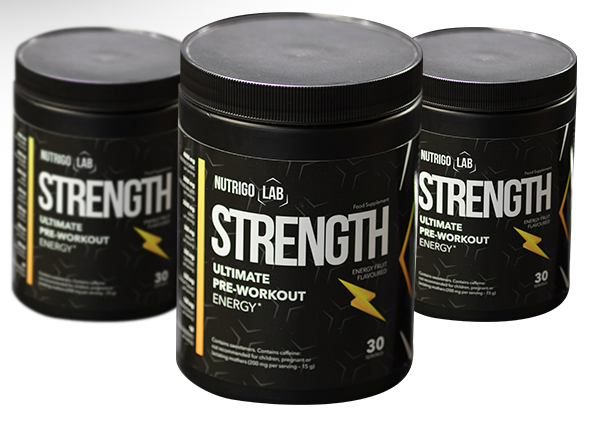
Our Recommendation — Nutrigo Lab Strength
Score: 6.1/10 · Best for: lifters who do the dose maths — a label that prints its citrulline malate honestly at 3 g, beside a properly printed creatine dose and a 200 mg caffeine serving Main caution: 3 g of citrulline malate 2:1 is only about 2 g of actual citrulline against the 6–8 g the trials used — and the “4,000 mg creatine” headline is 3,012 mg of actual creatine — with no money-back guarantee published Fair trial: one tub at $68.99 (about 30 servings) is the purchase unit — with no guarantee published, the dose audit on the label is the trial.
What Citrulline Does: the Arginine Detour
Citrulline is an amino acid with an indirect job. Your body converts citrulline to arginine — efficiently enough that oral citrulline raises blood arginine better than oral arginine itself (arginine is heavily broken down on first pass through the gut and liver; citrulline largely is not) — and arginine is the raw material for nitric oxide, the signalling molecule that relaxes blood vessels. Citrulline also participates in the urea cycle, clearing ammonia produced during hard exercise. That is the whole mechanistic story: better arginine availability, more nitric-oxide capacity, some waste clearance. Everything else — "insane pumps," "roadmap veins" — is this paragraph wearing a costume. One nuance the genre skips: citrulline raises blood arginine in a dose-dependent way, which is the pharmacokinetic finding the performance claims are extrapolated from — but arginine peaking in a blood test is not the same event as a muscle performing better, and the distance between those two findings is exactly what the meta-analyses below measure. Note the corollary that disciplines the expectations below: the pathway is a nudge to a regulated system, and the measured effects match that scale. Citrulline is not a stimulant, is not felt acutely the way caffeine is, and its best-evidenced theatre of operation is the later sets of a high-rep session, where blood flow and metabolite clearance are closest to limiting.
Citrulline Malate vs L-Citrulline: They Are Not the Same Gram
Two products share the shelf name. L-citrulline is the pure amino acid: a gram is a gram. Citrulline malate is citrulline bonded to malic acid (malate), most commonly in a 2:1 ratio — two parts citrulline to one part malate by weight — which means a gram of citrulline malate 2:1 is only about two-thirds citrulline. The trial literature's headline dose, 6–8 g, belongs to the malate form; pure L-citrulline trials use roughly 3–6 g. Comparing a label's "citrulline malate 3 g" against a study's "citrulline 6 g" without converting forms is the category's most common arithmetic error, and it always errs in the seller's favour. Malate itself gets a full section below, because its claimed contribution — feeding the Krebs cycle to make more ATP — is the part of the story with the least evidence attached.
The 2:1 Maths Table Nobody Prints
| Citrulline malate 2:1 on the label | Actual citrulline delivered | Against the evidence |
|---|---|---|
| 8 g (the landmark trial dose) | ~5.3 g | Top of the studied range |
| 6 g | ~4 g | Bottom of the studied range |
| 3 g (Nutrigo Lab Strength) | ~2 g | Half the low end — below every positive protocol |
| 3 g of a 1:1 blend (some labels) | ~1.5 g | Worse still — the ratio is part of the dose |
Two warnings complete the maths. First, the ratio on the label is a claim, not a measurement: independent testing discussed in the trade has found products labelled 2:1 analysing as low as 1.11:1 — roughly 20% less citrulline than the label implies. Second, apply the same conversion discipline in reverse when shopping: a tub of pure L-citrulline at 4 g is delivering more citrulline than a pre-workout boasting "6 g citrulline malate" at 2:1 (~4 g) — and far more than the 3 g (~2 g) audited here. None of this makes Nutrigo's 3 g fraudulent: the amount is printed, the ratio is printed, and a buyer who reads this table can price it exactly. It makes it, precisely, a half-dose of the studied intervention — our product review's "properly dosed by category norms" framing and this article's trial-dose framing are both true, and the distance between them is the difference between the category's habits and the evidence's demands.
The Famous Trial: Pérez-Guisado & Jakeman 2010, Read Properly
One study supplies most of the genre's marketing numbers, so it deserves a full reading. Pérez-Guisado & Jakeman (2010, Journal of Strength and Conditioning Research — not the British Journal of Sports Medicine, as some brand pages misattribute it) gave 41 trained men a single dose of 8 g citrulline malate, one hour before a bench-press session at 80% of one-rep max, performed as repeated sets to failure. The result that launched a thousand labels: 52.92% more repetitions on the final set, plus roughly 40% less muscle soreness at 24 and 48 hours. Now the reading discipline. The 53% figure is a last-set percentage: by the final set, absolute rep counts are small, so a few extra reps become a huge percentage. It is a single acute trial at the top of the dose range. And it is the outlier the pooled literature then averages down — which is exactly what meta-analysis is for.
The Meta-Analytic Reality: +6.4%, Not +53%
| Analysis | Finding | Reading |
|---|---|---|
| Vårvik et al. 2021 (8 RCTs, 137 participants) | +6.4% repetitions to failure, effect size SMD 0.196 | A small, real effect on muscular endurance — about 3 extra reps in practice |
| 2025 systematic review (30 RCTs, 644 participants) | Hedges' g ≈ 0.16, certainty graded low to very low | The effect survives pooling but shrinks; confidence in it is modest |
| Gonzalez & Trexler 2020; Gonzalez et al. 2022 | Small, inconsistent effects — present in some analyses (upper-body, high-set protocols), absent in others | Protocol-sensitive: most visible in high-volume, many-set work |
| Rhim et al. 2020 | Reduced perceived exertion and 24-hour soreness across 13 RCTs | The recovery/perception side of the file is steadier than the performance side |
| Strength analyses (e.g. Aguiar 2021) | No significant effect on maximal strength (SMD ~0.13, interval crossing zero) | 1RM is not citrulline's department |
Assemble the file and the honest summary is: citrulline, at 6–8 g of the malate (or equivalent), produces a small improvement in repetitions to failure in some protocols, a probable modest reduction in next-day soreness and perceived effort, and no established effect on maximal strength. That is a better file than 95% of pre-workout ingredients possess — and it is routinely inflated by quoting the single best set of the single best trial as the expected outcome. Both things are true; only one of them belongs on a label.
The Malate Question: Krebs-Cycle Theory, No Isolating Trial
Why bond citrulline to malate at all? The theory: malate is an intermediate of the Krebs (energy) cycle, so supplying it might support aerobic energy production and help clear the lactate/ammonia load of hard training. It is a coherent theory. It is also, at present, only a theory — as the most thorough brand-side review in this space concedes outright: no published randomised trial has demonstrated that the malate component adds a separable ergogenic benefit over citrulline alone. The performance trials used the bonded form because that was the commercial product, not because malate was isolated and vindicated. Practical consequence: shop by citrulline content delivered, not by form loyalty. If a pure L-citrulline powder delivers 4–5 g of citrulline cheaper than a malate product delivering the same, the evidence cannot tell them apart — and the malate premium is buying a hypothesis.
Timing: 60 Minutes in the Trials, 15 on the Label
Citrulline's pharmacokinetics set its clock: after an oral dose, blood arginine rises and peaks over roughly 45–90 minutes, and the trials dosed accordingly — ~40–60 minutes before training (Pérez-Guisado used one hour). Nutrigo's maker directs its full formula ~15 minutes before the session, a direction calibrated to caffeine's early felt onset rather than citrulline's peak. For the caffeine, that trade is defensible; for the citrulline, it means the ingredient's plasma peak lands mid-to-late session — arguably still inside a long high-rep workout, but not where the studies put it. If citrulline is the ingredient you care about, the evidence-aligned pattern is the full serving (or your top-up, below) a full hour out, which also suits the caffeine peak — one of the rare cases where the label direction, not the evidence, is the thing to adjust.
The Soreness File: Mixed, With a Regulatory Footnote
The soreness claim deserves its own paragraph because it is the second marketing pillar. Individual trials (Pérez-Guisado's ~40% reduction at 24/48 hours) and Rhim et al.'s meta-analysis point positive; other analyses find the effect small or protocol-bound. The European Food Safety Authority, assessing the related claim for citrulline back in 2012, concluded a cause-and-effect relationship for recovery from fatigue had not been established. Our grading: plausible, partially supported, not promised. If reduced next-day soreness is the outcome you are buying, you are buying the file's softer half — price it accordingly.
The Applied Audit: 3 g on a Real Label — and the Honest Top-Up
Return to the worked example with the maths now loaded. Nutrigo Lab Strength, per serving: 3 g citrulline malate 2:1 ≈ 2 g citrulline — half the citrulline delivered by the lowest studied malate dose (6 g ≈ 4 g), a third of the landmark trial's delivery (8 g ≈ 5.3 g). Add its context: it sits beside a properly-printed creatine dose and a 200 mg caffeine serving that does reach its evidence range's bottom edge — which is why our review scores the formula 6.1/10 and calls its core functional while auditing this ingredient down. The options for a buyer who wants the studied citrulline effect: (1) Top up — add ~3–5 g of citrulline malate (or ~2–3 g of pure L-citrulline) from a standalone powder to the pre-workout, taken an hour out; cheap per serving, slightly more hassle, and the only route that actually closes the gap. (2) Switch the citrulline job to a standalone and treat the pre-workout as a caffeine product — honest budgeting. (3) Accept the half-dose for what it plausibly is: a contribution in the right direction within an all-in-one you bought for other reasons. What is not an option, intellectually, is expecting 6–8 g outcomes from a 3 g label because the tub's front says "citrulline." Buy the formula if its transparency and caffeine/creatine core are what you're paying for. Skip it if citrulline at trial dose is the point of the purchase — buy the standalone powder and a coffee, and you'll have the studied protocol for less money.
A Note on the Other Nitric-Oxide Ingredient: RedNite™
Nutrigo also carries 250 mg of RedNite™ beetroot extract (1.5–2.75% nitrate ≈ 4–7 mg of nitrate). Beetroot is a separate nitric-oxide route — nitrate to nitrite to NO — with its own evidence base at ~300–500 mg of nitrate, and it is a closed topic on this site: our beetroot before a workout article covers its doses, its 2–3 hour timing and its lifting evidence in full. Here it is enough to say the extract's nitrate contribution is roughly two orders of magnitude under the studied dose and to not let two sub-dosed NO ingredients impersonate one dosed one — pathways do not pool that way on a label audit.
Who Responds: the Set-Count Condition
The meta-analyses carry a pattern worth extracting, because it predicts who reading this article will actually feel anything. The positive findings cluster in high-volume protocols — analyses found the repetitions effect most reliably where sessions involved many sets (one analysis isolated it to protocols of a dozen sets or more) and in upper-body work in another. That makes mechanistic sense: citrulline's proposed route — blood flow and metabolite handling late in accumulated work — only becomes relevant once a session has accumulated enough work for those to be limiters. A five-set workout may never reach the terrain where citrulline operates; a twenty-set back-and-arms session lives there. Training status cuts the usual way — recreationally trained subjects dominate the positive trials, with elite athletes showing the category's customary smaller margins. So the honest responder profile is: a high-rep, high-volume trainer, in the later sets of long sessions, at full dose. Readers outside that profile are not doing anything wrong; the ingredient was never really aimed at their session.
Citrulline Beyond the Gym: Blood Pressure and the Wider File
Citrulline has a second literature the pre-workout genre rarely mentions, and it matters for two audiences in this article: older readers and anyone on blood-pressure medication. Because the citrulline–arginine–nitric-oxide pathway is the body's own vasodilation route, citrulline (and its food form, watermelon) has been studied for blood-pressure and endothelial-function outcomes, with small reductions reported in some trials and reviews — modest, inconsistent, but directionally consistent with the mechanism. Two consequences. First, this is part of why the interaction caution in the safety section is not boilerplate: an ingredient that nudges blood pressure down can add to medication doing the same job deliberately. Second, it explains the ingredient's presence in "longevity" and cardiovascular blends far from the gym — several of the products this site reviews carry citrulline-family ingredients at capsule doses. For the lifter, the vascular file is background; for the medicated reader, it is the headline, and it is why the label's silence about interactions should be filled by a pharmacist, not by optimism.
Stacking Reality: Citrulline Beside Arginine, Beetroot and Caffeine
Real labels stack citrulline with its relatives, and the combinations deserve individual verdicts. With arginine/AAKG: mechanistically redundant — citrulline is in the formula precisely because it raises arginine better than arginine does; a panel carrying both (as Nutrigo's does, 3 g citrulline malate beside 2 g AAKG) is buying the pathway twice, once efficiently and once not. Judge such formulas on the citrulline content alone. With beetroot nitrate: genuinely complementary on paper — two different inputs to nitric oxide — but in this formula the partner arrives at ~4–7 mg of nitrate, so the stack exists on the label rather than in the physiology; at full doses both are legitimate, and the beetroot file is covered in our linked article. With caffeine: no known pharmacological conflict — the stimulant does not block the nitric-oxide pathway, and the pairing is the category's default. The stacking rule that emerges is the audit rule once more: a stack is only as real as its weakest dose, and combining two underdosed NO ingredients does not average out to a dosed one.
Forms and Shopping: Powder, Capsules and Label Traps
If the top-up route appeals, the shopping itself has traps. Bulk powder is the rational form: citrulline is cheap, soluble and mildly tart, and a standalone powder lets you dose 6–8 g without buying a second flavoured product. Capsules are the irrational form at these doses — 6–8 g means a handful of large capsules, which is why capsule products in adjacent categories quietly serve a gram or two and let the front label imply the rest. "Citrulline peptides" and novel forms arrive periodically with absorption claims and without comparative trials; price them as marketing until a human head-to-head exists. On any label, run the three checks from this article: state the form (malate or pure), state the ratio if malate (and discount unverifiable ratios), convert to citrulline grams and compare against 4–5.3 g (the delivery of the 6–8 g malate trials). A product that survives those three checks with its dose intact has earned the shelf claim "properly dosed" — in this category, that phrase should be a conclusion, not a slogan.
A Fair Self-Test: Can You Detect ~3 Extra Reps?
The pooled effect — a few extra repetitions late in a session — is small enough that casual impression will invent it or miss it at random. A fair personal test needs structure: choose a fixed protocol (say, four sets of a machine press at a fixed load, total reps as the score). Over four weeks, run it eight times, alternating full-dose days (your pre-workout plus a standalone top-up to a true 6–8 g malate equivalent, an hour out) with label-dose days (the pre-workout alone), holding caffeine, timing, food and time of day constant. Log totals before forming an impression. If the full-dose days win by a consistent small margin, you have replicated the meta-analysis in one subject and can price the top-up habit rationally. If they don't, your physiology has voted with the null trials, and the money belongs elsewhere. No other supplement genre on this site gets a self-test section; citrulline earns one because its effect size sits exactly at the edge where only a protocol can see it.
The "Pump," Audited as an Endpoint
Citrulline is sold as a pump ingredient, so the pump deserves a direct audit. The pump — transient muscular engorgement during training — is a sensation produced by exercise itself, local blood flow and cellular swelling, and it is felt far more reliably than any supplement's contribution to it. No citrulline trial uses pump as a primary endpoint; the trials measure repetitions, soreness and exertion, and cosmetic engorgement rides along unmeasured. This matters because the pump is the effect a buyer can "verify" in one session — and a warm, full feeling after a high-rep session on any new product is exactly the confirmation the marketing is counting on, whether the citrulline was 8 g or 800 mg. Nitric-oxide signalling is real, the pathway reasoning is sound, and at full dose the reps data suggest a genuine, small functional effect. But the mirror is not an instrument. Judge citrulline the way this article has: by converted doses, pooled effect sizes and logged finisher sets — never by how the sleeves fit at minute forty.
Watermelon and the Food Route
Citrulline's name comes from Citrullus — watermelon — and the food question is legitimate: can eating your way to the dose work? Watermelon flesh contains real citrulline, on the order of a gram or two per kilogram of fruit in most analyses, with the rind considerably richer than the flesh. That arithmetic is decisive: reaching even the pure-citrulline trial floor of ~3–4 g means eating kilograms of melon, daily, timed an hour before training — a protocol that exists in a few small juice studies (which used concentrated juice and found modest soreness effects) and in no serious lifter's kitchen. The food route's real value is background: a diet with regular watermelon contributes a low citrulline baseline the way vegetables contribute a nitrate baseline, and the studied spike on top of it is a supplement's job by design. File watermelon as a pleasant footnote with a genuine molecule in it — and as a calibration of how much molecule a "natural source" headline usually contains.
More Than 8 g: Is There a Ceiling?
A fair follow-up to the dose gap: if 6–8 g is the studied range, would 10–12 g be better still? The literature doesn't say so. The dose-ranging work behind the field shows plasma arginine rising with dose but the performance effect plateauing, and no trial has established superiority above the 8 g anchor — while the gastrointestinal cost (stomach discomfort and looseness) climbs exactly there, which is why the landmark protocol sat where it did. Some brand FAQs claiming citrulline malate requires 12–16 g are simply wrong — a figure that contradicts those same brands' own dose pages — and look like the 2:1 maths error this article dissected, run in reverse. The rational target remains the studied one: deliver ~4–5.3 g of citrulline, whether via 6–8 g of the malate or the equivalent pure form, and let anyone promising more from more produce their trial.
Citrulline on an Empty Stomach, and Other Practicalities
The last evidence gap is domestic. The big trials generally dosed in the pre-training window without elaborate food rules, and citrulline is tolerated either way by most users — the exception being the full 8 g single dose, where an empty stomach is the usual suspect in the GI complaints the trials record. Splitting the top-up (half with a small snack, half in the pre-workout) is the pragmatic fix. Citrulline requires no cycling, no loading in the creatine sense (its effect is acute and per-session), and no timing precision beyond the hour-out window. It also stacks without incident alongside creatine in the same drink — the two are the category's standard pair, one acute and one chronic, and the drink does not care that they run on different clocks.
Safety and Interactions
Citrulline's safety profile at studied doses is mild: the consistent complaint is gastrointestinal — stomach discomfort or looseness at the higher single doses (8 g on an empty stomach is the usual trigger), which splitting or food largely fixes. The cautions that matter are interactional and follow from the mechanism: a nitric-oxide-pathway ingredient can add to blood-pressure medication, nitrates and PDE-5 inhibitors, so anyone using those should clear citrulline supplementation with their clinician first, and anyone with low baseline blood pressure should note the direction of effect. Database claims of "no interactions" for citrulline are, in our reading, overconfident — the same pages often list these very interactions in their own fine print. Within a pre-workout, also count the whole stimulant context: our side-effects article covers the caffeine-and-synephrine stack this formula pairs it with.
How the File Grew: from Watermelon Chemistry to a Meta-Analysis
The shape of citrulline's evidence explains its peculiar reputation — simultaneously one of the best-studied pre-workout ingredients and one whose marketing runs furthest ahead of its data. The molecule was characterised from watermelon in the early twentieth century and lived a quiet life in biochemistry (the urea cycle, arginine recycling) before sports science adopted it in the 2000s, initially through the malate form's European use in fatigue states. Pérez-Guisado & Jakeman's 2010 bench-press trial made it famous — and, being a single vivid result at a high dose, set the genre's quoting habit for a decade. The 2020s have been the correction era: Gonzalez & Trexler's and Vårvik's meta-analyses, then the 30-trial 2025 review, progressively shrinking the effect toward its pooled ~0.16–0.20 size and grading the certainty low. That arc — exotic molecule, landmark trial, label explosion, meta-analytic haircut — is the standard biography of a supplement ingredient, and citrulline is simply further along it than most: what remains after the haircut is small, real and precisely located, which is more than the category usually survives with. Reading any newer ingredient's file against this timeline is the cheapest scepticism a buyer can buy.
Who Buys Citrulline Well: the Decision in One Pass
Pull the article's threads together into the purchase decision, since dose honesty is only useful if it changes behaviour. If your training is high-rep and high-volume, you tolerate an hour-out routine, and you will log a self-test honestly, citrulline at a true 6–8 g malate equivalent is one of the few extras in sports nutrition with a defensible expected value — small, but priced cheaply as a bulk powder. If your training is low-rep strength work, the same money buys nothing the trials can find. And if your citrulline currently arrives as 3 g inside a pre-workout, the decision is not whether the formula is "good" — Nutrigo's transparency and core earn its 6.1/10 — but whether the half-dose is a feature you are content to subsidise or a gap you will spend a few coins per session to close with a top-up. The worst outcome in the category is the default one: paying full-dose prices for a half-dose ingredient while believing the landmark trial's last set is on its way to your next workout.
Our Recommendation — Nutrigo Lab Strength
Score: 6.1/10 · Best for: lifters who do the dose maths — a label that prints its citrulline malate honestly at 3 g, beside a properly printed creatine dose and a 200 mg caffeine serving Main caution: 3 g of citrulline malate 2:1 is only about 2 g of actual citrulline against the 6–8 g the trials used — and the “4,000 mg creatine” headline is 3,012 mg of actual creatine — with no money-back guarantee published Fair trial: one tub at $68.99 (about 30 servings) is the purchase unit — with no guarantee published, the dose audit on the label is the trial.
Frequently Asked Questions
How long does citrulline stay in your system?
Hours, not days — plasma citrulline and arginine rise and fall around the session it was taken for, which is precisely why there is no loading protocol and no rest-day rationale. Its partner ingredient creatine, measured in weeks of saturation, is the opposite pharmacokinetic shape; the two sharing a tub shelf has confused more buyers than any label in this category.
Should I take citrulline on rest days?
There is no loading logic to serve — citrulline's effect is acute and session-timed, so rest-day doses buy nothing the evidence recognises. Spend rest-day money on the ingredient that does need daily coverage: creatine, as our companion article on pre-workout creatine works through. If a daily citrulline habit is being kept for the blood-pressure side of its file, that is a health decision to make with the clinician who owns that file — not a training protocol.
Is 3 g of citrulline malate enough?
Against the evidence, no — it is roughly half the low end of the 6–8 g studied range, and as a 2:1 blend it delivers only ~2 g of actual citrulline. It is a contribution, not the studied protocol; top up with a standalone if you want the trial dose.
How much actual citrulline is in 3 g of citrulline malate?
At the standard 2:1 ratio, about 2 g — the rest is malate. At 1:1, about 1.5 g. Always convert before comparing a label to a study.
Can I take extra citrulline with my pre-workout?
Yes — that is the standard fix. Add 3–5 g citrulline malate (or 2–3 g pure L-citrulline) to reach the studied delivery, take the combined drink about an hour before training, and expect the main side effect to be possible stomach ease-or-unease at the higher dose.
Citrulline malate or L-citrulline — which is better?
Neither has beaten the other in a trial that isolates the difference; the malate advantage is theoretical. Choose by citrulline grams delivered per unit of money, and be suspicious of unlabelled ratios.
When should I take citrulline?
About 60 minutes before training, matching the trials and the arginine peak — not the 15 minutes most pre-workout labels print for caffeine's sake.
Does citrulline increase strength?
Maximal strength: no significant effect in pooled analysis. Repetitions to failure at high reps: a small effect (+6.4%, ~3 reps) at full studied doses. Buy it for the second claim only — and notice that the second claim, properly understood, is about the last sets of long sessions, which is why the lifters most likely to benefit are the ones doing the most total work, not the ones chasing a single heavy single.
Does citrulline reduce soreness?
Possibly, modestly — some trials and one meta-analysis point that way, but EFSA judged the recovery claim not established. Treat soreness relief as a bonus if it appears, not the product's promise.
Is citrulline safe every day?
It is an acute, session-timed ingredient with a mild safety profile; daily use at studied doses has no established harm signal in healthy adults. The daily-use scrutiny in a pre-workout belongs to its caffeine, not its citrulline — a distinction this entire cluster of articles keeps returning to because labels blur it.
Last reviewed: October 2026. This article is educational and is not medical advice.
