
- Quick Answer
- Tier 1: The Two That Earned It
- Creatine monohydrate — the benchmark
- Protein — a target, not a product
- Tier 2: Real, Narrow, Conditional
- Caffeine
- Dietary nitrate (beetroot)
- Deficiency correction: vitamin D and zinc
- Honourable mentions, kept short
- Tier 3: the Botanical Shelf, Graded as a Class
- The Master Table
- Why Tier 3 Is So Loud: the Economics Under the Tiers
- A Realistic Budget: What a Sensible Year Costs
- Practicals the Competitors Skip
- Stacking, ordered by the tiers
- Bulking vs cutting: does the list change?
- Tested athletes: legality and contamination
- Daily use and long-term sense
- Frequently Asked Questions
- What is the single best supplement for muscle gain?
- Do I need a pre-workout?
- Are muscle-building supplements safe?
- How much should I spend per month?
- What about beginners specifically?
- Read This Next
Disclosure: This article contains affiliate links. If you buy through them, we may earn a commission at no extra cost to you. It never changes our conclusions.
Quick Answer
Ranked by evidence for gaining muscle alongside training: Tier 1 — creatine monohydrate (3–5 g/day) and protein sufficiency (1.6 g/kg/day, supplemented with whey only if food falls short). Tier 2 — caffeine for session performance, dietary nitrate for endurance-leaning training, and correcting actual deficiencies (vitamin D, zinc) if bloodwork or diet says they exist.
Tier 3 — everything else with a muscle claim, including herbal blends like Bulk Extreme (5.3/10): traditional ingredients, no muscle-outcome trials, doses below their own studies. The tiers are the article. Everything below is the evidence, the practicalities (stacking, bulking vs cutting, tested-sport legality), and the budget order in which a rational lifter buys.
Tier 1: The Two That Earned It
Creatine monohydrate — the benchmark
Creatine is the most-studied sports supplement in existence and the standard against which this site measures every other claim. Across hundreds of trials and repeated meta-analyses, 3–5 g/day increases phosphocreatine stores, improves high-intensity work capacity, and adds a small but consistent increment to strength and lean-mass gains over training alone.
Practicalities: no loading phase required (saturation arrives in ~3–4 weeks without one, days with), any time of day, monohydrate form specifically (the studied and cheapest), and a myth file we can close in one line — the hair-loss concern rests on a single small DHT finding never replicated, kidney harm in healthy people has not materialised in decades of data, and the initial 1–2 kg is intracellular water, not fat or bloat.
If this guide could keep only one supplement on Earth, the vote would not be close.
Protein — a target, not a product
The meta-analytic ceiling for lean-mass benefit sits around 1.6 g/kg/day of total protein. Whey is simply the convenient vehicle — complete, leucine-rich, fast — and it earns Tier 1 placement only in its role as insurance for people whose food undershoots (the hardgainer audit shows how often that is).
Casein, plant blends and bars are interchangeable at equal protein and leucine. Timing matters far less than the daily total. And no protein product outperforms the food it replaces — it only outperforms the food you didn't eat.
Tier 2: Real, Narrow, Conditional
Caffeine
The world's most effective legal acute ergogenic: 3–6 mg/kg before training improves strength-endurance and perceived effort in a large trial literature. Its conditions: tolerance erodes it, late-day use taxes the sleep that muscle is built in, and it adds performance, not tissue directly. Pre-workout products are caffeine with theatre around it — price them as caffeine.
Dietary nitrate (beetroot)
Genuine for endurance economy and preliminary for high-rep lifting, at ~300–500 mg of actual nitrate, 2–3 hours pre-session — the full audit, including the mouthwash interaction and the extract-mg trap, is in our beetroot guide. It ranks Tier 2 for endurance athletes and Tier 3 for pure lifters. The table there explains the split.
Deficiency correction: vitamin D and zinc
These are the category's honest "if" supplements. Correcting vitamin D deficiency improved testosterone ~25% over a year in deficient men in one RCT. Zinc deficiency measurably suppresses testosterone and repletion restores it. Both statements are corrections, not boosts: in replete lifters, extra vitamin D or zinc has no muscle case, and megadosing has documented downsides (zinc depleting copper.
B6 stacking arithmetic from our safety guide). Test or audit the diet first. Supplement the gap, not the hope.
Honourable mentions, kept short
Beta-alanine (buffers acid in 1–10 minute efforts. Tingles. Irrelevant to low-rep strength), citrulline (mixed muscular-endurance data at 6–8 g, more plausible than most), and omega-3s (general health case stronger than the muscle case) — each defensible, none displacing the tiers above.
Tier 3: the Botanical Shelf, Graded as a Class
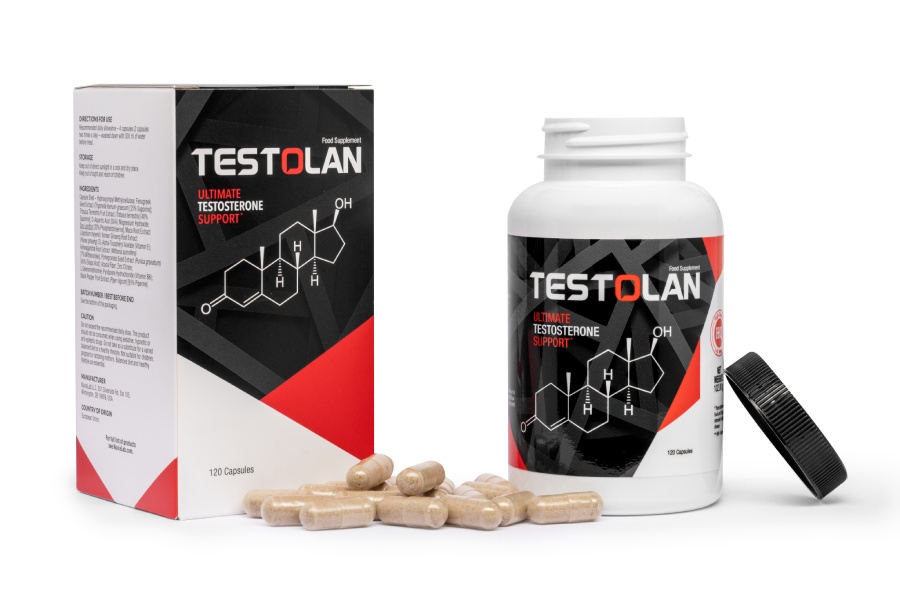
Herbal muscle and "testosterone" blends share a structural profile this set has now audited from every angle: impressive ingredient lists, evidence borrowed from single trials in different demographics (shilajit), animal data, or traditional use — and doses that shrink in the blending. The test cases write themselves.
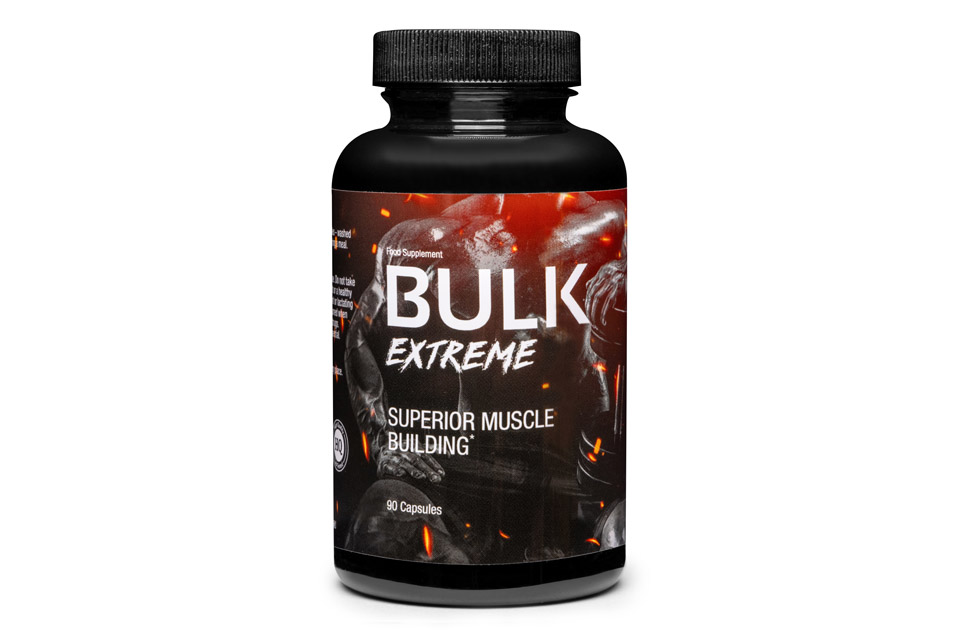
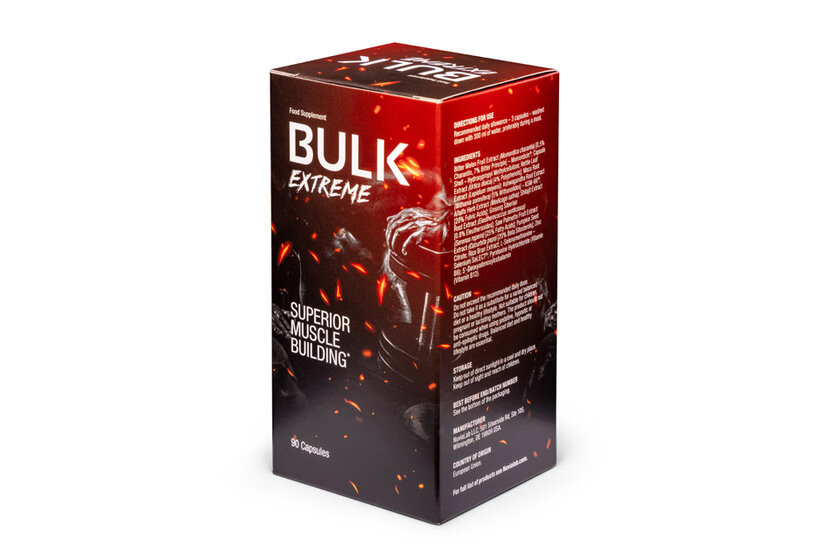
Bulk Extreme (5.3/10): thirteen ingredients, its two trialled headliners at fractions of their studied doses (shilajit 150 mg vs 500. Beetroot extract vs 300–500 mg of nitrate), a "natural SARM" claim rejected in our alternatives audit, and no money-back guarantee from its maker.
Its honest use-case — a general training-support formula for a lifter whose Tier 1 is already handled and whose expectations are set by this article — is narrow but real, and it is the use-case its score prices. The testosterone-booster shelf as a whole is graded, ingredient by ingredient, in that set's index.
The short version is that even a perfect booster would be a Tier 3 muscle supplement, because muscle is not built by nudging a normal hormone range.
The Master Table
| Supplement | Tier | Dose | Expected effect | Cost sense |
|---|---|---|---|---|
| Creatine monohydrate | 1 | 3–5 g/day | Small, real strength + lean-mass increment | Pennies/day — best value in the aisle |
| Whey (to hit protein target) | 1 | As needed to 1.6 g/kg total | Enables the model's rates; no effect beyond sufficiency | Price as food |
| Caffeine | 2 | 3–6 mg/kg pre-workout | Acute performance; watch sleep | Coffee is the benchmark price |
| Beetroot nitrate | 2 (endurance) / 3 (lifting) | 300–500 mg nitrate, 2–3 h prior | Endurance economy; preliminary rep support | Shots/juice, nitrate-labelled |
| Vitamin D / zinc | 2 if deficient, else none | Replacement doses | Restores normal; nothing beyond | Cheap; test first |
| Botanical blends (e.g. Bulk Extreme) | 3 | Label doses — below trial doses | No muscle-outcome evidence | Premium price for the weakest tier |
Why Tier 3 Is So Loud: the Economics Under the Tiers
The tier order inverts the marketing order for a structural reason worth understanding. Tier 1 products are commodities: creatine monohydrate is one molecule made by everyone, priced by competition to pennies, with no patentable story — nobody can afford to advertise it at you.
Tier 3 products are proprietary blends with trademarked ingredient names, exclusive supply stories and margins that fund affiliate commissions (the channel this site itself operates in — our disclosure sits at the top of this page), sponsorships and advertising.
Volume of promotion therefore correlates inversely with evidence across this aisle, and a lifter who shops by loudness will fund the weakest tier at the highest price. The correction is the habit this site teaches in every category: ask of any product, in order — which tier, which trial, which dose, which population — and let the noise fall where it may.
The tiers are not our opinion of the market. They are what falls out of applying those four questions to it.
A Realistic Budget: What a Sensible Year Costs
| Item | Monthly cost (typical) | What it buys |
|---|---|---|
| Creatine monohydrate | ~$3–6 | The best-evidenced supplement in sports science |
| Whey (only the shortfall) | ~$15–30 | Insurance on the 1.6 g/kg target |
| Caffeine | ~$0–10 | Coffee, or tablets at pennies per session |
| Vitamin D (if deficient) | ~$2–4 | Correction of a measured gap |
| Rational total | ~$20–50 | Everything with real evidence |
| One Tier-3 blend (e.g. Bulk Extreme) | $59.99 + shipping | No muscle-outcome evidence; fractional doses |
The table is the guide's conclusion in numbers. A lifter who funds the rational total and redirects the difference into food — the input the gain models actually run on — has optimised his supplement spending completely. Any further purchase is entertainment, experimentation or hope. This site sells honest labels for all three, but it will not call them muscle science.
Practicals the Competitors Skip
Stacking, ordered by the tiers
The rational stack is short: creatine daily, protein to target, caffeine on training days, nitrate if your sport is endurance-leaning. Everything added beyond that should have to answer the question this article grades by — which trial, at which dose, in which population? — and most additions fail it in one breath.
Budget order matters more than stack size: fund Tier 1 fully (it costs less per month than one Tier 3 bottle) before Tier 3 gets a dollar.
Bulking vs cutting: does the list change?
Barely. Creatine stays (its water is intracellular and irrelevant to fat loss. Dropping it in a cut is a superstition that costs strength). Protein matters more in a cut (higher targets defend lean mass). Caffeine earns its place for training quality on low energy.
Tier 3's case does not improve in a deficit — if anything, the timeline models remind the cutting lifter that his goal is conservation, a job no botanical has been shown to help with.
Tested athletes: legality and contamination
Nothing in Tiers 1–2 is prohibited in sport (creatine and caffeine are legal everywhere. Nitrate likewise). The risk is not the ingredient but the bottle: supplement contamination with prohibited substances is documented across this industry, and strict liability means the athlete owns the consequence.
Use only products certified by a recognised third-party programme (Informed Sport / NSF Certified for Sport class), and treat Tier 3 blends — multi-ingredient, globally manufactured, aggressively marketed — as the highest-risk shelf, whatever their labels promise.
Daily use and long-term sense
Creatine and protein are foods in effect — daily, indefinite use is the studied norm. Caffeine needs tolerance management (periodise it around important sessions if the effect dulls).
Botanical blends carry the category's standard unknown: combination products at indefinite duration are the least-studied configuration in this entire guide, one more argument for spending the daily money at the top of the tiers.
Frequently Asked Questions
What is the single best supplement for muscle gain?
Creatine monohydrate, 3–5 g/day — the deepest evidence, the smallest price. Protein sufficiency is its co-requirement, achieved with food first.
Do I need a pre-workout?
You need what a pre-workout actually provides: caffeine, and (for endurance-leaning work) possibly nitrate. Buy those as themselves and skip the proprietary-blend theatre around them.
Are muscle-building supplements safe?
Tier 1 has decades of reassuring data. The risks concentrate in Tier 3: untested combinations, contamination (a strict-liability problem for tested athletes), and borrowed-evidence marketing. Full context: our safety guide.
How much should I spend per month?
Tier 1 complete costs less than a single premium blend bottle. Spend in tier order. Let any Tier 3 purchase be the last and most-scrutinised line, made with its audit open — ours for Bulk Extreme is here.
What about beginners specifically?
Beginners gain fastest with the least help (the models). Creatine and protein from day one. Everything else can wait a year without costing a gram.
Last reviewed: October 2026. This article is educational and is not medical advice.
