
- Quick Answer
- Our Findings
- What we like
- What gives us pause
- Why You Should Trust This Review
- Our Verdict
- How We Scored It
- What Is NuviaLab Flex?
- The Ingredients
- 1. Glucosamine Sulphate 2KCl (500 mg)
- 2. Boswellia Serrata Resin Extract — Boswellin® (200 mg, 70% boswellic acid)
- 3. Curcuma Longa Rhizomes Extract — Curcumin C3 Complex® (200 mg, 85% curcuminoids)
- 4. Chondroitin Sulfate (100 mg, 90% chondroitin)
- 5. Methylsulfonylmethane — MSM (100 mg)
- 6. Shilajit Extract (50 mg, 20% fulvic acids)
- 7. Bromelain (50 mg, 125 GDU)
- 8. Papain (50 mg, 4,800 MCU)
- 9. Vitamin C (80 mg, 100% NRV)
- 10. Vitamin D (50 µg — 2,000 IU, 1,000% NRV)
- 11. Manganese (1.80 mg, 90% NRV)
- The Dose Audit: A Third, a Twelfth, a Fifteenth
- The Evidence, Read Properly
- How Long Does NuviaLab Flex Take to Work?
- Is NuviaLab Flex Safe?
- Side Effects
- When a Joint Supplement Is the Wrong Route
- Is NuviaLab Flex Legit — and Who Actually Sells It?
- The Maker's Claims, Checked
- Price and Packs — With the Shipping Everyone Else Leaves Out
- Purchase Options
- How It Compares
- A Stronger Alternative in This Category
- Who Should Buy NuviaLab Flex — and Who Should Skip It
- How to Take NuviaLab Flex
- Frequently Asked Questions
- How do I take NuviaLab Flex?
- Why is the glucosamine dose lower than the trials?
- Is NuviaLab Flex vegetarian or vegan?
- Is there a money-back guarantee?
- Are there any side effects?
- Why does the label recommend a vitamin D blood test?
- How long should I take it before judging the results?
- What ingredients are in NuviaLab Flex?
- Where is NuviaLab Flex made and who makes it?
- Is NuviaLab Flex sold on Amazon?
- Does NuviaLab Flex interact with any medications?
- Sources & Method
- Read This Next
Disclosure: This article contains affiliate links. If you buy through them, we may earn a commission at no extra cost to you. It never changes our scores or conclusions.
Quick Answer
NuviaLab Flex is a daily joint-support food supplement sold in bottles of 60 gelatin capsules, taken at two capsules a day. Its biggest credit is a fully disclosed panel where every ingredient amount and standardisation is published. On our fixed rubric, it scores 5.2/10.
The formula is built upside down. Its two branded botanical extracts — Boswellin® boswellia and Curcumin C3 Complex® — sit at plausible daily doses. By contrast, the famous joint trio is heavily underdosed. Glucosamine sits at 500 mg of the 2KCl salt, which delivers only about 296 mg of glucosamine itself against a 1,500 mg research standard. Chondroitin and MSM sit at mere garnish levels. The capsule shell is gelatin, and no money-back guarantee is published anywhere.
Best for: men who want boswellia and curcumin in one fully disclosed capsule.
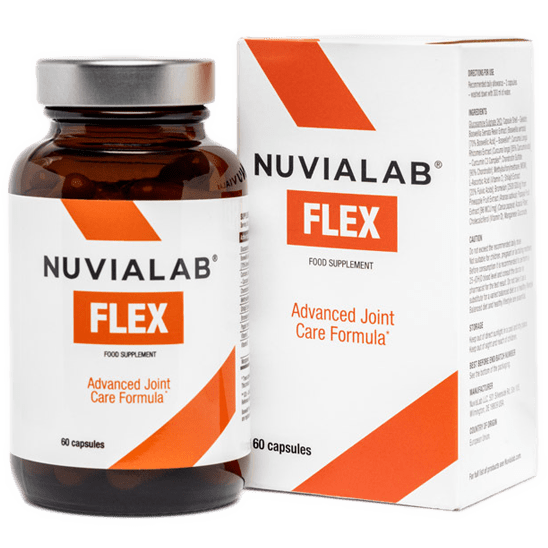
NuviaLab Flex — Our Score: 5.2/10
Score: 5.2/10 · Best for: boswellia and curcumin in one fully disclosed capsule · Main caution: no money-back guarantee is published, and the glucosamine trio sits at fractions of the research doses · Fair trial: the three-bottle pack ($99.98 + $12 shipping), judged over two to three months.
See the Product PageOur Findings
Auditing NuviaLab Flex is straightforward because the label does not hide behind a proprietary blend. When you line those published numbers up against clinical trials, you find a transparent label wrapped around an inverted formula.
What we like
- Full panel disclosure with standardisations: All eleven ingredients have their exact milligram or microgram amounts printed on the label, alongside extract percentages and two branded Sabinsa extracts at plausible doses.
- A genuinely responsible blood-test instruction: The panel itself advises taking a 25-(OH)D blood test and discussing the result with a doctor or pharmacist before use — the most medically literate caution line on any label in this wave.
- Enzyme activity units printed: Both bromelain (125 GDU) and papain (4,800 MCU) declare their enzymatic activity units rather than just raw powder weights.
- Full vitamin C reference intake: The daily serving delivers 80 mg of vitamin C (100% NRV), supporting normal collagen formation for cartilage and bone function.
What gives us pause
- Glucosamine at a third of the research dose: The label lists 500 mg of glucosamine sulphate 2KCl against a 1,500 mg trial standard — and because that figure is a salt weight, it delivers only about 296 mg of glucosamine itself.
- Chondroitin a twelfth and MSM a fifteenth: At 100 mg each, chondroitin sits at one-twelfth of the 1,200 mg GAIT dose, while MSM sits at one-fifteenth of the lowest common 1,500 mg study dose.
- Curcumin with no absorption partner: The panel includes 200 mg of Curcumin C3 Complex® without BioPerine or any other absorption enhancer on the label.
- Gelatin capsule shell: Because the capsule shell is made of animal-derived gelatin, the product is neither vegetarian nor vegan.
- An indefensible "no side effects" claim: The sales page claims the product has no side effects, which contradicts both the clinical trial record of its botanicals and its own label cautions.
- No money-back guarantee published: Neither the sales page, the order page, nor the terms publish a refund guarantee for an opened bottle that fails to help.
Why You Should Trust This Review
For this review, we audited the primary records firsthand: the full 11-ingredient supplement panel with published amounts and standardisations, the maker's sales page, §14 of the terms and conditions, the GAIT trial, the Cameron 2014 Cochrane review, the Bannuru 2018 meta-analysis, the Knudsen & Sokol 2008 warfarin interaction paper, the NIH Office of Dietary Supplements vitamin D fact sheet, and our live product page — and we print the details that complicate the sales story. Every score comes from one fixed rubric applied to every product we review and never moves for a brand; when verified facts change, we lower scores and say so. We earn a commission through our links and are never paid to place or praise a product.
Our Verdict
Our score of 5.2/10 reflects a supplement that is honest with its label math but compromised in its dosing priorities. No published clinical trial tests the finished NuviaLab Flex formula itself. The product earns its score from full ingredient transparency, sensible vitamin and cofactor coverage, and 200 mg each of Boswellin® and Curcumin C3 Complex®. It loses marks because the headline glucosamine, chondroitin, and MSM trio is rationed to fractions of the doses tested in human trials, and no refund policy backs the purchase.
As we detail on our NuviaLab Flex product page, a single bottle costs $49.99 plus $12 shipping ($61.99 delivered). Running a fair two-to-three-month trial with the three-bottle bundle costs $111.98 delivered. Without a money-back guarantee, that $111.98 is a firm upfront spend, not a risk-free trial.
How We Scored It
We graded NuviaLab Flex across the five weighted criteria of our store-wide rubric. Here is the exact breakdown:
| Criterion | Weight | Score | Why |
|---|---|---|---|
| Ingredients | 30% | 5.5 | Full panel with standardisations and two branded extracts at plausible doses; but glucosamine at one-third of the trial dose, chondroitin and MSM at garnish levels, and a gelatin shell |
| Evidence | 25% | 4.5 | Boswellia and curcumin carry modest positive trial records; glucosamine and chondroitin's evidence is contested even at full dose and cannot be borrowed at one-third dose; no trial of this formula |
| Maker Credibility | 20% | 5.0 | NuviaLab trademark and Sabinsa brands printed on the panel, FDA disclaimer present; against that, absolute sales claims, an unnamed seller in Hong Kong terms, and no guarantee |
| Safety | 15% | 6.0 | Full caution block plus a genuinely responsible instruction to get a 25-(OH)D blood test before use; against that, a "no side effects" claim the ingredients do not support, and 2,000 IU of vitamin D that stacks with other supplements |
| Value | 10% | 5.0 | $49.99 a month is mid-range and bundles fall to $25.00 a bottle; but several ingredients are part-dosed at full-formula prices, shipping adds $12, and no guarantee stands behind it |
Weighted calculation: 5.5 × 0.30 + 4.5 × 0.25 + 5.0 × 0.20 + 6.0 × 0.15 + 5.0 × 0.10 = 5.175 → 5.2/10.
Transparency note: No published clinical trial of NuviaLab Flex itself exists. Several third-party review pages invent ingredients for this product, cite a fabricated product "study," and award invented ratings — none of which carries any weight in our score.
What Is NuviaLab Flex?
NuviaLab Flex is a daily joint-support food supplement designed for adults seeking everyday comfort, flexibility, and bone maintenance. Each bottle contains 60 capsules, providing a 30-day supply when taken at the directed two capsules a day with about 300 ml of water. It is a dietary supplement, not a drug, and it is not a treatment for osteoarthritis, rheumatoid arthritis, or any diagnosed medical condition.
The corporate setup behind the website is opaque. No company is named anywhere on the site as the actual seller; the page footer reads only "NuviaLab® Flex © 2026". The label notes that NuviaLab® is a registered trademark of NuviaLab Limited, which identifies the trademark holder rather than a named retail seller, while the legal terms refer only to the product's own website name operating under Hong Kong law. On a smaller quality-control note, the sales page spells the mineral "Mangenese" in a section heading, while the supplement facts panel spells it "Manganese".
| Score | 5.2/10 |
| Brand | NuviaLab Flex |
| Company | NuviaLab Limited (trademark holder); the seller is not named anywhere on the site — the terms describe a Hong Kong operator |
| Type | Capsules (60 per bottle, one month at directed use) |
| Purpose | Daily joint support — flexibility, comfort and bone health; not a treatment for arthritis or any diagnosed condition |
| Formula | 11 ingredients, every amount published; two branded Sabinsa extracts (Boswellin® 200 mg; Curcumin C3 Complex® 200 mg); gelatin shell |
| Research | No trial of the finished formula; ingredient trials at higher doses (GAIT 1,583 people; Cameron 2014, 85 people; Bannuru 2018 meta-analysis) |
| Limitation | Glucosamine a third, chondroitin a twelfth, MSM a fifteenth of the research doses; curcumin without an absorption partner; no guarantee |
| Use | 2 capsules a day with about 300 ml of water; blood test first (see Safety) |
| Guarantee | No money-back guarantee is published; the terms allow only a 10-day withdrawal for unused goods |
The Ingredients
Unlike competitors that hide cheap fillers inside proprietary blends, the NuviaLab Flex label shows its working. All eleven active ingredients are printed with exact milligram or microgram weights, extract standardisations, and enzyme activity units. That transparency is what makes the dose audit in the next section possible.
Before looking at the active compounds, note the capsule shell. The shell is made of gelatin. Because gelatin is animal-derived, NuviaLab Flex is not vegetarian and not vegan.
| # | Component (as named by the maker) | Amount (per 2 capsules) | Standardisation / Activity |
|---|---|---|---|
| 1 | Glucosamine Sulphate 2KCl | 500 mg | Potassium-chloride salt form (~296 mg base) |
| 2 | Boswellia Serrata Resin Extract — Boswellin® | 200 mg | 70% boswellic acid |
| 3 | Curcuma Longa Rhizomes Extract — Curcumin C3 Complex® | 200 mg | 85% curcuminoids (~170 mg) |
| 4 | Chondroitin Sulfate | 100 mg | 90% chondroitin |
| 5 | Methylsulfonylmethane (MSM) | 100 mg | Pure compound |
| 6 | Shilajit Extract | 50 mg | 20% fulvic acids |
| 7 | Bromelain (from pineapple fruit extract) | 50 mg | 125 GDU |
| 8 | Papain (from papaya fruit extract) | 50 mg | 4,800 MCU |
| 9 | Vitamin C | 80 mg | 100% NRV |
| 10 | Vitamin D | 50 µg (2,000 IU) | 1,000% NRV |
| 11 | Manganese | 1.80 mg | 90% NRV |
Capsule shell: Gelatin (not vegetarian, not vegan).
1. Glucosamine Sulphate 2KCl (500 mg)
Glucosamine is the headline ingredient on the box and a structural building block of joint cartilage matrix. Using a sulfate salt puts the product in the right chemical family, since the positive European osteoarthritis trials used crystalline glucosamine sulfate rather than hydrochloride.
The problem is the dose. At 500 mg per daily serving, the label provides only one-third of the 1,500 mg research standard. Worse, because the ingredient is bound as the potassium-chloride (2KCl) salt, only 59.2% of that weight is actual glucosamine — delivering about 296 mg of glucosamine itself per day.
2. Boswellia Serrata Resin Extract — Boswellin® (200 mg, 70% boswellic acid)
Boswellia resin is an anti-inflammatory botanical studied for joint comfort and stiffness, and its inclusion via Sabinsa's branded Boswellin® is the strongest file on this panel. A 200 mg daily dose is a real, plausible botanical amount rather than label dust.
However, the standardisation metric matters. The strongest clinical trials used specialized extracts enriched specifically for 3-O-acetyl-11-keto-beta-boswellic acid (AKBA). NuviaLab Flex standardises its Boswellin® to 70% total boswellic acid and states no specific AKBA figure on the panel.
3. Curcuma Longa Rhizomes Extract — Curcumin C3 Complex® (200 mg, 85% curcuminoids)
Turmeric extract is included to support joint comfort and modulate inflammatory pathways. Because Sabinsa's Curcumin C3 Complex® is standardised to 85% curcuminoids, this 200 mg dose yields about 170 mg of active curcuminoids per day.
Pooled human trial evidence for curcuminoids in joint pain is modestly positive, though clinical studies usually run at higher daily milligram totals. Furthermore, poor gut absorption is curcumin's well-known weakness. Sabinsa's flagship C3 clinical programme (including its osteoarthritis trial) pairs C3 Complex® with BioPerine® black pepper extract, whereas this panel lists the C3 half only, with no BioPerine and no other absorption enhancer.
4. Chondroitin Sulfate (100 mg, 90% chondroitin)
Chondroitin sulfate is a structural component of cartilage often paired with glucosamine in joint formulas. Even at full clinical doses, its trial record in osteoarthritis is contested across major medical guidelines.
In NuviaLab Flex, the amount is far too small to test that clinical record. The landmark GAIT trial used 1,200 mg of chondroitin sulfate a day. At 100 mg (standardised to 90% chondroitin), this formula supplies just one-twelfth of that studied dose, and the biological source of the chondroitin is unstated on the panel.
5. Methylsulfonylmethane — MSM (100 mg)
MSM is an organosulfur compound taken for joint comfort and post-exercise recovery. Because MSM is a bulky powder, clinical trials run in gram-level amounts — typically between 1,500 mg and 3,000 mg per day.
Two small daily capsules simply do not have the physical room for gram-level MSM alongside ten other ingredients. The 100 mg included here is a token presence, sitting at one-fifteenth of the lowest common study dose.
6. Shilajit Extract (50 mg, 20% fulvic acids)
Shilajit is a mineral-rich exudate standardised here to 20% fulvic acids and marketed on the sales page for joint and bone support. In human clinical literature, shilajit is studied at substantially higher daily doses than 50 mg.
At 50 mg per two-capsule serving, the amount sits well below the levels its own research literature discusses. In this formula, it functions as label decoration rather than a primary active driver.
7. Bromelain (50 mg, 125 GDU)
Derived from pineapple fruit extract, bromelain is a proteolytic enzyme included to provide supplementary enzyme support. While 50 mg is a small daily dose compared with standalone enzyme regimens, the maker deserves credit for printing the actual enzymatic activity — 125 gelatin digesting units (GDU) — directly on the panel.
8. Papain (50 mg, 4,800 MCU)
Extracted from papaya fruit, papain is a second proteolytic enzyme paired with bromelain. Like bromelain, it sits at a modest 50 mg weight, and to the maker's credit, its enzymatic activity (4,800 milk clotting units, or MCU) is properly declared on the label.
9. Vitamin C (80 mg, 100% NRV)
Vitamin C is an essential water-soluble vitamin with an established physiological role in connective tissue maintenance. At 80 mg per two capsules, NuviaLab Flex provides 100% of the European Nutrient Reference Value (NRV). At this full reference intake, it legitimately contributes to normal collagen formation for the normal function of cartilage and bones.
10. Vitamin D (50 µg — 2,000 IU, 1,000% NRV)
Vitamin D supports normal bone maintenance and muscle function. Unlike the trace minerals or underdosed cartilage compounds on this panel, vitamin D is dosed aggressively at 50 µg (2,000 IU), which equals 1,000% of the basic reference intake.
This is a full maintenance-level dose sitting at exactly half the adult tolerable upper limit of 100 µg (4,000 IU) per day. That substantial dose is the exact reason the panel carries a pre-use blood-test instruction, and it stacks with any multivitamin or standalone vitamin D you already take.
11. Manganese (1.80 mg, 90% NRV)
Manganese is an essential trace mineral that acts as a cofactor for enzymes involved in building connective tissue and bone matrix. At 1.80 mg (90% NRV), it sits right near the full daily reference intake, rounding out the nutritional cofactor side of the panel cleanly.
The Dose Audit: A Third, a Twelfth, a Fifteenth
Because the maker publishes every milligram on the label, we can compare NuviaLab Flex directly against the clinical trial benchmarks. The table below shows why our glucosamine daily dose guide and our 500 mg glucosamine audit flag this formula as inverted.
| Ingredient | Clinical Study Standard | NuviaLab Flex (per 2 capsules) | Audit Status |
|---|---|---|---|
| Glucosamine | 1,500 mg/day sulfate salt (~1,178 mg base) | 500 mg 2KCl salt (~296 mg base) | One-third of the salt standard (~one-quarter of the base) |
| Chondroitin Sulfate | 800–1,200 mg/day (1,200 mg in GAIT) | 100 mg (90% chondroitin) | One-twelfth of the GAIT trial dose |
| MSM | 1,500–3,000 mg/day | 100 mg | One-fifteenth of the lowest study dose |
| Boswellia Extract | ~100 mg/day AKBA-enriched extract | 200 mg (70% total boswellic acid) | Real botanical dose, different metric (no AKBA stated) |
| Curcuminoids | Commonly ~1,000 mg/day (500–1,500 mg) | ~170 mg (from 200 mg C3 Complex®) | Below typical trial band, no absorption partner |
When auditing glucosamine, you must keep both layers of the salt chemistry together. First, NuviaLab Flex's 500 mg figure is the weight of the glucosamine sulphate 2KCl salt; once you strip away the potassium-chloride stabiliser (59.2% base fraction per the USP monograph), you get only about 296 mg of glucosamine itself. Second, the 1,500 mg clinical research standard is itself a salt figure: in pharmaceutical summaries of product characteristics, 1,884 mg of the sodium-chloride complex equals 1,500 mg of glucosamine sulphate, which delivers 1,178 mg of actual glucosamine base. Comparing salt to salt (500 mg vs 1,500 mg) or base to base (296 mg vs 1,178 mg), the capsule comes up badly short, and our chondroitin and MSM dose breakdown shows even wider gaps for its companion ingredients.
Why you must not double or triple the dose: A buyer might be tempted to take three two-capsule servings (six capsules a day) to reach 1,500 mg of the glucosamine salt. Never do this. Tripling the daily serving to close the glucosamine gap also triples the vitamin D dose to 150 µg (6,000 IU) a day, pushing you well above the 100 µg (4,000 IU) adult safe upper limit. That is a strict safety boundary, never a dosing workaround.
The Evidence, Read Properly
Nothing in the medical literature tests NuviaLab Flex itself — not for joint pain, not for stiffness, and not for mobility. Every claim rests on studies of individual ingredients, usually tested at much higher doses or in different chemical forms.
For glucosamine and chondroitin, the benchmark independent study is the GAIT trial (Clegg and colleagues, New England Journal of Medicine, 2006). GAIT followed 1,583 people with knee osteoarthritis over 24 weeks across glucosamine, chondroitin, both combined, celecoxib, or placebo. Overall, the supplements were not significantly better than placebo, largely because the placebo response hit 60.1%. While a moderate-to-severe pain subgroup taking the combination showed a positive signal (79.2% vs 54.3%), that finding was strictly exploratory — a hypothesis for future trials, not the headline result. Furthermore, GAIT tested glucosamine hydrochloride rather than this product's sulfate salt, and GAIT's two-year structural follow-up found no significant joint-space benefit over placebo. As we explain in our guide on whether glucosamine works, no dietary supplement has demonstrated cartilage repair.
Later, the MOVES 2015 trial (n=606) found that full-dose glucosamine plus chondroitin matched celecoxib at six months in moderate-to-severe knee osteoarthritis, though without consistent placebo superiority. Today, clinical guidelines remain split: in the UK and US, NICE (NG226) and the ACR recommend against glucosamine, whereas Europe's ESCEO supports prescription-strength, pharmaceutical-grade crystalline glucosamine sulfate. That split tracks product form and trial funding — and none of it rescues a one-third dose.
The botanical side of the panel has a cleaner evidence file, with caveats on extract metrics. A 2014 Cochrane review by Cameron and Chrubasik evaluated two trials (85 participants) taking 100 mg a day of an AKBA-enriched Boswellia serrata extract for 90 days. Against a mean placebo pain score of 40 points on a 0–100 scale, the AKBA-enriched extract reduced pain by a mean of 17 points and improved function by 8 points. However, those results belong to AKBA-enriched extracts; as our boswellia percentage vs AKBA guide explains, a 70% total boswellic acid label with no AKBA figure is a different metric. Meanwhile, small maker-centre trials on 5-Loxin and Aflapin often fuel retail claims of "clinically proven in 7 days," which we refuse as dose- and outcome-stripped marketing from a single 250 mg study arm.
For turmeric and boswellia together, a 2018 systematic review and meta-analysis by Bannuru and colleagues pooled knee osteoarthritis trials and found a modest benefit over placebo. However, those positive trials typically used curcuminoid doses between 500 mg and 1,500 mg a day — several times the roughly 170 mg delivered here — or paired curcumin with piperine to overcome poor gut uptake, a gap we examine in our curcumin dose and absorption article.
How Long Does NuviaLab Flex Take to Work?
On its sales page, the maker promises that "the first effects are visible in the first weeks of using the product," while adding that the best results take several months. We set aside the "first weeks" promise as advertising copy. In clinical trials of boswellia, curcumin, and glucosamine, meaningful changes are measured over 8 to 24 weeks, and placebo responses in joint pain are notoriously high in the opening month.
The only honest way to test NuviaLab Flex is a two-to-three-month fair trial tracked against a written baseline diary. Before you swallow your first capsule, score your daily pain and stiffness on two or three specific tasks, such as climbing stairs or getting out of a car. Check your diary again at week eight and week twelve. As we cover in our guide on when to stop taking a joint supplement, if your baseline diary shows nothing has changed after two to three months, apply the stop rule and stop buying it.
Is NuviaLab Flex Safe?
To the maker's credit, the NuviaLab Flex label prints a proper regulatory caution block: do not exceed the recommended daily dose; the product is not suitable for children or for pregnant or lactating mothers; and a food supplement is not a substitute for a varied diet or a healthy lifestyle.
Even better is the panel's standout line: before use, it is recommended to have a 25-(OH)D blood test and discuss the result with a doctor or pharmacist. That is the single most responsible sentence on any label in this product wave, and we repeat it in full because the formula delivers 50 µg (2,000 IU) of vitamin D per day. According to the NIH Office of Dietary Supplements vitamin D fact sheet, the adult RDA is 600–800 IU and the tolerable upper limit is 4,000 IU (100 µg) per day. While 2,000 IU is within safe bounds on its own, it sits at half the upper limit and stacks with any multivitamin, cod-liver oil, or bone supplement in your cabinet — a check we detail in our vitamin D in joint supplements guide.
The category's most important medicine check involves blood thinners. As documented by Knudsen and Sokol in Pharmacotherapy (2008), glucosamine (alone or with chondroitin) has published case reports and FDA MedWatch filings of raised INR and bleeding risk in patients taking warfarin. Anyone on anticoagulant medication must clear this supplement with their prescribing clinician before starting and never self-start.
Two further checks belong on your radar, both covered in our joint supplement safety and interactions guide. First, most commercial glucosamine is derived from crustacean shells, and the NuviaLab Flex panel does not state its glucosamine source. If you have a shellfish allergy, the honest answer is that the source is unknown from the label, so you should confirm it with the maker or skip the product. Second, if you have diabetes, older pre-trial warnings suggested glucosamine might raise insulin resistance, but human clinical data up to three years is generally reassuring on blood sugar and HbA1c; sensible guidance is simply to monitor your glucose when starting, rather than avoiding it outright.
Side Effects
On its sales page and in its FAQ, the maker declares that NuviaLab Flex "is safe and has no side effects." We refuse that claim. A supplement whose own label recommends a pre-use blood test and carries a strict daily dose limit is not a product with zero side effects.
In clinical trials of its individual ingredients, both curcumin and Boswellia serrata commonly produce mild gastrointestinal symptoms in a subset of users. Glucosamine and chondroitin can likewise cause mild digestive upset. In Cochrane safety pooling across 20 glucosamine trials (2,570 participants), overall adverse events were no more frequent than with placebo, with the common list consisting of nausea, heartburn, gastrointestinal upset, headache, drowsiness, and skin rash. "Generally well tolerated by most adults" is the accurate statement — never "no side effects."
Finally, watch for clinical red flags. A joint that is newly hot, red, swollen, locked, or acutely injured needs a same-day medical diagnosis, not an online supplement — especially when a sales page claims its capsules work "regardless of the cause."
When a Joint Supplement Is the Wrong Route
NuviaLab Flex is a food supplement, not a treatment for osteoarthritis, rheumatoid arthritis, gout, or any joint disease. When joint pain is persistent, worsening, or limiting your daily movement, the clinically tested routes are prescription or doctor-guided anti-inflammatory medicines and structured physiotherapy and exercise programmes. Always start with a doctor's examination, because joint pain has mutually exclusive medical causes — including inflammatory arthritis, crystal gout, joint infection, and structural injury — that require targeted clinical care.
Is NuviaLab Flex Legit — and Who Actually Sells It?
NuviaLab Flex is a legitimate commercial supplement, not a fake-billing trap or a mystery bottle. You get a real 11-ingredient formula with every dose declared, two trademarked Sabinsa botanical extracts (Boswellin® and Curcumin C3 Complex®), a standard FDA disclaimer in the footer, and a clear one-time checkout without hidden subscription auto-ship traps.
Where the product loses credibility is in its seller anonymity, its absence of a refund policy, and the messy affiliate review ecosystem surrounding it:
- An unnamed seller: No company is named anywhere on the website as the seller of record. The footer states only "NuviaLab® Flex © 2026". NuviaLab Limited is listed on the label as the trademark holder, not the seller, while the legal terms refer only to the product's own website name under Hong Kong law.
- The false "Return Policy 4.9/5" rating online: No money-back guarantee is published anywhere on the maker's site. Yet a top-ranking third-party review page scores this product's "Return Policy" at 4.9 out of 5. That is false comfort: §14 of the terms grants only a 10-day withdrawal window for unopened, unused bottles.
- Invented ingredients on review blogs: Several ranking blogs claim NuviaLab Flex contains hyaluronic acid or collagen. Neither ingredient appears on the verified supplement panel.
To avoid counterfeits or expired stock, buy only through the official website.
The Maker's Claims, Checked
The maker's sales page pairs a transparent supplement label with sweeping marketing promises. In the table below, we test each major sales claim — along with a fabricated third-party "study" circulating on review blogs — against the verified clinical record.
| Claim on the Sales Page or Review Blogs | Our Evidence Check |
|---|---|
| "It is safe and has no side effects" / "can be used by anyone" | Refused. Curcumin, boswellia, and glucosamine can all cause mild gastrointestinal upset, warfarin users face INR interaction risks, and the label itself restricts children and pregnant or lactating women. |
| "Works regardless of the cause of the joint problem, making it helpful in every case" | Refused. Joint pain has mutually exclusive causes (osteoarthritis, rheumatoid arthritis, gout, infection, mechanical injury) that require completely different treatments. |
| "98% of customers recommend NuviaLab Flex" | Unsubstantiated. No survey methodology, sample size, date, or independent verification is published anywhere on the site. |
| "Go for the leader in its category and forget about joint problems!" | Advertising language. No dietary supplement cures joint disease, and the finished formula has zero clinical trials behind it. |
| "Helps restore fitness and mobility to both Olympic athletes and those who shy away from sports" | Advertising language. A marketing slogan, not a clinical finding. |
| "The first effects are visible in the first weeks of using the product" | Overstated. Ingredient trials measure joint outcomes over 8 to 24 weeks; a fair, diary-tracked trial requires two to three months. |
| Glucosamine "is responsible for the regeneration of damaged cartilage" | Refused. In the 2-year structural arm of the GAIT trial, glucosamine and chondroitin showed no significant joint-space or cartilage-regrowth benefit over placebo. |
| The third-party "100 participants, 12 weeks" NuviaLab Flex study with before-and-after graphs | Fabricated marketing. Circulating on third-party affiliate blogs, this "study" names no medical journal, no clinical trial registry, and no authors. No such trial exists. |
Price and Packs — With the Shipping Everyone Else Leaves Out
The maker sells NuviaLab Flex in three package sizes. Unlike many supplement review pages that quote only the bare headline price, the table below includes the mandatory $12 shipping fee added to every order at checkout.
| Pack | Price | Per bottle | Delivered (+$12) | Per bottle, delivered |
|---|---|---|---|---|
| 1 bottle (1-month supply) | $49.99 | $49.99 | $61.99 | $61.99 |
| Buy 2, Get 1 Free (3 bottles) | $99.98 | $33.33 | $111.98 | $37.33 |
| Buy 3, Get 3 Free (6 bottles) | $149.97 | $25.00 | $161.97 | $27.00 |
Every order carries a flat $12 shipping charge, with no free-shipping tier and no crossed-out "list" price published on the order page.
The guarantee reality: No money-back guarantee is published on the sales page, the order page, or the terms. Because you cannot return opened bottles if your joints feel no different after eight weeks, order size is your only risk control. A fair two-to-three-month trial requires the three-bottle bundle at $111.98 delivered — and you should only buy that pack if you are comfortable treating the $111.98 as spent from day one.
Purchase Options
NuviaLab Flex is sold exclusively through the official website. If you decide to test the formula, the three-bottle pack ($99.98 plus $12 shipping, or $111.98 delivered) covers a realistic two-to-three-month evaluation window without locking you into a six-bottle spend. Keep in mind that §14 of the terms and conditions permits only a 10-day withdrawal right for sealed, unused goods.
How It Compares
If you are weighing NuviaLab Flex against the wider joint-health shelf, it helps to compare it across four distinct options: this multi-ingredient capsule, our highest-scored joint powder, a basic single-ingredient glucosamine bottle, and standard clinical care.
| Option | Our Score / Status | What You Get | Monthly Cost | Guarantee |
|---|---|---|---|---|
| NuviaLab Flex | 5.2/10 | Fully disclosed 11-ingredient gelatin capsule; Boswellin® 200 mg & Curcumin C3 Complex® 200 mg; glucosamine trio heavily underdosed | $61.99 single delivered ($37.33/bottle delivered on 3-pack) | None published (10-day unused withdrawal only) |
| Flexomore | 6.8/10 | Multi-ingredient powder delivering the full 1,500 mg D-glucosamine trial dose (from 2 g 2KCl salt), 1 g MSM, Tendoforte® 2.5 g, boswellia, and curcumin | $59.99 single tub ($29.99/tub on 6-pack) + shipping | None published |
| Basic Full-Dose Glucosamine | Generic benchmark | 1,500 mg crystalline glucosamine sulfate per day — the trial-matched dose of one contested ingredient, with none of the boswellia or curcumin | Typically far cheaper per month | Varies by retailer |
| Prescription & Clinical Care | Medical standard | Targeted diagnosis, physiotherapy/exercise programmes, and prescription anti-inflammatory medicines | Clinic/pharmacy rates | Not a rival product — the right route when pain is inflammatory, mechanical, or worsening |
A Stronger Alternative in This Category
If your main reason for buying a joint formula is to test the clinical 1,500 mg glucosamine dose alongside MSM and botanical extracts, a two-capsule product cannot hold the powder volume required. For $10 more a month on the base price ($59.99 vs $49.99), our top-scored joint formula fixes the dose math by switching from capsules to a daily scoop.
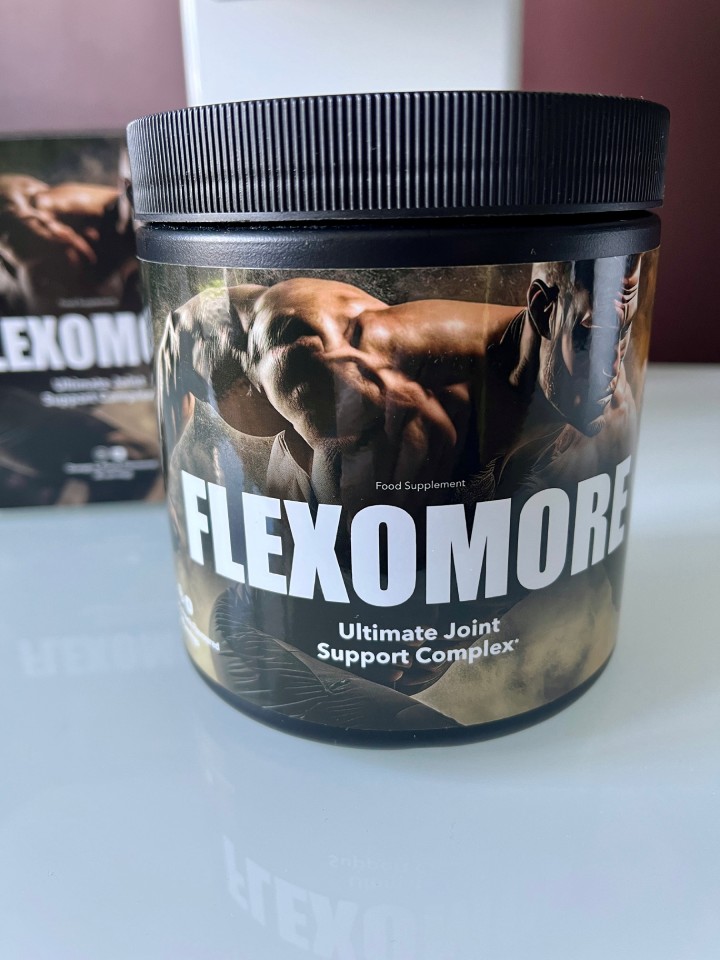
The stronger alternative: Flexomore · 6.8/10
The joint formula we scored highest delivers glucosamine at the full trial dose this panel undercuts — 2 g of glucosamine sulfate per scoop, every amount published. It is a powder rather than a capsule, and it also publishes no guarantee.
Read the Flexomore review →Note the trade-offs before switching: Flexomore is a flavoured drink powder rather than a convenient capsule, its glucosamine is explicitly crustacean-derived (unsuitable for shellfish allergies), and like NuviaLab Flex, it publishes no money-back guarantee.
Who Should Buy NuviaLab Flex — and Who Should Skip It
Because there is no refund policy to fall back on, use these filters before you spend a dollar.
Who should buy NuviaLab Flex:
- Buyers who want branded boswellia and curcumin in one capsule: You want 200 mg of Boswellin® and 200 mg of Curcumin C3 Complex® alongside full-NRV vitamin C, 2,000 IU of vitamin D, and manganese, and you prefer swallowing two capsules over mixing powders.
- Realists about the glucosamine trio: You understand that the glucosamine (~296 mg base), chondroitin (100 mg), and MSM (100 mg) sit well below clinical trial doses, and you treat them as minor supporting additions.
- Disciplined testers: You are willing to follow the panel's 25-(OH)D blood-test instruction first and judge a three-bottle pack ($111.98 delivered) over two to three months using a written symptom diary.
Who should skip NuviaLab Flex:
- Anyone looking for clinical doses of glucosamine, chondroitin, or MSM: Look at a powder formula like Flexomore (6.8/10) or a standalone 1,500 mg glucosamine sulfate product instead.
- Vegetarians and vegans: The capsule shell is gelatin, and the glucosamine and chondroitin sources are unstated.
- People taking warfarin or other anticoagulants: Do not take glucosamine or chondroitin without explicit clearance from your prescribing clinician due to documented INR interactions.
- Shoppers who want a money-back guarantee: No refund window exists for opened bottles.
- Anyone with a hot, swollen, or undiagnosed joint: Skip supplements entirely and see a doctor first.
How to Take NuviaLab Flex
Take 2 capsules a day with about 300 ml of water. Do not exceed the recommended daily dose. Before starting the product, follow the label's own instruction to take a 25-(OH)D blood test and review the result with your doctor or pharmacist, and count the 50 µg (2,000 IU) of vitamin D toward your daily total from all supplements. Never take extra capsules to close the glucosamine dose gap, as doing so pushes your vitamin D intake above safe adult limits.
Frequently Asked Questions
How do I take NuviaLab Flex?
Take two capsules daily with about 300 ml of water. Each bottle holds 60 capsules, which covers 30 days of use at the directed serving. Do not exceed two capsules a day.
Why is the glucosamine dose lower than the trials?
Two capsules contain 500 mg of glucosamine sulphate 2KCl — one-third of the 1,500 mg clinical trial standard. Because the potassium-chloride salt adds weight, that 500 mg delivers only about 296 mg of glucosamine itself (against 1,178 mg of glucosamine base in the 1,500 mg standard). Fitting 1,500 mg of glucosamine plus ten other ingredients into just two daily capsules is physically impossible.
Is NuviaLab Flex vegetarian or vegan?
No. The capsule shell is made of animal-derived gelatin, so NuviaLab Flex is neither vegetarian nor vegan. In addition, the panel does not state the biological source of its glucosamine or chondroitin.
Is there a money-back guarantee?
No money-back guarantee is published on the sales page, order page, or terms. Section 14 of the terms and conditions provides only a 10-day withdrawal window for unopened, unused goods. A third-party review site that scores this product's "Return Policy" at 4.9/5 is factually wrong; order size is your only risk control.
Are there any side effects?
Although the sales page claims the product has "no side effects," that is not accurate. Its ingredients are generally well tolerated, but curcumin, boswellia, and glucosamine can cause mild gastrointestinal symptoms such as nausea, heartburn, stomach upset, or diarrhoea, alongside occasional headache, drowsiness, or rash.
Why does the label recommend a vitamin D blood test?
Two capsules deliver 50 µg (2,000 IU) of vitamin D, which is 1,000% of the basic reference intake and half the 4,000 IU (100 µg) adult tolerable upper limit. The panel advises a 25-(OH)D blood test and a check with a doctor or pharmacist before use so you do not over-supplement, especially if you also take a multivitamin or standalone vitamin D.
How long should I take it before judging the results?
Plan on a fair trial of two to three months (the three-bottle bundle at $111.98 delivered). Record your baseline pain and mobility on specific daily tasks before starting, and apply our stop rule — if your diary shows no meaningful improvement after two to three months, stop taking it.
What ingredients are in NuviaLab Flex?
Every two-capsule serving contains 11 disclosed ingredients: glucosamine sulphate 2KCl (500 mg), Boswellin® Boswellia serrata extract (200 mg, 70% boswellic acid), Curcumin C3 Complex® turmeric extract (200 mg, 85% curcuminoids), chondroitin sulfate (100 mg), MSM (100 mg), shilajit extract (50 mg), bromelain (50 mg, 125 GDU), papain (50 mg, 4,800 MCU), vitamin C (80 mg), vitamin D (50 µg / 2,000 IU), and manganese (1.80 mg) in a gelatin shell. The glucosamine source is unknown from the label, and despite claims on some blogs, it contains no collagen or hyaluronic acid.
Where is NuviaLab Flex made and who makes it?
No company is named anywhere on the website as the seller, and the panel and site do not state a country of manufacture for NuviaLab Flex. The label notes that NuviaLab® is a registered trademark of NuviaLab Limited (the trademark holder, not a named seller), while the website's legal terms refer only to the product's own website name operating under Hong Kong law.
Is NuviaLab Flex sold on Amazon?
No. The maker sells NuviaLab Flex exclusively through its official website. Avoid third-party marketplace listings to steer clear of counterfeit or out-of-date bottles.
Does NuviaLab Flex interact with any medications?
Yes. Glucosamine and chondroitin have published case reports of increasing INR and bleeding risk in people taking the blood thinner warfarin. Anyone taking anticoagulant medication — or managing a chronic condition — should get clearance from their prescribing clinician before using this supplement.
NuviaLab Flex — Our Score: 5.2/10
Score: 5.2/10 · Best for: boswellia and curcumin in one fully disclosed capsule · Main caution: no money-back guarantee is published, and the glucosamine trio sits at fractions of the research doses · Fair trial: the three-bottle pack ($99.98 + $12 shipping), judged over two to three months.
See the Product PageSources & Method
This review is based on the joint-health trial record behind the formula's ingredients — the GAIT trial (Clegg et al. 2006), the Cochrane review by Cameron and Chrubasik 2014, the meta-analysis by Bannuru et al. 2018 and the interaction record (Knudsen and Sokol 2008) — the NIH ODS vitamin D fact sheet, and the maker's official label, price and guarantee pages, read in November 2026. Every figure was checked against those records before scoring.
Last reviewed: November 2026. This article is educational and is not medical advice.
