
- Quick Answer
- GAIT, Read Properly
- The Subgroup Everyone Quotes
- Why the Guidelines Disagree
- "Rebuilds Cartilage" — the Claim Check
- What This Means for a 500 mg Label
- Frequently Asked Questions
- Does glucosamine actually work for osteoarthritis?
- What did the GAIT trial find?
- Why do guidelines disagree about glucosamine?
- Can glucosamine rebuild cartilage?
- Why was the placebo response in GAIT so high?
- If guidelines disagree, how should a buyer decide?
- Does any of this evidence apply to a 500 mg combination product?
- Read This Next
Disclosure: This article contains affiliate links. If you buy through them, we may earn a commission at no extra cost to you. It never changes our conclusions.
Quick Answer
The honest pooled answer is: not convincingly, at any dose. The largest independent trial found no overall benefit over placebo, and the positive results cluster on one pharmaceutical-grade preparation rather than on glucosamine generally.
That is why the argument in this category is really about form. Sulfate or hydrochloride, crystalline pharmaceutical-grade or supplement-grade, full dose or part dose: the answer changes as those details change.
For the wider category verdict, including chondroitin, MSM and the other ingredients, read our hub article, Do Joint Supplements Really Work? This article goes deeper on glucosamine alone: its biggest trial, its guidelines and its form problem.
Guidelines split along exactly that form line. NICE does not recommend glucosamine, the ACR recommends against it, and ESCEO supports only the pharmaceutical-grade crystalline sulfate preparation. Same trials, three readings.
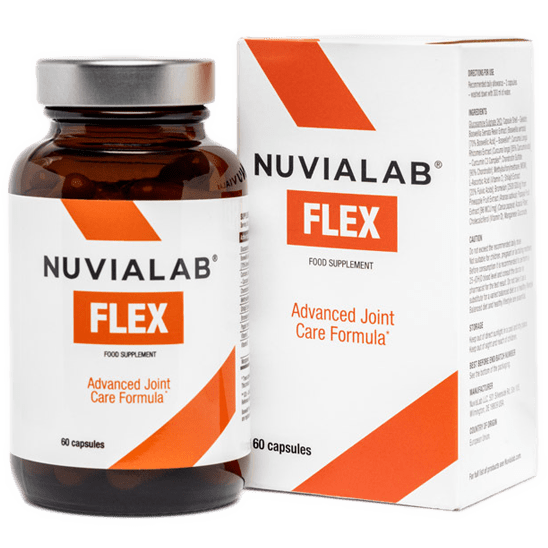
Our Recommendation — NuviaLab Flex
Score: 5.2/10 · Best for: boswellia and curcumin in one fully disclosed capsule. Main caution: no money-back guarantee is published, and the glucosamine trio sits at fractions of the research doses. Fair trial: the three-bottle pack ($99.98 + $12 shipping), judged over two to three months.
GAIT, Read Properly
GAIT, the Glucosamine/chondroitin Arthritis Intervention Trial, is the study every glucosamine argument eventually cites. It was large, independently funded, placebo-controlled and published in a major journal, which is why its result carries unusual weight.
It was reported by Clegg and colleagues in the New England Journal of Medicine in 2006. The trial enrolled 1,583 patients with symptomatic knee osteoarthritis and followed the main treatment period for 24 weeks.
Patients were assigned to one of five groups. The regimens included glucosamine hydrochloride at 1,500 mg per day, chondroitin sulfate at 1,200 mg per day, both supplements together, the drug celecoxib, or placebo.
Note the form before anything else. GAIT used glucosamine hydrochloride, not sulfate, and not the crystalline pharmaceutical-grade sulfate preparation behind the positive European dataset. That detail shapes what the trial can and cannot settle.
Pain was measured on the WOMAC index, the standard osteoarthritis questionnaire covering pain, stiffness and function. A responder threshold set in advance turns gradual score changes into a clear count, which is why GAIT's results are quoted in responder terms.
The primary outcome was a responder definition based on pain improvement.
A patient counted as a responder by meeting the trial's pre-set threshold for reduction in knee pain scores over the 24 weeks.The headline result was null for the supplements. Overall, no supplement arm beat placebo in GAIT's knee osteoarthritis population, compared with the placebo arm of the same trial, on that primary outcome.
The active drug did what the supplements did not. Celecoxib separated from placebo in the overall population of GAIT patients, compared with placebo in the same trial, which shows the trial could detect a working treatment.
That internal control matters. A null result in a trial whose drug arm succeeded cannot be waved away as a broken experiment. The design was capable of finding an effect, and found one only for the drug.
Then comes the number that explains the category. The placebo response in GAIT was 60.1 percent: 60.1 percent of patients assigned to placebo in GAIT's overall population met the responder definition, compared with what a no-treatment course would predict.
Six in ten people improved on dummy capsules. Pain fluctuates, trial participants receive attention and expectation is powerful, and osteoarthritis symptoms wax and wane over 24 weeks without any treatment at all.
Hold that figure against every testimonial in this category. If most trial participants improve on placebo, then most buyers of any joint product will feel better and credit the product, whatever it contains.
Testimonials are therefore the weakest evidence this market produces, and the placebo response is the reason. GAIT's lasting contribution may be that 60.1 percent figure as much as its null supplement result.
GAIT also had limits, and fairness requires naming them. It tested hydrochloride, it ran for 24 weeks, and its overall population included many patients with mild pain, where improvement is hardest to distinguish from placebo.
Those limits explain why GAIT did not end the argument. They do not rescue supplement-grade labels, because the limits point toward a specific other preparation, the crystalline sulfate, not toward glucosamine in general.
The Subgroup Everyone Quotes
One GAIT result appears in marketing everywhere, usually without its warning label. In a subgroup of patients with moderate-to-severe knee pain, the combination of glucosamine and chondroitin outperformed placebo on the responder outcome.
The figures, stated completely, are these. In GAIT's exploratory moderate-to-severe pain subgroup, 79.2 percent of patients taking the glucosamine and chondroitin combination met the responder definition, compared with 54.3 percent of patients taking placebo in that subgroup.
That gap looks decisive, and quoted alone it sells a great many combination capsules. Everything about how the result was produced, however, says it should be handled as a lead, not a conclusion.
It was an exploratory subgroup analysis. The subgroup was a smaller slice of the trial, the analysis was not the trial's primary test, and results found by slicing a null trial carry a high risk of being chance patterns.
The statistical reason is multiple comparisons. Slice one trial by pain severity, age, sex, joint and duration, and some slice will favour the treatment by chance alone. Exploratory analyses search those slices after the main result is known.
That does not make the subgroup dishonest. GAIT's researchers reported it openly, with its status visible. The dishonesty enters later, when marketing quotes the slice and deletes the status, the sample size and the doses that produced it.
Exploratory means hypothesis-generating.
The correct response to an exploratory finding is a new trial designed to test it directly. It is not a licence to present the number as a proven effect.The subgroup result also belongs to specific doses and forms. Those patients took glucosamine hydrochloride at 1,500 mg per day with chondroitin at 1,200 mg per day, the full trial doses of both ingredients.
Marketing routinely detaches the percentage from those conditions. A label carrying a third of the glucosamine and a twelfth of the chondroitin quotes a result earned by full doses, as if the number transferred with the ingredient names.
It does not transfer. Even if a confirmatory trial tomorrow proved the exploratory subgroup finding, it would prove it for that combination, at those doses, in patients with moderate-to-severe pain.
Later evidence has not turned the exploratory signal into a settled one. The combination question has been studied again since GAIT, with mixed results, and guideline bodies still treat the subgroup finding cautiously.
So quote the subgroup honestly or not at all: exploratory, small, full-dose, and unconfirmed as a primary result. Any shorter version of that sentence is marketing, not evidence reporting.
Why the Guidelines Disagree
Three major guideline positions exist, and they appear contradictory until the form question is restored. Each body read the same literature and weighted two things differently: preparation quality and who funded the trials.
NICE guideline NG226, the English guideline for osteoarthritis in people over 16, does not recommend glucosamine. Its position is the bluntest: on the overall evidence, the benefit does not justify recommending these products.
In practice, a does-not-recommend position is stronger than silence. It tells clinicians not to offer the product as a treatment, and tells patients that money and hope are better directed at measures the guideline does support, such as exercise and weight management.
The American College of Rheumatology, in its osteoarthritis guideline work
with the Arthritis Foundation, recommends against glucosamine for knee and hip osteoarthritis. Its reading emphasises the independently funded trials and their small or absent effects.ESCEO, the European Society for Clinical and Economic Aspects of Osteoporosis and Osteoarthritis, takes the third position. It supports pharmaceutical-grade crystalline glucosamine sulfate as a background treatment, while not extending that support to other preparations.
These are not three opinions about one product. NICE and the ACR are judging glucosamine as generally sold and generally trialled. ESCEO is judging one defined, patented preparation with its own consistent trial programme.
The funding pattern explains much of the split. In the Wandel and colleagues network meta-analysis, published in the BMJ in 2010, effects on pain were small overall, and industry-independent trials showed smaller effects than industry-funded ones.
That pattern is familiar across medicine. Trials funded by a product's maker tend to report larger benefits than trials funded independently, through design choices, comparators, publication decisions, or all three.
Wandel's analysis pooled glucosamine and chondroitin trials and found no clinically important advantage over placebo for the average patient in the pooled trial populations, compared with placebo in those same trials.
Clinical importance is the second filter Wandel applied, and it matters. A pooled effect can be statistically detectable yet too small for a patient to feel. Guideline panels ask whether an average benefit crosses that felt threshold, not only whether it exists.
Other guideline bodies land near the sceptical end too. Osteoarthritis guideline programmes outside the three named here have generally declined to recommend glucosamine, or recommended against it, on the same independence-weighted reading of the trial record.
The crystalline sulfate dataset sits inside that argument, not outside it.
Its defenders argue the preparation is genuinely better and consistently made. Its critics note the programme's funding and ask for independent replication at the same standard.Both readings can be held honestly, which is why guidelines differ. What neither reading supports is the leap from a pharmaceutical-grade, full-dose preparation to an ordinary supplement label carrying a fraction of the dose.
That leap is where marketing lives. A guideline position earned by one preparation is borrowed, silently, by products that share only an ingredient name with it. The borrow is the category's central sleight of hand.
For a buyer, the practical translation is simple. The most pro-glucosamine credible position available is a narrow one: full-dose, crystalline, pharmaceutical-grade sulfate. Anything outside those adjectives is outside the strongest case.
"Rebuilds Cartilage" — the Claim Check
Category marketing often goes further than pain relief, promising structural repair. Language about rebuilding, restoring or regenerating cartilage appears across the market, echoed in this wave's maker register of forgetting about joint problems altogether.
Those are claims about disease modification, and they need structural evidence: imaging or joint-space measurements showing cartilage preserved or restored, in treated patients, against a comparison group, over a meaningful period.
GAIT's own researchers ran that test. The trial's two-year structural follow-up, led by Sawitzke and colleagues, measured joint-space width over time in the original trial's treatment groups.
Its qualitative verdict was clear: no significant joint-space benefit for the supplement groups in that two-year follow-up population, compared with the placebo group of the same follow-up. We print that verdict qualitatively, because exact structural figures require the paper itself.
That distinction matters to our standards. A qualitative no-benefit verdict is well attested in the follow-up literature. Inventing precise millimetre figures to decorate it would be exactly the false precision this site exists to refuse.
No supplement has demonstrated cartilage repair in humans. The strongest structural claims in the literature concern slowed narrowing in some sulfate trials, which is a different and weaker claim than rebuilding anything.
Even slowed narrowing remains contested, sitting inside the same form and funding argument as the pain results. It belongs to the crystalline sulfate programme, at full dose, over years, not to a general label claim.
So any product language promising rebuilt cartilage fails its claim check twice. The effect has not been shown for supplements generally, and it has specifically not been shown at combination-label doses.
Symptom claims and structure claims also fail differently. A pain claim can hide behind placebo responses and fluctuating symptoms. A structure claim is measured on imaging, against time, where expectation cannot widen a joint space. That is why the structural record is the harder test.
Joint pain also has causes no cartilage ingredient addresses
, from inflammatory arthritis to injury to referred pain. A maker's suggestion that a formula works regardless of the cause of pain should be read as a warning about the maker.What This Means for a 500 mg Label
Now apply the evidence, at its strongest, to one real label. Grant the pro-glucosamine case everything it can fairly claim: the crystalline sulfate dataset, the exploratory subgroup, the ESCEO position, all of it.
That strongest case describes a pharmaceutical-grade crystalline sulfate, taken at 1,500 mg of the salt per day, by patients in defined trials. Every adjective in that sentence is load-bearing.
As our full NuviaLab Flex review records, this label offers glucosamine sulphate 2KCl at 500 mg per daily serving, about 296 mg of glucosamine itself, in a supplement-grade combination capsule.
It is not the crystalline preparation. It is not the full dose. It is not a single-ingredient product whose results could be read across from a single-ingredient trial programme. It fails the strongest case on every load-bearing adjective.
Its chondroitin position inherits the same problem. The exploratory GAIT subgroup used 1,200 mg of chondroitin per day alongside full-dose glucosamine. This panel carries chondroitin at 100 mg per day.
None of that makes the formula dishonest in itself. Its panel is fully disclosed, its sulfate form at least matches the trialled family, and its Boswellin and Curcumin C3 botanicals sit near plausible ranges, though neither carries BioPerine.
It also carries vitamin D at 50 micrograms, or 2,000 IU, a genuinely full dose. But vitamin D's presence does not rescue the glucosamine claim, and the product publishes no money-back guarantee to underwrite a trial of it.
The shell is gelatin, so the product is not vegetarian, a small fact that matters to some buyers and that the panel, to its credit, does not hide.
Our conclusion is the one the evidence forces. Judged generously, glucosamine has a narrow, preparation-specific case. Judged accurately, a 500 mg combination label stands outside that case, trading on ingredient names the trials made famous.
Our Recommendation — NuviaLab Flex
Score: 5.2/10 · Best for: boswellia and curcumin in one fully disclosed capsule. Main caution: no money-back guarantee is published, and the glucosamine trio sits at fractions of the research doses. Fair trial: the three-bottle pack ($99.98 + $12 shipping), judged over two to three months.
Frequently Asked Questions
Does glucosamine actually work for osteoarthritis?
Not convincingly, on the pooled evidence. The largest independent trial was null overall, and meta-analysis found no clinically important average benefit. The best remaining case is narrow: one pharmaceutical-grade crystalline sulfate preparation, at full dose.
What did the GAIT trial find?
GAIT enrolled 1,583 patients with knee osteoarthritis for 24 weeks. No supplement arm beat placebo overall, while the drug arm did. In an exploratory moderate-to-severe subgroup, the combination outperformed placebo, a finding labelled exploratory because it was not the primary test.
Why do guidelines disagree about glucosamine?
Because they weight form and funding differently. NICE does not recommend it and the ACR recommends against it, reading the overall and independent record. ESCEO supports only pharmaceutical-grade crystalline sulfate, the one preparation with a consistent trial programme.
Can glucosamine rebuild cartilage?
No supplement has demonstrated cartilage repair in humans. GAIT's two-year structural follow-up found no significant joint-space benefit for the supplements against placebo. At most, some sulfate trials argue for slowed narrowing, which is a weaker and contested claim.
Why was the placebo response in GAIT so high?
In GAIT's overall population, 60.1 percent of patients assigned to placebo met the responder definition, compared with the improvement a purely untreated course would suggest. Pain fluctuates, symptoms wax and wane, and trial attention itself helps. That is why testimonials prove so little.
If guidelines disagree, how should a buyer decide?
Ask which product each position describes. The supportive position names one pharmaceutical-grade preparation at full dose. The negative positions describe glucosamine as generally sold. A buyer holding an ordinary supplement label is holding the product the negative positions describe, not the excepted one.
Does any of this evidence apply to a 500 mg combination product?
Only weakly, by ingredient name. The positive case was built on full-dose, defined preparations. A label carrying 500 mg of the salt, with 100 mg each of chondroitin and MSM, is not the preparation, dose or formula any of the key trials tested.
Last reviewed: October 2026. This article is educational and is not medical advice.
