
- Quick Answer
- Glucosamine and Warfarin: The Documented One
- The only safe route
- The Shellfish Question
- What this formula's label does — and does not — say
- Diabetes: The "It's a Sugar" Worry, Calibrated
- The Rest of This Formula's Caution List
- "Works Regardless of the Cause of the Pain" — The Claim Check and the Red Flags
- The red flags: same-day medical care
- Other Blood Thinners, and Procedures
- How to Have the Conversation
- Reading a Combination Panel for Safety
- Frequently Asked Questions
- I take warfarin. Can I take glucosamine if I am careful?
- Does the shellfish warning mean the product will trigger my allergy?
- Will glucosamine raise my blood sugar?
- Are the other ingredients in a joint formula a problem with blood thinners?
- What joint symptoms should send me to a doctor today?
- The maker says the product has no side effects. Should I believe that?
- Read This Next
Disclosure: This article contains affiliate links. If you buy through them, we may earn a commission at no extra cost to you. It never changes our conclusions.
Quick Answer
One interaction in this category is well documented: glucosamine taken with warfarin. If you take warfarin, the answer on this page is short — speak to your anticoagulant clinic before starting any glucosamine product, not after.
Two famous worries are smaller than their reputation. The shellfish-allergy fear rests on a tiny but reassuring challenge study. The diabetes fear has a generally reassuring trial record, with monitoring as the sensible precaution.
And the most dangerous sentence in this category is a maker's claim — that a product works regardless of the cause of the pain. That claim, and the joint symptoms that need a doctor today, close this article.
Nothing on this page advises starting or stopping any medicine, supplement included, on your own. Where a medicine is involved, the decision belongs to the clinician or pharmacist who knows your full list.
Glucosamine and Warfarin: The Documented One
Warfarin keeps blood clotting inside a narrow target range, tracked by a blood test called the INR. Small shifts in that range matter: too little effect risks a clot, too much risks bleeding.
Published case reports exist of people stable on warfarin whose INR rose after they started glucosamine, sometimes with bruising or bleeding. In some reports, the INR settled again when the glucosamine was stopped or its dose reduced.
Case reports cannot prove how often this happens, and no controlled trial has measured the interaction directly. But the pattern is consistent enough, and warfarin's margin narrow enough, that the interaction is treated as real.
The pharmacist-reference record, summarised by HelloPharmacist's glucosamine–warfarin interaction page, rates the combination as a major interaction and advises avoiding it or using it only under close professional supervision.
Consumer drug references take the same line. WebMD's glucosamine monograph states the position plainly: do not use glucosamine if you take warfarin. That is the strictest wording in this category, and we reproduce it without softening.
The only safe route
If you take warfarin and want to try a joint supplement, contact your anticoagulant clinic first. Tell them the exact product and dose. Ask whether it is acceptable at all, and whether extra INR checks are needed.
Never adjust your warfarin dose yourself to make room for a supplement. Never skip doses, and never stop the supplement abruptly without telling the clinic if they agreed to monitor you while taking it.
The same caution extends, with less direct evidence, to anyone on other anticoagulant or antiplatelet treatment. The clinic or pharmacist question costs one phone call. An unmanaged interaction can cost far more than that.
Warning signs that mean prompt medical advice for anyone on warfarin include unusual bruising, nosebleeds that will not stop, bleeding gums, blood in urine or stools, or black stools. Do not wait for a routine appointment.
The Shellfish Question
Most glucosamine on the market is made from the shells of shrimp, crab or other shellfish. That origin is why labels carry shellfish warnings, and why allergic readers reasonably ask whether the product is safe for them.
The reassuring half of the evidence is a small blinded challenge study: fifteen adults with a shrimp allergy were given glucosamine under controlled conditions and tolerated it. The study is the one usually cited in drug monographs.
The reasoning behind that result is chemically plausible. Shellfish allergy is a reaction to proteins in the meat, while a supplement is a purified extract from the shell. Purification removes the great majority of the allergenic material.
The honest limit must travel with the reassurance: fifteen people is a very small trial. It cannot exclude rare reactions, and manufacturing purity varies between makers. Labels continue to warn, and that caution is proportionate.
So the practical answer is graded, not absolute. A severe shellfish allergy is a reason to raise the product with your doctor or pharmacist first, and to prefer a product whose glucosamine source is stated.
What this formula's label does — and does not — say
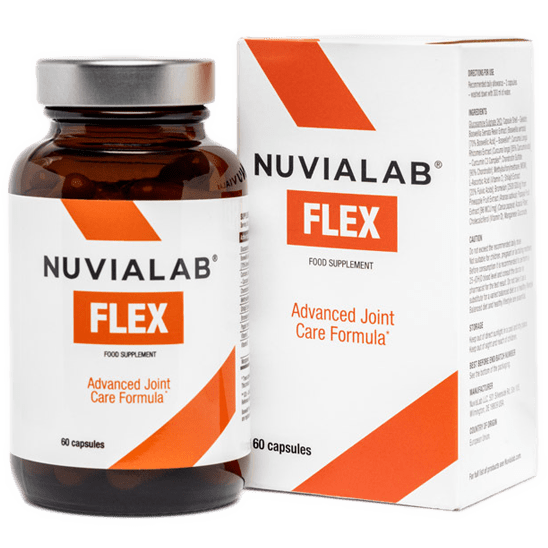
For the combination formula this cluster reviews, the panel does not state its glucosamine source. The honest answer for that product is therefore: unknown from the label. Ask the maker before relying on it.
That gap matters beyond allergy. Readers avoiding specific animal sources for other reasons face the same silence, compounded by a gelatin capsule shell. A fully printed amounts panel that omits sources is only partly transparent.
Diabetes: The "It's a Sugar" Worry, Calibrated
Glucosamine's name invites a diabetes worry: it sounds like glucose, and it is an amino sugar. Marketing-era warnings claimed it might increase insulin resistance and worsen blood-sugar control. That claim needs calibrating against the trial record.
The record, overall, is generally reassuring. Studies that tracked blood-sugar measures in people taking glucosamine — including ninety-day HbA1c data, HbA1c being the three-month average marker — did not find the deterioration the name predicts.
Follow-up in longer glucosamine studies, extending to three years in the trial literature, has likewise not produced a diabetes signal. The circulating insulin-resistance line is pre-trial framing that competitor pages still repeat as if it were a finding.
Two qualifications keep this honest. First, most trial participants were not selected for diabetes, so the evidence in established, medicated diabetes is thinner than the headline suggests. Reassuring is not the same as proven in your case.
Second, reassurance is not a reason to skip monitoring. If you have diabetes and start any glucosamine product, watch your readings a little more closely over the first weeks, and mention the supplement at your next review.
Do not avoid glucosamine on the name alone, and do not start it silently either. Monitor when starting — that single habit converts an old worry into a checked, personal answer within a few weeks.
The Rest of This Formula's Caution List
Glucosamine is not the only ingredient in a combination panel that touches blood thinning. Curcumin, the active fraction of turmeric extract, carries a standard anticoagulant caution based on its antiplatelet activity in laboratory and clinical references.
Boswellia carries a similar caution in interaction references, and bromelain — a protein-splitting enzyme from pineapple — sits in the same class. Individually modest cautions stack when one capsule delivers all of them daily.
None of this makes a combination formula dangerous for an unmedicated adult. It does mean that anyone on anticoagulant or antiplatelet therapy faces a panel-level question, not an ingredient-level one, and should ask it panel in hand.
The formula also contains vitamin D at a dose where stacking with other products matters. That arithmetic has its own article in this cluster; here it is flagged once: count your total across every product you take.
One baseline passage, kept deliberately short because the full explainer lives elsewhere: in pooled trial data reviewed by Cochrane, adverse events on glucosamine were no more frequent than on placebo.
The common list in that record is mild — stomach upset, headache and rash are the usual entries. The complete side-effect picture, ingredient by ingredient, is in our glucosamine side effects guide, which owns that topic.
Finally, the maker's own claim for this formula — that it is safe and has no side effects — is not a claim we repeat as fact. No multi-ingredient product has no side effects. The record above is the replacement for that sentence.
"Works Regardless of the Cause of the Pain" — The Claim Check and the Red Flags
The maker of this formula claims, in its sales copy, that the product works regardless of the cause of the pain. We quote that as a maker claim, because as a medical statement it is false, and its falseness matters.
Joint pain is a symptom, not a diagnosis. Its causes include osteoarthritis, inflammatory arthritis such as rheumatoid arthritis, gout, injury, and infection inside the joint. Those causes are mutually exclusive in the individual case and need different treatments.
A capsule cannot be the right answer to all of them. Gout needs crystal-directed treatment. Inflammatory arthritis needs disease-modifying drugs, where delay costs joint damage. An infected joint is an emergency. One claim covering every cause covers none responsibly.
The red flags: same-day medical care
Certain joint presentations should never meet a supplement first. A joint that is hot and swollen and suddenly much more painful needs same-day medical care. So does a joint you cannot bear weight on.
Joint pain arriving with fever belongs in the same category. That combination can signal infection, and infection inside a joint destroys cartilage quickly. Same day means today — urgent care or an emergency department, not a diary note.
New joint pain after an injury that deforms the joint, or pain with a spreading rash, unexplained weight loss or night sweats, also earns prompt medical assessment rather than a self-directed supplement trial.
The dividing line is simple to state. Gradual, familiar, load-related aching is the supplement conversation's territory. Sudden, hot, swollen, feverish or disabling pain is medicine's territory, and the order of visits matters: doctor first, always.
Other Blood Thinners, and Procedures
Warfarin has the documented record, but it is not the only blood-thinning treatment in common use. Newer oral anticoagulants and daily antiplatelet medicines such as aspirin or clopidogrel work differently, and their interaction files differ too.
For those medicines, the honest position is narrower: the glucosamine case-report record was built almost entirely on warfarin patients, because warfarin's INR makes an interaction visible. Absence of an INR signal is not proof of absence of risk.
So the same rule applies with less drama attached. Tell the prescriber or pharmacist the full panel before starting, and let them judge it against the specific medicine, dose and reason you take it.
Procedures deserve a sentence of their own. Dentists and surgeons routinely ask patients to stop certain supplements before extractions, operations or injections, because bleeding risk is managed in days, not in good intentions.
If a procedure is booked, disclose every supplement at the pre-assessment, including joint formulas that feel too ordinary to mention. Being told to pause a capsule for two weeks is routine practice, not a judgement on the product.
And if you are ever asked to stop a supplement before a procedure, do not quietly restart it afterwards without checking. Restart timing after surgery is a clinical decision, for the same bleeding reasons as the pause itself.
How to Have the Conversation
Most of this article reduces to one five-minute conversation, and it goes better with the product physically present. Bring the bottle, or clear photographs of every panel, including the amounts, directions and warnings on the back.
Lead with your medicine list, not with the product's marketing. A pharmacist screening a combination needs to know what you take, at what dose, and what for — before the supplement's claims enter the discussion at all.
Ask the three questions that matter. Does anything on this panel interact with anything on my list? Does any ingredient duplicate an effect one of my medicines already has? And is there any symptom I should treat as a stop signal?
Expect a conservative answer where doses are printed but the evidence is thin, and an even more conservative one where they are not. That conservatism is the professional standard working as intended, not an obstacle to argue around.
Finally, tell every clinician you see that you take supplements, each time. Records do not update themselves, supplement use is chronically under-disclosed, and no interaction check can screen a product the checker has never heard about.
If the answer you receive is no, accept it as the answer for that medicine list at that time. A changed list — a new anticoagulant, a new antiplatelet — reopens the question and earns a fresh conversation, not a recycled yes.
Reading a Combination Panel for Safety
A single-ingredient product asks a single safety question. A combination panel asks one per ingredient, plus one more for the stack — and the stack question is the one product pages almost never pose.
Work through it in label order. Glucosamine brings the warfarin record covered above. Chondroitin, its usual partner, is structurally related to blood-thinning compounds, which is why interaction references group the pair together in the warfarin discussion.
The botanicals bring their own cautions, already listed: curcumin and boswellia on the anticoagulant side, bromelain in the same class. The enzymes and the remaining minor ingredients add no major documented interactions, and we claim none for them.
Vitamin D contributes a different risk shape entirely — not an interaction with a named medicine here, but a total-dose question across products, handled in this cluster's vitamin D article and flagged once in the caution list above.
The method generalises beyond this formula. For any joint panel: identify the ingredient with a documented drug interaction, list every ingredient sharing that effect direction, then ask a pharmacist about the combination, not the headline.
That order of operations is the difference between a safety check and a reassurance search. The first can return a no. The second only ever returns what the reader went looking for, which is why this page is built as the first.
Frequently Asked Questions
I take warfarin. Can I take glucosamine if I am careful?
Careful is not a dosing strategy with warfarin. Case reports link glucosamine to raised INR and bleeding, and WebMD's monograph says not to use it with warfarin. Ask your anticoagulant clinic first — that is the only route this page endorses.
Does the shellfish warning mean the product will trigger my allergy?
Not necessarily — in one small blinded challenge, fifteen shrimp-allergic adults tolerated glucosamine. But fifteen is a small number, labels still warn, and severe allergy deserves a clinician conversation first. If the label does not state the source, treat it as unknown.
Will glucosamine raise my blood sugar?
The trial record, including ninety-day HbA1c data, is generally reassuring and has not shown the deterioration the ingredient's name suggests. If you have diabetes, monitor your readings when starting and mention the supplement at your next review.
Are the other ingredients in a joint formula a problem with blood thinners?
They add to the question rather than settling it. Curcumin, boswellia and bromelain each carry anticoagulant cautions in interaction references. Anyone on blood-thinning treatment should have the whole panel checked by a pharmacist, not just the glucosamine line.
What joint symptoms should send me to a doctor today?
A hot, swollen, suddenly very painful joint; a joint you cannot bear weight on; or joint pain together with fever. Those are same-day problems. They can signal infection or inflammatory disease, and no supplement is the right first response.
The maker says the product has no side effects. Should I believe that?
No. Pooled trial data show mostly mild effects — stomach upset, headache, rash — at rates no higher than placebo for glucosamine itself. That is a reassuring record, and it is still not "no side effects". No honest label can promise zero.
Last reviewed: October 2026. This article is educational and is not medical advice.
