
- Quick Answer
- Our Findings
- What we like
- What gives us pause
- Why You Should Trust This Review
- Our Verdict
- How We Scored It
- What Is Matcha Extreme?
- The Ingredients
- 1. Matcha Green Tea Leaves Powder — 2,250 mg
- 2. Spirulina Powder — 900 mg
- 3. Prickly Pear Fruit Extract (Cacti-Nea™) — 500 mg
- 4. Acerola Fruit Extract — 350 mg
- The Dose Audit
- The Evidence, Read Properly
- How Long Does Matcha Extreme Take to Work?
- Is Matcha Extreme Safe?
- Side Effects
- When Weight Loss Needs a Doctor, Not a Tea
- Is Matcha Extreme Legit?
- Maker Claims Checked
- Price and Packs
- Purchase Options
- How It Compares
- A Stronger Alternative in This Category
- Who Should Buy Matcha Extreme — and Who Should Skip It
- Who Should Buy Matcha Extreme
- Who Should Skip It
- How to Take Matcha Extreme
- Frequently Asked Questions
- Does Matcha Extreme really work?
- How do I take it?
- How long does one pouch actually last?
- Is there a money-back guarantee?
- How much caffeine is in it?
- Where can I buy authentic product — is it sold on Amazon?
- Is it the product in the celebrity "matcha ritual" ads?
- Will it detox heavy metals or toxins?
- Who should not use it?
- How much does it cost per pouch?
- Is it organic, and where is it made?
- How long does delivery take?
- How long does Matcha Extreme take to work?
- Does it have side effects?
- Is Matcha Extreme legit or a scam?
- When is the best time to take it?
- How is it different from traditional matcha or regular green tea?
- Can it work without diet or exercise?
- Is it suitable for vegetarians and vegans?
- How should I store it?
- Sources & Method
- Read This Next
Disclosure: This article contains affiliate links. If you buy through them, we may earn a commission at no extra cost to you. It never changes our scores or conclusions.
Quick Answer
Matcha Extreme scores 4.8/10 in our review. Its strongest feature is a fully disclosed four-ingredient powder panel with no proprietary blend, combining whole-leaf matcha green tea, spirulina, Cacti-Nea™ prickly pear fruit extract, and acerola. It is best for tea drinkers who want to swap a sugary or high-calorie beverage for an unsweetened matcha-style drink. However, no clinical trial has ever tested the finished product. The label never declares how much caffeine or catechin antioxidants a scoop contains, the pouch lasts only 15 days at the full two-scoop dose, and the seller publishes no money-back guarantee.
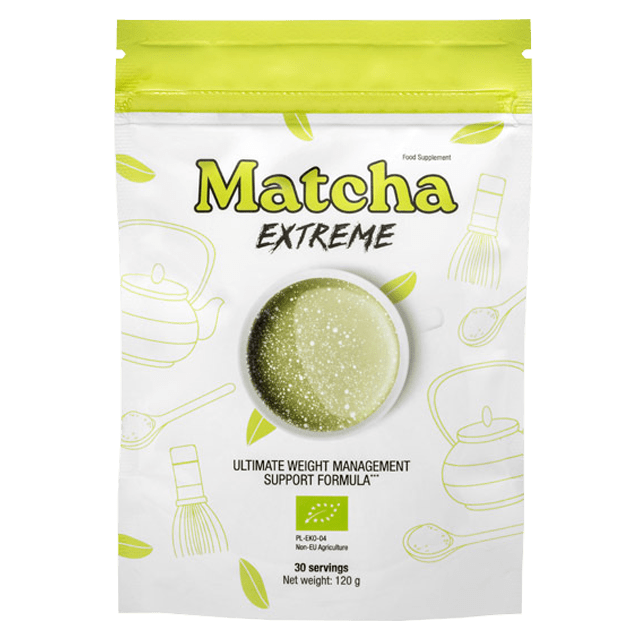
Matcha Extreme — Our Score: 4.8/10
Score: 4.8/10 · Best for: tea drinkers who would swap a caloric drink for an unsweetened matcha-style tea and want a fully declared panel, not a proprietary blend. · Main caution: no money-back guarantee is published, the pouch lasts 15 days at the maker's full dose, and caffeine is never declared. · Fair trial: two months at one serving a day — the three-pouch pack at $35.99 a pouch covers it.
See the Product PageOur Findings
We audited Matcha Extreme against the maker's official ingredients panel, live order page, legal terms, and published human nutrition trials. Here is where the formula stands out and where buyers need to be careful.
What we like
- Every ingredient amount is printed on the label: You get exact milligram weights for all four ingredients per 4 g scoop and per 8 g two-scoop daily serving, with no hidden proprietary blend.
- Food-level whole-leaf tea format: The base is 2,250 mg of powdered matcha green tea leaves per scoop rather than a harsh, concentrated chemical extract capsule.
- Clear safety cautions on the panel: The maker prints proper European Union-style warnings covering children, pregnancy, breastfeeding, and not exceeding the daily allowance.
- Sensible vitamin C addition: Acerola fruit extract supplies 60 mg of natural vitamin C per scoop (75% of the European nutrient reference value), rising to 120 mg at two scoops.
- Multi-pouch bundles lower the pouch price: Buying the three-pouch or six-pouch package cuts the price per pouch from $53.99 down to $35.99 or $26.99 before shipping.
What gives us pause
- Zero clinical trials on the finished product: No human study has tested Matcha Extreme itself, and pooled clinical trials on green tea preparations show very small weight changes.
- Caffeine and EGCG amounts are never declared: The sales page praises catechins and L-theanine qualitatively, yet the label prints no milligram figure for caffeine, catechins, or EGCG.
- Conflicting serving maths halves the pouch life: The label calls one 4 g scoop the daily allowance but advises drinking it one to two times daily, cutting a 30-day pouch down to 15 days at two scoops.
- Under-dosed Cacti-Nea™ against its cited study: One scoop delivers 500 mg of Cacti-Nea™ (1,000 mg at two scoops), whereas the maker's cited unpublished water-retention study used 2,000 mg a day.
- No named seller company and no refund guarantee: The terms name Hong Kong law without listing a registered company, and there is no money-back guarantee on opened pouches.
Why You Should Trust This Review
To write this review, we read the maker's official sales page, live order page, nutrition pop-up, Privacy Policy, and Terms and Conditions (§§1–18) in full, and we print the clauses that complicate the sales pitch. We checked every ingredient claim against primary human research, including the Jurgens 2012 Cochrane systematic review on green tea, the Moradi 2019 meta-analysis on spirulina, and the European Food Safety Authority (EFSA) 2018 scientific opinion on green tea catechins. Every product on SuppChecked is graded on one fixed five-part rubric that never moves for a brand. We earn an affiliate commission through our links, but commercial relationships never alter our scores or conclusions.
Our Verdict
Matcha Extreme earns 4.8/10 because it is an honest, food-level matcha drink blend sold behind an over-promised weight-loss sales page. We give it credit for printing every milligram weight on the label and keeping its cautions clear. What holds the score below average is the gap between the marketing and the evidence: green tea preparations show minimal weight loss on their own, Cacti-Nea™ is dosed below its unpublished study, caffeine is left unmeasured, and the seller offers no money-back guarantee. Approach it only as an unsweetened daily replacement for a high-calorie coffee drink or soda. For a fair two-month trial at one serving a day, the three-pouch pack at $35.99 a pouch ($119.98 delivered) covers 90 servings.
How We Scored It
We grade every supplement on SuppChecked using the same weighted rubric: Ingredients (30%), Evidence (25%), Maker Credibility (20%), Safety (15%), and Value (10%). The table below shows four of those five sub-scores for Matcha Extreme.
| Criterion | Weight | Score | Why |
|---|---|---|---|
| Ingredients | 30% | 5.5/10 | Full amounts for all four ingredients and a real food-format matcha dose, but no EGCG or catechin standardisation and caffeine is never declared. |
| Evidence | 25% | 4.0/10 | No trial of this product; green tea's pooled effect is small and non-significant, while spirulina has one modest positive meta-analysis. |
| Safety | 15% | 5.5/10 | Proper printed cautions (children, pregnancy, do not exceed dose) and a food-level format; undeclared caffeine is the standing gap. |
| Value | 10% | 4.5/10 | $53.99 a pouch is fair at one serving a day, but at two servings the true monthly cost doubles; bundles ease it to $26.99 a pouch. |
For the fifth criterion, Maker Credibility (20% weight), Matcha Extreme scores 4.5/10. The maker publishes a complete European Union-style nutrition panel and proper safety warnings, but names no legal company on its website, places buyers under Hong Kong terms that exclude European Union consumer law, prints unverifiable sales claims, and offers no money-back guarantee. Combining all five weighted scores gives 4.825, which rounds to our final score of 4.8/10.
What Is Matcha Extreme?
Matcha Extreme is a powdered green tea food supplement sold in a 120 g resealable pouch. It is mixed with hot water as a drink and is not a capsule or pill. Each pouch holds 30 scoops of 4 g each.
Every 4 g scoop combines four plant and algae ingredients: matcha green tea leaf powder (2,250 mg), spirulina powder (900 mg), Cacti-Nea™ prickly pear fruit extract (500 mg), and acerola fruit extract (350 mg). On the nutrition panel, the maker states "COUNTRY OF ORIGIN: European Union" and marks all four raw materials as being of organic origin. Both statements are the maker's published claims, which we report attributed to the label.
The product is sold exclusively via the official website. Although the panel uses European nutrition formatting, the website's footer and legal pages name no registered corporate entity anywhere. Instead, the privacy policy lists only the website's domain name beside a street name in Hong Kong.
| Product type | Powdered matcha green tea food supplement (not a capsule) |
| Net weight & servings | 120.00 g pouch — 30 servings per pouch |
| Serving size | 1 scoop (4 g), taken 1 to 2 times a day |
| Ingredients (4, amounts) | Matcha leaf powder (2,250 mg), Spirulina powder (900 mg), Cacti-Nea™ prickly pear extract (500 mg), Acerola fruit extract (350 mg; 60 mg vitamin C) per scoop |
| Caffeine / EGCG declared | None declared on the label (leaf estimate is ~43–99 mg caffeine per scoop) |
| Finished-product trials | None (0 published clinical trials on Matcha Extreme) |
| Origin & organic status | Maker's panel claims European Union origin and organic raw materials |
| Single pouch (+ shipping) | $53.99 + $12.00 flat shipping ($65.99 delivered) |
| Money-back guarantee | None published (10-calendar-day withdrawal for unused, pre-packed goods only) |
| SuppChecked score | 4.8/10 |
The Ingredients
Matcha Extreme prints a transparent four-ingredient panel with exact weights for one serving (4 g) and two servings (8 g). Every raw material carries the maker's double-asterisk mark indicating organic origin, though only two ingredients include a specific nutrient standardisation.
1. Matcha Green Tea Leaves Powder — 2,250 mg
Each 4 g scoop provides 2,250 mg (2.25 g) of powdered matcha green tea leaves (Camellia sinensis), rising to 4,500 mg (4.5 g) if you take two scoops a day. Because this is ground whole tea leaf rather than a concentrated chemical extract, you consume the leaf tissue directly in hot water. You can see how that scoop weight stacks up against clinical tea studies in our guide on how much matcha per day is studied for weight loss.
The maker's sales text mentions catechins, EGCG (epigallocatechin gallate, the main antioxidant in green tea), and L-theanine (an amino acid in tea leaves) only in qualitative terms. No milligram figure for EGCG, total catechins, L-theanine, or caffeine appears anywhere on the nutrition panel. Caffeine is naturally present in matcha leaves, and from published laboratory analyses of matcha powders we estimate roughly 43–99 mg of caffeine per 2,250 mg scoop of leaf. That 43–99 mg range is strictly our estimate from the leaf weight, never a declared content on this label.
2. Spirulina Powder — 900 mg
A single scoop delivers 900 mg of spirulina powder (Arthrospira platensis), which doubles to 1,800 mg (1.8 g) at two servings a day. Spirulina is a blue-green microalgae harvested and dried as a nutrient-dense food powder. On the Matcha Extreme label, it is standardised to contain 60% protein, which equals about 540 mg of protein per scoop or 1,080 mg across two scoops — a negligible amount for daily protein needs, but a sign that the raw material is specified.
Among the four ingredients in this pouch, spirulina holds the most supportive human weight-management record, though the studies are small. We break down those clinical trials and their limitations in our full review of spirulina for weight loss.
3. Prickly Pear Fruit Extract (Cacti-Nea™) — 500 mg
Each scoop includes 500 mg of prickly pear fruit extract (Opuntia ficus-indica) under the branded name Cacti-Nea™, a trademark of the French ingredient supplier Nexira. Taking two scoops a day provides 1,000 mg (1 g). Unlike cactus pad (cladode) fibre supplements marketed to bind dietary fat in the gut, Cacti-Nea™ is a water-soluble extract made from the cactus fruit.
Cacti-Nea™ is formulated to increase urine output and reduce temporary water retention rather than burn body fat. The maker cites an unpublished 2009 study that used 2,000 mg a day — four times the amount in one scoop of Matcha Extreme. We examine that study design and the dosing shortfall in our dedicated article on prickly pear for water retention and Cacti-Nea™.
4. Acerola Fruit Extract — 350 mg
Rounding out the 4 g scoop is 350 mg of acerola cherry fruit extract (Malpighia punicifolia), which reaches 700 mg at two servings a day. The panel standardises this extract to 17% vitamin C. That delivers exactly 60 mg of vitamin C per scoop (75% of the European Union nutrient reference value) and 120 mg per two scoops (150% NRV).
Vitamin C supports normal immune function and normal energy-yielding metabolism when correcting a low intake, and it gives the green tea and algae blend a sharper, slightly tart flavour note. However, vitamin C has no clinical evidence showing that it causes weight loss or fat loss in humans.
The Dose Audit
Printing exact milligram weights on a label is only half the test; those weights also have to match the doses used in human studies. The table below compares one scoop (4 g) and two scoops (8 g) of Matcha Extreme against the research record.
| Ingredient | Per serving (1 scoop) | Per day (2 scoops) | Research context | Verdict |
|---|---|---|---|---|
| Matcha Green Tea Leaves Powder (Camellia sinensis) | 2,250 mg | 4,500 mg | Food-level whole-leaf tea dose; most clinical weight-loss trials tested concentrated catechin extracts, and this label declares no EGCG or caffeine mg. | Real tea serving, but active catechin and caffeine doses are unquantified. |
| Spirulina Powder (Arthrospira platensis, 60% protein) | 900 mg | 1,800 mg | Human trials in the Moradi 2019 meta-analysis generally tested 1 to 2 g per day (1,000–2,000 mg/day). | Slightly below the 1 g floor on one scoop; well within the studied range on two scoops. |
| Prickly Pear Fruit Extract (Cacti-Nea™) | 500 mg | 1,000 mg | The maker's cited 2009 unpublished trial used 2,000 mg per day for 8 weeks. | Under-dosed: delivers one-quarter of the cited trial dose per scoop, and half at two scoops. |
| Acerola Fruit Extract (17% Vitamin C) | 350 mg (60 mg Vitamin C, 75% NRV) | 700 mg (120 mg Vitamin C, 150% NRV) | Nutritional vitamin C dose (75%–150% NRV); not a weight-loss agent. | Solid nutritional dose with no direct fat-loss role. |
The dose audit also exposes a contradiction in the maker's own directions. The label states: "Dissolve the recommended daily allowance of 4 g (1 scoop) in 150–200 ml of hot, but not boiling water. Consume 1 to 2 times a day depending on your needs." Calling one 4 g scoop the "recommended daily allowance" while simultaneously instructing you to take it "1 to 2 times a day" lets the seller have it both ways. The order page prices each pouch as a 30-day supply (which requires taking only one scoop a day), whereas reaching the studied 1.8 g spirulina range requires taking two scoops a day and finishing the pouch in 15 days.
The Evidence, Read Properly
No clinical trial has ever tested the finished Matcha Extreme product. To judge what this powder can realistically do, we have to look at the peer-reviewed human evidence on its individual ingredients and separate fat loss from water shifts.
For green tea, the benchmark authority is the Jurgens 2012 Cochrane systematic review examining green tea preparations for weight loss and weight maintenance in overweight or obese adults. Across trials lasting at least 12 weeks conducted outside Japan, the pooled weight change was a mean difference of -0.04 kg (95% confidence interval -0.5 to 0.4 kg, P = 0.88, 532 participants), and waist circumference changed by a non-significant -0.2 cm. The Cochrane authors concluded that green tea preparations produced "a small, statistically non-significant weight loss" that is "not likely to be clinically important." Furthermore, most trials in that review used concentrated catechin extracts rather than a gentler whole-leaf tea drink. You can read more in our evidence hub on whether matcha helps with weight loss and our comparison of matcha vs green tea.
On its sales page, the maker highlights "FACT 1," describing a 12-week trial in 110 overweight women who supposedly lost 3.4 kg (4.6% of body weight) and reduced waist size by 2.5%. The maker provides no journal citation for this study, and even in the maker's own summary it tested a green tea catechin extract — not whole-leaf matcha powder. Borrowing concentrated extract numbers to sell an unstandardised leaf tea is misleading.
Spirulina carries the strongest human data on the panel. A 2019 systematic review and meta-analysis by Moradi and colleagues pooled 5 randomized controlled trials (7 treatment arms) and found a statistically significant weight reduction of -1.56 kg (95% CI -1.98 to -1.14 kg), with an obese subgroup losing -2.06 kg, body-fat percentage dropping by -1.02%, and waist circumference falling by -1.40 cm. Those trials typically gave 1 to 2 g of spirulina daily. While encouraging, this is a modest effect drawn from a small number of modest-sized trials.
Many buyers also ask about bloating and water weight because of Cacti-Nea™. The maker cites a 2009 randomized, double-blind, placebo-controlled trial in 49 women (aged 20–55, weighing over 80 kg, with a waist over 88 cm) who took 2 g of Cacti-Nea™ daily for 8 weeks. However, that study has never been published in a peer-reviewed medical journal we can verify, its headline claims are largely subjective ("100% noticed a reduction in body fat", "85% lost a significant amount of weight"), and its 2,000 mg daily dose is double Matcha Extreme's two-scoop serving. Losing excess water weight can briefly flatten ankle or waist puffiness, but water drainage is not fat loss. In addition, the published prickly-pear research that does test body weight used an insoluble fibre preparation from cactus pads — an entirely different material from Cacti-Nea™'s watery fruit extract.
What is the honest mechanism here? Natural caffeine and green tea catechins increase daily energy expenditure by only a few tens of kilocalories a day. In real life, a matcha drink helps with weight control when it replaces a 200- to 300-kilocalorie sweetened latte, energy drink, or soda. That substitution mechanism also explains why blending Matcha Extreme into sugary milkshakes or cakes — or ordering café matcha lattes loaded with syrup and milk — can easily cause weight gain, and why viral promises of losing several kilograms in a month collapse against the clinical record.
How Long Does Matcha Extreme Take to Work?
When judging any tea-based supplement, you need to separate two different clocks. The first clock is the same-day feel: because matcha leaf naturally contains caffeine and L-theanine, you may notice a mild lift in morning alertness within 30 to 60 minutes of drinking a cup. That immediate energy feel is simply the effect of hot tea and caffeine, not fat burning.
The second clock is measurable body-weight change, which takes weeks and depends entirely on maintaining a calorie deficit. Even in clinical studies where green tea or spirulina showed small shifts, trials ran for 8 to 12 weeks — never a few days. Anyone promising rapid multi-kilogram fat loss in your first month is selling a myth, as our full breakdown of how matcha works for weight loss explains.
If you decide to test Matcha Extreme, use our Fair-Trial Protocol:
- Stick to one scoop (4 g) per day: Mix it in plain hot water with no added sugar, honey, or full-fat milk.
- Hold the drink swap steady: Use that cup to replace a caloric drink you normally consume every day.
- Run the test for 8 to 12 weeks: Weigh yourself once a week on the same morning, after using the bathroom and before breakfast, then stop if the scale trend has not moved after two months.
At one serving a day, the three-pouch bundle ($35.99 per pouch, $119.98 delivered) provides 90 servings, easily covering a full two-month trial.
Is Matcha Extreme Safe?
To the maker's credit, the nutrition panel prints a clear, responsible safety block: "CAUTION: Do not exceed the recommended daily dose. Do not take it as a substitute for a varied balanced diet or a healthy lifestyle. Not suitable for children, pregnant or lactating mothers. Balanced diet and healthy lifestyle are essential." Printing explicit exclusions for pregnancy, breastfeeding, and children is a genuine positive that many online weight-loss brands skip.
The main safety gap is undeclared caffeine. Because the label gives 2,250 mg of matcha leaf per scoop without testing or printing the caffeine milligram figure, buyers cannot know the exact stimulant load. Based on published leaf analyses, we estimate roughly 43–99 mg of caffeine per scoop (or about 86–198 mg across two scoops), which is an estimate from the leaf and never a declared label figure. For healthy adults, the US Food and Drug Administration (FDA) cites roughly 400 mg of caffeine per day from all sources as a level not generally associated with negative effects — a general ceiling reference, not a daily target. If you also drink coffee, energy drinks, or pre-workout powders, you must watch your combined daily total. You can compare typical cup strengths in our guide to matcha vs coffee caffeine.
Readers who have heard about green tea and liver safety should know the dose proportion set by the European Food Safety Authority (EFSA). In its 2018 scientific opinion, EFSA noted that rare liver-injury reports attach to concentrated green tea extract supplements delivering 800 mg of EGCG per day or more. A whole-leaf matcha tea sits in gentler, food-level territory, though because Matcha Extreme declares no EGCG figure on its panel, exact catechin exposure remains unmeasured.
With spirulina, category safety depends on clean cultivation so the algae does not absorb heavy metals or pond toxins; the maker's European Union origin and organic raw-material marks are reassuring on paper, though we cannot verify batch certificates from here. Finally, the 60 to 120 mg of vitamin C from acerola is a gentle nutritional amount well below any upper safety limit. For a full checklist of precautions, read our guide on matcha side effects.
Side Effects
Because no clinical trial has tested the finished Matcha Extreme formula, no product-specific side-effect rate has been recorded. In practice, potential side effects come from the known class effects of whole-leaf matcha tea, natural caffeine, and concentrated plant powders, especially if you take two scoops a day or drink it on an empty stomach.
Drinking too much matcha or stacking it with coffee can trigger typical caffeine reactions: jitteriness, a racing heart, nervousness, headaches, or trouble falling asleep if taken too late in the afternoon. Swallowing a concentrated 4 g scoop of green tea and spirulina powder on an empty stomach can also cause mild nausea, stomach cramping, acid reflux, or looser, more frequent bowel movements as caffeine stimulates gut transit. In addition, natural tea tannins (plant polyphenols that give tea its astringent bite) bind to non-haem iron from plant foods in the digestive tract, so drinking matcha alongside iron-rich meals or iron tablets can reduce how much iron your body absorbs.
When Weight Loss Needs a Doctor, Not a Tea
Matcha Extreme is a flavoured green tea food supplement, not a medical treatment for obesity, insulin resistance, or hormone-related weight gain. If you have significant weight to lose, struggle with persistent weight gain despite diet changes, or notice unexplained weight shifts alongside fatigue or mood changes, speak with a doctor first. A medical check can rule out underlying thyroid, metabolic, or medication causes and open the door to clinically tested lifestyle programmes or approved prescription treatments that have real human outcome data behind them.
Is Matcha Extreme Legit?
Matcha Extreme is a real product with an unusually transparent ingredient panel, sold through an anonymous corporate structure that leaves buyers with very little legal protection.
On the positive side, you are not buying a mystery proprietary blend. The maker prints the exact milligram weight for all four ingredients, includes proper safety cautions for pregnancy and children, and states European Union manufacture with organic raw-material marks on the label. Unlike several sister supplements that leave template placeholders in their legal pages, Matcha Extreme's terms are properly filled out with the website's name throughout.
What lets the seller down is corporate transparency and refund protection:
- No legal company is named anywhere: The website footer says only "Copyright 2024 @ MatchaExtreme.com." The Privacy Policy identifies the operator as "MatchaExtreme.com, Stanley Street, Hong Kong" — literally printing the website domain name in place of a registered company name.
- Hong Kong law with European Union law excluded: Terms §15 and §16 state that headquarters are in Hong Kong, Hong Kong law governs the contract, and "The application of EU law is not possible."
- No-liability clause on product descriptions: Terms §8 states that published descriptions cannot be guaranteed free of imperfections or errors and cannot be the basis of a buyer claim.
- Contradictory delivery promises: The sales page FAQ promises "The parcel should reach you within 2 working days," whereas Terms §6 states that order realisation takes "approximately 7 working days."
- No money-back guarantee: You cannot try an opened pouch and return it for a refund.
One extra warning for anyone researching online: several top-ranking third-party "review" websites describe a completely different capsule product under the Matcha Extreme name. Those pages invent ingredients (such as Garcinia cambogia, green coffee bean, guarana, or BioPerine), fabricated capsule prices, 60-day refund guarantees, and named customer testimonials that do not exist on the maker's own pages. Always check any claim against the maker's actual four-ingredient powder panel.
Maker Claims Checked
The official sales page surrounds this simple four-ingredient tea powder with bold numerical banners and detox promises. Here is how each published maker claim holds up when audited against our verified record:
- "RATING 5/5" and "96% SATISFIED CUSTOMERS": These figures appear as promotional graphics at the top of the sales page. The maker publishes no customer survey methodology, no sample size, no independent review feed, and zero named customer testimonials anywhere on the page.
- "OVER 90,000 PACKS SOLD": An unverified sales volume claim that no independent shopper can check.
- "The first tea on the market" and "PROVEN RESULTS IN LABORATORY TESTS": Advertising hyperbole. Green tea and spirulina blends are not new, and no laboratory or human clinical trial has ever tested the finished Matcha Extreme formula.
- Spirulina "supports the detoxification of the body to remove heavy metals" and "speeds up metabolism": Neither claim is a verified medical fact for this drink. Your liver and kidneys clear metabolic waste naturally, and drinking 900 mg of spirulina in tea does not chelate or strip heavy metals from human tissues.
- Cacti-Nea™ "proven to have slimming and detoxifying effects": This claim rests on Nexira's unpublished 2009 study of 49 women who took 2,000 mg a day — four times the 500 mg in one scoop of Matcha Extreme — and measured temporary water urination rather than body-fat loss.
- "Studies confirm that matcha supports weight loss, reduces appetite and helps maintain normal blood sugar levels": The maker's cited "FACT 1" study (-3.4 kg in 110 women over 12 weeks) tested a concentrated green tea extract without a published citation, whereas the Jurgens 2012 Cochrane review of green tea preparations outside Japan found a non-significant -0.04 kg weight difference.
- "GUARANTEE OF QUALITY" and "GUARANTEE OF SAFETY" header badges: These are decorative quality badges in the page header, not a money-back refund guarantee.
Price and Packs
Matcha Extreme is sold in three package tiers on the maker's live order page. Every order carries a flat $12.00 shipping fee, with no free-shipping threshold, no crossed-out list prices, and no recurring subscription trap.
| Tier (Order Page Name) | Pouches | Product Total | Per Pouch | + $12 Shipping (Delivered Total) |
|---|---|---|---|---|
| Basic Package ("1-month supply") | 1 pouch | $53.99 | $53.99 | $65.99 |
| Standard — Buy 2 Get 1 Free ("3-month supply") | 3 pouches | $107.98 | $35.99 | $119.98 |
| Best Value — Buy 3 Get 3 Free ("6-month supply") | 6 pouches | $161.97 | $26.99 | $173.97 |
Before you pick a bundle, run our Pouch-Maths Check. The order page calls each 120 g pouch a "bottle" and labels the 1-, 3-, and 6-pouch packages as a "1-month supply," "3-month supply," and "6-month supply." That calendar maths only works if you take one 4 g scoop a day, which makes a 30-scoop pouch last 30 days. If you follow the maker's full suggested serving of two scoops a day, a single pouch lasts only 15 days. At two scoops daily, one full month requires two pouches — doubling your monthly cost and turning the three-pouch bundle into a 45-day supply.
Equally important is the refund policy: there is no money-back guarantee. Under Terms §14, buyers have only a 10-calendar-day withdrawal right for unused, pre-packed goods, and you must send a written statement before returning the sealed package. Because you cannot get a refund once you open a pouch to taste the tea, order size is your only risk control.
Purchase Options
Matcha Extreme is sold directly via the official website using the link below, and the maker lists no verified official storefront on Amazon or in retail pharmacies. Because the seller offers no money-back guarantee on opened pouches and limits returns to unused packages within 10 calendar days, choose only the pack size you are comfortable committing to upfront.
How It Compares
If you are weighing Matcha Extreme (4.8/10) against other weight-management supplements in our catalogue or everyday kitchen options, here is how the numbers and formats line up:
- Crave Burner (Score: 6.5/10): Our top-rated alternative in this category. It uses capsules rather than a tea powder, matches Matcha Extreme's full milligram disclosure across every ingredient, and carries a stronger ingredient evidence record, though it also lacks a money-back guarantee.
- Nutrigo Lab Burner (Score: 5.0/10): A capsule fat burner whose own printed panel does not add up — its four ingredient amounts sum to 3,260 mg against a capsule the maker's site itself lists at 740–760 mg — and it publishes no money-back guarantee either.
- Piperinox (Score: 4.4/10): A once-a-day fat-burner capsule named for its headline ingredient — piperine (BioPerine® black pepper extract) — in a delayed-release vegetarian capsule, alongside bitter orange, guarana, cayenne, cinnamon, ginger and chromium.
- Silvets (Score: 3.5/10): A stimulant-style fat burner built from six familiar names — green tea, guarana, cayenne, L-carnitine, acai and BioPerine — and the lowest score on this shelf.
Compared with plain culinary or ceremonial matcha powder and black coffee, standard store-bought matcha or coffee gives you the exact same unsweetened drink-swap mechanism for a fraction of the price per cup, without spirulina or Cacti-Nea™. Finally, if your goal is clinically meaningful fat loss rather than a pleasant daily tea ritual, structured nutrition, resistance training, and doctor-supervised medical care remain in a different league altogether.
A Stronger Alternative in This Category
If you want full label transparency paired with a stronger ingredient evidence record — and prefer swallowing capsules over mixing a green tea and algae drink — Crave Burner (6.5/10) is our higher-scored pick in the weight-loss category.
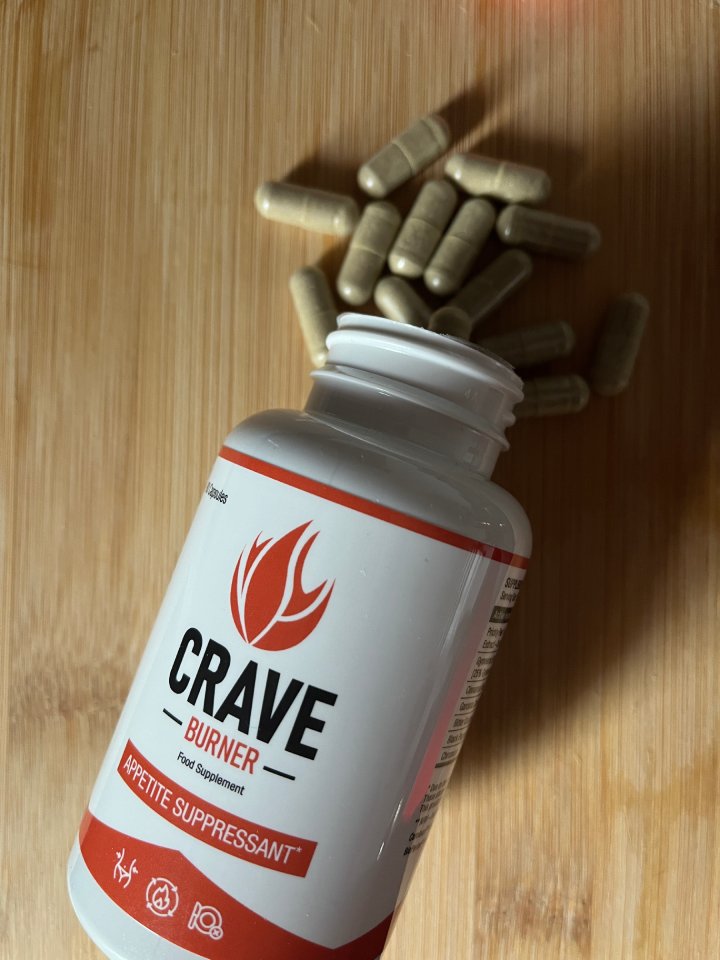
The stronger alternative: Crave Burner · 6.5/10
A capsule rather than a tea, but the same disclosure standard — every amount published — applied to a formula with the stronger ingredient record of the two. It shares one weakness with this page: no money-back guarantee there either.
Read the Crave Burner review →Who Should Buy Matcha Extreme — and Who Should Skip It
Use the product's actual panel and terms as a filter before spending your money.
Who Should Buy Matcha Extreme
- Tea drinkers making a real calorie swap: Readers who will genuinely use an unsweetened hot matcha drink to replace a daily sugary latte, energy drink, or soda.
- Shoppers who value a fully disclosed label: Buyers who want every ingredient weight printed in milligrams (2,250 mg matcha, 900 mg spirulina, 500 mg Cacti-Nea™, 350 mg acerola) rather than hidden inside a proprietary blend.
- Realists who understand the pouch maths: Users happy to run a steady one-scoop-a-day routine with expectations grounded in modest human evidence.
Who Should Skip It
- Anyone who requires a money-back guarantee: There is no refund policy on opened pouches; unused returns close after 10 calendar days.
- Caffeine-sensitive buyers who need an exact milligram number: Because caffeine is never declared on the label, anyone who must track exact stimulant milligrams should skip it.
- Children and pregnant or breastfeeding women: Excluded directly by the maker's own printed label caution.
- Anyone buying for "heavy metal detox" or rapid fat loss: No tea powder clears heavy metals or melts away several kilograms a month on its own.
How to Take Matcha Extreme
The maker's printed directions state: dissolve 1 scoop (4 g) of powder in 150–200 ml of hot — but not boiling — water, and consume 1 to 2 times a day depending on your needs. Using hot water below the boiling point keeps the green tea and spirulina from scalding and turning overly bitter. While the label mentions that you can also add the powder to cakes, milkshakes, and soups, mixing it into sugary shakes or baked goods adds extra calories that wipe out the drink-swap advantage.
Because each scoop contains natural caffeine from 2,250 mg of matcha leaf, take your serving in the morning or before a daytime workout, and avoid late-afternoon cups if caffeine disturbs your sleep. You can read our practical guides on the best time to drink matcha and whether matcha breaks a fast for routine tips. Store the pouch in a dry place at room temperature, tightly closed and out of reach of small children.
Frequently Asked Questions
Does Matcha Extreme really work?
No clinical trial has tested the finished Matcha Extreme product. Pooled human studies on green tea preparations outside Japan show a tiny, statistically non-significant weight change (-0.04 kg), while spirulina trials show a modest reduction (-1.56 kg across 5 small trials). In practice, Matcha Extreme works as a weight-control aid only if you use an unsweetened cup to replace a high-calorie drink alongside a calorie-controlled diet.
How do I take it?
Dissolve one 4 g scoop in 150–200 ml of hot, but not boiling, water and stir thoroughly. The maker's directions state that you can drink it 1 to 2 times a day depending on your needs. Keep the drink unsweetened if your goal is weight management, as mixing it into milkshakes or cakes adds calories.
How long does one pouch actually last?
Each 120 g pouch contains 30 scoops of 4 g. If you take one scoop a day, one pouch lasts a full 30 days. If you take the maker's full suggested dose of two scoops a day, one pouch lasts only 15 days, meaning you will need two pouches to cover a month.
Is there a money-back guarantee?
No, the maker publishes no money-back guarantee. The header badges reading "GUARANTEE OF QUALITY" and "GUARANTEE OF SAFETY" are quality slogans, not refund promises. Under Terms §14, you only have 10 calendar days to withdraw from the contract and return unused, pre-packed goods after sending a written statement.
How much caffeine is in it?
The nutrition panel never declares a caffeine milligram figure. Because each scoop contains 2,250 mg of whole-leaf matcha powder, caffeine is naturally present, and from published leaf ranges we estimate roughly 43–99 mg of caffeine per scoop — strictly an estimate from the leaf, never a declared label amount. You can see how tea ranges compare with coffee in our guide to matcha vs coffee caffeine.
Where can I buy authentic product — is it sold on Amazon?
Matcha Extreme is sold via the official website. The maker does not list a verified official storefront on Amazon or in retail pharmacies, so third-party marketplace listings carry a risk of lookalike or unauthorized stock. Because there is no refund guarantee on opened pouches, order size on the official site is your main risk control.
Is it the product in the celebrity "matcha ritual" ads?
Social media ads promoting a viral celebrity "matcha ritual" that melts belly fat overnight routinely misuse celebrity photos and fabricated claims. Matcha Extreme's own official sales page contains no named celebrity endorsements and no named customer testimonials. Treat any viral ad promising effortless rapid weight loss from a tea powder as misleading marketing.
Will it detox heavy metals or toxins?
No. Although the maker's sales page claims that spirulina supports detoxification to remove heavy metals and that Cacti-Nea™ has detoxifying effects, no human evidence shows that this tea removes toxins or heavy metals from your body. Your liver and kidneys handle detoxification naturally without help from a powdered tea supplement.
Who should not use it?
The maker's printed caution states that Matcha Extreme is not suitable for children, pregnant women, or breastfeeding mothers. People who are sensitive to caffeine, take medications affected by stimulants, or need to know the exact milligram amount of caffeine per serving should also skip it or speak with a doctor first.
How much does it cost per pouch?
A single pouch costs $53.99 plus $12.00 flat shipping ($65.99 delivered). Buying the three-pouch bundle ("Buy 2 Get 1 Free") lowers the price to $35.99 a pouch ($107.98 plus $12.00 shipping, or $119.98 delivered), while the six-pouch bundle ("Buy 3 Get 3 Free") drops it to $26.99 a pouch ($161.97 plus $12.00 shipping, or $173.97 delivered).
Is it organic, and where is it made?
On the nutrition panel, the maker states "COUNTRY OF ORIGIN: European Union" and marks all four raw ingredients (matcha leaf, spirulina, prickly pear extract, and acerola extract) as being of organic origin. Both are the maker's published label claims; however, the website names no legal company and governs sales under Hong Kong law.
How long does delivery take?
The maker's own pages give two different answers. The sales page FAQ states that "The parcel should reach you within 2 working days," whereas Terms §6 states that order realisation takes "approximately 7 working days." Buyers should plan around the longer seven-working-day window printed in the legal terms.
How long does Matcha Extreme take to work?
You may feel a mild caffeine lift within an hour of drinking a cup, but measurable weight change takes weeks and requires a consistent calorie deficit. Clinical trials on green tea and spirulina typically run for 8 to 12 weeks. We recommend a fair trial of 8 to 12 weeks at one serving a day while holding a caloric-drink swap steady.
Does it have side effects?
No clinical trial has tested Matcha Extreme itself, so side effects reflect its ingredients: natural caffeine and concentrated tea and algae powders. Taking too much or drinking it on an empty stomach can cause jitteriness, sleep disruption, mild stomach upset, nausea, or looser stools, and tea tannins can reduce iron absorption from food if taken directly with meals. Read our full guide to matcha side effects for details.
Is Matcha Extreme legit or a scam?
It is a legitimate, European Union-made four-ingredient powder with every milligram weight disclosed on the label, not a fake billing subscription trap. However, the anonymous Hong Kong terms, lack of a named legal company, unverified 96% satisfaction claims, and absence of a money-back guarantee are real buyer drawbacks. Be aware that some third-party review sites also describe an invented capsule version that does not match the real powder panel.
When is the best time to take it?
Morning or 30 to 60 minutes before a daytime workout is the most practical window. Because each scoop contains natural caffeine from 2,250 mg of matcha leaf, avoid drinking it in the late afternoon or evening so it does not interfere with sleep. If concentrated green tea upsets your stomach, take it after a light meal rather than on an empty stomach.
How is it different from traditional matcha or regular green tea?
Regular steeped green tea infuses hot water with tea leaves that you then discard, whereas traditional matcha is 100% finely ground green tea leaf whisked directly into water. Matcha Extreme is a blended food supplement rather than pure matcha: only 2,250 mg of each 4 g scoop is matcha leaf powder, while the remaining 1,750 mg consists of spirulina, Cacti-Nea™ prickly pear extract, and acerola fruit extract.
Can it work without diet or exercise?
No. Green tea catechins and natural caffeine burn only a few tens of kilocalories a day on their own, which is far too small to produce meaningful weight loss without diet or activity changes. Matcha Extreme helps only when you use an unsweetened cup to cut calories you would otherwise drink as part of a balanced diet and active routine.
Is it suitable for vegetarians and vegans?
All four declared ingredients on the panel — matcha green tea leaf powder, spirulina microalgae powder, prickly pear fruit extract, and acerola fruit extract — are plant- or algae-derived, with no animal gelatin capsule shell. However, the maker does not publish an independent third-party vegan certification mark on the panel.
How should I store it?
Follow the storage instructions printed on the maker's panel: keep the pouch in a dry place at room temperature, in a tightly closed container, and out of the reach of small children. Sealing the pouch tightly after each scoop also protects the matcha and acerola powder from moisture and air exposure.
Matcha Extreme — Our Score: 4.8/10
Score: 4.8/10 · Best for: tea drinkers who would swap a caloric drink for an unsweetened matcha-style tea and want a fully declared panel, not a proprietary blend. · Main caution: no money-back guarantee is published, the pouch lasts 15 days at the maker's full dose, and caffeine is never declared. · Fair trial: two months at one serving a day — the three-pouch pack at $35.99 a pouch covers it.
See the Product PageSources & Method
This review rests on primary human research and first-hand verification of the seller's pages. For ingredient efficacy, we audited the Jurgens 2012 Cochrane systematic review on green tea preparations for weight loss and the Moradi 2019 meta-analysis of randomized controlled trials on spirulina supplementation. For safety thresholds, we used the European Food Safety Authority (EFSA) 2018 scientific opinion on green tea catechins and FDA adult caffeine reference guidance. All product facts, label weights, bundle prices, and contract clauses come directly from the maker's official sales page, live order page, nutrition pop-up, Privacy Policy, and Terms §§1–18, read November 2026. No clinical trial of the finished product exists, and all scores follow our fixed five-part rubric.
Last reviewed: November 2026. This article is educational and is not medical advice.
