
Description of the article « Matcha Extreme »
Disclosure: This page contains an affiliate link. If you buy through it, we may earn a commission at no extra cost to you. It never changes our scores or conclusions.
Quick Answer
Matcha Extreme does the one thing most of this category refuses to do: it prints the whole formula, amounts included. It is a 120 g pouch of tea powder — 2,250 mg of matcha green tea per serving, plus spirulina, prickly pear extract and acerola — manufactured in the European Union, with a full panel and panel cautions published.
The honest limits: no trial has ever tested this product, the ingredient evidence behind it is modest, the seller is identified only by a website name in terms governed by Hong Kong law — and no money-back guarantee is published. At the maker's full suggested dose of two servings a day, the "one-month" pouch actually lasts fifteen days.
Best for: tea drinkers who would happily swap a caloric drink for an unsweetened matcha-style tea and want a declared panel, not a proprietary blend. Score: 4.8/10.
Matcha Extreme at a glance
Single bottle$53.99
Best pack$161.97 — 6 pouches ($26.99 per pouch)
Cost per day$0.90–$1.80
FormatTea powder (120 g pouch, 30 servings)
Directions1 scoop (4 g) in hot water, once or twice a day
Doses publishedFull
What we checked
- The full panel is published — amounts for all four ingredients — so a real dose audit is possible.
- The caffeine content is never declared: any figure for it is an estimate from the leaf, not a label fact.
- At the maker’s full suggested dose of two servings a day, the “one-month” pouch lasts fifteen days — the true monthly cost doubles.
- The maker prints a proper caution block — not for children or pregnancy, and do not exceed the stated dose.
- No money-back guarantee is published; the “guarantee of quality/safety” header badges are not a refund promise.
- No trial has tested this product, and green tea’s pooled trial effect on weight is small and non-significant.
Our Score: 4.8/10
| Criterion | Weight | Score | Why |
|---|---|---|---|
| Ingredients | 30% | 5.5 | Full amounts published for all four ingredients; real food-format doses of matcha — but no EGCG/catechin standardisation and caffeine content never declared |
| Evidence | 25% | 4.0 | No trial of this product; green tea's pooled trial effect is small and non-significant; spirulina has one modest positive meta-analysis |
| Maker credibility | 20% | 4.5 | Complete EU-style panel and cautions, EU manufacture; but no legal seller named, Hong Kong terms, unverifiable sales claims, and no guarantee |
| Safety | 15% | 5.5 | Proper printed cautions (children, pregnancy, do not exceed dose); food-level format rather than concentrated extract; undeclared caffeine is the gap |
| Value | 10% | 4.5 | $53.99 a pouch is fair at one serving a day; at two servings the true monthly cost doubles; bundles ease it to $26.99 per pouch |
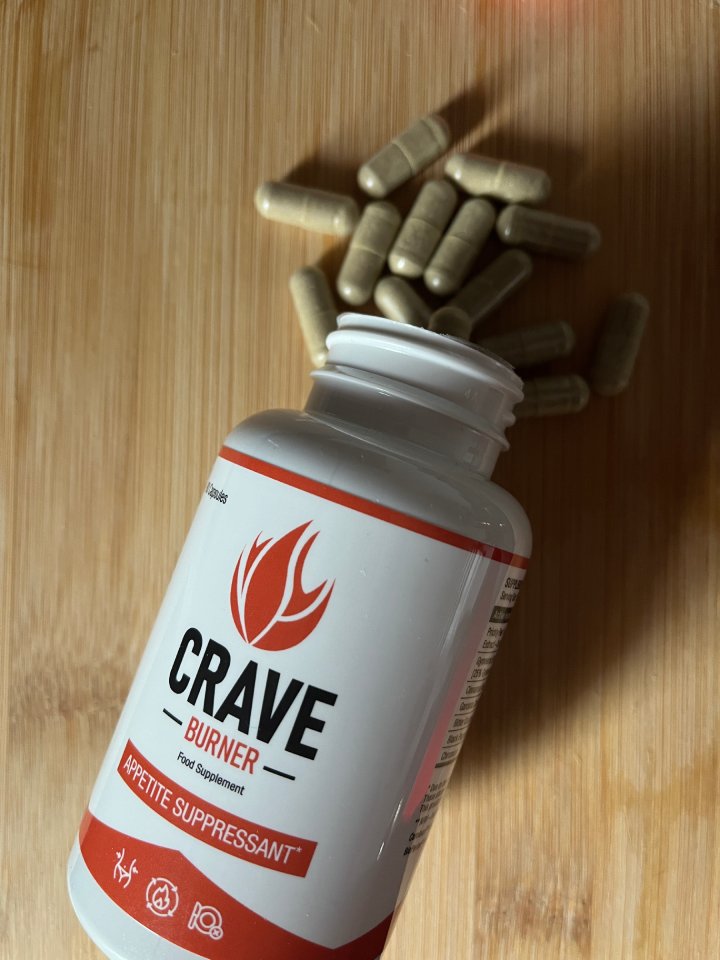
The stronger alternative: Crave Burner · 6.5/10A capsule rather than a tea, but the same disclosure standard — every amount published — applied to a formula with the stronger ingredient record of the two. It shares one weakness with this page: no money-back guarantee there either.
What It Is
Matcha Extreme is a powder, not a capsule: a 120 g pouch holding 30 servings of 4 g (one scoop) each. The maker's directions are to dissolve one scoop in 150–200 ml of hot — not boiling — water, once or twice a day; the maker also suggests adding it to cakes, milkshakes and soups.
The panel states the product is manufactured in the European Union and that its marked ingredients come from certified organic farming under EU regulation. The seller, however, is another matter: the terms identify it only by the site's name, located in Hong Kong under Hong Kong law. No legal company is named.
The maker's sales claims include being the "first tea on the market", "efficient elimination of toxins and heavy metals", "96% of customers satisfied" and "90,000 packs sold". None of these is verifiable from anything published, and we give them no weight in the score. Sold via the official website.
Ingredients (per serving of 4 g, as published by the maker)
| Ingredient | Per serving | Per 2 servings |
|---|---|---|
| Matcha Green Tea Leaves Powder | 2,250 mg | 4,500 mg |
| Spirulina Powder (60% protein) | 900 mg | 1,800 mg |
| Prickly Pear Fruit Extract — Cacti-Nea™ | 500 mg | 1,000 mg |
| Acerola Fruit Extract | 350 mg | 700 mg |
| — of which Vitamin C | 60 mg (75% NRV) | 120 mg (150% NRV) |
This is a genuine panel, and it lets us run the dose audit that undisclosed blends make impossible. What it shows is a food-format product: 2,250 mg of matcha leaf powder is roughly the amount of tea in a strong cup of matcha, because that is, essentially, what a serving is.
Matcha (2,250 mg) is whole ground green tea leaf, so a serving delivers the leaf's catechins and its natural caffeine together. Two qualifications: the panel does not standardise or declare the EGCG content, and it never declares the caffeine — matcha leaf is naturally caffeinated, and a serving in this range will typically carry a meaningful amount.
Spirulina (900 mg) is a protein-rich algae powder (60% protein per the panel). Trial doses of spirulina for weight outcomes have generally been in the 1–2 g a day range, so one serving is at the low edge and two servings sit inside it.
Prickly pear extract — Cacti-Nea™ (500 mg) is a branded extract (a Nexira trademark) positioned in the ingredient market around water retention and "drainage", not fat loss. Note the distinction: the prickly pear research that touches body weight concerns a fibre preparation from the pads, a different material from this fruit extract.
Acerola (350 mg) is there as a natural vitamin C source — 60 mg per serving, 75% of the nutrient reference value. Vitamin C is a legitimate nutrient with no weight-loss role; its presence is nutritional completeness, not fat burning.
What the Evidence Actually Supports
No study has tested Matcha Extreme itself, and the maker cites none. The assessment below is the record for its ingredients at comparable doses — which, thanks to the published panel, can at least be compared honestly.
For green tea, the benchmark remains the Cochrane review by Jurgens and colleagues (2012), which pooled the randomised weight-loss trials of green tea preparations and found the effect small, statistically non-significant overall, and "not likely to be clinically important". Those trials mostly used concentrated extracts; a whole-leaf tea serving is a gentler exposure still.
There is a format point in this product's favour, though. Most green tea research uses concentrated extracts; consuming the whole leaf as a tea is the traditional, lower-intensity exposure, and tea's safety record as a food is long. The trade-off is that the dose of any single active is correspondingly gentler.
Spirulina has the most encouraging single finding in this formula: a 2019 systematic review and meta-analysis by Moradi and colleagues found spirulina supplementation reduced body weight by an average of roughly 1.5 kg across small trials. That is a modest effect from modest studies — real enough to mention, nowhere near enough to promise.
Prickly pear fruit extract has no fat-loss trial record of its own; its marketed role is water retention, and temporary water shifts are not fat loss, whatever a scale says in week one. Vitamin C at these doses corrects low intake; it does not burn fat.
One component deserves plain arithmetic: caffeine. Matcha's natural caffeine, together with its catechins, underlies the small thermogenic effect measured in green tea trials — an effect in the range of tens of kilocalories a day. Against a daily intake measured in thousands, that is a rounding error unless the tea also replaces something richer.
What remains is the mechanism nobody can patent: a strongly flavoured, unsweetened tea taken once or twice a day in place of a caloric drink removes calories by substitution. If Matcha Extreme helps anyone, the published evidence points to that — plus small ingredient effects — rather than to any metabolic magic.
Price and Packs (maker's prices, verified 2026-10-31)
Prices from the maker's order page (US), before shipping. Shipping is $12.00 on every package, with no free-shipping option published.
| Package | What you get | Total | Per pouch |
|---|---|---|---|
| Basic | 1 pouch (30 servings) | $53.99 | $53.99 |
| Standard — Buy 2, Get 1 Free | 3 pouches (90 servings) | $107.98 | $35.99 |
| Best Value — Buy 3, Get 3 Free | 6 pouches (180 servings) | $161.97 | $26.99 |
With shipping added, the totals are $65.99, $119.98 and $173.97. The order page calls one pouch a one-month supply — true only at one serving a day. At the maker's full suggested dose of two servings daily, a pouch lasts 15 days and a month costs two pouches: $107.98 bought singly, before shipping.
On refunds there is nothing to read carefully, because there is nothing there: no money-back guarantee is published. The header badges claiming a "GUARANTEE OF QUALITY" and "GUARANTEE OF SAFETY" are not a refund promise. The terms allow only a 10-day withdrawal for unused goods.
Safety Notes
Credit where due: the maker prints a proper caution block — do not exceed the recommended daily dose, the product is not a substitute for a varied diet, and it is not suitable for children or for pregnant or lactating mothers. Storage guidance (dry, room temperature, away from children) is also published. Our additions:
- Undeclared caffeine. Matcha is naturally caffeinated and the panel does not state the amount. At two servings a day, caffeine-sensitive users, and anyone drinking coffee as well, are stacking a stimulant they cannot quantify from the label.
- Green tea catechins, in proportion. The European Food Safety Authority's liver caution concerns concentrated extract supplements delivering 800 mg or more of EGCG a day. A whole-leaf tea serving sits in a different, food-level territory — but the panel's failure to standardise EGCG means the exact exposure is still unmeasured.
- Spirulina sourcing matters generally. Algae powders are a category where production quality controls contamination; this product's EU manufacture and organic certification claims are reassuring on paper, though we cannot independently verify them.
- Vitamin C reaches 120 mg a day at two servings — well below any level of concern, and not a reason to choose or avoid the product.
- "Detox" claims. The maker's line about eliminating toxins and heavy metals is not supported by any evidence we can check, and no tea performs that function. Buy it as a tea, not as a cleanse.
Frequently Asked Questions
How do I take Matcha Extreme?
Dissolve one 4 g scoop in 150–200 ml of hot (not boiling) water, once or twice a day — the maker's directions. It can also be mixed into milkshakes, soups or baking. One pouch holds 30 servings.
How long does one pouch actually last?
Thirty days at one serving a day; fifteen days at the maker's full suggested dose of two servings a day. Budget accordingly — the "one-month supply" label assumes the lower dose.
Is there a money-back guarantee?
No. We checked the sales page, order page and terms: no money-back guarantee is published. The "guarantee of quality/safety" badges are not a refund policy, and the terms offer only a 10-day withdrawal for unused goods.
Does Matcha Extreme contain caffeine?
Yes — matcha leaf is naturally caffeinated, and at 2,250 mg of leaf per serving the amount will be meaningful. The maker does not declare the caffeine content, so treat it like a caffeinated tea for timing and sensitivity purposes.
Will it detox heavy metals or toxins?
That is a maker claim with no checkable evidence behind it. Nothing in the published panel supports it, and it played no part in our assessment or score.
Where can I buy authentic Matcha Extreme?
Sold via the official website linked from this page. We cannot vouch for third-party or marketplace listings.
How much does Matcha Extreme cost per pouch?
$53.99 for one pouch. On Buy 2 Get 1 Free, three pouches cost $107.98 ($35.99 per pouch received); on Buy 3 Get 3 Free, six cost $161.97 ($26.99 per pouch received). Shipping is $12.00 on every order, with no free shipping.
At two servings a day a month takes two pouches — price the habit at that rate, not at the single-pouch rate.
Who should not use Matcha Extreme?
The maker's own panel answers this: it states the product is not suitable for children, pregnant or lactating mothers, and that the recommended daily dose should not be exceeded. That caution is stricter than generic matcha guidance — and for this product, the panel governs.
Is Matcha Extreme organic, and where is it made?
According to the maker, the product is manufactured in the European Union, and its panel marks the ingredients as coming from certified organic farming under EU regulation. Those are the maker's published claims; we could not independently verify either from here.
Who Should Buy Matcha Extreme — and Who Should Skip It
Buy it if: you already like matcha-style drinks and would genuinely swap a daily caloric drink for an unsweetened tea; you want a fully declared panel with the dose maths done openly; and your expectations are set by the evidence — small ingredient effects, no guarantee, and a product that works, if it works, mainly by substitution.
Skip it if: you need a money-back guarantee before spending (there is none); you are caffeine-sensitive and need a declared caffeine content; you are pregnant or buying for a child (the maker's own caution says no); or you are buying it for the detox and "first tea on the market" claims, which are unverifiable.
Our verdict: the most transparent product in this wave, attached to ordinary evidence. Matcha Extreme earns its mid-range score the honest way — a real panel, real cautions, real food-format doses — and loses points the honest way too: an unnamed seller, no guarantee, and marketing claims its own panel cannot support.
Guides & Research
Every claim on this page is examined in depth in our Weight Loss guides — the trial record, the dose translations, the pouch maths and the safety questions, graded the same way we grade this product:
- Does Matcha Help With Weight Loss? What the Trials Actually Show
- How Much Matcha a Day for Weight Loss? The Studied Dose vs the Scoop
- Matcha vs Coffee Caffeine: The Numbers, the Ranges and the L-Theanine Effect
- The Best Time to Drink Matcha: Mornings, Workouts and the Evening Cutoff
- Matcha Side Effects: Empty Stomachs, Iron, Sleep and the Extract Distinction
- Does Matcha Break a Fast? Calories, Lattes and the Strict-Fast Answer
- Spirulina for Weight Loss: What the 2025 Meta-Analysis Found — and the Dose It Took
- Prickly Pear for Water Retention: Cacti-Nea, the Unpublished Trial and the Dose Gap
- Matcha vs Green Tea: The Whole-Leaf Difference — and the 137× Claim, Checked
Related Products
Last reviewed: October 2026