
- Quick Answer
- The Numbers, With Their Ranges Attached
- Why Does Matcha Caffeine Feel Calmer?
- How Many Servings of Matcha Equal One Cup of Coffee?
- The Latest You Can Drink It
- The Product That Declares Everything Except This
- Frequently Asked Questions
- Is matcha caffeine called theine, and is it different?
- Does matcha have more caffeine than coffee per gram?
- Is there a decaf-style matcha?
- Read This Next
Disclosure: This article contains affiliate links. If you buy through them, we may earn a commission at no extra cost to you. It never changes our scores or conclusions.
Quick Answer
Per serving, coffee usually carries more caffeine than matcha. An 8 oz cup of coffee is commonly anchored near 95 mg, within a wider 95 to 200 mg range depending on brew and size.
A standard matcha serving, made with 2 g of powder, is commonly reported near 60 to 70 mg. That figure is a reported serving estimate, presented here without a primary link, not a laboratory constant.
Matcha's range is the real story. At a reported 19 to 44 mg of caffeine per gram of leaf, a serving can mean about 38 mg from 2 g, or about 176 mg from 4 g at the top.
Matcha's L-theanine changes how its caffeine feels, not how much caffeine it contains. Best for: anyone switching drinks to manage caffeine, or counting a daily total. We score Matcha Extreme at 4.8/10 in this article's closing audit.
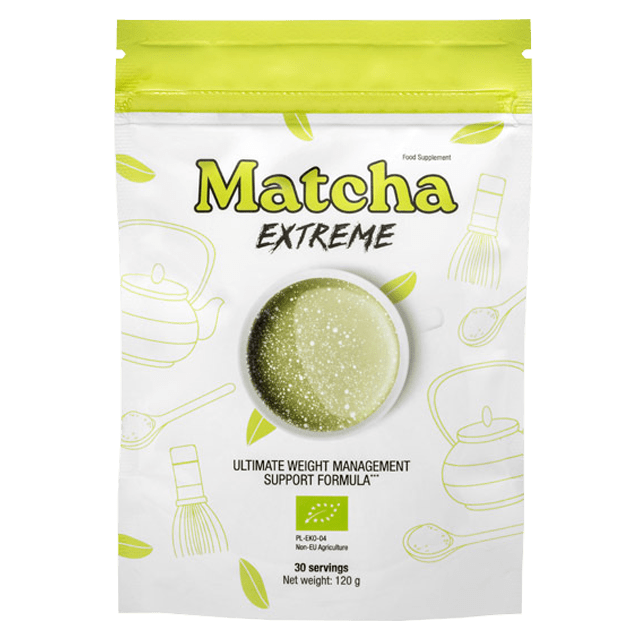
Our Recommendation — Matcha Extreme
Score: 4.8/10 · Best for: tea drinkers who would swap a caloric drink for an unsweetened matcha-style tea and want a fully declared panel, not a proprietary blend. Main caution: no money-back guarantee is published, the pouch lasts 15 days at the maker's full dose, and caffeine is never declared. Fair trial: two months at one serving a day — the three-pouch pack at $35.99 a pouch covers it.
The Numbers, With Their Ranges Attached
Comparison pages disagree because each silently picks a serving size. One compares a 1 g matcha with a large coffee. Another compares a 4 g matcha with a small espresso. Both can be arithmetically correct and practically misleading.
Start per gram, where matcha's variability is visible. Matcha is reported at 19 to 44 mg of caffeine per gram of leaf. That is more than a two-fold spread before serving size enters the calculation at all.
A 1 g serving therefore estimates to 19 to 44 mg. A 2 g serving estimates to 38 to 88 mg. A 4 g serving estimates to 76 to 176 mg, using that same reported per-gram range throughout.
The commonly quoted standard serving sits inside that arithmetic. A 2 g serving reported near 60 to 70 mg implies a mid-range powder, around 30 to 35 mg per gram. Stronger leaf, or more powder, moves the result upward quickly.
Coffee has a range too, and honesty requires printing it. The FDA caffeine guidance places an 8 oz cup of coffee closer to 80 to 100 mg, and cites wider variation by product and preparation.
Other standard references put a typical 8 oz brewed coffee near 95 mg, with a practical range of 95 to 200 mg for larger or stronger cups. Espresso is more concentrated per ounce, but a single shot is small.
A single espresso, at roughly 63 to 75 mg in standard references, is therefore comparable to a standard matcha serving. A large drip coffee or a cold brew can exceed both, sometimes by more than either drink's drinker expects.
Cold brew deserves its own warning. It is brewed concentrated, served large, and often drunk like a soft drink. Its caffeine can pass a standard coffee substantially, which makes it a poor assumed baseline for a switching decision.
The EFSA caffeine safety opinion gives the day-level frame. It concluded habitual consumption up to 400 mg a day does not give rise to safety concerns for non-pregnant healthy adults, compared with higher habitual intakes.
EFSA also concluded single doses up to 200 mg do not give rise to safety concerns for healthy adults, in its assessment compared with larger single doses. A top-range 4 g matcha, at an estimated 176 mg, approaches that single-dose reference.
So the comparison, stated correctly, is conditional. Coffee usually wins per standard serving. Matcha can match or exceed a modest coffee when the serving is large and the leaf sits at the top of its reported range.
Anyone counting caffeine should therefore count grams, not drink names. Two drinks both called matcha can differ by 100 mg or more. The name on the menu is not the dose in the cup.
A switching example makes the counting concrete. A drinker replacing two 95 mg coffees removes about 190 mg from the day. Replacing them with two standard matcha servings, near 65 mg each, puts back roughly 130 mg — a real reduction, not an elimination.
The same switch with large café matchas runs differently. Two 4 g servings at the top of the reported range estimate to about 352 mg combined. That routine can exceed the two coffees it replaced, while feeling like the lighter choice.
Labels and menus rarely help with either calculation. Coffee shops seldom print caffeine per size, and matcha servings are described by drink name rather than grams of powder. Asking how many grams are in the serving is the single most useful question.
Why Does Matcha Caffeine Feel Calmer?
Matcha contains L-theanine, an amino acid found in tea. A matcha serving is commonly described as providing roughly 15 to 40 mg of theanine, varying with leaf grade, harvest, and how much powder the serving actually uses.
Theanine is associated with relaxed alertness in the tea literature. It is linked to alpha-wave activity in brain studies, and to a steadier subjective state than caffeine alone produces in some controlled attention experiments.
The best-known combination test used doses above a normal cup. In Owen et al. 2008, 100 mg of L-theanine plus 50 mg of caffeine improved attention-switching performance in 27 healthy volunteers compared with placebo.
In that study, caffeine alone improved subjective alertness in those volunteers compared with placebo. The combination improved both speed and accuracy on the attention-switching task, and reduced susceptibility to distracting information in a memory task.
That result supports a real interaction, at its actual strength. The theanine-caffeine combination performed differently from caffeine alone on demanding tasks. It does not prove every cup of matcha produces a calm focus effect of that size.
Dose translation explains the caution. The tested theanine dose, 100 mg, is roughly three to six times the amount described for a typical matcha serving. A cup contains the pairing, but not necessarily the studied quantity of it.
Expectation also plays a part drinkers rarely count. A ritual of whisking, a slower preparation, and a drink consumed seated all feel calmer than coffee grabbed while moving. The setting is not theanine, even when both arrive together.
The limit must be stated in the same breath. Theanine moderates the experience of caffeine; it does not remove caffeine from the drink, neutralise it in the body, or shorten caffeine's roughly 5 to 6 hour half-life.
A matcha taken at 4 p.m. therefore still occupies your evening, however calm it felt at 4 p.m. Sleep timing rules in this article apply to matcha at full strength, theanine notwithstanding, because the caffeine molecule is unchanged.
That is the balanced version of the calm-energy claim. There is a studied interaction, a plausible subjective difference, and a smaller theanine dose in a real cup than in the trials — and the caffeine remains entirely present.
How Many Servings of Matcha Equal One Cup of Coffee?
Use the usual figures first, then the ranges. A standard coffee near 95 mg, divided by a standard matcha near 60 to 70 mg, gives roughly one and a half servings of matcha per coffee.
Round that honestly and the practical answer is 1.5 to 2 standard servings. Two 2 g servings of mid-range matcha will usually meet or slightly exceed one ordinary 8 oz coffee in caffeine terms.
Now run the same question on the ranges, because ranges are this article's point. One gram of low-range matcha, at an estimated 19 mg, would need about five servings to reach a 95 mg coffee.
At the other extreme, one 4 g serving of high-range matcha estimates to about 176 mg. That single serving exceeds a standard coffee, and approaches two smaller coffees, before any second drink of the day is counted.
Espresso changes the target again. Against a single shot at roughly 63 to 75 mg, one standard matcha serving is already approximately equal. Doubling the shot, as many café drinks do, doubles the coffee side of the comparison.
Size is the silent variable on both sides. A 12 oz coffee is not an 8 oz coffee, and a café matcha made with 4 g is not a home matcha made with 1 g. Conversions fail when either serving is assumed.
For daily counting, we recommend a simpler discipline. Assign each drink a conservative estimate from its actual grams or ounces, write it down for a week, and total it against the 400 mg reference from the regulators above.
That week of counting usually surprises switchers in both directions. Some discover their matcha routine was lighter than their coffee routine. Others discover a large café matcha plus an afternoon coffee quietly rebuilt the total they switched to escape.
The Latest You Can Drink It
Caffeine is cleared slowly. With a half-life of roughly 5 to 6 hours, about half of a dose remains five to six hours later, and about a quarter remains after ten to twelve hours in a typical adult.
Work that arithmetic on a realistic serving. A standard matcha near 65 mg taken at 2 p.m. leaves roughly 32 mg active near 8 p.m., and roughly 16 mg near 2 a.m., using the simple half-life model.
A larger serving leaves proportionally more. An estimated 176 mg top-range serving at 2 p.m. leaves roughly 88 mg near 8 p.m. — itself a standard coffee's worth — still circulating as bedtime approaches for most people.
The working rule from the caffeine-timing literature is therefore conservative: last dose at least 6 hours before bed. For a midnight bedtime, that means nothing caffeinated after about 6 p.m., matcha included.
Sensitive sleepers should move the cutoff earlier. Slower metabolisers, older adults, and anyone who already struggles to fall asleep may need 8 to 10 hours. Their half-life sits at the long end, and their margin is smaller.
EFSA's opinion adds a specific sleep note. It found single doses of 100 mg may increase sleep latency and shorten sleep in some adults, particularly when that dose is consumed close to bedtime, compared with no caffeine.
Applied to a 1 to 2 serving product schedule, the structure writes itself. First serving in the morning, second serving by early afternoon at the latest, and nothing after the cutoff — even if the second serving felt calm.
Decaffeinated expectations cause most failures here. Drinkers who treat matcha as effectively caffeine-free because it feels smoother will schedule it in the evening, then blame stress for a night that an estimated 60 to 170 mg explains.
If sleep is the reason you switched from coffee, protect the switch. Keep matcha in the first half of the day for a full fortnight, judge your sleep honestly, and only then test whether an early-afternoon serving is tolerable.
Weekend schedules break more caffeine plans than weekday ones. A late morning, a large brunch coffee, and an afternoon matcha can stack three doses inside the window a single morning coffee normally occupies, pushing the last dose's remainder into the night.
Travel does the same through time zones. A serving taken on local afternoon time may land, for your body clock, in the biological evening. Counting hours before intended sleep, rather than reading the clock face, keeps the cutoff rule working while travelling.
The Product That Declares Everything Except This
One label makes this article's point better than any menu comparison. Matcha Extreme prints all four ingredient amounts on its panel — and no caffeine figure anywhere on that panel.
Per 4 g scoop, it declares 2,250 mg of matcha leaf, 900 mg spirulina, 500 mg Cacti-Nea, and 350 mg acerola providing 60 mg of vitamin C. A buyer can audit every one of those numbers against research.
Caffeine is the exception, and it is not a minor one. From the declared 2,250 mg of leaf, the reported 19 to 44 mg per gram range gives an estimated 43 to 99 mg of caffeine per scoop.
Label that figure correctly every time: an estimate. It is calculated from leaf weight and a published range for matcha generally. It is not a measurement of this powder, and the maker publishes no figure of its own to confirm it.
At the maker's maximum of 2 servings a day, the estimate doubles to roughly 85 to 198 mg a day from this product alone. That range spans from under one coffee to about two, which is precisely the counting problem.
A buyer counting caffeine for pregnancy, medication, anxiety, or sleep reasons deserves the number on the panel. Those are the readers for whom a 43 to 99 mg uncertainty band, per scoop, is not an academic detail.
The rest of the buying file is similarly mixed. One pouch holds 30 servings, lasting 30 days at 1 serving a day or 15 days at 2 servings a day. Prices are $53.99 single, $107.98 for three packs, and $161.97 for six, plus $12 shipping.
No money-back guarantee is published for this product. Its quality and safety badges are not a refund promise, and its terms give only a 10-day withdrawal for unused goods. That absence is part of its score here.
The maker also claims the product "eliminates toxins and heavy metals" and that 90,000 packs have been sold. Neither claim, attributed to the maker as it is here, tells a caffeine-counting buyer anything about the figure the panel omits.
Our score is 4.8/10 for that combination. A genuinely declared panel earns real credit in this category. Leaving caffeine — the one number many buyers switch drinks to control — undeclared is the gap that holds it down.
Our Recommendation — Matcha Extreme
Score: 4.8/10 · Best for: tea drinkers who would swap a caloric drink for an unsweetened matcha-style tea and want a fully declared panel, not a proprietary blend. Main caution: no money-back guarantee is published, the pouch lasts 15 days at the maker's full dose, and caffeine is never declared. Fair trial: two months at one serving a day — the three-pouch pack at $35.99 a pouch covers it.
Frequently Asked Questions
Is matcha caffeine called theine, and is it different?
No. Theine is an older name for the same molecule, caffeine, first identified in tea. Your body does not distinguish caffeine from tea from caffeine from coffee; the molecule, and its half-life, are identical.
What differs is the company it keeps. Tea delivers caffeine with theanine and catechins, in typically smaller servings. Those companions can change the subjective experience without changing the stimulant itself.
Does matcha have more caffeine than coffee per gram?
Per gram, the comparison misleads. Dry matcha powder is consumed whole, while coffee is brewed from grounds that are discarded, in much larger gram weights per cup. Grams of powder and grams of beans are not equivalent servings.
Servings are what count for a drinker. Per typical serving, coffee usually delivers more, as this article's ranges show. Per gram comparisons exist mainly to make whichever drink is being sold sound stronger.
Is there a decaf-style matcha?
Low-caffeine matcha is not a standard product in the way decaf coffee is. Matcha's identity is whole leaf, and removing caffeine from powdered whole leaf without changing the product fundamentally is not a routine commercial process.
Readers who need near-zero caffeine should choose a genuinely caffeine-free drink instead. Hojicha and herbal alternatives sit outside this article, but a labelled caffeine-free option beats hoping a matcha is a low-caffeine one.
Last reviewed: October 2026.
