
- Quick Answer
- What the 2025 Meta-Analysis Actually Found
- The Second 2025 Review
- How Much Did the Studies Use — and How Does 900 mg Compare?
- How Long Before It Does Anything?
- Does the Vitamin C in the Blend Help You Lose Weight?
- Is Spirulina Safe — and What About Contamination?
- Our Verdict
- Frequently Asked Questions
- Is spirulina powder better than spirulina tablets for weight loss?
- Does spirulina replace protein in a diet?
- Why did weight fall but waist circumference not change?
- Read This Next
Disclosure: This article contains affiliate links. If you buy through them, we may earn a commission at no extra cost to you. It never changes our scores or conclusions.
Quick Answer
Spirulina is the rare algae with a current, GRADE-assessed meta-analysis behind it. Pooling 17 randomised trials in adults, Lak et al. 2025 found 1.07 kg more weight loss with spirulina than with placebo, alongside small falls in BMI and body fat.
The conditions matter as much as the headline. Effects were clearest in adults taking at least 2 g a day for at least 12 weeks, waist circumference did not change in adults versus placebo, and the pooled result was fragile to removing one trial.
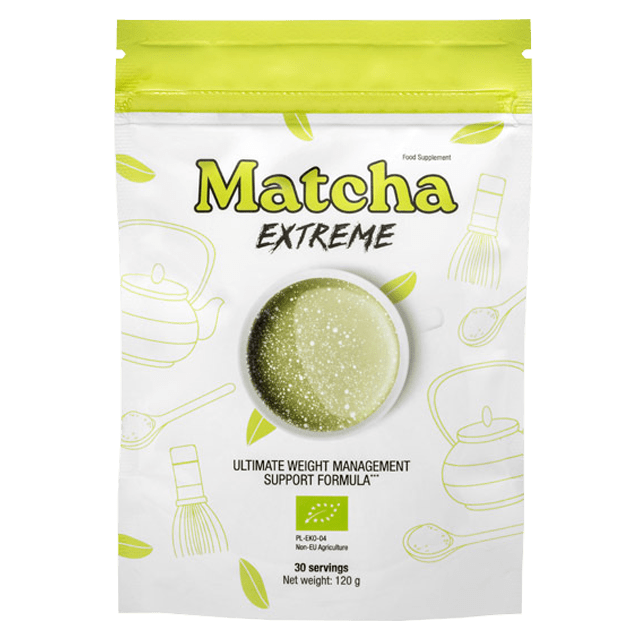
Best for: readers who want the 2025 record rather than the superfood version. We score the worked product example, Matcha Extreme, at 4.8/10: its panel is fully declared, but its spirulina serving sits under the studied dose.
Our Recommendation — Matcha Extreme
Score: 4.8/10 · Best for: tea drinkers who would swap a caloric drink for an unsweetened matcha-style tea and want a fully declared panel, not a proprietary blend. Main caution: no money-back guarantee is published, the pouch lasts 15 days at the maker's full dose, and caffeine is never declared. Fair trial: two months at one serving a day — the three-pouch pack at $35.99 a pouch covers it.
What the 2025 Meta-Analysis Actually Found
Start with what makes this ingredient unusual. Most algae and superfood powders reach the market on tradition, antioxidant language and animal work. Spirulina, by contrast, now has a 2025 dose-response meta-analysis that graded the certainty of its own evidence.
That paper is Lak et al. 2025, in Nutrition & Metabolism. It pooled 17 randomised controlled trials of spirulina supplementation in adults, most of them adults with overweight or obesity, and compared every outcome against placebo.
The pooled weight result was modest. In adults in those 17 trials, spirulina produced 1.07 kg more weight loss than placebo. That is a real difference on a scale, and it is also roughly the size of ordinary week-to-week fluctuation for many dieters.
Body mass index moved in the same direction. In adults across the pooled trials, BMI fell by 0.40 points more with spirulina than with placebo. A change that small will not alter a BMI category for most adults taking part.
Body fat followed the same pattern. In adults in the pooled trials, body fat fell by 0.84 percentage points more with spirulina than with placebo. The direction is consistent across the three measures, which strengthens the signal slightly, even at this size.
Waist circumference, however, did not move. In adults across the pooled trials, spirulina produced no significant change in waist circumference compared with placebo. Anyone selling spirulina as a belly-fat or inch-loss ingredient is therefore going beyond its best current evidence.
The dose split is the finding buyers should keep. In adults in the subgroup taking at least 2 g a day, spirulina produced about 1.87 kg more weight loss than placebo in the same pooled analysis of randomised trials.
Below that line, the effect disappeared. In adults in the subgroup taking under 2 g a day, spirulina produced about 0.14 kg more weight than placebo in the pooled trials, a result the authors treated as effectively null.
Duration split the record just as sharply. In adults in trials lasting at least 12 weeks, spirulina produced about 1.79 kg more weight loss than placebo. In adults in shorter trials under 12 weeks, the pooled difference against placebo was null.
Read those two splits together and the honest claim narrows considerably. The evidence does not say spirulina works at any dose for any length of time. It says a small effect appeared, in adults, at gram-level doses sustained for a quarter.
There is one more caveat, and we will not bury it. The pooled result was fragile: removing a single trial from the analysis could flip individual outcomes to non-significant. A finding that depends on one study staying in the pool is not settled science.
So the first section's verdict is narrow and specific. Spirulina has a small, conditional, placebo-controlled weight effect in adults. The conditions are dose, duration and a fragile pool — and each condition becomes important when a real product serving is checked next.
The Second 2025 Review
A second team published a parallel review in the same year. Fu et al. 2025, in Frontiers in Nutrition, pooled 23 studies of spirulina in adults with overweight or obesity, and asked a wider cardiometabolic question.
Its weight finding pointed the same way, more weakly. In adults with overweight or obesity across those 23 studies, spirulina alone produced a standardised weight effect of g = −0.30 compared with control groups, a small effect by conventional interpretation.
The review separated spirulina alone from spirulina combined with exercise. That separation matters, because exercise itself changes weight, lipids and blood pressure. Crediting spirulina for improvements measured in exercising adults, against non-exercising controls, would overstate the ingredient's own contribution.
Where Fu and colleagues found a clearer pattern was in blood lipids. In adults with overweight or obesity in the pooled studies, spirulina improved total cholesterol, LDL cholesterol and triglycerides compared with control groups, and raised HDL cholesterol in the same comparison.
Diastolic blood pressure also improved. In adults with overweight or obesity across the pooled studies, diastolic pressure fell more with spirulina than with control treatment, while the wider blood-pressure and glucose picture was less consistent across the same studies.
Two independent 2025 poolings agreeing on direction is worth something. Both found a small weight effect in adults versus control groups, both found the clearest signals at higher doses and longer use, and neither found a large or rapid transformation.
The cardiometabolic pattern also reframes what spirulina may actually be for. If its most consistent actions in adults, against control groups, sit in lipids and diastolic pressure, then weight loss may be the smaller part of its honest file.
That reframing helps a buyer in a practical way. A reader with borderline cholesterol who enjoys spirulina in a daily drink is using it near its evidence. A reader expecting visible fat loss in a month is using it well outside that evidence.
Neither review tested any commercial blend. Both pooled spirulina given as spirulina, at stated gram doses, in adults, against a control. What happens when spirulina is one ingredient among four, at under a gram per serving, is a separate question.
How Much Did the Studies Use — and How Does 900 mg Compare?
This is where ingredient evidence meets a real label. The studied pattern from the 2025 record is at least 2 g a day, sustained for at least 12 weeks, in adults, measured against placebo. Any product audit starts from that line.
Matcha Extreme declares its panel in full, which makes this audit possible at all. Each 4 g scoop contains 2,250 mg of matcha leaf, 900 mg of spirulina, 500 mg of Cacti-Nea and 350 mg of acerola, providing 60 mg of vitamin C.
Our full panel audit, pricing check and scoring of Matcha Extreme sits on its product page. The spirulina arithmetic is simple enough to state here: one serving delivers 900 mg, which is under half of the 2 g daily line.
At the maker's full dose of two servings a day, spirulina reaches 1,800 mg daily. That is closer, and it is still just under the at-least-2 g subgroup in adults where Lak and colleagues found the clearest effect against placebo.
Put plainly, even a buyer who follows the strongest directions on this pouch never quite reaches the dose range where the evidence was clearest. At one serving a day, the buyer sits at less than half of that range.
That gap does not prove the product does nothing. Biology rarely works as a cliff edge at exactly 2,000 mg. What the gap removes is the right to borrow the meta-analysis headline: the 1.07 kg figure belongs to a different exposure.
The dose-response detail underlines the point. Lak and colleagues found a dose relationship for BMI in adults across the pooled trials, with stronger effects as dose rose toward and beyond 2 g a day, compared with the lower-dose subgroups in the same analysis.
There is also a second shortfall hiding inside the first. Caffeine is not declared anywhere on this panel, even though the matcha leaf is naturally caffeinated. A buyer can audit the spirulina precisely and still cannot count the product's stimulant load at all.
And no guarantee softens the experiment. The maker publishes no money-back guarantee for this product; its terms offer only a 10-day withdrawal for unused goods. A buyer testing an under-dosed serving funds the whole trial personally, with no refund route.
So the dose audit ends in an unusual place. The ingredient is genuinely studied, the label is genuinely readable, and the serving is genuinely short. All three statements are true at once, and the score has to hold all three together.
How Long Before It Does Anything?
The duration finding deserves its own section, because it collides with how this product is sold. In adults in trials lasting at least 12 weeks, effects were clearest against placebo; in adults in shorter trials, the pooled effect against placebo was null.
Twelve weeks is therefore the honest judging window. Not ten days, not one pouch, and not the first fortnight's scale reading. A buyer who judges spirulina at week two is using a clock the trial record does not recognise at all.
Now run the supply maths at the maker's full dose. One pouch holds 30 servings. At two servings a day, that pouch lasts 15 days. At one serving a day, it lasts 30 days, but delivers only 900 mg of spirulina daily.
A 12-week protocol at two servings a day therefore needs about six pouches. Eighty-four days divided by fifteen days per pouch is 5.6 pouches, so a buyer must open a sixth pouch to finish the studied duration at full dose.
The cost follows directly from the maker's prices. Six pouches bought singly at $53.99 come to $323.94, before the $12 shipping charged on each order. Bought in the largest bundle, the per-pouch price falls, but the commitment rises before any result is judged.
For reference, the maker's three-pack price is $107.98 and its six-pack price is $161.97, each plus $12 shipping per order. A full-dose 12-week run bought as one six-pack costs $173.97 delivered, for a protocol whose dose still sits under 2 g daily.
The buyer is thus offered two different compromises. Pay for six pouches and still fall 200 mg short of the studied daily line, or pay for three pouches and take under half the studied dose for the full twelve weeks.
This is what we mean by a cost-of-protocol calculation. The relevant price of an ingredient is never the price of one container. It is the delivered price of reaching the dose and duration at which its evidence was actually produced.
Does the Vitamin C in the Blend Help You Lose Weight?
A common misreading of this panel treats every listed ingredient as a weight ingredient. The acerola line invites that mistake: 350 mg of acerola per serving, standardised here to provide 60 mg of vitamin C in each 4 g scoop.
Vitamin C has no fat-loss role in the trial record we reviewed. No spirulina meta-analysis credits vitamin C with weight change, and no matcha trial isolates it as the active driver. It is a nutrient on this panel, not a slimming agent.
Its honest jobs are nutritional. Vitamin C contributes to normal immune and collagen function, and it improves absorption of iron from plant foods eaten at the same meal. Those are worthwhile functions, and neither of them reduces body weight.
Correcting the misreading matters for the score. A four-ingredient panel where one ingredient is a vitamin, one is a water-retention extract and one is under-dosed leaves the matcha leaf carrying most of the formula's plausible weight relevance on its own.
Panels are designed to look cumulative, as if each ingredient adds its full trial effect to the scoop. Trials do not work that way. Each ingredient brings only its own evidence, at its own studied dose, in its own studied population.
When those exposures are translated honestly, this panel's weight case rests mainly on 2,250 mg of matcha leaf per scoop. The spirulina contributes a plausible but under-dosed supporting role, and the vitamin C contributes nutrition rather than weight change.
Is Spirulina Safe — and What About Contamination?
In the trials pooled in 2025, spirulina was generally well tolerated by adults in the treatment groups compared with adults in the placebo groups. Reported effects were mostly mild and gastrointestinal, which is the expected profile for a concentrated algae powder.
Well tolerated in trials is not the same as risk-free for everyone. Spirulina is a biological product, and its quality depends on how and where the algae were grown, harvested and tested before they reached a scoop or a capsule.
The legitimate buyer concern is contamination. Blue-green algae products grown in poorly controlled conditions can carry microcystins, toxin compounds produced by other cyanobacteria sharing the water. That risk attaches to production control, not to spirulina's own nutrient profile.
A buyer cannot test a pouch at home, so assurance has to come from the maker. This product's maker claims manufacture in the European Union and ingredients from certified organic farming under EU regulation. We report those as maker claims, not as independently verified facts.
That distinction is the only honest strength available here. An EU manufacture claim and an organic-origin claim are checkable in principle and reassuring in direction, but they are still the seller's own statements about its own supply chain.
Practical cautions remain. Anyone who is pregnant, breastfeeding, immunocompromised, or taking regular medication should treat a concentrated algae product as a clinician or pharmacist question first. The trial populations in adults do not settle safety for those groups against any comparator.
The product's own panel adds a stricter line. It states the product is not suitable for children, pregnant or lactating mothers, and that the recommended daily dose should not be exceeded. For this product, that panel caution governs over generic matcha or spirulina guidance.
Stop rules are simple. Persistent stomach symptoms, any allergic-type reaction, or unexpected effects after starting a new algae product are reasons to stop and seek advice. A supplement with a small expected benefit never justifies pushing through a clear adverse signal.
Our Verdict
Spirulina is a mid-table honest ingredient. It has something most superfood powders never acquire: a current, GRADE-assessed meta-analysis in adults, against placebo, reporting its effect in kilograms. That record deserves more respect than a testimonial page, and less than a headline.
The record says a small effect, under conditions. At least 2 g a day, at least 12 weeks, no waist change in adults versus placebo, and a pooled result fragile enough that removing one trial can flip individual outcomes to non-significant.
The product serving does not meet those conditions. Nine hundred milligrams per scoop, and 1,800 mg at the full two-serving dose, sit under the studied line. A 12-week full-dose protocol takes about six pouches, and no money-back guarantee is published behind it.
Buy spirulina as spirulina if you want its studied pattern: a gram-level daily powder, judged over a quarter, for a small effect. Buy this tea for its matcha if you like it — and count the spirulina as a partial, under-dosed extra.
Our Recommendation — Matcha Extreme
Score: 4.8/10 · Best for: tea drinkers who would swap a caloric drink for an unsweetened matcha-style tea and want a fully declared panel, not a proprietary blend. Main caution: no money-back guarantee is published, the pouch lasts 15 days at the maker's full dose, and caffeine is never declared. Fair trial: two months at one serving a day — the three-pouch pack at $35.99 a pouch covers it.
Frequently Asked Questions
Is spirulina powder better than spirulina tablets for weight loss?
The trials behind the 2025 meta-analysis used both powders and tablets in adults, compared against placebo. What transferred across those forms was the daily dose in grams, not the delivery shape. A tablet habit reaching 2 g daily matches the studied exposure better than a powder habit below it.
Does spirulina replace protein in a diet?
No. Spirulina is often described as roughly 60 percent protein by dry weight in nutrition references, calculated for the dried algae itself. At 900 mg per serving, that arithmetic gives about 0.54 g of protein — a rounding error beside any meal, not a protein source.
Why did weight fall but waist circumference not change?
We report that result as the meta-analysis found it, rather than explaining it away. In adults across the 17 pooled trials, weight, BMI and body fat moved against placebo while waist did not. A small, evenly distributed loss, measurement noise, or both could fit that pattern.
Last reviewed: October 2026.
