
- Quick Answer
- How Many Calories Are in a Serving of Matcha?
- The Three Fasts, Answered Separately
- The calorie-threshold fast
- The water-only fast
- Religious fasting
- Does a Matcha Latte Break a Fast?
- Does Matcha Stop Autophagy?
- A Real Product's Serving, Counted
- Practical Rules for Fasters Who Keep Matcha
- Frequently Asked Questions
- Does matcha with lemon break a fast?
- Can I drink matcha during a 24-hour or longer fast?
- Does matcha's caffeine affect fasting benefits?
- Is steeped green tea safer for a strict fast than matcha?
- Read This Next
Disclosure: This article contains affiliate links. If you buy through them, we may earn a commission at no extra cost to you. It never changes our scores or conclusions.
Quick Answer
It depends on the fast's rule, and the honest split is this: plain matcha in water carries roughly 5–10 kcal a serving, so it breaks a strict zero-calorie fast by the purist reading, and does not meaningfully break a calorie-threshold fast.
The threshold in common practice is under 50 kcal during the fasting window — a practitioner convention, not a physiological law. A plain serving sits well inside it. A matcha latte is a different answer entirely: milk and sweeteners are food, and a latte breaks any fast.
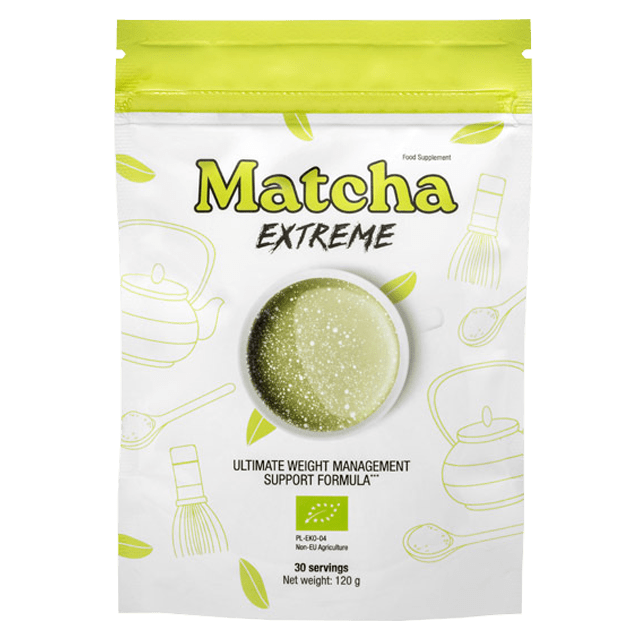
Best for: intermittent fasters who want the numbers instead of a yes-or-no slogan. We score the worked example in this article, Matcha Extreme, at 4.8/10: a fully declared panel, but caffeine is never declared and no money-back guarantee is published.
Our Recommendation — Matcha Extreme
Score: 4.8/10 · Best for: tea drinkers who would swap a caloric drink for an unsweetened matcha-style tea and want a fully declared panel, not a proprietary blend. Main caution: no money-back guarantee is published, the pouch lasts 15 days at the maker's full dose, and caffeine is never declared. Fair trial: two months at one serving a day — the three-pouch pack at $35.99 a pouch covers it.
How Many Calories Are in a Serving of Matcha?
Start with the per-gram figure, because every serving answer is built from it. Matcha powder carries roughly 2–3 kcal per gram in the nutrient data compiled in USDA FoodData Central. The powder is dried leaf; its energy comes from small amounts of protein, carbohydrate, and fibre.
A standard 1-gram serving — a thin usucha in a café — therefore lands at roughly 2–3 kcal. A common 2-gram serving lands at roughly 4–6 kcal. A large 4-gram preparation reaches roughly 8–12 kcal. None of these is zero, and none is a meal.
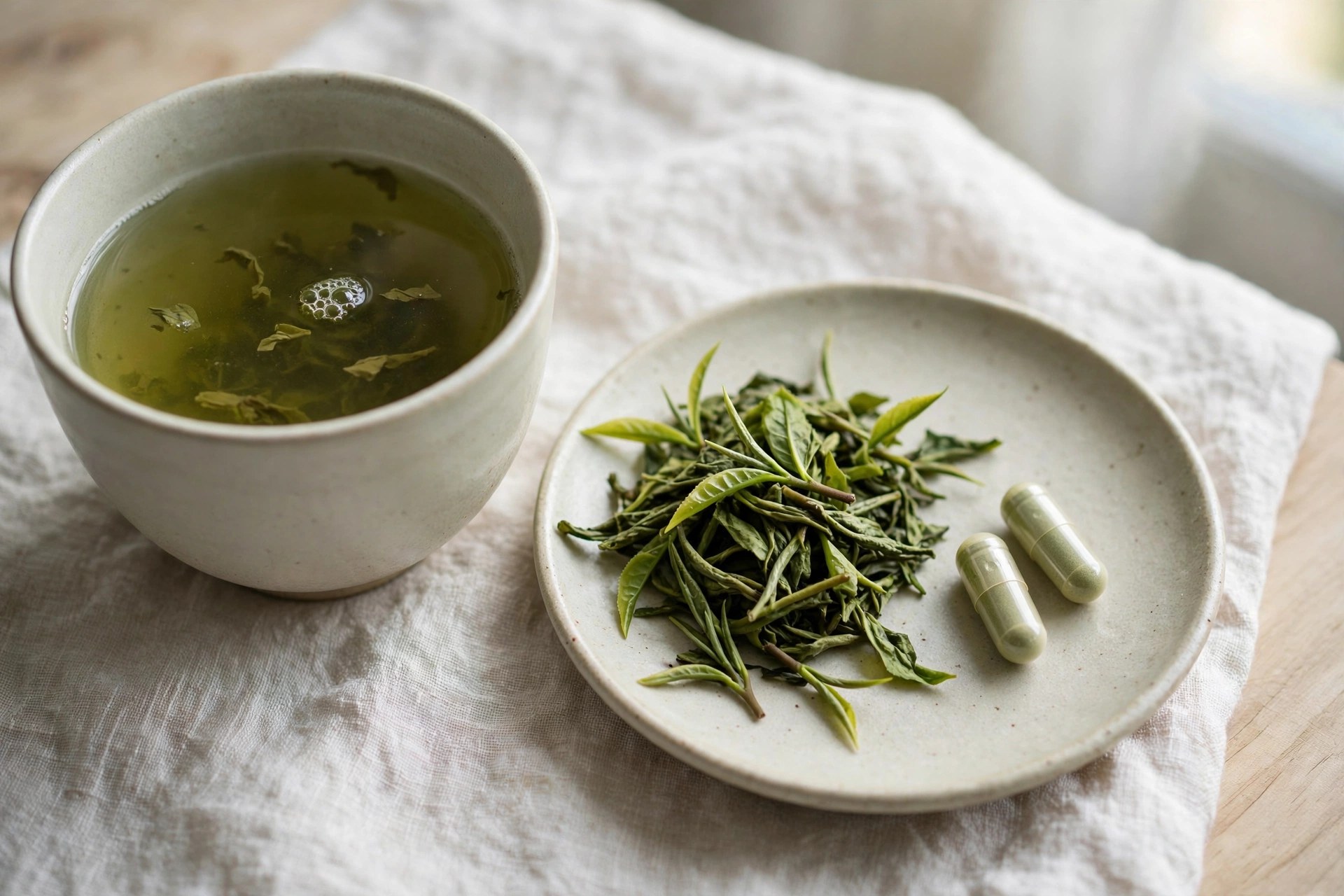
Compare steeped green tea, which sits at about 2 kcal a cup. The difference is the whole method: steeping extracts flavour and compounds into water while the leaf itself is discarded. Matcha drinkers consume the leaf. That is precisely why matcha has calories steeped tea barely registers.
The macros behind those calories are nutritionally trivial but not nothing. A 2-gram serving carries well under a gram of protein, a trace of fibre, and under a gram of carbohydrate. No dieter was ever undone by them; no purist can honestly call them zero, either.
Why do online answers range from "zero calories" to "30 calories"? Serving size, mostly. Labels round small numbers down, café servings vary from 1 gram to 4, and sweetened matcha mixes — powder pre-blended with sugar — are a different product wearing the same name. Check which one a claim describes.
Sweetened mixes deserve their own warning. A flavoured matcha powder built on sugar can carry 30–50 kcal a spoonful before milk enters the picture. If the ingredient list starts with sugar, the fasting answer is settled before the calorie table is even opened.
Put a full fasting day on the table as a worked example. A 16:8 faster drinks one 2-gram serving at 08:00 and another at 11:00, inside a window that ends at noon. That is roughly 8–12 kcal across the whole fast — the arithmetic the rest of this article judges.
So the working range for plain, unsweetened matcha is 5–10 kcal for a typical 2–4 gram serving, with 3–6 kcal at the lighter end. Keep those numbers; the next sections place them inside each kind of fast, where the same number earns three different verdicts.
The Three Fasts, Answered Separately
"Does it break a fast?" has no single answer because "a fast" is at least three different practices wearing one name. Each has its own rule, and matcha's 5–10 kcal lands differently under each. Answering them together is how slogans replace information.
The calorie-threshold fast
This is the intermittent-fasting practice most readers mean: 16:8, 18:6, or similar windows, where the goal is a long daily stretch with minimal energy intake. Practitioner convention allows a small allowance — commonly under 50 kcal — for coffee, tea, and similar drinks during the window.
Under that convention, plain matcha in water fits comfortably. At 5–10 kcal a serving, it uses a fifth or less of the allowance. Even two servings stay inside it. The fast's practical purpose — an extended low-insulin, low-intake period — is not meaningfully disturbed by numbers this small.
Attribute that rule honestly, though. The under-50-kcal line is practitioner convention built from clinical practice and community experience, not a threshold any trial has located in the body. It is a useful working rule. It is not a switch that physiology flips at 49 versus 51 kcal.
Notice what the threshold rule is really protecting. Sixteen hours without a meal changes hunger signalling, routine, and total daily intake far more than 8 kcal of leaf could. Threshold fasters who agonise over matcha while sweetening their coffee are auditing the smallest number in their day.
The water-only fast
A strict zero-calorie fast — water only, sometimes electrolytes — has a definition, not a threshold. Anything with calories ends it, by the fast's own terms. A 5-kcal serving of whole-leaf powder breaks a water-only fast the moment it is swallowed.
That verdict is about definitions, not danger or failure. A purist fasting for autophagy-style protocols or for the discipline itself has chosen the strictest rule available. Under that rule, even steeped tea is debated; ground leaf is not debated at all.
Religious fasting
Religious fasts — Ramadan, Lent, and others — follow their traditions' own rulings on what may be consumed and when. Those rulings are outside this article's competence, and we offer none. Readers fasting on religious grounds should follow their own tradition's guidance, not a nutrition site's calorie table.
Does a Matcha Latte Break a Fast?
Yes — under every definition above, including the generous one. The powder was never the problem in a latte. The milk is. A café matcha latte built on 240 ml of whole milk carries roughly 150 kcal before any sweetener is added to the cup.
Add the sweetening café versions routinely include — honey, syrup, or a pre-sweetened mix — and the drink climbs toward 200–300 kcal. That is not a fasting beverage with a rounding error. In calorie terms it is a small meal, and it will be metabolised like one.
The components matter individually, too. Milk brings protein and lactose, a sugar; both provoke an insulin response the threshold fast exists to avoid. Sweeteners add carbohydrate directly. Even plant milks, unless unsweetened, carry sugars and oils that move the drink out of any fasting window.
Unsweetened plant milk is the closest a latte gets to an argument. A small splash — the amount in a tea, not a latte — might add 10–20 kcal and stay inside threshold practice. A full latte's worth does not. The distinction is volume, and a latte is defined by having crossed it.
Blended café drinks add one more trap: the base. Many cafés build matcha lattes on a pre-sweetened powder, so the drink carries sugar even when the customer asks for no syrup. The menu board rarely says so. Asking whether the matcha is sweetened is the fastest way to learn what you actually ordered.
Our rule for fasters is therefore simple. During the window: matcha whisked in water, full stop. Save the latte for the eating window, where it is a perfectly reasonable drink. Sequencing, not abstinence, is what intermittent fasting actually asks of a matcha habit.
Does Matcha Stop Autophagy?
Here is the answer at exactly its honest strength: nobody knows, in humans. Autophagy — the cell's recycling of damaged components — is one of the main reasons people undertake strict fasts. Whether a 5-kcal serving of polyphenol-rich leaf measurably changes it has never been tested in a human trial.
State the absence plainly, because much online content will not. There is no human evidence to link — no study in which volunteers drank matcha during a fast and had autophagy measured before and after. Any article claiming certainty in either direction is citing around that empty space.
What can be said is narrower. The intakes involved are minute: a gram or two of leaf, a gram of carbohydrate at most, well under a gram of protein. Amino acids are the nutrient class most discussed in autophagy signalling, and a serving of matcha delivers them in trace amounts only.
"Likely negligible at these intakes" is therefore a reasonable summary of the expert view — a judgement from dose, not a measurement. We report it as a judgement. The distance between "likely negligible" and "proven not to affect autophagy" is exactly the distance this article refuses to blur.
Animal and cell studies are sometimes quoted at this point, usually with the species quietly removed. Autophagy responses in mice or in cultured cells, at extract doses scaled far beyond a cup of tea, do not transfer to a person drinking a gram of leaf. We do not cite them as human evidence.
Purists on strict autophagy protocols resolve the uncertainty by avoidance: steeped tea or water only, nothing ground, nothing with protein traces. That is a coherent choice under uncertainty. A threshold faster, whose goal is weight management, is making a different bet — and the calorie maths, not autophagy, governs it.
Caffeine belongs in this section for completeness. Matcha's caffeine — an estimated 19–44 mg per gram of leaf — has no demonstrated effect on the fasting metabolic state at these intakes. That, too, is an absence-of-evidence statement, and we label it as one rather than a reassurance.
A Real Product's Serving, Counted
Now count a serving people actually buy. Matcha Extreme is a 4-gram scoop: 2,250 mg of matcha leaf, 900 mg of spirulina, 500 mg of Cacti-Nea prickly-pear extract, and 350 mg of acerola, whisked into water by the maker's own directions.
By the per-gram figures above, that scoop lands at roughly 8–12 kcal in water — the top of the plain-matcha range, because it is the largest serving in this article. Inside a threshold fast, it fits. Inside a zero-calorie fast, it does not. The product changes nothing about the rules.
The blend's other ingredients do not change the calorie story materially. Spirulina at 900 mg contributes a gram-scale trace of protein and energy, already inside the 8–12 kcal estimate. Acerola's contribution is smaller still. The scoop's calories remain a rounding decision, not a meal.
What the maker suggests elsewhere in its materials deserves a fasting reader's attention: the same powder is promoted for adding to milkshakes and cakes. That is, obviously, not the fasting use. A powder does not break a fast; the preparation does, and a milkshake is breakfast by any name.
One worked day settles the placement. A faster on this product takes one scoop in water at 09:00, inside a fast ending at noon: roughly 8–12 kcal spent of a 50-kcal practice allowance, caffeine finished by mid-afternoon, and the eating window untouched. Every rule in this article is satisfied at once.
Cost belongs in a fasting audit, because fasters drink daily. One pouch holds 30 servings and costs $53.99 plus $12 shipping; at two servings a day it lasts 15 days. No money-back guarantee is published. A fasting habit built on this powder is a subscription, and should be priced as one.
Practical Rules for Fasters Who Keep Matcha
Keep it plain. Water, powder, nothing else. The moment milk, honey, syrup, or a sweetened mix enters the cup, the fasting answer flips. Most "does matcha break a fast" confusion is really "does my preparation break a fast" — and preparations, not powders, carry the calories.
Mind the clock at both ends. Matcha's caffeine half-life is five to six hours, so a fasting serving late in the day can tax the sleep the fast depends on. Servings near the start of the window, or early in it, respect both the fast and the night that follows.
Expect the empty-stomach question. A fasting serving is by definition an empty-stomach serving, and matcha on an empty stomach is the commonest nausea complaint in the whole matcha file. If it unsettles you, place the serving near the window's end, just before eating.
Count your caffeine like your calories. Matcha Extreme declares no caffeine figure; from its 2,250 mg of leaf, the published range gives an estimated 43–99 mg a scoop. The FDA's consumer guidance on caffeine cites about 400 mg a day as the general adult reference.
Break the fast deliberately when you break it. If a family breakfast or a training session matters more than a perfect window, eat properly and restart tomorrow. A fast treated as a flexible practice survives for years; a fast treated as a purity test usually ends in a single abandoned month.
Match the rule to the goal. Weight-management fasters can keep plain matcha under threshold practice with a clear conscience. Strict-protocol fasters should drop it for the fast's duration. Both are defensible; what is not defensible is pretending one rule answers for the other.
Our Recommendation — Matcha Extreme
Score: 4.8/10 · Best for: tea drinkers who would swap a caloric drink for an unsweetened matcha-style tea and want a fully declared panel, not a proprietary blend. Main caution: no money-back guarantee is published, the pouch lasts 15 days at the maker's full dose, and caffeine is never declared. Fair trial: two months at one serving a day — the three-pouch pack at $35.99 a pouch covers it.
Frequently Asked Questions
Does matcha with lemon break a fast?
A squeeze of lemon adds a trace of juice — roughly 1–2 kcal and a fraction of a gram of sugar at the amounts people actually use. Under threshold practice, that stays inside the allowance comfortably. Under a zero-calorie definition, it is still an intake, and the purist answer remains no.
Can I drink matcha during a 24-hour or longer fast?
Under threshold practice, plain matcha in water fits the same under-50-kcal convention on a longer fast. The practical cautions grow, though: caffeine on a fully empty stomach is where nausea bites hardest, and a long fast deserves its stimulants early, small, and finished well before sleep.
Does matcha's caffeine affect fasting benefits?
There is no evidence that caffeine at these intakes changes the metabolic state a fast is aiming for — and we state that as an absence of evidence, not a proven negative. Caffeine's demonstrated effects here are on alertness and sleep, which is why timing, not fasting purity, is its real issue.
Is steeped green tea safer for a strict fast than matcha?
For the strictest definitions, yes, marginally: an infusion carries about 2 kcal a cup and no leaf solids, while matcha's ground leaf carries 5–10 kcal a serving. The difference is small enough that only a zero-calorie purist needs to care — but for that reader, it is the whole question.
Last reviewed: October 2026.
