
- Quick Answer
- The Actual Differences, One by One
- Does Matcha Really Have 137 Times More EGCG?
- Which Is Better for Weight Loss?
- Matcha or Green Tea Extract Capsules — Which Format?
- The Caffeine and Theanine Comparison
- Frequently Asked Questions
- Is matcha just powdered green tea?
- Can I get matcha's effect from bottled green tea?
- Does ceremonial grade beat culinary grade for health purposes?
- Read This Next
Disclosure: This article contains affiliate links. If you buy through them, we may earn a commission at no extra cost to you. It never changes our scores or conclusions.
Quick Answer
Matcha and green tea come from the same plant, Camellia sinensis. The real difference is delivery: matcha is shade-grown leaf ground whole and consumed entirely, while ordinary green tea is an infusion you steep, drink and discard.
Consuming the leaf makes matcha more concentrated per serving in catechins, caffeine and theanine. On an honest per-cup comparison, that advantage is roughly 2–3 times for total catechins — not the famous 137 times repeated across the internet.
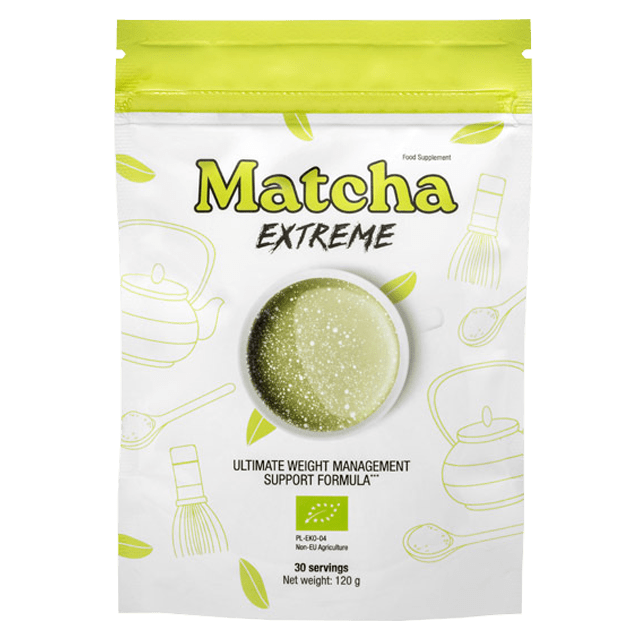
Best for: anyone choosing between the two drinks, or between tea and extract capsules. We score the whole-leaf product example, Matcha Extreme, at 4.8/10: a printed panel and declared amounts, with no guarantee published.
Our Recommendation — Matcha Extreme
Score: 4.8/10 · Best for: tea drinkers who would swap a caloric drink for an unsweetened matcha-style tea and want a fully declared panel, not a proprietary blend. Main caution: no money-back guarantee is published, the pouch lasts 15 days at the maker's full dose, and caffeine is never declared. Fair trial: two months at one serving a day — the three-pouch pack at $35.99 a pouch covers it.
The Actual Differences, One by One
Begin before the cup, in the field. Matcha starts as tencha, tea plants shaded for roughly the final weeks before harvest. Shading stresses the leaf, and the leaf responds by producing more chlorophyll, more caffeine and more of the amino acid L-theanine.
Ordinary green tea is usually grown in full sun. Sencha, bancha and bottled teas come from unshaded or lightly managed leaves, processed for steeping. The plant is the same species; the cultivation and the delivery are what genuinely diverge.
Processing widens the gap. Green tea leaves are heated, rolled and dried, then steeped in hot water at home. Matcha leaves are steamed, dried, de-veined and stone-ground into a fine powder that is whisked into water and swallowed whole.
That whole-leaf delivery changes what reaches the drinker. An infusion extracts only what hot water can pull from a leaf in a few minutes, and the spent leaf — with its fibre and remaining compounds — goes into the bin.
Matcha drinkers consume the leaf itself, suspended in water. Everything water-soluble arrives, along with compounds that steeping would leave behind and a small amount of leaf fibre. The dose per cup is therefore higher, and also more dependent on the powder used.
Theanine is where shading shows most clearly in the cup. Matcha's shaded leaves carry more of this amino acid than typical sun-grown leaves, which contributes to its smoother, less bitter taste and its reputation for calmer alertness beside coffee.
Caffeine rises with shading too. A matcha serving made with 2 g of powder commonly delivers caffeine in the same neighbourhood as a small coffee, while a cup of steeped green tea usually delivers noticeably less per serving.
Taste and preparation are practical differences, not footnotes. Matcha is thick, vegetal and umami-rich, whisked to a froth and drunk immediately. Green tea is lighter, clearer and more forgiving, brewed by the pot and sipped over an hour.
Cost follows the labour. Shading, hand selection, de-veining and slow stone milling make genuine matcha expensive per gram beside ordinary loose leaf. Per serving, a daily matcha habit costs several times a daily sencha habit for most buyers.
Grade complicates the shelf further. Ceremonial grades are milled from the youngest shaded leaves for drinking straight; culinary grades are stronger-tasting and intended for lattes and cooking. Grade predicts flavour and price far better than it predicts catechin content.
So the comparison, stripped of slogans, is this: same plant, different farming, different physical form. Matcha concentrates the leaf's compounds by delivering the leaf. Green tea dilutes them through water, convenience and a lower price per cup.
Does Matcha Really Have 137 Times More EGCG?
The number is real, traceable and badly misunderstood. It comes from Weiss & Anderton 2003, in the Journal of Chromatography A, a methods paper measuring catechins in matcha by a laboratory chromatography technique.
Those researchers compared matcha against one brewed product: a low-catechin commercial green tea sold as China Green Tips. Against that single, weak comparator, the EGCG available from matcha measured 137 times greater, on a milligram-per-gram-of-dry-leaf basis.
Every qualifier in that sentence has been stripped away in retelling. One product became green tea in general. A dry-leaf laboratory comparison became a per-cup promise. A methods paper became a health claim, repeated by sellers who never read it.
The same paper contained its own corrective. Against the largest literature values the authors found for other green teas, matcha's EGCG was at least three times higher — a substantial advantage, and a completely different headline from 137 times.
Newer comparisons narrow the realistic gap further. A 2023 comparison of commercial teas put matcha's total catechin advantage at roughly 2–3 times per cup against typical brewed green teas, rising toward about 10 times only at the extremes of the products compared.
We present that 2023 figure at exactly that strength: a comparison of commercial teas, reported without a link here, because its underlying citation cannot be named with confidence. The direction agrees with the 2003 paper's own secondary comparison; the spectacle does not.
Why does the gap vary so widely? Because brewed tea is not one thing. Leaf grade, water temperature, steeping time and leaf quantity change a cup's catechins severalfold, and bottled teas sit at the weak end of that range.
Matcha varies too, by grade, age and serving size, but its floor is higher for a structural reason: the leaf is consumed. Even a modest matcha, fully swallowed, usually delivers more catechins per serving than a briefly steeped, discarded leaf can.
The honest summary is therefore a range, not a slogan. Per cup, expect roughly 2–3 times the total catechins from matcha against a typical brewed green tea, with wider gaps possible against weak bottled or low-grade products.
That advantage is worth having if catechins are your goal. It is not worth the transformation in meaning that 137 performs, turning a two-to-threefold concentration edge into an implication of hundredfold health effects that no trial has ever shown.
Claim-checking rule, for this number and every viral figure like it: ask compared with what, measured how, and in which single product. A ratio without its comparator is marketing, however accurate it once was inside a laboratory paper.
Which Is Better for Weight Loss?
Neither drink owns a strong weight record, and pretending otherwise does both a disservice. The shared trial record belongs mostly to green tea preparations and extracts, pooled in adults with overweight or obesity against placebo, with small results.
The benchmark is the Jurgens et al. 2012 Cochrane review. In adults with overweight or obesity across its pooled trials, green tea preparations produced a small, statistically non-significant weight loss compared with control, which the authors judged unlikely to be clinically important.
Matcha-specific trials are fewer and narrower. The best-known matcha work concerns fat oxidation during exercise, in small studies of adults walking or cycling after matcha drinks, compared with control drinks. That is a rate during activity, not a scale result.
Per serving, concentration favours matcha. More catechins and more caffeine arrive in a 2 g matcha serving than in a typical cup of steeped tea. If the mechanism contributes anything, the whole-leaf format delivers more of it per occasion.
Adherence, however, favours whichever drink a person actually keeps drinking. A cheap, pleasant green tea taken daily for twelve weeks delivers more total exposure than an expensive matcha abandoned after nine days because of taste, cost or preparation friction.
Substitution is the mechanism both drinks share honestly. Either drink, taken unsweetened in place of a caloric drink, removes those calories from the day. That swap — not catechin pharmacology — is likely the largest weight contribution either format makes for most drinkers.
Milk and sugar reverse the arithmetic quickly. A sweetened matcha latte can carry the calories of the soft drink it replaced, plus milk. The format advantage survives whisking with water; it does not survive being rebuilt as a dessert.
Our answer to the section's question is therefore deliberately unglamorous. For weight, matcha has the stronger per-serving case and green tea has the stronger adherence and cost case. The tiebreaker is the drink you will still be making in week twelve.
Expectations should be set by the Cochrane scale, not by concentration ratios. A two-to-threefold catechin advantage applied to a small, non-significant pooled effect in adults versus control still produces a small effect — helpful inside a deficit, invisible outside one.
Matcha or Green Tea Extract Capsules — Which Format?
A third option sits beside both drinks: green tea extract capsules, which concentrate catechins — especially EGCG — to supplement doses no cup approaches. The format question is really an exposure question, and exposure cuts in both directions.
Extracts can deliver several hundred milligrams of EGCG a day in a capsule or two. That is the dose territory where trials were run and where any catechin effect, if present, is most plausible. It is also where the safety file changes character.
The regulator's line sits at that level. The EFSA assessment of green tea catechins concluded that supplemental EGCG doses at or above 800 mg a day may be associated with initial signs of liver damage in adults taking such supplements.
EFSA drew the contrast explicitly, in the same assessment: catechins from ordinary green tea infusions were generally safe for adults drinking them, while concentrated supplement doses carried the liver signal. The plant did not change; the exposure did.
Whole-leaf tea sits on the infusion side of that line. A matcha serving delivers catechins at food level, in the leaf's own matrix, alongside fibre and theanine. Its effects are correspondingly food-level too — smaller, slower and without the extract safety question.
That trade is the format choice in one sentence. Extract capsules buy higher, trial-adjacent exposure and inherit a liver caution. Tea buys lower, food-level exposure, a daily ritual and a safety profile closer to an ordinary drink.
Our full extract record — doses, trials and that EFSA line in context — is in our article on green tea extract for weight loss. This article deliberately does not duplicate it; the comparison here needs the line, not the whole file.
Where does a declared-panel tea product fit? Consider Matcha Extreme: 2,250 mg of matcha leaf per scoop, with spirulina, Cacti-Nea and acerola printed beside it. Whatever its other audit findings, its format is tea-side, whole-leaf exposure.
Those audit findings still matter, and format does not excuse them. Caffeine is not declared on that panel, no money-back guarantee is published, and a pouch at the full two-serving dose lasts 15 days. A tea-side product is not automatically a good product.
Prices frame the commitment plainly: $53.99 for one pouch, $107.98 for three and $161.97 for six, each order plus $12 shipping. A daily whole-leaf habit through a blended pouch costs more than loose matcha and far more than ordinary green tea.
Choose extracts only with the safety file read and, ideally, a pharmacist aware. Choose tea for the ritual and the lower exposure. Choose a blended tea product only when its printed panel, price and guarantee terms each survive their own separate checks.
The Caffeine and Theanine Comparison
Caffeine is the easiest difference to feel and the hardest to state exactly. Per serving, matcha usually carries more: a 2 g serving commonly provides roughly 60–70 mg, while a cup of steeped green tea commonly provides roughly 20–40 mg.
Those are ranges wearing point estimates' clothing, so treat them as centres. Matcha caffeine varies by grade and shading, green tea caffeine by leaf and brew, and a strong sencha can approach a weak matcha. Serving size moves both numbers more than brand does.
Bottled green tea sits at the bottom of the comparison. Ready-to-drink products are brewed for shelf life and mildness, and their per-bottle catechin and caffeine content is typically the lowest in the category — closer to the weak comparator of 2003 than to fresh leaf.
Freshness separates the formats in daily practice. Ground matcha exposes far more surface area to air than rolled leaf, so its colour, aroma and catechins fade faster once a tin is opened. A stale matcha can taste flat while still looking convincingly green in photographs.
Steeped leaf is more forgiving in storage and in brewing. Whole leaves keep for months in a sealed container, and a second infusion still extracts flavour and compounds. That resilience is part of green tea's value case: less waste, less precision, and a lower cost per acceptable cup.
Theanine runs in the opposite experiential direction. Matcha's shaded leaf delivers more L-theanine per serving than sun-grown steeped tea, and theanine is the compound most often credited with smoothing caffeine's edge into a calmer, steadier alertness.
Smoother is not weaker in the bloodstream. Theanine may moderate how caffeine feels; it does not remove caffeine, block its absorption, or shorten its roughly five-to-six-hour half-life. An evening matcha still spends the night as caffeine, however calm the afternoon felt.
That timing point decides real-world value for many readers. A morning matcha can be a genuine coffee alternative with a gentler profile. The same matcha at 5 p.m. is a sleep decision, and steeped green tea's lower dose is the safer evening choice.
For a blended product, the comparison acquires a hole. Matcha Extreme declares 2,250 mg of leaf per scoop but no caffeine figure, so any per-scoop caffeine number is an estimate from the leaf weight — roughly coffee-adjacent at two scoops, never a label fact.
Counted drinkers should hold that distinction firmly. You can count a cup of sencha within a reasonable range and a whisked matcha within a wider one. You cannot count a product that prints everything except the one number you are counting.
Steady-state, the comparison resolves into habits. Matcha: higher caffeine, higher theanine, higher cost, a ritual. Green tea: lower caffeine, gentler commitment, easier evenings. Extracts: highest catechins, no ritual, a safety file. The plant is constant; the lifestyle is the variable.
Our Recommendation — Matcha Extreme
Score: 4.8/10 · Best for: tea drinkers who would swap a caloric drink for an unsweetened matcha-style tea and want a fully declared panel, not a proprietary blend. Main caution: no money-back guarantee is published, the pouch lasts 15 days at the maker's full dose, and caffeine is never declared. Fair trial: two months at one serving a day — the three-pouch pack at $35.99 a pouch covers it.
Frequently Asked Questions
Is matcha just powdered green tea?
Essentially yes, with two qualifications that matter. Matcha is green tea leaf that was shade-grown before harvest, then de-veined and ground whole rather than rolled for steeping. Same species, same broad chemistry — different cultivation, different delivery, and a higher concentration per serving as a result.
Can I get matcha's effect from bottled green tea?
Only a fraction of it. Bottled products were the low-catechin end of the comparison behind the famous ratio: briefly brewed, diluted and shelf-stabilised. A bottle is a pleasant drink with modest caffeine and catechins, not a substitute for consuming the whole leaf in a fresh matcha serving.
Does ceremonial grade beat culinary grade for health purposes?
Grade predicts taste, colour and price more reliably than catechin arithmetic. Ceremonial grades use younger, more carefully shaded leaves and taste smoother; culinary grades are bolder for lattes and cooking. Any catechin difference between grades is small beside the serving-size and freshness differences that dominate a cup.
Last reviewed: October 2026.
