
- Quick Answer
- What Cacti-Nea Is — and What It Is Not
- The Evidence, Layer by Layer
- The unpublished human trial
- The rat study
- What does not transfer
- How Much Was Used — and How Much Is in a Serving Here?
- Water Weight vs Fat Loss
- Who Water-Retention Products Are Actually For
- Frequently Asked Questions
- Is Cacti-Nea a diuretic drug?
- How fast does water weight shift?
- Does Cacti-Nea burn fat?
- Read This Next
Disclosure: This article contains affiliate links. If you buy through them, we may earn a commission at no extra cost to you. It never changes our scores or conclusions.
Quick Answer
Prickly pear fruit extract, sold as Cacti-Nea, is marketed for water retention. Its human evidence is Nexira's unpublished trial, as reported on its ingredient pages: 47 women at 2 g a day, run by the ingredient's maker, never peer-reviewed or published.
That unpublished flag is the most important fact in this article, so it sits in the first screen. The only published Cacti-Nea study is a 2010 rat diuretic experiment. No published human trial of this ingredient exists for a reader to check.
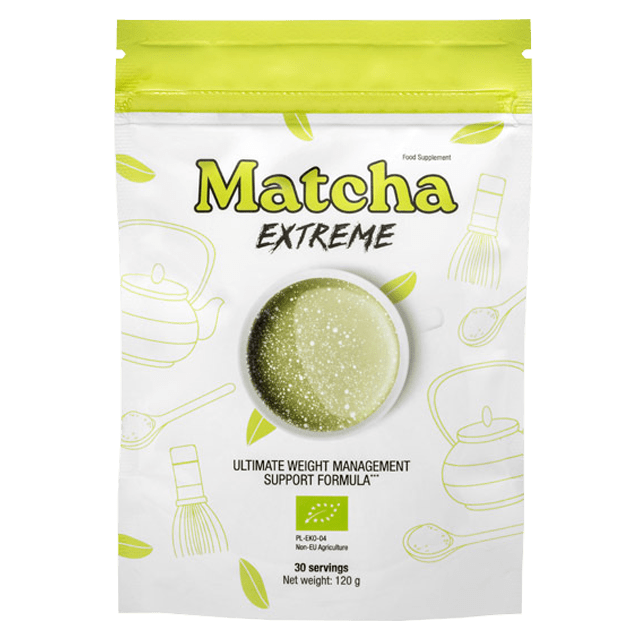
Matcha Extreme provides 500 mg of Cacti-Nea per serving — a quarter of that unpublished dose. Best for: readers deciding whether a week-one scale drop means anything. It means water. We score Matcha Extreme at 4.8/10 for its full panel.
Our Recommendation — Matcha Extreme
Score: 4.8/10 · Best for: tea drinkers who would swap a caloric drink for an unsweetened matcha-style tea and want a fully declared panel, not a proprietary blend. Main caution: no money-back guarantee is published, the pouch lasts 15 days at the maker's full dose, and caffeine is never declared. Fair trial: two months at one serving a day — the three-pouch pack at $35.99 a pouch covers it.
What Cacti-Nea Is — and What It Is Not
Cacti-Nea is a branded ingredient made by Nexira. It is a dehydrated water extract of prickly pear fruit — the fruit of the Opuntia ficus-indica cactus — processed into a powder that can be blended into drinks and supplements.
The fruit origin is not a detail. Prickly pear has two very different commercial materials: the fleshy fruit, and the flat pad, called the cladode. They differ in composition, in fibre content, and in the human research attached to each one.
Cacti-Nea comes from the fruit. The better-known prickly pear weight literature — the Litramine and NeOpuntia work — comes from cladode fibre, a pad-derived material designed to bind dietary fat in the gut. Those are different products from different plant parts.
Confusing the two is the central marketing trick in this corner of the market. A fruit extract borrows the credibility of pad-fibre trials, a reader sees the words prickly pear and weight together, and the material distinction quietly disappears from the page.
This article keeps the distinction in every section. When a result belongs to cladode fibre, it is labelled cladode fibre in the same sentence. When a claim belongs to Cacti-Nea fruit extract, its evidence is graded on its own, much thinner, file.
What is Cacti-Nea claimed to do? Its supplier positions it for water retention: helping the body eliminate retained water, easing the heavy, swollen feeling in legs, and improving body shape measures that shift when water shifts.
Notice what that positioning does not claim, at its careful best. It does not describe fat burning, appetite suppression or metabolic change. A water-elimination ingredient, even if it worked perfectly, would change water mass — and water mass is not fat mass.
In Matcha Extreme, Cacti-Nea is the third ingredient by weight. Each 4 g scoop contains 2,250 mg of matcha leaf, 900 mg of spirulina, 500 mg of Cacti-Nea and 350 mg of acerola. The water-retention ingredient is one eighth of the scoop.
That proportion frames the dose question coming later. Before dose, though, a reader deserves the evidence itself, layer by layer, in descending order of what each layer can actually prove about this ingredient in people.
The Evidence, Layer by Layer
The unpublished human trial
The human layer is Nexira's unpublished trial, as reported on its ingredient pages. As the supplier describes it, 47 women took 2 g of Cacti-Nea a day, and water-retention measures — including feelings of heavy, swollen legs — were reported to improve.
Every word of that description carries a limit. The trial is unpublished, so no peer reviewer has examined its methods. No journal paper exists, so no reader can check its randomisation, blinding, dropouts, statistics or full results table.
It was also run by the ingredient's maker. Maker-run research is not automatically false, and many good ingredients began with supplier studies. But a maker trial that is never submitted for publication leaves a buyer with the summary the maker chose to publish.
The population, as reported, was narrow. Nexira's unpublished trial, as reported on its ingredient pages, involved 47 women. Nothing in the reported summary establishes effects in men, in older adults, or in people whose swelling has a medical cause.
The endpoints, as reported, were water endpoints. Nexira's unpublished trial, as reported on its ingredient pages, addressed water retention and related sensations at 2 g a day. It did not, on any reported account, measure fat loss as its purpose or its result.
We cite this trial in exactly that form every time it appears here: Nexira's unpublished trial, as reported on its ingredient pages, with no link, because there is no publication to link to. Any page that cites it as a clinical study without the unpublished flag is upgrading it.
Upgrading matters because the word trial does heavy work in supplement marketing. A published, peer-reviewed trial can be interrogated. An unpublished maker summary can only be repeated. Repeating a summary accurately, with its status attached, is the strongest honest treatment available.
The rat study
The published layer is animal work. Bisson et al. 2010, in Phytotherapy Research, tested Cacti-Nea in rats and reported diuretic and antioxidant effects: urine output rose in rats given the extract, compared with rats in the control group of that experiment.
That study is real, peer-reviewed and specific to this ingredient, which puts it ahead of the unpublished summary in one respect. It is also, plainly, a rat study. Rats given a concentrated extract for seven days are not women taking a tea for a month.
The dose translation underlines the distance. The rats received 240 mg per kilogram of body weight a day. Scaled naively to a human, that would be many grams a day — an exposure no product on the market attempts and no human trial has tested.
What the rat study can honestly support is a mechanism signal. A fruit extract increased urine output in rats versus control rats, without disturbing the measured urinary minerals in that experiment. That makes a mild diuretic action in humans plausible, not proven.
Plausible is where the published Cacti-Nea record ends. There is no published human diuretic trial, no published human water-retention trial, and no published human weight trial for this ingredient. The gap between plausible and proven is the whole story of this file.
Antioxidant findings from the same rat work deserve the same restraint. An antioxidant marker improving in rats given an extract, compared with control rats, is a laboratory signal. It does not establish a health outcome in a person drinking a blended tea.
What does not transfer
The strongest prickly pear weight result in print belongs to a different material. In Grube et al. 2013, a cladode-fibre complex — not Cacti-Nea fruit extract — produced about 3.8 kg of weight loss in overweight and obese adults on a calorie-reduced diet, compared with 1.4 kg in the placebo group.
Read that sentence with its distinction intact. The tested material was a standardised fibre from the cactus pad, given at 3 g a day, designed to bind fat. Cacti-Nea is a water extract of the fruit, positioned for water elimination. The mechanisms do not overlap.
Transferring Grube's result to Cacti-Nea would be like crediting orange juice with the trial record of oat fibre because both come from plants eaten at breakfast. Same shelf, same health halo, different material, different action, different evidence.
The wider Opuntia record is cooler still. Onakpoya et al. 2015 pooled the randomised trials of Opuntia preparations and found no significant effect on body weight or waist circumference in adults, compared with control groups across those varied preparations.
That pooled null is not a trial of Cacti-Nea either, and we do not present it as one. It is context: even gathering every Opuntia material together, including the better-studied cladode fibre, the published human record did not produce a significant weight effect.
So the layers, stacked honestly, look like this. An unpublished maker summary in 47 women at 2 g a day. A published rat diuretic study at a high per-kilogram dose. A cladode-fibre weight trial that does not transfer. A pooled Opuntia record that is null.
How Much Was Used — and How Much Is in a Serving Here?
Dose is where a thin file becomes thinner. The only human dose ever reported for Cacti-Nea is 2 g a day, from Nexira's unpublished trial, as reported on its ingredient pages. That figure is the reference point, with its status attached.
Matcha Extreme provides 500 mg per serving. Our full panel and pricing audit of Matcha Extreme is on its product page; the comparison here is direct: one serving supplies a quarter of the reported 2 g daily dose.
At the maker's full dose of two servings a day, Cacti-Nea reaches 1,000 mg daily. That is half of the reported trial dose — half of a dose whose own evidence remains unpublished, unreviewed and reported only by the ingredient's supplier.
A quarter to a half of an unpublished dose is the precise audit finding. It cannot be softened into near the studied amount, because the studied amount is itself unverified. Two uncertainties multiply here; they do not cancel each other out.
The rest of the panel does not rescue the comparison. The scoop's other ingredients — matcha leaf, spirulina and acerola — have their own files, audited in their own articles. None of them is a water-retention ingredient, and none adds Cacti-Nea exposure.
Supply maths adds a practical footnote. At two servings a day, a 30-serving pouch lasts 15 days. A buyer testing even the reported 28-day pattern behind the supplier's summary would need about two pouches, at $53.99 each plus $12 shipping per order.
The maker publishes no money-back guarantee behind that test. Its terms offer only a 10-day withdrawal for unused goods. A buyer who finds week-one water shifts unimpressive has no refund route once the pouch is opened and used.
There is also a declaration gap elsewhere on this panel. Caffeine is not declared, despite 2,250 mg of naturally caffeinated matcha leaf per scoop. A label can be precise about a minor ingredient at 500 mg and still leave a major exposure uncounted.
None of this makes Cacti-Nea dangerous at 500 mg; the safety question is separate and, on current evidence, unremarkable for most adults. The finding is narrower: at this dose, against this evidence, the ingredient is decoration with a plausible mechanism.
Water Weight vs Fat Loss
Water is the fastest-moving number on a bathroom scale. Total body water shifts with salt intake, carbohydrate intake, hormones, heat, exercise and time of day. A litre of water weighs a kilogram, and a litre can arrive or leave within days.
Fat moves at a completely different speed. Losing a kilogram of body fat requires a cumulative energy deficit of several thousand kilocalories. No tea, extract or diuretic-leaning ingredient changes that arithmetic; it can only accompany the diet that produces it.
That speed difference is the trap in week one. A new product, a new diet and closer attention to salt often begin together. Water leaves quickly, the scale drops encouragingly, and the product receives credit for a change it may barely have influenced.
The reversal is just as predictable. Eat a salty, carbohydrate-heavy meal, and glycogen and water return together. The scale rises, the user concludes the product stopped working, and a cycle of hope and disappointment is built on fluid, not fat.
A diuretic-leaning ingredient sharpens this illusion rather than creating it. If retained water genuinely leaves in the first days, the early drop is larger and more convincing — and still says nothing about fat mass, waist circumference or week-eight progress.
The honest way to judge any such product is slower. Weigh under consistent conditions, average the readings across each week, and compare week eight's trend with week one's. Add a waist measurement, taken at the same time of day, as the second signal.
Clothing fit over a month tells the same story more kindly. Waistbands respond to fat and to bloating, but a sustained change across eight weeks, alongside a falling weekly weight average, is harder for water alone to fake.
Expectation-setting is therefore the real service of this section. If a buyer expects water change, a modest early shift can be a pleasant, correctly-labelled result. If a buyer expects fat loss from a water ingredient, disappointment is guaranteed by definition.
Marketers benefit from blurring that definition. Week-one photographs and testimonials are usually water, posture, lighting and a new diet photographed together. None of those images can distinguish a diuretic effect from a fat effect, and most are not trying to.
Our reviewing rule follows from that. We score water-retention ingredients on water evidence, at water doses, for water outcomes. Cacti-Nea's file, judged by its own claimed outcome, is still unpublished in humans — and its dose here is a quarter of the reported one.
Who Water-Retention Products Are Actually For
There is a legitimate, modest use case. Some adults experience temporary water fluctuation — after travel, salty food, heat, long standing, or across a menstrual cycle — and find the heavy, tight feeling uncomfortable enough to want short-term relief.
For that reader, the honest offer is small and temporary. A mild, food-level ingredient with a plausible diuretic mechanism might ease a fluctuating feeling for a few days. That is a comfort purchase, and it should be priced and judged as one.
It is not a weight-loss purchase. A reader whose goal is fat loss over twelve weeks gains nothing measurable from an ingredient whose entire file concerns water, at a dose below its own unpublished human reference point.
The medical line matters more than the marketing line. Persistent or one-sided swelling, swelling with breathlessness, chest symptoms, markedly reduced urination, or swelling that begins after a new medicine needs a clinician, not a tea. Oedema is a symptom with causes.
Those causes can include heart, kidney, liver and thyroid problems, and several common medicines. Treating a persistent symptom as a cosmetic water problem delays the assessment that would actually help, which is the one real harm a water product can do.
Anyone taking prescribed diuretics, blood-pressure medicines, or treatment for heart or kidney conditions should not add a diuretic-leaning supplement without asking a pharmacist or clinician first. Stacking fluid effects is a medical decision, even when one product is a food extract.
Pregnancy draws a similar line. This product's own panel states it is not suitable for children, pregnant or lactating mothers, and that the recommended daily dose should not be exceeded. For this product, that panel caution governs over any generic ingredient guidance.
So the audience narrows to a small, clear group: adults with ordinary, temporary water fluctuation, no medical red flags, and correctly-set expectations. For everyone else, this ingredient is either irrelevant to the goal or a reason to seek proper advice first.
Our Recommendation — Matcha Extreme
Score: 4.8/10 · Best for: tea drinkers who would swap a caloric drink for an unsweetened matcha-style tea and want a fully declared panel, not a proprietary blend. Main caution: no money-back guarantee is published, the pouch lasts 15 days at the maker's full dose, and caffeine is never declared. Fair trial: two months at one serving a day — the three-pouch pack at $35.99 a pouch covers it.
Frequently Asked Questions
Is Cacti-Nea a diuretic drug?
No. It is a food extract of prickly pear fruit, not a licensed diuretic medicine. Its published diuretic evidence is Bisson et al. 2010 in rats, compared with control rats. No published human trial establishes a diuretic effect at any dose in people.
How fast does water weight shift?
Days — and that speed is precisely the trap. Extracellular water responds to salt, carbohydrate, hormones and heat within a few days, in adults weighing themselves daily. Fat loss of the same scale weight takes weeks of sustained deficit. A fast drop is therefore water until proven otherwise.
Does Cacti-Nea burn fat?
There is no evidence that it does, and no fat-burning mechanism is claimed for it even at supplier strength. Its file concerns water elimination. The prickly pear weight result sometimes quoted beside it belongs to cladode fibre, a different material, in adults on a calorie-reduced diet versus placebo.
Last reviewed: October 2026.
