
- Quick Answer
- What the Studies Actually Served
- The Serving-Size Confusion
- This Product's Scoop, Translated
- Is Two Servings a Day Too Much Caffeine?
- What Happens If You Drink Too Much Matcha?
- The Pouch Maths Nobody Prints
- Frequently Asked Questions
- Does more matcha mean more weight loss?
- Can I take both servings at once?
- What does half a scoop give me?
- Read This Next
Disclosure: This article contains affiliate links. If you buy through them, we may earn a commission at no extra cost to you. It never changes our scores or conclusions.
Quick Answer
The weight-loss literature used roughly 1 to 2 servings a day, of 1 to 2 g of matcha powder per serving. One well-known programme, Willems 2021, used 3 g a day for three weeks in females.
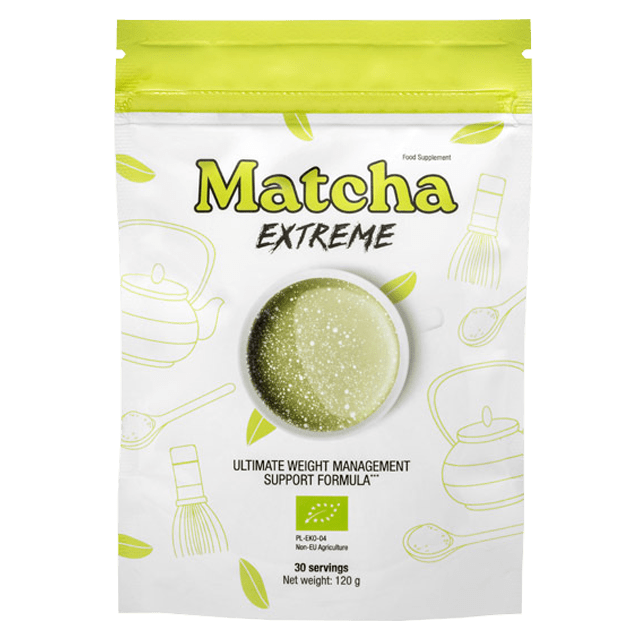
One scoop of Matcha Extreme is 4 g of blend containing 2,250 mg of matcha leaf. That is about one full studied serving. The maker's 1 to 2 servings a day therefore spans the studied range and its top.
The catch is supply. One pouch holds 30 servings. At 1 serving a day it lasts 30 days; at the maker's full 2 servings a day it lasts 15 days, despite the order page's one-month framing.
Best for: anyone trying to match a commercial scoop to the research, before paying for a routine. We score Matcha Extreme at 4.8/10 — a declared panel you can audit, with caffeine the undeclared exception.
Our Recommendation — Matcha Extreme
Score: 4.8/10 · Best for: tea drinkers who would swap a caloric drink for an unsweetened matcha-style tea and want a fully declared panel, not a proprietary blend. Main caution: no money-back guarantee is published, the pouch lasts 15 days at the maker's full dose, and caffeine is never declared. Fair trial: two months at one serving a day — the three-pouch pack at $35.99 a pouch covers it.
What the Studies Actually Served
Start with the literature's own serving. In matcha research, a cup is usually made with 1 to 2 g of powder. That is a teaspoon-scale amount, whisked into water, not a heaped scoop of blend.
The 2018 Chichester drinks used 1 g per cup. Participants drank three cups the day before testing and one cup two hours before a walk. Four grams across about a day was an acute testing pattern, not a daily habit.
The longer programme went further. In Willems et al. 2021, females took 3 g of matcha a day for three weeks, as three 1 g capsules daily.
That study measured substrate oxidation during moderate exercise after three weeks. It did not measure weight loss over months. Its 3 g figure is a studied daily intake for a metabolic endpoint, not a proven weight-loss prescription.
Positive matcha work generally sits between 2 and 4 g of powder a day. Below that range, exposure may still matter. Above it, there is no matcha trial showing extra weight benefit to justify the extra caffeine and cost.
Extract trials are a different exposure and must not be converted into grams of leaf. A capsule standardised for EGCG delivers a defined catechin dose. A gram of leaf delivers a variable catechin amount depending on grade and harvest.
The Jurgens et al. 2012 Cochrane review pooled green-tea preparations, not cups of matcha. Its trial context explains the class effect size, but it cannot tell you how many teaspoons of powder equal its capsules.
So the studied pattern, stated plainly, is this: 1 to 2 servings daily, each 1 to 2 g of matcha, sustained for weeks. Any product routine should be translated against that pattern, ingredient by ingredient.
Duration matters as much as grams. The weight trials behind the class ran about 12 weeks. A dose taken for five days has not reproduced the studied exposure, whatever its daily gram count claims to match.
A worked comparison shows why duration and dose must travel together. Three grams a day for three weeks is 63 g of matcha in total. One gram a day for twelve weeks is 84 g — a lower daily dose, but a larger total exposure.
Neither total, on its own, proves a weight effect. The three-week programme measured oxidation during exercise, while the twelve-week trials measured weight. Matching a gram figure without matching the endpoint and duration is a common way dose claims go wrong.
Timing within the day was also structured in the research. Doses were split across meals, or placed before testing, rather than taken as one large serving. A daily total reproduced at a completely different time is only partly the studied routine.
The Serving-Size Confusion
Every matcha dose answer online disagrees with the next one because the word serving hides three different amounts. In papers, a serving is commonly 1 to 2 g. In cafés, it is often 2 to 4 g.
On social media, a serving can be anything a creator scoops on camera. Two heaped teaspoons may double a level serving. A blended drink may contain matcha plus milk, sweetener, and other powders that change the comparison completely.
Grade adds a second confusion. Ceremonial and culinary powders differ in harvest, taste, and price. Their catechin and caffeine content per gram varies, so equal gram weights of different powders are not chemically identical servings.
Blend products add a third confusion. A 4 g scoop of a blend is not 4 g of matcha. Only the printed leaf amount counts for the matcha dose, and only a fully declared panel lets you find it.
That is why this article translates by leaf weight, not scoop weight. Scoops are packaging. Grams of matcha leaf are the exposure the literature studied, and the only figure that can be compared honestly across products.
A kitchen scale settles most arguments. Weigh your usual scoop once. If your home serving is 3 g and a study used 1 g cups, you are not under-dosing — you are taking three study cups at once.
Labels that give only a scoop size, with no gram weight, fail this test at the first step. You cannot match a dose you cannot measure, and you cannot audit caffeine or catechins from a spoon description.
This Product's Scoop, Translated
Here is the worked example this set is built around. Matcha Extreme prints a 4 g scoop containing 2,250 mg matcha leaf, 900 mg spirulina, 500 mg Cacti-Nea, and 350 mg acerola.
The acerola provides 60 mg of vitamin C per scoop, as printed on the panel. The four named amounts sum to the 4 g scoop. That arithmetic, unusually for this category, actually checks out on this label.
One scoop therefore delivers slightly more leaf than a 2 g study serving, and slightly less than the 3 g daily total used over three weeks in Willems 2021. One scoop a day is a studied-range routine.
Two scoops deliver 4,500 mg of matcha leaf in a day. That sits above the common studied day for matcha drinks. It also doubles every other ingredient, the caffeine estimate, and the rate at which the pouch empties.
The spirulina translation cuts the other way. At 900 mg per scoop, even two scoops give 1,800 mg a day. Our spirulina article shows the clearest pooled effects began at 2 g a day or more in adults compared with placebo.
So the same routine can be in range for one ingredient and under range for another. That is normal for blends. It is also why a single headline dose claim for a four-ingredient product should always be unpacked.
Cacti-Nea and acerola are not dosed for weight loss in this translation at all. Their own evidence files are separate, and neither converts a matcha serving into a stronger weight-loss serving by being present in the scoop.
The maker's directions allow 1 to 2 servings a day. Our translation says the lower end matches the research pattern most cleanly. The upper end is a maker's allowance, not a dose any matcha weight trial tested for months.
If you choose two servings, space them. The literature split intake across the day, at meals or around activity. Two scoops at once concentrates caffeine and stomach load without reproducing any studied pattern we could find.
A second worked example helps home drinkers. If your own powder serving weighs 2 g, two cups a day is 4 g of leaf. That already matches the top of the range the positive matcha work generally used.
If your serving weighs 1 g, three cups spread across a morning is 3 g of leaf. That matches the daily total in the three-week Willems programme exactly, without any single large serving at any point in the day.
Is Two Servings a Day Too Much Caffeine?
The honest answer is a range, because this product declares no caffeine figure. Matcha is reported to run 19 to 44 mg of caffeine per gram of leaf. That range is presented here as reported, without a primary link.
Apply it to one scoop. A scoop contains 2.25 g of leaf. At 19 mg per gram, the estimate is about 43 mg. At 44 mg per gram, the estimate is about 99 mg per scoop.
Apply it to two scoops. Two scoops contain 4.5 g of leaf. The same range estimates about 85 to 198 mg of caffeine across the day from this product alone, before coffee, tea, or anything else.
Those figures are estimates, every time they appear. They are calculated from leaf weight and a reported per-gram range. They are not measurements of this powder, and the maker has published no figure to check them against.
The frame for judging them is the FDA caffeine guidance. It cites about 400 mg a day, from all sources, as not generally associated with negative effects for most healthy adults.
On the estimates above, two scoops alone would not reach that reference for most adults. Add two coffees, however, and the total can approach or pass it, depending on the coffees and where this powder sits in its range.
Individual sensitivity matters more than the average. Some adults feel 85 mg strongly; others notice little at 198 mg. Pregnancy, medication, anxiety, and sleep problems all lower the amount a person should accept from an unlabelled source.
Our full caffeine comparison, matcha against coffee serving by serving, is in the matcha vs coffee caffeine article in this set. It works the same range against coffee's better-known figures, cup by cup.
The dose conclusion is conservative. If caffeine is the reason you are counting, one scoop a day is the defensible starting routine for this product. Two scoops double an estimate you cannot verify from its own label.
What Happens If You Drink Too Much Matcha?
The common effects of excess are caffeine effects. Jitteriness, a racing or noticeable heartbeat, anxiety, headache, and reflux-like discomfort all become more likely as daily caffeine rises, especially in sensitive drinkers or on an empty stomach.
Sleep is usually the first casualty. Caffeine's half-life is roughly 5 to 6 hours, so an afternoon second serving still leaves a meaningful share active at bedtime. Poor sleep then worsens hunger and diet adherence the following day.
Stomach upset scales too. Whole-leaf powder brings tannins and catechins in the full serving, not a strained infusion. Nausea on an empty stomach is the commonest complaint in reader reports and guides alike.
More powder also means more of everything else in the blend. At two scoops, spirulina, Cacti-Nea, acerola, and vitamin C all double. Doubling a blend is not selective; you cannot raise only the ingredient you wanted more of.
Serious harm from ordinary tea-strength servings is not the pattern in the literature. The green-tea safety warnings that make headlines attach mainly to concentrated extracts at high catechin doses, a different exposure from whisked whole leaf.
Our matcha side-effects article keeps that extract distinction in full, including iron absorption and the empty-stomach problem. This section is the dose summary only: effects scale with intake, and the studied range exists for a reason.
The practical stopping rule is simple. If a second daily serving costs you sleep, steadiness, or stomach comfort, it has already exceeded your useful dose — regardless of what a maker's directions permit on the pouch.
The Pouch Maths Nobody Prints
One pouch contains 30 servings. At 1 serving a day, that is 30 days. At 2 servings a day, that is 15 days. Both statements are true; the order page's one-month supply framing uses only the first.
Price follows the same split. A single pouch costs $53.99. Three packs cost $107.98 in total, which is $35.99 per pack received. Six packs cost $161.97 in total, which is $26.99 per pack received.
Every order also carries $12 shipping, with no free-shipping tier published. A single pouch delivered therefore costs $65.99. That delivered figure, not the headline pouch price, is the correct starting point for monthly maths.
At 1 serving a day, one pouch a month is the routine, at those prices. At 2 servings a day, a month takes two pouches. Bought singly, that is $107.98 in product, before the shipping charged on the orders.
Bundles change the per-pack price but not the serving count. Three packs at 2 servings a day last 45 days, not three months. Six packs at that routine last 90 days, not the half-year a pack count suggests.
Now place that against the trial window. A 12-week test at 1 serving a day needs about three pouches. At 2 servings a day it needs about six pouches, with the cost and caffeine doubling alongside the leaf.
No money-back guarantee is published to underwrite that test. The terms give only a 10-day withdrawal for unused goods. A buyer who finishes the trial with no result cannot recover its cost from the maker.
The maker's quality and safety badges do not change that position. Badges about manufacturing quality are not a refund promise. We score the absence of a published guarantee as part of this product's 4.8/10, alongside its declared panel.
Budget, then, for the routine you will actually run. The cheapest per-pack bundle is poor value if it commits you to six packs before you know whether one scoop a day suits your sleep, stomach, and scale trend.
Decide the routine before the first pouch, in writing. Write down servings per day, the pouch count that implies for twelve weeks, and the delivered cost. That single note prevents a one-month framing from quietly becoming a six-pouch commitment.
It also creates a fair test. Changing from one serving to two halfway through, while also changing diet or training, makes the result unreadable. The studies held dose steady for their full duration; a personal trial should do the same.
Our Recommendation — Matcha Extreme
Score: 4.8/10 · Best for: tea drinkers who would swap a caloric drink for an unsweetened matcha-style tea and want a fully declared panel, not a proprietary blend. Main caution: no money-back guarantee is published, the pouch lasts 15 days at the maker's full dose, and caffeine is never declared. Fair trial: two months at one serving a day — the three-pouch pack at $35.99 a pouch covers it.
Frequently Asked Questions
Does more matcha mean more weight loss?
No dose-response beyond the studied range has been shown for matcha and weight. The trials cluster around 1 to 4 g a day. Doubling past that range doubles caffeine and cost first, and proven benefit not at all.
If a routine is not working at a studied dose after 12 weeks, the evidence-based options are to reassess the diet, or stop. Escalating the scoop is the one response the trial record does not support.
Can I take both servings at once?
The literature split intake across the day, and we recommend following that pattern. Two scoops at once deliver an estimated 85 to 198 mg of caffeine in one sitting, from 4.5 g of leaf, using the reported range.
Splitting also spreads the stomach load. A single large whole-leaf serving is the pattern most likely to produce the nausea described in our side-effects article, especially before breakfast or training.
What does half a scoop give me?
Half a scoop halves everything on this declared panel proportionally. That is about 1,125 mg of matcha leaf, 450 mg spirulina, 250 mg Cacti-Nea, 175 mg acerola, and 30 mg of vitamin C.
That calculation is only possible because this panel is disclosed. On a proprietary blend, half a scoop would halve an unknown. Here it gives a legitimate lower-caffeine starting point for sensitive drinkers.
Last reviewed: October 2026.
