
- Quick Answer
- How Cellular Energy Is Supposed to Work: the ATP Story, Labelled
- The Human Record, Complete
- "Does Shilajit Give You Energy Immediately?"
- Why "More ATP" Would Not Automatically Mean "More Energy" Anyway
- Anatomy of a Number: How "Fatigue Down 32%" Happens Without a Drug Effect
- The Stress-Fatigue Overlap — and Where the Adaptogen File Lives
- Chronic Fatigue Is a Diagnosis, Not a Supplement Indication
- Shilajit vs Stimulants: an Honest Comparison
- When Tiredness Needs a Workup, Not a Supplement
- Endurance: the Adjacent Claim With No Human Measurement
- How to Run a Fair Self-Experiment (If You Run One)
- The Third Option Nobody Sells: Sleep
- The Product Paragraph: Shilajit Extreme, From the Energy Angle
- Who Should Buy Shilajit Extreme — and Who Should Skip It
- A Stronger Alternative in This Category
- Frequently Asked Questions
- Does shilajit really give you energy?
- How long before shilajit helps with fatigue?
- Is shilajit better than caffeine for energy?
- Can shilajit help chronic fatigue?
- Why do I feel more energetic since starting shilajit?
- Will shilajit keep me awake if I take it at night?
- Can I take shilajit every day for energy?
- Can I use shilajit as a pre-workout?
- Read This Next
Disclosure: This article contains affiliate links. If you buy through them, we may earn a commission at no extra cost to you. It never changes our conclusions.
Quick Answer
There is no well-designed human trial showing that shilajit reduces general fatigue, improves endurance, or raises subjective energy against placebo — not one. The most honest sentence any competitor publishes on this topic comes from a hospital group's evidence review: the energy claim is "biologically plausible, demonstrated in rodents, unproven in people." Everything else in the human file is a 28-day open-label pilot with no control group, run by a resin manufacturer. Shilajit contains no stimulant and produces no acute lift; the mechanism story (dibenzo-α-pyrones protecting coenzyme Q10 in mitochondria) is a hypothesis from laboratory work, not a measured human outcome. If a page tells you shilajit "boosts ATP and fights fatigue" as established fact, it is retailing rodent data in human clothing. Best for: men whose fatigue has already been checked for its common medical causes, who understand they are buying an unproven long-term experiment — not men who need to feel something this week.
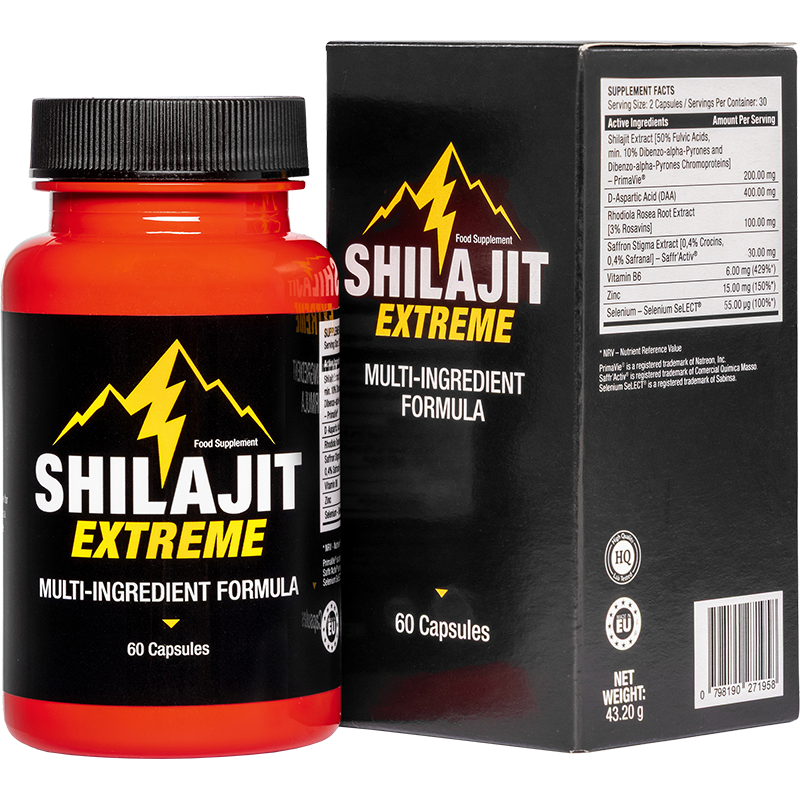
Our Recommendation — Shilajit Extreme
Score: 5.8/10 · Best for: men whose fatigue has already been checked for medical causes and who want a standardised extract as a long-term experiment — with no stimulant and no day-one lift promised Main caution: no human trial shows shilajit beating placebo for energy — the ATP story is still a laboratory hypothesis — and the bottle ships 200 mg a day against studied doses up to 500 mg Fair trial: $56.99 a month with a maker-recommended three-month minimum (three bottles at $153.87) and no published money-back guarantee — the experiment's cost is committed up front.
How Cellular Energy Is Supposed to Work: the ATP Story, Labelled
The energy claim has a genuinely interesting mechanism behind it, and the fastest way to keep it honest is to tell it as what it is: a proposed chain, link by link, with the evidence tier on each link. Your cells make most of their energy currency — ATP — in mitochondria, through the electron-transport chain. Coenzyme Q10 (CoQ10) is one of the chain's working parts, shuttling electrons along it. Shilajit contains a family of compounds called dibenzo-α-pyrones (DBPs), and laboratory research has proposed that DBPs help protect and recycle CoQ10 within that chain — in effect, defending the machinery's efficiency under stress. A second proposed player is fulvic acid, the small humic fraction that makes up half of a standardised extract, credited in laboratory and traditional accounts with carrying minerals and nutrients across cell membranes. Assembled, the pitch writes itself: protect the chain, deliver the inputs, make more ATP, feel more energy.
Now the tiers. The DBP–CoQ10 interaction is laboratory and animal-stage work. No human trial has measured ATP production, mitochondrial function, or any objective energy output as an outcome of taking shilajit. The distance between "a compound interacts with energy machinery in a dish" and "you will feel less tired" is the distance most supplement marketing exists to skip — caffeine, by contrast, has thousands of human trials measuring exactly the feeling. None of this makes the hypothesis worthless; mitochondrial support is a serious research direction, and shilajit's chemistry is a legitimate reason scientists looked. It makes the hypothesis a hypothesis. When a brand page states "shilajit increases ATP production" without the word "proposed" anywhere nearby, it has promoted two evidence tiers in one sentence, and you should price everything else on that page accordingly.
The Human Record, Complete
Here is the entire evidence base for shilajit and energy in humans, in full. It will not take long — and its brevity, after centuries of use and millions of jars sold, is itself the most informative fact in this article.
The rodent anchor (2012). The study every energy claim ultimately rests on: rats were put through 21 days of forced swimming — a standard chronic-fatigue model — which depleted the activity of mitochondrial enzymes in the brain and disturbed the stress-hormone response. Rats pre-treated with shilajit preserved more of that mitochondrial function. It is real, published, and about rats: animals whose "fatigue" is a swimming protocol, whose dosing and metabolism are not yours, in a model designed to screen hypotheses before anyone spends money on human trials. Mainstream coverage that labels it a rat study is doing its job; brand blogs that convert it, silently, into "clinically shown to fight fatigue" are not.
The open-label pilot. The one human fatigue figure in circulation — fatigue scores down roughly 32% — comes from a 28-day pilot in 25 healthy men taking resin at 250 mg twice daily. It was open-label (everyone knew what they were taking), uncontrolled (no placebo group), short, small, and run by the resin's manufacturer. Fatigue is among the most placebo-responsive outcomes in all of medicine: enrol tired people in a study, hand them a promising substance, check in on them for four weeks, and scores improve on sugar pills. That is precisely why the placebo group exists, and precisely why this pilot cannot separate shilajit from expectation, attention and a month of ordinary fluctuation. Quoted with its design attached, it is a reason to fund a real trial. Quoted as "fatigue reduced 32%" — the form in which it travels — it is advertising.
The neighbouring trial. The closest thing to an energy-adjacent controlled result is a study of strength retention during fatiguing exercise — a narrower, laboratory question about muscles under load, not about how tired a person feels in daily life — and it belongs to our muscle coverage, where it is read in full with its subgroup and dose limits, rather than being re-spent here as energy evidence; several brand pages do exactly that repurposing, and it is one of the misreadings this set exists to correct: see our shilajit and muscle article for what that trial actually found. Everything else labelled "energy" in the shilajit literature is traditional use, mechanism, or marketing. That is the complete human record.
"Does Shilajit Give You Energy Immediately?"
No — and this question, which the demand research shows men ask constantly, deserves a structural answer rather than a shrug. Shilajit has no stimulant pharmacology: nothing in it binds adenosine receptors (caffeine's trick), releases catecholamines, or acts on any pathway with an onset in minutes. Nothing in the trial literature was even measured on a same-day timescale — the fatigue pilot ran 28 days, the hormone trials 90. If you take shilajit and feel energised within the hour, the candidate explanations are, in order of likelihood: expectation (you took a thing sold for energy), the caffeine you took it with or near, repaid sleep debt, an ordinary good day, or the simple lift of starting a project aimed at feeling better. All five are real experiences; none is the resin. The corollary matters for judging fairly in the other direction: a product whose only evidence sits at 8–12 weeks cannot be failed at day 10 either. Immediate-energy products exist — they are called stimulants, they are in the comparison table below, and they come with tolerance, sleep costs and a crash profile that shilajit, to its credit, does not share. What shilajit offers instead is an unproven slow hypothesis. Selling it as a fast one is the category's most common small dishonesty. There is an irony the honest reader may as well enjoy: the acute lift is the best-documented effect in this entire story — expectation reliably, measurably improves felt energy within the hour — it just belongs to the ritual rather than the resin, fades as novelty fades, and is available from any capsule you believe in, including the empty ones used as placebos. The trials exist to tell you which part you are paying for.
Why "More ATP" Would Not Automatically Mean "More Energy" Anyway
Even if the mitochondrial hypothesis were confirmed tomorrow — DBPs measurably protecting CoQ10 in human muscle — a second gap would remain, and it is the one almost nobody in this market discusses: ATP production is not the same thing as feeling energetic. Healthy human cells are not usually ATP-limited at rest; the body produces ATP on demand, in quantities matched to activity, and subjective energy — the feeling a buyer is shopping for — tracks sleep quality, mood, blood sugar stability, fitness, illness and expectation far more closely than it tracks any mitochondrial variable anyone has measured. This is why the history of "mitochondrial" supplements is a history of plausible mechanisms and unproven feelings, and why the honest trial for an energy claim is not a biomarker but a boring, validated fatigue questionnaire given to blinded people against a placebo. Shilajit has never faced one. Understanding this two-step gap — compound-to-mechanism, mechanism-to-feeling — is the difference between reading supplement science and reading supplement copy. Most pages selling shilajit for energy jump both gaps in a single sentence. This page exists to put the gaps back.
Anatomy of a Number: How "Fatigue Down 32%" Happens Without a Drug Effect
The 28-day pilot deserves a slower autopsy, because its number is the only human fatigue figure in the entire shilajit market and it will be quoted at you. Open-label, uncontrolled fatigue studies manufacture improvements through at least four well-documented channels, none of which requires the substance to do anything. Expectation: participants knew they were taking a product sold for vitality; fatigue scores are subjective self-reports, the outcome type most permeable to belief. Regression to the mean: people join studies and start products when they feel worst; extreme states drift back toward ordinary ones on their own schedule, and a 28-day window is perfectly sized to collect the drift and call it efficacy. Attention and routine: enrolment brings check-ins, structure and the feeling of being looked after — interventions in themselves, and the reason trialists coined the term "trial effect". Co-interventions: a man who starts a vitality product in the same month he cleans up his sleep and training will improve, and the study records the improvement next to the product's name. A placebo group is not bureaucratic decoration; it is the only known instrument that subtracts all four channels at once. The pilot's maker chose not to include one — a common economy in manufacturer research — and the resulting 32% is therefore best read as the ceiling of what the whole ritual delivers, with the substance's share unknown and possibly zero. That is the number, whole. Anywhere you meet it without its design attached, you are being handed the ceiling as if it were the substance.
The Stress-Fatigue Overlap — and Where the Adaptogen File Lives
One refinement keeps this article from overshooting into dismissal. "Fatigue" in the wild is a blended complaint: some of it is sleep debt, some is the medical list below, and a substantial share is stress-load fatigue — the flat, wired-tired state of sustained pressure, poor recovery and ragged sleep. That third kind is the territory of the adaptogen literature, and it is why a formula like Shilajit Extreme's pairs its shilajit with rhodiola and saffron, two ingredients with their own stress-and-fatigue trial files. Those files are graded in this site's stress cluster — linked from the product paragraph below — and they are stronger than shilajit's own energy file while still being ingredient-specific and modest. The discipline matters: a buyer whose fatigue is stress-shaped may rationally be more interested in the formula's supporting cast than in its headline ingredient, but the claims must be met in their own articles, at their own doses, with their own caveats — not borrowed across a label. Set O does not build adaptogen claims of its own; it points, and the pointing is the honesty.
Chronic Fatigue Is a Diagnosis, Not a Supplement Indication
A boundary this article will not blur: chronic fatigue as a symptom (feeling tired for weeks) is one of the commonest presentations in medicine, and chronic fatigue syndrome / ME (myalgic encephalomyelitis) is a specific, serious diagnosis with criteria, exclusions and a management literature of its own. Neither is a shilajit indication. No shilajit trial enrolled fatigued patients — the pilot enrolled healthy men — and no responsible reading of a rat swim study produces a treatment for a human illness. If your tiredness is persistent, worsening, or accompanied by the red flags in the checklist below, the correct purchase is a consultation. The supplement industry profits from the gap between "tired" (universal, usually fixable) and "fatigued" (sometimes a disease announcing itself) — this page declines the profit and keeps the distinction.
Shilajit vs Stimulants: an Honest Comparison
| Shilajit (purified extract) | Caffeine / stimulant products | |
|---|---|---|
| Onset | No acute effect; any real effect would be measured at 8–12 weeks | 15–60 minutes |
| Human evidence for energy | None placebo-controlled; one open-label pilot, animal data | Extensive — alertness and fatigue masking are among the best-measured effects in nutrition science |
| Mechanism | Proposed mitochondrial support (DBP/CoQ10) — unmeasured in humans | Adenosine-receptor blockade — established |
| Tolerance & dependence | No stimulant tolerance described; long-term use unstudied | Tolerance develops in days–weeks; withdrawal headache/fatigue are real |
| Sleep cost | None known as a stimulant effect; evening use is a routine question, not a pharmacological one | Measurable sleep disruption even 6+ hours before bed at typical doses |
| What it fixes | Unknown in humans | Masks sleep debt; fixes nothing underneath it |
| Honest use case | A slow, unproven experiment after fatigue's causes are checked | A short-term alertness tool, best used sparingly and early in the day |
The table's last stimulant row is the one stimulant marketing omits: caffeine borrows alertness from tonight's sleep and tomorrow's baseline, which is why heavy users feel they "need it to function" — they are servicing a debt the caffeine itself issued. Shilajit's genuine comparative virtue is that it makes no such bargain. Its comparative vice is that, in humans, it has not yet been shown to do anything for energy at all. A non-addictive unknown versus a well-measured loan: that is the actual choice, and it is a more useful frame than "natural energy vs artificial energy", which is a slogan, not a comparison.
When Tiredness Needs a Workup, Not a Supplement
The most valuable section of any fatigue article is the one that routes readers away from products. Persistent tiredness has a standard differential, and most of it is findable with basic blood work and a history:
- Sleep apnoea — common, underdiagnosed, and a testosterone-suppressor in its own right; loud snoring, witnessed pauses and unrefreshing sleep are the classic triad.
- Iron status / anaemia — a blood count and ferritin answer this in one draw.
- Thyroid function — underactivity is a textbook fatigue cause, checked with TSH.
- Depression and low mood — fatigue is a core symptom; the screening takes minutes.
- Medication effects — beta-blockers, some antidepressants, antihistamines and many others list fatigue prominently.
- Blood sugar and diabetes, vitamin D and B12 status, chronic infection or inflammation, and plain energy deficit in men dieting hard or overtraining.
See a clinician promptly if fatigue comes with unexplained weight loss, fever, night sweats, breathlessness, chest symptoms, swollen glands, or a sudden change in a man who was previously well — and treat any fatigue that has lasted beyond a few months without explanation as a workup item by default. Every item on the list above is more common, more consequential and more treatable than "low shilajit". The supplement question, if it survives the workup, can be asked afterwards with a clear field — which is the only order of operations this site will recommend.
Endurance: the Adjacent Claim With No Human Measurement
Energy's neighbouring claim — endurance, stamina, lasting longer in training — deserves its own short section because it borrows the energy file's credibility while having even less of its own. No human trial has measured an endurance outcome for shilajit: no VO2 max, no time-to-exhaustion, no time-trial, no repeated-effort test in people. The closest measurement in the entire literature is the rodent forced-swim work — an exhaustion model in rats, useful for screening mitochondrial hypotheses, and about as transferable to a runner's 10k as a crash test is to a commute. Traditional use at altitude contributes the stamina reputation (shilajit has a long history in mountain cultures), and tradition is a reason researchers looked — it is not a stopwatch. Athletes meeting "clinically shown to improve endurance" on a shilajit page are meeting a claim with zero human performance trials behind it. This site's muscle cluster covers the one exercise trial that exists, on its own narrow terms; endurance, as a human claim, remains unmeasured, and this article grades it accordingly rather than letting it hitchhike on the fatigue discussion.
How to Run a Fair Self-Experiment (If You Run One)
Suppose the workup is done, the sleep is handled, and you still want to test the hypothesis on yourself. Run it so the answer means something. Fix the inputs first: hold sleep, caffeine and training roughly constant — a supplement trialled simultaneously with a new sleep schedule will be credited or blamed for the schedule. Log the output simply: a daily 1–10 energy rating at the same time each day, plus your sleep hours; thirty seconds, no app required. Two weeks of baseline before the first capsule converts your impressions into before/after data and exposes how much your energy moves on its own — for most men, a great deal, which is itself the lesson. Pre-commit the judgement: decide in advance what change would count (say, a sustained one-point average improvement across the final month) and at what date you will judge it — day 90, matching the trials — so a good week cannot move the goalposts. Change one variable: starting three products at once teaches you nothing about any of them. And let the log outrank the feeling: if the numbers say no change, the honest outcome of a well-run experiment is to stop, and a well-run "no" is worth the money — it retires a hypothesis permanently instead of re-buying it every spring.
The Third Option Nobody Sells: Sleep
Every fatigue article owes its reader the intervention with the largest measured effect on daytime energy, and it is not in a bottle. Sleep restriction studies produce fatigue degradations that dwarf anything in the supplement literature, in both directions: curtail sleep and alertness, mood and performance fall off a cliff within days; extend and protect sleep in tired people and the same measures recover — an effect size no capsule in this file approaches in either direction. The same is true, at one remove, of the other unpatentables: daylight exposure and exercise (which improve sleep architecture as well as fitness), alcohol reduction (a sedative that fragments the second half of the night), and treating the snoring that turns eight hours in bed into five hours of sleep. None of this can be sold to you at $56.99 a month with free shipping on six, which is precisely why fatigue marketing routes around it. Our position, stated in every article in this set in some form: supplements are what remains after the big levers — sleep, causes, stress load — have been pulled. A reader who pulls them first and still wants to experiment is the reader the rest of this article was written for.
The Product Paragraph: Shilajit Extreme, From the Energy Angle
The product this set accompanies, Shilajit Extreme (our score: 5.8/10), makes no stimulant claim it could cash, and this article grants it no energy claim either: its 200 mg/day of PrimaVie® — a purified extract standardised to 50% fulvic acids — sits below even the testosterone trial's dose, and there is no energy trial at any dose to be below. What the formula does contain, at honest supporting doses, is rhodiola (100 mg) and saffron as Saffr'Activ® (30 mg) — two ingredients whose stress-and-fatigue files live in this site's stress cluster, and we link rather than borrow them: our rhodiola for stress and saffron for mood and stress articles grade those ingredients on their own evidence, which is the correct way to meet them. The commercial facts for the energy buyer: $56.99 a month ($153.87 / three bottles; $273.55 / six, free shipping), a maker-recommended three-month minimum, and no published money-back guarantee. For a claim with no human RCT behind it, that is a considered purchase, not an impulse one — and it should be made, if at all, after the causes checklist above has had its turn.
Who Should Buy Shilajit Extreme — and Who Should Skip It
Buy it if your tiredness has been worked up and explained (or ruled medical-cause-free), you want the standardised-extract form of a biologically interesting hypothesis, and you can hold a fair 90-day judgement without expecting to feel anything on day one. Skip it if you need energy today (that is caffeine's job, with its costs), if your fatigue is unexplained (that is a clinician's job, urgently more than it is a supplement's), if a diagnosis of chronic fatigue syndrome is in your picture (no supplement in this literature has been trialled in it), or if "boosts ATP" on a label was the reason you came — that claim is a laboratory hypothesis, and buying it as a fact is buying something no seller actually has. The experiment, run slowly and honestly, is defensible; the promise is not.
A Stronger Alternative in This Category
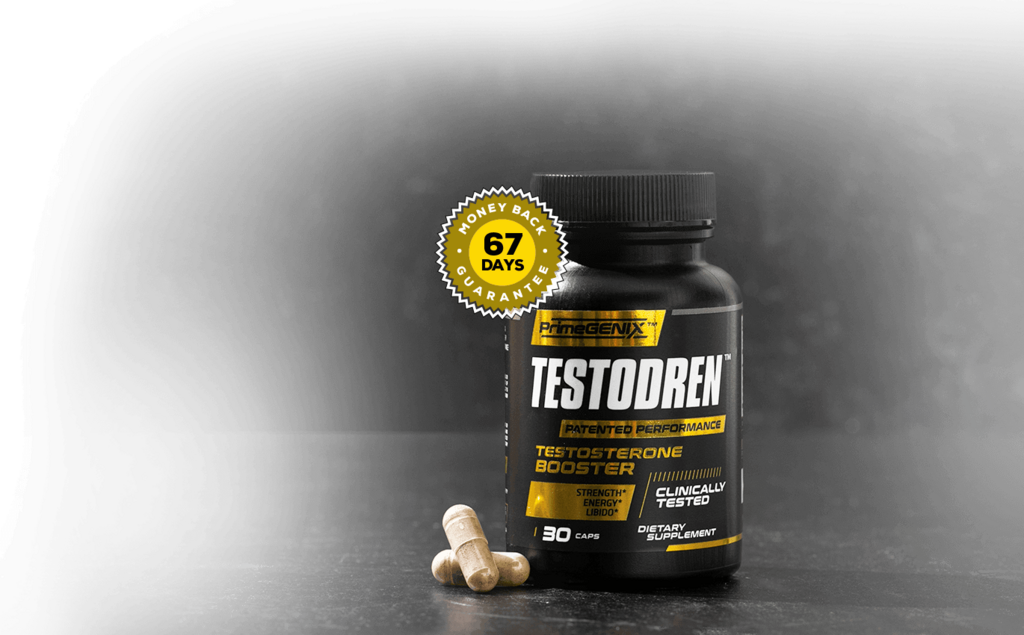
The stronger alternative: Testodren · 8.5/10For testosterone support, the stronger-scoring route in this catalogue is a single ingredient at a published 500 mg dose, with human studies behind the ingredient itself — not a blend sitting below the range its own trials used.
Our Recommendation — Shilajit Extreme
Score: 5.8/10 · Best for: men whose fatigue has already been checked for medical causes and who want a standardised extract as a long-term experiment — with no stimulant and no day-one lift promised Main caution: no human trial shows shilajit beating placebo for energy — the ATP story is still a laboratory hypothesis — and the bottle ships 200 mg a day against studied doses up to 500 mg Fair trial: $56.99 a month with a maker-recommended three-month minimum (three bottles at $153.87) and no published money-back guarantee — the experiment's cost is committed up front.
Frequently Asked Questions
Does shilajit really give you energy?
There is no placebo-controlled human evidence that it does. The claim rests on a rat chronic-fatigue study, a mitochondrial mechanism proposed from laboratory work, and one 28-day open-label pilot (fatigue scores down ~32%) run by a resin maker with no control group. Biologically plausible; demonstrated in rodents; unproven in people.
How long before shilajit helps with fatigue?
Nothing is measured before 28 days even in the weakest study, and the serious trials in this file ran 90 days. Any effect, if one exists, is a months-scale question. Same-day or first-week energy from shilajit is expectation or the coffee next to it.
Is shilajit better than caffeine for energy?
They are not the same kind of thing. Caffeine's alertness effect is real, fast and exhaustively measured — and it masks rather than fixes tiredness, with tolerance and sleep costs. Shilajit has no stimulant action and no proven energy effect; its claimed virtue is a slow, unproven mechanism with no crash profile. Choose based on which honest description matches your need.
Can shilajit help chronic fatigue?
Chronic fatigue syndrome/ME is a medical diagnosis, and no shilajit trial has enrolled fatigued patients of any kind. Persistent unexplained fatigue needs a workup — sleep apnoea, thyroid, iron, mood and medication effects head the list — before any supplement conversation.
Why do I feel more energetic since starting shilajit?
The likeliest explanations are expectation, the attention a new routine brings (better sleep, training and eating often arrive alongside a supplement), ordinary fluctuation, or caffeine timing. This is not a dismissal — feeling better matters — but feeling better on an uncontrolled personal trial is exactly the signal a placebo group exists to interpret, and yours doesn't have one. Judge at 90 days, and judge the basics first.
Will shilajit keep me awake if I take it at night?
It has no stimulant pharmacology, so there is no caffeine-style reason it should. Most users take it in the morning out of association with energy; if you find yourself alert after evening doses — a pattern reported anecdotally with many vitality products — move it to the morning, as our how-to-take guide advises. Restlessness and a racing pulse at high doses are listed among reported effects in our safety article.
Can I take shilajit every day for energy?
People do, and purified extracts at 200–500 mg/day were tolerated in trials for up to 48 weeks — but "for energy" has no trial behind it at any duration, and no study establishes multi-year daily safety for any purpose. Daily use also converts the purity question from a detail into the main event: contaminants accumulate with exposure, which is why our safety and purity articles treat product quality as the centre of the daily-use decision.
Can I use shilajit as a pre-workout?
As an acute pre-workout, it has nothing to offer: no stimulant, no measured same-day effect, and no human endurance trial. This site's muscle cluster covers what was actually studied around training; a pre-workout ritual built on shilajit is built on tradition and expectation, and this article's comparison table shows what the fast-acting alternatives cost and deliver.
Last reviewed: October 2026. This article is educational and is not medical advice.
