
- Quick Answer
- The Comparison Table
- The Fact Nobody's Marketing Mentions: There Is No Head-to-Head Trial
- What the Trials Used: Preparation Is Not Format
- Standardisation: the Capsule's One Real Advantage
- The Taste Question — and the Bitterness Fallacy
- Liquids: the Fourth Form
- The Cost Table: What a Month Actually Costs
- The Beginner Decision Path
- The Bottom Line, Against the Score
- Who Should Buy Shilajit Extreme — and Who Should Skip It
- A Stronger Alternative in This Category
- Frequently Asked Questions
- Is shilajit resin more potent than capsules?
- Which form of shilajit is best for beginners?
- What form did the clinical trials use?
- Are shilajit gummies or liquids equivalent to capsules?
- How should each form be stored — and does resin go off?
- Is powder a good middle option?
- Read This Next
Disclosure: This article contains affiliate links. If you buy through them, we may earn a commission at no extra cost to you. It never changes our conclusions.
Quick Answer
The best form of shilajit is the one whose preparation you can identify and verify — because no trial has ever compared resin, capsules and powder against each other, and form loyalty is a marketing product, not a research finding. What the trials actually used was a measured, purified, standardised preparation delivered in capsules. That does not crown the capsule shell; it crowns measurability. A standardised capsule can state its milligrams and its fulvic percentage per serving; a scoop of resin usually can state neither with batch precision, and a powder sits between the two — weighable, but only as strong as its label's standardisation claim. For most beginners, a standardised capsule of a named extract is the rational default: the dose is known, the routine survives travel and busy mornings, and the paperwork question (our purity guide) can actually be asked. Resin remains a legitimate choice for buyers who value the traditional format and do the COA work. Best for: the standardised capsule — for anyone whose goal is to run something resembling the studied protocols rather than to perform a ritual.
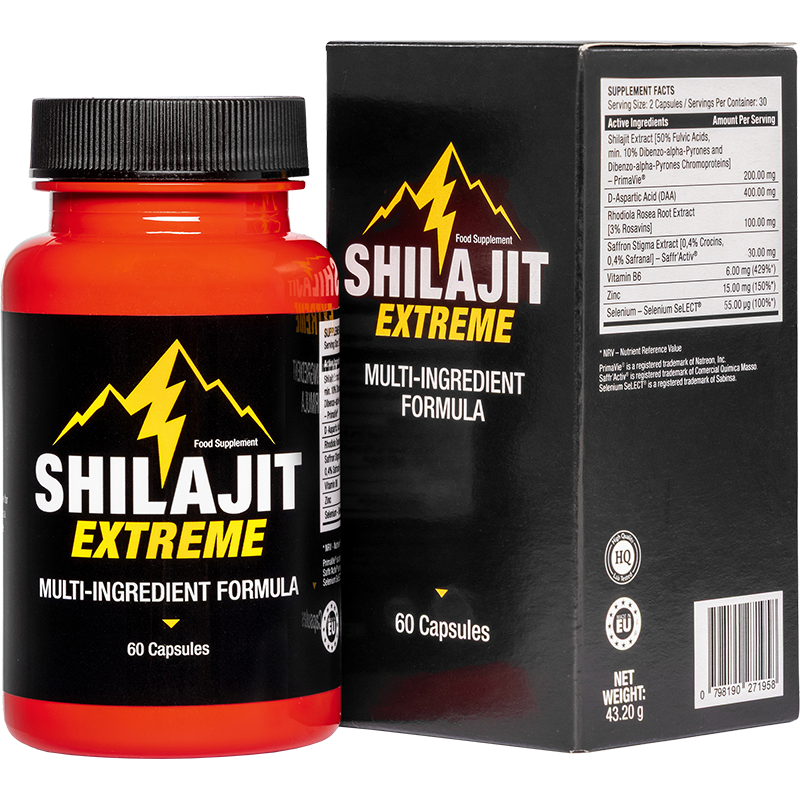
Our Recommendation — Shilajit Extreme
Score: 5.8/10 · Best for: beginners and protocol-followers who want the documented end of this market — a standardised capsule whose milligrams and fulvic percentage can actually be stated against the trial doses Main caution: no trial has compared the forms — the capsule wins on measurability, not proven superiority — and it ships at 200 mg a day against the testosterone trial's 500 mg Fair trial: about $45.59 a month on the six-pack ($273.55, free shipping) that matches how long these experiments run — the single bottle is $56.99, and no money-back guarantee is published.
The Comparison Table
| Resin | Capsules (standardised extract) | Powder | |
|---|---|---|---|
| Processing | Least processed in appearance; purification varies enormously by seller and is invisible in the jar | Extract purified and standardised before encapsulation; the processing is the point | Extract dried to powder; may be standardised or not — the label decides |
| What the label can state | Usually net weight and origin claims; fulvic % rarely stated per batch, and then rarely with its assay method | Exact mg per serving and fulvic % of a named extract (e.g. 200 mg at 50% fulvic acids) | Mg per serving possible; standardisation stated only if the maker standardised |
| Measuring a dose | By eye (rice-grain to pea-sized) — a several-fold range disguised as a dose | Count capsules — the dose is the label's | By scale if you own one; by scoop (unreliable) if you don't |
| Taste | Intensely bitter, smoky, tar-like; the ritual's main tax | None | Bitter in drinks; usually mixed into smoothies or coffee to hide it |
| Travel & routine | Melts in heat, sticks to everything, jar and spoon ritual; the hardest routine to sustain | Trivial — the form most likely to still be running at day 90 | Moderate; needs mixing, clumps, stains |
| Filler / dilution risk | Look-alike resins and stretched batches (identity risk — home tests screen some of it) | Low for the named-extract products; the capsule's contents are the label's claim, checkable against a COA | Highest — appearance reports nothing, dilution is invisible |
| Who it suits | Traditionalists who enjoy the ritual and will do the purity paperwork | Beginners, protocol-followers, anyone running a 90-day measured trial | Confident measurers who buy only standardised powder and own a scale |
The Fact Nobody's Marketing Mentions: There Is No Head-to-Head Trial
Every strong claim in the forms debate — "resin is more potent", "capsules are over-processed", "powder is just as good" — collides with one absence: no study has ever compared the forms for efficacy, absorption or any other outcome. The most credible seller in our research, a brand that sells both resin and capsules, states this plainly on its own comparison page: there is no universally best form, and the human studies do not crown a winner. When a resin-first page opens with "resin is typically purer and more effective gram-for-gram", that is a seller's assertion with no trial and no price maths behind it. When a liquid-brand page argues that spray-drying damages fulvic acid and therefore its live resin is the gold standard, the chain is asserted link by link without a comparative study — and its flagship statistic, a claim repeated across the category that high-temperature processing can reduce fulvic acid content "by up to 60%", carries no cited source anywhere we could find. Treat that figure the way this site treats all unsourced precision: as a measurement of the marketing department, not of fulvic acid. The forms question is real; the evidence for answering it by potency does not exist. What exists is a difference in what each form lets you know — and that is a difference worth a decision.
What the Trials Used: Preparation Is Not Format
The trials used capsules — Pandit's PrimaVie®, Keller's PrimaVie®, Pingali's standardised aqueous extract — and capsule sellers quote this as a format victory. Read it more carefully and it is a preparation lesson. A clinical trial needs a material it can specify, reproduce and dose in exact milligrams across hundreds of administrations; a standardised extract in a capsule is simply how you do that. What the trials validate is the chain — purified, standardised, measured — not the gelatin around it. Two consequences follow, one for each camp. For resin sellers: the trial results cannot be transferred to a pea of resin by invoking the capsule studies, because the material differs in the one way that matters (known strength per dose). For capsule sellers: a capsule of an unstandardised powder inherits none of the trial's authority either — the shell is the least important part of the chain, and a capsule labelled only "shilajit 500 mg" with no extract name and no standardisation is resin logic in a tidier outfit. Judge the chain, not the container.
Standardisation: the Capsule's One Real Advantage
Here is the advantage that survives audit. A capsule of a named extract can state, per serving: the extract's identity, its milligrams, and its standardisation — for the product in this set, 200 mg of PrimaVie® at 50% fulvic acids, identical on the brand site and the maker's store. A buyer can hold that label against the trial table in our how-to-take guide and know exactly which studied protocol they are near (the fertility trial's dose) and which they are not (the testosterone trial's). A scoop of resin can state none of that with batch precision — not because resin sellers are dishonest, but because the material itself varies and the format carries no specification. The honest counterweight, which this article owes resin: a resin jar can be excellent — purified, tested, and documented by a batch COA that states its fulvic content with its assay method. At that point the resin has acquired the capsule's virtue (verifiability) while keeping its own (minimal processing, the ritual, nothing added). The hierarchy is therefore not capsule > resin > powder. It is documented > undocumented, in whichever form the documentation arrives — and in practice, today, documentation arrives in capsules far more often than in jars.
The Taste Question — and the Bitterness Fallacy
One form difference is neither chemical nor documentary but behavioural, and over 90 days it may matter more than the rest: taste. Resin tastes the way it looks — intensely bitter, smoky, earthy, persistent — and resin culture has converted that liability into a credential, on the theory that a strong taste signals a strong product. It signals no such thing. Bitterness reports the presence of bitter compounds (which raw, uncharacterised material has in unpredictable company), not the concentration of the studied constituents; a contaminated resin tastes exactly as authentic as a clean one, and a standardised capsule's silence on the tongue says nothing about its contents either way. What taste does predict is adherence. The trials that produced every number in this set ran 8 to 48 weeks of daily dosing; a format a buyer dreads each morning is a format quietly abandoned by week five, and an abandoned protocol produces a guaranteed null result — the most expensive outcome in the category, because it is misread as "shilajit doesn't work" when the accurate reading is "the routine didn't". Choose the form you will still be taking in month three. For most people, most mornings, that is the capsule — not because it is stronger, but because it is easier to keep.
Liquids: the Fourth Form
Liquid shilajit complexes — droppers and pumps of resin pre-dissolved with companion ingredients — sell convenience against the resin ritual and deserve a short, separate verdict. On measurement they inherit the dropper's problem: a drop is not a milligram, and unless the product states extract-equivalent per serving with its standardisation, the liquid is resin logic with better packaging. On purity they inherit the whole category's paperwork question unchanged. And on claims they are, in our research, among the most aggressive sources of the unsourced heat-damage and altitude arguments audited above. A liquid whose label states a standardised extract amount per serving can be judged like a capsule; most cannot be, and should be priced accordingly — as flavoured resin, not as a fourth technology.
The Cost Table: What a Month Actually Costs
Cost comparisons in this category are usually rigged by comparing a month of one form against an "effective serving" of another — a unit nobody can define. The like-for-like discipline: cost per month at a stated daily amount, for products whose amounts are stated. Only the capsule column can fully comply, which is itself the finding.
| Option | Maths | Cost per month | Catch |
|---|---|---|---|
| Shilajit Extreme, single bottle | $56.99 ÷ 60 capsules = 30 days at 2/day (200 mg/day) | $56.99 (≈ $1.90/day) | Highest per-month price; the single bottle is also shorter than any trial |
| Shilajit Extreme, 3-pack | $153.87 ÷ 3 bottles (≈ $51.29/bottle) | ≈ $51.29 | Matches the 90-day judgement window — the rational trial purchase |
| Shilajit Extreme, 6-pack | $273.55 ÷ 6 bottles (≈ $45.59/bottle), free shipping | ≈ $45.59 | Cheapest per month; commits six months before any result is judged |
| Resin, typical jar | Jar price ÷ days the jar lasts at your scoop size | Unknowable in advance | The denominator is a guess: scoop size varies several-fold, and the mg of extract-equivalent is unstated — a cheaper jar may be a dearer dose |
| Powder, standardised | Price per gram × your weighed daily grams | Computable if standardised and weighed | Unstandardised powder fails the same test as resin: price per gram of what? |
Add the standing commercial facts for the worked example: $12 shipping on smaller orders (free on the 6-pack), and no money-back guarantee published by the maker — a real cost-of-being-wrong that resin sellers with guarantees would be entitled to price against it, and that belongs in any honest cost table. Cost per verified milligram is the only metric that survives the category, and it can only be computed where milligrams are verified. Every cheaper-looking alternative should be asked the question the table asks: cheaper per what?
The Beginner Decision Path
If this is your first shilajit purchase, walk it in order. Step one: decide the question. Testosterone, fertility, or general use — each has a studied protocol in our how-to guide, and the form serves the protocol, not the reverse. Step two: choose documented over undocumented. In practice that means a standardised capsule of a named extract, or a resin whose seller publishes a batch-matched COA with a stated fulvic method — and it means walking past everything else regardless of price or altitude. Step three: buy the judgement window, not the trial size. A 30-day bottle of anything cannot reproduce a 90-day outcome; the 3-pack is the honest unit for the capsule example above. Step four: set the measurement before the first dose — blood test, semen analysis or a simple log, per our how-to guide — because form debates end at purchase, and measurement is what the following 90 days are for. A beginner who follows the path will notice it never once asks which form is "strongest". That question has no evidence behind it, and letting it drive the purchase is how the category's marketing wins.
The Bottom Line, Against the Score
The product in this set, Shilajit Extreme, scores 5.8/10 on this site, and the forms question shows both halves of that number cleanly. The capsule form is its structural strength: standardisation you can read (200 mg, 50% fulvic acids), a dose you can state, a routine anyone can sustain for 90 days, and a maker's batch-testing statement behind it. The form does not rescue the dose — 200 mg/day remains 40% of the testosterone trial's protocol, audited in our testosterone article — because form governs what you know, and dose governs what the evidence says, and confusing the two is the final marketing trick this article exists to retire. A perfect capsule of an underdosed extract is an honest product with a limited claim. A perfect resin of unknown strength is a traditional product with an unknowable one. Choose with both eyes on which limitation you prefer.
Who Should Buy Shilajit Extreme — and Who Should Skip It
Buy it if you are a beginner or a protocol-follower who wants the documented end of this market: a standardised capsule whose dose you can state against the trial table, at a per-month cost that improves to about $45.59 on the pack that matches how long these experiments actually run. Skip it if the resin ritual is itself part of what you are buying — some buyers value it, and a documented resin from a seller with real paperwork serves them better than a capsule they resent; if you need the full 500 mg/day studied dose (buy the label that delivers it, in whichever form); or if any seller — of any form — is asking you to pay for potency claims no trial has ever tested.
A Stronger Alternative in This Category
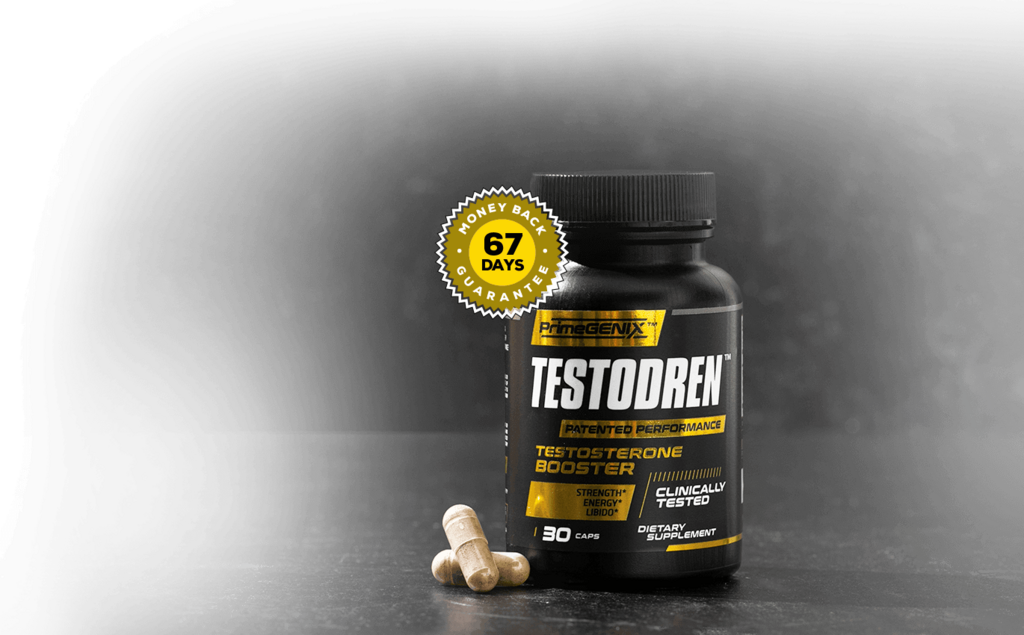
The stronger alternative: Testodren · 8.5/10For testosterone support, the stronger-scoring route in this catalogue is a single ingredient at a published 500 mg dose, with human studies behind the ingredient itself — not a blend sitting below the range its own trials used.
Our Recommendation — Shilajit Extreme
Score: 5.8/10 · Best for: beginners and protocol-followers who want the documented end of this market — a standardised capsule whose milligrams and fulvic percentage can actually be stated against the trial doses Main caution: no trial has compared the forms — the capsule wins on measurability, not proven superiority — and it ships at 200 mg a day against the testosterone trial's 500 mg Fair trial: about $45.59 a month on the six-pack ($273.55, free shipping) that matches how long these experiments run — the single bottle is $56.99, and no money-back guarantee is published.
Frequently Asked Questions
Is shilajit resin more potent than capsules?
There is no evidence for that claim — no head-to-head trial of any outcome exists between the forms. "More effective gram-for-gram" is a seller assertion. What differs measurably is standardisation: a capsule of a named extract states its strength per serving; a resin scoop usually cannot.
Which form of shilajit is best for beginners?
A standardised capsule, for practical reasons rather than potency ones: the dose is stated, the routine is effortless enough to survive 90 days, there is no taste tax, and the product can be checked against the trial-dose table. Beginners have enough variables without adding scoop estimation.
What form did the clinical trials use?
Measured, purified, standardised preparations administered as capsules (PrimaVie® in the testosterone and exercise trials; a standardised aqueous extract in the 48-week bone trial). That validates a preparation standard, not a shell — a capsule of unstandardised powder inherits none of it.
Are shilajit gummies or liquids equivalent to capsules?
Claims that thousands of milligrams of "raw herb equivalent" in a gummy equal a few hundred milligrams of extract are equivalences invented by their sellers — "raw herb equivalent" has no standardised meaning. Judge any form by the same test: named extract, stated milligrams, stated standardisation. Forms that cannot state them cannot be compared.
How should each form be stored — and does resin go off?
Resin is temperature-theatrical: it softens and turns runny in heat, hardens and turns brittle in the cold, and both states are normal for the material rather than signs of spoilage; keep it sealed, dry and out of heat, and expect it to keep for a long time. Capsules and powder want the standard discipline — cool, dry, sealed, away from bathroom humidity. None of these storage behaviours certifies anything about content, which is the refrain of this entire article: form tells you how a product behaves in your kitchen, not what is in it.
Is powder a good middle option?
Only the standardised, weighed version of it. Powder can be dosed by scale, which beats a resin scoop — but it is also the form most easily diluted invisibly, so the standardisation and the seller's paperwork matter more, not less. Unstandardised powder is resin with extra steps and fewer home tests available.
Last reviewed: October 2026. This article is educational and is not medical advice.
