
- Quick Answer
- What Saffron Is, Pharmacologically
- From Spice Rack to Psychiatry Journals: How Saffron Got Here
- The Trial Record, Trial by Trial
- The Fluoxetine Comparisons, in Full Context
- Saffron for Stress and Everyday Mood (This Site's Actual Lane)
- The PMS and Sleep Threads
- The Anxiety Evidence, Separately
- The Appetite Thread: Satiereal and the Snacking Claim
- Saffron vs St John's Wort: the Comparison That Teaches the Category
- How to Choose a Saffron Supplement
- The ADHD Question, Answered Carefully
- Dose, Cost and the Adulteration Problem
- The Sexual-Function Thread (and What It Teaches About the Whole File)
- What to Expect, Week by Week
- Safety: the Section That Governs the Rest
- Frequently Asked Questions
- Does saffron help with stress and mood?
- Is saffron really as good as fluoxetine?
- What dose of saffron is studied?
- How long does saffron take to work?
- Is saffron safe?
- Read This Next
Disclosure: This article contains affiliate links. If you buy through them, we may earn a commission at no extra cost to you. It never changes our conclusions.
Quick Answer
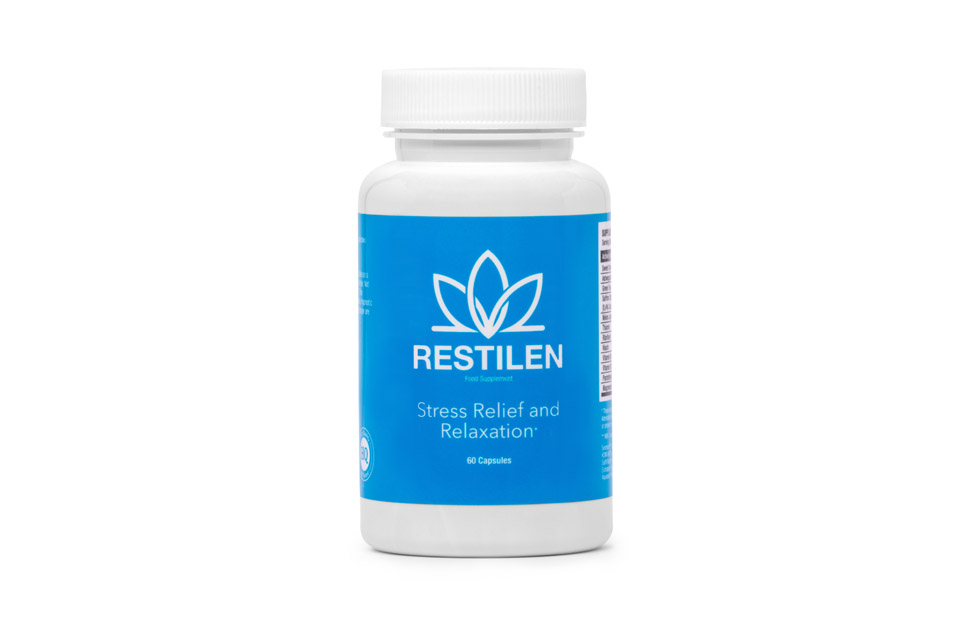
Saffron is the mostdose-disciplinedingredient in the stress category: nearly every human trial uses the same30 mg/day of stigma extract, and across small randomised trials and a 2014 meta-analysis, that dose improved depressive-symptom scores versus placebo in mild-to-moderate cases. Small head-to-head trials report it performing comparably to low-dose fluoxetine — a finding this article prints with its full, necessary context: those trials are small, short and largely from one research region, andsaffron is not a substitute for prescribed treatment. Supporting threads exist for anxiety (one 50 mg trial), PMS (a striking but small trial) and sleep quality. Its safety file is the most consequential in this set: side effects climb above ~200 mg/day, it iscontraindicated in pregnancy, and it carries a theoretical serotonin-syndrome caution alongside antidepressants. The product we review,Restilen, uses the exact studied dose of a branded extract (Saffr'Activ® 30 mg) — the cleanest label match in its formula.
What Saffron Is, Pharmacologically
Saffron is the dried stigma of Crocus sativus — three threads per flower, hand-picked, which is why it is the world's most expensive spice and why extract adulteration is an industry in itself. The compounds the research tracks arecrocin and crocetin(the carotenoid pigments, with antioxidant and proposed neuroprotective activity) andsafranal(the aromatic, with proposed serotonergic activity). Standardisation therefore matters and is checkable: serious extracts declare their crocin/safranal content or belong to branded families with published specifications (affron®, standardised to 3.5% lepticrosalides; Satiereal®; and Saffr'Activ®, the extract in Restilen, which carries its own small human study at exactly 30 mg/day over 6 weeks, with mood scores improving). Proposed mechanisms — serotonin reuptake modulation, antioxidant and anti-inflammatory actions, HPA-axis effects — are plausible and preclinical-to-early; the human outcome data below is what the claims must stand on.
From Spice Rack to Psychiatry Journals: How Saffron Got Here
Saffron's route into mood research is unusually traceable. The plant has a documented traditional use as a mood-lifting and calming preparation in Persian medicine — the same medical tradition centred in the region (modern Iran) that would later produce the bulk of the clinical trials
That lineage cuts both ways, and this article holds both edges in view: a genuine traditional signal is a reasonable reason to run trials, and a regional research concentration is a reasonable reason to want replication elsewhere — which the 2025 affron trial (Spanish extract, international journal, 202 participants) has begun, encouragingly, to supply
Chemically, the modern framing is that crocin (converted in the body to crocetin) carries antioxidant and neuroprotective actions in preclinical models, while safranal — the compound that makes saffron smell like saffron — is the leading candidate for the mood effects, with serotonergic activity demonstrated in animal work
Neither compound's human pharmacology is fully mapped; the trials below were run on whole standardised extracts, and it is the extracts — not isolated compounds — that any product claim must be tethered to. That tether is why branded standardisation (lepticrosalides percentage in affron; Saffr'Activ's defined profile) is a scientific feature and not merely a trademark: it is the only way to claim your capsule resembles the trial's capsule.
The Trial Record, Trial by Trial
| Question | Study / design | Dose & duration | Result | Size flag |
|---|---|---|---|---|
| Depressive symptoms vs placebo | Lopresti & Drummond 2014 meta-analysis of RCTs | ~30 mg/day, mostly 6 weeks | Saffron significantly outperformed placebo on symptom scales | Small trials pooled; effect promising, not definitive |
| Vs fluoxetine (mild–moderate depression) | Several small head-to-head RCTs | Saffron 30 mg/day vs fluoxetine 20 mg/day, ~6 weeks | Comparable improvement in both arms | Small, single-region; absence of difference in a small trial is weak evidence of equivalence |
| Vs citalopram (anxious distress) | Small RCT | 30 mg/day class dosing | Comparable symptom improvement reported | Small; preliminary |
| Anxiety symptoms | 2016 RCT (Phytotherapy Research) | 50 mg/day | HAM-A anxiety scores improved | Above the usual 30 mg dose — note the difference |
| PMS symptoms | Agha-Hosseini 2008 RCT | 30 mg/day, two cycles | 76% response vs 8% placebo | Small n— a dramatic ratio on a small base; treat as a strong lead, not a settled fact |
| Sleep quality | Nutrients 2020 RCT | 14 mg twice daily × 28 days | Sleep-quality ratings improved | Questionnaire outcomes |
| Subclinical low mood | Lopresti 2025 (J Nutrition), n=202 | affron® 28 mg/day × 12 weeks | Mood outcomes improved vs placebo | The largest, most modern trial — in subclinical, not clinical, populations |
| Saffr'Activ® specifically | Small human study (PMC) | 30 mg/day × 6 weeks | Mood (HAMD) scores improved | Small; branded-extract study |
The Fluoxetine Comparisons, in Full Context
Because "as effective as Prozac" is the headline this literature generates, it earns a section of disciplined cold water. The trials behind it randomised a few dozen patients with mild-to-moderate depression to saffron 30 mg/day or fluoxetine 20 mg/day for about six weeks and found similar score improvements. What that design can show: saffron isactive enough to belong in the conversation. What it cannot show: equivalence — proving two treatments equal requires large non-inferiority trials, and these were neither large nor designed that way; a small trial that finds "no difference" has usually foundinsufficient data to detect one. Add the context that the trials cluster in one country with a cultural and commercial saffron interest, that fluoxetine at 20 mg is the floor of its dosing range, and that none of it addresses moderate-to-severe depression, suicidality, or long-term relapse — and the honest sentence is the one this article keeps using:a genuinely promising small-trial signal that no one should trade a prescription for. If you are prescribed an antidepressant, the only saffron conversation is with your prescriber — not least because of the interaction caution below. Readers whose symptoms are serious belong inthe safety guide's closing sectionfirst.
Saffron for Stress and Everyday Mood (This Site's Actual Lane)
Strip the clinical trials down to what transfers to a healthy, stressed reader and a defensible core remains: at 30 mg/day, over 4–8 weeks, saffron has improved mood and stress-adjacent scores in subclinical populations — most recently and rigorously in the 202-person affron trial of adults with subclinical low mood (2025), which is the study whose population most resembles the person reading this page. The effect to expect is ashift in baseline mood tone, not an acute calm (theanine owns the acute lane, inits article) and not a treatment effect. Onset in the trials is gradual — assessments at 4–8 weeks — and the fair-trial protocol fromour roundup(baseline scores, one change at a time, judge at week 6–8) applies in full.
The PMS and Sleep Threads
The PMS trial (76% response versus 8% on placebo) is the most eye-catching number in saffron's file and the one we flag hardest relative to its size: the trial was small, and ratios built on small denominators exaggerate. It is best read as a strong reason for a larger trial, fifteen years of follow-up literature not having produced a decisive one
The sleep thread (28 mg/day improving sleep-quality ratings over 28 days) is thinner but consistent with the mood mechanism, and similarly questionnaire-based. Both threads share the family's virtues — the same 30 mg-class dose, short clean trials — and its vice: nobody has funded the definitive version of any of them.
The Anxiety Evidence, Separately
Because "stress and mood" blurs two outcomes, the anxiety thread deserves isolation. The cleanest datum is the 2016 randomised trial at50 mg/day— note, higher than the canonical 30 — improving HAM-A scores; clinician-rated anxiety scales moving in a controlled trial is a step above the self-report data most of this category runs on. Around it sit smaller anxiolytic signals from the depression trials' anxiety subscales and from the affron programme's stress-adjacent measures. The fair summary: saffron's anxiety evidence isthinner than its mood evidence and at a less standardised dose, which is precisely the opposite of how it is usually marketed (as a general calmative). For acute anxiety the category's honest tool remains theanine's fast mild nudge; for persistent anxiety symptoms the honest tool is an assessment, perthe safety guide. Saffron's defensible lane is the one its trials actually occupy: baseline mood over weeks.
The Appetite Thread: Satiereal and the Snacking Claim
A second commercial life of saffron extract — under the Satiereal® brand — targets appetite and emotional snacking, on the theory that a serotonergic mood ingredient should blunt stress-eating. Its supporting trial (a manufacturer-linked study in mildly overweight women) reported reduced snacking events and modest weight differences over eight weeks. Our grading: an interesting, single, industry-run trial in a specific population — hypothesis-grade, and notably adifferent claimfrom the mood literature despite sharing the extract family and the 30 mg-class dose (Satiereal is typically dosed higher, ~176 mg/day in its trial — a discrepancy worth noticing, since it breaks the family's otherwise admirable dose discipline). Readers meeting saffron in a weight-loss product should apply ourweight-claim standards: one small sponsored trial is a lead, not a label claim.
Saffron vs St John's Wort: the Comparison That Teaches the Category
The other famous serotonergic botanical clarifies saffron's profile by contrast. St John's wort has adeeperdepression literature than saffron — larger trials, Cochrane-level reviews for mild-to-moderate depression — and a dramaticallyworseinteraction file: it is a potent inducer of drug-metabolising enzymes, documented to reduce the effectiveness of oral contraceptives, immunosuppressants, anticoagulants and many other medicines, alongside its own serotonin-syndrome combinations. Saffron presents the mirror image: a smaller evidence base and, at 30 mg/day, a comparatively quiet interaction record (its serotonergic caution is theoretical; St John's wort's interactions are demonstrated and clinically serious). The lesson generalises across this whole set: in botanical mood ingredients, evidence depth and interaction burden tend to arrive together, because both are what real pharmacology looks like. An ingredient with drug-like benefits and no drug interactions at all is usually an ingredient without drug-like activity — and saffron, interestingly, sits in the credible middle: some activity, some cautions, honestly proportioned.
How to Choose a Saffron Supplement
Four checks, in order.Named standardisation:a branded extract (affron®, Saffr'Activ®, Satiereal®) or a declared crocin/safranal percentage — an unstandardised "saffron 500 mg" capsule is priced by weight of the wrong thing entirely, since the studied dose is 30 mg ofextract.Dose:28–30 mg/day for mood purposes; treat dramatically higher doses as a different (and less safe) intervention, and dramatically lower ones as label decoration.Price sanity:genuine standardised saffron extract cannot be the cheapest capsule in the aisle; a price that ignores the spice's raw-material cost is telling you how it was achieved.Claims discipline:mood/stress support language with trial context is the honest register; depression-treatment claims, ADHD claims and weight claims are each disqualified by sections above. Restilen's saffron line passes all four — the strongest single line in its formula, asour reviewrecords.
The ADHD Question, Answered Carefully
Search interest connects saffron to ADHD, on the basis of a small trial comparing saffron with methylphenidate in children over six weeks, reporting comparable symptom-score improvements. Our position, stated plainly: a single small, short trial isearly evidence of interest to researchers— it is not a treatment, not a reason to alter a child's prescribed medication, and not a use we will present as established anywhere on this site. Paediatric psychiatry decisions belong to paediatric psychiatrists; a spice extract with one small trial does not outrank them, and any seller implying otherwise has disqualified themselves. (The same discipline appears in our theanine article's note on children's products, and for the same reason.)
Dose, Cost and the Adulteration Problem
Saffron's dose discipline creates a pricing tell. Thirty milligrams of genuine standardised extract is a real raw-material cost — saffron stigma is the most expensive agricultural product in the world by weight — so finished products at implausibly low prices are answering a question about their contents. The adulteration repertoire is old and documented across the saffron trade: dyed substitutes, other plant materials, exhausted (pre-extracted) stigma
Defences: branded standardised extracts with declared active percentages (the affron/Saffr'Activ class), sellers with identities, and a price that respects the spice. Restilen's Saffr'Activ® 30 mg passes all three tests — and it is worth being explicit that this line is the formula's best: exact studied dose, branded standardisation, and its own (small) human study behind the specific extract.
The Sexual-Function Thread (and What It Teaches About the Whole File)
A smaller literature cluster examines saffron for sexual function — including trials in SSRI-induced sexual dysfunction and in erectile function — with positive small-trial results. We include it less for the claim than for the pattern it completes: saffron's research programme is broad, shallow and persistently positive across mood, anxiety, PMS, sleep, appetite and sexual function, generated largely by small trials from a concentrated research base. Two readings compete. The generous one: a genuinely active serotonergic-antioxidant extract plausibly touches all of these systems, and small trials are what an unfashionable spice can fund. The sceptical one: a literature in which everything works a little, everywhere, in studies too small to fail decisively, is the signature of publication bias — null saffron trials may simply not existin print. Both readings agree on the practical conclusion, which is why this site can hold them simultaneously: the 30 mg dose is well-tolerated and interesting enough to justify a personal fair trial for mood, and no claim in the file is strong enough to justify displacing a treatment, a prescription, or a diagnosis. When the larger independent trials arrive — the affron programme suggests they are coming — this article will be updated to their verdict, in whichever direction it lands.
What to Expect, Week by Week
Days 1–7:nothing attributable — saffron has no acute signature at 30 mg, and any day-one transformation is expectancy (which thetheanine articleteaches you to price correctly).Weeks 2–4:the earliest window in which the trials' mood scales begin to separate; the honest instrument is a weekly 1–10 mood/stress score recorded before you check the calendar.Weeks 6–8:the trials' assessment window and your judgement point — a sustained improvement in your recorded scores, in a month where sleep and workload were not transformed by other causes, is a result; anything less is a renewal decision the evidence does not support making on autopilot.Beyond week 12:outside the bulk of the trial record; continuing is reasonable for a responder at the studied dose, with the safety section's cautions re-read whenever your medication list changes.
Safety: the Section That Governs the Rest
Dose ceiling:side effects (nausea, headache, dry mouth, appetite change) are uncommon at 30 mg and rise materially above ~200 mg/day; gram-level doses are genuinely toxic territory — the studied dose is not a floor to build on.Pregnancy:contraindicated at supplemental doses (uterine-stimulant concern); culinary threads in food are a different exposure, but capsules are not food.Antidepressant combinations:saffron's proposed serotonergic action creates a theoretical serotonin-syndrome risk with SSRIs/SNRIs — theoretical, and still a prescriber conversation, not a personal experiment; the adaptogen-plus-antidepressant adverse-event data inour safety guidecovers the wider pattern.Sedatives and blood pressure:additive effects are possible at higher doses.Bipolar caution:as with other mood-active agents, activation is a theoretical risk warranting psychiatric guidance. None of this makes 30 mg/day dangerous for a healthy adult — the trials' tolerability was good — but saffron is the ingredient in this set where the gap between "spice" and "pharmacology" is narrowest, and the label deserves to be read with that respect.
Frequently Asked Questions
Does saffron help with stress and mood?
At 30 mg/day over 4–8 weeks, small trials and a meta-analysis show improved mood scores, including a 202-person trial in subclinical low mood. It is a baseline-mood ingredient, not an acute calmative, and not a treatment for depression.
Is saffron really as good as fluoxetine?
Small head-to-head trials found comparable improvements — in trials too small to prove equivalence, at fluoxetine's lowest dose, over six weeks. Promising signal; not a basis to change any prescription.
What dose of saffron is studied?
28–30 mg/day of standardised stigma extract in nearly every trial (the anxiety trial used 50 mg). More is not better: side effects rise above ~200 mg/day.
How long does saffron take to work?
Trials assess at 4–8 weeks. Judge a fair trial at week 6–8 with baseline scores recorded.
Is saffron safe?
At 30 mg/day in trials, tolerability was good. Contraindicated in pregnancy; prescriber conversation required alongside antidepressants; respect the dose ceiling.
Last reviewed: October 2026. This article is educational and is not medical advice.
