
- Quick Answer
- What Shilajit Actually Is
- The Human Trial Record at a Glance
- The Benefits Map, Graded
- Testosterone: the one real trial
- Fertility: promising numbers, missing control group
- Oxidative stress: a real measurement, a modest claim
- Energy: the claim with the thinnest human file
- Strength and training: a narrow finding, covered elsewhere
- Bone, skin and brain: real science, wrong shelf
- Libido: the most-claimed, least-tested benefit
- Who the Trials Actually Studied — the Population Problem
- What Happens If You Take Shilajit Every Day?
- What a Decisive Trial Would Look Like
- "It Contains 84 Minerals" — and Other Label Poetry
- Why the Trial Record Is So Small — and Why the Funding Matters
- How to Read a Shilajit Label
- The Hype-vs-Evidence Verdict
- Shilajit vs "Testosterone Boosters": a Different Category
- The Dose Audit: Shilajit Extreme Against the Trials
- Who Should Buy Shilajit Extreme — and Who Should Skip It
- How We Graded This Map
- A Stronger Alternative in This Category
- Frequently Asked Questions
- What is shilajit actually proven to do?
- What happens if I take shilajit every day?
- How long does shilajit take to work?
- Why do shilajit prices vary so much?
- Can women take shilajit?
- Is shilajit worth the hype?
- Does shilajit give you energy straight away?
- Is resin better than capsules?
- Does shilajit need to be cycled?
- Can I take shilajit with medication?
- Read This Next
Disclosure: This article contains affiliate links. If you buy through them, we may earn a commission at no extra cost to you. It never changes our conclusions.
Quick Answer
Shilajit has a real but narrow human evidence base. Exactly one randomised, placebo-controlled trial supports a benefit in men — a rise in testosterone in healthy 45–55-year-olds taking 500 mg/day of a purified branded extract for 90 days, in a trial whose extract was supplied by its maker and which has never been independently replicated. One further study, on sperm counts, had no placebo group at all. The energy claims rest on rodent work and one small open-label pilot; the cognition claims are laboratory work; most of the rest is Ayurvedic tradition. None of that makes shilajit a hoax — the substance is real, one trial is genuinely interesting, and purified extracts were well tolerated in trials — but the distance between the studied extract at 500 mg/day and the typical product on a shelf is where this category's marketing lives. Best for: men who want the studied form — a purified, standardised extract with its standardisation printed on the label — and who are willing to judge it over the same 90 days the research used, rather than men looking for a fast or dramatic effect.
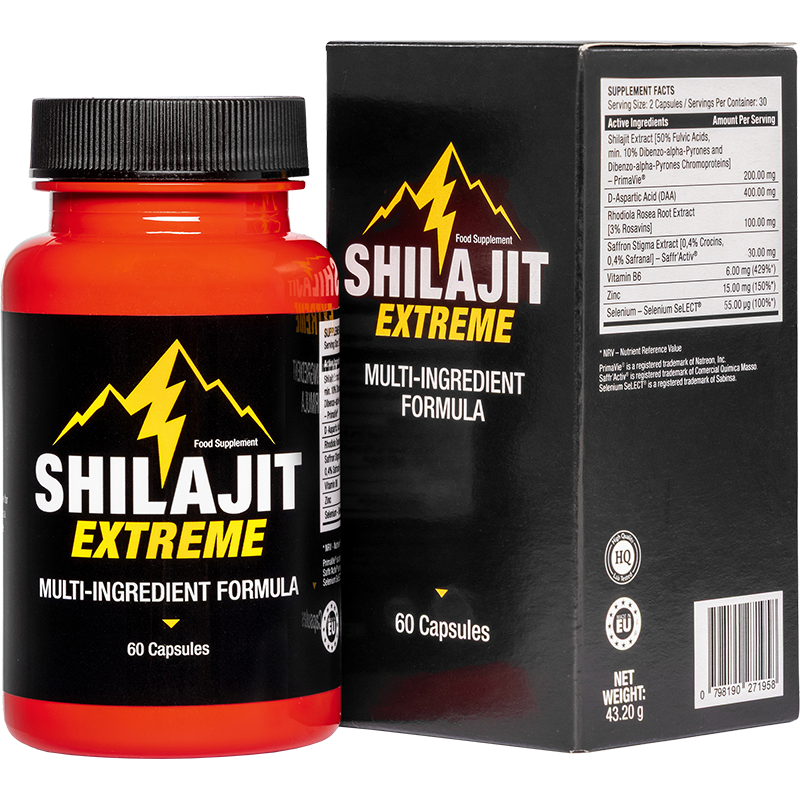
Our Recommendation — Shilajit Extreme
Score: 5.8/10 · Best for: men who want the same PrimaVie® purified, standardised extract family the trials used — standardised to 50% fulvic acid — in a capsule with a fully printed panel Main caution: this capsule delivers the studied extract at 200 mg a day against the 500 mg a day the testosterone trial used — 40% of the pivotal dose — and no money-back guarantee is published Fair trial: the maker recommends a minimum of three months, so a fair trial is three bottles at $153.87 (the 6-pack is $273.55, about $45.59 a month) — not one bottle.
What Shilajit Actually Is
Shilajit is a tar-like resin that seeps from rock faces in high mountain ranges — the Himalayas above all, but also the Caucasus, Altai and other ranges — during warm months. It forms over centuries as plant material trapped in rock is broken down by microorganisms and compressed, and the result is a complex organic-mineral mixture rather than a single compound. Its chemistry explains both its reputation and its risks. The headline constituents are the humic substances, formed as soil microbes decompose plant matter: among them fulvic acid, the small, water-soluble fraction credited with most of the biological activity, and a family of compounds called dibenzo-α-pyrones (DBPs), proposed to interact with mitochondrial energy production. It also carries a mineral load picked up from the rock it formed in — which is why the same geology that gives shilajit its mineral content can also give it lead, arsenic, mercury and other contaminants, a problem we take up in full in our purity and heavy-metals guide.
That mixture has been used in Ayurvedic medicine for centuries, classed as a rasayana — a rejuvenating preparation — and prescribed for vitality, stamina and male reproductive health. One more distinction belongs in this introduction, because the whole evidence base turns on it: raw shilajit and purified shilajit are not the same material. Raw resin as collected carries waxes, gums, plant debris, microbial load and whatever metals its geology contributed. Purification — classically, dissolving in water, filtering, and concentrating — is the step that turns a variable natural exudate into something a trial can dose in milligrams and a label can standardise; the branded extract used in the trials is a purified, standardised, water-extracted preparation. Every credible medical source in our research (Healthline, WebMD, the Cleveland Clinic, hospital evidence reviews) warns against consuming shilajit unpurified. So whenever this article says "shilajit showed X in a trial", the subject is a purified extract — and whenever a seller blurs raw and purified material together, the trial evidence is being spent on a product it never touched. Traditional use is a reason to study a substance; it is not evidence that it works, and this article grades shilajit the way we grade everything on this site: human randomised trials at the top, uncontrolled human work below them, animal and laboratory work clearly labelled, and tradition at the bottom, named as tradition. What makes shilajit unusual among supplement ingredients is that the grading exercise is quick. The entire placebo-controlled human literature on purified shilajit is a handful of small trials, most of them run on one branded extract — PrimaVie®, a purified, standardised preparation made by Natreon — and several of them funded or supplied by that extract's maker. Everything else in this article hangs off that small frame.
The Human Trial Record at a Glance
Before the benefit-by-benefit grading, here is the whole human record the grades rest on. Read the design column as carefully as the findings column — in this literature, design is destiny.
| Study | Who & design | Dose & duration | What it found |
|---|---|---|---|
| Pandit 2016 (Andrologia) | 96 healthy men aged 45–55 enrolled, 75 completed; randomised, double-blind, placebo-controlled | PrimaVie® purified shilajit, 250 mg twice daily (500 mg/day), 90 days | Total testosterone +20.45% and free testosterone +19.14% vs placebo; DHEA-S rose significantly; LH and FSH unchanged. Extract supplied by its maker; never independently replicated |
| Biswas 2010 (Andrologia) | 35 infertile men with low sperm counts enrolled (60 assessed), 28 completed; open trial, no placebo group | Processed shilajit 100 mg twice daily after meals (200 mg/day), 90 days | Vs baseline only: total sperm count +61.4%, motility up, normal forms up, oxidative-damage marker (MDA) down; testosterone +23.5%. No comparison group, so no effect can be separated from time and study participation |
| Keller 2019 (J Int Soc Sports Nutr) | 63 recreationally active men; randomised, double-blind, placebo-controlled | PrimaVie® 250 mg/day vs 500 mg/day vs placebo, 8 weeks | Strength retention during a fatiguing test improved only at 500 mg/day and only in the stronger half of the men; 250 mg/day matched placebo. Covered in full in our muscle article — linked below |
| Pingali 2022 | Postmenopausal women; randomised, placebo-controlled (bone density) | Standardised shilajit extract 250–500 mg/day, 48 weeks | Bone-density protection in women with low bone mass — a real trial, in a different population, at doses above most men's products |
| Das et al. (skin studies) | Middle-aged women; gene-expression and skin outcomes | Purified shilajit, up to 14 weeks | Skin-related gene expression and microperfusion changes in women — not a men's outcome, listed here because marketers borrow it |
| Open-label resin pilot (2026) | 25 healthy men; no placebo, no control group, run by a resin maker | Resin 250 mg twice daily, 28 days | Fatigue scores fell ~32% — with no comparison group, this cannot be separated from expectation and the passage of four weeks |
Two structural facts about this table matter more than any single row. First, the doses: the trials that found anything used 250–500 mg/day of a purified, standardised preparation — not raw resin of unknown strength, and not the 100–200 mg/day that many commercial capsules deliver. Second, the funding: the pivotal testosterone trial's extract was supplied by Natreon, the company that sells PrimaVie®, and the trial has not been repeated by an independent group in the decade since. A maker-supplied, unreplicated trial is not worthless — the design was properly randomised and blinded — but it is the weakest form a positive RCT can take, and every grade below carries that discount.
Notice, finally, the size of everything in that table: the human studies in this field enrol between 16 and 160 people. Small trials are not automatically wrong, but they are fragile — a handful of responders more or less can swing a result, which is one more reason the field's central finding needs an independent second act before it graduates from "interesting" to "established".
The Benefits Map, Graded
Here is every benefit shilajit is sold for, with the strongest evidence behind each and our grade. The grades use one scale throughout: Human RCT (placebo-controlled trial in people), Human uncontrolled (people, but no comparison group), Animal / laboratory (rodents, cells, test tubes), and Traditional only (historical use, no human data).
| Claimed benefit | Best evidence | Grade | Honest verdict |
|---|---|---|---|
| Testosterone support | Pandit 2016: +20.45% total T vs placebo at 500 mg/day over 90 days | Human RCT — one trial | The strongest claim in the set, and still a single maker-supplied, unreplicated trial in healthy men whose levels were normal to begin with |
| Sperm count & male fertility | Biswas 2010: count +61.4% vs baseline, no placebo | Human uncontrolled | Promising numbers that the design cannot confirm; pregnancy rates were never an endpoint |
| Strength retention when training | Keller 2019: retention benefit at 500 mg/day in the stronger half only | Human RCT — subgroup | Real but narrow; the full read is in our shilajit and muscle article |
| Energy & fatigue | Rat chronic-fatigue study; one 28-day open-label pilot | Animal + uncontrolled | No placebo-controlled human trial shows shilajit reduces general fatigue. Full read in our energy and fatigue article |
| Bone density | Pingali 2022: 48-week RCT in postmenopausal women | Human RCT — different population | Genuine trial evidence, for a benefit most male buyers are not shopping for and at 250–500 mg/day for a year |
| Skin & collagen support | Das studies in middle-aged women | Human (women) | Interesting, early, and not a men's outcome; borrowed constantly by marketers |
| Brain, memory & Alzheimer's | Fulvic acid and tau proteins in laboratory work | Laboratory only | Test-tube findings. No human trial of shilajit for cognition exists |
| Libido | Ayurvedic tradition; testosterone trial did not measure it | Traditional only | The most-claimed and least-tested benefit on this list |
Testosterone: the one real trial
Pandit and colleagues (2016) randomised healthy men aged 45–55 to PrimaVie® purified shilajit 250 mg twice daily or placebo for 90 days. Of 96 men enrolled, 75 completed. In the shilajit group, total testosterone rose 20.45% and free testosterone 19.14% relative to placebo, DHEA-S rose significantly, and LH and FSH were maintained rather than suppressed. In absolute terms the average man's total testosterone moved from roughly 4.84 to 5.83 ng/mL — about 484 to 583 ng/dL — which deserves two honest framings at once. It is a statistically real rise inside the normal range, larger than supplement effects usually are. It is also a rise in men who were not testosterone-deficient, measured on hormone levels rather than on how the men felt or functioned — libido, mood, strength and body composition were not the trial's endpoints, whatever later marketing implies. And the two caveats never leave the sentence: the extract was supplied by its maker (Natreon), and no independent team has replicated the result. Our full read of this trial — the audit table, the dose question, and what unchanged LH and FSH might mean — is in our dedicated shilajit and testosterone article.
A note on one number you will not find in this article: DHEA-S. Pandit reported that DHEA-S rose significantly, but the paper's abstract gives no percentage, and the secondary literature cannot agree — one sceptical review reports +31.35%, a brand evidence table reports +37.18%, for the same statistic. Both cannot be right, so we print neither, and describe the finding as the paper supports: DHEA-S rose significantly. If you see a precise DHEA-S percentage for this trial on any page — including pages that agree with us on everything else — you are looking at a number its author did not verify against the full text. Percentages discipline is this set's house rule: a figure appears only with its trial, its population and its dose attached.
Fertility: promising numbers, missing control group
Biswas and colleagues (2010) gave processed shilajit (100 mg twice daily after meals — 200 mg/day) for 90 days to infertile men with low sperm counts. Among the 28 men who completed, total sperm count rose 61.4% against baseline, motility and normal forms improved, a marker of oxidative damage in semen fell, and serum testosterone rose 23.5%. Those are the numbers on a hundred product pages. What the product pages omit is the design: the trial was open and uncontrolled — there was no placebo group. Men enrol in fertility studies when their counts are at a low point, sperm parameters fluctuate seasonally and with lifestyle, and study participation itself changes behaviour. Without a comparison group, none of the improvement can be credited to shilajit rather than to time. Pregnancy — the outcome that actually matters — was not a trial endpoint. This is the set's most mis-sold study, and our sperm-count article reads it line by line, including the enrolment funnel (60 men assessed, 35 enrolled, 28 finished) that most summaries get wrong.
Oxidative stress: a real measurement, a modest claim
One further finding deserves its own short paragraph because it is the closest thing the fertility data has to a mechanism. In Biswas, semen malondialdehyde (MDA) — a standard marker of oxidative damage — fell 18.7% over the 90 days. Oxidative stress is a recognised contributor to poor sperm parameters, and an antioxidant effect is the most biologically coherent story for why processed shilajit might help sperm: fulvic acid and the DBP family have antioxidant activity in laboratory systems. But the MDA fall was measured in the same uncontrolled trial as everything else in that study — it shows the marker moved while men took the product, not that the product moved it, and "antioxidant" effects measured on a semen marker do not license the sweeping anti-ageing claims the word attracts in marketing. File it where it belongs: a plausible mechanism attached to an unproven effect.
Energy: the claim with the thinnest human file
The energy story is mechanistically attractive: dibenzo-α-pyrones are proposed to protect coenzyme Q10 in the mitochondrial electron-transport chain, supporting ATP production, and fulvic acid is proposed to shuttle nutrients into cells. Attractive — and, in humans, untested. No trial has measured ATP output as an outcome of shilajit, and no well-designed human trial shows it reducing general fatigue or improving endurance against placebo. The animal anchor is a 2012 rat study in which 21 days of forced swimming (a chronic-fatigue model) depleted brain mitochondrial function, and shilajit pre-treatment preserved it — genuinely interesting rodent work that brand blogs routinely promote, silently, into a human energy claim. The one human fatigue figure in circulation — fatigue scores down about 32% — comes from a 28-day, open-label pilot of 25 healthy men run by a resin manufacturer, with no comparison group. Our energy and fatigue article gives this claim the full treatment, including why "feeling it in the first week" is expectation, not pharmacology.
Strength and training: a narrow finding, covered elsewhere
One placebo-controlled trial (Keller 2019) found a strength-retention effect during fatiguing exercise — at the full 500 mg/day dose, and only in the stronger half of the men tested; the 250 mg/day arm was indistinguishable from placebo and nobody's baseline strength increased. Because the muscle claims are a topic of their own — and one this site has already covered in depth — this hub grades the claim in the map above and defers the full read, including the collagen-marker secondary outcome, to our shilajit and muscle article rather than re-arguing it here. The short version for hub readers: a subgroup finding at a dose most products don't deliver is not a muscle benefit, and any page selling shilajit to lifters on Keller's data without those two qualifiers is selling you the abstract, not the paper.
Bone, skin and brain: real science, wrong shelf
Three further areas have genuine research that men's marketing borrows out of context. Bone: a 48-week placebo-controlled trial (Pingali 2022) found a standardised shilajit extract protected bone density in postmenopausal women — the longest and in some ways best trial in the whole file, conducted in women, over a year, at 250–500 mg/day. Skin: trials in middle-aged women found purified shilajit altered skin-related gene expression and microperfusion over up to 14 weeks — early, female, and about skin biology rather than appearance miracles. Brain: fulvic acid interfered with tau-protein aggregation in laboratory work, which is why "Alzheimer's" appears in shilajit marketing; there is no human trial of shilajit for memory or cognition, and the Cleveland Clinic's position on fulvic acid — promising signs, nowhere near enough research to call it safe or effective — is the correct temperature for all three areas. Interesting science is not a benefit until it survives a trial in the people being sold to.
Libido: the most-claimed, least-tested benefit
Shilajit's Ayurvedic reputation is, above all, a sexual-vitality reputation, and "libido" is the word its marketing leads with. The human record, however, contains no trial that measured libido as an outcome of shilajit in men. Pandit's testosterone trial did not endpoint it — the men were not asked, in any published measure, whether desire changed — yet at least one brand summary credits those same subjects with libido and mood improvements the trial never recorded. That is how a traditional claim acquires a fake citation: the trial exists, the claim exists, and readers reasonably assume the first supports the second. It does not. The honest position is narrower and still not nothing: testosterone is one input into male libido, a trial showed a modest testosterone rise in middle-aged men, and tradition is unanimous — three weak-to-moderate signals pointing the same way, none of them a measurement. A man whose libido has genuinely fallen belongs in the diagnostic pathway first (libido loss is a presenting symptom of low testosterone, depression, thyroid disease, medication effects and relationship-level stress alike), a point our Set I testosterone cluster makes in detail. Shilajit as a libido product is a bet on tradition plus one hormone trial — priced and judged accordingly, it is a defensible bet for some buyers; sold as a proven aphrodisiac, it is not.
Who the Trials Actually Studied — the Population Problem
Supplement evidence fails buyers most often through population mismatch, and shilajit's small file makes the matches easy to list. The testosterone result belongs to healthy men aged 45–55 with normal levels — not to men with diagnosed low testosterone (never studied), not to men in their twenties or thirties (never studied for testosterone), and not to men whose symptoms are the reason for buying (symptoms were not endpoints). The fertility numbers belong to infertile men with clinically low sperm counts — a group whose parameters have the most room to move and the strongest regression-to-the-mean pull. The strength-retention result belongs to recreationally active men, and within them only the stronger half. The bone result belongs to postmenopausal women. A 30-year-old lifter reading "clinically shown to raise testosterone 20%" is borrowing a result from men twenty years older whose physiology, baseline and question were all different. None of this forbids the purchase; it defines the purchase. You are not buying the trial result — you are buying the chance that a result from a neighbouring population transfers to yours, at a dose that (per the audit below) is often lower than the one studied. Pages that state the population earn the right to state the percentage; pages that state only the percentage are advertising.
What Happens If You Take Shilajit Every Day?
This is one of the most-asked questions in the demand research behind this set, and the honest answer is: we know what happened in trials that dosed it daily for 8 to 48 weeks, and we know almost nothing beyond that. In the trials, purified shilajit at 200–500 mg/day was generally well tolerated — Pandit recorded no adverse events attributed to the extract, and Biswas found liver and kidney profiles unaltered after 90 days. The longest continuous exposure in the record is the 48-week bone trial. No trial establishes the safety of multi-year daily use, and there are no safety data in pregnancy, breastfeeding or children at all. Two daily-use considerations follow. The first is accumulation: shilajit's risks concentrate in unpurified product, where contaminants arrive with every dose — which is why the daily-use question is really a purity question, and why our heavy-metals guide treats the documented contamination record (one in five Ayurvedic products in the landmark JAMA surveys carried lead, mercury or arsenic) as the centre of the safety story rather than a footnote. The second is expectation: the effects with any human data behind them were measured at 90 days, not 9. A daily capsule judged at two weeks is being judged before the only relevant evidence even begins — a point our how-to-take guide builds its timeline around. One more documented data point belongs in the daily-use picture: US public-health authorities have recorded case series of lead poisoning — 12 cases across five states in one CDC series — traced to Ayurvedic products taken daily, which is the real-world version of the accumulation problem. Nobody in those cases was taking a purified, standardised extract at trial doses; they were taking exactly the kind of uncharacterised product the trials never studied. Daily use is where the gap between "trial extract" and "whatever was in the jar" stops being academic.
What a Decisive Trial Would Look Like
Since this hub grades the evidence, it should also state what would change the grades — the standard we will apply when new shilajit research appears. For testosterone: an independent group (no extract supplied free by the seller, or supplied with the funding declared and the analysis pre-registered), men with low-normal rather than mid-normal testosterone, 500 mg/day and a 200 mg/day arm — because 200 mg is what the market actually sells — run for at least six months, with symptom endpoints (libido, energy, strength) measured alongside hormones. For fertility: a placebo group, full stop, plus pregnancy as a tracked outcome. For energy: any placebo-controlled trial with a validated fatigue measure would be a first. None of this is exotic; it is the ordinary standard the supplement ingredients with strong reputations have already met. If a trial like that appears, this page's map gets redrawn — and if it appears and is null, the map gets redrawn the other way. Until then, the grades above are the honest state of play.
"It Contains 84 Minerals" — and Other Label Poetry
A claim repeated across shilajit marketing is that the resin contains 84 (or 85, or "all") of the minerals the body needs. The hospital-group evidence review that anchors several sections of this article makes the correct reply in one clause: contains a mineral ≠ delivers a meaningful amount of it. Shilajit is taken in hundreds of milligrams. Even if a resin is a few percent mineral ash, a 200–500 mg dose delivers single-digit milligrams of mixed minerals in total — a rounding error next to, say, the 15 mg of zinc or 55 µg of selenium that a formulated product adds deliberately. Nobody's zinc status was ever corrected by a resin's mineral dust. The minerals story matters in exactly one direction: the same geology that contributes trace potassium and calcium also contributes lead, arsenic, mercury, nickel and cobalt to raw material — which is why purification and testing, not mineral romance, are the quality questions. Treat "84 minerals" the way you would treat "contains traces of gold": possibly true, nutritionally irrelevant, and a reliable sign the page has run out of evidence.
Why the Trial Record Is So Small — and Why the Funding Matters
It is fair to ask why, for a substance used for centuries and sold worldwide, the placebo-controlled human record fits in the small table above. Part of the answer is economics: shilajit itself cannot be patented, so the research money has come almost entirely from the one party with something patentable to sell — the maker of the standardised extract. Dr. Axe's evidence table counts 11 human studies of 16–160 people, 4–48 weeks, seven of them placebo-controlled — and notes that several were run on one extract and four were maker-funded. That is the whole landscape. The consequence for a reader is not "therefore nothing works"; it is that the positive findings and the commercial interest are entangled in a way they are not for, say, creatine or vitamin D, where independent groups worldwide have replicated results for decades. For shilajit, the pivotal testosterone result stands alone: one group, one maker-supplied extract, one population, no replication in ten years. A second, independent trial at the same dose — or, just as informative, a well-run trial at the 200 mg dose most products actually deliver — would change this article's grades more than another decade of tradition. Until one exists, "shown in a clinical trial" for shilajit always needs its footnote, and this site prints the footnote.
How to Read a Shilajit Label
Because the trials studied a defined preparation, the label is where a buyer can actually close part of the evidence gap. Four checks, in order. First, is the extract named and standardised? A label that says "shilajit extract, standardised to 50% fulvic acids" (the specification of the extract used in the testosterone trial) tells you what each capsule contains; a label that says "shilajit powder" or "pure Himalayan resin" with no standardisation tells you nothing measurable — and raw resin almost never states a fulvic percentage with batch precision. Second, does the dose resemble the trials? The human findings sit at 200–500 mg/day of extract; a product delivering 100 mg of an unspecified powder is not a smaller version of the trial, it is a different, untested thing. Third, is fulvic percentage quoted with a method? Percentages in this market range from 15–20% to claims of 75%+, and the spread is largely an assay problem — different measurement methods (the older Lamar method vs ISO 19822) produce non-comparable numbers. A percentage without a method is decoration; our purity guide explains the method problem in full. Fourth, what does the maker say about testing? A batch-testing statement in the maker's own words — as Shilajit Extreme's maker makes for its product — is worth more than a "third-party tested" badge with no lab, no batch and no numbers behind it, and worth less than a published, batch-matched certificate of analysis. Ask which of those three you are actually being offered. Fifth, read the altitude and origin story as marketing, not specification. "Harvested above 16,000 feet" is a sourcing narrative; altitude does not appear in any trial's methods as a quality variable, and a high-altitude raw resin with no standardisation is still an uncharacterised material. What the trials rewarded was not the mountain — it was purification, standardisation and dose.
The Hype-vs-Evidence Verdict
Strip the category down and three statements survive. What is proven: a purified, standardised extract at 500 mg/day raised testosterone about 20% over 90 days in one well-designed but maker-supplied, unreplicated trial of healthy middle-aged men; purified extracts at 200–500 mg/day were well tolerated for up to 48 weeks. What is plausible but unproven: a fertility benefit (uncontrolled data only), strength retention at the full 500 mg dose (one subgroup finding), and bone protection (proven in women, untested in men). What is marketing: energy and stamina as established human effects, any cognitive or anti-Alzheimer's benefit, libido effects presented as trial findings, and any result quoted from the 500 mg/day trials attached to a product delivering a fraction of that dose — which brings us to the audit that matters most for a buyer.
Translated into buyer profiles, the map resolves like this. The evidence-led buyer — typically the 45–60-year-old this literature actually studied — has one legitimate experiment available: a standardised extract, judged over 90 days, ideally with a morning blood test either side, accepting that the supporting trial is singular and maker-linked. The fertility buyer is purchasing a hypothesis with encouraging uncontrolled numbers and should be running the medical workup in parallel, because the supplement is the adjunct, never the investigation. The performance buyer — younger, training-focused, chasing energy — is the worst served by this file: his claims are the ones with no human trial behind them, and his money is better evidenced elsewhere. Every shilajit purchase is one of these three bets. The map's job is to make sure you know which one you are placing.
Shilajit vs "Testosterone Boosters": a Different Category
Most men meet shilajit while shopping the testosterone-booster shelf, so the comparison is worth making precisely. The booster category, audited in our Set I cluster, is a blends business: dozens of ingredients at fractional doses, most never studied for testosterone in humans at all — our study-by-study answer to whether testosterone boosters work found fewer than a quarter of top-selling products' ingredients had any supporting human data. Shilajit is structurally different: essentially one substance, one defined extract, and one genuine placebo-controlled trial behind its main claim. That cuts both ways. It means shilajit's best claim is stronger than almost any booster's — a real RCT beats a collage of rat studies — and it means shilajit has nothing to hide behind: when the one trial is maker-supplied and unreplicated, there is no second ingredient to gesture at. It also means the two purchases answer different questions. A booster is a scatter bet across twenty unproven ingredients. Shilajit is a single, legible bet: that Pandit's result is real, and that it transfers to you, at your dose. The ingredient-level record for both approaches is laid out in our testosterone-booster ingredients evidence guide — and the lifestyle levers that outperform both categories (sleep, body composition, alcohol, energy availability) are quantified in our natural-methods guide, which is where a man with symptoms and no blood test should start regardless of which capsule he is considering.
The Dose Audit: Shilajit Extreme Against the Trials
The product this set is built around, Shilajit Extreme (our score: 5.8/10), illustrates both halves of this category honestly, which is precisely why we scored it in the middle. Its winning angle is real: in a market of anonymous resin scraped, dried and sold with no stated strength, it is a capsule of PrimaVie® — the same purified, branded extract family the trials used — standardised to 50% fulvic acids, with the full panel printed, made in the EU, and a maker that states every batch undergoes tests to guarantee quality, absence of contaminants, and safety of use (the maker's words; it does not publish the underlying reports, and we print no test results it has not published). Its weakness is arithmetic:
| Ingredient | Trial dose | Shilajit Extreme (per day) | Gap |
|---|---|---|---|
| Shilajit (PrimaVie®) | 500 mg/day (Pandit, testosterone); 200 mg/day (Biswas, fertility) | 200 mg | Matches the fertility study's dose — the weakest design in the set — and is 40% of the testosterone trial's |
| D-Aspartic acid | ~3,120 mg/day in the only positive trial (Topo 2009) | 400 mg | Roughly one-eighth — and the trained-men trials at full dose were null anyway; the full record is our DAA article |
| Zinc | Deficiency correction is the evidence-based use | 15 mg | A full, sensible dose — the panel's most defensible supporting line |
| Selenium | Deficiency correction / normal spermatogenesis support | 55 µg | A full daily amount, appropriately modest |
The rest of the label — rhodiola 100 mg and saffron (Saffr'Activ®) 30 mg, both at plausible supporting doses, plus vitamin B6 6 mg — is covered on the product page; the adaptogen claims belong to our stress cluster, and we don't borrow them here. The commercial facts belong in the audit too: $56.99 for a 30-day bottle (3-pack $153.87; 6-pack $273.55 with free shipping), the maker recommends a minimum of three months — so a fair trial costs three bottles, not one — and the maker publishes no money-back guarantee, so that three-month judgement is funded entirely by the buyer. That combination — the right extract, honestly standardised, at 40% of the pivotal trial's dose, with no guarantee — is exactly what a 5.8/10 looks like.
Who Should Buy Shilajit Extreme — and Who Should Skip It
Buy it if your priority is purity and standardisation — you want shilajit as a purified, batch-tested branded extract in a stated-strength capsule instead of anonymous raw resin — and you can commit to the 90 days the research used. On that plan the multi-bottle packs are the sensible buy (the 6-pack works out to about $45.59 a month with free shipping), because a single bottle is not the test the maker itself describes. Skip it if you want the exact dose the testosterone trial studied — 500 mg/day — from one product; this one gives you the trial's extract at 40% of the trial's dose, and no honest page should blur that. Skip it, too, if you need the safety net of a money-back guarantee (none is published), if you are expecting energy or libido effects the human trials never measured, or if your symptoms have never had a medical workup — low mood, low libido and low energy have medical causes that a blood test sorts faster and cheaper than a supplement does.
How We Graded This Map
Our method, stated so you can check it: placebo-controlled human trials outrank uncontrolled human work; independent replications outrank originator results; a trial's population and dose are printed next to its finding before any product is discussed; industry funding is disclosed wherever we know it, because in this literature it predicts which results get published and promoted; and where the record is animal, laboratory or traditional, the grade says so in the same breath as the claim. Product scores follow the same discipline — Shilajit Extreme's 5.8/10 credits a fully printed panel, a named standardised extract and a maker's batch-testing statement, and discounts an audited dose below the pivotal trial's and the absence of a published guarantee. If a future independent trial moves any grade on this page, the page will be updated and the change dated; that is the deal the map makes with its readers.
A Stronger Alternative in This Category
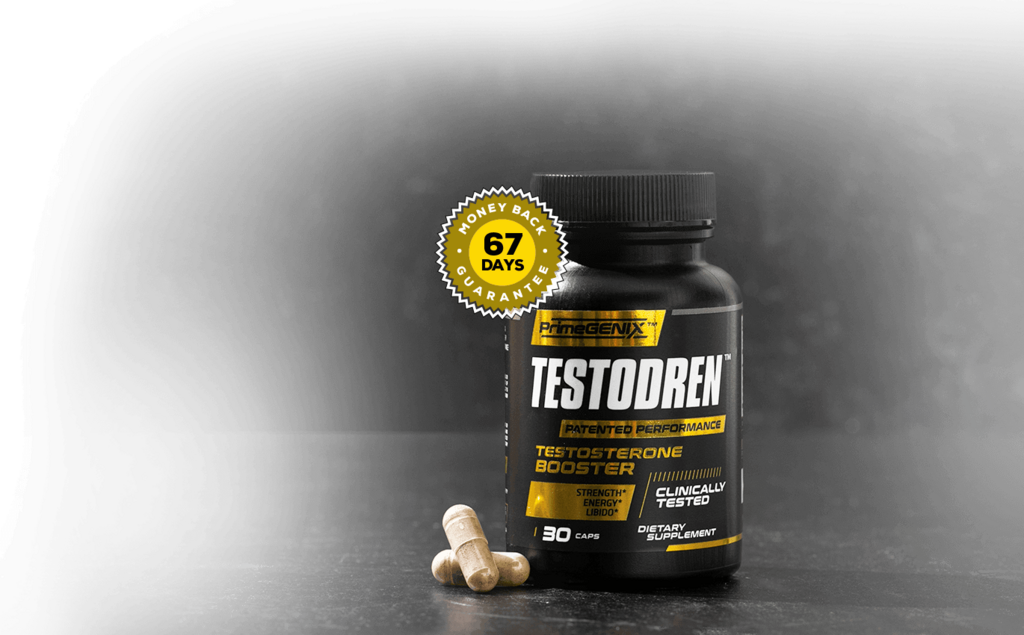
The stronger alternative: Testodren · 8.5/10For testosterone support, the stronger-scoring route in this catalogue is a single ingredient at a published 500 mg dose, with human studies behind the ingredient itself — not a blend sitting below the range its own trials used.
Our Recommendation — Shilajit Extreme
Score: 5.8/10 · Best for: men who want the same PrimaVie® purified, standardised extract family the trials used — standardised to 50% fulvic acid — in a capsule with a fully printed panel Main caution: this capsule delivers the studied extract at 200 mg a day against the 500 mg a day the testosterone trial used — 40% of the pivotal dose — and no money-back guarantee is published Fair trial: the maker recommends a minimum of three months, so a fair trial is three bottles at $153.87 (the 6-pack is $273.55, about $45.59 a month) — not one bottle.
Frequently Asked Questions
What is shilajit actually proven to do?
One thing, in one trial: purified shilajit at 500 mg/day raised total testosterone about 20% over 90 days in healthy men aged 45–55 (Pandit 2016). The extract was supplied by its maker and the result has not been independently replicated. Everything else — fertility, energy, cognition — sits at a lower evidence tier, as the graded map above shows.
What happens if I take shilajit every day?
In trials, purified extracts at 200–500 mg/day were well tolerated for up to 48 weeks, with few reported side effects. Beyond about a year of daily use there is no human safety record, and none at all for pregnancy, breastfeeding or children. With unpurified resin, the daily question becomes a contamination question — see our purity guide before taking any raw product daily.
How long does shilajit take to work?
The outcomes with human data were measured at 90 days (testosterone, sperm parameters) and 8 weeks (strength retention). Nothing in the record supports a days-scale effect; our how-to-take guide lays out the week-by-week timeline the trials actually used.
Why do shilajit prices vary so much?
Because the products are barely the same category: uncharacterised resin sold by the jar at one end, and a purified, standardised, batch-tested branded extract at the other, with altitude-sourcing stories and testing regimes (real or claimed) priced in between. Price alone proves nothing in either direction — the label checks above (named extract, stated standardisation, trial-range dose, a testing statement you can interrogate) are the meaningful differences. Our forms comparison works the cost-per-month arithmetic for the main formats.
Can women take shilajit?
Women appear in this literature — bone-density and skin trials used purified extracts in female participants — but Shilajit Extreme is a men's formula: it is built and dosed around men's indications, includes ingredients such as D-aspartic acid whose research is male-focused, and its maker directs pregnant and breastfeeding women not to use it. This article set therefore covers shilajit for men; women considering shilajit should use products formulated and studied for them, with a clinician's input.
Is shilajit worth the hype?
Partly. The substance and one trial are real; the purified-extract form is a genuine quality difference over raw resin. The hype is everything pasted on top: energy, cognition and libido claims with no human trials, and 500 mg trial results attached to 200 mg products. Buy the audited version of the story or don't buy at all.
Does shilajit give you energy straight away?
There is no stimulant in shilajit and no human trial showing a same-day energy effect. The outcomes with data were measured at 8–12 weeks. A lift in the first days is expectation, better sleep, or the coffee you took it with — our energy and fatigue article examines the claim in full.
Is resin better than capsules?
No trial has ever compared the forms head-to-head. What the trials used was a measured, purified preparation delivered as capsules; a standardised capsule can state its milligrams and fulvic percentage per serving, while a scoop of resin usually cannot. Our resin-vs-capsules comparison works through the standardisation and cost arithmetic in detail.
Does shilajit need to be cycled?
No trial has ever tested cycling — the studies dosed continuously for 8 to 48 weeks. The "8–12 weeks on, 2–4 weeks off" pattern sold online is user practice and traditional habit, not pharmacology; it does no obvious harm, but it also has no evidence behind it, and a break inserted at week 8 interrupts the exact window the trials measured. Our how-to-take guide gives the honest version of the cycling question.
Can I take shilajit with medication?
Caution is the rule: possible additive effects with blood-pressure and diabetes medication, theoretical interactions with anticoagulants, thyroid and hormonal medication, and an iron content that matters in iron-overload conditions. Our safety article carries the full interaction table; anyone on prescription medication should clear it with their clinician first.
Last reviewed: October 2026. This article is educational and is not medical advice.
