
- Quick Answer
- What Shilajit Is (and Why "Purified" Is the Load-Bearing Word)
- Claim vs Study: the Master Table
- The Testosterone Trial, Read Closely (Pandit 2016)
- The Strength Trial, Read Closely (Keller 2019)
- So: Does Shilajit Build Muscle?
- Fulvic Acid: the Molecule Doing the Marketing
- Shilajit vs Ashwagandha: the Testosterone Comparison Buyers Actually Make
- What About Women, Energy Claims and Everything Else on the Bottle?
- The Fertility Data (Biswas 2010) — With Its Population Attached
- Energy, Fatigue and the Mitochondrial Story
- Safety: Heavy Metals, Sourcing and Who Should Avoid
- Forms: Resin, Powder, Extract — and the Dose Gap, Named
- Traditional Use: What Kind of Evidence Is It?
- The Buying Checklist (If You Buy It At All)
- What Would Settle the Question: the Research Agenda
- How to Judge a Personal Trial (If the Two Real Trials Interest You)
- Frequently Asked Questions
- Does shilajit increase testosterone?
- Does shilajit build muscle?
- What dose of shilajit was used in the studies?
- Is shilajit safe?
- Shilajit resin or capsules — which is better?
- How long does shilajit take to work?
- Read This Next
Disclosure: This article contains affiliate links. If you buy through them, we may earn a commission at no extra cost to you. It never changes our conclusions.
Quick Answer
Shilajit has exactly the kind of evidence file this site exists to read carefully: two real human trials and a great deal of weather around them.
For testosterone: Pandit (2016) gave purified shilajit, 250 mg twice daily for 90 days, to healthy men aged 45–55 and found total testosterone, free testosterone and DHEA-S rose significantly versus placebo (the widely-quoted figure is a ~20% rise in total testosterone).
For muscle: no trial shows shilajit increasing muscle mass — the one strength trial (Keller 2019, young men, 500 mg/day) found the high-dose group lost less strength under fatigue than placebo, which is a retention finding, not a growth finding.
Around those two trials orbit animal studies, fertility data in infertile men, traditional Ayurvedic authority, and a genuine safety question — heavy-metal contamination in unpurified material — that matters more than any benefit claim. Dose discipline seals the audit: the trials used 500 mg/day of purified shilajit.
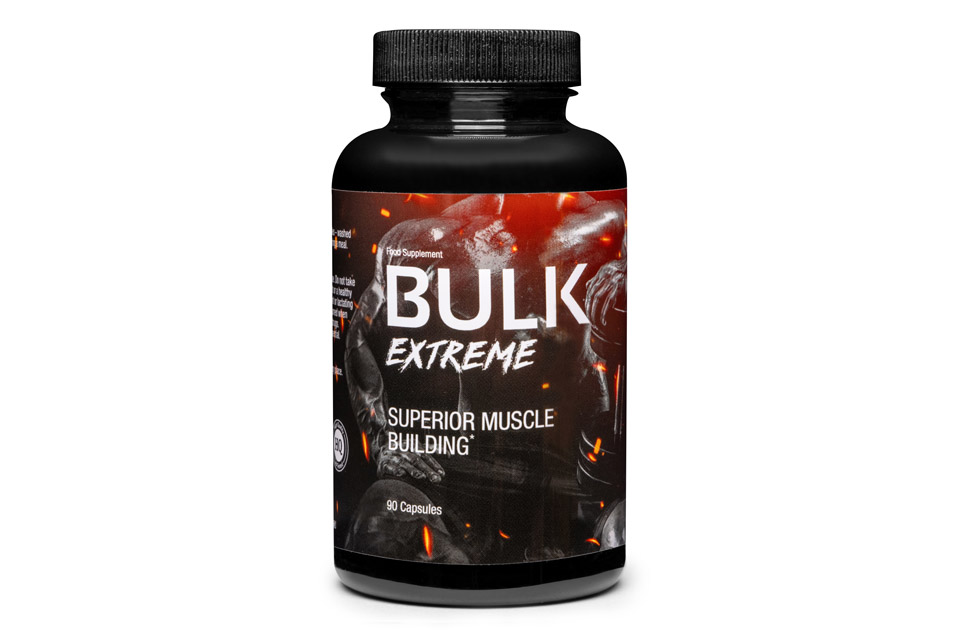
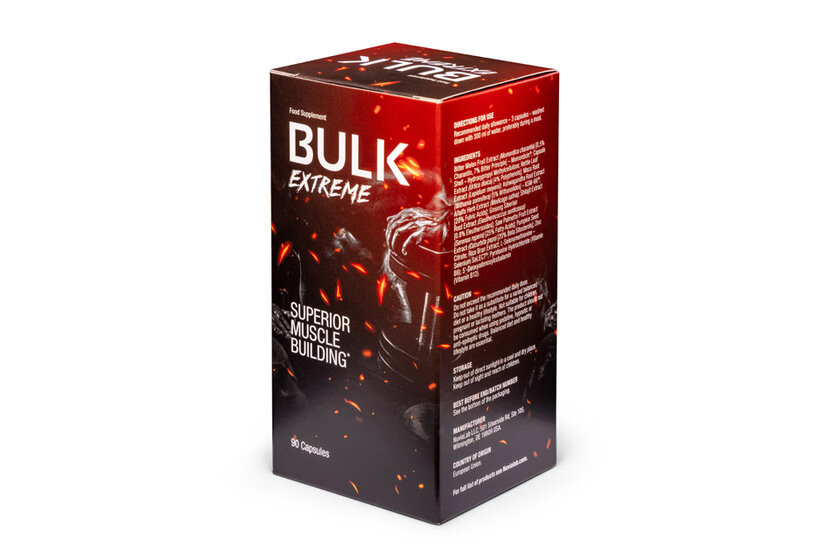
The formula this site reviews, Bulk Extreme, provides 150 mg — a third of the studied dose, inside a blend.
What Shilajit Is (and Why "Purified" Is the Load-Bearing Word)
Shilajit is a tar-like exudate that seeps from rock in high mountain ranges — the Himalayas above all — formed over centuries from decomposed plant matter under pressure. In Ayurvedic medicine it is a classical rasayana (rejuvenative), traditionally processed before use.
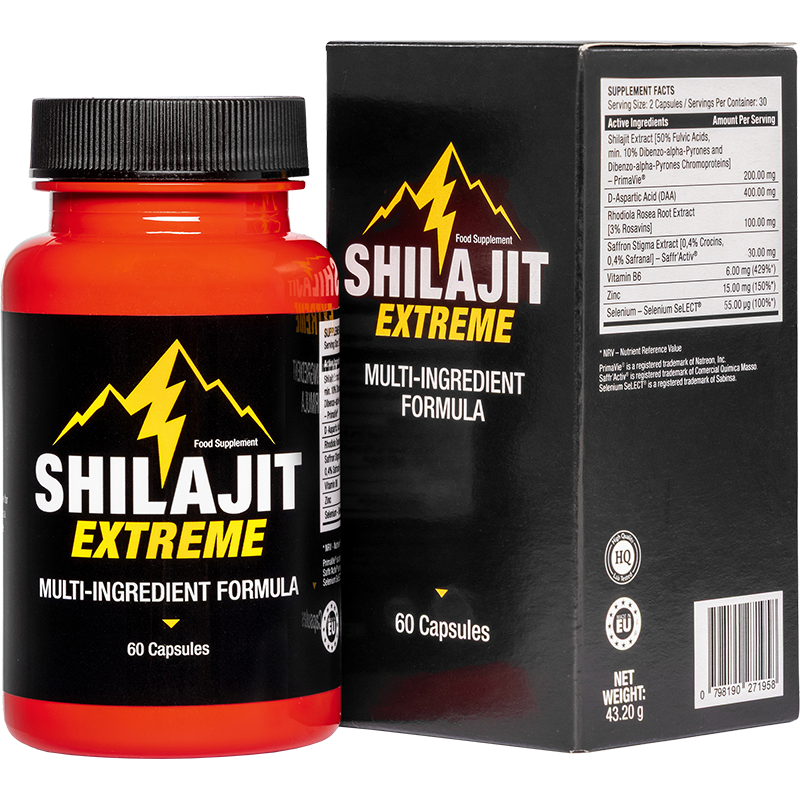
Its chemistry centres on fulvic acid (the fraction products standardise to — 20% in Bulk Extreme's material) and dibenzo-alpha-pyrones, alongside a mineral load that is the source of both its "80+ minerals" marketing and its central safety problem: rock exudate concentrates what the rock contains, including, in unpurified or carelessly sourced material, lead, arsenic and mercury at levels regulators have repeatedly flagged.
The distinction between purified, standardised extract (the trial material, and the only form this article discusses favourably) and raw resin of unknown provenance is therefore not pedantry — it is the difference between a studied substance and a geology sample. NCCIH and Memorial Sloan Kettering both carry the contamination caution.
The Ayurvedic tradition itself purifies shilajit before use, a step the raw-resin internet market is happy to skip on your behalf.
Claim vs Study: the Master Table
| Claim | Best human evidence | Status |
|---|---|---|
| "Raises testosterone" | Pandit 2016: purified shilajit 250 mg ×2/day, 90 days, men 45–55 — total T, free T and DHEAS significantly up vs placebo | Supported — one trial, one demographic |
| "Builds muscle" | No human trial measures increased muscle mass from shilajit | Unsupported |
| "Improves strength" | Keller 2019: 500 mg/day group retained more maximal strength after a fatiguing protocol (MVIC loss 8.9% vs 16.0%) | Narrow support: fatigue resistance, not strength gain |
| "Improves fertility" | Biswas 2010: sperm parameters improved in oligospermic (infertile) men on purified shilajit | Supported in a clinical population; does not transfer to healthy men |
| "Boosts energy / fights fatigue" | Traditional use + animal data; Keller's fatigue-retention finding is adjacent | Plausible, thinly evidenced in humans |
| "Safe because it's natural and ancient" | Heavy-metal contamination documented in unpurified products; purified extracts were the trial materials and were tolerated in trials | Form-dependent — see safety section |
The Testosterone Trial, Read Closely (Pandit 2016)
Pandit and colleagues randomised healthy male volunteers aged 45–55 to purified shilajit 250 mg twice daily or placebo for 90 days. The abstract's findings: after 90 days, the shilajit group showed significant increases in total testosterone, free testosterone and DHEA-S compared with placebo, while LH and FSH — the pituitary signals — were maintained rather than suppressed.
That last detail is pharmacologically interesting and worth dwelling on: exogenous testosterone suppresses LH/FSH (the axis reads the drug as its own product) A rise in testosterone with gonadotropins maintained suggests, if real, an upstream or testicular-site effect rather than hormone replacement — one reason the trial attracts genuine scientific interest rather than only marketing.
The widely-circulated quantification — total testosterone up ~20.45% — comes from the full text as reported by secondary sources. We cite it as reported, not as abstract-verified. Now the limitations, in the same type size: a single trial. A modest sample. One age band (45–55) chosen, as in the fenugreek literature, where testosterone has room to rise.
A commercial purified extract as the material. And, in the years since, no independent replication. The correct epistemic label is the one this site applies across categories: a promising, unreplicated result in the population most likely to show it.
A 25-year-old lifter quoting Pandit is quoting a study of men his father's age, on a purified extract, at 500 mg/day — three translations away from his own capsule before the first question of dose even arrives.
The Strength Trial, Read Closely (Keller 2019)
Keller and colleagues (Journal of the International Society of Sports Nutrition, 2019) randomised 63 recreationally active young men (average age ~21) to placebo, 250 mg/day or 500 mg/day of purified shilajit for 8 weeks, and tested — among other measures — how much maximal voluntary isometric strength (MVIC) they lost after a fatiguing exercise protocol.
The 500 mg group lost significantly less (8.9% decline versus 16.0% on placebo): shilajit appeared to make fatigued muscle hold on to its strength better.
Read precisely, that is a fatigue-resistance/recovery finding in young men — relevant to training quality across a session, possibly to collagen and muscle-integrity pathways the authors discuss — and it is routinely inflated, in marketing, into "clinically shown to build strength and muscle".
It shows neither: baseline strength was not the winner, muscle mass was not measured as improved, and the trial's own framing is retention under fatigue.
We grade it as the second-most-interesting result in shilajit's file precisely because it is real, randomised and in the young demographic the sellers target — and we insist on its actual shape, because a supplement literature that cannot tell retention from growth will sell you anything.
So: Does Shilajit Build Muscle?
No human evidence says so, and the structure of the two trials explains why the claim persists anyway. The testosterone trial is in middle-aged men (not lifters, no training intervention, no mass outcome). The strength trial is in young men (no mass outcome, a retention endpoint).
Marketing splices the two — testosterone from the first, "strength" from the second, "muscle" from the splice — into a claim neither study made.
The honest chain, link by link: if shilajit raises testosterone modestly in deficient-ish middle-aged men (one trial), and if testosterone within the normal range were rate-limiting for muscle in young trained men (it is not — see our booster verdict), and if the formula dose matched the trial dose (150 mg versus 500 — it does not), then a muscle effect might be hypothesised.
Three conditionals deep is where this claim lives.
For the muscle goal itself, the proven inputs remain the unpatentable ones in our muscle-supplements guide — training, protein, surplus, creatine — against which shilajit's realistic best case is "may help you retain strength when fatigued, at 500 mg/day of a purified extract", a claim we would print on a label tomorrow if a label ever printed it.
Fulvic Acid: the Molecule Doing the Marketing
Nearly every shilajit claim routes through fulvic acid, so it deserves its own grading.
Fulvic acid is a fraction of humic substances — the organic acids of decomposed matter — and it is genuinely bioactive chemistry: it chelates minerals (which cuts both ways, transport and contamination), shows antioxidant activity in vitro, and is the vehicle for the dibenzopyrone compounds proposed to support mitochondrial electron transport.
What it does not have is a human clinical literature of its own at supplement doses: no trial isolates fulvic acid for testosterone, muscle or energy outcomes in people. The standardisation percentages on labels (20%, 50% fulvic acid) therefore certify identity and consistency of the extract — a real quality signal — without certifying any outcome.
This distinction matters commercially: "standardised to X% fulvic acid" is the shilajit equivalent of "contains L-theanine" — the beginning of an audit, not its conclusion. The trials that anchor this article dosed whole purified shilajit extracts, and their results belong to those extracts at those doses. A different extract at a third of the dose inherits the vocabulary, not the findings.
Shilajit vs Ashwagandha: the Testosterone Comparison Buyers Actually Make
| Shilajit | Ashwagandha | |
|---|---|---|
| Best testosterone trial | Pandit 2016 — men 45–55, 500 mg/day, 90 days, total/free T + DHEAS up | Lopresti 2019 (men 40–70, crossover): salivary T +14.7% vs placebo; Wankhede 2015 in young training men |
| Replication | None yet | Multiple trials, mixed sizes, pooled analyses exist |
| Muscle/strength data | Keller 2019: fatigue-retention only | Wankhede 2015: strength/mass measures in a training programme (industry-linked) |
| Signature risk | Heavy metals in unpurified material — sourcing is the safety decision | Rare liver case reports; thyroid cautions |
| Best-fit reader | Man 45–55 considering a hormonal nudge, willing to verify sourcing | Stressed, fatigued man 40–70; also the better-evidenced stress choice |
The comparison's lesson is structural: ashwagandha has the wider, replicated-but-heterogeneous file. Shilajit has the single cleaner demographic match for midlife testosterone and the heavier sourcing burden. Both files dwarf their appearance in formulas, where both are typically under-dosed — the recurring arithmetic of our ingredient index.
What About Women, Energy Claims and Everything Else on the Bottle?
Women: the human shilajit literature is almost entirely male — the testosterone and fertility trials by design, and no adequate female trial programme exists for the bone, energy or hormonal claims made at women online.
Absence of data plus a hormone-active reputation plus pregnancy's no-data rule equals our standing advice: not recommended for women on current evidence, whatever the traditional-use citations say. Energy and cognition: traditional rasayana use and animal data, with no clean human primary-endpoint trial — graded as unproven in our muscle guide's tier table.
DHEAS: Pandit's DHEAS rise is real within that trial and routinely oversold — DHEA-S is an adrenal androgen reservoir whose supplementation significance in healthy men is unsettled. A rise is a datum, not a benefit certificate. The pattern across all three: shilajit's file is two good trials and a penumbra, and the penumbra is where the marketing lives.
The Fertility Data (Biswas 2010) — With Its Population Attached
Biswas and colleagues studied purified shilajit in men with oligospermia (low sperm count) — a clinical infertility population — and reported improvements in sperm count, motility and related parameters, alongside hormonal measures, over 90 days. Two disciplines apply. First, the direction is genuinely interesting and consistent with the Pandit hormonal picture.
Second, fertility improvements in men with a diagnosed deficit do not transfer to fertile men as an "enhancement" — the ceiling logic of this whole site (corrections are not boosts) applies to sperm exactly as to zinc and vitamin D. Any product citing Biswas at healthy young buyers has committed the demographic substitution this article keeps catching.
Men with actual fertility concerns have a clinical pathway (semen analysis, endocrine workup) in which a trialled, purified preparation might one day earn an adjunct conversation — after the workup, not instead of it.
Energy, Fatigue and the Mitochondrial Story
Shilajit's traditional reputation is as much about energy as hormones, and its modern mechanistic pitch is mitochondrial: fulvic acid and the dibenzopyrones are proposed to support electron-transport efficiency and CoQ10 recycling, with animal studies showing anti-fatigue effects under exertion. Graded plainly: the mechanism is coherent and preclinical.
The human energy evidence is Keller's fatigue-retention result and general trial tolerability — there is no human trial with energy or endurance as a clean primary endpoint in healthy people. This places shilajit in the large family of ingredients whose "energy" claim is a mechanism in search of a trial.
Buyers should also know the confound: fatigue is the symptom most responsive to expectancy, ritual and sleep change in all of supplement research, which is why uncontrolled user reports ("I feel incredible on shilajit") carry almost no information here — the 8-week Keller design, blinded and placebo-controlled, is what information looks like, and its finding was narrower and more interesting than the testimonials.
Safety: Heavy Metals, Sourcing and Who Should Avoid
This section governs the rest of the article, and it has two halves that must not be averaged. The material risk: shilajit is a rock exudate. Unpurified and poorly sourced products have repeatedly raised heavy-metal concerns (lead, arsenic, mercury, and also iron overload in the other direction — shilajit is iron-rich, a real consideration in haemochromatosis).
NCCIH advises that some Ayurvedic products have been found to contain toxic metals. Memorial Sloan Kettering's monograph carries the same caution for shilajit specifically. Safety reviews (Stohs 2014) conclude that purified shilajit has a reassuring profile in the studies conducted, while emphasising that purification and testing are the entire basis of that reassurance.
The trial record: the purified extracts in Pandit, Keller and Biswas were well tolerated at 250–500 mg/day over 8–12 weeks, with no serious adverse pattern. The synthesis writes the buying rule: shilajit is a source-verification purchase — purified, standardised, third-party-tested material from an accountable maker, or none at all.
Raw resin from anonymous marketplace sellers, however photogenic and "Himalayan", inverts the evidence: it is the untested form carrying the documented risk. Populations to avoid or clear first: pregnancy and breastfeeding (no data) Iron-overload conditions. Gout (purine-adjacent cautions in traditional literature)
Anyone on medication should note that fulvic-acid preparations' interaction file is thin rather than clean — thin means unknown, and unknown plus medication equals a pharmacist conversation. The product we review uses a standardised extract (20% fulvic acid) inside its formula — the right kind of material, at the wrong dose for the trials.
Forms: Resin, Powder, Extract — and the Dose Gap, Named
The market sells three forms. Resin (the semi-solid tar, dissolved in water or milk traditionally) is the traditional format and the least standardised — potency varies by source and batch, and the contamination question sits entirely on the seller. Powdered raw shilajit inherits the same variability in a capsule.
Purified standardised extract — standardised to fulvic acid content, as in the trials (the Pandit/Keller material class) — is the only form whose milligrams mean something comparable across products. Now the dose audit that no seller guide performs: the human trials used 500 mg/day of purified extract (250 mg twice daily in Pandit. 500 mg in Keller's effective arm.
Biswas in the same range). Bulk Extreme provides 150 mg/day — 30% of the studied dose — as one line in an thirteen-ingredient formula. We do not claim 150 mg does nothing.
We claim, precisely, that no human trial has ever tested 150 mg, so every benefit sentence written about that formula's shilajit is borrowed from studies of more than three times the dose.
That gap, multiplied across the formula's other headliners (its beetroot is likewise a fraction of the nitrate literature's doses — see our beetroot guide), is the arithmetic inside Bulk Extreme's 5.3/10.
Traditional Use: What Kind of Evidence Is It?
Shilajit's Ayurvedic pedigree is genuine and long — a classical rasayana prescribed for vigour, recovery and ageing, traditionally purified (the texts describe washing and processing the raw exudate, an early intuition of the contamination problem) and traditionally combined, often with milk or triphala.
This site's position on traditional use is consistent across categories: it is a hypothesis-generation record of real value — it pointed researchers at a substance that then produced two legitimate modern trials — and it is not itself outcome evidence, because traditional systems did not run placebo controls, record denominators, or publish their failures.
The respectful and the sceptical readings converge on the same behaviour: take the tradition seriously enough to test its claims properly (Pandit and Keller did), and decline to let "5,000 years" substitute for the testing. Sellers who quote the tradition while skipping its purification discipline are not even being traditional correctly.
The Buying Checklist (If You Buy It At All)
Purified extract, named: the label should say purified/standardised and give the fulvic-acid percentage — the trial-material class. Third-party heavy-metal testing, published: a certificate of analysis for the batch, from a named lab, covering lead, arsenic, cadmium and mercury. Its absence on a rock-derived product is disqualifying. Dose honesty: 500 mg/day of that extract is the studied amount.
A product built on 150 mg inside a blend is asking the trials to cosign a different intervention. Maker identity: a real company, a real address, a guarantee policy printed somewhere (Bulk Extreme's maker, to note the pattern, publishes no money-back guarantee — one of the entries in its 5.3/10). Price sanity: purification and testing cost money.
The cheapest shilajit on a marketplace is cheap for reasons that are, for once, easy to guess. Apply the five checks and the market shrinks to a handful of defensible products — which is what a checklist is for.
What Would Settle the Question: the Research Agenda
Shilajit is unusually close to gradeability for a traditional substance — two competent trials exist — and the gaps are specific enough to name. A replication of Pandit by an independent group, in the same demographic, with pre-registered outcomes: one more positive would transform the testosterone claim's standing. A null would discipline a decade of marketing.
A training study with mass as the endpoint: young lifters, 500 mg/day, 12+ weeks, DEXA-measured lean mass on a controlled programme — the exact study the muscle claim needs and has never had. A female safety/efficacy programme before any claim at women. Long-term safety data past 12 weeks, including metal-accumulation monitoring on purified material.
Until those exist, this article's grades stand: testosterone in midlife — promising, single-trial. Strength retention — narrow, single-trial. Muscle — unevidenced. Safety — a sourcing discipline, not a property of the word shilajit.
How to Judge a Personal Trial (If the Two Real Trials Interest You)
The defensible experiment: a purified, standardised, third-party-tested extract at 500 mg/day. A defined question chosen in advance (for a man 45–55: a morning testosterone panel before and after 90 days, mirroring Pandit. For a younger lifter: a fixed fatigue protocol — the same top-set sequence weekly — with performance logged, mirroring Keller's design rather than your hopes)
And a hard stop at the trial window's end for judgement. What not to do: judge by libido or "energy" impressions in week two (the two most expectancy-soluble outcomes in the file), stack it simultaneously with three other new products, or buy the resin form because it photographs like tradition.
And the expectation to carry in, from this article's tables: the best-documented outcome is a hormonal nudge in middle age. The second is holding strength better when tired. Muscle mass is not on the menu the evidence printed.
Frequently Asked Questions
Does shilajit increase testosterone?
One good trial says yes — purified shilajit 500 mg/day raised total and free testosterone significantly over 90 days in men aged 45–55 (Pandit 2016). It is unreplicated, and no trial exists in young men.
Does shilajit build muscle?
No trial shows increased muscle mass. The young-men trial (Keller 2019) showed better strength retention under fatigue at 500 mg/day — a different and narrower finding.
What dose of shilajit was used in the studies?
500 mg/day of purified extract (250 mg twice daily, or 500 mg in the strength trial). Formulas providing ~150 mg/day are delivering 30% of the studied dose, untested at that level.
Is shilajit safe?
Purified, standardised, tested extracts were well tolerated in trials. Unpurified material carries documented heavy-metal contamination risk — the sourcing decision is the safety decision. Avoid in pregnancy. Caution with iron-overload conditions.
Shilajit resin or capsules — which is better?
For trial comparability: purified standardised extract (the trial material). Resin is traditional but unstandardised and carries the full sourcing risk. Judge any form by its fulvic-acid standardisation and third-party testing.
How long does shilajit take to work?
The trials ran 8–12 weeks. Judge at 90 days for hormonal questions, 8 weeks for the fatigue-retention question — not before.
Last reviewed: October 2026. This article is educational and is not medical advice.
