
- Quick Answer
- The Trial-Dose Table: the Only Dosage Authority Worth the Name
- The Capsule Protocol (Start Here)
- With Food or Empty Stomach? What the Trials Did vs What Tradition Says
- If You Use Resin: the Ritual, Summarised Honestly
- Morning or Night?
- Split Dose or Single Dose?
- What to Mix It With — and the Absorption-Booster Myth
- Starting Out: the First Two Weeks, Honestly
- Keeping the Record That Makes Day 90 Worth Something
- Cycling: Practice, Not Pharmacology
- How Long It Takes: the 90-Day Timeline
- How Much Is Too Much?
- The Protocol by Goal: a Summary Table
- A Note on Powders
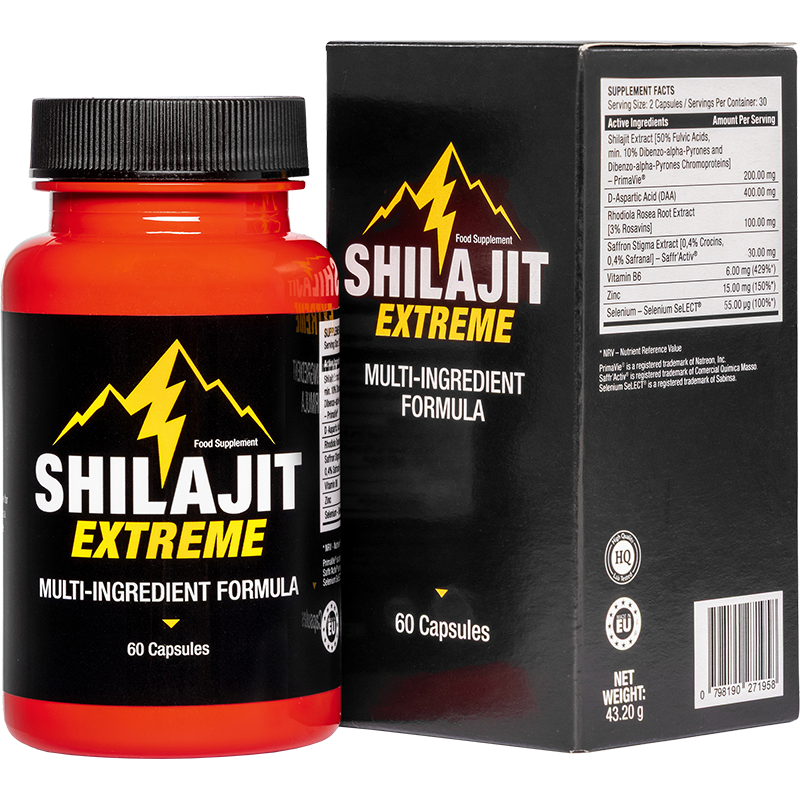
- The Worked Example: Shilajit Extreme's Label Against This Guide
- Who Should Buy Shilajit Extreme — and Who Should Skip It
- A Stronger Alternative in This Category
- Frequently Asked Questions
- How much shilajit should I take a day?
- Should I take shilajit on an empty stomach?
- Is it better to take shilajit in the morning or at night?
- Do I need to cycle shilajit?
- How long does shilajit take to work?
- Should I take shilajit before a workout?
- Can I take shilajit with coffee?
- What if I miss doses or take a break mid-trial?
- Can I take more than the label dose to match the studies?
- Read This Next
Disclosure: This article contains affiliate links. If you buy through them, we may earn a commission at no extra cost to you. It never changes our conclusions.
Quick Answer
The doses with human evidence behind them are 200–500 mg/day of a purified, standardised extract, taken daily for 8–12 weeks — the testosterone trial used 500 mg/day for 90 days, the fertility trial 200 mg/day (taken after meals) for 90 days, and the longest study ran 48 weeks at 250–500 mg/day. Almost everything else in the how-to genre is resin folklore: the pea-sized piece, the warm-water ritual, the empty-stomach rule and the cycling schedules were not the protocols the trials used — the trials used measured capsules, mostly dosed with or after food. Take shilajit like the evidence took it: a stated milligram dose of a standardised extract, consistently, in the morning if it suits you, with food if your stomach prefers, judged at 90 days rather than 9. Best for: capsule users who want the studied protocol rather than the ritual — and resin users who want to know what the ritual can and cannot tell them.
Our Recommendation — Shilajit Extreme
Score: 5.8/10 · Best for: men who want the studied protocol in a measurable form — a stated 200 mg a day of standardised extract in capsules, identical on the brand site and the maker’s store, instead of the resin ritual Main caution: 200 mg a day matches the fertility trial’s dose, not the testosterone trial’s 500 mg — and doubling up to chase it doubles every other ingredient with it Fair trial: the maker’s own minimum is three months — read three bottles at $153.87 as the purchase unit, with no money-back guarantee published if the 90 days disappoint
The Trial-Dose Table: the Only Dosage Authority Worth the Name
Dosage advice should start from the doses that were actually studied, in the forms that were actually used. This table is the complete controlled human record:
| Study | Form used | Dose | Duration | Outcome studied |
|---|---|---|---|---|
| Pandit 2016 | PrimaVie® purified extract, capsules | 250 mg twice daily = 500 mg/day | 90 days | Testosterone (+20.45% vs placebo) |
| Biswas 2010 | Processed shilajit, capsules, after major meals | 100 mg twice daily = 200 mg/day | 90 days | Sperm parameters (uncontrolled) |
| Keller 2019 | PrimaVie®, capsules | 250 mg/day vs 500 mg/day vs placebo | 8 weeks | Strength retention (500 mg subgroup only; muscle cluster has the full read) |
| Pingali 2022 | Standardised aqueous extract | 250–500 mg/day | 48 weeks | Bone density (postmenopausal women) |
Three lessons fall out of the table. First, the studied range is 200–500 mg/day of extract — brand guides recommending up to 1,000 mg/day, or protocols escalating to 500 mg twice daily, are prescribing beyond the record, not within it. Second, every controlled trial dosed a measured preparation in capsule form; no trial dosed a pea of resin dissolved in tea, which is why resin dosing guidance is, at best, a folk conversion of capsule data. Third, duration is part of the dose: nothing in this table was measured before 8 weeks. A how-to guide that promises effects in days is not summarising this table — it is ignoring it.
The Capsule Protocol (Start Here)
If you take a standardised capsule product, the protocol that best matches the evidence is unglamorous:
- Dose: the label's stated dose, checked against the table above. 500 mg/day of a standardised extract replicates the testosterone trial; 200 mg/day matches the fertility trial's dose. Below 200 mg/day you are under every protocol ever studied, in a zone with no data in either direction.
- Frequency: the two positive trials split the day — 250 mg twice daily, or 100 mg twice daily. Splitting is the studied pattern; a single morning dose of the same total is a reasonable convenience, but it is a convenience, not a studied variant.
- With water: the capsule products in this file are directed to be taken with a full glass of water (the product below specifies about 300 ml), which aids swallowing and gastric tolerance.
- Consistency: daily, at the same times, for the full course. The trials dosed continuously; the results belong to that continuity.
- Duration: 90 days before judging any hormone or fertility outcome (the spermatogenesis cycle alone runs ~74 days), 8 weeks minimum for anything exercise-adjacent, and no verdict at all from week two.
That is the entire evidence-based protocol. Everything after this section is the honest treatment of the questions the protocol doesn't answer — timing folklore, stomach folklore, and the cycling habit — each labelled with what it actually is.
With Food or Empty Stomach? What the Trials Did vs What Tradition Says
The loudest rule in resin culture — "always on an empty stomach, or it won't absorb" — collides with the trial record, and the record should win. Biswas dosed after major meals, explicitly. The testosterone trial's extract guidance, as summarised by the clinician sources in our research, is with meals. No trial mandated fasting, and no human study demonstrates superior absorption on an empty stomach; the specific claim circulating on brand blogs — that fulvic acid uptake rises "up to 30 percent" without food — carries no source we could find and appears to be invented, as does the companion claim that fulvic acid "crosses the blood-brain barrier efficiently" in humans, for which no human data exists. The practical settlement: if you tolerate it on an empty stomach and prefer the ritual, no evidence says you are harming the effect; if it nauseates you — GI upset is the commonest reported side effect — take it with food, which is what the fertility trial did anyway. Absorption certainty is not available at any stomach state; comfort is. Choose comfort.
If You Use Resin: the Ritual, Summarised Honestly
For completeness — because many readers arrive with a jar, not a capsule box — the standard resin method, with its epistemic status attached. A portion is measured by eye against a visual scale: a rice-grain-sized piece (roughly 100–300 mg) to start, up to a pea-sized piece (roughly 300–500 mg). It is dissolved in warm — not boiling — liquid (water, tea or milk), traditionally in the morning, and drunk once dissolved. Start-low-go-slow escalation over the first weeks is sensible harm reduction for any new substance. What this method cannot do is tell you your dose: resin density and fulvic content vary by batch and source, the visual scale spans a five-fold range between its two reference objects, and no home method converts a sticky pea into a verified 250 mg of extract. Resin users are therefore running an unmeasured protocol by necessity — which is a legitimate choice, made honestly only when the user knows the trials' milligrams are not hiding inside it. Storage and jar-life are practicalities (resin softens with heat, hardens with cold, and keeps for a long time sealed and dry); the contamination question is not a practicality at all, and it is handled in our purity guide, which resin users should read before their second jar, not after their twentieth.
Morning or Night?
The consensus across clinician summaries and brand guides alike is morning — partly tradition, partly the energy association, partly simple routine design (a morning dose is the one people remember). There is no trial comparing timing, and no pharmacology suggesting a circadian window matters for a substance whose outcomes are measured in months. The one practical exception: a minority of users report feeling wired or restless with evening use (restlessness and faster pulse appear among reported effects at higher doses in our safety file), and anyone who notices that pattern should move the dose to the morning — not because the morning is proven better, but because sleep is worth more than symmetry with a ritual. If you split the dose (the studied pattern), morning and early evening mirrors the trials' twice-daily spread without pushing the second dose against bedtime.
Split Dose or Single Dose?
Every positive protocol in the table split the day: 250 mg twice daily, or 100 mg twice daily. That pattern is worth noticing because it is the kind of detail that separates a protocol from a habit. There is no head-to-head trial of split versus single dosing for shilajit — there is barely a trial of anything — so the honest claim is narrow: twice-daily is what was studied, and a once-daily consolidated dose is an unstudied convenience. The practical stakes are probably small either way for a substance judged in months, and two real considerations pull in opposite directions. Splitting matches the evidence and softens the GI load per dose (relevant, since stomach upset is the commonest complaint). Consolidating matches real life: the best protocol is the one still running at day 80, and a man who reliably takes two capsules with breakfast will learn more than a man whose twice-daily schedule collapses by week three. Our recommendation follows the evidence with an adherence escape hatch: split if you can sustain it; if you cannot, take the full dose once, at a fixed time, and say honestly — if only to yourself — that you have traded a studied detail for a sustainable one.
What to Mix It With — and the Absorption-Booster Myth
Resin tradition dissolves shilajit in warm milk, tea or water; capsule users just need water. Beyond preference, three mixing claims circulate and deserve verdicts. Warm, not boiling: boiling water is traditionally avoided on the theory that heat damages active compounds — plausible kitchen chemistry, unmeasured either way; warm liquid dissolves resin faster and is the harmless consensus. Coffee: no interaction between shilajit and caffeine is documented in humans; the practical question is attribution — if you always take them together, your 90-day judgement inherits caffeine's effects on sleep and energy. Keep them together if you like, but keep them constant. "Absorption boosters": advice to pair shilajit with piperine (black-pepper extract) or fats to "unlock" absorption imports a trick from other ingredients' marketing; piperine genuinely alters the metabolism of some compounds — which is an argument for caution about interactions, not for stacking it on folklore — and there is no human study showing any pairing raises shilajit's effects. The gummy version of the same myth deserves its own sentence: claims that some thousands of milligrams of "raw herb equivalent" in a gummy equal 300–500 mg of extract are equivalences invented by their sellers, because "raw herb equivalent" has no standardised meaning. A milligram of a named extract is a measurement. A milligram of "equivalent" is a metaphor. Dose from measurements. That single rule quietly eliminates most of the how-to genre's confident instructions, which is a fair summary of the genre.
Starting Out: the First Two Weeks, Honestly
Brand guides ritualise the start — a week at a rice-grain dose, a cautious climb, signs lists for "too low" and "too high". The trials, it should be said, simply started at the full studied dose on day one; there is no loading phase, no titration schedule and no evidence that a slow start improves outcomes. A gentle start is still defensible as harm reduction — new substances deserve a few days at a lower dose while you learn your own tolerance, particularly for the GI effects that are this ingredient's commonest complaint — provided it is labelled as prudence rather than protocol. Two starting rules survive scrutiny. First, introduce one product at a time: starting shilajit alongside two other new supplements makes every subsequent sensation unattributable. Second, note your baseline before you start — energy, sleep, training, and, if testosterone or fertility is the question, the blood test or semen analysis our topic articles describe. The first fortnight's real job is not to produce an effect; nothing in the record says it can. It is to establish that you tolerate the product and to lock the routine that has to survive to day 90.
Keeping the Record That Makes Day 90 Worth Something
A how-to guide for a 90-day intervention should end with the paperwork, because an unmeasured trial is just a purchase. For testosterone: a morning total-T blood test before the first capsule and another after day 90, drawn at a similar time, in similar conditions (sleep, illness, heavy training and alcohol all shift readings — our testosterone article details the protocol). For fertility: a semen analysis at baseline and after a full spermatogenesis cycle, with the same abstinence interval; expect the laboratory to want a repeat of any abnormal result, because single samples fluctuate — that fluctuation being, once again, the reason Biswas needed a control group. For energy and general wellbeing: a one-line daily log (energy 1–10, sleep hours) started a fortnight before the product, so the product's months can be compared against your own ordinary variance rather than your hopes. None of this requires an app, a coach or a wearable. It requires deciding, on day one, what evidence would change your mind at day 90 — and writing it down before the marketing, the routine and the sunk cost start voting.
Cycling: Practice, Not Pharmacology
"How long can I take it before I need a break?" is one of the most-asked questions in this set's demand research, and it has a cleaner answer than the internet gives it: no trial has ever tested cycling. The studies dosed continuously — 8 weeks, 90 days, and in the bone trial 48 straight weeks — with no breaks built in and no loss-of-effect reported across those spans. The familiar protocols ("8–12 weeks on, 2–4 weeks off", "six weeks on, one off") come from user practice and traditional habit, reinforced by analogy with substances that genuinely do need cycling (stimulants, for tolerance; other compounds, for receptor reasons). For shilajit, no tolerance mechanism has been described in humans and no evidence says a break restores or protects anything. Our honest guidance: if you take breaks because the habit suits you or the budget does, you are doing something harmless and unstudied; do not insert a break at week 8 of a 90-day trial you intend to judge, because you would be interrupting the only protocol that has data. And if you stop because nothing happened, that is not a cycle — that is a result, and the correct next step is to believe it.
How Long It Takes: the 90-Day Timeline
Expectations should be set by what was measured when:
| Window | What the record supports | What people report (anecdote tier) |
|---|---|---|
| Days 1–14 | Nothing measured. No trial endpoint exists inside two weeks | "Feeling it" in week 1–2 — expectation, routine change, or caffeine adjacency; also the window where GI side effects, if any, usually appear |
| Weeks 4–8 | First measured window: strength retention was assessed at 8 weeks (and only at 500 mg/day, in a subgroup) | Energy and wellbeing impressions accumulate — the open-label pilot's fatigue figure was measured at day 28, without a control group |
| Day 90 | The judgement point: testosterone (Pandit) and sperm parameters (Biswas) were both 90-day outcomes; sperm biology (~74-day production cycle) makes earlier fertility verdicts meaningless | |
| Up to 48 weeks | The longest studied span (bone density, in women) — also the outer limit of the daily-safety record |
The asymmetry is worth internalising: harms and side effects, if they come, usually announce themselves early (the first days of GI upset); benefits, if they exist, are only measurable late. A user who quits at day 10 for nausea has learned something real. A user who declares victory at day 10 has learned something imaginary. Plan the purchase, the blood work and the patience around day 90 from the start — our testosterone and sperm-count articles each describe the before/after measurement that makes the 90 days worth more than an impression.
How Much Is Too Much?
The studied ceiling is 500 mg/day. Above it, the human record is empty — no efficacy data (nothing suggests more works better; the one dose-ranging trial found 250 mg/day no better than placebo on its outcome while 500 mg worked, which is an argument for matching the studied dose, not exceeding it) and no safety data specific to higher intakes. Brand escalation protocols that climb toward 1,000 mg/day are inventions, occasionally honest ones, always untested. Two corollaries. First, do not improvise above a product's label: doubling a 200 mg/day capsule product to chase the 500 mg trial is at least arithmetic a buyer can see — but it doubles every other ingredient in the formula too (in the product below, the D-aspartic acid, rhodiola, zinc and B6 all double with it), which is a different and unstudied formula. If the studied dose is what you want, buy a product whose label dose is the studied dose. Second, more is the wrong direction for the commonest side effects: GI upset is dose-related in the reports we have, and the correct response to it is food, a split dose, or stopping — not escalation. If you experience the red-flag symptoms in our safety article (rash, racing heart, dizziness, breathing difficulty), the dose question is over: stop and seek care.
The Protocol by Goal: a Summary Table
Because most readers arrive with one goal, here is the whole guide compressed — dose, duration and the verdict the evidence supports, per goal. Where the verdict column says "no protocol exists", that is the answer, and a page that gives you a milligram schedule anyway is decorating.
| Goal | Studied protocol | Duration to judge | Verdict |
|---|---|---|---|
| Testosterone support | Standardised extract 500 mg/day (250 mg twice daily) | 90 days, with morning bloods either side | One maker-supplied RCT; the protocol is replicable, the certainty is not |
| Sperm count / fertility support | Processed shilajit 200 mg/day (100 mg twice daily, after meals) | 90+ days (one spermatogenesis cycle), with repeat semen analysis | Uncontrolled data only; adjunct to a workup, never instead of one |
| Exercise / training support | 500 mg/day in the one trial that found anything | 8 weeks | Subgroup finding; full read in the muscle cluster — this guide does not extend it |
| Energy / fatigue | No studied protocol exists | — | Animal data and one open-label pilot; see the energy article before spending |
| General daily use | 200–500 mg/day purified extract is the tolerated trial range | Safety record extends to 48 weeks; beyond that, unstudied | Tolerability is documented; purpose is the buyer's own |
Read down the verdict column and the shape of this ingredient appears: two goals with protocols worth the name (one strong-ish, one weak), one subgroup footnote, one blank, and a tolerability range doing duty for everything else. A how-to article's job is to show that shape honestly — the dosing detail is real, but it is detail in service of a smaller evidence base than the genre admits.
A Note on Powders
Loose extract powder — the third common form — sits between the capsule and the resin on the measurability scale, and its protocol problem deserves one paragraph. A powder can be weighed: a milligram scale turns a scoop into a dose, which is more than a resin pea allows. But weighing solves only the mass; the extract's strength is whatever the label claims (standardised to a stated fulvic percentage, or not), and powders are the form most vulnerable to dilution with fillers precisely because nothing about their appearance reports it. If you use a powder: weigh it, buy only a standardised one with the percentage and method stated, and treat an unstandardised "pure shilajit powder" as resin with extra steps. Our forms comparison runs the full three-way audit — standardisation, cost per month, and who each form suits.
The Worked Example: Shilajit Extreme's Label Against This Guide
Everything above, applied to the product this set accompanies, Shilajit Extreme (our score: 5.8/10). Its protocol: 2 capsules a day with 300 ml of water, delivering 200 mg of PrimaVie® (50% fulvic acids) per day. Against the trial-dose table, that places it exactly at the fertility trial's dose and at 40% of the testosterone trial's — a position this site has audited in both directions in our testosterone and sperm-count articles, and states here without decoration. The maker's own FAQ recommends a minimum of three months for full results, which aligns with the 90-day judgement point above and should be read as the purchase unit: three bottles at $153.87 (or six at $273.55 with free shipping; a single bottle is $56.99), with no money-back guarantee published if the 90 days disappoint. Where this product's how-to genuinely beats the resin ritual is measurability: the dose is stated in milligrams of a named, standardised extract, identical on the brand site and the maker's store, so a user can at least know which protocol from the table they are running — the thing a scoop of resin can never tell you. Its maker also states that all batches undergo tests to guarantee quality, absence of contaminants, and safety of use — quoted in its words; the underlying reports are not published, and our purity guide explains what that statement is and is not worth.
Who Should Buy Shilajit Extreme — and Who Should Skip It
Buy it if you want the capsule protocol — a stated 200 mg/day of a standardised extract, taken consistently with water (with food if your stomach prefers, as the fertility trial itself dosed) — and you can commit to the maker's and the evidence's shared timeline of three months before judging. Skip it if your aim is to replicate the testosterone trial exactly (that protocol is 500 mg/day — buy a label that says so, rather than doubling this one and doubling its other ingredients with it), if you are a resin user who values the ritual over measurability (a different and legitimate preference, priced accordingly in our forms comparison), or if a 90-day, guarantee-free commitment does not fit — because every shorter or cheaper version of this experiment answers a question the trials never asked.
A Stronger Alternative in This Category
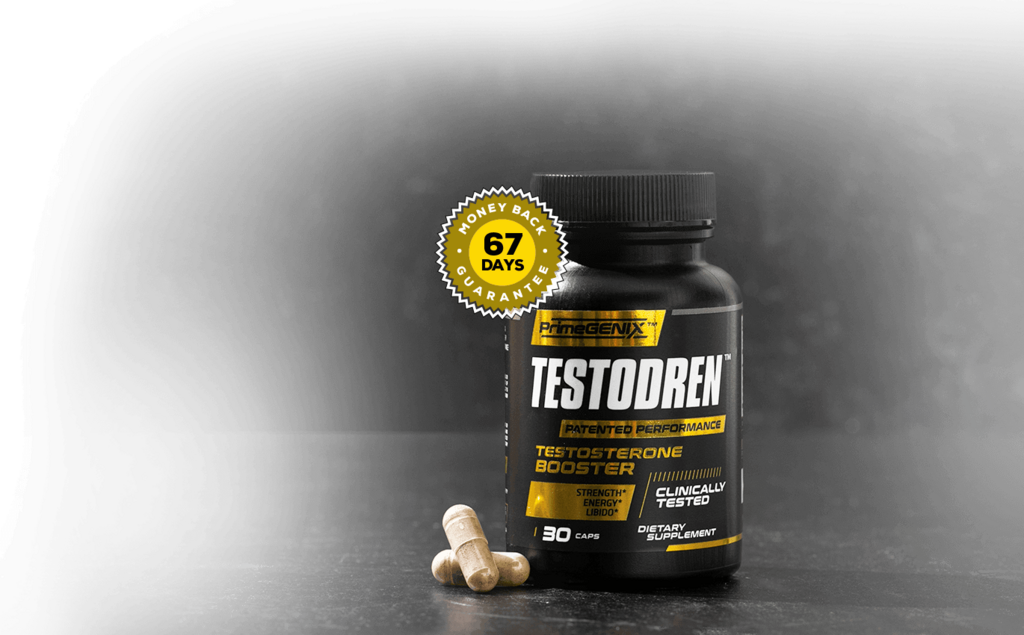
The stronger alternative: Testodren · 8.5/10For testosterone support, the stronger-scoring route in this catalogue is a single ingredient at a published 500 mg dose, with human studies behind the ingredient itself — not a blend sitting below the range its own trials used.
Our Recommendation — Shilajit Extreme
Score: 5.8/10 · Best for: men who want the studied protocol in a measurable form — a stated 200 mg a day of standardised extract in capsules, identical on the brand site and the maker’s store, instead of the resin ritual Main caution: 200 mg a day matches the fertility trial’s dose, not the testosterone trial’s 500 mg — and doubling up to chase it doubles every other ingredient with it Fair trial: the maker’s own minimum is three months — read three bottles at $153.87 as the purchase unit, with no money-back guarantee published if the 90 days disappoint
Frequently Asked Questions
How much shilajit should I take a day?
The studied extract range is 200–500 mg/day: 200 mg/day in the fertility trial, 500 mg/day in the testosterone trial. Below 200 mg/day of extract there is no human data; above 500 mg/day there is no human data either. Resin pieces measured by eye (rice-grain to pea-sized) cannot be converted into these milligrams reliably.
Should I take shilajit on an empty stomach?
The trials did not require it — the fertility trial dosed after meals, and clinician summaries of the testosterone trial describe dosing with meals. The empty-stomach rule is traditional, and the claim that it raises fulvic uptake by a specific percentage is unsourced. Take it with food if it upsets your stomach; comfort beats folklore.
Is it better to take shilajit in the morning or at night?
Morning, by consensus and convenience — there is no timing trial. If evening doses leave you restless, move them earlier; if you split the dose as the trials did, morning and early evening is the studied spread.
Do I need to cycle shilajit?
No evidence says so. Trials dosed continuously for up to 48 weeks and no tolerance mechanism is described in humans. "Weeks on, weeks off" schedules are user practice, not pharmacology — harmless if you like them, but don't break a 90-day trial you intend to judge. And note the asymmetry the schedules ignore: the concern that would justify cycling — long-term daily safety — is a question about years, and no on/off rhythm answers it either; only the missing long-term studies would.
How long does shilajit take to work?
The measured outcomes sit at 8 weeks (exercise) and 90 days (testosterone, sperm parameters). Nothing is measured inside two weeks. Judge at 90 days, with the before/after tests our topic articles describe — not by the first fortnight's impressions.
Should I take shilajit before a workout?
There is no acute protocol to follow: the exercise trial dosed daily for eight weeks, not before sessions, and shilajit has no stimulant or same-day mechanism. Timing around training is a matter of routine convenience. What was studied around exercise — and its substantial limits — is covered in our muscle cluster, not by a dosing trick.
Can I take shilajit with coffee?
No human interaction is documented. The real issue is bookkeeping: caffeine moves energy and sleep on its own, so if your coffee habit changes during a 90-day trial, your judgement of the shilajit is contaminated. Keep the pairing constant, whichever way you choose it.
What if I miss doses or take a break mid-trial?
Occasional misses are life, and no data says they reset anything — the trials' results belong to roughly continuous dosing over 90 days, so a two-week holiday in the middle converts your experiment into a shorter, messier one. If you break for more than a few days, the clean move is to extend the course by the missed span before judging, and to note it in the record you are keeping.
Can I take more than the label dose to match the studies?
Don't improvise: doubling a combination product doubles all of its ingredients, not just the shilajit, producing an unstudied formula. If you want the 500 mg/day studied protocol, choose a product whose label delivers it as directed.
Last reviewed: October 2026. This article is educational and is not medical advice.
