
- Quick Answer
- The Complete Trial Record — Positives and the Negative
- How Rhodiola Is Thought to Work
- Dose: 200–600 mg, and a Ceiling
- Timing: Morning, Before Food — and Why Evening Is Wrong
- What to Expect, Week by Week
- Buying Rhodiola: Species, Standardisation and the Substitution Problem
- The Burnout Question
- Side Effects and Interactions
- Rhodiola vs Ashwagandha, in One Paragraph
- Frequently Asked Questions
- How long does rhodiola take to work?
- What is the right rhodiola dose for stress?
- When should I take it?
- Is rhodiola safe?
- Why do some people feel worse on rhodiola?
- Read This Next
Disclosure: This article contains affiliate links. If you buy through them, we may earn a commission at no extra cost to you. It never changes our conclusions.
Quick Answer
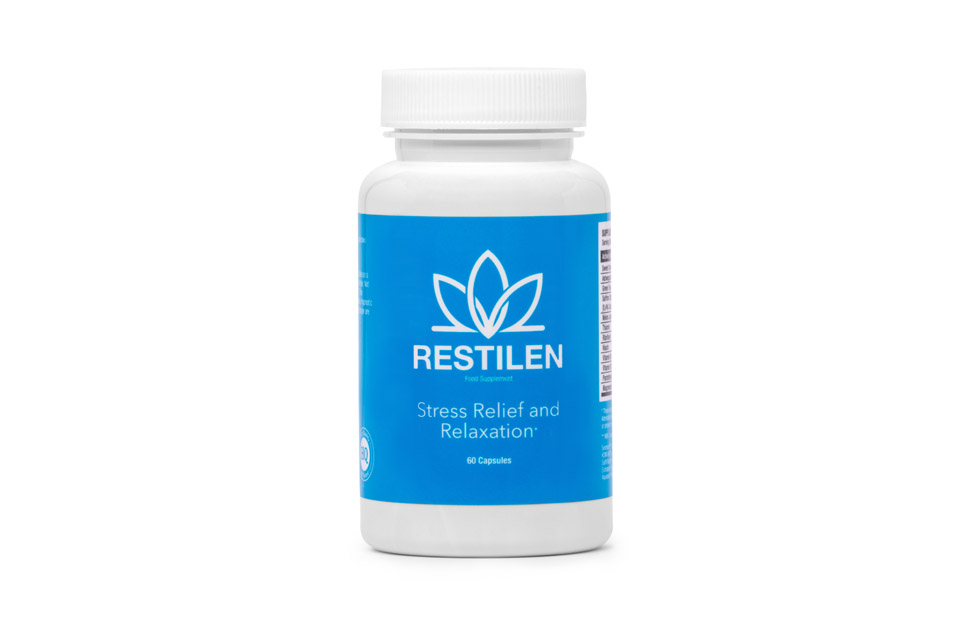
Rhodiola rosea is a classic adaptogen with a genuinely interesting trial record forstress-related fatigue: positive randomised trials in night-duty physicians, exam students and fatigued adults — every one of them carrying high or unclear risk of bias on systematic review, joined by one trial where fatigueworsenedversus placebo. The studied pattern is consistent:200–600 mg/day of a standardised extract (~3% rosavins, ~1% salidroside), taken in the morning(it is stimulating), with fatigue effects reported from about two weeks and fuller effects at 4–12 weeks. NCCIH's verdict stands as the sober line: not enough evidence to conclude rhodiola works for any purpose. Ours: the most promising of the classic adaptogens for the wired-and-tired pattern, unproven, with a real interaction list — and chronically under-dosed in formulas likeRestilen(100 mg), as the audit below shows.
The Complete Trial Record — Positives and the Negative
| Trial | Population & design | Dose | Result |
|---|---|---|---|
| Darbinyan 2000 | Night-duty physicians; randomised crossover | SHR-5 extract, low dose | Mental performance/fatigue measures improved under stress |
| Olsson 2009 | Adults with stress-related fatigue; RCT | 576 mg/day × 28 days | Fatigue improved; cortisol response to awakening stress blunted vs placebo |
| Student exam-period trial (2009) | Students during exams; RCT | 170 mg twice daily | Fatigue benefits by ~day 14; no significant effect on exam grades |
| Edwards 2012 | 101 adults with life-stress symptoms;open-label, no placebo | 200 mg twice daily × 4 weeks | Stress/fatigue scores improved; design cannot attribute the improvement |
| 2015 dose trial (n=480) | Adults with stress symptoms; RCT | 400 vs 600 mg/day × 12 weeks | Both doses improved symptoms;no extra benefit at 600— a dose ceiling |
| Kasper & Dienel 2017 | Burnout symptoms; open multicentre | Standard extract × 12 weeks | Symptoms improved; open design, hypothesis-grade |
| Punja 2014 | Nursing students; RCT, 42 days | 364 mg/day | Fatigue WORSENED vs placebo— the record's necessary negative |
Read whole, the table is more useful than any single line in it: rhodiola looks best where the stressor is concrete and the outcome is fatigue (night shifts, exams, burnout-adjacent exhaustion), its benefits plateau at moderate doses, and its failures are real. A systematic review of the controlled literature found 3 of 5 mental-fatigue trials positive — with every trial at high or unclear risk of bias
That combination (direction encouraging, quality weak, one reversal) is exactly what "promising, unproven" means, and it is the grade this article defends.
How Rhodiola Is Thought to Work
The extract's named actives are the rosavins and salidroside — the standardisation markers (3% / 1%) printed on serious labels, including the Rhodiolife® extract in Restilen (standardised for rosavins). Proposed mechanisms cluster around the stress axis: modulation of cortisol dynamics under load (Olsson's blunted awakening response is the human datum), monoamine effects in preclinical work (including weak MAO interactions in vitro — the root of the antidepressant-interaction caution), and anti-fatigue effects on mental performance under sleep deprivation in the physician and student trials. We print mechanisms with their epistemic rank attached: the cortisol finding is human and trial-based; the monoamine story is largely preclinical; and "adaptogen" itself is a category claim (normalising, bidirectional) whose scientific standing ouradaptogens guideexamines without sentimentality.
Dose: 200–600 mg, and a Ceiling
The dose literature is unusually coherent for this category. The effective trial range runs from ~340 mg/day (student trial) to 576 mg/day (Olsson), with the 480-person trial finding 400 mg/day sufficient and 600 mg/day adding nothing — a ceiling that should discipline both buyers and formulators. Below ~200 mg/day there is essentially no trial support at all, which is the context for the formula audit: Restilen provides100 mgof Rhodiolife® — half the floor of the studied range. A 100 mg dose is not "gentle rhodiola"; on the current record it is an untested dose of a bias-flagged ingredient, present so the label can say rhodiola. (Restilen's overall 6.6/10 already prices this; the full audit table is inour stress roundup. ) If rhodiola is the ingredient you actually want, the studied purchase is a single-ingredient extract at 200–400 mg/day, standardised, from a maker who prints the standardisation.
Timing: Morning, Before Food — and Why Evening Is Wrong
Rhodiola is the stimulating adaptogen: the consensus protocol across the trial literature and clinical guides is a morning dose, roughly 30 minutes before food, with a second early-afternoon dose in split regimens — and a standing warning against evening use, where its alerting effect can cost the sleep that stress recovery depends on. This creates a quiet formulation tension worth noticing in products like Restilen, whose directed use is one capsule morningand one evening: at 100 mg the rhodiola is unlikely to disturb sleep, but a full trial-dose rhodiola product taken at night would be working against itself. Timing is part of dose; a label that ignores it has not read its own ingredient's literature. Expectation-setting on timing: the student trial saw fatigue benefits by about day 14; Olsson's trial ran 28 days; the honest window to judge is2–4 weeksfor fatigue outcomes, longer for broader stress symptoms.
What to Expect, Week by Week
Week 1:the alerting effect, if you are sensitive to it — some users report feeling brighter within days, which the trial record cannot distinguish from expectancy; sleep is the thing to watch (if it frays, move the dose earlier, and if it still frays, stop).Weeks 2–4:the window where the trials' fatigue outcomes moved — the honest test is a workday-afternoon energy rating, kept on paper, against your pre-rhodiola baseline.Weeks 4–12:the broader stress-symptom window of the longer trials; benefits, where real, consolidate rather than escalate — a product that needs ever more weeks to "start working" is describing the absence of an effect.After week 12:you are beyond the studied safety horizon; continuing is a personal experiment, and periodic breaks are the conservative pattern the clinical guides suggest for an ingredient whose long-term file does not exist.
Buying Rhodiola: Species, Standardisation and the Substitution Problem
The label literacy for this ingredient has three specific traps.Species:the trials usedRhodiola rosea; the market also sells other Rhodiola species (notably R. crenulata, common in Chinese supply chains) whose chemistry differs — heavy on salidroside, light on rosavins — and which inherit rosea's reputation without its data.Standardisation:the meaningful line is "3% rosavins + 1% salidroside, from root" (the SHR-5 profile); a label printing only salidroside, or no standardisation at all, is describing the cheaper profile.Root vs whole plant:the actives concentrate in the root; aerial-part material dilutes them. Branded extracts (SHR-5 in the trials; Rhodiolife® in Restilen) exist precisely to pin these variables — one of the few categories where the branded-ingredient premium buys something real: identity. It does not buy dose, as the audit above shows; a branded 100 mg remains an untested 100 mg. Read both lines — identityandamount — before crediting either.
The Burnout Question
Rhodiola is increasingly marketed for "burnout", so the term deserves its paragraph. Burnout in the clinical sense (ICD-11: an occupational phenomenon of exhaustion, detachment and reduced efficacy) is a workplace condition with workplace causes; the Kasper & Dienel study of rhodiola in burnout symptoms was open-label — everyone took it, nobody took placebo — and reported symptom improvement over 12 weeks that its design cannot attribute to the extract rather than to time, attention and the natural course of a crisis that prompted enrolment. If you are in genuine burnout territory, the evidence-based first moves are structural (workload, recovery, possibly clinical support for the depression and anxiety that travel with it), and oursafety guide's closing section exists for this exact reader. Rhodiola as an adjunct while you fix the structure is a defensible experiment; rhodiolainstead offixing the structure is the category's most expensive illusion.
Side Effects and Interactions
Trial tolerability is generally good; the reported effects are dizziness, dry mouth, jitteriness or sleep disturbance (dose and timing-related), and occasional GI upset. The serious cautions are interactions and populations.Antidepressants:rhodiola's preclinical monoamine activity underlies a standing caution with SSRI/SNRI/MAOI medication — unsupervised combination is not advised, and a case literature exists for agitation-type reactions; the measured tone of pharmacist-grade sources (caution, prescriber conversation) is the right one, over both the alarmist and the dismissive versions.Bipolar disorder:case reports of mania activation — a hard avoid without psychiatric supervision.Blood-pressure and diabetes medicationappear on pharmacist interaction lists (theoretical-to-modest);losartanis named in interaction databases via metabolic pathways.Pregnancy and breastfeeding:insufficient data — avoid. The full ingredient × drug-class table for the whole stress category is inour safety guide.
Rhodiola vs Ashwagandha, in One Paragraph
The short version (the full comparison ownsits own article): rhodiola is themorning, fatigue-forward, stimulatingadaptogen with a thinner, bias-heavy file and a negative trial to respect; ashwagandha is theevening, tension-forward, calmingone with a deeper (if heterogeneous) file. The wired-and-exhausted pattern maps to rhodiola's trials; the tense-and-wired pattern maps to ashwagandha's. Choosing between them by pattern is the most defensible use either literature supports.
Frequently Asked Questions
How long does rhodiola take to work?
Fatigue effects were reported by ~2 weeks in the student trial; the main trials ran 4–12 weeks. Judge at 2–4 weeks for fatigue, longer for general stress symptoms.
What is the right rhodiola dose for stress?
The studied range is 200–600 mg/day of standardised extract (3% rosavins / 1% salidroside), with no added benefit shown at 600 over 400. Doses under 200 mg — including most formula inclusions — are untested.
When should I take it?
Morning, about 30 minutes before food. Avoid evening dosing; it can disturb sleep.
Is rhodiola safe?
Generally well tolerated in trials up to ~12 weeks. Cautions: antidepressant combinations, bipolar disorder, pregnancy (no data). Long-term safety beyond the trial windows is unstudied.
Why do some people feel worse on rhodiola?
The Punja 2014 trial found fatigue worsened versus placebo in nursing students — individual response varies, stimulating effects can backfire in the already-wired, and the honest response to feeling worse is to stop, not to push through.
Last reviewed: October 2026. This article is educational and is not medical advice.
