
- Quick Answer
- The Trial Itself: Pandit 2016, Line by Line
- The Audit Table
- What "+20%" Actually Means in a Blood Result
- Why the Unchanged LH and FSH Matter
- How This Trial Gets Misreported
- Total vs Free Testosterone: What the Two Numbers Mean
- The Other Study Everyone Quotes: Biswas 2010
- The Extract Question: Why "Purified Shilajit" Is Part of the Result
- When Would It Show Up — and What Happens When You Stop?
- The Case For the Trial — and the Case Against It
- The Dose Gap: 500 mg Studied, 200 mg Sold
- Does Shilajit Help Erections?
- What the Independent Databases Say
- Outside the Trial's Age Band: Under 45 and Over 55
- A Checklist for Any Shilajit Testosterone Claim You Meet
- Where This Fits in the Wider Testosterone Picture
- Who Should Buy Shilajit Extreme — and Who Should Skip It
- A Stronger Alternative in This Category
- Frequently Asked Questions
- Does shilajit really increase testosterone?
- How much shilajit did the testosterone study use?
- Will shilajit help if my testosterone is clinically low?
- Does shilajit suppress your own testosterone production, like TRT can?
- How would I test whether it works for me?
- Why hasn't anyone repeated the trial in ten years?
- What dose of shilajit is best for testosterone?
- Is a 20% testosterone increase a big deal?
- Can I combine shilajit with other testosterone supplements?
- Read This Next
Disclosure: This article contains affiliate links. If you buy through them, we may earn a commission at no extra cost to you. It never changes our conclusions.
Quick Answer
One randomised, double-blind, placebo-controlled trial — Pandit 2016 — found that purified shilajit (PrimaVie®, 250 mg twice daily, 500 mg/day for 90 days) raised total testosterone by 20.45% and free testosterone by 19.14% versus placebo in healthy men aged 45–55. That is the entire placebo-controlled evidence for the claim. The trial was competently designed, but the extract was supplied by its maker (Natreon), 21 of the 96 enrolled men did not finish, the men were healthy volunteers rather than patients with low testosterone, and no independent group has replicated the result in the decade since. A second study often quoted beside it (Biswas 2010, testosterone +23.5%) had no placebo group at all. So: a real signal, from a single trial, at 500 mg/day — and most products, including the one reviewed on this page, deliver less than half that dose. Best for: men in the trial's own demographic — mid-40s to mid-50s, generally healthy — who want to run the closest honest version of the experiment: a standardised extract, 90 days, with a morning blood test before and after to judge it by numbers rather than feelings.
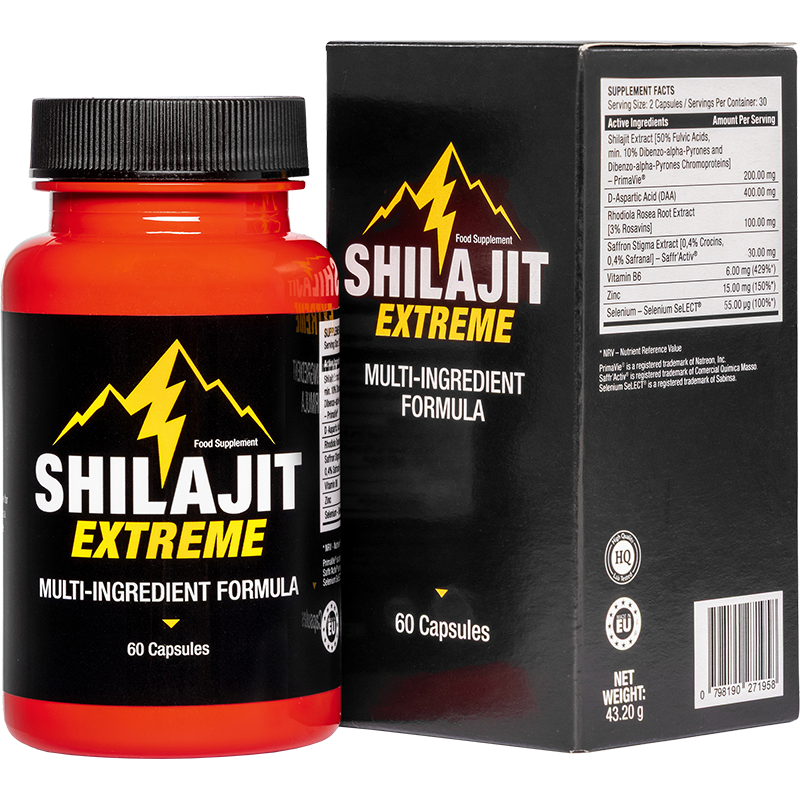
Our Recommendation — Shilajit Extreme
Score: 5.8/10 · Best for: generally healthy men in their mid-40s or 50s who want to test the testosterone hypothesis with the same PrimaVie® extract the one positive trial used — and will prove it to themselves with a blood test before and after 90 days Main caution: the trial dose was 500 mg a day; this bottle ships 200 mg — and that single maker-supplied trial has never been replicated, while the formula’s DAA adds a second, deeper dose gap (400 mg against about 3 g studied) Fair trial: three bottles at $153.87 buy the 90-day course the trial ran — the maker publishes no money-back guarantee, so the experiment’s cost is committed up front
The Trial Itself: Pandit 2016, Line by Line
Pandit and colleagues published the study in Andrologia in 2016 (it appeared online in 2015; PMID 26395129). The design, on paper, is what you would ask for: randomised, double-blind, placebo-controlled, with blood drawn at baseline and at days 30, 60 and 90. The intervention was PrimaVie® purified shilajit — a standardised, water-extracted preparation — at 250 mg twice a day. The subjects were healthy male volunteers aged 45–55. What the men were not: patients. Nobody was enrolled for low testosterone, symptoms, infertility or any diagnosis; this was a hormone study in well men, which shapes everything the result can mean.
The headline results, versus placebo at day 90, with statistical significance (P < 0.05): total testosterone +20.45%, free testosterone +19.14%, and DHEA-S significantly increased. The pituitary hormones LH and FSH did not rise — they were, in the paper's framing, well maintained, i.e. unchanged. The absolute anchor most often reported puts average total testosterone moving from about 4.84 to 5.83 ng/mL. Converted to the units on most US lab reports, that is roughly 484 → 583 ng/dL: a meaningful move, from mid-normal to mid-normal.
One figure from this trial is deliberately missing from this article: a DHEA-S percentage. The original abstract reports significance without a percentage, and the secondary sources conflict — one sceptical review prints +31.35%, a brand's evidence table prints +37.18%. Both cannot describe the same statistic, so we print neither and report DHEA-S as the paper supports: it rose significantly. Any page quoting you a precise DHEA-S number for Pandit is quoting a number it did not verify.
The Audit Table
| Element | What the trial did | What it means for the claim |
|---|---|---|
| Design | Randomised, double-blind, placebo-controlled; bloods at days 0/30/60/90 | The strongest design tier — the claim starts with real credibility |
| Enrolled vs completed | 96 men randomised; 75 completed and were analysed | A 22% dropout is not disqualifying, but competitor pages that table "96" as the analysed n overstate the dataset by more than a quarter |
| Population | Healthy volunteers, aged 45–55, normal baseline testosterone | Says nothing directly about men with diagnosed low T, younger men, or symptom relief |
| Intervention | PrimaVie® purified shilajit 250 mg twice daily = 500 mg/day, 90 days | The dose is part of the result. It cannot be quoted for products delivering 100–200 mg/day |
| Outcomes | Total T +20.45%, free T +19.14% vs placebo; DHEA-S up significantly; LH/FSH unchanged | Hormone endpoints only — no libido, mood, strength, energy or body-composition outcomes were measured |
| Funding / supply | Extract supplied by Natreon Inc., the company that sells PrimaVie® — acknowledged in the paper | Maker-supplied trials across supplement science report larger effects than independent ones; this is the claim's biggest discount |
| Replication | None. No independent group has repeated the trial since 2016 | A single unreplicated trial is a finding, not a fact of physiology |
| Safety reporting | No adverse events attributed to the extract | Reassuring for 90 days at 500 mg/day of purified extract — and silent on longer use and on raw resin |
What "+20%" Actually Means in a Blood Result
Percentages hide bases, and testosterone marketing lives in the hiding place. A 20.45% rise from a baseline of ~484 ng/dL lands at ~583 ng/dL — comfortably inside the normal adult range at both ends. Clinical context: the American Urological Association's guideline threshold for low testosterone sits around 300 ng/dL, and diagnosis requires symptoms plus two separate low morning readings. Pandit's men started at roughly one-and-a-half times that threshold. So the trial did not show shilajit treating anything; it showed a hormone moving upward within the range where it was already adequate. Would a man feel a 100 ng/dL rise inside the normal range? The trial cannot say — it never asked. Libido, energy, mood, erections, strength and body composition were not endpoints, and any page that attaches those outcomes to Pandit's percentages (one brand summary credits the subjects with libido and mood improvements) is decorating the paper with results it does not contain. Testosterone also swings on its own — by time of day, sleep, illness, alcohol, training load — which is why single before/after readings in uncontrolled settings mislead, and why, if you run this experiment on yourself, the protocol in the verdict section below matters more than the product.
Why the Unchanged LH and FSH Matter
The most scientifically interesting line in Pandit is the one marketing never quotes: LH and FSH did not change. Testosterone production is normally driven by the pituitary — LH signals the testes to produce, and rising testosterone feeds back to quiet the signal. That flat LH/FSH pattern does two kinds of work. First, it is reassuring in one specific way: unlike exogenous testosterone (TRT), which suppresses LH and FSH and with them sperm production, whatever shilajit did in this trial did not involve shutting down the axis — there is no suppression signal in the data. Second, it is genuinely puzzling: if neither the pituitary signal nor (reportedly) anything else upstream changed, how did testicular output rise by a fifth? Proposed explanations — antioxidant protection of Leydig cells, the DBP/CoQ10 mitochondrial story — are exactly that: proposed, from laboratory and animal work, not demonstrated in this or any human trial. Competitor errors cluster here, and they are worth naming because you will meet them: one gym brand attributes the result to "LH-stimulated Leydig cell activation", which the trial's own flat LH refutes; another summary claims Pandit increased FSH and LH themselves. When a page gets the mechanism backwards, it has not read the paper it is citing. Our position is the boring one: the rise was measured; the mechanism is unknown; anyone who tells you otherwise is selling certainty the literature does not hold.
How This Trial Gets Misreported
Because Pandit is the only trial, it accumulates errors the way a single road accumulates traffic. Our competitor research for this article found every one of the following in print, on pages that rank for this exact question — a field guide to what to distrust, including from pages that reach the right conclusion:
| Error in print | What the record actually says |
|---|---|
| "Randomised 75 healthy men" (medical-news explainer) | 96 were randomised; 75 completed. The error shrinks the dropout out of the story |
| "Two randomised controlled trials show a testosterone rise" | One RCT (Pandit). The second study (Biswas) had no control group of any kind |
| "+23.5% total testosterone" attributed to Pandit (a purity guide's evidence summary) | 23.5% is Biswas's uncontrolled result. Pandit's figure is +20.45% vs placebo |
| Pandit showed increases in "DHEA, FSH and LH" (a gym brand) | FSH and LH did not increase; they were maintained. DHEA-S rose; DHEA was not the reported analyte |
| "12% total testosterone through LH-stimulated Leydig activation" (a resin brand) | Wrong figure and wrong mechanism — LH was flat in the trial this garbles |
| Trial tables listing "96" as the study size without qualification (a brand evidence table) | 96 enrolled, 75 analysed — both numbers, always, or the table is marketing |
| DHEA-S quoted at +37.18% (and elsewhere +31.35%) | The abstract gives no percentage; the two printed figures contradict each other. Neither is verified |
Notice the direction of the errors: every one of them makes the evidence sound stronger, larger, more controlled or more mechanistically tidy than it is. Random reporting noise would err in both directions. A literature whose errors all point uphill is a literature being pushed — which is precisely why this article re-derives the trial from its design facts rather than summarising summaries.
Total vs Free Testosterone: What the Two Numbers Mean
Pandit reported both, and the distinction matters for interpreting the rise. Most testosterone in blood is bound — to SHBG and albumin — and only the small unbound fraction ("free" testosterone) is immediately available to tissues. A product could, in principle, raise the total while the free fraction stagnates (if binding rose in parallel), which is why a total-only result invites a follow-up question. Pandit's free testosterone rose alongside the total (+19.14%), which removes that particular ambiguity: by both measures, more hormone was in circulation at day 90. What neither measure tells you is whether tissues responded — receptor-level effects, symptom changes and functional outcomes were, again, not measured. Two honest numbers, then: the hormone supply rose by both accounting methods; the demand side of the story was never opened.
The Other Study Everyone Quotes: Biswas 2010
Search this topic and a second figure follows the first: testosterone up 23.5%. That number is real — and it does not belong to Pandit, a swap at least one purity guide in our research makes in print. It comes from Biswas 2010, the oligospermia trial: infertile men with low sperm counts took processed shilajit 200 mg/day for 90 days, and serum testosterone rose 23.5% against baseline. The design, however, was open and uncontrolled — no placebo group, no comparison group, 28 completers. In an uncontrolled study of infertile men, a hormone rise over 90 days can reflect the product, regression to the mean, seasonal variation, lifestyle changes under study participation, or all four in unknown proportions. Biswas is therefore corroboration of the weakest kind: consistent with Pandit's direction, incapable of confirming it. Our sperm-count article reads Biswas in full — the 60-assessed → 35-enrolled → 28-completed funnel included — because its sperm data, not its testosterone data, is that trial's actual subject. For the testosterone question, the honest count of placebo-controlled trials remains one.
The Extract Question: Why "Purified Shilajit" Is Part of the Result
Pandit did not test "shilajit" in the abstract; it tested PrimaVie® — a purified, water-extracted preparation standardised to at least 50% fulvic acids, manufactured to a specification, dosed by weight. That specificity is a feature of the trial and a problem for the market. Raw resin varies by source rock, season and handling; its fulvic content is variously estimated at 15–20% and is rarely stated per batch at all. A resin buyer therefore cannot know whether a pea-sized piece delivers anything resembling 250 mg of the trial material — the trial's unit is simply not convertible into scoops. This is why the transferability question has two separate gaps: a dose gap (500 mg vs what a product delivers) and a material gap (a defined extract vs an uncharacterised substance). Capsule products built on the same branded extract close the material gap completely and the dose gap partially, which is the strongest structural argument they have — stronger, in our scoring, than any claim printed on their labels. Resin products close neither gap by default, and close them only if their batch paperwork (a certificate of analysis stating fulvic content by a named method) does the work — paperwork our purity guide teaches you to read.
When Would It Show Up — and What Happens When You Stop?
Two timeline questions follow every testosterone claim, and Pandit answers one of them only by implication. Onset: blood was drawn at days 30, 60 and 90, but the published, placebo-compared result is the 90-day outcome. There is no verified basis for claims of an effect in days or a couple of weeks; the honest statement is that the effect, if it occurs, was demonstrated across a 90-day course, and the trial's own authors chose that duration because hormone axes move slowly. Anyone who reports feeling transformed in week one is reporting something the trial design cannot confirm and physiology makes unlikely. The same discipline applies to week-by-week claims in either direction: the design drew blood at interim points, but the verified, placebo-compared finding is the day-90 comparison, and any page narrating a precise week-4 or week-8 rise is inventing a granularity the publication does not provide. Ninety days is not a marketing inconvenience; it is the measured unit of this claim. Offset: Pandit includes no post-treatment follow-up — the men were not re-tested after stopping, so how long any rise persists is simply unknown. There is no washout data for shilajit and testosterone at all. Buyers should therefore assume the conservative model used for most supplement effects: whatever a product does, it does while you take it. A purchase framed as a permanent fix contradicts the little evidence there is; a purchase framed as a 90-day experiment with a blood test at the end matches it exactly.
The Case For the Trial — and the Case Against It
A fair audit argues both sides at full strength before it concludes. For: the design was the right one (randomised, double-blind, placebo-controlled, serial bloods over 90 days rather than a single endpoint draw). The outcomes moved together coherently — total testosterone, free testosterone and DHEA-S all rose while the pituitary hormones held steady, an internally consistent pattern that random noise rarely produces. The direction is corroborated, weakly, by an independent (if uncontrolled) observation of a similar-magnitude testosterone rise in Biswas. The dose was substantial and the extract defined — the trial tested something identifiable, not a mystery powder. And the result, if real, matters: a 20% rise is larger than the effects most legitimate supplement ingredients ever show in controlled settings. Against: the extract was supplied by the company that sells it, and maker-linked trials across supplement science systematically report friendlier results than independent ones. A fifth of the enrolled men did not finish, and the analysed set is 75, not 96. The finding is a decade old with zero replication attempts in print — for a result this commercially valuable, that silence is itself evidence about how robust the research community judges it to be. The men were healthy and mid-normal at baseline, the population least able to tell us about the buyers who most want help. The endpoints were hormones alone, so the trial is mute on whether anyone felt or functioned better. And the percentage framing flatters a rise that, in absolute terms, moved an average man from one side of the normal range's middle to the other. Our verdict holds both: this is a genuinely promising single trial and, simultaneously, nowhere near proof. The distance between those two judgements is exactly the distance responsible coverage has to live in — and exactly the distance marketing exists to erase.
The Dose Gap: 500 mg Studied, 200 mg Sold
Here is the question no commercial page asks, and the one this site exists to ask. Pandit's dose was 500 mg/day of a defined extract. The product this article set accompanies, Shilajit Extreme (our score: 5.8/10), delivers 200 mg/day of PrimaVie® — the same branded extract, standardised to the same 50% fulvic acids — at 40% of the studied dose. Does 40% of the dose produce 40% of the effect? Nobody knows. Dose-response for shilajit has never been mapped in humans for testosterone; effects can scale with dose, plateau early, or vanish below a threshold, and each pattern exists somewhere in pharmacology. What can be said precisely is what the product has going for it and what it does not. For it: the right extract, honestly standardised, a fully printed label, EU manufacture, and a maker that states every batch undergoes tests to guarantee quality, absence of contaminants, and safety of use (its words; the underlying reports are not published, and we claim no test results beyond them). Against it: the dose gap itself, D-aspartic acid at 400 mg against trial doses of ~3 g (a second, deeper gap — the full DAA record is our site's dedicated D-aspartic acid article), a maker-recommended minimum trial of three months, and no published money-back guarantee — so the experiment is funded entirely by the buyer at $56.99 a month ($153.87 for three bottles; $273.55 for six with free shipping). That is the arithmetic inside the 5.8/10, and it is the arithmetic any honest version of this purchase has to face: you would be running a lower-dose, self-funded, unblinded version of a single maker-supplied trial. Some buyers will find that worth it. Nobody should find it misrepresented.
One fairness point completes the audit, because our standard is dose-matching, not brand loyalty: products that deliver the full studied protocol — 500 mg/day of a standardised extract with its fulvic specification printed — do exist, and a buyer whose sole aim is to replicate Pandit as closely as the market allows should compare on exactly that line of the label. What they cannot buy at any dose is replication, symptom data, or a guarantee that the result is real; the trial's limits travel with the claim regardless of whose capsule carries it. And a buyer replicating the dose should also replicate the trial's conditions that marketing omits: men of the studied age, no concurrent hormonal products, 90 continuous days, and blood work to close the loop. Half the protocol at twice the confidence is still half the protocol.
Does Shilajit Help Erections?
Briefly, because it is a real question in the demand research and deserves a straight answer rather than a sales paragraph: there is no trial of shilajit for erectile dysfunction — not of the extract, not of the resin, in any population. The inferential chain offered by marketing runs testosterone-up → erections-better, but Pandit's men were healthy, their erectile function was not measured, and erectile difficulty in middle-aged men is more often vascular, metabolic, medication-related or psychological than a 100 ng/dL testosterone question. ED is also a recognised early marker of cardiovascular disease. If erections are the problem, the evidence-based route is a medical workup, and this site's position is that a supplement trial is at most a parallel experiment — never the investigation. Anyone who tells you shilajit is "clinically shown" for ED is citing a trial that does not exist.
What the Independent Databases Say
It is worth noting how the least commercial voices in our research file score this ingredient, because they have nothing to sell in either direction. An ingredient-database profile of PrimaVie® rates its evidence 2 out of 5 — "Limited" — and compresses the whole testosterone story into three sentences: the trial exists, the extract was maker-supplied, and the result has not been replicated. A hospital-group evidence review reaches the same resting point from the sceptical side. Compare that temperature with the retail internet's, where Pandit has been upgraded, through a decade of retelling, into "clinically proven to boost testosterone by 20%" — with the dose, the population, the dropout and the funding stripped out at each retelling. The distance between "2/5, limited" and "clinically proven" is the distance this article exists to close. Our own grade sits deliberately between the two: the trial is better than the database's shrug implies (a clean RCT design with coherent multi-hormone movement is not nothing), and far weaker than the marketing implies. Where exactly a reader lands between those poles should depend on the audit above — which is why we published the audit instead of just a verdict.
Outside the Trial's Age Band: Under 45 and Over 55
Pandit's window was 45–55, and readers outside it should know they are extrapolating. For younger men, there is no testosterone trial of shilajit at all — the nearest controlled data in younger, active men is the muscle study (a different question, with its own subgroup limits, covered in our muscle article). A healthy 30-year-old's axis also sits near its physiological ceiling, the setting in which the wider booster literature most reliably produces nulls. For men over 55, the extrapolation is friendlier in one way — age-related decline gives a falling baseline more room to move — and more demanding in another: older men are the group most likely to have genuinely low testosterone with findable causes (sleep apnoea, obesity, medication effects, pituitary issues) that a workup, not a supplement, should catch first. In both directions the rule is the same: the further your situation sits from healthy 45–55-year-olds with normal levels, the less Pandit's percentages describe your purchase, and the more a blood test outperforms a shopping cart as the first step.
A Checklist for Any Shilajit Testosterone Claim You Meet
Because this claim will follow you around the internet, here is the five-question audit this article applied, in a form you can reuse on any page — including ours. (1) Which trial? If the answer isn't Pandit 2016, the claim is not about a controlled trial. (2) Which dose? 500 mg/day of a standardised extract is the studied protocol; anything else is an extrapolation and should be labelled one. (3) Which men? Healthy 45–55-year-olds with normal levels — if you're not them, the number isn't yours. (4) Completed or enrolled? 75 finished of 96 enrolled; a page quoting only the bigger number is selling. (5) Who supplied the extract, and has anyone repeated it? The maker, and no. A claim that survives all five questions with its caveats intact is the honest version of the shilajit-testosterone story: promising, precise, and unfinished.
Where This Fits in the Wider Testosterone Picture
Shilajit's single trial looks different depending on the company it keeps. Against the testosterone-booster category — where our Set I audit found most ingredients unstudied in humans and the famous results repeatedly collapsed on inspection — one genuine RCT is a strong hand; our study-by-study review of whether testosterone boosters work and the ingredient-by-ingredient evidence guide show how rare a placebo-controlled positive is in this aisle. Against actual medicine, the same trial is a preliminary finding in healthy volunteers, several evidentiary tiers below the diagnosis-and-treatment pathway: symptoms plus two morning blood tests, causes investigated, prescription therapy where indicated. And against doing nothing differently at all, the lifestyle levers with quantified testosterone effects — sleep above all — are set out in our natural methods guide. Shilajit sits between the booster shelf and the clinic: better evidenced than the former pretends to be, nowhere near the latter. That is an unusual position, and it is why this ingredient gets a set of articles instead of a paragraph.
Who Should Buy Shilajit Extreme — and Who Should Skip It
Buy it if you match the trial's profile — a generally healthy man in your mid-40s or 50s — and you want to test the testosterone hypothesis with the same branded extract the trial used, accepting the 200 mg dose gap with your eyes open and judging it the way the trial did: a morning blood test before you start and another at 90 days, with the three-bottle pack (about $51.29 a month) as the honest unit of purchase. Skip it if your testosterone has actually been measured low — that is a diagnosis, and it deserves the medical pathway, not a supplement experiment; if you are under 35, where no testosterone trial of shilajit exists at all; if you need certainty (the evidence is one unreplicated trial — certainty is not on offer at any price in this category); or if a three-month, guarantee-free trial at these prices does not fit your budget, because a one-month bottle answers nothing the trial measured.
A Stronger Alternative in This Category
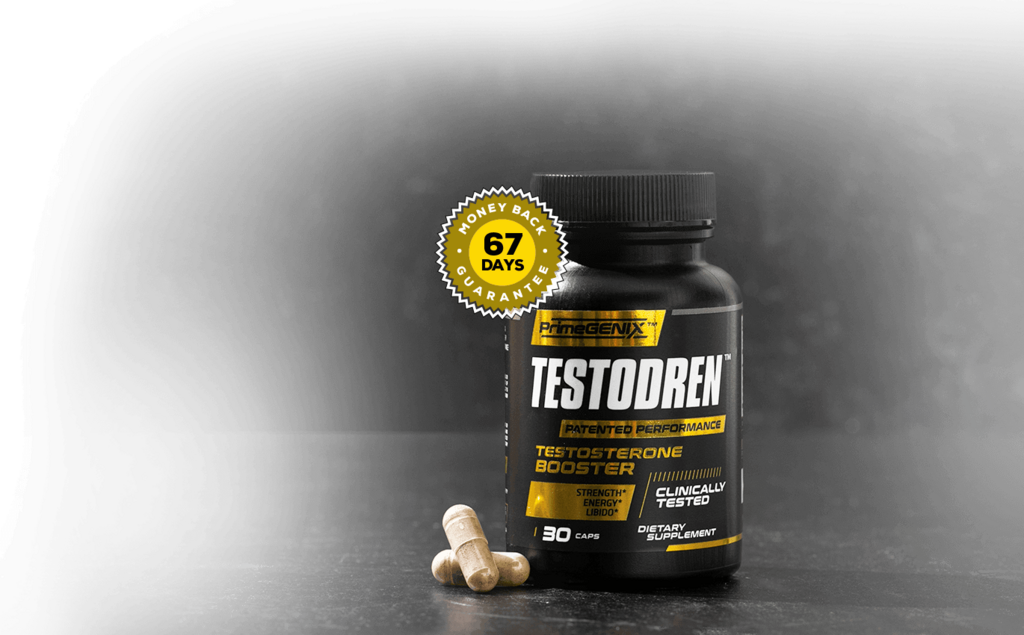
The stronger alternative: Testodren · 8.5/10For testosterone support, the stronger-scoring route in this catalogue is a single ingredient at a published 500 mg dose, with human studies behind the ingredient itself — not a blend sitting below the range its own trials used.
Our Recommendation — Shilajit Extreme
Score: 5.8/10 · Best for: generally healthy men in their mid-40s or 50s who want to test the testosterone hypothesis with the same PrimaVie® extract the one positive trial used — and will prove it to themselves with a blood test before and after 90 days Main caution: the trial dose was 500 mg a day; this bottle ships 200 mg — and that single maker-supplied trial has never been replicated, while the formula’s DAA adds a second, deeper dose gap (400 mg against about 3 g studied) Fair trial: three bottles at $153.87 buy the 90-day course the trial ran — the maker publishes no money-back guarantee, so the experiment’s cost is committed up front
Frequently Asked Questions
Does shilajit really increase testosterone?
In one placebo-controlled trial, yes: +20.45% total testosterone over 90 days at 500 mg/day in healthy men aged 45–55. The trial was maker-supplied and has never been independently replicated, and a second quoted study (+23.5%) had no placebo group. "One good trial says so" is the complete and honest answer.
How much shilajit did the testosterone study use?
500 mg/day of PrimaVie® purified shilajit — 250 mg twice daily — for 90 consecutive days. Products delivering 100–200 mg/day are not running the studied protocol, whatever their labels imply.
Will shilajit help if my testosterone is clinically low?
That has never been studied. Pandit's men had normal levels. Diagnosed low testosterone is treated medically; a supplement trial is not a substitute, and delaying the workup delays finding causes that matter beyond testosterone.
Does shilajit suppress your own testosterone production, like TRT can?
There is no signal of that in the one trial: LH and FSH — the pituitary hormones TRT suppresses — were unchanged. That is reassuring as far as a single 90-day trial goes, and no further.
How would I test whether it works for me?
The same way the trial measured it: a morning total testosterone blood test before starting, 90 days at a consistent dose of a standardised extract, then a second morning test under similar conditions (sleep, illness and training load all move readings). Judge by the pair of numbers, not by how a given week felt — our timeline guide covers what to expect, and when, in more detail.
Why hasn't anyone repeated the trial in ten years?
Follow the money, as this site's hub article explains: shilajit itself can't be patented, so independent research funding is scarce, and the party with the commercial incentive — the extract's maker — already has its positive trial. A replication would cost real money to produce a result its funder cannot own. That is an explanation, not an excuse: until someone funds it anyway, the claim stays at one trial.
What dose of shilajit is best for testosterone?
The only dose with placebo-controlled evidence is 500 mg/day of a purified, standardised extract (250 mg twice daily), taken for 90 days. Lower doses are unstudied for this outcome — not proven ineffective, simply never tested — and higher doses have no testosterone data either. "Best" beyond the studied protocol is a guess wearing a lab coat.
Is a 20% testosterone increase a big deal?
It depends entirely on the base. In Pandit it meant moving from roughly 484 to 583 ng/dL — mid-normal to mid-normal, in men without symptoms measured. For a man at 280 ng/dL the same percentage would matter more, but that man was never in the trial. Percentages travel; contexts don't. Judge any claim by its absolute numbers and its population.
Can I combine shilajit with other testosterone supplements?
Stacking multiplies unknowns: Pandit tested shilajit alone, in men taking nothing else hormonal, and no combination has trial data. Men on any hormonal medication, or stacking several testosterone-positioned products, leave the evidence base entirely — our safety article sets out the interaction cautions for this formula, including its companion ingredients. If you experiment at all, one variable at a time is the only version that teaches you anything.
Last reviewed: October 2026. This article is educational and is not medical advice.
