
- Quick Answer
- The Category, Audited
- The Five Core Ingredients, Study by Study
- The Ingredients, One by One
- Fenugreek: a small, real-looking signal in older men
- D-Aspartic acid: the 12-day study that built an industry
- Tribulus: animal fame, human nulls
- Ashwagandha: the strongest case, with its limits printed
- Maca: works for desire, never claimed the hormone honestly
- Why the Percentages Mislead: a Short Arithmetic Lesson
- Who Might See a Small Effect — and Who Won't
- The Ingredients That Work by Fixing a Deficiency
- Why the Reviews Disagree With the Trials
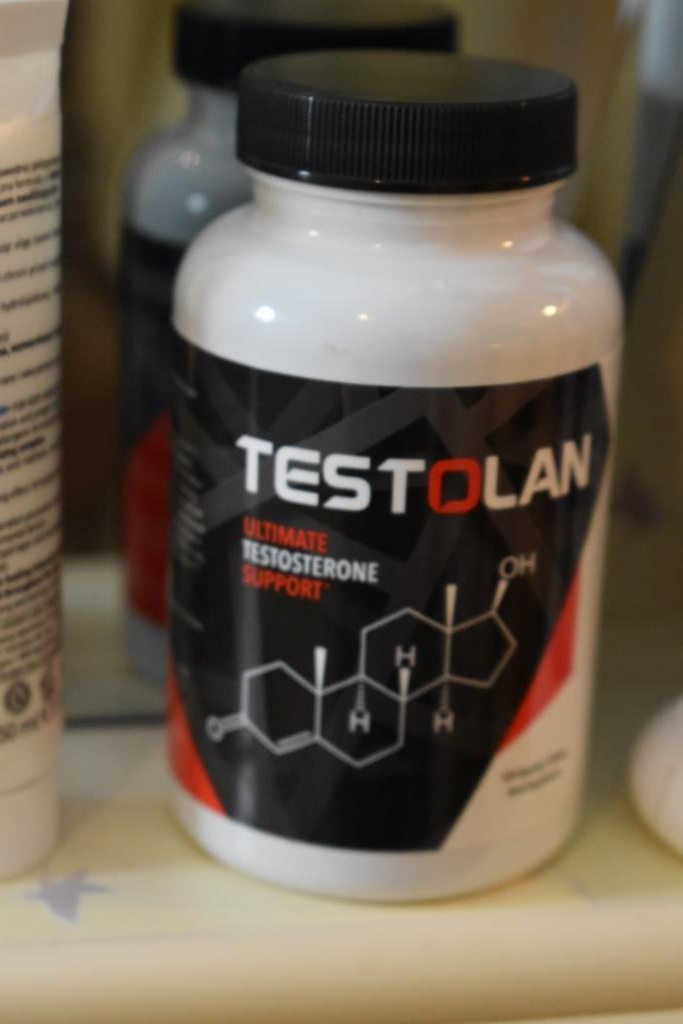
- The Label-Dose Problem: Testolan as the Worked Example
- Boosters Are Not TRT — and TRT Evidence Is Not Booster Evidence
- How Low Testosterone Is Actually Diagnosed
- A Decision Framework: Four Situations, Four Answers
- How We Graded This Category
- A Stronger Alternative in This Category
- Frequently Asked Questions
- Do testosterone boosters actually work?
- What is the best testosterone booster?
- Do boosters work for bodybuilding?
- Can a booster replace TRT?
- How do I know if my testosterone is actually low?
- Read This Next
Disclosure: This article contains affiliate links. If you buy through them, we may earn a commission at no extra cost to you. It never changes our conclusions.
Quick Answer
Mostly, no — and the parts that work, work much less than the marketing. When researchers audited the 50 top-selling testosterone boosters (Clemesha et al., 2020), they found that fewer than 25% of the ingredients had any published data supporting a testosterone increase — and about 10% had data showing a decrease.
Ingredient by ingredient, the record is: ashwagandha and fenugreek show small rises in specific populations (older, overweight or stressed men), in industry-linked trials. D-aspartic acid's famous result comes from one 12-day study of sedentary men and every trial in trained men is null. Tribulus has good evidence of no effect in humans.
Maca reliably improves desire without touching testosterone at all. No booster has been shown to raise a healthy young man's testosterone in any clinically meaningful way, none treats diagnosed low testosterone, and the product this site reviews — Testolan, scored 6.0/10 — illustrates the category's deepest problem: its label doses sit far below the doses used in even the positive trials.
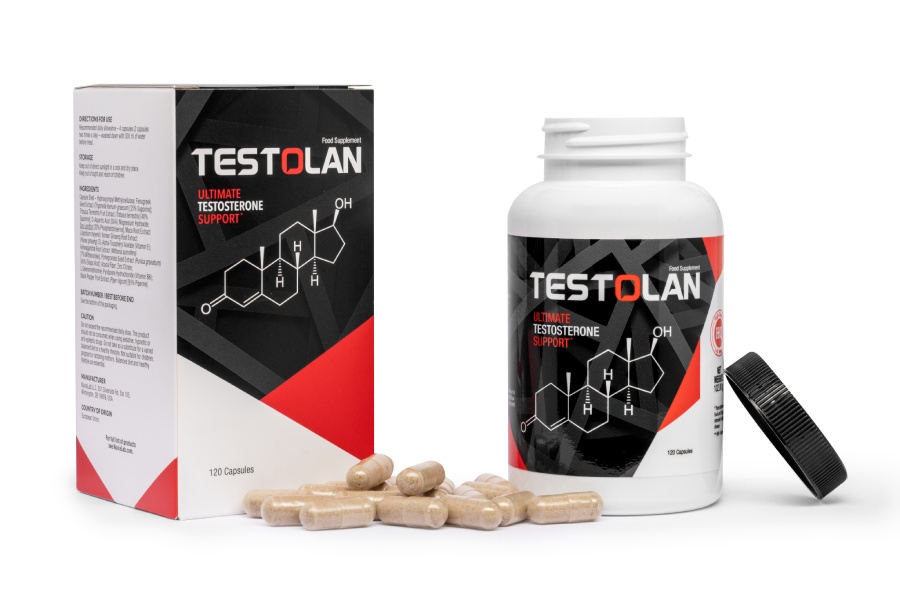
Our Recommendation — Testolan
Score: 6.0/10 · Best for: men who want a testosterone-support formula whose maker publishes every amount — all 14 ingredients, from fenugreek 400 mg to zinc 15 mg — so the label can be audited line by line. Main caution: the two ingredients with real human data are under-dosed against their trials (generic fenugreek 400 mg, not Testofen at 600 mg; ashwagandha 133 mg against 240–600 mg studied), D-aspartic acid, tribulus and maca have null testosterone evidence at any dose, and no money-back guarantee is published. Fair trial: 8–12 weeks at the label dose of 4 capsules a day — one bottle is $54.99 plus $12 shipping (three bottles $109.98) — judged by a repeat morning blood test, with none of the spend refundable.
The Category, Audited
Two independent audits frame everything else in this article. Clemesha and colleagues (2020) examined the 50 top-selling "testosterone boosters" and their 109 distinct ingredients: fewer than a quarter had any data supporting a testosterone increase. Roughly a tenth had data pointing the other way. The majority had never been studied for testosterone at all.
Balasubramanian and colleagues (2019) traced the evidence ecosystem of the top Amazon products: of 191 cited studies, only 19% were human studies at all — the rest were animal or cell work — and among the 37 human studies, 30% reported an increase, 46% no effect and 3% a decrease.
Hold those two audits in mind and the genre's advertising inverts: the default assumption for any booster ingredient is not "works until proven otherwise" but "unstudied until proven otherwise". The burden sits on each ingredient individually — which is how the next section grades them.
The Five Core Ingredients, Study by Study
| Ingredient | Best human evidence | Dose & population | Verdict |
|---|---|---|---|
| Ashwagandha | Salivary T +14.7% vs placebo (Lopresti 2019, crossover) — but fatigue/vigour symptoms did NOT improve; a stressed-adult trial found cortisol benefits with NO significant T difference | Shoden extract, 8 weeks, overweight men 40–70 with mild fatigue; KSM-66 600 mg/day in a separate positive trial | Low–moderate: the most credible of the five; small, population-specific, industry-linked |
| Fenugreek (Testofen) | Total T +12.4%, free T +9.5% vs placebo (Rao 2016); a 2020 trial found +7.6% at 600 mg with free T unchanged | 600 mg/day, 12 weeks, men 43–70; commercial extract (Gencor) trials | Low: small effect within the normal range; libido signals stronger than hormone signals |
| D-Aspartic acid | +42% in ONE 12-day study (Topo 2009); null in every resistance-trained trial; 6 g/day DECREASED T by 12.5% (Melville 2015) | 3.12 g/day, 12 days, 23 sedentary men — vs nulls at 3–6 g/day in trained men | Evidence against: a marketing fossil from a single outlier study |
| Tribulus terrestris | No T change in young men (Neychev 2005) or elite rugby players (Rogerson 2007); erectile scores improved in one trial with NO T change | 450–750 mg/day, 5–12 weeks | Good evidence of no T effect; reputation is animal data |
| Maca | Desire improved from week 8; testosterone, LH, FSH and estradiol all unchanged (Gonzales 2002, 2003) | 1,500–3,000 mg/day, 12 weeks | Null for T — replicated; a libido ingredient mis-sold as a hormone ingredient |
The Ingredients, One by One
Fenugreek: a small, real-looking signal in older men
Fenugreek's case rests on the Testofen trials — a standardised seed extract, studied by Rao and colleagues. In 2016, 120 men aged 43–70 taking 600 mg/day for 12 weeks saw total testosterone rise 12.4% and calculated free testosterone 9.5% more than placebo — in absolute terms, roughly 44 ng/dL, the largest rise in the Testofen programme.
A 2020 trial in younger men (25–47) found a smaller effect: +7.6% total testosterone at 600 mg, nothing at 300 mg, and free testosterone unchanged in every arm. Across roughly nine published trials, about half show a rise.
The proposed mechanism is not more production but less conversion — fenugreek compounds may slow the enzymes that turn testosterone into DHT or oestrogen, nudging the measured level up within its normal range. Libido scores improve more consistently than hormones do. Grade: a genuine but small effect, in middle-aged men, from a commercial extract's own trial programme.
D-Aspartic acid: the 12-day study that built an industry
DAA's reputation is a case study in how this category manufactures evidence. In 2009, Topo and colleagues gave 3.12 g/day to 23 sedentary men for twelve days and measured a 42% testosterone rise — a spectacular number that has been printed on labels ever since.
What the labels omit is the sequel: Willoughby (2013) found no change in 20 resistance-trained men over 28 days. Melville (2015) found no effect at 3 g/day and a decrease — total testosterone down 12.5%, free down 15.4% — at 6 g/day. Melville (2017) confirmed the null over 12 weeks of training. A climber study agreed.
The honest summary is that DAA has evidence against it in the population that buys it, one ancient outlier in its favour, and a plausible mechanism for the decrease (the axis down-regulating in response). Any article or label still leading with "+42%" is quoting 23 untrained men from 2009 against everything published since.
Our ingredients deep-dive walks the full DAA record.
Tribulus: animal fame, human nulls
Tribulus terrestris raises testosterone in rats, rabbits and primates — that part of the marketing is true, and entirely about other species. In humans: Neychev and Mitev (2005) found no change in testosterone, androstenedione or LH in young men at two doses over four weeks.
Rogerson (2007) found no difference from placebo in strength, fat-free mass or testosterone in 22 elite rugby players across a preseason, with doping ratios unmoved. A later trial (Kamenov 2017) found erectile-function scores improved without any testosterone change — which may be a real, separate effect, but it is not the one on the label.
Systematic reviews conclude there is no reliable human evidence for a testosterone effect. Tribulus is the category's purest example of a cross-species bait-and-switch.
Ashwagandha: the strongest case, with its limits printed
Ashwagandha leads the field because its best trial is genuinely decent: Lopresti (2019), a randomised double-blind crossover in 57 overweight men aged 40–70 with mild fatigue, found salivary testosterone rose 14.7% more than placebo on a defined extract (Shoden) over eight weeks, with DHEA-S up 18%.
The same trial's honesty is its own caveat: fatigue, vigour and well-being scores did not improve significantly versus placebo — the hormone moved and the man did not feel it. Wankhede (2015) found a larger rise (≈+96 ng/dL vs +18) with KSM-66 in untrained men starting resistance training.
And a stressed-adult trial (Lopresti, Medicine 2019) improved cortisol and anxiety while testosterone did not separate from placebo — suggesting the route, where it works, is stress-axis relief in men whose testosterone stress was suppressing. Credible, modest, population-bound: that is the best this category offers, and it is not nothing — it is just not what the advertisements describe.
Maca: works for desire, never claimed the hormone honestly
Maca is the literature's cleanest negative. Gonzales and colleagues showed in two trials (2002, 2003) that gelatinised maca at 1,500–3,000 mg/day improved sexual desire from week eight while testosterone, LH, FSH, prolactin and estradiol all stayed exactly where placebo put them — the desire effect statistically independent of every hormone measured.
Maca may be a reasonable libido ingredient. As a "testosterone booster" it is a category error that its own discoverers disproved two decades ago. Its continued presence in booster formulas (at a tenth of the studied dose, in Testolan's case) tells you the formula was assembled from marketing associations, not from the papers.
Why the Percentages Mislead: a Short Arithmetic Lesson
Booster marketing trades in percentages because percentages hide the base. "+42%" (DAA) was a rise from ≈4.5 to 6.4 ng/mL in 23 sedentary men for 12 days — within the normal range at both ends, in the population least like the buyer.
"+12.4%" (fenugreek) is ≈44 ng/dL — real, and smaller than the difference between a morning and an evening blood draw, or between a good and a bad week of sleep. Testosterone is pulsatile, diurnal and noisy. Within-man swings of 10–20% are physiology, not pharmacology.
The discipline this imposes: never accept a percentage without its absolute values, its population and its duration — the three facts our evidence table prints for every ingredient and the three facts cherry-picked roundups (which advertise "boosters raise T by 15–40%") uniformly omit.
A 15% rise in a deficient 60-year-old and a 15% rise promised to a healthy 28-year-old are different claims wearing the same number.
Who Might See a Small Effect — and Who Won't
The pattern across the table is consistent enough to state as a rule. The positive signals cluster in older men, overweight men, stressed men, and men starting from the lower end of normal — populations in whom testosterone is suppressed by addressable factors (weight, stress hormones, poor sleep's downstream effects) and in whom a nudge registers.
Ashwagandha's best trial is in overweight 40–70-year-olds. Fenugreek's in men 43–70. The nulls cluster in young, lean, resistance-trained men with normal testosterone — the DAA and tribulus trials' populations — because a healthy axis already regulates itself near its set point and a botanical does not raise a ceiling that endocrinology is actively defending.
This is also why the marketing photos (young, muscular men) depict the population least likely to respond. If you are 25, train seriously and sleep badly, the evidence says fix the sleep — our natural-methods guide quantifies why (one week of 5-hour nights: −10 to −15% testosterone) — before shopping for the capsule aimed at a 55-year-old's physiology.
The Ingredients That Work by Fixing a Deficiency
A separate family deserves different treatment, because its logic is sound: zinc, magnesium and vitamin D do not "boost" testosterone — they permit it. Zinc deficiency measurably suppresses testosterone production, and correcting it restores levels. Magnesium status tracks with testosterone in observational data, particularly in active men.
And the vitamin D trial most often quoted (3,332 IU/day for a year) raised testosterone by roughly 25% in men who were vitamin-D-deficient — the qualifier is the finding. In a replete man, extra zinc or vitamin D does nothing for testosterone, and excess zinc brings its own problems (it competes with copper absorption).
This is why the most defensible lines on Testolan's panel are its plain nutrients — zinc at a full 15 mg, magnesium, B6, selenium, vitamin E — and also why they cannot carry the product's marketing: deficiency correction is a blood-test-guided intervention, not a universal boost.
If you suspect deficiency (restricted diet, minimal sun, heavy training load), the test-and-correct route costs less than a booster and answers a real question. The lifestyle version of the same principle — the inputs that move testosterone most are the ones that fix suppression, not the ones that promise elevation — is quantified in the natural-methods guide.
Why the Reviews Disagree With the Trials
Marketplace ratings for boosters are glowing. The trial record is not. The sceptical audit in our research file puts a number on the gap: after filtering for likely fake reviews, a major booster's apparent libido benefit collapsed by roughly 91%. Beyond outright fakes, three honest mechanisms inflate ratings. Placebo response in libido and energy outcomes is large and real.
Buyers start products at peak motivation, alongside sleep and training changes that do the actual work (and stop reviewing when life intervenes). And the men most likely to respond — older, lower-baseline — are also the most motivated reviewers. None of this makes any individual reviewer a liar.
It makes the star average a measure of hope, regression and selection, where the trials are a measure of the ingredient. When the two disagree, bet on the instrument that was blinded.
The Label-Dose Problem: Testolan as the Worked Example
Even the ingredients with real trials face a second, quieter failure: commercial doses rarely match trial doses. The product this site reviews makes the point with unusual clarity, because its maker at least publishes a panel (in its store). Compare, per daily serving:
| Ingredient | Testolan label (maker's store panel) | Trial dose | Gap |
|---|---|---|---|
| Fenugreek | 400 mg | 600 mg Testofen (a specific extract) | Below — and not stated to be Testofen |
| Ashwagandha | 133 mg | 240–600 mg of defined extracts | Far below |
| D-Aspartic acid | 400 mg | 3,120 mg (in the lone positive trial) | ~1/8 of the outlier dose; trained-men trials null anyway |
| Maca | 200 mg | 1,500–3,000 mg | ~1/10 of trial doses |
| Tribulus | 400 mg | 450–750 mg in (null) trials | Near trial dose — of an ingredient with null results |
| Zinc | 15 mg | Correcting deficiency is the evidence-based use | Full daily-value dose — the panel's most defensible line |
This is the arithmetic behind our Testolan score of 6.0/10 — the formula gestures at the literature's ingredient list while under-dosing nearly every entry in it, at $54.99 with no published money-back guarantee. It is not the category's worst product. It is the category's typical one, which is the point.
A booster that matched trial doses of defined extracts would cost more to make and could still only promise the small, population-specific effects above. The gap between that honest product and the shelf is the industry's business model.
For the full audit — every published amount checked against its trial dose — see our Testolan review.
Boosters Are Not TRT — and TRT Evidence Is Not Booster Evidence
A confusion the category cultivates: benefits demonstrated for testosterone itself (libido, bone density, muscle, mood in deficient men) are prescription-therapy findings, and review sites routinely describe them in booster articles while conceding in the small print that boosters may not do any of it.
The largest recent TRT safety trial, TRAVERSE (2023, ~5,200 men on prescription gel), found no excess of major cardiovascular events but more atrial fibrillation, kidney injury and pulmonary embolism — evidence about a drug, at drug doses, in diagnosed men. It neither convicts nor acquits any supplement. What treats diagnosed hypogonadism is prescription testosterone, monitored.
What boosters offer is, at best, a nudge within the normal range for men who were never patients. Articles that borrow TRT's benefits for boosters' marketing — or TRT's risks for boosters' scare stories — are confusing two different interventions that happen to share a hormone's name.
How Low Testosterone Is Actually Diagnosed
Because "low T" is the fear this category monetises, the diagnostic standard belongs in this article.
Low testosterone is diagnosed with symptoms plus two separate morning blood tests showing low total testosterone (commonly around or below ~300 ng/dL, with guideline variation) — morning because levels peak early and fall through the day, twice because a single low reading is common and often normalises. Feeling tired, flat and low-libido correlates poorly with measured levels.
Those symptoms have a long differential (sleep apnoea, depression, thyroid, anaemia, overwork, alcohol) that a booster purchase skips entirely.
If the symptoms are real, the blood test is the first purchase — it costs less than a bottle of most boosters and it sorts you into the group that needs a doctor, the group that needs sleep and a diet, and the small group in between for whom a trial-dosed ingredient is a reasonable experiment.
Timelines for judging that experiment are in our timeline guide. The per-ingredient deep dives are in the ingredients article. And the safety file — including why this category has an adulteration problem prescription drugs do not — is in the safety guide.
A Decision Framework: Four Situations, Four Answers
You have symptoms and no blood test. The booster is the wrong first purchase at any quality.
Two morning total-T tests cost less than a month of most products and divide the world correctly: genuinely low levels go to a clinician (boosters are not treatment), and normal levels redirect you to the causes that mimic low T — sleep apnoea above all, which is common, dangerous and testosterone-suppressing. You have tested low-normal and your clinician is unconcerned.
This is the one situation where the booster experiment is defensible: you are in the demographic the positive trials actually studied (older, possibly overweight or stressed, lower starting point). Run it properly — a defined extract at its trial dose, 8–12 weeks, a repeat morning blood test to judge it — and let the number, not the feeling, decide renewal.
You are young, train hard, and test normal. The trials say the capsule will not move you. The levers that will are quantified in the natural guide — sleep (worth 10–15%), body composition (worth more), alcohol and energy availability — plus the unglamorous truth that your axis is already doing what the booster promises.
Spend the $55 on food and a sleep tracker you will actually use. You are considering a blend because it contains "everything". Re-read the label-dose table above: "everything" at a tenth of each studied dose is a way of buying nothing five times.
One ingredient, at its trial dose, with a blood test either side, is the only version of this experiment that produces knowledge — and knowledge, not hope, is what a supplement budget should buy.
How We Graded This Category
Our method, stated so you can check it: human randomised trials outrank animal and cell studies. Independent replications outrank originator-lab results. Absolute changes (ng/dL) outrank percentages. Trial doses are compared against label doses before any product is discussed. And industry funding is disclosed wherever we know it, because it predicts effect sizes across this literature with embarrassing reliability.
Where a number in this article lacks a study attached, it is because the study does not exist — and we say so rather than borrowing one. That standard is also how we score products: Testolan's 6.0/10 reflects a recognisable formula, published amounts and a fair price band, discounted for under-dosed actives and the absence of a published guarantee.
A Stronger Alternative in This Category
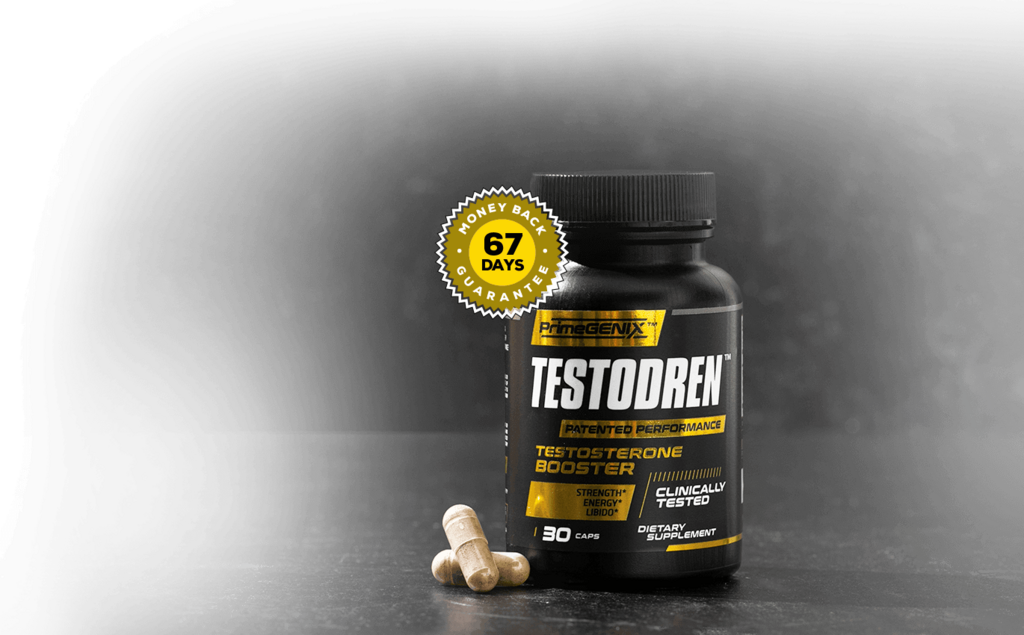
The stronger alternative: Testodren · 8.5/10One ingredient at a published 500 mg dose, with human studies behind the ingredient itself: Testodren is the testosterone formula we score highest in this catalogue.
Our Recommendation — Testolan
Score: 6.0/10 · Best for: men who want a testosterone-support formula whose maker publishes every amount — all 14 ingredients, from fenugreek 400 mg to zinc 15 mg — so the label can be audited line by line. Main caution: the two ingredients with real human data are under-dosed against their trials (generic fenugreek 400 mg, not Testofen at 600 mg; ashwagandha 133 mg against 240–600 mg studied), D-aspartic acid, tribulus and maca have null testosterone evidence at any dose, and no money-back guarantee is published. Fair trial: 8–12 weeks at the label dose of 4 capsules a day — one bottle is $54.99 plus $12 shipping (three bottles $109.98) — judged by a repeat morning blood test, with none of the spend refundable.
Frequently Asked Questions
Do testosterone boosters actually work?
For raising testosterone meaningfully in healthy men: no reliable evidence. Ashwagandha and fenugreek show small rises in older/overweight/stressed populations in industry-linked trials. DAA and tribulus do not work in the populations tested most. Maca does not affect testosterone at all.
What is the best testosterone booster?
The honest answer is that the category has no proven winner — the audits found most ingredients unstudied. If experimenting, choose defined extracts at trial doses (ashwagandha KSM-66/Shoden at 240–600 mg. Testofen at 600 mg) over blends at mystery doses.
Do boosters work for bodybuilding?
The trained-men trials are the null ones: DAA and tribulus showed no strength or lean-mass benefit, and no booster has demonstrated a muscle outcome in trained lifters. Training, protein, sleep and creatine own that evidence base.
Can a booster replace TRT?
No. Diagnosed hypogonadism is a medical condition. Boosters have never been tested as treatment for it and cannot produce drug-range hormone levels.
How do I know if my testosterone is actually low?
Two morning blood tests plus symptoms, interpreted by a clinician. Feelings alone misclassify constantly — test before you shop.
Last reviewed: November 2026. This article is educational and is not medical advice.
