
- Quick Answer
- They Do Different Jobs
- Where the "As Good as Antibiotics" Claim Comes From
- Can D-Mannose Be Used Alongside Antibiotics? (Question #2)
- Can Men Use D-Mannose Instead of Antibiotics? (Question #5)
- Which Medication Works Best to Treat a UTI? (Question #32)
- Where Uticarin Fits
- Frequently Asked Questions
- Can D-mannose cure a UTI I have right now?
- Why do so many sites say D-mannose worked as well as an antibiotic?
- If antibiotics worry me, what are the genuine non-antibiotic options?
- Read This Next
Disclosure: This article contains affiliate links. If you buy through them, we may earn a commission at no extra cost to you. It never changes our scores or conclusions.
Quick Answer
No — and the comparison itself needs unpacking.Antibiotics treat an active UTI: they kill or stop the bacteria causing it, and for an established infection they are the treatment.D-mannose does not kill bacteria at all; it is a sugar intended to make it harder for E. coli to stick to the bladder wall, which makes it — at best — apreventionidea, not a treatment. Even in prevention, the honest summary has darkened recently: an early trial suggested D-mannose prevented recurrences about as well as a daily antibiotic, but the largest and best-designed trial (598 women, 2024) found itno better than placebo. Choosing D-mannoseinstead ofantibiotics for a current infection is the one use the evidence clearly argues against.
They Do Different Jobs
| Antibiotics | D-mannose | |
|---|---|---|
| Action | Kill bacteria or stop them multiplying | No antibacterial action; intended to block E. coli adhesion to the bladder wall so bacteria flush out |
| Role | Treat active infections; also used preventively in selected cases | Prevention only — no treatment evidence |
| Evidence for treatment | Decades of trials; guideline first-line | None — no trial shows it cures an established UTI |
| Evidence for prevention | Low-dose prophylaxis clearly reduces recurrence | Mixed: one flawed positive trial (2014); largest rigorous trial (2024) negative |
| Main downsides | Side effects, gut-flora disruption, resistance with repeated use | Mild GI effects; the risk of false confidence delaying real treatment |
Where the "As Good as Antibiotics" Claim Comes From
One study: Kranjčec 2014, 308 women with recurrent UTIs, comparing daily D-mannose (2 g), daily nitrofurantoin (50 mg) andno preventionover six months. Recurrence: 14.6% on D-mannose, 20.4% on the antibiotic, 60.8% with nothing. Those numbers powered a decade of marketing. But the trial had no placebo group and no blinding — women who knew they were taking something may have behaved and reported differently, and recurrence naturally fluctuates. A 2022 Cochrane review graded the D-mannose evidence "very low certainty". Then the trial Cochrane asked for arrived:Hayward 2024 (JAMA Internal Medicine), 598 women across 99 UK practices, double-blind, 2 g/day versus placebo for six months — 51.0% vs 55.7% had a suspected UTI, not a significant difference.The authors concluded D-mannose should not be recommended for prevention in this group. That is the current state of the science, and any article still quoting 2014 without 2024 is selling, not informing.
Can D-Mannose Be Used Alongside Antibiotics? (Question #2)
There is no known direct conflict, and nothing suggests D-mannose blocks or boosts an antibiotic. The rules are about roles, not interactions: the antibiotic treats the infection in front of you; D-mannose, if used at all, is a between-infections experiment. Two cautions matter
First, never delay or shorten a prescribed course to "give the natural option a chance" — the infection does not care about the experiment, and untreated UTIs can ascend to the kidneys. Second, tell your clinician you are taking it; recurrent-UTI care is pattern detective work, and an unreported supplement muddies the pattern.
Can Men Use D-Mannose Instead of Antibiotics? (Question #5)
Men, specifically, should not self-substitute anything. A UTI in a man is classified ascomplicatedby definition: male anatomy makes infection uncommon, so when one occurs clinicians look for a reason — prostate involvement, obstruction, incomplete emptying, stones. A man treating himself with a supplement instead of getting that evaluation risks missing the underlying problem while the infection continues. The same logic, softened, applies to anyone whose infections keep returning despite treatment.
Which Medication Works Best to Treat a UTI? (Question #32)
The one matched to your bacteria. For uncomplicated bladder infections in women, guidelines putnitrofurantoin,trimethoprim(where local resistance allows) andfosfomycin(single-dose) at the front of the line — effective against typical E. coli while sparing broader-spectrum antibiotics for when they are truly needed. "Best" is decided by a urine culture, local resistance patterns and your history — which is why a recurrent pattern deserves a culture with each episode rather than another round of whatever worked last time. What never belongs on that list is D-mannose: it has no killing action and no treatment trial behind it.
Where Uticarin Fits
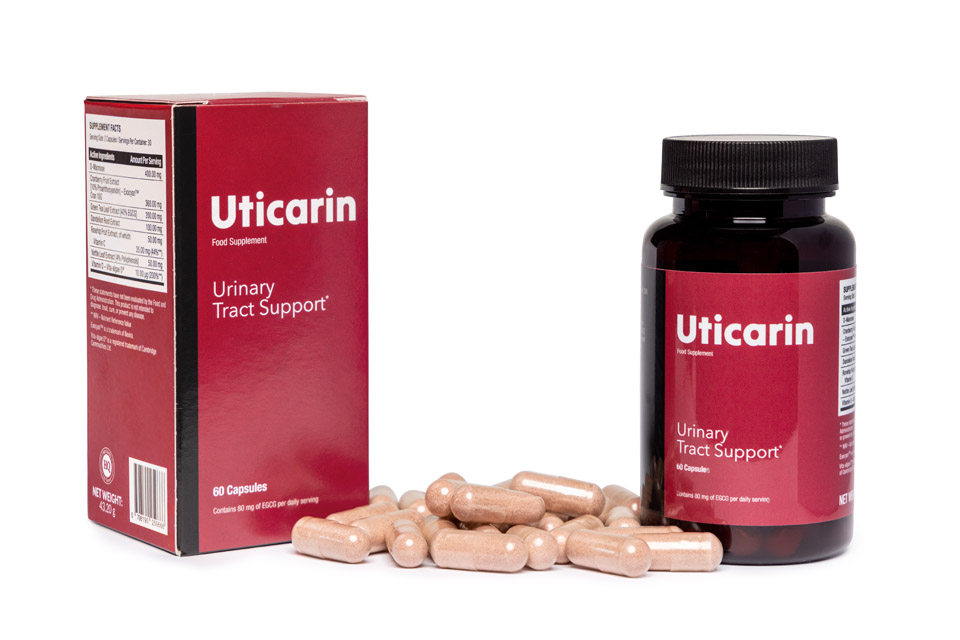
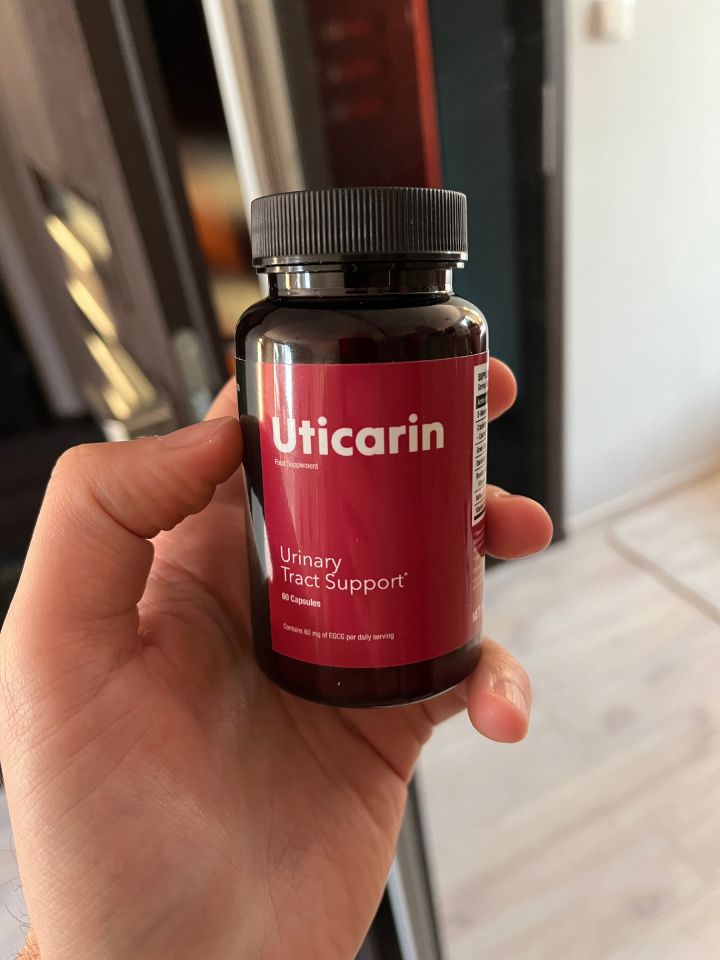
Uticarin(our score 6.8/10) is honestly positioned by its maker as prevention support, and we review it that way in ourfull review. Two dose facts decide its place in this comparison: its cranberry extract delivers about 36 mg of proanthocyanidins a day — the level where cranberry's prevention evidence appears (see ourcranberry guide) — while its D-mannose is 400 mg a day,one-fifth of the 2 g dose used in both the positive 2014 trial and the negative 2024 trial. Whatever the final verdict on D-mannose, it will have been reached at 2 g, not 400 mg. Position Uticarin as a cranberry-led prevention supplement with a supporting D-mannose dose, never as an antibiotic alternative — and read ourfull D-mannose evidence reviewbefore making it your only prevention plan.
For the full audit of the formula — every amount checked against the trial record — see our Uticarin review.
Frequently Asked Questions
Can D-mannose cure a UTI I have right now?
There is no evidence it treats an active infection, and it has no antibacterial action. Burning, urgency, fever, flank pain or blood in the urine means a clinician and, ordinarily, an antibiotic.
Why do so many sites say D-mannose worked as well as an antibiotic?
Because of the 2014 trial described above — real numbers, weak design, no placebo. The larger, blinded 2024 trial found no benefit over placebo, and responsible coverage now leads with that.
If antibiotics worry me, what are the genuine non-antibiotic options?
For prevention, several have real evidence: drinking more water if your intake is low, vaginal oestrogen after menopause, methenamine hippurate (a non-antibiotic urinary antiseptic), and cranberry at an adequate PAC dose. Ourprevention guideranks them.
Last reviewed: October 2026. This article is educational and is not medical advice. An active UTI — especially with fever, flank pain, vomiting, pregnancy or diabetes — needs prompt medical care.
