
- Quick Answer
- How Cranberry Is Supposed to Work
- Who Benefits — and Who Doesn't (Cochrane 2023)
- The Juice Myth (Question #30)
- How to Choose a Cranberry Product (Question #22)
- Are Blueberries Good for a UTI? (Question #33)
- Uticarin, Checked Against This Standard
- Frequently Asked Questions
- Does cranberry cure a UTI?
- How long does cranberry take to help?
- Who should not rely on cranberry?
- Cranberry or D-mannose — which first?
- Read This Next
Disclosure: This article contains affiliate links. If you buy through them, we may earn a commission at no extra cost to you. It never changes our scores or conclusions.
Quick Answer
For prevention, yes — modestly, in the right people and at the right dose. For treatment, no.The 2023 Cochrane review (50 trials, 8,857 participants) found cranberry products reduced the risk of symptomatic, culture-confirmed UTIs, with the clearest benefit in women with recurrent infections — about26% fewer UTIs— and in children and people prone to UTIs after medical procedures. It found little or no benefit for elderly people in care homes, pregnant women, or adults with bladder-emptying problems. The active compounds are A-type proanthocyanidins (PACs), and the effect turns on dose:around 36 mg of PACs a dayis where trials separate from placebo — a level cranberry juice cocktails almost never reach.
Our Recommendation — Uticarin
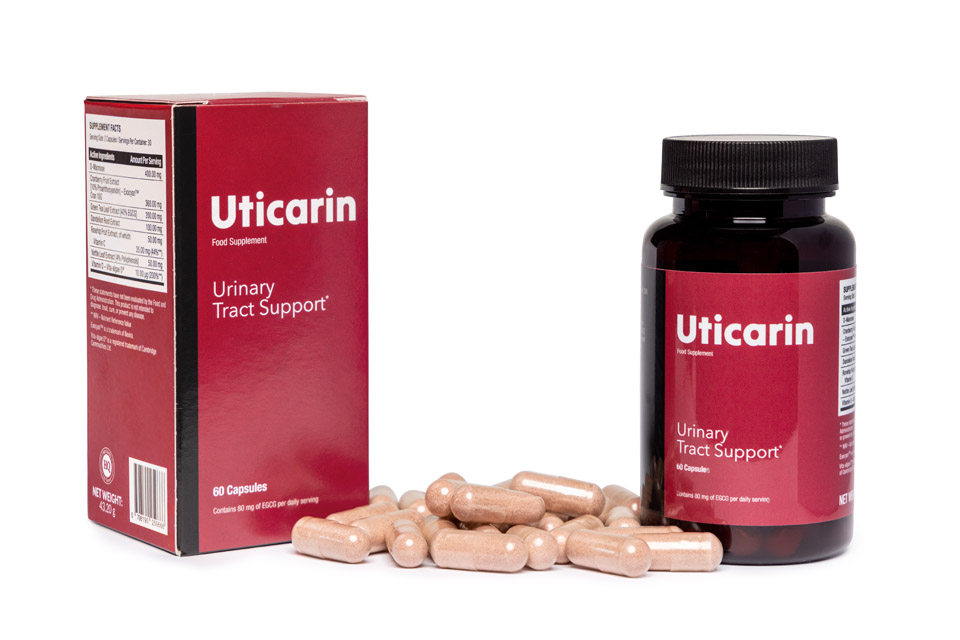
Score: 6.8/10 · Best for: women with recurrent UTIs who want a cranberry product that actually reaches the studied dose — about 36 mg of PACs a day. Main caution: its D-mannose is 400 mg against a 2 g trial dose, no money-back guarantee is published and the maker is unnamed; it is prevention only — an active infection needs a clinician. Fair trial: judge across a season (12–24 weeks) by infection count, not by day-to-day feel; at $47.99 a month with no guarantee, plan the full run before starting.
How Cranberry Is Supposed to Work
Not by acidifying urine — that is the outdated explanation. The modern one is anti-adhesion: cranberry's A-type PACs interfere with the fimbriae E. coli uses to grip the bladder wall, making attachment harder so bacteria are flushed out during urination. Two consequences follow. First, cranberry is apreventionmechanism — it argues with bacteria arriving, not with an established, multiplying infection. Second, everything depends on delivering enough of one specific compound family — which is why the form and standardisation of the product matter more than the word "cranberry" on the front of the pack.
Who Benefits — and Who Doesn't (Cochrane 2023)
| Group | Verdict |
|---|---|
| Women with recurrent UTIs | Benefit — about 26% fewer symptomatic, culture-confirmed UTIs |
| Children with recurrent UTIs | Benefit shown |
| People prone to UTIs after medical procedures | Benefit shown |
| Elderly people in care homes | Little or no benefit |
| Pregnant women | Little or no benefit |
| Adults with bladder-emptying problems | Little or no benefit |
The Juice Myth (Question #30)
The folk remedy fails on arithmetic. Cranberry juice cocktail is mostly water and sugar — typically around a quarter juice — and a serving delivers only a small, unstandardised fraction of the PACs used in trials; the trials themselves mostly used concentrated juices, tablets or capsules with measured content
You would need to drink large, daily, sugary volumes to approach trial-level PAC intake, importing a diabetes-relevant sugar load in the process. Unsweetened pure cranberry juice is closer in spirit but still unstandardised and punishingly tart, which is why adherence in juice trials was poor. Verdict: juice is a beverage with a health halo; the evidence belongs to measured-PAC products
The same arithmetic quietly kills most cheap cranberry gummies and "500 mg cranberry" capsules that never state a PAC number at all — 500 mg of extract at 2% PAC is 10 mg of the active fraction, a third of the threshold.
How to Choose a Cranberry Product (Question #22)
- Find the PAC number.Look for proanthocyanidin content per daily serving, ideally ~36 mg or more, and ideally measured by the DMAC method (the reference assay for A-type PACs). No PAC number = no way to know = assume below threshold.
- Prefer standardised extracts(a stated percentage, e.g. "10% proanthocyanidins") over "cranberry fruit powder" of unstated strength.
- Check the serving maths.The 36 mg must be in thedailyserving you will actually take — not in three servings, not per bottle.
- Plan for 12–24 weeks.The dose-response analyses found benefit over months of use; cranberry is a background habit, judged by infection counts across a season.
- Keep it prevention-only.A burning, urgent, feverish day is a clinician day, whatever your supplement shelf holds.
Are Blueberries Good for a UTI? (Question #33)
As food, blueberries are excellent; as UTI strategy, they are a category error. Blueberries contain proanthocyanidins too, but predominantly the B-type, whose anti-adhesion activity against E. coli is weaker and far less studied than cranberry's A-type — and no clinical trial shows eating blueberries (or any achievable serving of them) prevents UTIs. Eat them for the reasons people eat blueberries
Do not let a berry bowl substitute for the measured-PAC product or, in an active infection, for treatment.
Uticarin, Checked Against This Standard
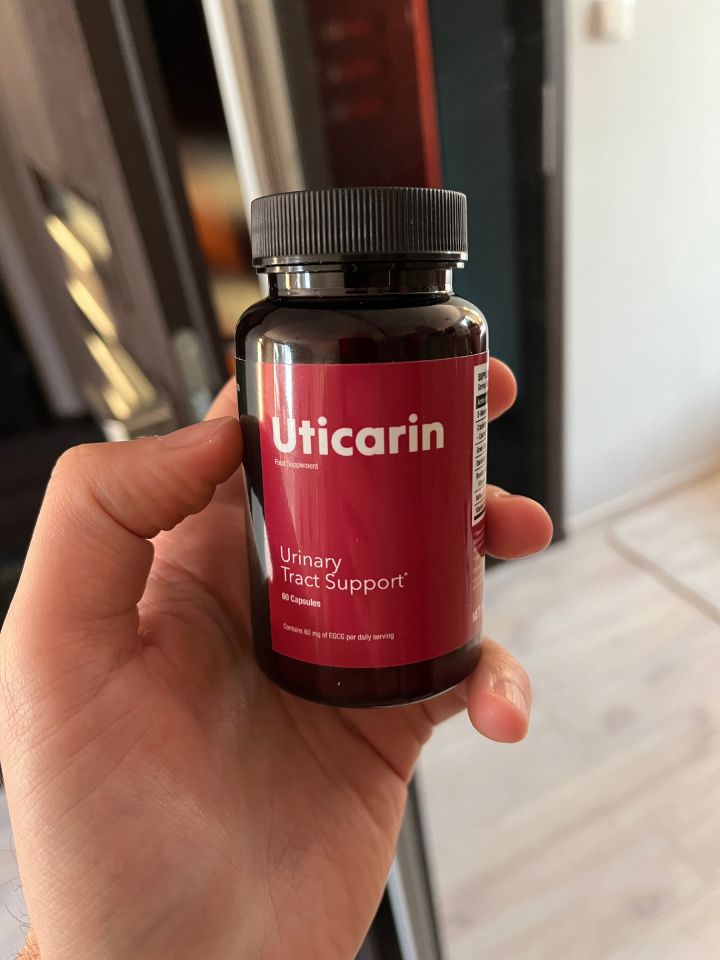
Uticarinis one of the few products that passes its own label test: its Exocyan™ cranberry extract is 360 mg per daily serving, standardised to10% proanthocyanidins — i.e. about 36 mg of PACs a day, exactly at the threshold where the evidence appears. It adds D-mannose 400 mg (below its own 2 g trial dose — the formula's weak point, detailed in ourD-mannose review), plus supporting herbs and vitamin D, with EGCG content (80 mg/serving) explicitly declared. No money-back guarantee is published, and the maker is unnamed — hence our 6.8/10 rather than higher. As a cranberry purchase, though, it is built the way this article tells you to buy: standardised, quantified, at dose.
Our Recommendation — Uticarin
Score: 6.8/10 · Best for: women with recurrent UTIs who want a cranberry product that actually reaches the studied dose — about 36 mg of PACs a day. Main caution: its D-mannose is 400 mg against a 2 g trial dose, no money-back guarantee is published and the maker is unnamed; it is prevention only — an active infection needs a clinician. Fair trial: judge across a season (12–24 weeks) by infection count, not by day-to-day feel; at $47.99 a month with no guarantee, plan the full run before starting.
For the full audit — every amount on the panel checked against the trial record — see our Uticarin review.
Frequently Asked Questions
Does cranberry cure a UTI?
No. Prevention and treatment are different jobs; cranberry has no antibacterial action and no treatment evidence. An active UTI needs assessment and ordinarily antibiotics.
How long does cranberry take to help?
It doesn't "kick in" — it lowers the probability of infections over time. Trials measured outcomes over 12–24 weeks; judge your infection count across a season.
Who should not rely on cranberry?
Groups where Cochrane found little or no benefit: elderly people in institutional care, pregnant women, and adults whose bladders don't empty fully. Cranberry is also a discussion to have with a clinician if you take warfarin — cranberry has been flagged for possible interaction, and anticoagulation is not a place for assumptions.
Cranberry or D-mannose — which first?
On current evidence, cranberry: its largest review is positive at a defined dose, while D-mannose's largest trial was negative. Many products combine them; buy the combination for its cranberry content, as ourprevention guidesets out.
Last reviewed: October 2026. This article is educational and is not medical advice.
