
- Quick Answer
- How It Is Supposed to Work
- The Evidence, in the Order It Arrived
- The Evidence at a Glance
- Prevention Only — Not Acute Treatment (Question #6)
- Does It Work for All UTIs? Only E. coli? (Questions #4, #7)
- Why Does D-Mannose Stop Working? (Question #8)
- What About Products Like Uticarin?
- Frequently Asked Questions
- Does D-mannose help prevent UTIs at all, then?
- Has anyone actually tried it for recurrent UTI?
- Is it worth taking alongside cranberry?
- Read This Next
Disclosure: This article contains affiliate links. If you buy through them, we may earn a commission at no extra cost to you. It never changes our scores or conclusions.
Quick Answer
On current evidence:probably not, or at most far less than its reputation suggests. The idea is elegant and the safety is good, which is why D-mannose became the default natural UTI preventive. But the clinical story reversed as the research improved: a small, unblinded 2014 trial was strongly positive; a 2022 Cochrane review called the evidence very low certainty; and the definitive test — a 598-woman, double-blind, placebo-controlled trial published inJAMA Internal Medicinein 2024 — found2 g of D-mannose daily was no better than placeboat preventing recurrent UTIs. It remains a personal experiment some people choose with open eyes; it is no longer something the evidence lets anyone recommend as effective.
How It Is Supposed to Work
D-mannose is a simple sugar, closely related to glucose. Most of what you swallow is absorbed and then excreted largely unchanged in the urine. The theory: E. coli — the bacterium behind roughly 80–90% of uncomplicated UTIs — attaches to the bladder wall using hair-like fimbriae that grip mannose-type receptors
Free D-mannose in the urine is meant to act as a decoy: bacteria bind the floating sugar instead of the bladder, and are flushed out when you urinate. The mechanism genuinely works in laboratory settings. The decade-long question was whether it works in bladders, at real doses, in real women — and that is where the story turns.
The Evidence, in the Order It Arrived
- 2014 — the optimistic trial.Kranjčec and colleagues randomised 308 women with recurrent UTIs to D-mannose 2 g/day, nitrofurantoin 50 mg/day, or no prevention. Six-month recurrence: 14.6% vs 20.4% vs 60.8%. Widely and reasonably celebrated — but there was no placebo arm and no blinding, so expectation effects and natural fluctuation were free to inflate the result.
- 2022 — Cochrane pours cold water.Pooling seven randomised trials (719 people), the Cochrane review found the evidence ofvery low certainty— too weak and inconsistent to support or refute D-mannose — and called for a properly powered placebo-controlled trial.
- 2024 — the proper trial answers.Hayward and colleagues (JAMA Internal Medicine) enrolled 598 women with recurrent UTIs across 99 UK primary-care practices, double-blind, 2 g/day versus matched placebo for six months. Clinically suspected UTI:51.0% on D-mannose vs 55.7% on placebo — a small, non-significant difference. No secondary outcome rescued it. Conclusion: D-mannose should not be recommended for prophylaxis in this population.
- 2025 — the syntheses adjust.Meta-analyses incorporating the 2024 trial find no significant pooled benefit, and the American Urological Association's guidance now has clinicians telling patients D-mannose alone may not be effective.
The pattern — early small trials glowing, the big rigorous trial flat — is one of the most common stories in supplement science, and it is why "studies show" claims need a date attached.
The Evidence at a Glance
| Year / source | Design | Result |
|---|---|---|
| 2014 — Kranjčec trial | 308 women; D-mannose 2 g/day vs nitrofurantoin vs no prevention; no placebo, unblinded | Recurrence 14.6% vs 20.4% vs 60.8% — positive, but weak design |
| 2022 — Cochrane review | 7 randomised trials pooled (719 people) | Evidence rated "very low certainty" — neither supports nor refutes |
| 2024 — Hayward trial (JAMA Internal Medicine) | 598 women, double-blind, 2 g/day vs placebo, 6 months | 51.0% vs 55.7% suspected UTI — no significant benefit |
| 2025 — meta-analyses and AUA guidance | Syntheses including the 2024 trial | No significant pooled benefit; D-mannose alone may not be effective |
Prevention Only — Not Acute Treatment (Question #6)
Even D-mannose's supporters studied it as prevention. It has no antibacterial action, so for an active infection — bacteria already attached, multiplying, inflaming the bladder — a decoy sugar is not a treatment, and no trial has tested it as one. Using it during an acute episodeinstead ofseeking care adds the real risk of an ascending kidney infection to an unproven benefit. Ourcomparison with antibioticslays out the division of labour.
Does It Work for All UTIs? Only E. coli? (Questions #4, #7)
The mechanism itself is E. coli-specific: the decoy logic targets the mannose-binding fimbriae that uropathogenic E. coli use. Other UTI organisms — Klebsiella, Proteus, Staphylococcus saprophyticus, enterococci — attach differently, and no adhesion-decoy claim applies to them. Since most uncomplicated UTIs are E. coli, the mechanism covers the majority case; but a "UTI" that keeps recurring is exactly the situation where a non-E
coli organism, or a structural cause, should be cultured and identified rather than assumed.
Why Does D-Mannose Stop Working? (Question #8)
People who swore by it for a year and then relapsed usually meet one of these explanations:
- The organism changed.A new infection from a non-E. coli bacterium is outside the mechanism entirely.
- A risk factor changed.New spermicide use, menopause and oestrogen loss, a new pattern of incomplete bladder emptying, constipation, diabetes control slipping — each can raise recurrence beyond what any adhesion blocker could offset.
- Recurrence naturally fluctuates.Recurrent UTIs cluster and remit on their own; a quiet year on any remedy may be the pattern, not the product (regression to the mean is the quiet engine behind many supplement success stories — and behind the 2014 trial's spectacular no-treatment comparison).
- Adherence drifted.Prevention only "works" on days it is taken; powders and routines fade.
The constructive response to "it stopped working" is not a bigger dose — it is a urine culture and a review of what changed.
What About Products Like Uticarin?
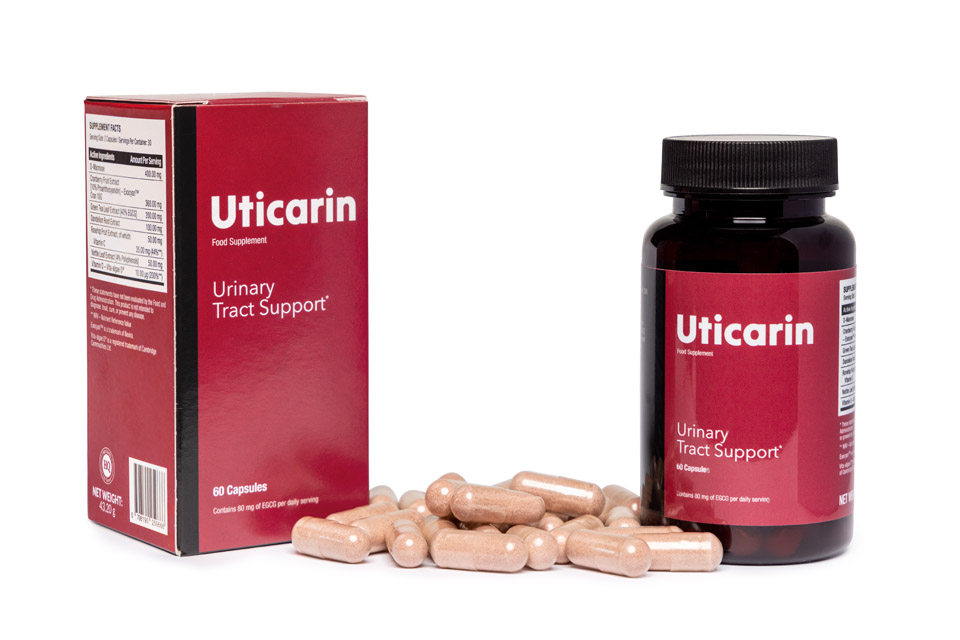
Combination products complicate the verdict in an interesting way.Uticarinpairs D-mannose with cranberry extract standardised to deliver ~36 mg of proanthocyanidins daily — and cranberry's prevention evidence (Cochrane 2023: about 26% fewer recurrent UTIs in women) held up in large reviews; see ourcranberry guide. But note the dose asymmetry: Uticarin's D-mannose is 400 mg/day against the 2 g/day used in every major trial — one-fifth. If you buy it, buy it as a cranberry product with extras (our score: 6.8/10), and build the rest of your prevention on the measures in ournon-antibiotic prevention guide, not on the sugar.
Frequently Asked Questions
Does D-mannose help prevent UTIs at all, then?
The best single trial says no significant benefit over placebo at 2 g/day. Earlier, weaker evidence said yes. Given it is safe, inexpensive and easy to stop, some women still choose it knowingly — the honest label is "unproven after proper testing", not "proven".
Has anyone actually tried it for recurrent UTI?
Hundreds of trial participants and a large real-world user base — the patient-experience literature is full of strong personal reports in both directions, which is exactly what a fluctuating condition plus a placebo-responsive symptom set produces. Personal reports generated the hypothesis; the 2024 trial tested it.
Is it worth taking alongside cranberry?
There is no interaction concern between them, and their proposed mechanisms differ (both anti-adhesion, different chemistry). If you take one evidence-backed preventive, cranberry at ≥36 mg PACs has the stronger file; D-mannose adds cost and hope more than proven effect.
Last reviewed: October 2026. This article is educational and is not medical advice.
