
- Quick Answer
- The Dose Table
- How Long Does It Take to Work? (Questions #12, #13)
- If You Feel a UTI Starting, Should You Take More? (Question #14)
- The Combination-Product Trap, With a Real Example
- Practical Details That Actually Matter
- Frequently Asked Questions
- How much D-mannose should I take for a UTI I already have?
- Is 500 mg of D-mannose enough?
- When is the best time of day to take it?
- Read This Next
Disclosure: This article contains affiliate links. If you buy through them, we may earn a commission at no extra cost to you. It never changes our scores or conclusions.
Quick Answer
The studied prevention dose is2 grams (2,000 mg) of D-mannose once a day— the amount used in both major trials (2014 and 2024) and the dose in Health Canada's monograph. For early symptoms, common practice — not trial-proven treatment — is around3 g a day in divided doses(for example 1.5 g twice daily) for a short period. Read every label against the 2 g benchmark: many combination products quietly provide a few hundred milligrams, which is a fraction of any studied dose. And hold the context from ourevidence review: even at the full 2 g, the best trial found no significant prevention benefit over placebo.
The Dose Table
| Use | Typical amount | Status |
|---|---|---|
| Daily prevention | 2 g once daily (powder in water is the studied form) | The trial standard — 2014 (positive, weak design) and 2024 (negative, strong design) |
| Prevention, split schedule | 1 g twice daily | Same daily total; some prefer it for steadier urinary levels |
| At first symptoms ("active" use) | ~3 g/day divided — e.g. 1.5 g twice or 1 g three times daily, for a few days up to ~2 weeks | Common practice and retailer guidance; NOT established by treatment trials — D-mannose has no antibacterial action |
| Post-sex targeted use | A single 2–3 g dose around intercourse | Practice-based pattern borrowed from postcoital antibiotic logic; untested for D-mannose |
Safety framing for the prevention dose (Question #15): 2 g/day was well tolerated in trials lasting six months — the most common effects were mild gastrointestinal ones (bloating, loose stool). The dose question and the safety question are the same question at higher amounts: more sugar, more GI effect, no more proven benefit.
How Long Does It Take to Work? (Questions #12, #13)
Two different clocks get confused here:
- Pharmacology clock:D-mannose is absorbed and excreted into the urine relatively quickly — it begins appearing in urine within roughly the first hour after a dose, and most of a dose clears within hours. That is why prevention routines are daily and why split dosing exists, and why an evening dose is popular for prevention: it covers the long overnight stretch between urinations, when bladder dwell time is longest.
- Outcome clock:prevention cannot be judged in days. The trials ran six months and counted infections. A fair personal assessment is a season — three to six months of consistent daily use against your own previous pattern — while remembering that recurrence fluctuates naturally, which makes personal before/after judgements shakier than they feel (one reason the placebo-controlled verdict matters).
For symptom use, the honest statement is: there is no established "works within X hours" claim, because there is no treatment trial. If symptoms are worsening or persist beyond about 48 hours, the dose conversation is over and the doctor conversation starts.
If You Feel a UTI Starting, Should You Take More? (Question #14)
This is the most common real-world pattern, so it deserves a straight answer. Increasing to the divided ~3 g/day practice dose at first twinge is what many users and retailers advise, and it is unlikely to harm a healthy adult. But understand what it is: an unproven comfort measure riding on a prevention ingredient with a now-negative flagship trial
It must never become a reason to watch a real infection for days. Escalation rules that outrank any supplement plan: fever, back or flank pain, vomiting, blood in the urine, pregnancy, diabetes, male sex, or symptoms beyond 48 hours → medical care, promptly.
The Combination-Product Trap, With a Real Example
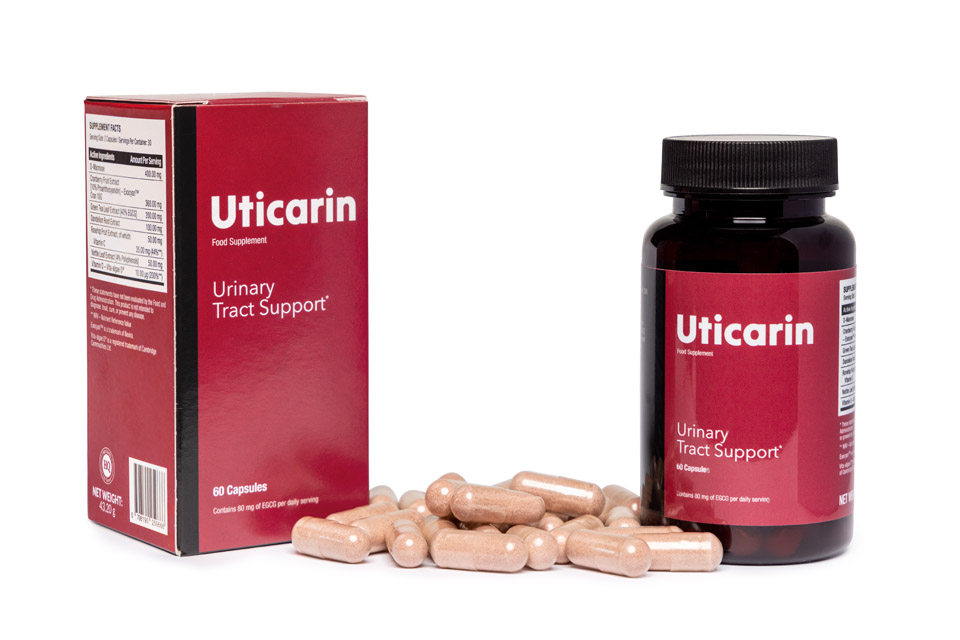
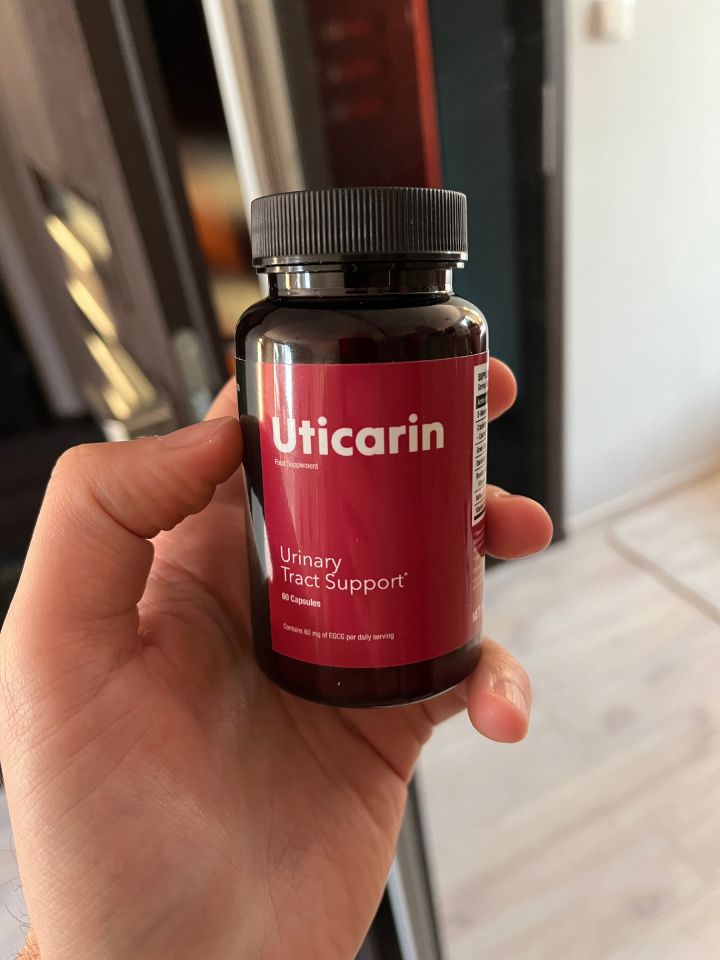
Pure D-mannose powder makes 2 g easy — a small scoop. Capsule combinations are where doses collapse.Uticarin, the most transparent product in its class (every amount published; our score 6.8/10), provides400 mg of D-mannose per daily serving — one-fifth of the 2 g studied dose. To reach 2 g from Uticarin you would need five times the serving, which the maker does not direct and we do not suggest. Uticarin's defensible active is its cranberry extract (~36 mg proanthocyanidins, the studied threshold — see ourcranberry guide); treat its D-mannose as a supporting inclusion, and if D-mannose itself is your strategy, buy it as a standalone powder at an honest dose — while knowing the 2024 verdict on what that dose achieved.
Practical Details That Actually Matter
- Take it with water— the flush is part of the mechanism; a dose swallowed dry works against its own logic.
- Powder vs capsules:identical ingredient; powder makes gram-level dosing practical and cheaper, capsules make it portable.
- Consistency beats intensity:six months of daily 2 g is the studied pattern; heroic doses on random days are not a strategy.
- Do not exceed sane amounts chasing effect:beyond the practice range, what rises is GI upset, not proven protection.
Frequently Asked Questions
How much D-mannose should I take for a UTI I already have?
No dose is established for treating an active infection, because D-mannose doesn't treat infections. The ~3 g/day divided pattern is common practice for early symptoms in low-risk adults — with a hard 48-hour rule and the red flags above.
Is 500 mg of D-mannose enough?
There is no evidence at that level; every outcome trial used 2,000 mg. A product providing 400–500 mg is providing a label ingredient, not a studied dose.
When is the best time of day to take it?
For prevention, evening is the common choice (longest overnight bladder dwell); split dosing morning/evening is the alternative. What matters more is daily consistency and taking it with fluid.
Last reviewed: October 2026. This article is educational and is not medical advice. Doses above are research and practice patterns, not a prescription; check with a clinician if you are pregnant, diabetic, or take regular medication.
