
Description of the article « Uticarin »
Quick Answer
Uticarin is a urinary tract support supplement for people — mostly women — who get recurrent urinary tract infections and want a non-antibiotic way to reduce how often they happen. Its two headline ingredients are the right ones and are dosed openly: 400 mg of D-mannose and 360 mg of a branded cranberry extract (Exocyan™) per daily serving, backed by green tea, dandelion, nettle, rosehip and vitamin D, all with published amounts. It is vegan, made in the EU, and carries the most complete safety labelling in this group of products, including an explicit EGCG warning. The seller is unnamed and no money-back guarantee is published. One bottle of 60 capsules costs $47.99. We score it 6.8/10 .
Uticarin at a glance
Single bottle$47.99
Best pack$143.97 — 6 bottles ($23.99 per bottle)
Cost per day$0.80–$1.60
FormatCapsules (60 per bottle)
Directions2 capsules a day with 300 ml of water, not on an empty stomach
Doses publishedFull
What we checked
- Both headline amounts are published: D-mannose 400 mg and standardised cranberry extract 360 mg per daily serving.
- The safety labelling is the most complete in this group — including a specific EGCG warning (80 mg per serving; do not reach 800 mg a day from all sources).
- The headline percentages come from ingredient research, not a trial of Uticarin itself.
- No money-back guarantee is published, and the seller is not named.
- The maker links the studies behind its headline statistics instead of just quoting numbers.
- Prices are published in full: $47.99 a bottle — the lowest entry price in this group — falling to $23.99 a bottle on the six-bottle pack, plus $12 shipping.
Sold via the official website; made in the European Union; no company name is published on the site
Our Score: 6.8/10
| Criterion | Weight | Score | Why |
|---|---|---|---|
| Ingredients | 30% | 8.0 | The two right headline ingredients, standardised and fully dosed on the label. |
| Evidence | 25% | 6.5 | Headline statistics tied to cited ingredient studies; no trial of the finished product. |
| Maker credibility | 20% | 5.0 | Transparent label and honest disclaimers, but an unnamed seller and no guarantee. |
| Safety | 15% | 7.5 | The most complete caution labelling in this group, including an explicit EGCG warning. |
| Value | 10% | 6.5 | Lowest entry price here, sensible bulk pricing. |
Our Verdict
Recurrent UTIs are miserable, and antibiotic prevention has real downsides, so the demand for a product like this is understandable. Uticarin's formula targets the accepted mechanism — D-mannose and cranberry proanthocyanidins are both intended to make it harder for E. coli bacteria to stick to the bladder wall, so they are flushed out instead. Unlike most competitors, the maker prints every amount, standardises the cranberry to 10% proanthocyanidins, links the studies behind its headline statistics, and prints the FDA-style disclaimer in its own footer. That honesty extends to safety labelling, including a specific warning about the green tea extract's EGCG content — the single best safety disclosure in this batch of products. The score is capped by the anonymous seller, the absence of a guarantee, and the fact that the cited percentages come from ingredient research, not a trial of Uticarin itself.
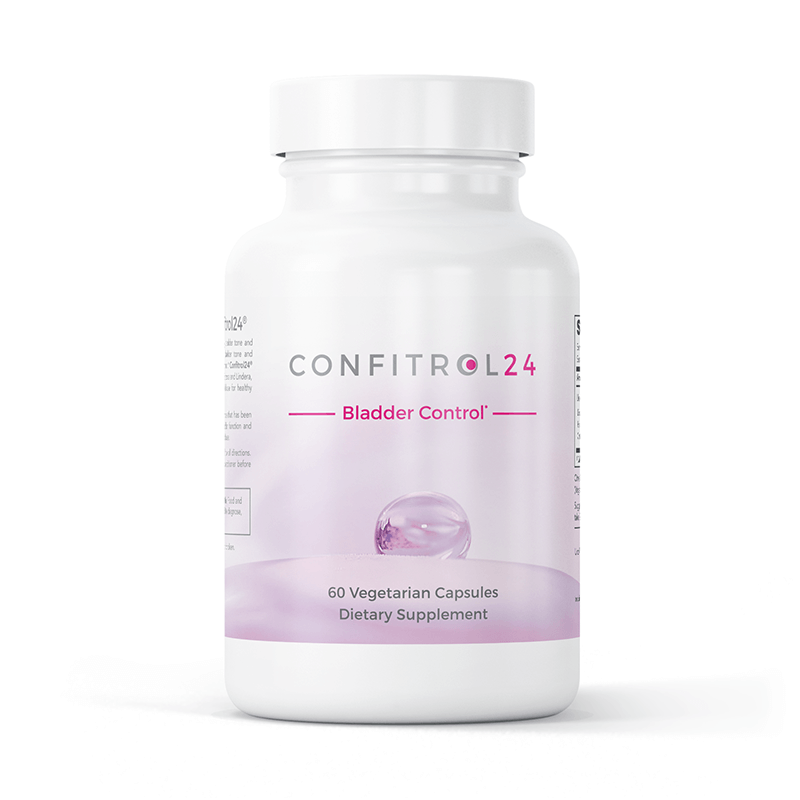
The stronger alternative: Confitrol24 · 8.0/10For bladder control itself, Confitrol24's Urox® blend carries a published randomised trial behind it — the strongest evidence file in the urinary category, and our higher score.
What Is in Uticarin?
Full amounts per daily serving (2 capsules), exactly as the maker publishes them:
- D-mannose — 400 mg : a simple sugar that is excreted into the urine, where it is intended to bind E. coli and help flush it out.
- Exocyan™ Cran 10G cranberry fruit extract — 360 mg (10% proanthocyanidins): the standardised cranberry extract used for urinary tract support.
- Green tea leaf extract — 200 mg (40% EGCG): antioxidant support; see the EGCG note under Safety.
- Dandelion root extract — 100 mg : traditionally used to support fluid flow through the urinary tract.
- Rosehip fruit extract — 50 mg : provides vitamin C 35 mg (44% NRV).
- Nettle leaf extract — 50 mg (4% polyphenols): a traditional urinary-support herb.
- Vita-algae D® vitamin D — 10 µg (200% NRV): supports normal immune function, from a vegan algae source.
How to Use It
Take 2 capsules a day, washed down with 300 ml of water, and not on an empty stomach. The maker recommends it both for people dealing with recurrent infections and for preventive use by people prone to them, and states it is suitable for men as well as women. It says effects may be noticeable after a few weeks of regular use, with the longer-term benefit — fewer infections — depending on consistent daily use. To be clear about what it is: a preventive support supplement. It is not an antibiotic and does not treat an active infection.
Safety and Limitations
An active UTI needs medical care, not a supplement. Burning when you urinate, fever, back/flank pain, blood in the urine or symptoms lasting more than a couple of days mean seeing a doctor — untreated infections can reach the kidneys. Uticarin's role is prevention support between infections. On the product itself, the maker publishes unusually complete cautions: do not exceed the daily dose; not suitable for children or pregnant or breastfeeding mothers; and a specific green-tea warning — each daily serving contains 80 mg of EGCG, and you should not consume 800 mg or more of EGCG per day (relevant if you drink large amounts of green tea or take other green-tea supplements). That level of candour is rare in this category and is reflected in our safety score.
Pricing
One bottle is $47.99 — the lowest single-bottle price in this group. Three bottles (buy 2, get 1 free) cost $95.98 — $31.99 each — and six bottles (buy 3, get 3 free) cost $143.97 — $23.99 each. Shipping adds $12. Since prevention products are judged over months, the multi-bottle pricing is reasonable once you have decided the product suits you; with no guarantee published, start with one bottle.
| Package | What you get | Total | Per bottle |
|---|---|---|---|
| 1 bottle | 1 bottle (1 month) | $47.99 | $47.99 |
| 3 bottles (buy 2, get 1 free) | 3 bottles | $95.98 | $31.99 |
| 6 bottles (buy 3, get 3 free) | 6 bottles | $143.97 | $23.99 |
Frequently Asked Questions
Can Uticarin treat a UTI I have right now?
No. It is a preventive support supplement, not an antibiotic. An active urinary tract infection — burning, fever, flank pain, blood in the urine — needs a doctor.
How does Uticarin work?
Its main ingredients, D-mannose and cranberry proanthocyanidins, are intended to make it harder for E. coli bacteria to adhere to the bladder wall, so they are more easily flushed out when you urinate — reducing the chance of infections recurring.
Can men take Uticarin?
Yes — the maker states men can also benefit, although urinary tract infections are more common in women.
How long before Uticarin helps?
The maker says effects may be noticeable after a few weeks of regular use, and that the reduction in infection frequency is a long-term benefit of consistent daily use.
Is Uticarin vegan?
Yes — the maker states it is vegan-friendly, including a plant-based (algae) vitamin D source, and it is made in the EU.
Guides & Research
Every claim on this page is examined in depth in our Urinary Health guides — the D-mannose evidence and dosing, the cranberry myths, and preventing recurrent UTIs without antibiotics, graded the same way we grade this product:
- Does D-Mannose Actually Work for UTIs? Evidence, Limits and Why It Sometimes Stops Working (2026)
- D-Mannose Dosage: How Much to Take for Prevention vs an Active UTI (and How Long It Takes) (2026)
- Cranberry for UTIs: Does It Work, the Juice Myth and How to Choose a Product (2026)
- How to Prevent Recurrent UTIs Without Antibiotics: A Practical Guide (2026)
- Is D-Mannose Safe? Daily Use, Side Effects, Interactions and Pregnancy (2026)
Related Products
Last reviewed: October 2026