
- Quick Answer
- Where the Testosterone Story Came From
- The Human Trials, One by One
- The Two 2025 Syntheses, Read Side by Side
- What About Libido, and How Does It Compare With Ginseng?
- Will Tribulus Fail a Drug Test?
- Why "40% Saponins" Tells You Less Than You Think
- Testomore and Tribulus: Who Should Buy, Who Should Skip
- Tribulus for Athletes: the Strength Question, Answered Separately
- Why the Animal Studies Were So Convincing — and Why They Misled
- What About Women?
- How to Read a Tribulus Label in Sixty Seconds
- A Stronger Alternative in This Category
- Frequently Asked Questions
- Does tribulus increase testosterone in men?
- Why do so many websites say tribulus boosts testosterone?
- Does tribulus do anything at all?
- I saw a study where tribulus improved erections by 4.21 points. Is that right?
- Will tribulus make me fail a doping test?
- How much tribulus did the studies use?
- Is a higher saponin percentage better?
- Does tribulus work for women?
- Is tribulus safe?
- How long should I take tribulus for?
- Read This Next
Disclosure: This article contains affiliate links. If you buy through them, we may earn a commission at no extra cost to you. It never changes our conclusions.
Quick Answer
No. In humans, tribulus terrestris has been tested for testosterone repeatedly — in young men, elite athletes, trained lifters and men over 40 — and the answer has come back the same every time: no significant change in testosterone. That is not an absence of research; it is a well-populated null. What tribulus may do, modestly and through a non-hormonal route, is improve erectile function scores in men who have erectile difficulties — a 2025 meta-analysis found IIEF-5 scores up 3.23 points versus placebo while testosterone did not move at all. If you are reading labels, the formula we review in this category — Testomore, scored 6.0/10 — pairs its 400 mg of tribulus with something rarer: a fully printed panel and a branded ingredient (Tesnor™) that does have human trial data behind it. This article is the tribulus verdict in full; for the wider testosterone-booster landscape, start with our ingredient-by-ingredient evidence review. Best for: readers deciding whether tribulus deserves their money — and for men with mild erectile difficulties, it reframes what the ingredient might honestly be for.
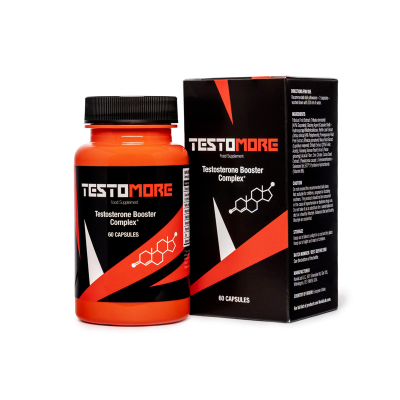
Our Recommendation — Testomore
Score: 6.0/10 · Best for: men who want tribulus inside a fully printed panel alongside a branded blend with real trial data — every amount on the label, auditable before you spend Main caution: tribulus alone is a well-populated null for testosterone, the Tesnor™ ships at half its studied dose (200 mg against 400 mg), and the maker publishes no money-back guarantee Fair trial: two bottles at $53.99 ($107.98, plus $12 shipping) cover the blend’s 56-day trial window — with no guarantee behind it, the trial is funded entirely by you
Where the Testosterone Story Came From
Tribulus did not earn its reputation in a laboratory studying men. It earned it in the 1970s and 1980s, in Bulgarian and Eastern-European strength-sport circles, where a standardised Bulgarian extract (sold as Tribestan) was used by weightlifters and bodybuilders who believed — and said loudly — that it raised their testosterone and their totals. The anecdotes travelled west with the athletes, and by the 1990s tribulus was a fixture of sports-nutrition marketing on two continents. It is worth being precise about what those origin stories were: testimony from elite lifters in an era when actual anabolic steroids were also endemic in the same gyms, attached to a plant extract that has never been shown to do in a human what the testimony claimed.
The scientific-sounding layer came from the plant's chemistry. Tribulus fruit is rich in steroidal saponins, chiefly one called protodioscin. "Steroidal" here describes the shape of the molecule — a steroid-like skeleton — not any hormonal activity in your body; cholesterol and many entirely inert plant compounds are "steroidal" in the same structural sense. In rodents, protodioscin-rich extracts raised luteinising hormone (LH) — the pituitary signal that tells the testes to produce testosterone — and raised testosterone and sexual behaviour along with it. That produced the hypothesis every label still prints: protodioscin → more LH → more testosterone. It is a clean, plausible, testable chain. The problem is simply that when researchers tested it in humans, every link failed: LH does not rise, and neither does testosterone. A mechanism demonstrated in rats and rabbits is a reason to run a human trial. It is not a substitute for the trial's result.
The Human Trials, One by One
Five named trials and two 2025 syntheses carry the whole verdict. Read the table first; the walk-through after it explains why each row matters.
| Trial | Population | Dose & duration | Testosterone result |
|---|---|---|---|
| Neychev & Mitev 2005 | 21–22 healthy young men, aged 20–36 | 10 or 20 mg/kg/day (≈750–1,500 mg) Bulgarian extract, 4 weeks | No change in testosterone, androstenedione or LH at any of 6 measurement points |
| Rogerson et al. 2007 | 22 elite rugby league players | 450 mg/day, 5-week preseason | No difference from placebo in testosterone, strength or fat-free mass; urinary T:E ratio unchanged |
| Antonio et al. 2000; Fernandez-Lazaro et al. 2021 | Resistance-trained men; 30 CrossFit athletes | Up to 770 mg/day, 6 weeks (Fernandez-Lazaro) | Null — no testosterone or performance advantage |
| Santos et al. 2014 | 30 men aged 40+ | 800 mg/day, 30 days | Both groups improved; no difference between tribulus and placebo |
| Kamenov et al. 2017 | 180 men with mild–moderate erectile dysfunction | Tribestan 1,500 mg/day (250 mg × 6 tablets), 12 weeks | Testosterone unchanged; erectile-function scores improved (+2.70 IIEF points vs placebo) |
Neychev and Mitev (2005) is the trial the marketing least likes to discuss, because it tested the mechanism directly. Young men took a Bulgarian tribulus extract — the same style of preparation as the original Tribestan — at two weight-based doses for four weeks, and the researchers measured testosterone, androstenedione and LH six times. Nothing moved at either dose at any point. If protodioscin raised LH in humans the way it does in rodents, this is the study that would have caught it.
Rogerson (2007) moved the question into the population that buys the product hardest: elite rugby league players across a preseason, 450 mg/day against placebo. Strength, fat-free mass and testosterone all tracked placebo exactly, and — a detail that matters for the doping section below — the urinary testosterone-to-epitestosterone ratio did not change either.
The trained-men nulls kept accumulating. Antonio (2000) found no body-composition or strength benefit in resistance-trained men, and Fernandez-Lazaro (2021) found the same in 30 CrossFit athletes at 770 mg/day for six weeks — a dose above most labels. Santos (2014) is arguably the best-controlled of the set and the one most often omitted from roundups: 30 men over 40, 800 mg/day for 30 days, in which the placebo group improved alongside the tribulus group and the between-group difference was nil. That pattern — everyone feels better, nobody's hormones move — is the signature of a placebo-sensitive outcome, and it previews exactly what the erectile-function data shows later.
And then there is the trial most likely to be quoted at you with the wrong dose attached. Kamenov (2017) gave 180 men with mild-to-moderate erectile dysfunction a standardised Bulgarian extract (Tribestan) at 1,500 mg/day — 250 mg tablets, six a day, each tablet standardised to at least 112.5 mg of furostanol saponins, roughly 675 mg of saponins a day — for 12 weeks. Erectile-function scores improved meaningfully versus placebo (+2.70 IIEF points). Testosterone did not change. You will see this trial cited online as "750 mg/day"; that figure belongs to a different, smaller study (Roaiah 2016), and the confusion flatters commercial labels, because 750 mg looks reachable and 1,500 mg of a pharmacopoeial extract does not. Hold both numbers — the real dose and the real outcome — because they frame the label arithmetic later in this article.
The Two 2025 Syntheses, Read Side by Side
Individual trials can be argued with; the systematic reviews are where the argument ends. Two were published in 2025, and they answer two different questions.
Vilar Neto et al. (2025, Nutrients) reviewed tribulus for testosterone specifically: 10 trials, 483 men aged 16–70, doses of 400–750 mg/day over 1–3 months. Eight of the ten trials showed no androgen change at all. The only increases were small within-group rises of 60–70 ng/dL in men who were hypogonadal to begin with — rises measured against the men's own baselines, not against placebo, in a literature the reviewers rated as half low-quality. For a healthy man with normal testosterone, the review's answer is simply no.
Suharyani et al. (2025), a meta-analysis of 8 randomised trials in men with erectile dysfunction (PMID 40360723), asked the other question — not hormones, but function — and found a real signal: IIEF-5 scores improved by 3.23 points versus placebo (95% CI 1.89–4.58), a modest but genuine effect for men with ED, while total testosterone across the same trials showed no difference. One warning about this paper, because you will meet the wrong number: the figure 4.21 circulates online as the effect size. It is the within-group pre-to-post change in the tribulus arms — before subtracting what placebo did. The honest, placebo-adjusted figure is 3.23. Any page quoting 4.21 as tribulus's benefit is quoting the number before the control group is accounted for, which is precisely the move this site exists to catch.
Put together, the two syntheses draw a clean line: testosterone — no; erectile function in men who have difficulties — a modest yes, by a route that is not hormonal. The likely route is nitric-oxide-mediated blood flow, the same general pathway the ED drugs target far more powerfully. Tribulus's tragedy as a supplement is that it is marketed for the one effect it demonstrably lacks and rarely sold honestly for the effect it might actually have.
What About Libido, and How Does It Compare With Ginseng?
The libido reports follow the erectile data rather than the hormone data: desire scores in the ED trials move with function, and the proposed mechanisms (nitric oxide, possibly central effects) do not require testosterone to change. That distinction matters for expectations: a man whose problem is low desire with normal erections is outside the studied population, and a man whose problem is genuinely low testosterone has a medical issue tribulus does not address.
For calibration, compare the other traditional ED botanical in this product category, Korean ginseng. Its erectile-function file is also small-trial grade — a systematic-review signal at doses of roughly 600–3,000 mg/day of root preparations, with modest effect sizes and the usual quality caveats. In other words, the two most famous "men's" botanicals converge on the same honest description: possible small benefits for erectile function in men with difficulties, no demonstrated testosterone effect. We cover the per-ingredient detail in the ingredients evidence review and the category-level verdict in Do Testosterone Boosters Actually Work? — this article exists because tribulus alone generates enough mythology to deserve its own file.
Will Tribulus Fail a Drug Test?
This is one of the most-searched tribulus questions, and it has two separate answers that are usually mashed together.
Tribulus itself: no signal. Anti-doping's first-line steroid screen tracks the urinary testosterone-to-epitestosterone (T:E) ratio, with 4:1 as the threshold that triggers further investigation. In Rogerson's trial of elite rugby players — the population actually subject to testing — five weeks of tribulus at 450 mg/day left the T:E ratio unchanged, exactly as you would expect from an ingredient that does not change testosterone. There is no evidence that tribulus, as an ingredient, moves the ratio or produces a positive test.
Tribulus products: a different risk. The tested athlete's real exposure is not the plant but the bottle. The sports-supplement market has a documented adulteration problem — products have repeatedly been found to contain undeclared prohibited substances, including actual anabolic agents and stimulants, which is why anti-doping bodies warn athletes off non-certified supplements generally. A tribulus capsule from an uncertified brand carries that background risk regardless of what the label lists. If you are in a testing pool, the practical answer is: the ingredient is not the problem, but only use products certified by a recognised third-party testing programme, and keep the batch details. The same caution applies to any formula in this category, including the one reviewed below.
Why "40% Saponins" Tells You Less Than You Think
Because the testosterone claim is dead, tribulus marketing has migrated to a numbers game: standardisation percentages. Labels advertise "40% saponins", "60% saponins", even "90% saponins", as if the percentage were a potency score. Three facts dismantle that reading.
First, total saponins is an aggregate assay, not a measurement of the compound the story is about. The LH hypothesis names one saponin — protodioscin. A "90% saponins" figure says nothing about how much protodioscin is in the extract; a high total-saponin extract can carry negligible protodioscin, and no human trial has ever standardised to protodioscin content or validated an assay for it. Second, the percentage depends on the assay method — different laboratory methods (gravimetric, UV, HPLC) return different numbers for the same material, so percentages are not comparable across brands. Third, plant part matters: saponin profiles differ between fruit, leaf and aerial parts, and the human trials used specific preparations — Bulgarian fruit/aerial extracts, Tribestan's standardised tablets — not generic powder.
Now the arithmetic that labels avoid. What reaches your body is milligrams of extract × the percentage. Kamenov's protocol delivered about 675 mg of saponins a day (1,500 mg at ~45% standardisation) and moved erections, not testosterone. The standardised-trial band overall runs from roughly 400 to 1,500 mg of extract a day. Testomore provides 400 mg of tribulus fruit extract at 40% saponins — 160 mg of saponins a day, about a quarter of Kamenov's saponin exposure, of an ingredient whose testosterone effect was null at every dose tested. None of that makes the capsule dishonest — the maker prints the amount and the percentage plainly, which is more than most of this category does — but it does mean the tribulus line is a supporting ingredient riding on a reputation its own trials retired. Our full Testomore review scores the formula on exactly that basis: the label is transparent, the tribulus evidence is what it is.
Testomore and Tribulus: Who Should Buy, Who Should Skip
Testomore's genuine winning angle is not its tribulus — it is that the formula can be audited at all. Every amount is published (tribulus 400 mg at 40% saponins, Tesnor™ 200 mg, nettle leaf 200 mg, maca 100 mg, shilajit 100 mg, Korean ginseng 100 mg, zinc 10 mg, selenium 55 µg, B6 7 mg), it is EU-made by a named maker, and the maker prints a medication warning most competitors omit: the product "should not be consumed in the case of hypertension or diabetes drugs use." Its headline ingredient, Tesnor™, has real human trials — at 400 mg, twice the dose in this capsule — which is why our review scores it 6.0/10 rather than either the hype or the bin. It costs $53.99 a bottle (bundles lower), with $12 shipping, and the maker publishes no money-back guarantee — say that plainly, because most pages in this niche will not.
Buy it if you want a stimulant-free, fully labelled men's formula, you have read the tribulus verdict above and are buying for the overall panel — the branded Tesnor™, the sensible zinc and selenium — and you are not on blood-pressure or diabetes medication. Judge it over two bottles, ideally with a morning blood test either side, and not by the tribulus line.
Skip it if you are buying for tribulus as a testosterone booster — that purchase has a decade of null trials against it — if you take hypertension or diabetes medication (the maker's own warning), or if your symptoms suggest genuinely low testosterone, which is a diagnosis to make with two morning blood tests and a clinician, not a capsule. The full safety file for tribulus itself is our companion article on tribulus side effects; the category safety picture is in the testosterone-booster safety guide.
Tribulus for Athletes: the Strength Question, Answered Separately
Because the original legend was athletic, the trained-men trials deserve their own paragraph rather than a table row. The pattern across them is unbroken. Rogerson's elite rugby players gained no strength or fat-free mass advantage across a preseason — the exact window in which a testosterone rise would have shown up on the field and in the gym. Antonio's resistance-trained men showed no body-composition benefit. Fernandez-Lazaro's CrossFit athletes, at 770 mg/day — a dose above most commercial labels, for six weeks — showed no performance or hormonal advantage on any measure. Three different training populations, three nulls, including the two hardest-training groups ever given the plant. If tribulus worked for athletes at anything like label doses, this is the literature that would know. It is also worth noting what these trials collectively exclude: the defence that "the dose was too low" has to survive Neychev's 20 mg/kg arm (≈1,500 mg at 60% saponins) doing nothing in young men, and the defence that "the extract was wrong" has to survive the Bulgarian preparation itself being the one tested. The remaining defences are about duration — and the 12-week Kamenov trial, the longest, still moved no hormone in anyone.
Why the Animal Studies Were So Convincing — and Why They Misled
It is worth understanding why the rodent data looked strong, because the same pattern recurs across this entire supplement category. In rats and rabbits, protodioscin-rich tribulus extracts produced a coherent-looking chain: LH rose, testosterone rose, sexual behaviour increased, and the effects were repeatable across laboratories. Animal results like that usually justify human trials with genuine optimism. What they could not capture is species difference in saponin metabolism: how a rodent's gut and liver process steroidal saponins, and what metabolites reach the pituitary, differs from the human case — and the human trials, measuring the actual endpoints (LH at six time points in Neychev), found the chain broken at its first link. The lesson generalises beyond tribulus: a supplement claim built entirely on rodent endocrinology is a hypothesis with good marketing. The honest sequence — animal signal, then human test, then verdict following the human test — is exactly the sequence tribulus has completed. It is one of the few ingredients in this aisle whose story is finished rather than merely unproven, and finished stories deserve to be reported as such.
What About Women?
The one result in the literature that cuts the other way deserves honest placement rather than burial. Vale (2017) studied 40 women and reported rises in free and bioavailable testosterone on tribulus. It has not been reproduced in men, it is a single small trial, and female androgen physiology differs enough that it cannot be imported into the male claim — but it exists, and a page claiming "every study is null" without it would be doing to the data what the marketers do in reverse. Our reading: an interesting, isolated signal in a different population, awaiting replication, which changes nothing about the verdict for the men this article is written for.
How to Read a Tribulus Label in Sixty Seconds
Given the verdict, why does label-reading still matter? Because tribulus is rarely sold alone — it rides inside blends, and the label tells you how the maker thinks. Run four checks. Amount printed? A milligram figure for tribulus itself, not a proprietary-blend total. Percentage printed, and of what? "Standardised to X% saponins" is an audit trail; "high potency" is not — and remember the percentage measures total saponins, not protodioscin. Plant part named? The trials used fruit/aerial preparations of specified origin; an unnamed part is an unknown variable. Dose versus the trial table: convert to saponin milligrams (amount × percentage) and compare against the 450–675 mg/day exposures in the studies above. A maker who passes all four checks — as Testomore's does, printing 400 mg of fruit extract at 40% saponins — has at least given you the means to reach the correct conclusion about his product, which in this category is a form of honesty worth more than the ingredient. A maker who fails them is asking you to buy the Bulgarian legend on trust, forty years after the human data arrived.
A Stronger Alternative in This Category
The stronger alternative: Testodren · 8.5/10One ingredient at a published 500 mg dose, with human studies behind the ingredient itself: Testodren is the testosterone formula we score highest in this catalogue.
Our Recommendation — Testomore
Score: 6.0/10 · Best for: men who want tribulus inside a fully printed panel alongside a branded blend with real trial data — every amount on the label, auditable before you spend Main caution: tribulus alone is a well-populated null for testosterone, the Tesnor™ ships at half its studied dose (200 mg against 400 mg), and the maker publishes no money-back guarantee Fair trial: two bottles at $53.99 ($107.98, plus $12 shipping) cover the blend’s 56-day trial window — with no guarantee behind it, the trial is funded entirely by you
Frequently Asked Questions
Does tribulus increase testosterone in men?
No. Across young men, elite athletes, trained lifters and men over 40, at doses from 450 to 1,500 mg/day for 4–12 weeks, human trials show no significant testosterone change. The 2025 Nutrients systematic review of 10 trials found 8 of 10 with no androgen change at all.
Why do so many websites say tribulus boosts testosterone?
Because rodent studies show exactly that — protodioscin-rich extracts raise LH and testosterone in rats and rabbits — and because 1970s–80s Bulgarian athlete anecdotes built the legend before human trials existed. The human trials, when they came, did not reproduce the animal results.
Does tribulus do anything at all?
Possibly, for erectile function in men who have erectile difficulties: a 2025 meta-analysis of 8 trials found IIEF-5 scores improved 3.23 points versus placebo, with testosterone unchanged — a modest, non-hormonal effect. That is a different (and smaller) claim than the one on most labels.
I saw a study where tribulus improved erections by 4.21 points. Is that right?
That figure is the within-group change in the tribulus arms of the 2025 meta-analysis — before placebo is subtracted. The placebo-adjusted effect is 3.23 IIEF-5 points. Both numbers describe the same data; only one of them is the honest effect size.
Will tribulus make me fail a doping test?
Tribulus itself did not change the urinary T:E ratio in elite rugby players over 5 weeks, and there is no evidence the ingredient produces a positive test. The real risk for tested athletes is product adulteration — undeclared prohibited substances found in some sports supplements — so use only third-party-certified products.
How much tribulus did the studies use?
Roughly 400–1,500 mg/day of extract. The largest, best-known trial (Kamenov 2017) used 1,500 mg/day of Tribestan — about 675 mg of saponins daily. The "750 mg" figure often attached to that trial belongs to a different study (Roaiah 2016). For the full dosage picture, see our tribulus dosage guide in this series.
Is a higher saponin percentage better?
Not demonstrably. The percentage measures total saponins by an assay method that varies between brands; it does not measure protodioscin, the compound the testosterone story is based on, and no trial has standardised to protodioscin. Milligrams of extract and the trial record matter more than the percentage on the front of the bottle.
Does tribulus work for women?
The one small trial often cited (Vale 2017, 40 women) reported rises in free and bioavailable testosterone that have not been reproduced in men and rest on a thin base. It does not rescue the male testosterone claim, and this site does not recommend tribulus as a hormone product for either sex.
Is tribulus safe?
At trial doses over 4–12 weeks it has generally been well tolerated, with digestive upset the common complaint. Rare liver and kidney case reports exist, mostly at extreme doses or with confounding factors, and there are medication-interaction cautions (including the hypertension/diabetes warning Testomore's maker prints). Our companion article covers the tribulus safety file in full.
How long should I take tribulus for?
Judge it the way the trials did: a defined course of 8–12 weeks, then stop and assess — because 12 weeks is both the longest trial duration and roughly the edge of the human safety record. Open-ended daily use has no data behind it in either direction. For the erectile-function question specifically, the positive trial measured at 12 weeks; anything felt in the first fortnight belongs, on Santos's evidence, as much to expectation as to the plant.
Last reviewed: October 2026. This article is educational and is not medical advice.
