
- Quick Answer
- SHBG in Ninety Seconds: Why "Binding" Sounds Better Than It Is
- The SHBG Claim's True Tier: In-Vitro Lignan Studies
- The Human Evidence: Prostate Trials, Not Testosterone Trials
- Does Nettle Root Block DHT?
- The Aromatase Claim, Tier-Checked in One Paragraph
- Root vs Leaf: the Gap That Decides the Label
- What This Means in a Testosterone Formula — and Safety
- Why Is Nettle in Testosterone Formulas at All?
- A Stronger Alternative in This Category
- Frequently Asked Questions
- Does nettle root raise free testosterone?
- Does nettle block DHT?
- Is nettle root good for hair loss?
- What is nettle root actually proven for?
- What is the difference between nettle root and nettle leaf?
- How much nettle root did the studies use?
- Read This Next
Disclosure: This article contains affiliate links. If you buy through them, we may earn a commission at no extra cost to you. It never changes our conclusions.
Quick Answer
Almost everything written about nettle and testosterone is research on nettle root — and almost all of that is test-tube work. Nettle-root lignans can bind SHBG in a laboratory dish; no human trial has ever shown nettle raising testosterone, freeing testosterone, or lowering DHT in a man. The plant's genuine human evidence is for prostate symptoms (BPH), where a 620-man trial showed symptom relief with testosterone unchanged. Now the part that decides this article: Testomore — the formula readers land on from this topic — contains nettle leaf extract (200 mg, 4% polyphenols), a different plant part with different chemistry and essentially no androgen research at all. Even if the root data were strong, it could not be read across to the leaf in the capsule. It isn't strong. Best for: men who have seen "nettle frees up testosterone" or "natural DHT blocker" claims and want to know which plant part, which evidence tier, and which human data actually stand behind them.
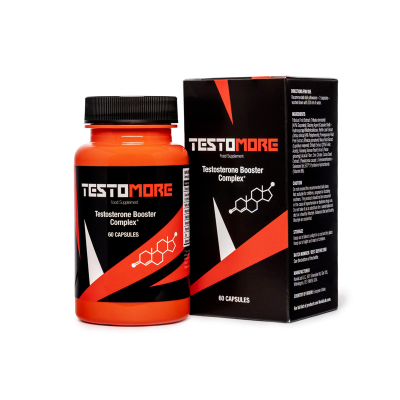
Our Recommendation — Testomore
Score: 6.0/10 · Best for: men who want nettle inside a fully printed panel alongside a branded blend with real trial data — transparency high, every amount auditable before you spend Main caution: the nettle research is on the root and Testomore ships 200 mg of nettle leaf — no trial has measured free testosterone rising in men taking nettle — and the Tesnor™ sits at half its studied dose, with no money-back guarantee published Fair trial: two bottles at $53.99 ($107.98, plus $12 shipping) cover the blend's 56-day trial window — with no money-back guarantee, a negative result is not refundable.
SHBG in Ninety Seconds: Why "Binding" Sounds Better Than It Is
SHBG — sex hormone-binding globulin — is a blood protein that carries testosterone around in an inactive, bound state. Only the small unbound fraction ("free testosterone", roughly 1–3% of the total) is immediately available to tissues. That is the entire marketing opening: if a compound "binds SHBG", the story goes, it displaces testosterone from the protein, free testosterone rises, and you get more hormone effect without more hormone. The story has a superficial logic and two fatal gaps. First, the displacement data for nettle are concentrations achieved in assay dishes, not in human blood after swallowing a capsule — no pharmacokinetic bridge between the dish and the man has ever been published. Second, SHBG is not a vault to be robbed: when SHBG falls, total testosterone typically falls with it, because the bound fraction is also the hormone's circulating reservoir. "Lower SHBG" and "higher free T" are not synonyms, and any page treating them as such is selling the first as the second. Keep those two gaps in mind; the evidence tables below are graded against them.
The SHBG Claim's True Tier: In-Vitro Lignan Studies
| Study | Type | What was shown | The limit on every row |
|---|---|---|---|
| Hryb et al. 1995 | In vitro — laboratory binding work | Nettle-root constituents interact with SHBG binding sites | Binding demonstrated in a dish, at extract concentrations (10⁻³–10⁻⁵ M) never shown to occur in human blood. Not a human hormone change — no man's testosterone, free T or SHBG response to nettle has been measured in these studies, because no man was in them |
| Schöttner et al. 1997 | In vitro — isolated lignans | Specific root lignans — secoisolariciresinol and 3,4-divanillyltetrahydrofuran — bind SHBG with measurable affinity | |
| Gansser & Spiteller (1990s) | In vitro / phytochemical | Identified the lignan fraction of the root responsible for the binding activity |
This is the complete foundation of the "nettle frees testosterone" claim: three decades-old laboratory studies showing that molecules from nettle root can attach to SHBG in vitro. That is a legitimate scientific observation and a legitimate reason — in 1997 — to run a human trial. The human trial measuring SHBG, free testosterone or DHT after nettle ingestion has still never been run. Zero human studies measure nettle's effect on testosterone, free testosterone, SHBG or DHT as outcomes. (Human studies exist in which SHBG was noted — in prostate patients, below — but hormones were not the intervention's demonstrated effect.) A claim that has had thirty years to climb one rung of the evidence ladder and hasn't is telling you something.
The Human Evidence: Prostate Trials, Not Testosterone Trials
| Human evidence | Design | Hormone findings |
|---|---|---|
| Safarinejad 2005 (PMID 16635963) | 620 men with BPH; nettle root 600 mg/day vs placebo, 6 months, crossover | Prostate symptoms improved in 81% vs 16% on placebo. PSA and testosterone unchanged; DHT not reported. A symptom trial — hormones were bystanders |
| EMA/HMPC regulatory assessment | Review of the human nettle-root literature (3 studies) | SHBG fell, but sex hormones were non-significant in 2 of 3 studies; the BPH mechanism is rated unclear, and 5-alpha-reductase inhibition "less likely" |
| Fischer & Wilbert 1992; Vontobel 1985 | Small older BPH studies (40–50 men, root extract) | ⚠️ Circulating summaries quote ~10% hormone changes — we do not use these figures: the originals are not publicly verifiable and every number in circulation arrives via secondary reviews |
Safarinejad deserves its due: 620 men, six months, a crossover design, and an emphatic symptom result is a real trial — the best human data nettle root has. It is also a trial about urinary symptoms in men with enlarged prostates, in which testosterone sat still. That is the plant's actual clinical identity: a prostate herb with a decent symptom record and no demonstrated hormone activity. The regulator agrees — the European Medicines Agency's assessment concludes the BPH mechanism itself is unclear and the popular 5-alpha-reductase story is among the less likely explanations. When the marketing says "clinically studied", this is the study it means, and this is what it found.
If prostate symptoms are your actual issue, that evidence is worth pursuing in its own right — it is why nettle root appears in prostate formulas such as the one we review at PrimeGenix Prostate Support, and why our prostate coverage treats the BPH angle seriously rather than borrowing it for testosterone claims.
Does Nettle Root Block DHT?
The "natural DHT blocker" claim rests on 5-alpha-reductase — the enzyme that converts testosterone to dihydrotestosterone. The nettle file, tier by tier: an in-vitro enzyme study (Nahata & Dixit 2014) reported inhibition in a cell-free assay using an indirect NADPH-consumption method, with the plant part not even clearly stated; animal prostate models show extract effects in rodents; and the EMA's reviewers, looking at the whole file, rated 5-alpha-reductase inhibition "less likely" as the mechanism and noted the human data do not show it. Most importantly: no human trial has ever reported blood DHT falling after nettle — in the one big trial, DHT was not even measured. A claim with no human measurement is not a small claim; it is an unmeasured one. The category's usual benchmark makes the gap vivid:
| Finasteride 1 mg (prescription) | Nettle root extract | |
|---|---|---|
| Human serum DHT effect | Lowers DHT by roughly 70%, measured in large trials | Never measured in humans |
| Mechanism evidence | Direct enzyme inhibition, demonstrated in humans | Indirect cell-free assay; regulator rates it "less likely" |
| Approved/monitored use | Hair loss and BPH, with known side-effect profile | Traditional use for BPH symptoms (EMA) |
Even saw palmetto — the strongest "natural DHT" candidate, with actual human trials — failed its best tests (the STEP trial in 2006 and CAMUS in 2011, the latter null even at triple dose). That is the honest frame for the entire natural-DHT shelf, and it is the frame our hair-set coverage uses too: in-vitro enzyme inhibition is where DHT claims begin, and for every botanical so far, it is also where they end.
The Aromatase Claim, Tier-Checked in One Paragraph
Nettle is also said to inhibit aromatase — the enzyme converting testosterone to oestrogen — and therefore to "keep testosterone from being wasted". Same file, same tier: the aromatase data are enzyme-assay and laboratory work, with no human study showing estradiol falling or testosterone rising after nettle in men. In the EMA's human dataset, sex hormones were non-significant in two of three studies — the closest thing to a human aromatase test that exists, and it did not perform. File aromatase with SHBG and 5-alpha-reductase: three mechanisms, all demonstrated at most in glassware, none in a man.
Root vs Leaf: the Gap That Decides the Label
Here is the section no competitor writes, because it cannot survive being written on a sales page. Nettle root and nettle leaf are different preparations with different chemistry and different traditional uses. The root carries the lignans (the SHBG-binding molecules above), the lectin UDA and the polysaccharides studied for prostate symptoms. The leaf is the allergy-and-tea part of the plant — the traditional hay-fever remedy, rich in flavonoids and polyphenols, with essentially no androgen research of any tier: no lignan-SHBG studies, no BPH trials, nothing.
Testomore contains nettle leaf extract, 200 mg at 4% polyphenols. Standardised to polyphenols — a leaf marker — not to the root's lignans. So the evidentiary chain offered for this ingredient in a testosterone formula is: a mechanism shown in vitro, for the root, at concentrations unbridged to humans, in studies thirty years old, for a different part of the plant than the one in the capsule. Every link fails independently; together they are not a chain at all. (The same note applies to the 100 mg of nettle leaf in Profolan, the hair formula we review in this programme — the root's reputation is doing work the leaf's data cannot.) To the maker's credit — and this is Testomore's actual winning angle — the leaf and its amount are printed plainly on the label, so this audit is possible. Most formulas just write "nettle" and let the reader's imagination supply the root.
What This Means in a Testosterone Formula — and Safety
Read Testomore's nettle line as what it is: a supporting botanical with a borrowed reputation, included in a formula whose real rationale sits elsewhere (the branded Tesnor™ blend, audited in our pomegranate article in this series, and the zinc/selenium base). Our full review scores the product 6.0/10 on that whole picture — transparency high, this ingredient's evidence nil — and the product's own safety posture is better than its nettle evidence: the maker warns against use with hypertension or diabetes medication, and publishes no money-back guarantee, which we record rather than excuse. On nettle itself, tolerability in the prostate trials was unremarkable — the BPH literature is not a safety alarm — but anyone on prescription medication should treat an unstudied botanical as a clinician conversation, and nobody should take a leaf extract expecting a root mechanism.
Buy Testomore if you want the audited, fully labelled formula for its headline ingredients and accept that its nettle leaf contributes tradition, not evidence. Skip it if nettle — SHBG, free testosterone or DHT — is the reason you are buying: for that purpose the human evidence does not exist for the root, and the product does not even contain the root. Men whose concern is genuinely prostate symptoms should look at the prostate category on its own evidence (PrimeGenix Prostate Support), and men whose concern is measured low testosterone should start with the diagnosis route in our testosterone-booster verdict.
Why Is Nettle in Testosterone Formulas at All?
If the evidence is this thin, the ingredient's ubiquity needs an explanation, and it is a marketing-historical one rather than a scientific one. Nettle root arrived in men's formulas through the prostate aisle: a traditional BPH herb with a genuine symptom trial is an easy line on a "men's health" panel, and once present, its in-vitro SHBG and enzyme data — real laboratory observations, as the tables above show — could be narrated as hormone activity by anyone willing to skip the words "in a dish". Each retelling dropped a qualifier: binding became freeing, enzyme assays became DHT blocking, prostate trials became clinical proof. The formula-level incentive is obvious — a panel with nine recognisable botanicals looks more comprehensive than a panel with two — and the cost is borne by the reader, who cannot tell which lines carry human data and which carry folklore unless the maker or the reviewer grades them line by line. That grading is the entire method of our ingredients evidence review, and nettle is its cleanest teaching example: not a dangerous ingredient, not a fraudulent plant — a prostate herb whose résumé was rewritten for a hormone claim it never applied for.
A Stronger Alternative in This Category
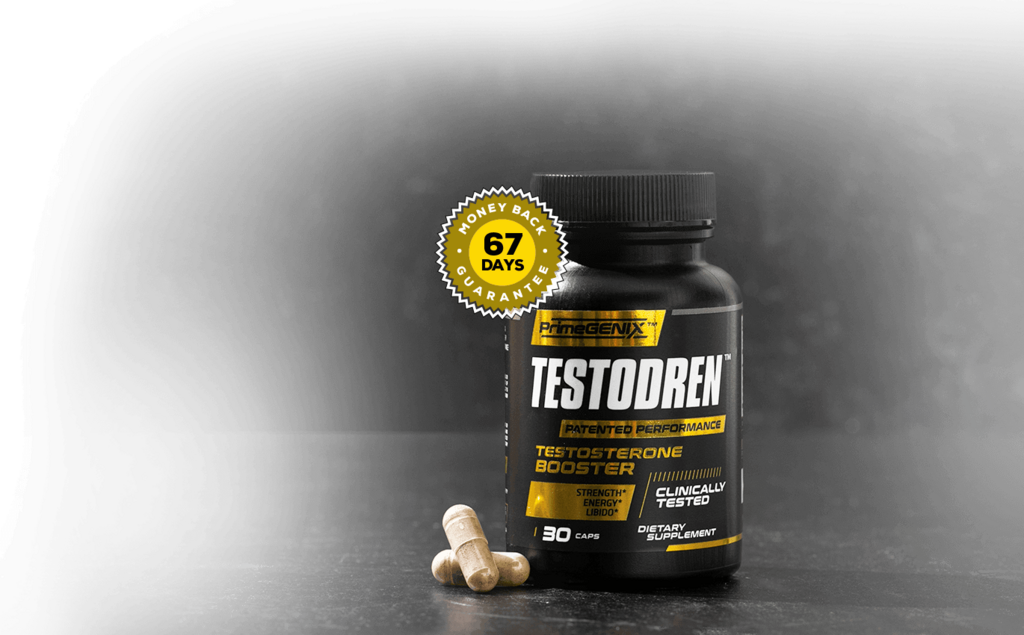
The stronger alternative: Testodren · 8.5/10One ingredient at a published 500 mg dose, with human studies behind the ingredient itself: Testodren is the testosterone formula we score highest in this catalogue.
Our Recommendation — Testomore
Score: 6.0/10 · Best for: men who want nettle inside a fully printed panel alongside a branded blend with real trial data — transparency high, every amount auditable before you spend Main caution: the nettle research is on the root and Testomore ships 200 mg of nettle leaf — no trial has measured free testosterone rising in men taking nettle — and the Tesnor™ sits at half its studied dose, with no money-back guarantee published Fair trial: two bottles at $53.99 ($107.98, plus $12 shipping) cover the blend's 56-day trial window — with no money-back guarantee, a negative result is not refundable.
Frequently Asked Questions
Does nettle root raise free testosterone?
There is no human evidence that it does. Nettle-root lignans bind SHBG in laboratory studies (Schöttner 1997; Hryb 1995), but no trial has measured free testosterone rising in men taking nettle — and lower SHBG would not guarantee higher free T in any case, since total testosterone tends to fall alongside it.
Does nettle block DHT?
Not in any human measurement. The 5-alpha-reductase evidence is an indirect cell-free enzyme assay; the EMA rates that mechanism "less likely", and the largest human trial did not report DHT at all. Finasteride lowers serum DHT by about 70% in men; nettle has no human DHT figure to compare — the side-by-side is between a measurement and an absence.
Is nettle root good for hair loss?
That claim is the DHT claim wearing a different hat, and it inherits the same verdict: no human trial shows nettle affecting DHT or hair outcomes. Men treating pattern hair loss should start from interventions with human data, not enzyme assays.
What is nettle root actually proven for?
Prostate symptoms. In Safarinejad's 620-man, 6-month trial, nettle root (600 mg/day) improved BPH symptoms in 81% of men versus 16% on placebo — with testosterone and PSA unchanged. It is a prostate herb with a symptom record, not a hormone herb.
What is the difference between nettle root and nettle leaf?
Different chemistry and different evidence. The root contains the lignans behind the SHBG studies and is the part trialled for BPH. The leaf is the traditional allergy/tea preparation, standardised (when standardised) to polyphenols, with no androgen research. Testomore uses the leaf — 200 mg at 4% polyphenols — so root data cannot be claimed for it.
How much nettle root did the studies use?
The BPH trial used 600 mg/day of root extract for six months. The SHBG studies were not doses at all — they were laboratory binding assays. There is no studied "testosterone dose" of nettle, for either plant part, because no testosterone trial exists.
Last reviewed: October 2026. This article is educational and is not medical advice.
