
- Quick Answer
- The Origin Story: Topo 2009, Read in Full
- What "+42%" Actually Looks Like in Real Numbers
- The Trained-Men Sequel, Trial by Trial
- The Complete Trial Record
- How the Claim Propagated: from Pilot to Label Law
- D-Aspartic Acid, L-Aspartic Acid and the Salt Question
- The Dose-Response Problem: More Did Not Mean More
- The Estradiol Footnote: the Worry the Data Retired
- The Mechanism: Beautiful in Rats
- The Baseline Hypothesis: the Strongest Version of the Other Side
- DAA and Fertility: a Separate, Smaller File
- Muscle and Strength: the Nulls Nobody Quotes
- If You Are Topo's Population: the Sedentary Man's Actual Options
- What Trial Would Settle It? (and Why It Hasn't Been Run)
- DAA Inside Blends: the Attribution Problem
- Side Effects and the Safety Ceiling
- How to Read Any DAA Label in Ninety Seconds
- The 400 mg Audit: DAA in This Store's Own Formulas
- Why DAA Is Still on Labels: a Short Economics
- Who Should Buy — and Who Should Skip
- A Stronger Alternative in This Category
- Frequently Asked Questions
- Does D-aspartic acid actually boost testosterone?
- What is the recommended dose of D-aspartic acid?
- Does DAA work for bodybuilding or strength?
- Why do testosterone boosters still contain DAA?
- Is D-aspartic acid safe?
- Does DAA raise LH?
- Is DAA a natural alternative to testosterone therapy?
- How long does DAA take to work — and should it be cycled?
- The product I'm looking at has 400 mg of DAA. Is that enough?
- Read This Next
Disclosure: This article contains affiliate links. If you buy through them, we may earn a commission at no extra cost to you. It never changes our conclusions.
Quick Answer
D-aspartic acid (DAA) has exactly one positive human trial behind it: Topo 2009, in which 23 sedentary men taking 3.12 g/day for 12 days raised testosterone by 42%. Every subsequent trial in resistance-trained men — the population that actually buys DAA — found no increase: at 3 g/day, nothing (Willoughby 2013; Melville 2015); at 6 g/day, testosterone fell by 12.5–15.4% over two weeks (Melville 2015), and a 12-week trial at 6 g/day found no effect on hormones, strength or lean mass at any point (Melville 2017). Two smaller trained-population trials (climbers, boxers) agree. Reviewers' verdicts match the record: human results "inconsistent", evidence "sparse", and in a 2023/2024 systematic review of 27 booster ingredients, DAA was not among the exceptions that worked. Meanwhile the ingredient sits at 400 mg/day — about one-eighth of the only positive trial's dose, a dose at which no human trial exists in either direction — in real products, including two sold through this site. This article is this site's single reference on DAA; the others link here rather than re-arguing it. Best for: nobody, as a testosterone strategy — and this page will show its work for that verdict rather than asking you to take it on trust. Readers who want the strongest honest version of the pro-DAA case will find it steelmanned below, because it deserves a fair hearing before it is retired.
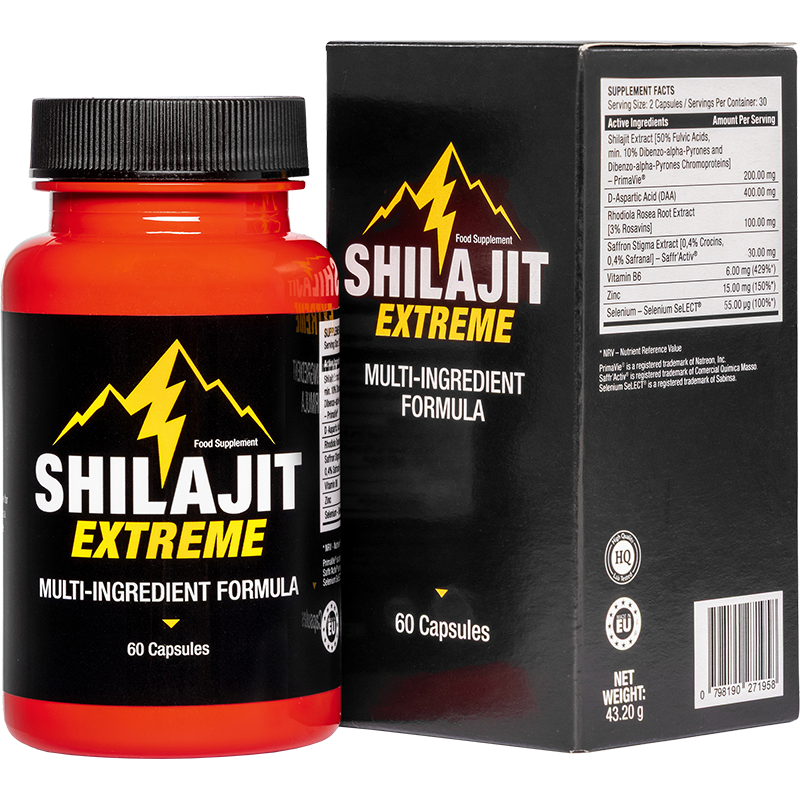
Our Recommendation — Shilajit Extreme
Score: 5.8/10 · Best for: men buying this bottle for its standardised shilajit extract, not its DAA — who will judge the shilajit on a blood test before and after 90 days Main caution: the 400 mg of DAA is about an eighth of the only dose ever to show an effect (about 3 g, in sedentary men only; trained-men trials at full dose found nothing), and the shilajit itself ships at 200 mg against the 500 mg used in the testosterone trial Fair trial: the 90-day experiment the evidence points to costs three bottles at $153.87 — and the maker publishes no money-back guarantee, so that spend is committed before the blood test answers
The Origin Story: Topo 2009, Read in Full
Every "+42%" on every label descends from one paper: Topo and colleagues, Reproductive Biology and Endocrinology, 2009. It deserves a full read, because it is neither fraudulent nor weak in the ways its critics sometimes claim — it is a small, short, specific study whose findings were then asked to carry an industry.
Who: healthy men aged 27–37 — 23 in the treatment group, 20 on placebo — described as not engaged in sport. Sedentary men, in other words, recruited (as the more careful secondary sources note) in a fertility-clinic context, with baseline testosterone in the lower part of the normal range: about 4.5 ng/mL, roughly 450 ng/dL. What: sodium D-aspartate, 3.12 g/day, taken in the morning, for 12 days. The product used (a commercial preparation, DADAVIT) also contained vitamin B6, B12 and folic acid — a detail the label industry omits, since "DAA +42%" is a cleaner story than "a four-ingredient preparation, +42%, in 23 men, for 12 days". Results: LH rose 33% (about 4.2 → 5.6 mIU/mL); total testosterone rose 42% (about 4.5 → 6.4 ng/mL — in the other common unit convention, ~15.6 → 22.2 nmol/L, still mid-normal range); 20 of the 23 men rose; levels were still above baseline three days after stopping; placebo was unchanged throughout.
The weaknesses, catalogued by the reviewers rather than invented by us: 23 treated men is a pilot-sized sample. Twelve days is a snapshot, not a course of use — nothing in Topo speaks to week 6, let alone month 6. The randomisation is unclearly reported. The men were recruited around a fertility clinic and started at the low end of normal — the demographic, as we will see, most favourable to a rise. Testosterone was measured as single morning values, in a hormone that pulses and swings. And the effect, expressed in absolute terms, moved an average man from lower-normal to mid-normal — meaningful if real and durable, neither of which a 12-day study can establish. None of this makes Topo wrong. It makes Topo a hypothesis with a p-value — the correct scientific status of a small positive pilot. What happened next is the market's doing, not the authors': the hypothesis was printed on labels as a conclusion, at one-eighth of the dose, for a different population, for indefinite durations. The sequel literature is the story of that conclusion being tested — and failing.
What "+42%" Actually Looks Like in Real Numbers
Percentages are the marketing unit; hormones are measured in absolute ones, and the translation is where the claim shrinks to size. Topo's men went from about 4.5 to about 6.4 ng/mL. In the units most American readers know, that is roughly 450 → 640 ng/dL — from the lower part of the normal range to the middle of it. In the SI units used in much of the world, ~15.6 → ~22.2 nmol/L. Three things follow. First, nobody crossed a clinical threshold: the average participant started low-normal and ended mid-normal, which is a description of ordinary variation as much as of pharmacology — testosterone swings by comparable fractions across a single day (highest in the morning, falling by evening), across a week of sleep debt, and across assay runs, which is why guidelines demand two separate low morning measurements before calling a man low at all. Second, symptoms track thresholds and individual baselines, not percentage deltas: a man does not feel "42% more" of a hormone whose absolute level moved within the range his own body visits between a good night's sleep and a bad one. Third, and most quietly damning for the label use: the trained men's trials started near 8 ng/mL (~800 ng/dL) — and a 42% rise from there would have put them near 11 ng/mL, above the normal range, a result no free-living feedback system was ever going to permit an amino acid to produce. The axis defends its set point; that is the entire physiology lesson of the nulls, and it is why the percentage only ever appeared where there was headroom below the set point to fill — briefly, in sedentary men, in one small trial.
There is also a confound hiding in the one positive trial that deserves its own paragraph, because it previews every blend problem in this article. Topo's preparation was not pure DAA: alongside the 3.12 g of sodium D-aspartate it contained vitamin B6, vitamin B12 and folic acid. The +42% therefore belongs, strictly, to a four-ingredient product — and while no one seriously proposes that ordinary B-vitamin doses explain a 42% testosterone rise in replete men, "strictly" is the operative word in evidence work: the trial cannot attribute its effect to DAA alone, and every label that prints "DAA +42%" is laundering a combination result into a single-ingredient claim. The industry learned the trick from its founding study. When the same pattern reappears in the 2025 fertility trial (DAA inseparable from ubiquinol and zinc), it is not a coincidence; it is the field's house style — and the reader's defence is the rule this page keeps repeating: a combination result grades the combination, never the ingredient you came to ask about.
The Trained-Men Sequel, Trial by Trial
The trial table further down is the skeleton of this record; the sequence deserves its narrative first, because each trial closed a door the previous one had left open. Willoughby & Leutholtz (2013) asked the obvious first question — does it work in men who lift? — with the design Topo lacked: resistance-trained men (at least a year of training), a supervised heavy training programme running alongside, 3 g/day for 28 days, and a wide endpoint net (total and free testosterone, LH, oestradiol, oestrone, body composition, 1RM strength). The answer was a clean sweep of nulls — with the single fascinating exception that D-aspartate oxidase activity rose, the body visibly adapting to clear the molecule it was being fed. One door closed: at the label-standard dose, in the label-standard customer, nothing. Melville (2015) then tested the escape hatch — maybe the dose was too low — by running 3 g against 6 g in men with at least two years of training. The 3 g arm repeated the null. The 6 g arm produced the literature's only significant testosterone movement in trained men: downwards, 12.5% total and 15.4% free in fourteen days. Second door closed, and a warning sign hung on it. Melville (2017) tested the remaining hatch — maybe it needs longer — with 6 g/day for twelve full weeks of supervised training: no hormonal difference at any measurement point, no strength difference, no lean-mass difference; the early dip had normalised, and no rise ever replaced it. Third door closed. The two athlete studies that followed (climbers at 3 g, boxers at altitude at 6 g) were smaller confirmations of a settled pattern rather than new questions. Read as a sequence, this is what a literature looks like when it is converging: each obvious objection funded, tested, and answered in the negative. What remains untested — the low-testosterone trial specified later in this article — remains untested for reasons of economics, not because the existing record encourages it.
The Complete Trial Record
| Trial | Population | Dose & duration | Testosterone result |
|---|---|---|---|
| Topo 2009 | 23 treated + 20 placebo; healthy men 27–37, sedentary, lower-normal baseline | 3.12 g/day, 12 days (preparation also contained B6, B12, folate) | +42% total T; LH +33%; 20/23 men rose |
| Willoughby & Leutholtz 2013 | 20 resistance-trained men (≥1 year training) + heavy training programme | 3 g/day, 28 days | No difference vs placebo — total T, free T, LH, estradiol/estrone, body composition, 1RM all unmoved |
| Melville 2015 (3 g arm) | 24 resistance-trained men (≥2 years) across arms | 3 g/day, 14 days | No effect |
| Melville 2015 (6 g arm) | Same trial, higher-dose arm | 6 g/day, 14 days | Total T −12.5%, free T −15.4% vs baseline (total T significantly reduced, p=0.03; free T vs placebo p=0.005); LH unchanged |
| Melville 2017 | 22 resistance-trained men + supervised training | 6 g/day, 12 weeks | No difference in total/free T, LH, estradiol, strength or lean mass at any point — the 2-week dip did not persist, and no rise ever appeared |
| Crewther 2019 | 16 climbers (trained) | 3 g/day, 2 weeks | Null |
| Płoszczyca 2024 | 16 boxers at altitude (trained) | 6 g/day, 14 days | Null |
Step back from the table and the pattern is unusually clean for this literature — most supplement ingredients offer a fog of mixed small trials, but DAA offers a sequence. One positive result, in sedentary men, at 12 days. Then, in trained men: null at 3 g over 4 weeks; null at 3 g over 2 weeks; negative at 6 g over 2 weeks; null at 6 g over 12 weeks; null in climbers; null in boxers. Six trained-men datasets, totalling well over a hundred participants, without a single positive testosterone finding between them. The 2023/2024 systematic review of testosterone-booster ingredients (27 ingredients assessed) found most failed against placebo — and DAA was not among the exceptions. A separate systematic review of DAA and body composition in trained men (doses 3–12 g, 2–12 weeks) found no effect. The reviewers who summarised the field in 2017 — results "inconsistent", evidence "still sparse" — were being polite about a record that has only hardened since.
How the Claim Propagated: from Pilot to Label Law
The decade after Topo is a case study in how a citation becomes a fact of commerce. The result was quotable in a single line ("increases testosterone by 42% in 12 days"), the ingredient was cheap and legal, and the claim attached to the most marketable hormone in men's health. Consumer-facing guides absorbed it with the softening clause that has followed DAA ever since — effective "when levels are low" — a phrase whose journey is worth tracing: it began as a fair observation about Topo's population, hardened into a consumer recommendation, and is now repeated by retail and content sites as though a low-T trial had established it. None has. Industry coverage travelled the opposite direction: trade and evidence-review outlets that revisited DAA as the nulls accumulated used words like "underwhelming", and the ingredient's centre of gravity shifted from standalone products (where the claim had to carry the whole label) into multi-ingredient blends, where a famous-but-failed ingredient can lend its citation to a panel and share the blame with nine others. That migration matters for the reader: DAA today is rarely the product; it is the product's bibliography. Judging it therefore means judging what work the citation is doing — usually, standing in for evidence the rest of the panel does not have either, which is the pattern our ingredients evidence guide documents across the category.
D-Aspartic Acid, L-Aspartic Acid and the Salt Question
A short chemistry sidebar, because labels exploit the confusion. Aspartic acid exists in two mirror-image forms. The L-form is an ordinary dietary amino acid: your body builds proteins with it, and you eat it in every protein food. The D-form is not used for protein; it appears in small amounts in neuroendocrine tissues, which is the entire basis of its signalling reputation. Supplements sell the D-form — almost always as sodium D-aspartate (the form Topo used) or as "D-aspartic acid" in blends, with calcium and magnesium aspartate variants also in commerce (Topo's own discussion compares the sodium salt's performance against earlier animal data on other aspartate forms). No human trial has ever compared the salts against each other for testosterone, so any label implying its particular salt is the proven one is decorating again. And the L-form's dietary innocence transfers nothing to the D-form: they are different molecules in the body's handling, however similar the names look on a panel. When a label writes simply "aspartic acid 400 mg" without the D- specified, it has told you even less than the audited products above did — which is its own answer about what the line is for.
The Dose-Response Problem: More Did Not Mean More
If DAA's story were merely "the effect didn't replicate", it would be an ordinary supplement disappointment. Melville 2015 made it stranger and more instructive: in the same trial, 3 g/day did nothing and 6 g/day reduced testosterone — total T down 12.5%, free T down 15.4% in fourteen days. The highest dose ever tested in trained men produced the literature's only negative result. Then Melville 2017 ran 6 g/day for twelve weeks and found... nothing — no dip persisting, no rise appearing, hormones indistinguishable from placebo throughout. The two results together sketch the likeliest physiology: a short-term disturbance that the system corrects. The correction mechanism has a name and a measurement behind it. Willoughby 2013 — the first trained-men null — found that while serum D-aspartate rose on supplementation (absorption was not the failure), so did the activity of D-aspartate oxidase, the enzyme that clears D-aspartate. The body, in other words, appears to treat a DAA load the way it treats any signal it intends to keep stable: it up-regulates the disposal pathway. That finding remains the leading explanation for the entire pattern — a brief rise in sedentary men before clearance adapts, nothing in trained men whose axes are already tightly regulated, and a transient overshoot downward when the dose doubles. For the buyer, the practical translation is brutal in its simplicity: there is no dose of DAA with evidence of a sustained testosterone rise in the men who buy it, and the dose-response curve points the wrong way at the top.
The Estradiol Footnote: the Worry the Data Retired
Gym folklore carries a second DAA claim, usually whispered as a warning: that raising testosterone via DAA must raise oestrogen with it, through aromatisation. The trials are unusually reassuring here — within their limits. Willoughby 2013 measured estradiol and estrone across 28 days at 3 g: no change. Melville 2017 measured estradiol across 12 weeks at 6 g: no increase — and the 12-week trial record includes a reported reduction of about 16% in one arm's readings, which no one should over-read either (small samples, secondary endpoints). The coherent picture: DAA does not appear to push the axis hard enough in trained men to move testosterone, and correspondingly does not move its downstream oestrogen either. The folklore warning and the folklore promise fail together, for the same underlying reason — in the population tested, the molecule's grip on the axis is simply weak. Men whose real concern is a diagnosed hormone problem should take the whole footnote as what it is: another reason this ingredient is not a lever on the system it advertises.
The Mechanism: Beautiful in Rats
DAA was never a silly idea, and this article's verdict is stronger for admitting it. D-aspartate is the mirror-image form of the ordinary amino acid L-aspartate; it is not used to build protein. The body makes it (via an enzyme, aspartate racemase) and concentrates it in exactly the tissues a testosterone hypothesis would want: hypothalamus, pituitary and testes. In rats, the pathway is demonstrated end to end — D-aspartate stimulates GnRH release from the hypothalamus, which drives LH from the pituitary, and inside the testes' Leydig cells it raises expression of StAR, the protein that ferries cholesterol into mitochondria, the rate-limiting step of testosterone synthesis; it also interacts with NMDA receptors along the axis. This is real, coherent endocrinology. It is also rodent endocrinology, plus a mechanistic plausibility that human axes — with their feedback loops and clearance enzymes, see above — have declined to honour in every trained-men test. The gap between "the pathway exists" and "swallowing the molecule raises the hormone in men" is where DAA lives. Rat mechanism plus one 12-day pilot was enough to launch a category; it was never enough to conclude one. When a label explains DAA to you with arrows — hypothalamus → pituitary → testes — it is showing you the rat diagram and omitting the human sequel, which is this page.
One more mechanistic detail sharpens the picture. In Melville 2015's 6 g arm, testosterone fell while LH — the pituitary signal that orders testosterone production — did not change. A centrally-driven effect (the rat pathway, hypothalamus → pituitary → testes) would be expected to show its signature in LH first; its absence points the other way, toward peripheral handling — clearance, conversion, feedback at the tissue level — rather than the axis being driven at all. That is a small observation with a large implication: even DAA's one negative result does not behave like the advertised mechanism operating in reverse. It behaves like a system metabolising an unusual amino-acid load and re-asserting its set point, which is the least marketable and most probable story in this entire file.
The Baseline Hypothesis: the Strongest Version of the Other Side
One serious defence of DAA remains, and fairness requires stating it at full strength, because it might even be true. Compare the populations: Topo's men started at ~4.5 ng/mL (lower-normal). Willoughby's trained men started around 8 ng/mL — high-normal, near the axis's ceiling. The hypothesis writes itself: DAA may raise testosterone only where there is headroom — in men starting low — and do nothing where the axis is already at its set point. A mainstream testing organisation's summary endorses exactly this reading: possibly effective in men with lower testosterone; larger, longer studies required. It is the same population pattern this site documented across the testosterone-booster category (small rises clustered in older, lower-baseline men; nulls in young, trained, normal men). Now the counterweight, which the defence's advocates quote less often: an open-label study of a DAA-containing blend in men with genuinely low testosterone found no rise — the very population the hypothesis predicts should respond. Open-label and a blend, so the counterweight is itself weak; but the state of play is then: a plausible hypothesis, one small positive pilot consistent with it, one weak study against it, and no trial that has ever tested it properly — DAA at full dose, in men with confirmed low testosterone, over months, against placebo. Until that trial exists, "works if you're low" is a marketing sentence wearing a hypothesis's clothes. And it has a corollary the labels never print: if you are low enough for the hypothesis to apply to you, you are low enough to need a diagnosis — low testosterone has causes, and treating the number with an unproven amino acid instead of finding them is the worst sequencing in men's health, as our Set I cluster argues in full.
DAA and Fertility: a Separate, Smaller File
DAA's other reputation — fertility — must not be allowed to borrow the testosterone argument in either direction, so it gets its own short audit. The early work (D'Aniello 2012) was an open series in sub-fertile men reporting improved sperm count and motility on DAA, with no placebo group: hypothesis-generating, nothing more. Open series in fertility are especially weak evidence, for a reason worth knowing: semen parameters are among the most variable measurements in medicine — count and motility swing substantially between samples from the same man weeks apart — so an uncontrolled before/after in a motivated, clinic-attending group will manufacture apparent improvements out of ordinary fluctuation plus regression to the mean, even if the intervention is inert. That is not an accusation against the authors; it is why the design exists at the bottom of the evidence ladder, and why the correct next step was a placebo-controlled trial of DAA alone. Thirteen years on, that trial has still not been run. The most recent entry is instead a 2025 randomised trial of DAA 2,660 mg combined with ubiquinol 200 mg and zinc 10 mg over three months — a combination product in which DAA's individual contribution cannot be isolated, and which reported no pregnancies. Two design morals repeat from the shilajit fertility file in our sperm-count article: sperm outcomes are surrogates, and combinations launder attribution. A man pursuing fertility should read that article's sequencing — workup first, adjuncts in their place — and treat DAA's fertility file as what it is: an open series and a combination trial, at doses (2.66 g) nearly seven times what the products below contain.
Muscle and Strength: the Nulls Nobody Quotes
Briefly, because the claim follows DAA into gym products: no DAA trial at any dose has shown a strength or lean-mass benefit. Willoughby 2013 measured 1RM strength and body composition across 28 days of training — no difference. Melville 2017 measured strength and lean mass across 12 weeks at 6 g/day — no difference at any point. The trained-men body-composition systematic review (3–12 g, 2–12 weeks) concluded no effect. Testosterone, even when it moves within the normal range, is not a muscle drug at these magnitudes — and in DAA's trained-men trials it did not move. Any DAA product sold on physique outcomes is selling two nulls for the price of one.
If You Are Topo's Population: the Sedentary Man's Actual Options
One reader deserves direct address before the verdict, because the entire DAA legend was built on men like him: sedentary, in his late twenties or thirties, testosterone drifting at the low end of normal, looking for a lever. The honest counsel is unglamorous and it is the strongest evidence in this entire article — none of it sold in a capsule. Men in that profile hold the largest known modifiable influences on their own testosterone: body weight (fat mass actively suppresses the axis, and losing it raises testosterone by amounts that dwarf anything in this file, durably), sleep (a single week of short sleep measurably lowers daytime testosterone in young men), and — the intervention Topo's men were selected for not doing — resistance training itself, which is also the only entry here that improves the life the testosterone was wanted for. Our guide to raising testosterone naturally works through that evidence with the same claim-by-claim discipline. The cruel arithmetic of the DAA market is that it sells hardest to the men with the most to gain from free interventions, on the basis of a trial conducted in men who had not yet tried any of them. If that reader finishes this page and spends his money on a gym membership and his evenings on sleep instead, this article will have produced the largest testosterone effect in the entire DAA literature.
What Trial Would Settle It? (and Why It Hasn't Been Run)
It is worth specifying the experiment that could still rescue DAA, because its absence is diagnostic. The fair test of the baseline hypothesis: recruit men with confirmed low testosterone (two morning measurements below range, the clinical standard), randomise them double-blind to 3.12 g/day of DAA or placebo for at least three to six months — long enough to outlast the oxidase adaptation and to measure what a user would actually experience — with testosterone, LH, symptoms and (for the fertility claim) semen parameters and partner pregnancies as endpoints, run by a group with no product to sell. Every element of that design is a sentence about why it does not exist. Confirmed-low-T recruitment is clinical work, expensive and slow. Six months of a cheap, unpatentable amino acid offers no sponsor a return. And the plausible outcomes are asymmetrically bad for the industry that would fund it: a null retires the citation; a positive would still be modest, within-range and symptom-unproven, competing against actual testosterone therapy for the same men. So the hypothesis survives precisely because testing it properly is nobody's business model — a pattern this site has met before (the shilajit field's best trial was funded by the extract's maker; most ingredients get nothing at all). The rational reader's stance in the meantime is not "disproven for all men forever". It is: unproven where it matters, disproven where it was tested, and priced on labels as though the opposite were true.
DAA Inside Blends: the Attribution Problem
One more structural point, because most readers will meet DAA inside a multi-ingredient panel rather than alone. A blend containing DAA plus tribulus, fenugreek, zinc and the rest cannot be evaluated ingredient-by-ingredient from its label — but it can be evaluated claim-by-claim against the ingredient literature, which is what our Set I cluster does for the category. The correct mental model: each ingredient contributes its own evidence grade, and a panel is only as strong as its best-evidenced lines at their actual doses. DAA's contribution, graded honestly, is: proven citation, disproven effect in trained men, untested at blend doses. When a blend's marketing leads with the DAA story — the 42%, the rat pathway, the 12 days — it is leading with its weakest evidence because it is its most dramatic, and that choice itself grades the rest of the panel's presentation. In both products audited below, to the makers' credit, DAA is not the lead claim; it is one line among several, dosed transparently. Transparency about a weak ingredient is still transparency — it is what makes this audit, and the reader's own version of it, possible on any panel.
Side Effects and the Safety Ceiling
DAA's safety file is thin in the way that matters: the trials are small and none runs beyond about three months, so the honest summary is "few problems seen in short studies; nothing known beyond them" rather than "safe". What has been reported: in Willoughby 2013, three men reported irritability, nervousness, fast heart rate or headache (catalogued via the 2017 review). Estradiol did not rise in the trials — one 12-week study reported it lower — which retires one common worry with the limited confidence the data allow. Very high doses produced oxidative-stress signs in some animal tissues, an animal-tier flag with no human dose translation. There is no official recommended dose for DAA — no regulator or guideline body has set one, because the evidence base does not support setting one — and any label's "recommended dose" is the manufacturer's invention, usually a rounding of Topo's 3.12 g or a fraction of it. The practical safety guidance follows from the evidence shape: if you take DAA at all, gram-level doses for longer than the ~3 months ever studied are uncharted water; the symptoms above are stop signals; and men on hormonal therapy or with hormone-sensitive conditions should treat an axis-active amino acid as a clinician conversation, not a grocery item.
How to Read Any DAA Label in Ninety Seconds
Everything in this article compresses into a five-point audit you can run on any panel, in the shop or on a product page. One — the dose. Find the milligrams. Below 3,120 mg/day, the product is not Topo's protocol, whatever its marketing implies; at the few-hundred-milligram level common in blends, it is not within sight of any human trial. Two — the form. "D-aspartic acid" or "sodium D-aspartate" at least names the molecule; bare "aspartic acid" or an unnamed "aspartate complex" names nothing testable. Three — the claim's population. If the copy speaks to lifters, athletes or "alpha" performance, it is addressing the population with six null trials; the one positive study was of sedentary men who had never trained. Four — the duration. "Results in as little as 12 days" quotes the shortest study as a promise; the 28-day and 12-week studies are the ones that resemble actual use, and they found nothing. Five — the citation's completeness. A label or page that prints "+42%" without dose, population and duration in the same breath has failed the only test that matters, and — this is the transferable skill — so has every other ingredient claim presented the same way. Run the five points on the whole panel, not just the DAA line, and you have replicated this site's entire method.
The 400 mg Audit: DAA in This Store's Own Formulas
Now the audit this article exists to land. D-aspartic acid appears at 400 mg/day in two products sold through this site: Shilajit Extreme (our score: 5.8/10), where it supports the shilajit headline, and Testolan (6.0/10), where it sits in a broader booster panel. Put the number against the record. Topo's positive dose: 3,120 mg. The trained-men nulls: 3,000–6,000 mg. The negative signal: 6,000 mg. The audited dose — 400 mg — is roughly 13% of the only positive trial's dose, and it has never been trialled in humans at all, in either direction. It cannot borrow Topo's result (wrong dose by a factor of eight, wrong population anyway), it cannot borrow the nulls' reassurance about efficacy questions, and its most accurate description is the one no label prints: a dose selected for the ingredient list, not from the literature. To be precise about what this does and doesn't damn: in both products, DAA is a supporting line, not the headline — Shilajit Extreme's case stands or falls on its PrimaVie® extract, audited in our testosterone article — and both makers at least print the amount, which is why this audit is possible at all. But a reader deciding what "contains D-aspartic acid" is worth now has the conversion: at 400 mg it is worth, on the human evidence, nothing measurable in any direction. It is label furniture. The ingredient's presence should move no purchase, in either product, by one cent. And because both makers print the amount openly, a buyer can run this audit on the label in the shop, in about ten seconds, without us — which is, in the end, the only sentence in this article that matters.
Why DAA Is Still on Labels: a Short Economics
If the record is this clear, why does the ingredient persist? Because the label claim was never the trials' to revoke. "*42% increase in as little as 12 days*" — a real label formulation in this category — cites Topo accurately enough to be defensible and incompletely enough to be fiction: the dose on the citing product is not Topo's, the population is not Topo's, the duration promise ("as little as 12 days") inverts the finding that longer trained-men trials found nothing. Retracting a claim costs a redesign and an admission; keeping it costs nothing, because no regulator pre-approves supplement label claims and the correction literature (this page, the sceptical reviews) reaches a fraction of the audience the label does. DAA is therefore best understood not as a failed ingredient but as a successful citation — a study so perfectly shaped for marketing (big percentage, short duration, hormone headline) that its sequels never stood a chance of catching it. The defence available to a reader is the one this article models: never accept a percentage without its dose, its population and its duration attached — and when a product cites a trial, ask whether the product is the trial: same dose, same people, same timeline. DAA fails that test more completely than any ingredient in this site's files, which is why it gets the longest article — and why this page, rather than any label, should be the last word a buyer consults on it.
Who Should Buy — and Who Should Skip
Because this is the site's DAA reference, the verdict covers the ingredient generally and then the two audited products. For DAA as an ingredient: there is no buyer profile the evidence supports. Trained men — the buyers — have six null-to-negative datasets. Sedentary men have one 12-day pilot from 2009. Men with low testosterone have a hypothesis contradicted by the one (weak) study that looked, and a diagnosis to pursue instead. Skip any product whose purchase case rests on its DAA content, at any dose. For the audited formulas: Shilajit Extreme should be bought, if at all, for its standardised shilajit extract with the reasoning in our shilajit articles — treating its 400 mg of DAA as what the evidence says it is: inert decoration at a price already counted in the 5.8/10. Testolan likewise stands on its whole panel, graded in its own review and in our Set I cluster — with the same instruction: let the DAA line carry no weight in your decision, because in the human literature, at one-eighth of the studied dose, it carries none.
A Stronger Alternative in This Category
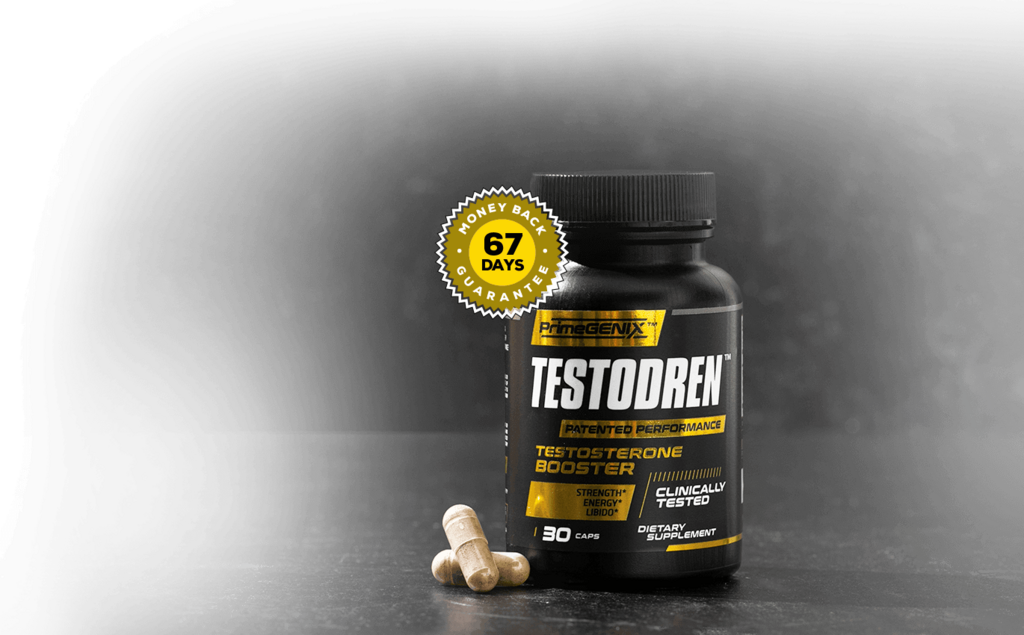
The stronger alternative: Testodren · 8.5/10For testosterone support, the stronger-scoring route in this catalogue is a single ingredient at a published 500 mg dose, with human studies behind the ingredient itself — not a blend sitting below the range its own trials used.
Our Recommendation — Shilajit Extreme
Score: 5.8/10 · Best for: men buying this bottle for its standardised shilajit extract, not its DAA — who will judge the shilajit on a blood test before and after 90 days Main caution: the 400 mg of DAA is about an eighth of the only dose ever to show an effect (about 3 g, in sedentary men only; trained-men trials at full dose found nothing), and the shilajit itself ships at 200 mg against the 500 mg used in the testosterone trial Fair trial: the 90-day experiment the evidence points to costs three bottles at $153.87 — and the maker publishes no money-back guarantee, so that spend is committed before the blood test answers
Frequently Asked Questions
Does D-aspartic acid actually boost testosterone?
In one 12-day trial of 23 sedentary men at 3.12 g/day, testosterone rose 42%. In every trial in resistance-trained men since — at 3 g and 6 g, over 2 to 12 weeks — it did not rise at all, and at 6 g over two weeks it fell significantly. The weight of the record says no for the population that buys it.
What is the recommended dose of D-aspartic acid?
There isn't one — no official body has set a recommended dose, because the evidence doesn't support one. Labels printing a "recommended dose" are citing Topo's 3.12 g/day (or a fraction of it) as if a 12-day pilot were a dosing guideline. It is not.
Does DAA work for bodybuilding or strength?
No trial has shown a strength or lean-mass benefit at any dose — including the 12-week, 6 g/day trial that measured both. The body-composition systematic review agrees: no effect.
Why do testosterone boosters still contain DAA?
Because Topo's "+42% in 12 days" is a perfect label citation and nothing forces its correction: the dose, population and duration on the label rarely match the trial's, and the six null sequels have no marketing department. Our ingredients evidence guide shows the same citation pattern across the category.
Is D-aspartic acid safe?
In small trials up to ~3 months, few problems were reported (isolated irritability, nervousness, fast heart rate, headache). Beyond ~3 months there is no human safety data at all, and no long-term record exists. "Safe" beyond the studied window is a claim nobody can currently make.
Does DAA raise LH?
In Topo's sedentary men, yes — LH rose 33% alongside testosterone over the 12 days. In the trained-men trials, LH did not change at 3 g or 6 g, including in the arm where testosterone fell — one of the clues that the human axis is not being driven by DAA the way the rat pathway predicts.
Is DAA a natural alternative to testosterone therapy?
No, and the framing is dangerous in both directions. Testosterone therapy is a prescription treatment for diagnosed deficiency, with monitoring; DAA is an amino acid whose best result is a 12-day within-range rise in sedentary men and whose trained-men record is null-to-negative. A man with symptoms and confirmed low levels needs the diagnostic pathway, not a supplement that borrows the therapy's vocabulary — our Set I cluster covers the decision properly.
How long does DAA take to work — and should it be cycled?
The only positive result appeared at 12 days, which spawned the category's cycling folklore (two weeks on, two weeks off). No trial has ever tested a cycling protocol, and the longer continuous trials — 28 days, 12 weeks — found no effect to cycle around. "It works in 12 days" and "it stops working after 12 days" are the same unsupported claim wearing two hats; the trained-men record supports neither, because it never found the effect in the first place.
The product I'm looking at has 400 mg of DAA. Is that enough?
Enough for what the trials found is the wrong frame — at 3,000–6,000 mg the trials found nothing (or worse) in trained men, and 400 mg itself has never been trialled in humans. Judge the product on its other ingredients and their doses; the DAA line, at any dose on any current label, should carry no weight in the decision.
Last reviewed: October 2026. This article is educational and is not medical advice.
