
- Quick Answer
- The Trial: Biswas 2010, Read With Its Design Attached
- The Audit Table
- Reading the Numbers: Count, Motility, Morphology, Volume
- Why 90 Days Is the Judgement Point: the Spermatogenesis Timeline
- The Dose-Match Honesty Box
- What Actually Improves Sperm: the Lifestyle-First Baseline
- How This Study Gets Reported Elsewhere
- The Mechanism Story: Oxidation and the Testes
- What a Proper Trial Would Need
- The Clinician Route, Stated Plainly
- Who Should Buy Shilajit Extreme — and Who Should Skip It
- Frequently Asked Questions
- Does shilajit increase sperm count?
- Does shilajit improve sperm motility?
- How long does shilajit take to improve sperm?
- My sperm count is normal. Will shilajit raise it further?
- Does shilajit increase semen volume?
- Can shilajit cure infertility?
- What dose did the sperm study use?
- Read This Next
Disclosure: This article contains affiliate links. If you buy through them, we may earn a commission at no extra cost to you. It never changes our conclusions.
Quick Answer
The entire human evidence for shilajit and sperm count is one study: Biswas 2010, in which 28 infertile men with low sperm counts completed 90 days of processed shilajit (100 mg twice daily after meals — 200 mg/day) and finished with total sperm count up 61.4%, motility improved and more normally-formed sperm than they started with. Those numbers are real measurements. What they cannot do is prove shilajit caused the improvement, because the study had no placebo group and no comparison group of any kind — every change is measured against the men's own baselines, in a population whose counts fluctuate naturally and who enrolled at a low point. Pregnancy, the outcome that actually matters, was not a trial endpoint. So the honest answer is: possibly, on weak evidence — the weakest design in this site's shilajit file, attached, confusingly, to the one dose a commercial product actually matches. Best for: men already working through a fertility workup who want a low-risk adjunct with a plausible mechanism and some human numbers behind it — not men using a supplement instead of that workup.
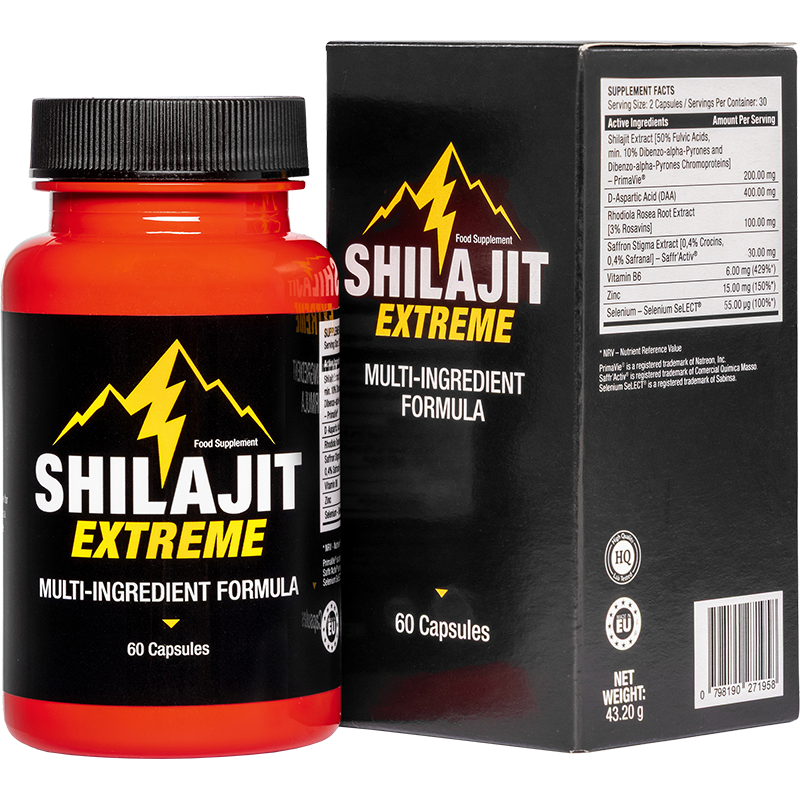
Our Recommendation — Shilajit Extreme
Score: 5.8/10 · Best for: men with a measured sperm problem who want the one claim where this product’s 200 mg a day exactly matches the studied dose — judged on a repeat semen analysis after 90-plus days, after a workup, not instead of one Main caution: that fertility study had no placebo group and was small — its numbers are a hypothesis, not proof — and pregnancy data does not exist at all Fair trial: three bottles at $153.87 cover the study’s own 90-day course — the maker publishes no money-back guarantee, so decide with the repeat analysis in hand, knowing the spend is not recoverable
The Trial: Biswas 2010, Read With Its Design Attached
Biswas and colleagues published the study in Andrologia in 2010 (PMID 20078516), explicitly as a clinical evaluation of the spermatogenic activity of processed shilajit in oligospermia — the clinical term for a low sperm count. The paper is not hidden or obscure; it is the most-cited fertility study in the shilajit literature, and its abstract states its design plainly. What happens to it afterwards — in roundups, brand blogs and marketplace copy — is the subject of this article as much as the study itself.
Start with the funnel, because most summaries get it wrong in the direction of size. Sixty infertile men were initially assessed — that is the number Healthline and several brand roundups report as the study's enrolment, and it is wrong. Of those assessed, 35 men who met the criterion (total sperm count under 20 million/mL) were enrolled. Of those, 28 completed the 90 days and form the dataset every percentage comes from. A study of 28 completers is not a scandal; fertility pilot studies are small. But a reader told "60 men" has been given a study more than twice the size of the one that exists, with the dropouts edited out — and the dropouts matter in an uncontrolled design, because men who feel they are not improving are the likeliest to leave, quietly flattering the average of those who remain.
The Audit Table
| Element | What the study did | What it means |
|---|---|---|
| Design | Open trial — no placebo group, no comparison group | Every result is "vs baseline". Attribution to shilajit is impossible from this design alone |
| Population funnel | 60 assessed → 35 enrolled (sperm count <20 million/mL) → 28 completed | Results describe 28 completers with clinically low counts — not 60 men, and not men with normal counts |
| Intervention | Processed shilajit 100 mg twice daily, after major meals = 200 mg/day, 90 days | The one shilajit trial whose dose matches a commercial product's — see the honesty box below |
| Count outcomes | "Spermia" +37.6%; total sperm count +61.4%; normal sperm count +18.9% (all vs baseline, completers) | Large percentage rises from a low base, in the direction the product is sold for — and exactly the pattern regression to the mean also produces |
| Motility | Motility improved +12.4–17.4% depending on the time interval measured | A range, not a point — summaries quoting a single motility figure have chosen one |
| Hormones | Serum testosterone +23.5% (P < 0.001); FSH +9.4% (P < 0.05) vs baseline | Frequently misattributed to the separate Pandit trial; here it is uncontrolled, like everything else in this study |
| Oxidative marker | Semen malondialdehyde (MDA) −18.7% | The study's most mechanistically interesting result — a fall in an oxidative-damage marker, still uncontrolled |
| Safety measures | Hepatic and renal profiles unaltered; shilajit constituents detected in semen by HPLC | Reassuring tolerability over 90 days at 200 mg/day in this group |
| What was NOT measured | Pregnancy rates and live births were not endpoints | The trial cannot tell any couple whether shilajit improves their chance of a baby — the only outcome that finally matters |
Reading the Numbers: Count, Motility, Morphology, Volume
Fertility marketing collapses four different measurements into the word "fertility". They are different numbers, with different evidence behind each, and the demand research for this article shows men ask about them separately — so, separately:
Total sperm count — the number of sperm in the ejaculate — is the headline: +61.4% against baseline among completers. Two disciplines apply. First, percentages on a low base inflate: these men enrolled below 20 million/mL, so a 61% rise can still leave a man in the clinically low range; the study reports relative change, not how many men crossed into normal territory. Second, an uncontrolled rise in a fluctuating measure, in men recruited at a low reading, is the textbook setup for regression to the mean — some of that 61.4% would be expected if the capsules had contained nothing at all, and the design cannot tell us how much. Motility — the share of sperm moving, and moving progressively — improved by 12.4–17.4% depending on the interval assessed; motility matters because a count of immobile sperm fertilises nothing, and this improvement, if real, is arguably more meaningful than the count. Morphology — normally-formed sperm — rose 18.9% on the "normal sperm count" measure. Volume — semen volume — is where the questions outrun the study: men ask about volume directly, and the honest label is weaker signal. Biswas measured count and normal forms, not volume as a headline outcome; any page presenting shilajit as proven to increase semen volume is extrapolating past its only source. The four measures also share one absence: none of them is a pregnancy. Counts are surrogates — reasonable, standard, clinically used surrogates — but couples do not take a sperm count home from the hospital, and the four conceptions mentioned in later case-report literature are anecdotes downstream of a trial, not trial outcomes.
Why 90 Days Is the Judgement Point: the Spermatogenesis Timeline
Sperm are not made on demand. Producing a mature sperm cell from a stem cell — spermatogenesis — takes roughly 74 days, followed by further maturation in transit. The sperm in a sample this week began their development more than two months ago, which is why every serious fertility intervention, shilajit included, is judged at about three months: a shorter trial measures sperm that predate the intervention. Biswas's 90-day duration fits this biology, and it sets the honest expectation for any buyer: nothing a supplement does can show up in a semen analysis next week, a one-month trial is a measurement of sperm made before the product arrived, and any review — personal or published — reporting transformed parameters inside a month is reporting noise, hope, or a different cause. The same biology disciplines the follow-up: if you test at all, test at 90-plus days, under comparable conditions (abstinence interval, illness and fever all move results), and compare like with like. Fevers alone can depress counts for a full cycle — one more uncontrolled variable that a placebo group exists to absorb, and this study didn't have one.
The Dose-Match Honesty Box
Here is the coincidence this article is obliged to state in full, in both directions. Biswas used 200 mg/day. The product this set accompanies, Shilajit Extreme (our score: 5.8/10), delivers 200 mg/day of PrimaVie® — making this the only claim in the entire shilajit file where the product's dose exactly matches the studied dose. That is a genuine point in the product's favour, and fertility is the one angle where its label needs no dose-gap apology. And the other half: the study it matches is the weakest in the file — open, uncontrolled, 28 completers, no pregnancy endpoint. A dose match to a strong trial (like the testosterone trial's 500 mg/day, where this product delivers 40%) is worth a great deal; a dose match to a weak trial transfers the weakness along with the dose. Both halves are true, and any version of this story that prints only one of them — the brand version (dose match!) or the sceptic's version (no placebo!) — is half an audit. The rest of the product's file is on its page: a fully printed panel, a purified branded extract with its standardisation stated (50% fulvic acids), a maker's batch-testing statement in its own words, prices of $56.99 single / $153.87 for three / $273.55 for six bottles, and no published money-back guarantee — which matters here, because a fair fertility trial of the product is a three-bottle, three-month commitment ($153.87) with no refund if the semen analysis doesn't move.
What Actually Improves Sperm: the Lifestyle-First Baseline
A fertility article that ends at a capsule has failed its readers, because the factors with the strongest effects on sperm parameters are mostly not purchasable. Heat is the classic one — sperm production runs best below core body temperature, and saunas, hot tubs, laptops and tight occupational heat exposure all measurably suppress it. Smoking suppresses count and motility; heavy alcohol use does the same; anabolic steroids — still startlingly common among men trying to conceive — can shut sperm production down almost entirely and take months to reverse. Obesity, sleep deprivation and several common medications all appear in the clinical literature. And the largest category of all is medical: varicocele (a treatable venous abnormality and the commonest correctable cause of male infertility), infection, hormonal disorders and genetic causes are findings of a workup, not a shopping trip. None of this is a reason to sneer at an adjunct with a plausible antioxidant mechanism and some uncontrolled human numbers. It is a reason to sequence correctly: the workup and the lifestyle audit first, because they find causes; the supplement, if at all, alongside — because at best it nudges surrogates. A man who spends three months on capsules before anyone examines him has spent the one resource fertility medicine cannot refund: time, his partner's included.
How This Study Gets Reported Elsewhere
Because Biswas is the only fertility study, its retellings are a clean sample of how supplement evidence degrades. A mainstream health publisher's shilajit page reports that "a group of 60 infertile men took shilajit" and that "more than 60 percent showed an increase in total sperm count" — a double error in two clauses: 60 was the number assessed (28 completed), and 61.4% was the mean increase in count, not the share of men who improved. A brand evidence roundup repeats "enrolled 60 men" while otherwise quoting the results accurately — and never flags the missing placebo group in its fertility section. A dedicated resin-brand article on this exact question gets the dose and the +61.4% right, then concludes the benefit is "not a myth anymore, backed by science" and the product "a safe and logical alternative" — an overclaim that an uncontrolled, 28-completer pilot cannot carry, whatever it found. Notice the pattern from our testosterone article repeating itself: every error enlarges the study, hardens the conclusion, or removes a caveat. The corrections are not pedantry. A couple deciding whether to spend three months and $150 on this hypothesis deserves the study that was actually run: small, uncontrolled, genuinely interesting, and incapable of bearing the word "proven".
The Mechanism Story: Oxidation and the Testes
If shilajit does anything for sperm, the most coherent proposed route runs through oxidative stress. Sperm are unusually vulnerable to it: their membranes are rich in the fatty acids oxidation attacks, and excess reactive oxygen species in semen are associated with poorer motility and DNA damage. Biswas's fall in semen MDA — malondialdehyde, a standard marker of lipid oxidation — of 18.7% is therefore the result in that paper a mechanism-minded reader circles: the oxidative marker moved in the direction the antioxidant story predicts, alongside the parameters it is supposed to protect. Fulvic acid and the dibenzo-α-pyrone family have antioxidant activity in laboratory systems, and shilajit constituents were detected in the men's semen by HPLC, establishing at least that the compounds reach the relevant compartment. Hold all of that at its proper weight: a plausible mechanism, a moved marker, and an uncontrolled design. Mechanism plus surrogate is how hypotheses earn a proper trial — it is not how they earn the word "works". The fertility field is littered with antioxidant supplements that looked exactly this promising at exactly this stage; the ones that survived placebo control are a short list, and shilajit has not yet faced the test that writes it.
What a Proper Trial Would Need
The standard is not exotic, and stating it shows how far short the current file falls: a placebo group (indistinguishable capsules, double-blind); men with confirmed low counts on two baseline analyses, because single readings fluctuate; at least 90 days, matched to the spermatogenesis cycle; pre-registered outcomes including the one that matters — pregnancy — tracked for a defined period after the intervention; and reporting of how many men crossed into the normal range, not only mean percentage change. A trial like that, at the studied 200 mg/day of a defined extract, would settle in one publication what a decade of uncontrolled enthusiasm has not. Until it exists, this page's grading stands: the most interesting weak evidence in the shilajit file.
The Clinician Route, Stated Plainly
Infertility is defined medically — twelve months of trying without conception (six months where the female partner is over 35) — and it is a workup for both partners, because male factors contribute to roughly half of cases. A semen analysis is cheap, non-invasive and decisive about where the problem sits; from it, the treatable causes above get found or excluded. Nothing in this article, and nothing in the shilajit literature, is a fertility treatment, and a supplement positioned otherwise would be overclaiming against a no-placebo pilot study. If you are reading this page early in the process, the most valuable sentence on it is this one: get the semen analysis first — it costs less than the three-bottle trial, and it tells you whether sperm count is even your problem.
Who Should Buy Shilajit Extreme — and Who Should Skip It
Buy it if you have a confirmed low-count picture (or are mid-workup), you understand that the supporting study is uncontrolled, and you want the one formulation whose 200 mg/day dose matches that study's, from a purified, standardised extract rather than raw resin — judged, as the biology requires, on a repeat semen analysis after 90-plus days, not on impressions. Skip it if you have not had a semen analysis (you would be treating an unmeasured problem), if a treatable cause like varicocele or steroid suppression is in play (fix the cause), if you are expecting pregnancy data (none exists), or if the three-month, guarantee-free cost does not fit — because a one-month trial measures sperm that predate the product.
Our Recommendation — Shilajit Extreme
Score: 5.8/10 · Best for: men with a measured sperm problem who want the one claim where this product’s 200 mg a day exactly matches the studied dose — judged on a repeat semen analysis after 90-plus days, after a workup, not instead of one Main caution: that fertility study had no placebo group and was small — its numbers are a hypothesis, not proof — and pregnancy data does not exist at all Fair trial: three bottles at $153.87 cover the study’s own 90-day course — the maker publishes no money-back guarantee, so decide with the repeat analysis in hand, knowing the spend is not recoverable
Frequently Asked Questions
Does shilajit increase sperm count?
One open trial says counts rose 61.4% over 90 days in men with low counts — with no placebo group, so the rise cannot be credited to shilajit rather than time, fluctuation and study participation. It is the best human evidence available for the claim, and it is weak. No placebo-controlled trial of shilajit for sperm count exists.
Does shilajit improve sperm motility?
In the same uncontrolled trial, motility improved 12.4–17.4% depending on the interval measured — against the men's own baselines, with no placebo group. Motility is arguably the more meaningful parameter (sperm that don't swim don't fertilise), which makes it the finding most worth testing properly — and, for now, equally unproven.
How long does shilajit take to improve sperm?
Sperm take roughly 74 days to produce and mature, so any real effect needs a full cycle to appear — the trial ran 90 days. Judge nothing before three months, and judge by a repeat semen analysis, not by feel.
My sperm count is normal. Will shilajit raise it further?
Unknown — and unstudied. The only trial enrolled men with clinically low counts, whose parameters had room (and statistical tendency) to rise. There is no human data in men with normal counts, and no physiological reason to assume a supplement pushes a healthy parameter above its regulated range. If your count is normal, this is not your product category.
Does shilajit increase semen volume?
Weaker signal: the trial measured sperm count, motility and normal forms — not volume as a headline outcome. Volume claims for shilajit extrapolate beyond the only human study.
Can shilajit cure infertility?
No. Nothing in its literature measured pregnancy or live birth, and infertility has medical causes — varicocele, infection, hormonal and genetic factors among them — that require a workup for both partners. A supplement is, at most, an adjunct alongside that process.
What dose did the sperm study use?
Processed shilajit 100 mg twice daily after meals — 200 mg/day — for 90 days. Unusually for this category, that is exactly the daily shilajit dose in the product reviewed on this site; the study's weakness is its design, not its dosing.
Last reviewed: October 2026. This article is educational and is not medical advice.
