
- Quick Answer
- What L-Carnitine Does in the Body
- What the Pooled Trials Actually Found
- How Much Did the Studies Actually Use?
- Tartrate vs Plain L-Carnitine
- When Do People Take It?
- Does It Work Without Exercise?
- Side Effects at Studied Doses
- Now Check a Real Label Against That Record
- Frequently Asked Questions
- How long before I should judge L-carnitine?
- Is the carnitine in food enough?
- What is EFSA's position on carnitine and fat metabolism?
- Read This Next
Disclosure: This article contains affiliate links. If you buy through them, we may earn a commission at no extra cost to you. It never changes our scores or conclusions.
Quick Answer
Pooled across randomised trials, L-carnitine produced about 1.2 to 1.3 kg more weight loss than placebo in adults taking it versus adults taking placebo. That effect was measured at studied doses of one to two grams a day, over eight to twenty-four weeks.
It is a real, small, dose-specific effect — the strongest honest sentence in the fat-burner ingredient literature, and still only about a kilogram. Most of those trials ran alongside diet and activity programmes, not as a stand-alone treatment tested in isolation.
Best for: readers who want the studied record separated from the "fat transporter" marketing story. Silvets, which lists L-carnitine tartrate with no amount published, scores 3.5/10 with us — its best-evidenced ingredient, at a dose nobody can check.
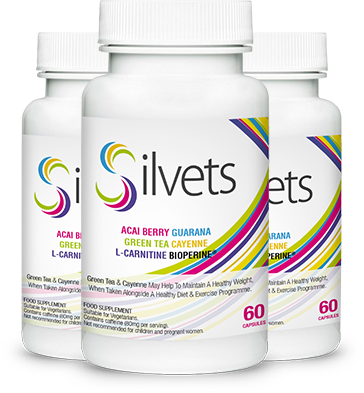
Our Recommendation — Silvets
Score: 3.5/10 · Best for: only the committed bargain-hunter who tolerates an unauditable label. Main caution: no amounts or directions published on the official store, and an advertised ingredient is missing from the formula. Fair trial: the three-bottle bundle at $39.33 a bottle — the six-pack maths only wins if you accept zero refund protection beyond ten days, unused.
What L-Carnitine Does in the Body
L-carnitine's genuine job is transport. It carries long-chain fatty acids across the inner mitochondrial membrane so they can be oxidised for energy. Without carnitine, that step of fat metabolism cannot proceed normally, which is why the body guards its supply carefully.
Healthy adults make their own carnitine from the amino acids lysine and methionine, in the liver and kidneys. The NIH Office of Dietary Supplements carnitine fact sheet confirms no recommended dietary allowance exists, because healthy adults synthesise enough to meet their daily needs without supplementation.
Food adds more, mainly from animal products. Red meat is the richest common source, with dairy, poultry, and fish contributing smaller amounts, while plant foods provide very little. Even so, a day's food provides milligrams — while the weight-loss trials, as we will see, used grams.
Here is where the marketing story detaches from the physiology. "Transports fat" describes a necessary shuttle operating inside cells that already have carnitine. It does not follow that swallowing extra carnitine makes a non-deficient adult burn extra fat, any more than extra delivery vans speed up a warehouse.
The bottleneck question is empirical, not logical. If healthy adults were short of carnitine, topping up might plausibly change fat oxidation. They are not short — synthesis plus diet covers requirements — so any supplement effect must be demonstrated in trials, not deduced from the mechanism.
Deficiency is the exception that proves the framing. People who genuinely cannot make or retain enough carnitine — certain genetic conditions, premature infants, some kidney patients — are treated medically, with diagnosed need and monitored doses. That clinical world has nothing in common with a fat-burner capsule sold to healthy adults.
That is the right frame for everything that follows. The mechanism is real, the deficiency story is generally false for healthy adults, and the entire case for supplementation rests on what randomised trials measured when they gave gram-level doses to overweight adults.
What the Pooled Trials Actually Found
Two independent poolings anchor the record, and they agree closely. Both combined randomised controlled trials in adults given L-carnitine versus adults given placebo or control treatment, with body weight as a primary measured outcome, mostly inside diet-context programmes.
Talenezhad et al. 2020, in Clinical Nutrition ESPEN, pooled thirty-seven randomised trials with 2,292 participants and found L-carnitine reduced body weight by 1.21 kg in adults receiving it compared with adults receiving control treatment. Fat mass also fell, while waist circumference did not change significantly.
The earlier pooling points the same way. In Pooyandjoo et al. 2016, in Obesity Reviews, adults receiving carnitine lost 1.33 kg more than adults receiving control treatment across nine trials with 911 participants, with a parallel small reduction in body mass index.
The NIH Office of Dietary Supplements carnitine fact sheet summarises the same literature at about 1.3 kg of additional loss in study participants receiving carnitine compared with participants receiving placebo, while noting that further research on carnitine for weight loss is warranted.
Read those three summaries together and a stable picture emerges. The effect is statistically real in pooled analysis, consistent in direction across poolings, and small in absolute terms — roughly a kilogram and a quarter, not a transformation, and not a substitute for a deficit.
Two cautions belong in the same breath. First, Pooyandjoo's analysis found the advantage shrank as trial duration lengthened in adults receiving carnitine versus control treatment, which argues against the effect compounding over time. Second, individual trials varied, and the pooled figure is an average, not a promise.
Population matters, too. The trials enrolled mostly adults with overweight or obesity, often with metabolic conditions, inside programmes that included dietary control. Extrapolating the pooled kilogram to a healthy-weight adult taking a capsule without changing anything else goes beyond anything the trials measured.
How Much Did the Studies Actually Use?
The studied range is the article's most transferable fact. The trials behind the pooled effect typically used one to two grams of L-carnitine a day, often split across the day, for eight to twenty-four weeks. Doses were stated, measured, and reported in every included trial.
Talenezhad's dose-response analysis gives that range a shape. The relationship between dose and weight reduction in adults receiving L-carnitine versus control treatment was non-linear, with the maximum effect at about two grams a day and no additional gain shown above that level.
Below the range, the record thins quickly. Trials using well under a gram a day contribute little to the pooled effect, and no trial supports expecting the pooled kilogram from a few hundred milligrams. The effect belongs to gram-level dosing, not to the ingredient's mere presence on a label.
Absorption explains part of that arithmetic. The NIH fact sheet puts absorption from oral supplements at roughly 14 to 18 out of every 100 milligrams swallowed in adults taking supplemental carnitine, compared with much higher absorption of carnitine obtained from food in the same adults.
Work the numbers once, concretely. At two grams swallowed, only a fraction reaches circulation, yet the trials still produced their small pooled effect at that swallowed dose. A capsule delivering an unknown — possibly far smaller — amount starts that already leaky arithmetic from an unknown point.
Duration completes the dose picture. Eight weeks is the short end of the credible judging window, and twelve weeks is the fairer test, matching the spans over which the pooled trials in adults versus control treatment actually measured their one-kilogram advantage.
A worked example fixes the scale. A 70 kg adult in the studied range swallows one to two grams a day for twelve weeks — roughly 84 to 168 grams of carnitine across the trial. That cumulative exposure, not a capsule's cameo appearance on a blend list, is what the pooled kilogram was bought with.
So the transferable standard is precise: one to two grams a day, split, for at least eight to twelve weeks, inside a diet context. Any product or article invoking the carnitine evidence should be measured against that standard — starting with whether its dose can be known at all.
Tartrate vs Plain L-Carnitine
Supplements sell carnitine in several forms, and the form on fat-burner labels is usually L-carnitine L-tartrate — carnitine bound to tartaric acid. The binding aids stability and manufacturing. It also dilutes the dose, and that dilution is arithmetic every buyer should be able to run.
L-carnitine L-tartrate delivers about 680 mg of carnitine base for every 1,000 mg of the tartrate salt. So a label stating 1,000 to 2,000 mg of the tartrate form is stating about 680 to 1,360 mg of actual carnitine — the rest is the tartrate carrier.
Set that against the studied range. To swallow one to two grams of carnitine base from the tartrate form, a buyer needs roughly 1,500 to 3,000 mg of L-carnitine L-tartrate a day. A label quoting the salt weight without that conversion flatters its own dose by nearly a third.
The tartrate form's own trial home is exercise recovery, where it has been studied for soreness and muscle-damage markers around training. That literature is separate from the weight-loss pooling, which drew on carnitine trials across forms at gram-level carnitine doses over weeks.
No form has a proven fat-loss advantage over another at an equal carnitine dose. Acetyl-L-carnitine is studied mainly for neurological questions, plain L-carnitine dominates the weight trials, and the tartrate salt is a delivery choice. Equal base dose is the only fair comparison between them.
The practical rule is therefore simple. Convert any tartrate figure to base carnitine before comparing it with the trial record, and treat any label that publishes no figure at all — the case we audit at this article's end — as unconvertible, and therefore unjudgeable.
When Do People Take It?
Timing is a minor variable next to dose and duration, but the trials and the muscle-uptake literature do have habits worth copying. Studied doses were usually split across the day rather than taken at once, which also improves gastrointestinal tolerance at gram-level intakes.
The muscle-uptake research generally paired carnitine with food, often carbohydrate, because insulin helps drive carnitine into muscle tissue. Trials in the weight pooling likewise dosed alongside meals inside their diet programmes, rather than in a fasted state before exercise.
Around-exercise timing is the popular alternative, borrowed from the tartrate recovery literature. Taking a dose before training matches how those recovery studies were run, but no trial shows pre-workout timing produces more weight loss than the same total daily dose taken with meals.
What timing cannot do is rescue dose. A perfectly timed few hundred milligrams remains a few hundred milligrams, well below the one-to-two-gram range in adults versus control treatment where the pooled effect was measured. Schedule is the last thing to optimise, not the first.
Consistency matters more than the clock. The pooled effect accumulated over eight to twenty-four weeks of daily dosing in the trial participants. A buyer judging carnitine fairly copies that pattern: same total dose, same rough timing, measured weekly, judged at twelve weeks.
Does It Work Without Exercise?
Plainly: the pooled effect was measured inside diet and activity contexts, and no trial supports a stand-alone effect in sedentary use. The kilogram-and-change advantage belongs to participants who were also dieting, moving, or both, under programme conditions the trials described.
This is the expectation most marketing removes. Trial participants receiving carnitine versus control treatment lost more weight than controls — while enrolled in structured programmes. Remove the programme and you have removed the setting in which the only positive evidence was ever generated.
Mechanistically, that should surprise nobody. Carnitine shuttles fatty acids toward oxidation; it does not create the energy demand that makes oxidation necessary. A calorie deficit, from food, activity, or both, creates that demand. The shuttle can, at best, serve a deficit that already exists.
So our answer to the sedentary-use question is an expectation, honestly set. Taking L-carnitine while changing nothing else has no trial support and no plausible route to the pooled figure. Pairing a verified dose with a real deficit is the only use the evidence describes.
Side Effects at Studied Doses
At studied doses, L-carnitine's side-effect record is comparatively mild, which is part of why its file is the panel's best. Most trial participants tolerated one to two grams a day, with gastrointestinal complaints the most common reason for discomfort or dropout.
The NIH fact sheet sets the clearer line higher up: taking three grams or more a day in adults consuming supplemental carnitine can cause nausea, vomiting, stomach cramps, and diarrhoea, along with a fishy body odour. That threshold sits above the studied weight-loss range, not inside it.
The odour effect has a mechanism worth understanding. Unabsorbed carnitine reaches gut bacteria, which convert it to trimethylamine, later oxidised in the liver to trimethylamine N-oxide — TMAO. The fishy smell is trimethylamine itself, and it is dose-related and reversible on stopping.
TMAO has a second, unresolved discussion attached. Gut-microbiome conversion of carnitine raises circulating TMAO, and observational studies have associated higher TMAO levels with cardiovascular events. Association is not causation, the research is contested, and we state it as unresolved — not as settled harm.
What can be said responsibly is narrower. The TMAO question is a reason to avoid megadosing carnitine for long periods without a purpose, and a reason researchers keep studying it. It is not, on current evidence, a reason to fear the studied one-to-two-gram range inside a time-limited trial.
Interactions deserve one plain sentence. Carnitine can interact with certain medicines, including some thyroid and anticoagulant treatments, which is why the NIH fact sheet advises discussing supplement use with a clinician. A full interaction check belongs to that conversation, not to a product page's reassurance.
Ordinary cautions still apply. Anyone who is pregnant, breastfeeding, managing kidney disease, or taking regular medication should treat any supplement as a clinician question first. And any dose that produces persistent cramps or diarrhoea has answered itself, whatever a label promises.
Now Check a Real Label Against That Record
Everything above can be carried to a shelf in one question: how much L-carnitine does a serving deliver? Silvets lists L-carnitine tartrate among its six ingredient names — and publishes no amount for it, or for any other ingredient on its panel.
The reader therefore cannot tell whether a serving delivers two grams, two hundred milligrams, or twenty milligrams. Each possibility carries a different verdict against the trial record, from plausibly studied, to far below it, to homeopathic in effect — and the label distinguishes none of them.
Our full audit of that label, including the missing amounts and the guarantee wording with no period stated, is in our Silvets review. The carnitine point stands alone, though: the entire pooled trial record in this article is unusable against a label that withholds the dose.
The directions gap compounds it. The maker does not publish how many capsules a day it intends buyers to take, stating only that sixty capsules are sold as a one-month supply. A buyer cannot reconstruct a daily dose from a supply description alone.
Contrast a disclosed label for a moment. A product printing "L-carnitine L-tartrate 2,000 mg" can be converted — about 1,360 mg of base — and judged, fairly, as below the range where the maximum pooled effect sat. Failing an audit is informative. Preventing one is not.
That asymmetry is the audit point of this whole ingredient series. L-carnitine is the rare fat-burner ingredient with a real, dose-specific record. A seller using it at a serious dose has every reason to print the number. Silence about the number is information, too.
Our Recommendation — Silvets
Score: 3.5/10 · Best for: only the committed bargain-hunter who tolerates an unauditable label. Main caution: no amounts or directions published on the official store, and an advertised ingredient is missing from the formula. Fair trial: the three-bottle bundle at $39.33 a bottle — the six-pack maths only wins if you accept zero refund protection beyond ten days, unused.
Frequently Asked Questions
How long before I should judge L-carnitine?
Use the trial window: eight weeks at minimum, twelve weeks for a fair test. The pooled effect in adults receiving carnitine versus control treatment accumulated over eight to twenty-four weeks of daily gram-level dosing inside diet programmes. Judging at two weeks measures water and enthusiasm, not the studied effect.
Is the carnitine in food enough?
For general health, yes — healthy adults synthesise what they need and food adds milligrams daily. For the trial effect, no: the studies used one to two grams a day, an order of magnitude beyond diet. Food carnitine and supplemental trial dosing are different exposures sharing a name.
What is EFSA's position on carnitine and fat metabolism?
The European Food Safety Authority's 2018 opinion on L-carnitine and normal lipid metabolism concluded that a cause-and-effect relationship had not been established in the general population. In plain terms, Europe's regulator would not authorise the fat-metabolism claim on the evidence submitted, even though pooled trials show a small weight effect.
Last reviewed: October 2026.
