
- Quick Answer
- What African Mango Actually Is
- Is African Mango the Same as Regular Mango?
- All Five Human Trials, in One Table
- Trial by Trial: What Each One Can and Cannot Tell You
- 2005 — the whole-seed study
- 2008 — the combination study that proves nothing about mango
- 2009 — the IGOB131 study behind every headline
- 2018 — the Mexican metabolic-syndrome study
- 2022 — the independent trial that found nothing
- What Independent Reviewers Concluded
- Were the African Mango Studies Retracted?
- How Is It Supposed to Work? The Mechanisms, Graded
- How Much Weight Can You Realistically Expect?
- How Long Does African Mango Take to Work?
- Does African Mango Burn Belly Fat?
- Can You Just Eat the Fruit?
- The Label Reality: Why "Studied Dose" Is Usually Unverifiable
- African Mango vs Proven Fibre Options
- Who Should Skip It
- How a Cameroon Soup Ingredient Became a Global Diet Product
- Inside the Seed: What the Nutrition Actually Looks Like
- Beyond Weight: the Blood Sugar and Cholesterol Claims
- Who Was Actually Studied — and Why It Matters for You
- African Mango in Combination Products: the Fairy-Dust Problem
- The Placebo Arms Are Data Too
- The Dropout Problem: How 18 People Change a Headline
- What a Definitive Trial Would Look Like
- If Your Goal Is Metabolic, Not Cosmetic
- A Stronger Alternative in This Category
- Frequently Asked Questions
- Does African mango really work for weight loss?
- How much weight can I expect to lose?
- How long does it take to work?
- Does African mango burn belly fat?
- Is African mango the same as mango?
- Were the African mango studies retracted?
- What is IGOB131, and is it better?
- Can I just eat African mango fruit instead?
- What do doctors and reviewers actually say about it?
- Can I combine it with other weight-loss supplements?
- Is it safe?
- The Economics: What a "Studied Month" Costs
- Taking It With Food, Medication and Other Supplements
- Regulatory Status: What Sellers May and May Not Claim
- How to Read the Next African Mango Headline
- Frequently Asked Questions (More)
- Does African mango suppress appetite?
- Does African mango help cholesterol?
- African mango vs glucomannan — which is better supported?
- Why do so many sites say it works?
- Why the Anecdotes Sound Better Than the Trials
- The SuppChecked Scorecard for This Ingredient
- Where the Literature Stands (October 2026)
- Our Verdict
- Read This Next
Disclosure: This article contains affiliate links. If you buy through them, we may earn a commission at no extra cost to you. It never changes our conclusions.
Quick Answer
African mango (Irvingia gabonensis) has been tested in five small human trials. The two famous ones — both from the same research group in Cameroon — reported strikingly large weight losses (up to −12.8 kg in 10 weeks on the patented extract IGOB131).
The later, independent trials did not reproduce anything like that: the most rigorous one, a 2022 Thai trial using the same 300 mg/day dose, found no significant difference from placebo. Meta-analyses pooling all five trials still show an average advantage over placebo, but four of the five trials are rated high risk of bias.
And the reviewers' verdict (2013, University of Exeter group) is that the effect is "unproven" and the ingredient "cannot be recommended as a weight loss aid". Our summary: there may be a modest real effect — most plausibly from the seed's soluble fibre — but the headline numbers are not trustworthy. And no specific product can be matched to the trials because commercial labels, including the one we review, rarely disclose the studied dose.
Our Recommendation — African Mango
Score: 5.0/10 · Best for: the curious who want to test this ingredient with open eyes — knowing the studied dose, the 10–12 week judgement window, and that the best independent trial found nothing. Main caution: the maker does not publish the extract amount per capsule, so a day’s dose cannot be matched to the 300 mg/day used in the trials; the large results come from the extract developer’s own research group, the one independent trial at the same dose (2022) found no difference from placebo, and no money-back guarantee is published. Fair trial: judge at 10–12 weeks on weight and waist trend; one bottle costs $49.99 plus $12 shipping — with an unverifiable dose and no guarantee, one bottle is the most the evidence justifies risking.
What African Mango Actually Is
Irvingia gabonensis is a West and Central African tree whose fruit looks like a mango and whose seed — the "dika nut" — is the part supplements use. In regional cooking the ground seed is a prized soup thickener (it gives ogbono soup its draw), valued for exactly the property supplement marketing borrows: it is rich in soluble fibre and mucilage. And the kernel is 63–69% fat by weight.
Three different things are sold under the "African mango" name. And trials have used two of them: the whole ground seed (the 2005 trial), a defatted seed extract standardised as the patented ingredient IGOB131 (the 2009 trial). And various commercial extracts of unstated composition (most shelf products). A study of one form does not validate another — a point the category's marketing works hard to blur, and one this article will keep returning to.
Is African Mango the Same as Regular Mango?
No — and the distinction is not pedantic, because the two fruits' useful parts are opposites. The regular mango (Mangifera indica) is eaten for its flesh; its seed is discarded and is not a fibre supplement. African mango's flesh is unremarkable and barely eaten outside its home range; its seed is the food and the supplement.
They are different species in different plant families that converged on a similar-looking fruit. Anything you have read about mango flesh — its vitamins, its enzymes, its sugar — does not transfer to an Irvingia seed extract capsule, and vice versa. When a product page shows a glossy mango fruit, it is showing you the packaging, not the ingredient.
All Five Human Trials, in One Table
| Trial | Who / where | Form & dose | Length | Reported result vs placebo |
|---|---|---|---|---|
| Ngondi 2005 | n=40 obese adults, Cameroon | Whole ground seed, 1.05 g three times daily (3.15 g/day), with a normocaloric diet | 1 month | Weight −5.26% vs −1.32%; cholesterol, LDL and triglycerides improved; HDL rose |
| Oben 2008 | n=72, Cameroon | Cissus quadrangularis ± Irvingia combination — Irvingia never tested alone | 10 weeks | Combination groups lost weight; cannot credit mango alone |
| Ngondi 2009 | 120 enrolled / 102 completed, Cameroon | IGOB131 extract, 150 mg twice daily before meals (300 mg/day) | 10 weeks | Weight −12.8 kg vs −0.7 kg; waist −16.19 cm vs −5.3 cm (as reported); body fat −6.3 vs −1.99 points |
| Méndez-Del Villar 2018 | n=24 metabolic syndrome, Mexico | Extract, 300 mg/day | 90 days | Waist 94.0 → 91.0 cm; triglycerides improved; small, single-centre |
| Nonsa-Ard 2022 | Adults with overweight, Thailand | Extract, 300 mg/day | 12 weeks | No significant difference from placebo on weight, body composition, metabolism or inflammation |
Everything else in this article is commentary on that table. Read it once and the shape of the problem is already visible: the effect size shrinks as the trials get further from the original laboratory — from −12.8 kg (2009, originator group) to −3 cm of waist (2018, Mexico) to nothing measurable (2022, Thailand). That gradient, not any single number, is the most informative datum in the African mango literature.
Trial by Trial: What Each One Can and Cannot Tell You
2005 — the whole-seed study
The first trial is also the most nutritionally plausible. Forty obese adults in Cameroon took 1.05 g of ground Irvingia seed three times a day for a month, alongside a normal-calorie diet. And lost 5.26% of body weight versus 1.32% on placebo, with significant improvements in total cholesterol, LDL and triglycerides and a rise in HDL.
The authors framed the seed as a fibre source, and at 3.15 g/day of a fibre-rich seed, a real (if modest) satiety effect is believable. The limits are equally clear: 40 people, one month, a single centre, and an imbalanced randomisation (28 in the Irvingia arm, 12 on placebo). It supports "worth studying properly"; it cannot support the marketing built on it.
2008 — the combination study that proves nothing about mango
The 2008 trial from the same group tested Cissus quadrangularis alone and combined with Irvingia. Because no arm took Irvingia by itself, this trial cannot attribute any effect to African mango — yet it is routinely counted in "five studies show…" marketing lists. We include it in the table precisely so you can watch for it: any source citing five trials without flagging this one's design is selling, not summarising.
2009 — the IGOB131 study behind every headline
The 2009 trial is the category's founding document: 102 completers, 150 mg of the patented IGOB131 extract twice daily before meals for 10 weeks. And results that would be remarkable for a prescription drug — 12.8 kg lost versus 0.7 kg on placebo, with parallel improvements in waist, body fat, cholesterol, glucose, leptin, adiponectin and CRP.
Three disclosures belong next to those numbers wherever they are quoted. First, the trial was partly funded by the company supplying the extract — the patent holder for IGOB131. Second, the paper's own numbers contain an internal inconsistency: the waist values it reports at start and end (105.1 → 88.1 cm) imply a 17.0 cm change, while its stated change is 16.19 cm — small.
But the kind of slip careful reporting should not contain. And secondary sites have garbled the figure further (you will see "6.7 cm" and even "6.7 inches" elsewhere; both are corruptions).
Third, 18 of 120 enrolled participants dropped out, and the per-protocol analysis that produced the famous figure is the most favourable way to present the data. None of this proves the result false. All of it means the result needs independent replication before it deserves belief — which is what the next two trials were for.
2018 — the Mexican metabolic-syndrome study
An independent group in Mexico gave 300 mg/day for 90 days to 24 people with metabolic syndrome and reported a 3 cm waist reduction and triglyceride improvement. This is the shape of a plausible modest effect: real people, a relevant population, unspectacular numbers. It is also tiny (24 participants) and single-centre — hypothesis-confirming, not practice-changing.
2022 — the independent trial that found nothing
The Thai trial is the most important one for a buyer, precisely because its result is boring. Independent of the Cameroon group, using the same 300 mg/day dose for 12 weeks, it found no significant advantage over placebo for weight, body composition, metabolic markers or inflammation — only plasma vitamin C and adiponectin nudged upward.
(One nuance the sceptical write-ups often omit: this trial was itself funded by a supplement company — independence from the original lab is not the same as freedom from industry money, which makes its null result more notable, not less.) When the best-designed, most independent test of a supplement returns null, the honest prior for the next product on the shelf is "unproven". And the burden of proof sits with the seller.
What Independent Reviewers Concluded
Three assessments by people with nothing to sell frame the literature. The 2013 systematic review (Onakpoya and colleagues, the Exeter group known for rigorous supplement scepticism) found three trials and 208 participants, all with major reporting flaws.
And concluded the effect is unproven and Irvingia cannot be recommended as a weight-loss aid. The 2020 meta-analysis (Lee and colleagues) pooled five trials and did find average advantages — roughly 9% weight and 8% waist versus placebo — but rated four of the five trials at high risk of bias.
And noted the single low-risk-of-bias trial did not reproduce the headline effect: the pooled number is carried by the weakest studies. The NIH Office of Dietary Supplements fact sheet summarises drily that the trials are small, short and all by the same authors, and that safety has not been rigorously studied.
If you read only the meta-analysis headline ("works!") or only the Exeter verdict ("cannot be recommended"), you have half the picture. together they describe a literature whose average is positive and whose quality is poor — the classic profile of an effect that shrinks toward zero as methods improve, exactly as the 2022 trial suggests.
Were the African Mango Studies Retracted?
No — and because this claim circulates, it deserves a boxed answer. As of October 2026, neither the 2005 nor the 2009 trial has been retracted. And neither carries an expression of concern (we checked the journal and PubMed records for this article). What exists is criticism: methodological reviews rating the trials at high risk of bias, the internal inconsistency in the 2009 waist figures, and a null independent replication.
Those are serious scientific problems, but they are different from retraction, which is a formal finding of misconduct or fatal error. Anyone telling you "the studies were retracted" is overstating the case against the ingredient, just as anyone quoting −12.8 kg without the funding disclosure is overstating the case for it. Both errors serve someone's sales.
How Is It Supposed to Work? The Mechanisms, Graded
Soluble fibre and fullness — plausible. The seed is genuinely rich in soluble fibre and mucilage (it thickens soup; that is fibre at work). Fibre slows gastric emptying and adds bulk, and fibre's modest satiety effects are among the most replicated findings in nutrition.
At the 2005 trial's 3.15 g/day of whole seed, this mechanism was actually dosed. Fat-cell signalling (PPAR-gamma) — test-tube. The claim that Irvingia compounds suppress fat-cell development via PPAR-gamma comes from cell and animal work at extract concentrations a capsule does not obviously reproduce in human fat tissue.
Leptin and adiponectin "correction" — downstream, not a mechanism. The 2009 trial's leptin fall and adiponectin rise are what weight loss itself does to those hormones; citing them as the cause of the weight loss reverses the arrow.
Amylase inhibition / slower carb absorption — weakly supported. Real for some seed extracts in vitro; unquantified in humans at label doses. Net: one plausible mechanism (fibre), dosed properly only in the whole-seed trial; the hormonal story is marketing wearing a lab coat.
How Much Weight Can You Realistically Expect?
Set the two originator trials aside as un-replicated outliers and the realistic envelope looks like this: the Mexican trial's ~3 cm of waist over 90 days, the meta-analysis's caution that its pooled figure is bias-carried, and the Thai trial's zero.
An honest planning expectation for a 300 mg/day extract taken for 10–12 weeks alongside no other change is somewhere between nothing and a few pounds, with nothing a perfectly respectable result — in other words, an effect at or below what the same money spent on a proven soluble-fibre supplement (or the same effort spent on the fibre-rich diet itself) would deliver, with far less certainty.
Anyone projecting double-digit kilograms is quoting a single, funded, internally inconsistent trial from 2009 against the run of everything published since.
How Long Does African Mango Take to Work?
The trials ran one month (2005), ten weeks (2009, 2008) and twelve weeks (2022) — so the honest trial-based answer is that any real effect was assessed over 4–12 weeks, with the pre-meal timing protocol (30–60 minutes before lunch and dinner) coming from the 2009 study.
Sellers promising visible change in days are describing the diuretic-and-hope genre, not this ingredient. Equally, "give it six months" exceeds every trial ever run: if 12 weeks at a studied dose has produced nothing, the evidence offers no reason to expect week 20 to differ.
Judge any trial of this ingredient at the 10–12 week mark, on waist and weight trends. And let it go if the trend is flat — that is the discipline the 2022 participants' data argues for. The dose question — including why labels so rarely let you reproduce a studied dose — is its own article: African mango dosage, studied vs sold.
Does African Mango Burn Belly Fat?
No supplement does, and this one is no exception: there is no mechanism by which an oral fibre or seed extract selectively removes visceral fat. And no trial measured belly fat as a distinct outcome. What the trials measured was waist circumference, which falls when total weight falls (and when bowel contents and bloating fall).
The 2009 trial's waist change — even taken at face value — tracks its total weight change; it is not evidence of targeting. If belly fat is the actual goal, the honest tools are the total-fat-loss tools (sustained deficit, protein, resistance training, sleep). And anything — capsule or cleanse — promising to bypass them is misdescribing physiology. Our belly-fat accounting for the cleanse genre applies here word for word.
Can You Just Eat the Fruit?
Eating the fruit is a dead end for this purpose, for a simple anatomical reason: the trials used the seed. And the seed of the eating fruit is not what is in the bowl.
The flesh of Irvingia is a minor regional food with no weight-loss data. the seed is consumed as ground dika in soups — which is, incidentally, the closest food-form equivalent of the 2005 trial's whole-seed preparation, embedded in a meal rather than a capsule.
If you have access to dika nut as a cooking ingredient, you own the most traditional and most trial-adjacent form of this food — as an ingredient in a fibre-rich diet, not as a medicine. For everyone else, "just eat mangoes" (the regular kind) delivers a nutritious fruit and zero Irvingia seed; the two are different species, as the identity section above explains.
The Label Reality: Why "Studied Dose" Is Usually Unverifiable
Here is the buyer problem no competitor article names directly. The studied extract dose is 300 mg/day of a defined preparation (IGOB131). Commercial products overwhelmingly do not tell you whether their extract is that preparation, an equivalent, or something else entirely — and a striking number do not even print the amount of Irvingia per capsule.
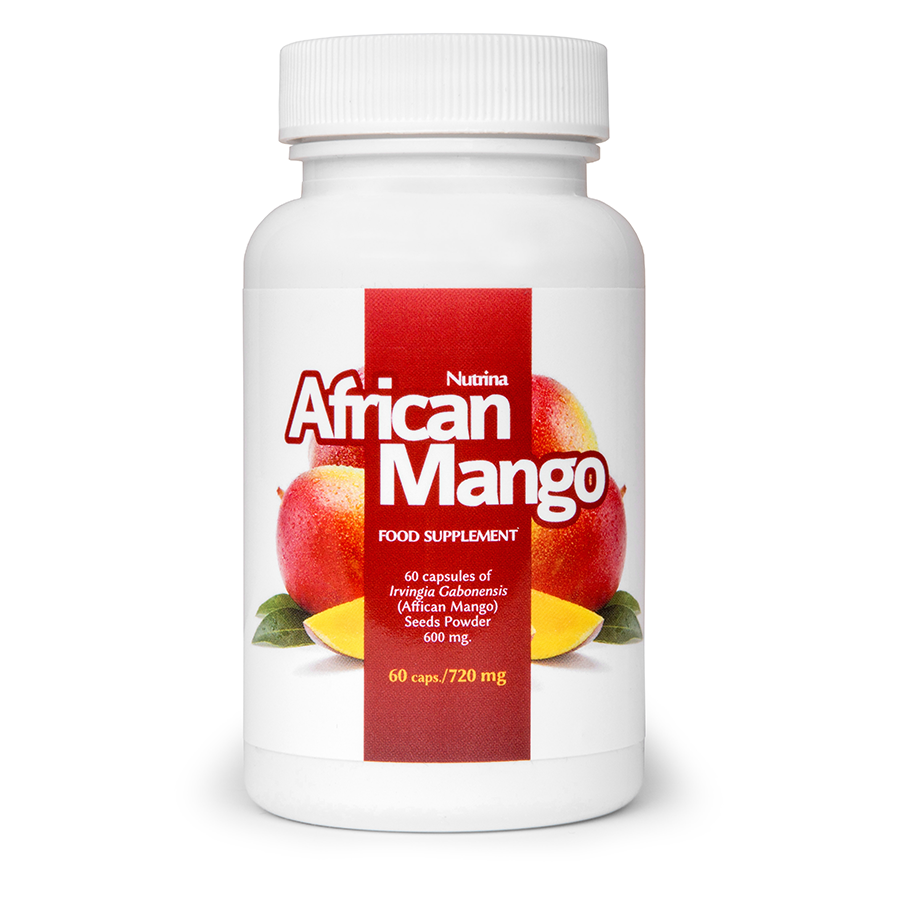
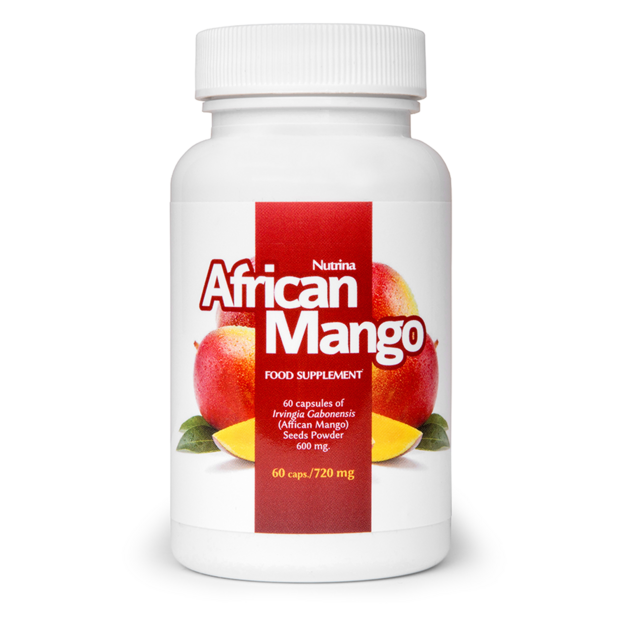
We know, because the product this site reviews is one of them: Nutrina's African Mango names its single ingredient (Irvingia gabonensis extract) but publishes neither the per-capsule amount nor any standardisation — so a buyer cannot establish that a day's capsules deliver 300 mg, 30 mg, or any other figure, of anything defined.
That single fact is most of why we score it 5.0/10 despite the genuinely interesting literature behind its ingredient: an unverifiable dose of an unproven ingredient at $49.99 with no money-back guarantee. The wider market is worse, not better — our dosage article audits the standard tricks, including "18,000 mg" labels that dissolve into 500 mg of extract on inspection.
African Mango vs Proven Fibre Options
The fairest comparison for the plausible mechanism is other soluble fibres. Glucomannan (konjac fibre) has multiple trials and an authorised European weight-loss claim at 3 g/day in divided pre-meal doses within a calorie-controlled diet — modest, regulated, and cheap. Psyllium has deep evidence for regularity and cholesterol, with mild satiety effects. Against those, Irvingia's fibre case rests on one 40-person month of whole seed.
If the fibre mechanism is what you believe in, the rational purchase order is: dietary fibre first, glucomannan or psyllium second. And African mango a distant third for the curious — at a price that reflects its evidence, which $49.99 for an unlabelled dose does not. What African mango uniquely offers is the hormonal-mechanism story; what it uniquely lacks is a trustworthy demonstration of it.
Who Should Skip It
The full safety picture is in our side-effects and safety guide. the short version: the trials' reported effects were mild (headache, sleep difficulty, flatulence — at similar rates on placebo). But the trials were small and short, so long-term safety is genuinely unknown.
People managing diabetes should treat the glucose effects seen in trials as a reason for medical supervision, not a bonus. anyone with kidney disease should know the one serious case report in the literature. and pregnant or breastfeeding women have no safety data at all. "Natural seed, eaten for centuries as food" is a real point in its favour as a food — it does not extend automatically to concentrated extracts taken daily at supplement doses.
How a Cameroon Soup Ingredient Became a Global Diet Product
The hype arc is worth knowing, because it explains the gap between the ingredient's fame and its evidence. The two Cameroon trials (2005, 2009) sat in a small lipid journal attracting little attention until around 2010, when American daytime television and the diet-blog ecosystem discovered the 2009 paper's headline — double-digit weight loss, no diet change — and converted it into a product genre within months.
The pattern is a standard one in supplement economics: a single striking result from a small trial, a patented extract with a trade name (IGOB131) that gives marketers a scientific-sounding asset.
And a media environment that quotes the result without the funding line. What did not happen in the following decade is equally diagnostic: no large independent trial was funded, no regulator endorsed a claim. And the follow-up literature that did appear (2018, 2022) came from outside the original group and shrank the effect toward zero.
Ingredients with real, robust effects accumulate confirmation over a decade; African mango accumulated caveats. That trajectory — fame first, scrutiny later, shrinkage throughout — is the single most reliable prior a buyer can carry into any "breakthrough" ingredient. And this one is a textbook exhibit.
Inside the Seed: What the Nutrition Actually Looks Like
The dika kernel is an energy-dense traditional food, not a diet food in itself: roughly 63–69% fat (predominantly saturated and monounsaturated fatty acids typical of tropical seed oils), meaningful protein.
And the component the trials lean on — a soluble-fibre and mucilage fraction that hydrates into a gel (the same property that draws ogbono soup into ribbons). The defatted extracts used in supplements remove most of that fat and concentrate the fibre and polyphenol fractions; IGOB131 is one such preparation. Two consequences follow for readers of labels.
First, "African mango" on a whole-seed powder and on a defatted extract are materially different intakes — calories included. Second, the phenolic compounds often listed in marketing (the seed contains various polyphenols) are present at food-level amounts with no established human dosing — their presence is a fact about the seed, not a demonstrated effect in you.
The nutritional bottom line: as a food, dika is a legitimate, nutrient-dense traditional ingredient. as an extract, you are buying concentrated fibre and hope, in proportions the label usually declines to state.
Beyond Weight: the Blood Sugar and Cholesterol Claims
Because the trials measured metabolic markers, African mango is also marketed for cholesterol and blood sugar — and here the data pattern repeats in miniature. In 2005, total cholesterol, LDL and triglycerides fell significantly and HDL rose, on 3.15 g/day of whole seed in 40 people for one month.
In 2009, the IGOB131 group showed large improvements across total cholesterol (−39.8 mg/dL), LDL and fasting glucose (−19.3 mg/dL) against minimal placebo changes. In 2018, triglycerides improved in 24 metabolic-syndrome patients. And in 2022 — the independent trial — no significant metabolic differences appeared.
The fair summary mirrors the weight story: consistent signals from the originator group, a whisper from Mexico, silence from Thailand. There is a fibre-plausible mechanism for modest cholesterol effects (soluble fibre binds bile acids. this is established for fibres as a class), which makes "may modestly help cholesterol as a fibre" the most defensible metabolic claim — and makes glucose claims the most dangerous to repeat casually, because a real glucose effect, if it existed at label doses, would be a drug-like action requiring supervision alongside diabetes medication.
We treat that interaction seriously in the safety guide; marketing that celebrates the glucose numbers while omitting the supervision point is quoting the trial selectively.
Who Was Actually Studied — and Why It Matters for You
Generalisability is the quiet weakness of this literature. The positive trials studied Cameroonian adults — the 2005 group explicitly on a normocaloric local diet — whose baseline diets, fibre intakes and gut microbiomes differ substantially from a North American or European supplement buyer's. A fibre intervention tested in a population already eating a traditional high-fibre diet, then sold to a low-fibre Western consumer, is not the same intervention.
Add the demographic narrowness (small samples, single centres, short durations, and in 2009 a per-protocol analysis after 15% dropout) and the correct ex-portability rating is low. None of this is a criticism of the researchers' setting — it is the normal state of early-stage supplement science.
It becomes a problem only at the point of sale, where "clinically studied" is printed without "in 40 Cameroonian adults for one month" ever appearing beside it. When you see the claim, supply the footnote yourself; this article's trial table is built to make that easy.
African Mango in Combination Products: the Fairy-Dust Problem
A large share of shelf products are not African mango supplements at all but blends — mango extract sprinkled into a formula with green tea, garcinia, raspberry ketones or caffeine, at doses chosen for the label rather than the literature.
This creates three problems the single-ingredient trials cannot solve. First, attribution: any effect (or side effect) cannot be assigned to the mango. Second, dosing: blend economics push each ingredient below its studied amount — the "fairy dusting" pattern our dosage audit documents.
Third, safety stacking: caffeine-bearing blends convert a non-stimulant seed into a stimulant product without changing the front label's implication (a point the safety guide covers for garcinia combinations in particular). If the trials interest you at all, the product category that respects them is a single-ingredient extract with a printed dose — a description that fits remarkably few products. And not, on its label evidence, the one this site reviews.
The Placebo Arms Are Data Too
A trial has two stories, and marketing quotes only one. Look at the placebo arms across this literature and a second pattern emerges. In 2005, the placebo group — eating a prescribed normocaloric diet, taking inert capsules — lost 1.32% of body weight in a month: the measurable value of structure, attention and a diet sheet, with no active ingredient at all.
In 2009, the placebo group lost just 0.7 kg in ten weeks, a strikingly flat line for overweight adults enrolled in a weight trial. And one that widens the famous gap from the other side: the −12.8 vs −0.7 contrast is as much a story about an unusually inert placebo arm as an unusually potent treatment arm.
In 2022, treatment and placebo tracked together — the signature of two groups experiencing the same trial effect and no drug effect. Reading placebo arms is the fastest quality check in this genre: a supplement trial whose placebo group mysteriously underperforms the laws of dieting arithmetic deserves the suspicion this one receives.
And a trial where the arms converge is telling you the truth even when its abstract is polite about it. The five-trial table at the top of this article prints both arms for exactly this reason.
The Dropout Problem: How 18 People Change a Headline
One statistical idea unlocks most of the scepticism in this literature, and it is worth learning on this example because it applies to every supplement trial you will ever read. The 2009 trial enrolled 120 people; 102 finished. The famous −12.8 kg is calculated on the finishers — a per-protocol analysis.
The alternative, intention-to-treat, counts everyone enrolled, carrying forward or modelling the data of those who left. Trials lose people non-randomly: participants who are not losing weight, or who feel unwell, quit at higher rates — one competitor's close reading of this literature notes dropouts who left precisely because they were not losing weight fast enough.
Deleting those people from the average mechanically inflates it, in whichever arm they sat, and with 15% of the sample gone the inflation is not a rounding issue. Rigorous modern trials prespecify intention-to-treat as primary for exactly this reason.
And the risk-of-bias tools used by the 2020 meta-analysis penalise its absence — a large part of why four of these five trials rate "high risk". When you read "participants lost X kg", the follow-up question is always: out of how many who started? If the article cannot tell you, it has not read the paper it is quoting.
What a Definitive Trial Would Look Like
It is fair to ask what would settle this — because the answer shows how far the current literature is from settling anything.
A decisive Irvingia trial would be preregistered (hypotheses and analysis fixed before data collection, so outcomes cannot be cherry-picked afterwards); independently funded, with the extract supplied but the sponsor blinded out of analysis. powered properly — several hundred participants, not dozens, to detect a realistic 2–3 kg effect rather than a miraculous 12. run for at least six months with a follow-up, because weight interventions live or die on maintenance; analysed by intention-to-treat; and conducted in the population the products are sold to, on their actual diets.
Every element on that list is standard in drug development and absent here. Until such a trial exists, "unproven" is not a debating position but a description — and the burden of funding that trial sits with an industry that has had fifteen years and a global market, and has chosen marketing spend instead. Absence of evidence after that long, at that scale, becomes its own kind of evidence.
If Your Goal Is Metabolic, Not Cosmetic
A distinct group of readers arrives at this ingredient through blood work rather than mirrors — borderline cholesterol, creeping fasting glucose, a metabolic-syndrome label like the 2018 trial's population. For that reader the calculus differs in one important way: the opportunity cost is not a wasted $50, it is delayed effective care.
The interventions with outcome-level evidence for metabolic risk are unglamorous and known — dietary pattern change, fibre at dietary scale (25–38 g/day, dwarfing any capsule), activity, weight loss by any sustainable route, and medication where thresholds are met.
An Irvingia capsule can ride along inside that programme harmlessly for most people, with the diabetes-medication caution from the safety guide observed. What it cannot do is substitute for the programme while borrowing the programme's expected results. If a seller's page implies your lipids or glucose are a capsule away from handled, it has crossed from optimism into something worse — and the 2022 trial's flat metabolic lines are the data to remember.
A Stronger Alternative in This Category
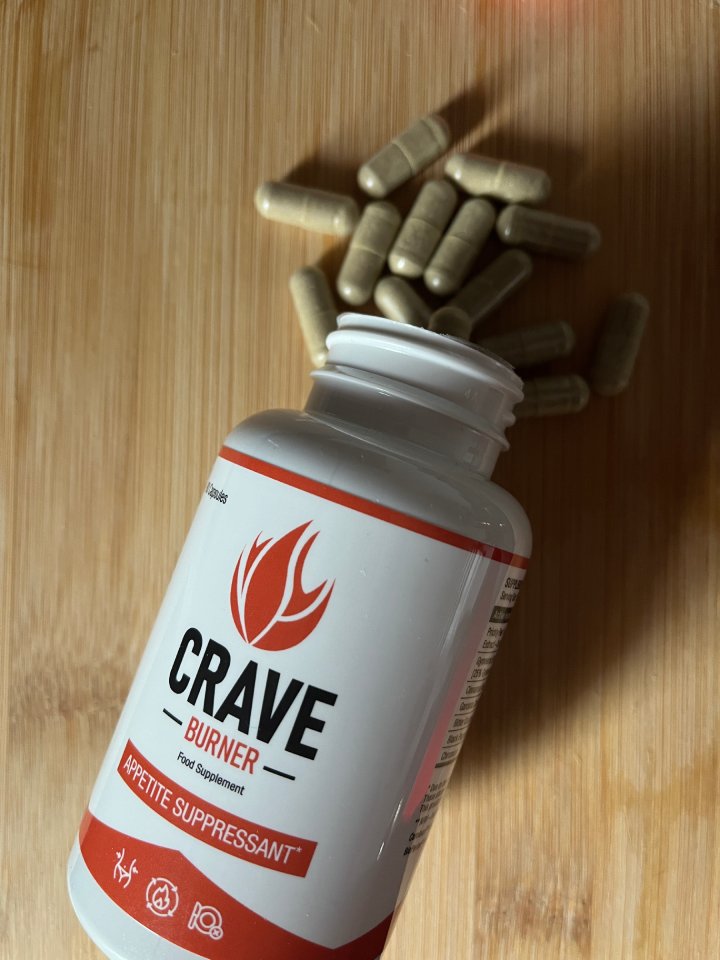
The stronger alternative: Crave Burner · 6.5/10Crave Burner publishes its full panel with amounts — the 1,000 mg lead dose included — where African Mango never states how much extract is in a capsule.
Our Recommendation — African Mango
Score: 5.0/10 · Best for: the curious who want to test this ingredient with open eyes — knowing the studied dose, the 10–12 week judgement window, and that the best independent trial found nothing. Main caution: the maker does not publish the extract amount per capsule, so a day’s dose cannot be matched to the 300 mg/day used in the trials; the large results come from the extract developer’s own research group, the one independent trial at the same dose (2022) found no difference from placebo, and no money-back guarantee is published. Fair trial: judge at 10–12 weeks on weight and waist trend; one bottle costs $49.99 plus $12 shipping — with an unverifiable dose and no guarantee, one bottle is the most the evidence justifies risking.
Frequently Asked Questions
Does African mango really work for weight loss?
The evidence is mixed and weak: two small trials from the originating lab reported large losses; the independent 2022 trial at the same dose found no effect. Reviewers call the effect unproven. A modest fibre-mediated effect is plausible; the famous numbers are not reliable.
How much weight can I expect to lose?
Realistically, between nothing and a few pounds over 10–12 weeks, based on the independent trials. Double-digit projections quote the single 2009 trial against everything published since.
How long does it take to work?
Trials assessed effects over 4–12 weeks. Judge at 10–12 weeks on weight and waist trends; day-scale promises are not this ingredient.
Does African mango burn belly fat?
No. Waist reductions in trials track total weight change; no trial showed selective belly-fat loss, and no oral supplement has such a mechanism.
Is African mango the same as mango?
No. Different species; supplements use Irvingia's seed, while regular mango is eaten for its flesh and its seed is not used.
Were the African mango studies retracted?
No. As of October 2026 neither key trial is retracted or under an expression of concern. The problem is methodological criticism and a failed independent replication — serious, but different.
What is IGOB131, and is it better?
IGOB131 is the patented, standardised Irvingia seed extract used in the 2009 trial. It is "better" only in being defined and studied; its headline result is exactly the one that failed to replicate in independent hands.
Can I just eat African mango fruit instead?
The flesh has no weight-loss data, and the studied part is the seed. Ground dika seed as a cooking ingredient is the food-form closest to the 2005 trial — as part of a fibre-rich diet, not as a treatment.
What do doctors and reviewers actually say about it?
The Exeter systematic review concluded it cannot be recommended as a weight-loss aid; the NIH fact sheet notes small, short, single-group trials; the 2020 meta-analysis found a positive average carried by high-bias studies. Clinician-written explainers converge on "preliminary and unreliable" — the position this article grades the full record to.
Can I combine it with other weight-loss supplements?
Combinations are untested as combinations: no trial covers mango-plus-garcinia, mango-plus-caffeine or any other stack, and each added ingredient imports its own safety file. The blend problem is covered in the fairy-dust section above; the conservative answer is that stacking multiplies unknowns, not evidence.
Is it safe?
Short trials reported mild effects at placebo-like rates, but long-term safety is unstudied. Diabetes medication users and anyone with kidney disease need medical input first — see the safety guide.
The Economics: What a "Studied Month" Costs
Price the claim, not the bottle. A trial-faithful month of the studied extract is 300 mg/day of a defined preparation for 10–12 weeks — call it three bottles of a typical product. The product we review costs $49.99 a bottle with no published dose and no money-back guarantee: roughly $150 to run an experiment whose faithful replication is impossible from its label, on an ingredient whose best independent trial returned null.
Against that, a month of glucomannan at its authorised-claim dose costs a fraction as much, carries a regulated claim, and publishes its dose on the front. Supplement spending is always partly buying a story; the discipline is noticing when the story's price has detached from the evidence's value.
African mango's story is genuinely interesting — that is what this 7,000-word article exists to show — but interesting is a reason to read, not a reason to pay a premium.
Taking It With Food, Medication and Other Supplements
The practical interaction rules follow from the fibre mechanism. High-fibre doses taken with medication can slow or reduce absorption of some drugs — the reason the clinical advice is to separate fibre supplements from medicines by a couple of hours and to involve a pharmacist for narrow-window medications (thyroid hormones are the standard example). The trials' own protocol — 30–60 minutes before meals — was designed around satiety timing.
And it conveniently also separates the dose from most mealtime medication, but it was never tested as an interaction strategy. Stacking Irvingia with other fibre products duplicates the mechanism (and the gas); stacking it into stimulant blends changes the product's nature entirely, per the fairy-dust section above.
And the one group for whom "take with a meal vs before" genuinely matters is people on glucose-lowering medication, for whom any real glucose effect compounds with their drugs — supervision first, per the safety guide.
Regulatory Status: What Sellers May and May Not Claim
No major regulator has authorised a weight-loss claim for Irvingia gabonensis. In the European Union it has no approved health claim (contrast glucomannan, which holds a narrow, conditions-attached one). In the United States it is sold under the dietary-supplement framework, which permits structure/function language ("supports weight management") with a disclaimer and no pre-market efficacy proof — the legal architecture that lets the 2009 abstract do the persuading while the label stays technically compliant.
In its home region the seed is simply food. The practical translation for a buyer: the phrase "clinically studied ingredient" on a US label is a statement that studies exist, not that any authority found them convincing — and in this ingredient's case, the authorities that reviewed them (Exeter 2013. NIH's fact sheet) found them wanting. Regulation will not grade this product for you; the trial table above is the grading.
How to Read the Next African Mango Headline
This ingredient will be rediscovered by the content cycle every few years; the same checklist will grade each revival. One: which trial is being quoted — and is it 2009 again? Two: is the funding line attached to the number, or stripped from it?
Three: does the piece mention the 2022 null trial anywhere? (Its absence is the tell.) Four: is the product being sold the same preparation, at the same dose, as the trial being cited?
Five: are the claims waist-and-weight (what was measured) or belly-fat-and-detox (what was not)? A source that passes all five is informing you; one that fails the third is selling you 2009 forever. SuppChecked's own coverage is built to pass its own checklist — the trial table above includes the null result in the same type size as the famous one, which is the entire editorial policy in one formatting decision.
Frequently Asked Questions (More)
Does African mango suppress appetite?
No trial measured appetite directly. Fullness is inferred from the seed's soluble-fibre content — plausible for the whole seed at gram doses, unmeasured for 300 mg extract capsules. Any product stating appetite suppression as established is ahead of its evidence.
Does African mango help cholesterol?
The originator trials reported lipid improvements and soluble fibre has a class-level cholesterol mechanism, but the independent trial found no metabolic effect. "May modestly help, as a fibre" is the defensible ceiling.
African mango vs glucomannan — which is better supported?
Glucomannan: more trials, a regulated weight-loss claim in Europe at defined doses, transparent labelling and lower cost. Irvingia's advantage is narrative, not evidential.
Why do so many sites say it works?
Because the 2009 abstract is one search away, its numbers are spectacular, and quoting it sells product. Sites that read past the abstract — into the funding, the bias ratings and the 2022 replication — converge on the position in this article.
Why the Anecdotes Sound Better Than the Trials
Set this article beside user reviews and a puzzle appears: if the best independent trial found nothing, why do so many buyers report losing weight on it? The honest answer is that most anecdotes are probably true as experiences and uninformative as evidence, for four compounding reasons.
People start supplements at moments of maximum motivation, alongside the diet and walking changes they do not log as variables. Weight fluctuates by kilograms across weeks, and any 10-week window containing a motivated start will contain a lower reading to remember.
Regression to the mean guarantees that people who begin at a personal peak — the moment that prompts a purchase — drift downward thereafter, supplement or not (the 2005 placebo arm's −1.32% on capsules of nothing is this effect, measured). And the minority who gain or stall quietly stop buying, while the coincidental losers write the reviews — the same self-selection that deleted 18 people from the 2009 average, running at marketplace scale.
None of this accuses reviewers of lying; it explains why a marketplace can be full of sincere five-star weight-loss stories for a product whose controlled effect may be zero — and why the boring Thai trial, in which nobody got to choose whether their data counted, outranks every testimonial ever written.
The SuppChecked Scorecard for This Ingredient
| Dimension | Grade | Basis |
|---|---|---|
| Efficacy evidence | Weak / unproven | Positive pooled average carried by high-bias trials; independent replication null (2022) |
| Mechanism plausibility | Moderate (fibre) / low (hormonal) | Soluble-fibre satiety is real; PPAR-gamma and leptin stories are preclinical or downstream |
| Dose verifiability | Poor across the market | Studied dose is known (300 mg/day defined extract); commercial labels routinely omit amounts — our reviewed product included |
| Safety data | Thin | Mild effects in short trials; long-term, pregnancy and interaction data absent — see safety guide |
| Value vs alternatives | Poor | Glucomannan/psyllium offer the plausible mechanism with stronger evidence at lower cost |
Where the Literature Stands (October 2026)
Pull the threads together and the state of knowledge is this. Five small trials exist. Two, from one laboratory, report effects large enough to have built a global product category. one of them is internally inconsistent in its own tables and was part-funded by the extract's patent holder.
One is a combination study that cannot speak to the ingredient alone. One small independent study found modest waist and triglyceride changes. One independent study, at the marketed dose, found nothing.
The systematic reviews call the effect unproven; the meta-analysis's positive average is carried by its weakest inputs; no regulator has authorised a claim; no trial has been retracted; no trial longer than twelve weeks exists. no trial has measured appetite, the benefit buyers most expect. and the single product category fact a shopper most needs — how much Irvingia is in the capsule — is the fact commercial labels, including our reviewed example, most often omit.
That is the whole picture, and it supports exactly one confident sentence: African mango is an interesting, traditional, fibre-rich food ingredient whose supplement claims remain, after fifteen years of selling, undemonstrated. Everything beyond that sentence — in either direction — is someone rounding the evidence toward their interest. We have tried to round it toward yours.
Our Verdict
African mango is a traditional fibre-rich food wrapped around one of supplement marketing's most instructive evidence stories: dramatic originator trials, industry funding, quiet methodological rot. And a null result when independent scientists finally ran the experiment properly. The ingredient is not a scam — the seed is real food with a plausible fibre mechanism — but the claims outran the data a decade ago and never came back.
If you experiment anyway, do it with the studied form and dose in view, a 12-week judgement window. And a price that reflects "unproven" — and read the label the way our African Mango review does, because the dose you cannot see is the result you cannot expect.
Last reviewed: October 2026. This article is educational and is not medical advice.
