
- Quick Answer
- Where the Weight-Loss Claim Came From
- Why Did the FTC Crack Down?
- What Does Acai Actually Do?
- How Much Acai Is in a Typical Supplement?
- Is Acai Safe?
- The Acai on This Label
- Frequently Asked Questions
- Does acai juice work better than acai capsules for weight loss?
- Why is acai in so many fat burners if it does not cause weight loss?
- Is the FTC case old news?
- Is eating acai worthwhile at all?
- Read This Next
Disclosure: This article contains affiliate links. If you buy through them, we may earn a commission at no extra cost to you. It never changes our scores or conclusions.
Quick Answer
There is no clinical evidence that acai causes weight loss. None. No trial in people has shown acai, in any form, producing weight loss beyond what a comparison group achieved without it.
The claim has a history, and it is not a scientific one. Acai's weight-loss reputation was built by affiliate marketers, and the Federal Trade Commission shut down a fake-news industry constructed around it.
What acai honestly is: a nutritious Amazonian fruit with genuine antioxidant content and a good nutrient profile. That is a food story. It was never a fat-loss story, at any dose, in any study.
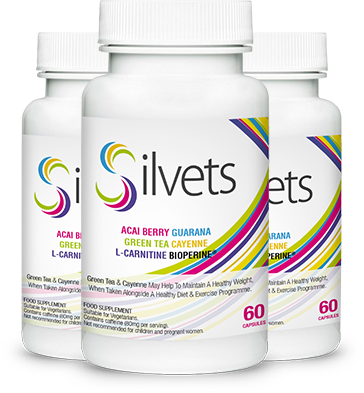
Best for: anyone meeting acai at the top of a fat-burner label and wondering what that position is worth. Silvets lists acai first among six ingredients. We score Silvets at 3.5/10.
Our Recommendation — Silvets
Score: 3.5/10 · Best for: only the committed bargain-hunter who tolerates an unauditable label. Main caution: no amounts or directions published on the official store, and an advertised ingredient is missing from the formula. Fair trial: the three-bottle bundle at $39.33 a bottle — the six-pack maths only wins if you accept zero refund protection beyond ten days, unused.
Where the Weight-Loss Claim Came From
Acai is a small, dark purple fruit from a palm native to the Amazon. Eaten locally for generations as a staple food, it arrived in North American marketing in the 2000s carrying a different identity.
The first stage was legitimate curiosity. Laboratory work showed the fruit was unusually rich in anthocyanins, the antioxidant pigments that give it its colour. Nutrition writers picked it up. "Superfood" lists followed.
Nothing in that early coverage was about weight. The antioxidant reputation was the product. Acai bowls, juices and powders sold on the strength of a nutrient profile that was, and remains, genuinely respectable.
Then marketers attached a claim the fruit never had. Rapid weight loss — dramatic, effortless, diet-free weight loss — began appearing in advertisements for acai supplements, none of it drawn from any human trial.
One marketing line from that era promised 450% more weight loss in adults using an acai product than in adults relying on dieting and exercise alone. We quote it here as marketing, not as a finding.
No study stands behind that figure. There was no trial comparing acai users with dieters, no measured group, no published data. The number existed because large numbers sell capsules, and this one sold very well.
The mechanism story was equally invented. Acai was said to speed metabolism, flush fat, and cleanse the colon into slimness. Each phrase sounded biological. None described anything researchers had observed in people taking acai.
What made the campaign distinctive was its delivery system. The claims did not run as obvious advertisements. They ran as journalism — or as something carefully built to look like journalism at a glance.
That delivery system is why this ingredient, alone among superfoods, has a federal enforcement record. The next section is that record, because it is the real history of the acai weight-loss claim.
Why Did the FTC Crack Down?
Between 2011 and 2013, the Federal Trade Commission brought actions against around ten affiliate operations that marketed acai weight-loss products through fake news websites.
The sites were designed to imitate legitimate news outlets. They carried invented mastheads, borrowed the look of broadcast networks, and presented advertisements as investigative reports with headlines asking whether the acai diet was a miracle or a scam.
Inside, a fabricated reporter described an independent test that never happened. The reporter typically claimed to have lost 25 pounds in four weeks using the product, without changing diet or exercise.
Beneath the story sat fabricated comments from apparent readers, each reporting similar success. None of it was independent. The sites were paid advertising, built by affiliate marketers earning commission on every sale they steered.
The billing model completed the trap. Readers were offered a free trial and asked only for shipping. The recurring charge — around $79.99 a month in the cases the FTC described — was buried or undisclosed.
Consumers who thought they had sampled a product found themselves subscribed to it. Cancelling proved difficult. Complaints accumulated, and the FTC's sweep followed: cases against the site operators and the affiliate networks behind them.
The money was not trivial. One affiliate operation was alleged to have taken in more than $25 million. Across the sweep, settlements ultimately exceeded $9.4 million, alongside permanent bans on the deceptive practices.
Precision matters here. What the FTC penalised was deception: fake journalism, fabricated testimonials, unsubstantiated weight-loss claims, and unfair billing. The agency did not ban acai, and it did not need to test the fruit.
The legal point was simpler. The claims had no substantiation when they were made. A seller asserting rapid weight loss needs competent evidence first, and for acai weight loss, that evidence did not exist.
It still does not. The National Center for Complementary and Integrative Health states that no studies in people published in peer-reviewed journals substantiate claims that acai promotes weight loss.
That sentence, from the US government's own complementary-health centre, is the current scientific position. The FTC record is what happened the last time marketing ran ahead of it at industrial scale.
The consumer harm was concrete, not theoretical. Buyers described charges appearing after a trial they believed was free, refund requests refused or endlessly delayed, and subscriptions that continued after cancellation attempts.
The FTC's consumer guidance from that period taught readers to spot the format itself: a news-style page, a reporter's personal transformation, comments that read like advertisements, and a trial offer with terms in fine print.
That guidance has aged well because the format has. The names, fruits and networks rotate. The page architecture — borrowed journalism wrapped around an unsubstantiated claim and a billing trap — remains recognisably the same.
The template also outlived the cases. Week-by-week transformation stories, invented reviewer personas and countdown discounts still drive supplement traffic today. Our companion article on Silvets examines that pattern on this product's own search results.
What Does Acai Actually Do?
Strip the marketing away and a smaller, fairer file remains. Acai is not inert, and honesty about what it does do is part of auditing what it does not.
The best-supported effect is antioxidant. In a small human study of acai juice consumption, measures of antioxidant capacity in the blood rose after drinking it. That is a real, if modest, laboratory finding.
It is also a finding about blood chemistry over hours, not about body weight over months. Antioxidant capacity is a marker researchers can measure easily. It is not a mechanism that melts fat.
The fruit's own pilot research points the same way. In Udani et al. 2011, in Nutrition Journal, ten overweight adults took acai pulp for a month, and some metabolic markers shifted favourably.
Read that pilot at its actual size. Ten people, no placebo group, one month. It measured glucose, insulin and cholesterol — risk markers worth watching — and it was not designed as a weight-loss trial.
Separately, a small pilot found that inflammatory markers improved in adults with metabolic syndrome who consumed acai, again with no weight effect reported. Interesting, preliminary, and entirely silent on fat loss.
The nutrient profile deserves its due without translation into promises. Acai pulp provides fibre, unsaturated fats unusual in a fruit, and a dense load of polyphenols. As food, it compares well with other berries.
Blueberries carry a similar profile and a similar evidence pattern, yet nobody sells blueberry extract as a fat burner at a premium. The difference between the two fruits is not pharmacology. It is marketing history.
So the fair middle is this: acai is a good fruit with measurable antioxidant activity and early, small studies on metabolic markers. Nothing in that file is a weight-loss effect, at any dose tested.
Consider what a genuine weight-loss finding would look like, for calibration. A randomised trial, a placebo group, a defined acai dose, and a between-group weight difference that survives statistical testing over months.
No element of that design has ever been run for acai and weight. The absence is total, which is why reviewers can state the conclusion flatly: this is not a contested literature, it is an empty one.
The antioxidant story deserves one more distinction. Raising antioxidant capacity in blood after a drink is an acute, reversible laboratory event. It says nothing about fat stores, appetite, or energy expenditure the following week.
That distinction — a food can be nutritious and still do nothing for weight — is the one the superfood era worked hardest to blur. Antioxidant is a description of chemistry, not a promise about your waistline.
How Much Acai Is in a Typical Supplement?
A second problem sits underneath the evidence problem. Even a buyer who accepts acai on antioxidant grounds cannot be sure a capsule contains much acai at all.
Investigations reported that many acai supplements on the market contained little or no genuine acai pulp. Products traded on the name while delivering fillers, blends, or token amounts of the fruit itself.
We describe those investigations at that strength deliberately. They reach us through secondary reporting rather than a single nameable primary study, so we report what was reported, without dressing it as our own finding.
The structural cause is visible on any label. Acai raw material is expensive and perishable. A cheap capsule sold on the acai name has an economic incentive to contain as little of it as possible.
Regulation does not close the gap. A proprietary blend can list acai among several ingredients while disclosing only the blend's total weight, leaving each ingredient's share legally invisible to the buyer.
A names-only panel goes further: it lists ingredients with no amounts at all. Against that format, no content check is possible — not for acai, and not for anything else printed on the bottle.
The pilot studies above used defined material: 100 grams of acai pulp, twice daily, in the Udani work. A capsule of undisclosed content is not a smaller version of that exposure. It is an unknown one.
Price sharpens the point. Acai-branded supplements routinely sell at a premium over generic berry and antioxidant products, a premium justified entirely by the fruit's reputation rather than by verified content or tested effect.
A buyer paying that premium for a names-only capsule is purchasing a word on a label. The word is doing all of the work: recognition, halo and hope, in place of a dose and a finding.
This is why the acai question splits in two. Does acai cause weight loss? No evidence says so. Does a given acai supplement deliver a studied amount of acai? On most labels, nobody can tell.
Is Acai Safe?
As a food, acai has a long history of ordinary consumption and is generally well tolerated. People eat the pulp, drink the juice, and blend the bowls without a distinctive safety signal emerging.
That reassurance belongs to the fruit. It does not automatically transfer to every capsule sold under its name, because a capsule is a blend, and the blend is where the documented problems live.
The risk pattern in the acai category has historically sat in combination products: "acai cleanse" formulas and fat-burner blends that add stimulants, laxative herbs, or other undisclosed ingredients alongside the headline fruit.
A buyer reacting badly to such a product is rarely reacting to acai. They are reacting to the caffeine load, the senna, or an ingredient the label never quantified — none of which the fruit's food record covers.
Allergy is the fruit-level exception worth noting. Anyone allergic to related palm fruits or with a known berry allergy should treat concentrated acai products with the same caution as the food itself.
There is also a contamination logic to undisclosed blends generally. When a maker does not publish amounts, third-party content checks become the only verification, and most products in this category publish none of those either.
One more caution belongs to the category rather than the fruit. Weight-loss blends have a documented history, across many brands, of undeclared pharmaceutical or stimulant adulteration found by regulators after products reached the market.
That history is why "natural" on a blend label is not a safety argument. The safety question is always about the specific product's disclosed panel and testing, never about the reputation of its headline fruit.
Our practical distinction is simple. Acai as food: a reasonable, well-tolerated choice. Acai as the lead name on an undisclosed stimulant blend: a different purchase, judged by the blend's record, not the fruit's.
The Acai on This Label
All of the above lands on one concrete label. Silvets lists acai berries first among its six named ingredients, ahead of green tea, guarana, cayenne, L-carnitine tartrate and BioPerine.
Position on an ingredient list is a signal makers choose deliberately. Leading with acai borrows the superfood halo — the recognition, the Amazon imagery, the antioxidant reputation — for the front of the bottle.
What the position cannot borrow is evidence. Acai has no weight-loss evidence at the pulp doses used in pilot research, and this label does not disclose any dose at all for it.
The amount is simply unpublished. A buyer cannot tell whether a serving delivers a gram of acai, a tenth of a gram, or a dusting included so the name can lead the list.
The same is true of all six names. Silvets publishes no amount for any ingredient, and no directions on its sales pages. The acai problem is the general problem, wearing its most recognisable face.
The maker's guarantee language completes the picture: money-back wording is published, but no time period is stated anywhere. A buyer cannot tell from the documents how long any such promise runs.
None of this makes acai a bad ingredient. It makes its lead position on this label a marketing decision, unsupported by a weight-loss record and unverifiable as a dose. That is exactly what our score reflects.
Our Recommendation — Silvets
Score: 3.5/10 · Best for: only the committed bargain-hunter who tolerates an unauditable label. Main caution: no amounts or directions published on the official store, and an advertised ingredient is missing from the formula. Fair trial: the three-bottle bundle at $39.33 a bottle — the six-pack maths only wins if you accept zero refund protection beyond ten days, unused.
Frequently Asked Questions
Does acai juice work better than acai capsules for weight loss?
Neither form has weight-loss evidence. The juice study measured antioxidant capacity in blood; the pulp pilot measured metabolic markers. No trial of juice, pulp or capsules has shown weight loss in people taking acai versus people not taking it.
Why is acai in so many fat burners if it does not cause weight loss?
Recognition. Acai is famous, photogenic and carries a health halo from its antioxidant reputation. On a label, that familiarity does the selling. Its presence is a marketing decision, not a pharmacological one — the trial record never justified the placement.
Is the FTC case old news?
The settlements date from 2011 to 2013, but the template outlived them. Fake review sites, invented testers and free-trial billing traps still appear across the supplement market. The case remains the clearest documented account of how the pattern works.
Is eating acai worthwhile at all?
As food, yes. Acai pulp is fibre-rich, polyphenol-dense and nutritionally comparable to other dark berries. Enjoy it as part of a varied diet. Just do not pay a fat-burner premium for it, or expect it to move your weight.
Last reviewed: October 2026.
