
- Quick Answer
- The Two Sources on This Panel
- Why No Total Can Be Calculated
- Can It Keep You Awake?
- Can You Drink Coffee While Taking It?
- Who Should Be Careful With Undisclosed Caffeine?
- How Long Does the Caffeine Last — and Why Timing Matters More When the Dose Is Secret
- What a Careful Buyer Does With a Missing Number
- Frequently Asked Questions
- Is Silvets caffeine-free because it is "natural"?
- Will the caffeine in Silvets affect me like coffee does?
- Can I take Silvets at night?
- Why doesn't the maker just print the caffeine total?
- Read This Next
Disclosure: This article contains affiliate links. If you buy through them, we may earn a commission at no extra cost to you. It never changes our scores or conclusions.
Quick Answer
Nobody knows how much caffeine is in Silvets, and that is the honest answer. The maker publishes no amount for either caffeine source and no caffeine total anywhere on its pages.
The product contains two caffeine sources: guarana and green tea. Both are on its six-name ingredient list. Neither carries a milligram figure, so a day's serving cannot be calculated from anything disclosed.
What can be said is narrower: this is certainly a caffeinated stimulant product. Its maker simultaneously claims it is "free of side effects" — a claim we test in our side-effects article.
Best for: caffeine-counters, caffeine-sensitive readers, and anyone stacking coffee on top of a supplement. We score Silvets at 3.5/10, with the undisclosed caffeine total central to that score.
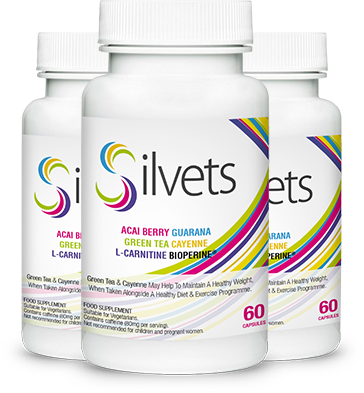
Our Recommendation — Silvets
Score: 3.5/10 · Best for: only the committed bargain-hunter who tolerates an unauditable label. Main caution: no amounts or directions published on the official store, and an advertised ingredient is missing from the formula. Fair trial: the three-bottle bundle at $39.33 a bottle — the six-pack maths only wins if you accept zero refund protection beyond ten days, unused.
The Two Sources on This Panel
Silvets lists six ingredients by name only: acai, green tea, guarana, cayenne, L-carnitine tartrate and BioPerine. Two of those six are caffeine sources, and neither is a minor botanical garnish.
Guarana is the concentrated one. According to the Cleveland Clinic, guarana seed is a potent caffeine source, carrying roughly double the caffeine concentration found in coffee beans by weight.
The same clinical source puts guarana seed at 2–8% caffeine by weight in the guarana seed itself. That range matters: the plant material alone varies fourfold before any maker chooses an amount.
Green tea is the second source. The leaf naturally contains caffeine alongside its catechins, and an extract concentrates whatever the leaf held. Green tea on a fat-burner panel is never a caffeine-free ingredient.
Two moderate sources can add up to a full stimulant dose. A formula does not need added caffeine on its label to deliver a coffee-sized hit; it needs enough caffeinated plant material.
The word "herbal" does no protective work here. Caffeine from guarana and caffeine from coffee are the same molecule, handled by the body the same way, with the same effects on sleep and heart rate.
For scale, ordinary drinks publish their numbers. The FDA's guidance notes an 8-ounce cup of green or black tea typically contains 30–50 mg of caffeine, and an 8-ounce cup of coffee around 80–100 mg.
Those reference points show what disclosure buys a consumer. A tea drinker can budget a cup. A coffee drinker can budget two. A Silvets buyer can budget nothing, because no equivalent figure exists.
Guarana's concentration is what makes the silence consequential. A gram of a weak source adds little. A gram of guarana seed, at the top of its published caffeine range, is a serious stimulant contribution.
That is why this article exists as a product-specific question. Our companion piece on guarana alone covers the plant. This one covers the combined, undisclosed total inside a single commercial formula.
Why No Total Can Be Calculated
Calculating a caffeine total needs simple arithmetic. For each source, multiply the amount of material by its caffeine concentration. Add the sources together. That is the whole method, and it needs two numbers per source.
This label provides neither number for either source. No amount of guarana is published. No amount of green tea is published. No total caffeine figure appears anywhere in the maker's documents.
The concentration side is equally open. Guarana seed varies across that 2–8% caffeine range in the seed itself, and green-tea extracts vary further by standardisation, which this maker also does not disclose.
So every term in the equation is missing. The result is not a wide estimate or a rough range. The result is that no calculation can be run at all from disclosed information.
Contrast a disclosed label. Our Matcha Extreme coverage shows the difference: where a maker declares its leaf weight per serving, an undeclared caffeine figure can at least be estimated from published ranges.
Here, even that fallback fails. There is no declared weight to apply a range to. A buyer, a pharmacist, or a reviewer all face the same blank: the total is unknowable by design.
Work the buyer's side of the problem once, concretely. To estimate this product, you would need the guarana amount, its standardisation, the green-tea amount, and its extract strength. The maker publishes zero of those four inputs.
Third-party websites fill the vacuum with invented figures, as they do with this product's directions. Any precise milligram number for Silvets found online was made up by someone with no more data than this label provides.
No rule forces a blend maker to print a caffeine total for naturally occurring caffeine in botanical ingredients. Legal and knowable are different standards, and this label meets only the first one.
Can It Keep You Awake?
Sleep is where an uncounted caffeine dose usually announces itself first. Alertness fades politely during the day; the residue at bedtime is the part of the dose nobody scheduled.
Caffeine's half-life in most adults runs around five to six hours. Half of a morning dose is still circulating in the early evening, and a quarter remains near midnight.
The European Food Safety Authority's caffeine safety opinion notes that even 100 mg taken close to bedtime can lengthen the time needed to fall asleep and shorten sleep in sensitive adults.
The working rule from the stimulant-timing literature is to keep the last caffeine dose at least six hours before bed, and longer for people who know they clear caffeine slowly.
Applying that rule requires knowing two things: how much caffeine you took, and when you took it. With this product, the first is undisclosed. The second is worse than undisclosed.
The maker publishes no directions on its sales or order pages. There is no suggested time of day, no stated serving pattern, nothing to anchor timing advice to at all.
A buyer is therefore timing a stimulant blind on both axes: unknown dose, no maker guidance on the clock. If sleep breaks after starting it, caffeine is the first suspect to eliminate.
Can You Drink Coffee While Taking It?
This is the stacking question in its practical form, and it is the question caffeine-counters actually ask us. The answer depends on a daily budget that this product makes impossible to complete.
The FDA's consumer caffeine guidance cites about 400 mg a day as an amount not generally associated with negative effects in healthy adults consuming caffeine from all sources combined.
That budget is an all-sources budget. Coffee counts. Tea counts. Cola, energy drinks and pre-workouts count. A supplement counts too — except this supplement's contribution cannot be entered into the sum.
Every other source in your day can be estimated within a reasonable range. This one cannot. The budget therefore has a hole in it, of unknown size, sitting underneath numbers you can measure.
The conservative practice follows directly. Count the product as an unknown contributor, reduce the countable sources around it, and do not stack it on a high-coffee day while judging tolerance.
Notice the asymmetry the maker has created. The stimulating effect is part of the product's appeal. The dose producing it is the buyer's problem to guess. Disclosure runs one way only, toward the sale.
A worked day shows the exposure. Two ordinary coffees can contribute roughly 160–200 mg on the FDA's reference figures. Add tea, a cola, or a pre-workout, and the countable total approaches the 400 mg reference line.
Into that nearly spent budget, this product inserts an unknown amount. The day can cross the line without any single item looking reckless, which is exactly how undisclosed totals cause trouble.
Tolerance does not rescue the arithmetic. Daily caffeine users develop partial tolerance to its alerting effects within weeks, but the sleep and blood-pressure effects persist, and the milligram total is unchanged by feeling used to it.
Withdrawal deserves a line in the same ledger. A daily undisclosed dose can create dependence a user never chose: stop the product abruptly and headache, fatigue and irritability may follow for several days.
If you rely on caffeine limits for sleep, blood pressure, anxiety or pregnancy, an uncountable contributor is not a rounding error. It is the difference between keeping a limit and merely hoping you kept it.
Who Should Be Careful With Undisclosed Caffeine?
Some readers are told to keep explicit caffeine limits. For them, a hidden source does not just add stimulation; it defeats the limit they are actively trying to observe.
The Cleveland Clinic's guarana guidance lists the familiar stimulant symptom set: headache, heart palpitations, upset stomach and increased urination among the effects users may notice from guarana products.
People managing blood pressure or heart-rhythm conditions sit first on the caution list. Caffeine raises both transiently, and an unmeasured dose removes their ability to judge whether a reading reflects the product.
Anxiety belongs on the same list. Stimulant doses that a relaxed user calls focus can read as dread in an anxious one, and the effect scales with a dose nobody has disclosed here.
Pregnancy limits are explicit in the guidance literature: the EFSA caffeine opinion puts habitual intake of up to 200 mg a day as not raising safety concerns for the fetus in pregnant women generally.
A product with no published total makes that 200 mg ceiling unpoliceable. The same applies to breastfeeding guidance, to adolescents, and to anyone whose clinician has set a personal caffeine ceiling.
Medication belongs in this section too. Some medicines slow caffeine clearance, stretching its half-life and its evening residue; others share caffeine's stimulant direction. A pharmacist can check both patterns — if the dose is known.
Caffeine-sensitive users complete the group. Sensitivity is a spectrum, and the sensitive end discovers an undisclosed dose only by experiencing it — the worst possible way to read a label.
How Long Does the Caffeine Last — and Why Timing Matters More When the Dose Is Secret
Run the half-life arithmetic on a known dose and timing becomes manageable. A 200 mg dose at breakfast leaves roughly 100 mg by mid-afternoon and about 50 mg by the evening.
Each halving takes around five to six hours in a typical adult, slower in pregnancy, with some medicines, and in people who simply metabolise caffeine at the cautious end of normal.
Now run the same arithmetic on an unknown dose. The curve has the same shape, but every point on it is a guess. You cannot time what you cannot measure, in either direction.
That is why timing matters more, not less, when the dose is secret. With a declared product, an early dose is a plan. With this one, an early dose is merely the least risky guess.
Marketing sometimes frames guarana caffeine as "slow-release," as if a longer curve were a gentler one. A slower release stretches exposure later into the day; for sleep, that is worse, not better.
Our Set W article on how much caffeine is in guarana works the plant-level numbers in full. The product-level conclusion here is shorter: no timing strategy compensates for a total the maker withholds.
Half-life also varies more than the average suggests. Pregnancy can stretch it considerably, some medicines lengthen it, and smoking shortens it. Two users taking the same unknown dose can run different clocks entirely.
That variability is manageable when a dose is printed, because timing can be adjusted around a known starting point. Against an unknown dose, variability stacks on top of secrecy, and prediction fails twice.
There is one honest measurement available to a user: their own sleep. A sleep diary kept for a fortnight before and after starting will not reveal milligrams, but it will reveal consequences.
The practical protocol is conservative by necessity. Take it early if you take it at all, never in the evening, and treat any sleep disruption as dose information the label refused to give you.
What a Careful Buyer Does With a Missing Number
The careful response to a missing caffeine total is to stop trying to fill it in. Treat Silvets as a full stimulant for timing, stacking and sensitivity purposes, whatever the true figure is.
That means morning-only use as a personal rule, a reduced coffee intake alongside it, and no combination with pre-workouts or energy drinks while you learn how strongly it affects you.
It also means discounting the maker's reassurance. A seller claiming a two-caffeine-source product is "free of side effects" while publishing no caffeine figure has answered the disclosure question itself.
The absence of the figure is scored in our review for exactly this reason. Declaring a stimulant total is the maker's job. Reconstructing it should never become the buyer's detective work.
Disclosed competitors make the contrast plain. Where amounts are printed, caffeine can be budgeted, timed and judged. Where they are not, the buyer funds the experiment and absorbs the uncertainty personally.
Our score treats this as a disclosure failure rather than a formulation crime. Guarana and green tea are ordinary fat-burner ingredients. Selling them together, at unstated amounts, with a "free of side effects" claim attached, is the finding.
A maker could fix the central problem in one printing run: amounts per serving and a total caffeine figure on the panel. Until that happens, every buyer's caffeine accounting carries the same hole.
If you need to count caffeine — for sleep, for a condition, for pregnancy, for medication — this label gives you nothing to count. That sentence is the whole answer to the question in the title.
Our Recommendation — Silvets
Score: 3.5/10 · Best for: only the committed bargain-hunter who tolerates an unauditable label. Main caution: no amounts or directions published on the official store, and an advertised ingredient is missing from the formula. Fair trial: the three-bottle bundle at $39.33 a bottle — the six-pack maths only wins if you accept zero refund protection beyond ten days, unused.
Frequently Asked Questions
Is Silvets caffeine-free because it is "natural"?
No. Guarana and green tea both naturally contain caffeine, and natural caffeine is the same molecule as added caffeine. The maker publishes no caffeine-free claim we could verify, and the panel itself contradicts one.
Will the caffeine in Silvets affect me like coffee does?
Yes, in kind. The molecule is identical, so expect the same family of effects: alertness, raised heart rate, possible jitters and disrupted sleep. Only the dose differs — and the dose is the part this label never discloses.
Can I take Silvets at night?
We would not. Caffeine's five-to-six-hour half-life means an evening dose is still substantially present at bedtime, the maker publishes no directions suggesting evening use, and sleep disturbance is the likeliest first effect of the stimulant load.
Why doesn't the maker just print the caffeine total?
No rule forces a total onto a blend label for caffeine that occurs naturally in botanical ingredients, and the maker's proprietary, names-only panel withholds every amount. Our proprietary-blends explainer covers how that label format works.
Last reviewed: October 2026.
