
- Quick Answer
- The Skin-Cycle Maths Nobody Does
- The Week-by-Week Table, Built From Endpoints
- The Photo-Tracking Protocol
- Early Flare vs True Worsening — Without Inventing a "Purge"
- Combining With Medication: the Spacing Question
- Why 12 Weeks Is Also a Statistical Rule
- Ingredient Timelines at a Glance
- If It Worked: the Maintenance Question Nobody Answers
- The Decision Tree
- Zinamax on This Timeline — the Honest Purchase Shape
- Who Should Buy Zinamax — and Who Should Skip It
- Frequently Asked Questions
- How long do acne supplements take to work?
- Why does my age change the timeline?
- My skin got worse in the first two weeks. Should I push through?
- Can I take an acne supplement with antibiotics?
- Can I speed it up by doubling the dose?
- When should I stop a supplement that isn't working?
- Read This Next
Disclosure: This article contains affiliate links. If you buy through them, we may earn a commission at no extra cost to you. It never changes our conclusions.
Quick Answer
Judge any acne supplement at 12 weeks — not because twelve is a round number, but because it is where the trials put their endpoints: the zinc head-to-head read out at day 90, the lactoferrin combination peaked at week 10 of a 12-week trial, and the diet studies reported at 10–12 weeks.
An early signal — fewer new inflammatory lesions — is plausible from weeks 6–8; anything promised at week 2 is marketing, since the skin you are looking at today began forming weeks before the first capsule.
The one exception to "wait it out" is severity: acne that deepens, hurts, cysts or scars at any point ends the experiment immediately, in favour of a dermatologist. Best for: anyone mid-trial on a supplement who needs to know what "working" looks like week by week, when to quit, and how to measure honestly instead of by mirror-mood.
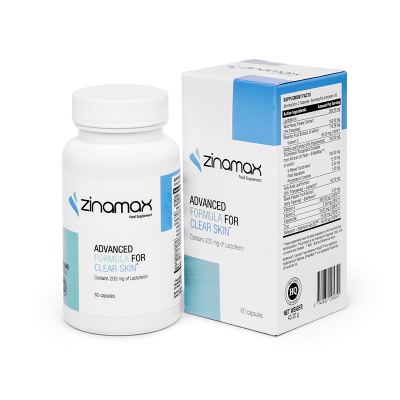
Our Recommendation — Zinamax
Score: 5.7/10 · Best for: adults with mild, persistent breakouts who want a nutritional adjunct alongside a topical routine, judged fairly over 12 weeks. Main caution: it carries a declared milk allergen, its vitamin B6 (18 mg) sits above EFSA's upper limit, and no money-back guarantee is published. Fair trial: the three-bottle pack at $39.33 a bottle — one full trial at the trials' own 8–12 week length.
The Skin-Cycle Maths Nobody Does
Every timeline claim in this category should be checked against one physiological fact: the visible surface of your skin is old news.
Epidermal turnover — the journey of a skin cell from the basal layer to the surface — takes roughly 28 days in a young adult, and it lengthens steadily with age: by your forties and fifties a full cycle runs to six weeks or more.
Acne lesions add their own lead time: a microcomedone, the invisible plug that becomes a pimple, forms over weeks before anything surfaces. Two consequences follow, and they explain most failed supplement trials-by-consumers. First, judging at week 3–4 is judging skin that was programmed before the supplement started.
The lesions appearing in your first fortnight were already in the pipeline; their behaviour says nothing about the ingredient. Second, age changes the arithmetic. A 22-year-old gets through roughly three full epidermal cycles in 12 weeks — a fair reading.
A 45-year-old gets through barely two, and at week 8 has completed only about one and a third cycles: an 8-week verdict at 45 is a verdict on skin that is mostly pre-supplement.
This is why the trials standardised on 12 weeks, why dermatologists give topicals the same window, and why "I tried it for a month, it did nothing" is a statement about skin biology, not about the product — in either direction. It also cuts against impatience marketing: the brand promising visible change at two weeks is promising you a result on skin that has not turned over once.
The Week-by-Week Table, Built From Endpoints
Here is the timeline assembled from what the studies actually measured, band by band — not the "internal changes begin" filler that fills competitor guides:
| Weeks | What the evidence supports expecting | What to do |
|---|---|---|
| 0–2 | Nothing provable. The one early data point in the literature: the lactoferrin combination capsule (Chan et al. 2017) separated from placebo at week 2 with a −14.5% median total-lesion reduction — a statistical signal in a 168-person trial, not a mirror event. Your pipeline lesions are pre-supplement | Baseline photographs (protocol below). Change nothing else. Start the diary |
| 2–4 | Still inside one skin cycle for most adults. No trial endpoint lives here. Any visible change is as likely cycle timing or routine effects as the supplement | Weekly photos. Note cycle phase if your acne is hormonal-pattern — compare like with like later |
| 4–6 | First full turnover completes for younger skin. Early responders in trials begin to distinguish themselves around here on lesion counts, not on individual stubborn spots | Count new inflammatory lesions per week in the diary; the trend of new lesions is the metric, not total appearance on a bad morning |
| 6–8 | The honest "early signal" window: fewer new inflammatory lesions, if the ingredient is going to work for you. Zinc's meta-analysed effects and the diet trials' trajectories are consistent with signal-by-here, judgement-not-yet | Mid-point review against week-0 photos. If dramatically worse or scarring — stop, escalate (rules below) |
| 8–12 | The measurement window. Chan's combination peaked at week 10 (−28.5% median total lesions vs placebo); Dreno's zinc endpoint is day 90; Smith's diet trial read out at week 12 | Full comparison against baseline photos, same cycle point. This reading is the verdict |
| 12+ | Beyond every endpoint in the file. The JAMA Dermatology systematic review of oral nutraceuticals (42 RCTs) found benefits, where they existed, inside trials of mostly 8–12 weeks | No change by now = the ingredient has had its fair trial. Stop or reassess; do not extend on hope |
One clarification the table depends on: those percentages are median reductions in lesion counts versus placebo, measured by assessors counting lesions — not "skin looks 28% better", and not clearance. Expect, at best, a visibly quieter trend: fewer new sore spots per week, existing ones behaving the same. If your mental finish line is "clear", no timeline fixes the disappointment, because the finish line was set by advertising rather than by the trials.
The Photo-Tracking Protocol
Memory is the worst instrument in skincare: it photographs your worst morning and files it as the trend. The trials used counted lesions and standardised assessment; your home version is a disciplined photo protocol, and it is genuinely unclaimed content in this niche — no ranking competitor publishes one:
- Same light. One location, one lighting setup (bathroom light is fine if it is identical), no flash variations, no golden-hour cheating in either direction.
- Same angles. Front, left profile, right profile — every time. Acne is three-dimensional and so is its improvement.
- No filter, no makeup, same time of day. Skin looks different swollen at 7 a.m. and settled at noon; pick one and keep it.
- Weekly, not daily. Daily photos measure mood. Weekly photos measure skin.
- Same point in the menstrual cycle, if your pattern is hormonal: compare flare-phase to flare-phase and clear-phase to clear-phase, or the cycle will impersonate both improvement and relapse.
- Count, don't vibe. Once a week, count new inflammatory lesions since the last photo. Write it down. The number series — 9, 8, 9, 6, 5… — is the answer the mirror keeps refusing to give you.
Early Flare vs True Worsening — Without Inventing a "Purge"
Supplement marketing has borrowed a word from retinoid therapy — "purging" — to explain away any early worsening as proof of progress. Resist the loan. A purge, properly, describes the accelerated surfacing of microcomedones when a topical retinoid speeds turnover: a defined mechanism, in a defined treatment class.
No such mechanism is established for oral supplements, and an ingredient cannot claim retinoid behaviour it does not have.
What can honestly happen in the early weeks: ordinary fluctuation (acne waxes with cycle, stress, season and chance — the first fortnight of any trial contains weather, not signal); a reaction to a different change you made simultaneously (which is why the protocol forbids them); or a genuine supplement-triggered eruption of the kind our Q5 article documents — sudden, uniform papules after starting a high-dose B-vitamin or similar suspect, which resolves on stopping.
The decision rule: mild fluctuation inside one skin cycle = hold course and let the photos arbitrate. New deep, painful, cystic or scarring lesions, a sudden monomorphic eruption, or steady worsening past week 6–8 = stop the supplement and see a dermatologist. "It gets worse before it gets better" is a sentence that should always have to name its mechanism and its evidence; for oral supplements, it can't.
Combining With Medication: the Spacing Question
Timeline questions often hide a combination question — can I take this with my prescription? The one hard rule in this cluster involves zinc and antibiotics: zinc chelates tetracycline and quinolone antibiotics in the gut and reduces their absorption.
Per the NIH Office of Dietary Supplements, take the antibiotic at least 2 hours before, or 4–6 hours after, any zinc-containing supplement.
Beyond that: supplements alongside topical retinoids or benzoyl peroxide are the normal trial context and generally the point of an "adjunct"; supplements alongside isotretinoin are a prescriber conversation (vitamin A stacking alone justifies it — an acne formula containing preformed vitamin A does not belong next to a retinoid drug without the prescriber's knowledge). When in doubt, the pharmacist is the fastest accurate answer in the health system, and asking costs nothing.
Why 12 Weeks Is Also a Statistical Rule
Skin biology sets the floor; statistics sets the rest. Acne is a fluctuating condition, and people overwhelmingly start interventions at a bad moment — nobody buys a supplement during a clear month. That single fact manufactures false positives: from a flare-peak, the most likely direction is improvement, supplement or no supplement, a phenomenon called regression to the mean.
It is the engine behind most testimonials in this industry ("I started it at my worst and within a month…") and the reason the trials insist on control groups and fixed, pre-set endpoints rather than "until it looks better".
Twelve weeks does not eliminate regression to the mean — nothing at home can — but it dilutes it: across three months and two-plus skin cycles, a genuine ingredient effect has time to separate from the flare cycle, and your weekly lesion counts give the separation a shape (a trend) instead of an anecdote (a good week).
This is also why the protocol forbids starting three products at once and changing your routine mid-test: every extra change is another claimant for credit that regression was going to hand out anyway. Honest self-experimentation is mostly the discipline of refusing free credit.
Ingredient Timelines at a Glance
Different interventions keep different clocks, and comparing them stops a category error — judging a supplement by a spot-treatment's timeline, or a retinoid by a supplement's promises:
| Intervention | Earliest honest signal | Judgement point | Source of the numbers |
|---|---|---|---|
| Zinc (oral, 15–30 mg) | Weeks 6–8, fewer new inflammatory lesions | 12 weeks | Dreno 2001 endpoint at day 90; meta-analysis trial durations |
| Lactoferrin combinations | Week 2 statistical separation (trial setting, not mirror-visible) | Weeks 10–12 (peak effect at week 10) | Chan 2017; Kim 2010 read out at 12 weeks |
| Low-glycaemic diet | Weeks 6–10 | Weeks 10–12 | Smith 2007 (12 weeks); Kwon 2012 (10 weeks) |
| Topical retinoid (for comparison) | Weeks 6–8, after a possible adjustment phase | 12 weeks and beyond | Standard dermatology guidance; the AAD pathway in our teenager article |
| Spot treatments (benzoyl peroxide on a lesion) | Days — on that lesion only | Not a course-of-treatment measure | Different job: lesion management, not count reduction |
The pattern in the table is the article in miniature: everything that changes lesion counts — supplement, diet or drug — is measured in the same 10–12-week currency, because all of them act on skin that takes that long to replace itself. Anyone quoting you a shorter clock for a count-changing claim is quoting you a spot-treatment's manners on a systemic intervention's behalf.
If It Worked: the Maintenance Question Nobody Answers
Suppose week 12 returns the verdict you wanted — fewer new lesions, photographs agreeing. What then? The trials stop at their endpoints, so maintenance is genuinely unmapped territory, and honesty requires saying so rather than inventing a taper schedule. Three defensible positions exist.
Continue at the same dose, with periodic re-audits of your total stack (ceilings do not stop applying because the product is working — zinc's copper question in particular is a chronic-exposure question).
Run a planned pause after a stable quarter: if lesions return on the same weekly count within a cycle or two, you have learned something real about cause; if they don't, you may have been paying rent on a result that time and your topical routine were producing anyway.
Step down to the foundation — diet pattern and topicals, which carry no per-bottle cost — and keep the supplement as a flare-season tool. What is not defensible is the default the industry designs for: indefinite continuation at full dose, unexamined, because stopping feels like risking the result. A result you never test is a subscription, not a finding.
And one boundary survives every maintenance plan: the ingredients' safety profiles were characterised at label doses over trial durations — "it worked, so double it" converts a graded product into an ungraded experiment, and in this cluster (zinc's copper ceiling, B6's neuropathy ceiling) the ceilings are exactly where doubling lands.
The Decision Tree
Nothing has changed by week 12 → stop, or consciously reassess with a clinician. The ingredient received the same duration the trials gave it; extension is spending, not testing. Modest improvement by week 12 → continuing is defensible; re-audit the label and your stack (the Q1 dose-check), and re-photograph monthly rather than weekly.
Worse at any point — deeper, painful, cystic, scarring → dermatologist now; do not "finish the bottle first", because the cost of delay in scarring acne is permanent and the cost of stopping a supplement is zero.
Sudden uniform eruption shortly after starting → run the self-test from our article on supplements that can cause acne; stop the suspect (unless prescribed) and watch for resolution within weeks. Pregnant, under 18, or new PCOS signs → the supplement timeline is the wrong timeline; the medical one applies.
Zinamax on This Timeline — the Honest Purchase Shape
Apply the article to its own cluster product. Zinamax's ingredients were trialled at 12 weeks (lactoferrin in milk; lactoferrin combination capsule peaking week 10), so a fair test is three bottles — one month each — judged on week-12 photographs.
The pricing ladder reflects that: $58.99 for one bottle, $117.98 for three ($39.33 each), $176.97 for six ($29.50 each), plus $12 shipping per order. The sequencing advice this timeline implies is unfashionable and financially against our own link: do not buy six months upfront.
No Zinamax-specific trial exists — the 12-week frame is inherited from its ingredients — and the maker publishes no money-back guarantee, so an unjudged six-pack is a bet placed before the first data point. Buy the trial size your protocol can judge (one bottle, then the three-pack if weeks 6–8 show the early signal), and let the week-12 photograph make the six-pack decision.
Who Should Buy Zinamax — and Who Should Skip It
Buy it if you are an adult with mild inflammatory acne, prepared to run the full 12-week protocol — photographs, diary, no simultaneous changes — and to accept the verdict the photos return, including a negative one.
Skip it if you need visible change inside a month (no oral ingredient in this literature can honestly promise it, and anyone who does is selling the promise, not the product), if you are over 40 and planning to judge at week 6 (your skin cycle makes that a pre-supplement reading), if your acne is deepening or scarring (skip the timeline, take the dermatologist route), or if you are milk-allergic — Zinamax's lactoferrin is a bovine milk protein with a declared MILK allergen, and no timeline argument survives an allergen.
Our Recommendation — Zinamax
Score: 5.7/10 · Best for: adults with mild, persistent breakouts who want a nutritional adjunct alongside a topical routine, judged fairly over 12 weeks. Main caution: it carries a declared milk allergen, its vitamin B6 (18 mg) sits above EFSA's upper limit, and no money-back guarantee is published. Fair trial: the three-bottle pack at $39.33 a bottle — one full trial at the trials' own 8–12 week length.
Frequently Asked Questions
How long do acne supplements take to work?
Twelve weeks to a fair judgement. The trials were designed that way — zinc's endpoint is day 90, the lactoferrin combination peaked at week 10 — and skin biology agrees: lesions surfacing today began forming weeks ago. An early signal (fewer new inflammatory lesions) is plausible at weeks 6–8; week-2 promises precede a single skin turnover.
Why does my age change the timeline?
Epidermal turnover slows with age — roughly 28 days in young adults, six weeks or more by the forties and fifties. A 45-year-old judging at week 8 has completed barely one full cycle of new skin; the same 12-week window a 22-year-old gets three cycles from. Older skin needs the full protocol, not a shorter one.
My skin got worse in the first two weeks. Should I push through?
Depends on the pattern. Mild fluctuation inside the first skin cycle is weather, not signal — let weekly photos arbitrate. But there is no established "purge" mechanism for oral supplements (that concept belongs to topical retinoids), and a sudden uniform eruption after starting suggests a supplement trigger (see our Q5 article), while deepening, painful or scarring lesions at any point mean stop and see a dermatologist.
Can I take an acne supplement with antibiotics?
With spacing, if it contains zinc: zinc binds tetracycline and quinolone antibiotics, so take the antibiotic at least 2 hours before, or 4–6 hours after, the supplement. Alongside isotretinoin, clear any supplement with the prescriber first — vitamin A stacking is a real concern.
Can I speed it up by doubling the dose?
No — and in this category doubling is specifically the wrong lever. The ceilings are the story: zinc above 40 mg/day courts copper deficiency, and vitamin B6's upper limits (EFSA 12 mg/day, US 100 mg/day) exist because of nerve toxicity, not caution theatre.
The trials also offer no evidence that above-range doses work faster; the endpoints were set by skin turnover, which no dose accelerates. If 12 weeks at the studied dose is too slow, the honest accelerant is the treatment tier above supplements, not a bigger capsule count.
When should I stop a supplement that isn't working?
At week 12 with no change on standardised photographs — the ingredient has then had exactly the trial the evidence gave it. Stopping sooner is only correct for worsening, scarring, or a suspected supplement-triggered eruption; continuing beyond 12 weeks without effect is spending, not testing.
Last reviewed: October 2026. This article is educational and is not medical advice.
