
- Quick Answer
- Side-by-Side
- The Evidence, Honestly Compared
- Which One Fits Your Situation?
- Can You Take Both?
- A Real-World Label Check
- Frequently Asked Questions
- Which works faster?
- Which is safer?
- Is turmeric better than glucosamine for arthritis?
- Can turmeric replace my anti-inflammatory medication?
- Read This Next
Disclosure: This article contains affiliate links. If you buy through them, we may earn a commission at no extra cost to you. It never changes our scores or conclusions.
Quick Answer
They do different jobs. Turmeric (curcumin) is an anti-inflammatory: faster (4–8 weeks), best aimed at pain with an inflammatory character, but only at real doses — around 1,000 mg/day of curcuminoids in an absorbable form. Glucosamine sulfate is a cartilage building-block supplement: slower (8–12 weeks), contested evidence, aimed at osteoarthritis symptoms.
For a time-limited experiment, curcumin gives you a quicker verdict. For classic knee osteoarthritis, glucosamine sulfate has the longer track record. They can be combined safely for most people.
Side-by-Side
| Turmeric / curcumin | Glucosamine sulfate | |
|---|---|---|
| Mechanism | Anti-inflammatory (NF-κB, COX-2 and cytokine pathways) | Cartilage matrix building block; possible mild anti-inflammatory effect |
| Best-fit problem | Sore, stiff, inflammation-feeling joints; osteoarthritis pain | Osteoarthritis, especially knee |
| Effective dose | ~500–1,000 mg curcuminoids/day, enhanced absorption | 1,500 mg/day (crystalline sulfate form preferred) |
| Timeline | 4–8 weeks | 8–12 weeks |
| Evidence snapshot | Multiple positive RCTs and meta-analyses for knee OA pain; one trial comparable to ibuprofen | Mixed: GAIT negative overall; sulfate-form trials and some European guidance positive; NICE against |
| Main cautions | Bleeding tendency, gallbladder disease, rare liver reports at high-dose extracts, piperine drug interactions | Warfarin (INR), shellfish source caution, mild GI effects |
| Cost pattern | Moderate (quality extracts cost more) | Low to moderate |
The Evidence, Honestly Compared
Curcumin's trial record is smaller but more consistently positive than glucosamine's, provided the formulation actually delivers curcuminoids to the bloodstream — the qualifier that sinks most cheap turmeric products.
Glucosamine's record is enormous and contradictory: the biggest trial (GAIT) was negative overall, pooled effects fall below the noticeable threshold, yet the sulfate form keeps producing positive European trials and retains some guideline support. Neither is a strong intervention by drug standards. Both are low-risk experiments with a defined end date.
Which One Fits Your Situation?
- Pain that feels inflammatory — morning stiffness, soreness after activity, several joints grumbling: start with a proper curcumin product. You will have your answer by week 8.
- Classic single-joint knee osteoarthritis and patience for a slower test: glucosamine sulfate at 1,500 mg/day, judged at 12 weeks.
- You want the fastest possible verdict: curcumin — its timeline is half of glucosamine's.
- You take warfarin: both need a clinician conversation. Glucosamine has the documented INR interaction, curcumin adds bleeding tendency.
- Shellfish allergy: curcumin avoids the issue. Glucosamine requires a vegan-source product.
Can You Take Both?
Yes — the mechanisms are complementary and combination products are common. If you combine them, stagger the start by a few weeks so you can tell which one is doing what, and keep the total experiment inside one 12-week window with weekly pain scores.
A Real-World Label Check
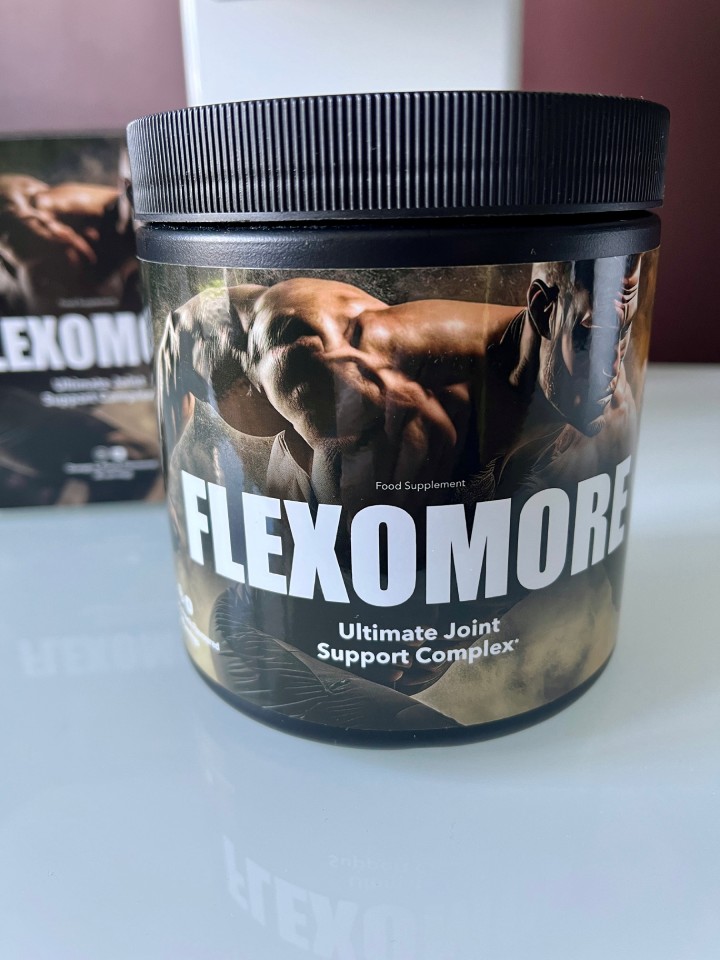
Combination products only count if both ingredients are at meaningful doses. Flexomore pairs a full glucosamine dose (1.5 g of D-glucosamine per scoop) with a supporting turmeric dose (200 mg of extract, 20 mg of curcuminoids) plus collagen peptides, MSM and boswellia. Read honestly, that is a glucosamine-led formula with turmeric in a minor role — not a curcumin product.
If turmeric is your main strategy, buy it dedicated and dosed. If glucosamine is, Flexomore covers it properly. Our review scores it 6.8/10 with that balance stated plainly.
Frequently Asked Questions
Which works faster?
Curcumin — measurable changes typically at 4–8 weeks versus 8–12 for glucosamine. Neither works in days.
Which is safer?
Both are well tolerated in trials. Glucosamine's record is exceptionally clean apart from the warfarin interaction. Curcumin's caution list (bleeding, gallbladder, rare liver reports with high-dose enhanced extracts) is slightly longer.
Is turmeric better than glucosamine for arthritis?
For osteoarthritis pain, curcumin's recent trial record reads better. For a long, cheap, well-characterised experiment, glucosamine sulfate remains the default. "Better" depends on the dose you actually take — a 20 mg curcuminoid blend loses to a full-dose glucosamine every time. See our full guides to turmeric for joint pain and whether joint supplements work.
Can turmeric replace my anti-inflammatory medication?
No supplement should be swapped for prescribed medication without your clinician. Curcumin takes weeks. NSAIDs work in hours. They are not interchangeable tools.
Last reviewed: October 2026. This article is educational and is not medical advice.
