
- Quick Answer
- Why the Evidence Looks So Contradictory
- What the Landmark Evidence Actually Found
- GAIT (2006) — the trial everyone cites
- The BMJ network meta-analysis (2010)
- The guidelines, split down the middle
- Ingredient by Ingredient: a Realistic Verdict
- So Should You Bother?
- Frequently Asked Questions
- Why do so many people swear joint supplements work?
- Do joint supplements rebuild cartilage?
- Are joint supplements safe enough to just try?
- What works better than supplements for osteoarthritis?
- Read This Next
Disclosure: This article contains affiliate links. If you buy through them, we may earn a commission at no extra cost to you. It never changes our scores or conclusions.
Quick Answer
Sometimes, a little, for some people. The largest trials of the most popular joint supplements show effects that are small, inconsistent, or below what patients can feel — which is why NICE advises against glucosamine while other expert bodies call it "possibly helpful".
The ingredients with the most defensible trial records are crystalline glucosamine sulfate, UC-II collagen and absorption-enhanced curcumin, and even those promise modest symptom relief over months, not repair. If you try one, run it as a 3-month experiment with a score sheet — not as an act of faith.
Why the Evidence Looks So Contradictory
Joint supplements have been studied for decades, yet headlines still flip between "works" and "doesn't work". Four reasons explain most of the confusion:
- Form matters. Positive glucosamine trials cluster around patented crystalline glucosamine sulfate. The big negative US trial used glucosamine hydrochloride. Reviews that pool every form blur this.
- Funding matters. A BMJ network meta-analysis (10 trials, 3,803 patients) found industry-independent trials showed smaller effects than industry-funded ones.
- Osteoarthritis pain fluctuates. People start supplements when pain peaks. Pain then eases on its own, and the supplement takes the credit. Only placebo-controlled trials can separate this — and placebo itself produces large improvements in joint-pain trials.
- Severity matters. Signals, where they exist, concentrate in moderate-to-severe pain and disappear in mild disease.
What the Landmark Evidence Actually Found
GAIT (2006) — the trial everyone cites
The NIH-funded GAIT trial randomised 1,583 people with knee osteoarthritis to glucosamine (1,500 mg), chondroitin (1,200 mg), both, the drug celecoxib, or placebo for 24 weeks. Overall, none of the supplements beat placebo. Celecoxib did. In a smaller subgroup with moderate-to-severe pain, the combination outperformed placebo — an interesting, exploratory result that marketing has since inflated into "proof".
The BMJ network meta-analysis (2010)
Pooling the large trials, glucosamine, chondroitin and their combination each reduced pain by 0.3–0.5 cm on a 10-cm scale versus placebo — below the 0.9 cm difference prespecified as the smallest patients would consider important — with no effect on joint-space narrowing.
The guidelines, split down the middle
NICE (NG226): do not offer glucosamine for osteoarthritis. The ACR/Arthritis Foundation: strongly against glucosamine, conditional support for chondroitin in hand osteoarthritis only. The AAOS: glucosamine "may be helpful" for mild-to-moderate knee osteoarthritis. European ESCEO guidance supports prescription crystalline glucosamine sulfate.
When expert bodies reading the same trials disagree this openly, the accurate consumer translation is: unproven, possibly small benefit, low risk.
Ingredient by Ingredient: a Realistic Verdict
- Glucosamine sulfate: contested. Best case is a modest effect in some users at 1,500 mg/day after 2–3 months. Safety record is excellent.
- Chondroitin: similarly mixed. Small symptom benefits in some analyses. No structural proof.
- Curcumin: the strongest anti-inflammatory trial record of the group at ~1,000 mg/day of curcuminoids in absorbable forms — still modest, still weeks not days.
- Collagen peptides / UC-II: peptides (~10 g/day) show small joint-pain improvements over ~3 months. UC-II (40 mg) beat glucosamine+chondroitin in one good trial. Promising, not settled.
- Fish oil: weak for osteoarthritis pain specifically (one large trial found low dose outperformed high dose. A long trial found no benefit over placebo) Better supported for inflammatory joint conditions.
- MSM, boswellia, ginger: smaller, shorter evidence bases. Plausible supporting roles.
So Should You Bother?
The rational case for trying a joint supplement: your pain is mild-to-moderate, you are already doing the proven basics (strengthening exercise, weight management, topical treatments), the product discloses full doses of a studied ingredient, and you can afford a 3-month experiment that might end in "did nothing".
The irrational case: expecting repair, substituting it for medical care, or stacking five products so you can never tell what helped.
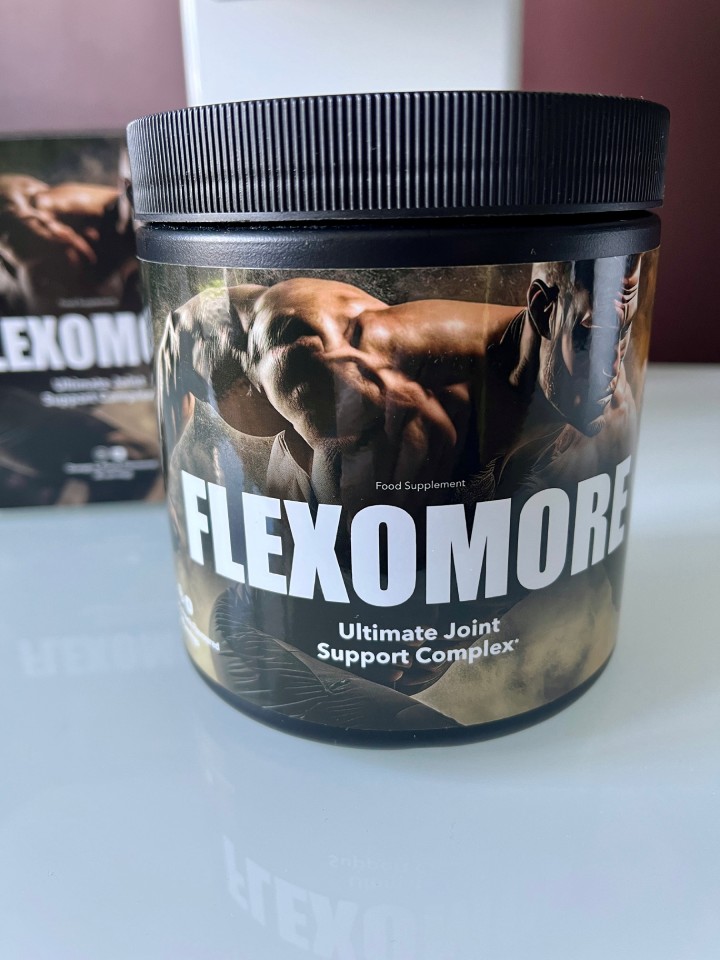
Combination formulas sit in the middle. Flexomore, for example, discloses a full 1.5 g of D-glucosamine per scoop alongside collagen peptides, MSM, boswellia and minerals — a transparent formula you can judge ingredient by ingredient, which is exactly why we score it 6.8/10 rather than dismissing or hyping it.
Its turmeric content is a supporting dose, not a trial dose, and it publishes no money-back guarantee — the kind of detail a sceptical read should catch.
Frequently Asked Questions
Why do so many people swear joint supplements work?
A mix of genuine small effects in some users, natural pain fluctuation, the strong placebo response in pain trials, and starting treatment at a pain peak. Personal experience is real but cannot separate those causes.
Do joint supplements rebuild cartilage?
No supplement has proven clinically meaningful cartilage regrowth in humans. Claims of "repair" go beyond the evidence.
Are joint supplements safe enough to just try?
The major ingredients have good safety records in trials up to three years. The important exceptions: glucosamine can raise INR in people on warfarin, shellfish-derived glucosamine needs caution with shellfish allergy, and any supplement deserves a medication check first.
What works better than supplements for osteoarthritis?
Strengthening exercise, weight loss when relevant, topical NSAIDs and clinician-guided care — the interventions guidelines put first because their evidence is stronger.
Last reviewed: October 2026. This article is educational and is not medical advice.
