
- Quick Answer
- Timelines by Ingredient
- Why They Take So Long
- What the Timeline Looks Like in Practice
- Tracking That Actually Tells You Something
- Where Combination Formulas Fit
- Frequently Asked Questions
- Can a joint supplement work in a few days?
- Should I double the dose to make it work faster?
- What if I miss days?
- When should I stop?
- Read This Next
Disclosure: This article contains affiliate links. If you buy through them, we may earn a commission at no extra cost to you. It never changes our scores or conclusions.
Quick Answer
Joint supplements are slow by design. Anti-inflammatory botanicals (boswellia, curcumin) may show something in 1–8 weeks. The structural ingredients (glucosamine, chondroitin, collagen) need 8–12 weeks before a fair judgement, with some trials running 3–6 months. Nothing legitimate works overnight. Use the 12-week rule: no clear improvement by then, stop — the same rule NHS guidance gives for glucosamine.
Timelines by Ingredient
| Ingredient | Earliest signal | Fair judgement point | Notes |
|---|---|---|---|
| Boswellia (AKBA-standardised) | 1–2 weeks | 4–6 weeks | Fastest trial signals of the common ingredients |
| Curcumin (enhanced absorption, ~1,000 mg curcuminoids) | 2–4 weeks | 8 weeks | Plain turmeric powder may never reach effective levels |
| Glucosamine sulfate (1,500 mg) | 4–6 weeks | 12 weeks | Positive trials typically ran 3–6 months |
| Chondroitin (800–1,200 mg) | 4–8 weeks | 12 weeks | Slow, structural rationale |
| Collagen peptides (~10 g) | 6–8 weeks | 12 weeks | Joint and tendon studies cluster around 90 days |
| UC-II collagen (40 mg) | 4–8 weeks | 12–24 weeks | The key trial ran 180 days |
| MSM | 2–4 weeks | 6–12 weeks | Shorter, smaller trials |
| Omega-3 (fish/krill oil) | 6–8 weeks | 12 weeks | Membrane incorporation is gradual |
Why They Take So Long
Unlike a painkiller that blocks a signal within the hour, these ingredients aim at slower biology: cartilage matrix turnover, gradual changes in inflammatory signalling, tendon collagen synthesis. Cartilage in particular is one of the slowest-turnover tissues in the body — it has no direct blood supply, so anything delivered by mouth arrives slowly and in small amounts.
Any product promising joint relief "in days" is either leaning on a fast botanical like boswellia, or on hope.
What the Timeline Looks Like in Practice
- Weeks 1–2: expect nothing structural. Boswellia or a good curcumin may take the edge off stiffness. Glucosamine and collagen will not have done anything measurable yet. Do not judge the product now.
- Weeks 3–6: the earliest honest checkpoint for the anti-inflammatory ingredients. Morning stiffness and pain scores should be drifting, not transformed.
- Weeks 8–12: decision territory for everything. If your weekly pain/stiffness scores have not clearly moved, the remaining weeks rarely rescue the result.
- Months 3–6: the window long trials use for structural ingredients. Continue only if the 12-week trend was genuinely positive.
Tracking That Actually Tells You Something
Memory is a terrible measuring instrument — pain fluctuates and good weeks overwrite bad ones. Instead: pick two measures (morning stiffness in minutes. Pain on stairs, 0–10), record them weekly in your phone, and compare the average of weeks 10–12 against your starting week.
Also note the confounders: a new exercise programme, weight change or a steroid injection during the trial will muddy any conclusion.
Where Combination Formulas Fit
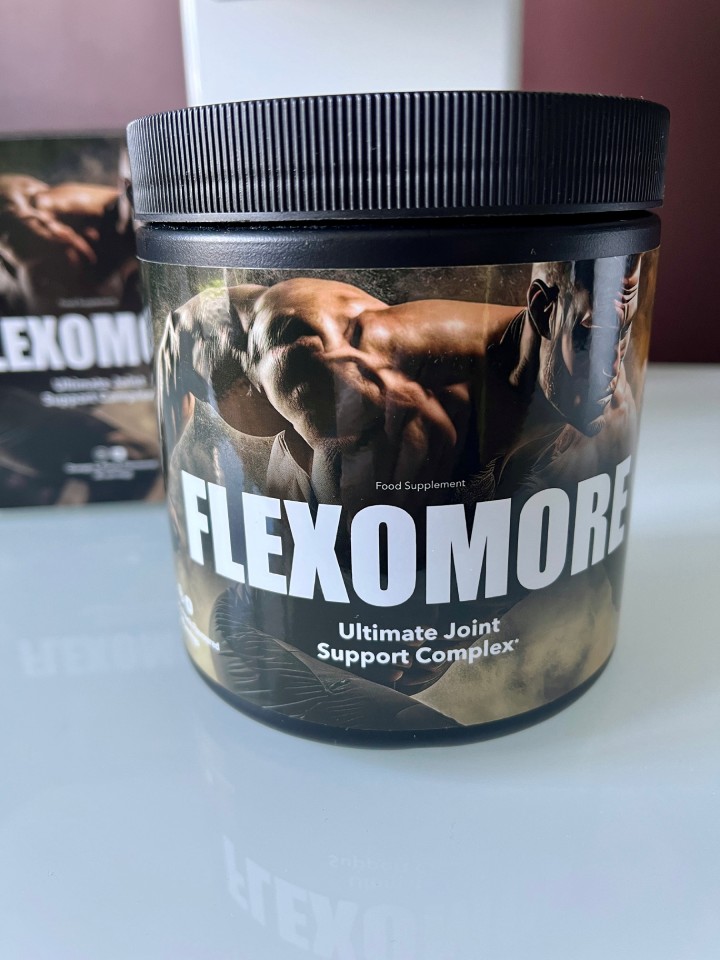
A formula like Flexomore mixes fast and slow lanes: boswellia and ginger sit in the early-signal group, while its headline ingredient — a full 1.5 g of D-glucosamine per scoop — is a 12-week ingredient, and its Tendoforte® collagen was studied over a 3-month period (paired with calf exercises, in runners with Achilles tendon pain).
Judge it on the 12-week clock, not the first fortnight. Note its turmeric is a supporting dose, well below the amount curcumin trials use, so do not credit or blame "turmeric" for what you feel.
For the full audit of the formula — every amount checked against the trial record — see our Flexomore review.
Frequently Asked Questions
Can a joint supplement work in a few days?
Only the fast botanicals show trial signals inside two weeks, and even those are modest. Day-level dramatic relief claims are marketing.
Should I double the dose to make it work faster?
No. Trials use fixed doses. Doubling adds cost and side-effect risk (and for a powder like Flexomore, a second scoop is a labelled option only for people training five or more days a week — not a speed hack).
What if I miss days?
Occasional misses are human. Chronic inconsistency invalidates the experiment. These ingredients rely on daily accumulation.
When should I stop?
At 12 weeks without clear improvement — or sooner for side effects, new medication interactions, or worsening symptoms that need medical review.
Last reviewed: October 2026. This article is educational and is not medical advice.
