
- Quick Answer
- What Each One Is
- The Evidence, Head to Head
- Safety Differences
- Which Should You Choose?
- A Note on Formulas That Pick a Side
- Frequently Asked Questions
- Is the combination proven better than either alone?
- Glucosamine sulfate or hydrochloride?
- How long until I know?
- Can I take both with other joint ingredients?
- Read This Next
Disclosure: This article contains affiliate links. If you buy through them, we may earn a commission at no extra cost to you. It never changes our scores or conclusions.
Quick Answer
Glucosamine and chondroitin are both cartilage components with modest, contested evidence. Glucosamine sulfate (1,500 mg/day) has the slightly stronger individual case — mostly from European trials of the crystalline sulfate form. Chondroitin (800–1,200 mg/day) shows small symptom effects in some analyses. The combination beat placebo only in the moderate-to-severe subgroup of one major trial.
Neither is recommended by NICE. If you choose one, choose glucosamine sulfate at full dose and judge it at 12 weeks.
What Each One Is
| Glucosamine | Chondroitin | |
|---|---|---|
| What it is | An amino sugar — a building block of the glycosaminoglycans in cartilage | A glycosaminoglycan itself — a major structural component of cartilage that holds water and resists compression |
| Proposed role | Supplies raw material for cartilage matrix; possible mild anti-inflammatory effect | Helps cartilage retain water and elasticity; may inhibit cartilage-degrading enzymes |
| Usual source | Shellfish shells (or fermented, vegan versions) | Bovine or shark cartilage; some fermented versions |
| Studied dose | 1,500 mg/day | 800–1,200 mg/day |
| Forms matter? | Yes — sulfate (esp. crystalline) vs hydrochloride performed differently in trials | Quality/purity varies; pharmaceutical-grade material drove the better trials |
The Evidence, Head to Head
GAIT (2006, n=1,583): overall, neither alone nor combined beat placebo for knee osteoarthritis pain. The combination showed a signal only in the moderate-to-severe pain subgroup. BMJ network meta-analysis (2010): pooled effects were −0.4 cm (glucosamine), −0.3 cm (chondroitin) and −0.5 cm (combination) on a 10-cm pain scale — all below what patients would notice as important.
MOVES trial: in severe knee osteoarthritis, the combination performed comparably to the drug celecoxib over six months — the combination's best result. Guideline bodies split: NICE says do not offer either. The ACR conditionally supports chondroitin for hand osteoarthritis. The AAOS allows glucosamine "may be helpful".
The fair reading: both are low-risk, low-to-modest-reward options whose benefits, when they occur, take 2–3 months and are clearest in more painful joints.
Safety Differences
- Shellfish: glucosamine is commonly shellfish-derived (the allergen protein sits in the flesh, not the shell, and a small blinded challenge was tolerated — but labels warn, and caution is the standard advice). Chondroitin is usually bovine, avoiding that issue.
- Warfarin: glucosamine has documented INR-raising case reports — tell your anticoagulant clinic before starting.
- Everyday tolerance: both are well tolerated. Mild stomach effects (nausea, heartburn, loose stool) and headache are the common complaints. A Cochrane review found glucosamine's adverse events essentially equal to placebo.
- Diabetes: trials show no meaningful effect on blood sugar or HbA1c. Product licences still advise monitoring when starting.
Which Should You Choose?
- One ingredient only: glucosamine sulfate, 1,500 mg/day — the deeper evidence base.
- Moderate-to-severe knee pain, budget allows: the combination is the version with the GAIT subgroup and MOVES results behind it.
- Shellfish allergy: chondroitin, or a certified vegan glucosamine — and check every label.
- On warfarin: neither without your clinician's involvement.
- Expecting transformation: neither. See our honest guide to whether joint supplements really work.
A Note on Formulas That Pick a Side
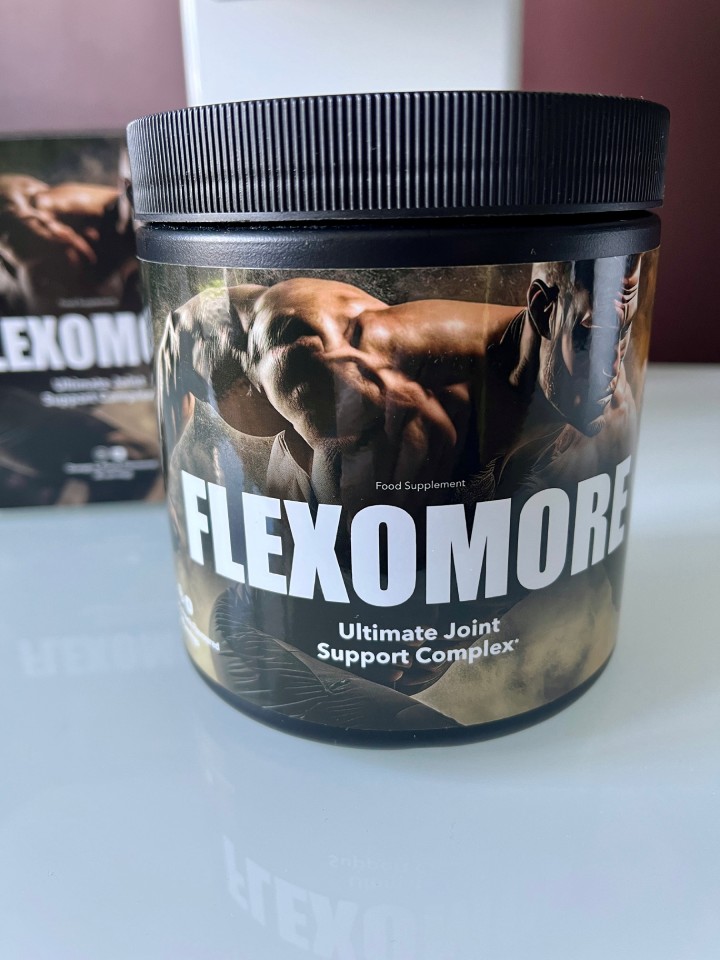
Not every formula includes both. Flexomore, the joint powder in our catalogue, contains glucosamine sulfate at the full studied amount (2,000 mg of glucosamine sulfate 2KCl per scoop, providing 1.5 g D-glucosamine) but no chondroitin — it spends the rest of the formula on collagen peptides, MSM, boswellia and minerals instead.
That is a legitimate design choice, but if the glucosamine-plus-chondroitin combination is specifically what you want to test, this is not the product that tests it. We score it 6.8/10 and keep that trade-off visible in our review.
Frequently Asked Questions
Is the combination proven better than either alone?
Not proven. The supportive results are a subgroup finding (GAIT) and one trial against a drug comparator (MOVES) Pooled analyses show effects below the noticeable threshold.
Glucosamine sulfate or hydrochloride?
Sulfate — specifically crystalline glucosamine sulfate — is the form behind most positive trials. Hydrochloride has the weaker record despite being common in US products.
How long until I know?
Twelve weeks at full dose. Stop if nothing has changed. That is the NHS's practical advice too.
Can I take both with other joint ingredients?
They are routinely combined with MSM, collagen and botanicals. The warfarin interaction and shellfish source are the checks that matter most.
Last reviewed: October 2026. This article is educational and is not medical advice.
