
- Quick Answer
- What Saw Palmetto Is
- The DHT Claim, Examined
- The inhibition figures are test-tube figures
- The PSA argument
- What about topical saw palmetto?
- What the Hair Trials Actually Found
- Prager 2002: the early botanical-blend trial
- Rossi 2012: the two-year comparison
- The 2020 systematic review's pooled picture
- The 2023 RCT
- Why Stabilisation Is the Realistic Claim
- How Long Saw Palmetto Takes
- The Standardisation Warning, Applied
- Women and Saw Palmetto
- Frequently Asked Questions
- Does saw palmetto really block DHT?
- How effective is saw palmetto compared with finasteride?
- What dose did the hair trials use?
- How long before I can judge whether it is doing anything?
- Can women take saw palmetto for hair loss?
- Who Should Buy Folisin — and Who Should Skip It
- Read This Next
Disclosure: This article contains affiliate links. If you buy through them, we may earn a commission at no extra cost to you. It never changes our conclusions.
Quick Answer
Saw palmetto has a real but modest evidence signal in hair loss: small trials and one systematic review point to slower loss and stabilisation in some men, not regrowth, and the ingredient is far weaker than finasteride in the only head-to-head test ever run.
The catch almost no ranking page applies: the hair trials used extracts standardised to 85–95% fatty acids. Most retail products do not match that specification — including the formula this article audits, Folisin, whose saw palmetto is standardised to 25%.
Best for: men with early, diffuse thinning who want a fully disclosed nutritional formula and accept support, not regrowth. Folisin scores 5.9/10 in our review — its transparency is the strength; its lead ingredient's standardisation gap is the weakness.
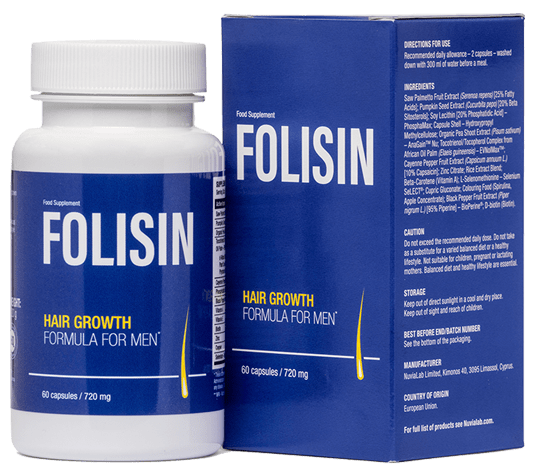
Our Recommendation — Folisin
Score: 5.9/10 · Best for: men with early, diffuse thinning who want a fully disclosed nutritional formula — it supports hair; it does not regrow it. Main caution: the saw palmetto is standardised at 25% fatty acids against 85–95% in the trial extracts, and no money-back guarantee is published. Fair trial: the three-bottle pack at $46.66 a bottle — a fair trial of Folisin is a three-bottle commitment; the six-bottle pack is the cheapest continuation, after a completed trial.
What Saw Palmetto Is
Saw palmetto is an extract of the berries of Serenoa repens, a dwarf palm native to the south-eastern United States. The extract is a mixture of fatty acids and plant sterols, and its reputation was built somewhere else entirely: the prostate.
For decades it has been one of the most-used herbal products for urinary symptoms of an enlarged prostate. When Bent et al. (2006) ran their New England Journal of Medicine trial, they noted that more than two million men in the United States were already taking it for that purpose.
The migration into hair formulas rests on a theory. Pattern hair loss is driven by dihydrotestosterone (DHT), a hormone made from testosterone by the enzyme 5-alpha-reductase. Finasteride treats hair loss by blocking that enzyme. Saw palmetto is marketed as doing something similar, gently, and naturally, from a plant.
That theory is why the ingredient sits at the top of so many hair supplement panels — including Folisin's, where it is the largest single ingredient at 320 mg per daily serving. Whether the theory survives contact with the trial record is the subject of this article.
One point before the evidence: "saw palmetto" on a label is not one thing. Extracts vary in how they are produced and, critically, in their fatty-acid content — the fraction thought to carry the activity. That variation turns out to matter more than the milligram count, and it is where most buying advice in this category quietly fails.
The reference extracts come from prostate research, where manufacturers learned early that a berry extract is only reproducible if its composition is pinned down. The standard that emerged there — a liposterolic extract standardised to 85–95% fatty acids and sterols — is the specification the serious trials, hair and prostate alike, were run on.
Production method is part of that story. Solvent and carbon-dioxide extraction concentrate the fatty-acid fraction; simple berry powder is mostly berry. Two products can both say "saw palmetto 320 mg" and deliver materially different chemistry, which is precisely why the standardisation percentage, where it is printed, is the number to compare.
The DHT Claim, Examined
The inhibition figures are test-tube figures
Search for saw palmetto and DHT and you will meet confident percentages: the extract inhibits 5-alpha-reductase by this much, blocks DHT binding by that much. Those numbers come from laboratory work — enzyme preparations and cell systems — not from measuring DHT in men who swallowed the extract.
That distinction is not pedantry. An extract can inhibit an enzyme in a dish at concentrations never reached in human tissue, and many plant compounds do exactly that. What matters for a buyer is whether oral saw palmetto measurably lowers DHT in people, at supplement doses, in blood or scalp.
On that question, the honest answer is that no equivalent human number exists. Finasteride's DHT reduction was measured directly in treated men during its trial programme, which is why its effect can be stated as a finding. Saw palmetto has no comparable measurement to quote — only the laboratory framing, repeated from label to label until it reads like a clinical result.
The PSA argument
There is, however, an indirect test, and it is a good one. PSA — prostate-specific antigen — is sensitive to androgen activity in the prostate. Drugs that genuinely suppress DHT lower PSA readings substantially; that is established pharmacology, and clinicians adjust PSA interpretation for men taking them.
Saw palmetto does not do this. In Bent et al.'s trial, 225 men over 49 with moderate-to-severe prostate symptoms took 320 mg/day of saw palmetto extract or placebo for a year, and there was no difference between the groups in serum PSA levels at the end of it.
The larger CAMUS trial pushed the dose far beyond anything a hair product uses — escalating to 960 mg/day over 72 weeks in 369 men aged 45 and older (Barry et al. 2011, JAMA) — and the ingredient's overall profile remained indistinguishable from placebo across its outcomes.
None of this proves saw palmetto has zero effect on DHT anywhere in the body. A weak or local effect could exist below what PSA would register. But it is very hard to square with the strong systemic DHT suppression implied by the phrase "natural DHT blocker".
Our phrasing, used consistently across this site: saw palmetto is a mild anti-androgen candidate with laboratory support and a modest clinical signal in hair — not a measured DHT blocker. Any page that prints a human DHT percentage for it is printing a number that does not exist.
What about topical saw palmetto?
Topical products exist, and the 2023 trial included a topical arm: hair fall fell by 22% in the topical group versus placebo over its 16 weeks. One small trial, from an interested source, is the whole of that evidence — thinner even than the oral record, and no basis for the confident claims on scalp serums.
What the Hair Trials Actually Found
Prager 2002: the early botanical-blend trial
The earliest randomised trial in this area, Prager et al. (2002) in the Journal of Alternative and Complementary Medicine, tested a blend of botanically derived 5-alpha-reductase inhibitors — saw palmetto alongside beta-sitosterol and other plant compounds — against placebo in men with androgenetic alopecia.
The blend group reported conservation of hair density and quality relative to placebo. It was a small, early study, and because the product was a blend, it cannot tell us what saw palmetto alone did. It is best read as the trial that started the category, not as proof of the ingredient.
Rossi 2012: the two-year comparison
The most informative hair study is the head-to-head: Rossi et al. (2012) followed 100 men with mild-to-moderate androgenetic alopecia for two years, one group taking saw palmetto 320 mg/day, the other finasteride 1 mg/day.
Hair growth improved in 38% of the men taking saw palmetto 320 mg/day versus 68% of the men taking finasteride 1 mg/day over those two years. The trial was open-label — everyone knew what they were taking — which softens how firmly the numbers can be held, and we give the full anatomy in our saw palmetto vs finasteride comparison.
Two things are worth holding together. First, 38% improving is not nothing: the saw palmetto arm did better than standing still, and stabilisation was its more common outcome. Second, the gap to the drug is the honest headline — this is a weaker intervention by a wide margin.
Note also what the trial did not include: no placebo arm. Rossi compared two active treatments, so the study can rank saw palmetto against finasteride but cannot, by itself, separate saw palmetto's effect from the natural course of the condition over two years.
The 2020 systematic review's pooled picture
Evron et al. (2020), in Skin Appendage Disorders, gathered the alopecia literature: five randomised trials and two prospective cohort studies of topical and oral saw-palmetto supplements at doses between 100 and 320 mg.
The review reports a 60% improvement in overall hair quality, a 27% improvement in total hair count, and increased hair density in 83.3% of patients across the studies it pooled. Those are the review's own summary figures, pooled across different products, doses, designs and endpoints — useful as a map of the literature's direction, not as a prediction for any individual buyer.
The same review is candid about its base: robust, high-quality data are lacking. Most of the underlying studies are small, several test blends rather than the ingredient alone, and publication bias in a commercially popular category is a live concern.
The two cohort studies in the review underline the point. One tested a saw-palmetto-containing tablet in 35 men over six months and reported improved density ratings; without a placebo group, that design cannot separate the ingredient from time, expectation and the other compounds in the tablet.
The 2023 RCT
The most recent trial, Sudeep et al. (2023) in Clinical, Cosmetic and Investigational Dermatology, randomised 80 men and women with androgenetic alopecia to a standardised saw palmetto oil or placebo, orally or topically, for 16 weeks.
Hair fall fell by 29% in the oral group versus placebo over the 16 weeks, and hair density rose by 5.17% versus placebo in the same oral arm. Those are real placebo-controlled differences.
They come with a disclosure we print whenever we cite this study: several of its authors were affiliated with the company behind the tested oil. The extract was also standardised for beta-sitosterol content, not for the fatty-acid profile of the older trials.
Read the four studies together and a consistent picture forms: a modest stabilisation signal, from small trials, with the strongest single result belonging to a comparison the ingredient clearly lost. That is the evidence base the marketing phrase "clinically proven DHT blocker" is built on.
Why Stabilisation Is the Realistic Claim
It helps to be precise about the three outcomes hair products blur together. Regrowth means new hair where follicles had stopped producing it. Improvement means existing hair becoming denser or thicker on measurement. Stabilisation means the loss stops progressing — you keep what you have.
Across saw palmetto's record, stabilisation is the outcome that recurs. In the systematic review's summary of Rossi's trial, disease progression stabilised in 52% of the men taking saw palmetto 320 mg/day over the two years — a keeping result, in an open-label study, not a regrowth result.
That framing matters for expectations. A man whose crown is thinning slowly and whose realistic goal is to hold the line while avoiding prescription medication is describing the one job this ingredient has any evidence for. A man who wants a receded hairline rebuilt is describing a job no supplement has evidence for, this one included.
It also matters for judging. Stabilisation is invisible week to week — nothing happening is the success state — which is why photographs at fixed intervals, not mirror impressions, are the only fair test.
How Long Saw Palmetto Takes
Nothing in this ingredient's record is fast. The trials measure at three to six months at the earliest: the 2023 RCT ran 16 weeks, Prager's blend trial ran about six months, and Rossi's comparison needed two years to separate stabilisation from improvement.
Hair biology sets the floor. A follicle that is going to respond has to shift growth phases and then produce a visible shaft, and that cycle runs in months regardless of what caused the shift. Any saw palmetto product promising visible change in weeks is promising something its own ingredient's trials never measured.
Our general rule for the category — judge on shedding and standardised photographs at three months, and apply a hard stopping rule at six — is set out in the Set R guide on how long hair supplements take to work, and it applies to saw palmetto formulas unchanged.
The Standardisation Warning, Applied
Here is the audit this category's reviews almost never run. The extracts used in the hair trials were standardised — concentrated and verified — to contain 85–95% fatty acids. Fatty acids are the fraction believed to carry the anti-androgen activity, so the standardisation figure is, in effect, the strength printed on the bottle.
Now apply it. A 320 mg capsule of a trial-standardised extract delivers roughly 272–304 mg of fatty acids. A 320 mg capsule standardised to 25% delivers about 80 mg. Same headline milligrams; roughly a third of the fraction the trials actually tested.
Folisin is the worked example, and we choose it because its panel is honest enough to audit: its Folisin label prints saw palmetto at 320 mg standardised to 25% fatty acids. The milligram figure matches Rossi's trial dose exactly. The standardisation does not come close to the trial specification.
To be fair to the product: printing the 25% figure at all puts it ahead of competitors who hide behind proprietary blends and print nothing. A buyer can run this audit on Folisin precisely because the maker disclosed the number. But disclosure does not close the gap — it reveals it.
There is also a price signal hiding here. High-standardisation liposterolic extracts cost more to produce than dilute ones, which is why trial-strength specifications cluster in pharmacy-grade prostate products rather than in mass-market hair blends. A cheap 320 mg capsule is usually cheap for this reason.
The buying rule that follows: when you compare saw palmetto products, compare milligrams multiplied by standardisation, not milligrams alone. A 320 mg capsule at 85% is a different intervention from a 320 mg capsule at 25%, whatever the front of the bottle implies.
In practice, that means looking for three things on a panel: the extract amount per daily serving, the standardisation percentage, and the fraction it refers to (fatty acids, or fatty acids and sterols). If any of the three is missing, the product cannot be compared with the trials at all — which is itself the finding.
Our dosage article works through the arithmetic in full: saw palmetto dosage for hair loss.
Women and Saw Palmetto
This section is a safety note, not an invitation. Saw palmetto is sometimes marketed to women with thinning hair, and a small number of the pooled studies included women — the 2023 trial among them. The evidence in women is thinner than the already-thin evidence in men.
The caution that leads: true 5-alpha-reductase inhibitors such as finasteride are contraindicated in pregnancy because blocking that enzyme can interfere with the genital development of a male fetus. Saw palmetto is sold precisely on its claimed anti-androgen activity, and there is no safety data establishing what it does in pregnancy.
Drug monographs therefore advise women who are pregnant, or who could become pregnant, to avoid saw palmetto rather than experiment with it. The same caution extends to breastfeeding, where data are likewise absent. Our saw palmetto side effects article covers the full safety picture, including interactions.
Our Recommendation — Folisin
Score: 5.9/10 · Best for: men with early, diffuse thinning who want a fully disclosed nutritional formula — it supports hair; it does not regrow it. Main caution: the saw palmetto is standardised at 25% fatty acids against 85–95% in the trial extracts, and no money-back guarantee is published. Fair trial: the three-bottle pack at $46.66 a bottle — a fair trial of Folisin is a three-bottle commitment; the six-bottle pack is the cheapest continuation, after a completed trial.
Frequently Asked Questions
Does saw palmetto really block DHT?
Not in any measured human sense. It inhibits 5-alpha-reductase in laboratory systems, but no trial has measured a DHT reduction in people taking it at supplement doses, and it did not move PSA — an androgen-sensitive marker — in a 225-man, one-year trial at 320 mg/day versus placebo (Bent et al. 2006). Treat "DHT blocker" as marketing shorthand for a much weaker claim.
How effective is saw palmetto compared with finasteride?
In the only head-to-head, hair growth improved in 38% of men on saw palmetto 320 mg/day versus 68% of men on finasteride 1 mg/day over two years in 100 men with mild-to-moderate pattern loss (Rossi et al. 2012, open-label). Finasteride is the stronger intervention by a wide margin; saw palmetto's case is preference, access and tolerability.
What dose did the hair trials use?
Between 100 and 320 mg/day of extract across the reviewed studies, with 320 mg/day in the two-year comparison — of extracts standardised to 85–95% fatty acids. Dose and standardisation have to be read together; our dosage article does the full arithmetic.
How long before I can judge whether it is doing anything?
Three months minimum, judged on shedding and standardised photographs; six months for a fair verdict. The trials themselves measure at 16 weeks to two years. Anything promising visible results in a few weeks is not describing this ingredient's evidence.
Can women take saw palmetto for hair loss?
The evidence in women is minimal, and the safety caution is real: because it is sold on anti-androgen activity and true 5-alpha-reductase inhibitors are contraindicated in pregnancy, monographs advise women who are or could become pregnant to avoid it. Anyone else considering it should raise it with a clinician first.
Who Should Buy Folisin — and Who Should Skip It
Buy it if your thinning is early and diffuse, you have decided against finasteride or want nutritional support alongside a clinician's plan, and you value a label that prints every amount and standardisation — including the 25% figure that lets you audit the product honestly. Set the expectation at stabilisation and shedding support, judge at three to six months on photographs, and note there is no published money-back guarantee behind the trial.
Skip it if you want the intervention with the strongest evidence — that is finasteride, and this formula lost that comparison by a wide margin.
Skip it if your loss is advanced, patchy or sudden, which needs a dermatologist rather than a supplement. And skip it if the standardisation gap decides it for you: a trial-strength saw palmetto extract at 85–95% fatty acids is a different purchase from this panel's 25%, and Folisin's own label gives you the numbers to see that.
Last reviewed: October 2026. This article is educational and is not medical advice.
