
- Quick Answer
- What Actually Changes After 40 (and 50)
- Androgen trajectory and pattern progression
- Slower cycles, longer timelines
- The prostate overlap
- Rule Out the Fixable Causes First
- Medications That Can Shed Hair
- The Ingredients, Graded for This Age Group
- Saw palmetto
- Biotin: deficiency-only
- Zinc: deficiency-only
- Phosphatidic acid: the evidence check
- The Hairline Question
- Can a Supplement Replace Minoxidil or Finasteride?
- How Long to Give It at This Age
- The Greying Question
- A Buyer's Checklist for This Age Group
- Frequently Asked Questions
- What is the best hair supplement for men over 40?
- Should men over 50 take different hair supplements?
- Can supplements restore a receding hairline?
- How long should a man over 40 give a hair supplement?
- Who Should Buy Folisin — and Who Should Skip It
- Read This Next
Disclosure: This article contains affiliate links. If you buy through them, we may earn a commission at no extra cost to you. It never changes our conclusions.
Quick Answer
After 40, hair loss is still mostly genetic — but the picture around it changes. Correctable causes become more common, medications that affect hair multiply, and the prostate enters the conversation at the same age, which changes what a supplement's ingredients can interfere with.
The order of operations matters more than the product: test the fixable causes first (iron stores, vitamin D, thyroid), then grade any supplement ingredient by ingredient — not by "for men over 40" branding, which is a marketing segment, not a formulation difference.
Best for: men over 40 with early, diffuse thinning who will test first and audit the label. The worked example in this article, Folisin, scores 5.9/10: a fully disclosed panel aimed squarely at this age group, with no published guarantee.
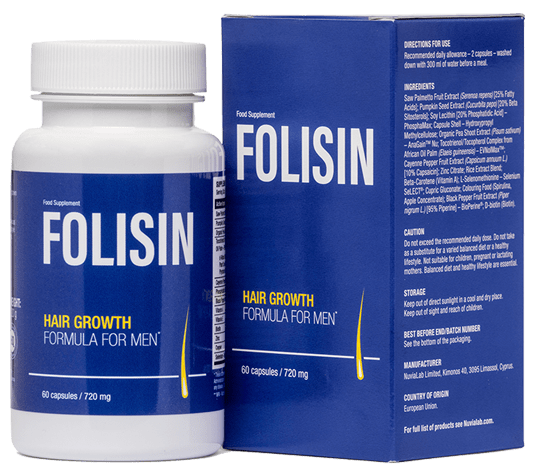
Our Recommendation — Folisin
Score: 5.9/10 · Best for: men with early, diffuse thinning who want a fully disclosed nutritional formula — it supports hair; it does not regrow it. Main caution: the saw palmetto is standardised at 25% fatty acids against 85–95% in the trial extracts, and no money-back guarantee is published. Fair trial: the three-bottle pack at $46.66 a bottle — a fair trial of Folisin is a three-bottle commitment; the six-bottle pack is the cheapest continuation, after a completed trial.
What Actually Changes After 40 (and 50)
Androgen trajectory and pattern progression
The underlying engine of pattern loss does not retire at 40. Follicles genetically sensitive to DHT keep miniaturising on their own schedule; by the fifth and sixth decades, a larger share of men have visible loss, and thinning that was confined to the crown joins up with frontal recession.
Androgen levels drift downward with age, which tempts a "less testosterone, less loss" argument. It does not follow: susceptibility lives in the follicle, not in the hormone level, and pattern loss progresses in men whose testosterone is unremarkable or low. Age changes the context of hair loss more than its core mechanism.
Slower cycles, longer timelines
Hair growth slows with age — shafts grow more slowly and emerge finer, and the growth phase shortens. Practically, every intervention at 50 runs on a slower clock than the same intervention at 30: shedding changes take longer to show, and density changes longer still. Trial timelines quoted from younger populations are optimistic for this age group, and judgement windows need extending, as we set out below.
The prostate overlap
The overlap nobody mentions in hair marketing: the years when men buy hair supplements are the years when prostate symptoms arrive, prostate medication starts, and PSA monitoring begins. That matters for supplements in three concrete ways.
First, a flagship hair ingredient — saw palmetto — is a prostate ingredient, with interactions and overlaps that our side effects article covers. Second, urinary symptoms self-treated with a "hair" formula can mask a prostate that needs assessing. Third, the blood tests of prostate age — PSA, testosterone, thyroid — are among the assays that high-dose biotin can distort, which is why the biotin section below is not a footnote.
Rule Out the Fixable Causes First
Before any supplement is graded, the causes a supplement could actually fix have to be looked for — because at this age they are common, and because no blend can correct a deficiency it does not contain.
The panel that matters: ferritin (iron stores — the deficiency with the longest hair evidence behind it), 25-OH vitamin D, and thyroid function (TSH, with free T4 if indicated). Add a medication review: several common prescriptions in this age group, from some blood-pressure drugs to anticoagulants, list hair shedding among their effects.
Our Set R guide to vitamin deficiencies that cause hair loss works through the evidence nutrient by nutrient and reaches the rule this article runs on: test first, then fill the actual gap with the actual nutrient. A man whose ferritin is low needs iron, which hair formulas — including the one audited below — typically do not contain.
And a man whose panel comes back normal has learned something worth more than a bottle: his loss is the genetic kind, and his choices are the proven treatments, cosmetic management, or acceptance — with supplements demoted to optional support, honestly labelled as such.
Scalp health belongs on the same checklist. Seborrhoeic dermatitis and scalp psoriasis are common in this age group, visibly inflame the scalp, and worsen shedding from follicles that are otherwise healthy. They are also treatable, cheaply, with medicated shampoos and a clinician's input — another fixable cause that no oral formula addresses and that a "test first" visit tends to catch.
One testing caution belongs to this age group specifically. If you already take a biotin-containing supplement, tell the lab before the draw. At the 500–1,000 µg doses typical of hair formulas, biotin can distort biotin-based assays — thyroid and testosterone among them — and a distorted panel sends the whole "test first" strategy off course. Our dedicated article, biotin and blood tests, is the full briefing.
Medications That Can Shed Hair
A cause of thinning that barely exists at 25 is routine at 50: the prescription list. Several widely used drug classes are associated with telogen effluvium — a shedding surge that begins two to three months after a drug is started or its dose changes, which is why the connection is so often missed.
The classes most often named in the clinical literature include some blood-pressure medicines (certain beta-blockers and ACE inhibitors), anticoagulants, some antidepressants, anticonvulsants, and retinoid acne treatments in younger users. Statins appear in case reports. The point is not that any given drug is guilty — most users of these medicines keep their hair — but that a new shedding problem at this age deserves a timeline review before a supplement purchase.
Two rules govern this section. First, never stop or adjust a prescribed medicine over hair: the conditions those drugs treat outrank cosmetic concerns by an order of magnitude. Second, bring the timeline to the prescriber — "the shedding started about three months after we changed this dose" is exactly the kind of observation that lets a clinician test the connection safely, sometimes by substitution.
If a medication is the cause, no supplement fixes it, and the months spent trialling one are months the actual cause goes unexamined. That is the age-specific version of this site's standing rule: diagnose before you supplement.
The Ingredients, Graded for This Age Group
Saw palmetto
The best-known hair botanical, graded fully in our saw palmetto for hair loss hub: a modest stabilisation signal in small trials, from extracts standardised to 85–95% fatty acids, far weaker than finasteride in the head-to-head (38% versus 68% of men improving over two years in 100 men, Rossi et al. 2012, open-label).
For this age group, add the prostate file. The ingredient's big trials are prostate trials; its dose was cleared for safety up to 960 mg/day in 369 men aged 45 and older over 72 weeks in CAMUS (Barry et al. 2011) — a reassuring safety record in exactly this demographic.
The caution runs the other way: if you take tamsulosin or another prostate drug, or your urinary symptoms are unassessed, the supplement conversation comes after the medical one.
Biotin: deficiency-only
Biotin is the most oversold name in hair care, and the verdict has been stable across reviews for years: no demonstrated benefit for men who are not deficient, and true deficiency is rare. Our Set R article on biotin for hair loss gives the full record.
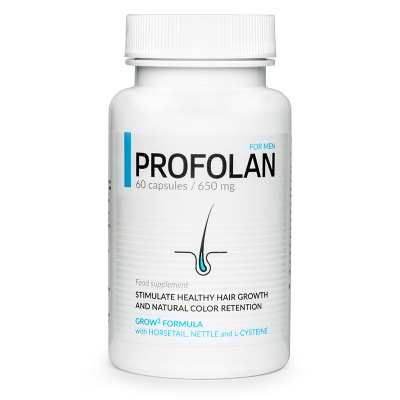
For men over 40, biotin's real significance is not efficacy but interference: it is the ingredient most likely to corrupt the blood tests this age group actually gets. A formula's biotin dose is therefore a safety specification, not a selling point — 500 µg (Folisin) or 900 µg (Profolan) both sit in the range where disclosure to the lab is the correct protocol.
Zinc: deficiency-only
Zinc follows the same rule as biotin with a cleaner deficiency story: low zinc is genuinely associated with shedding, and correcting a measured shortfall is rational. Supplementing zinc blindly is not — excess zinc depletes copper, which is why competent formulas pair the two (the audited formula's 10 mg zinc with 1 mg copper is the correct pattern) and why "more zinc" is a worse strategy than "measured zinc".
Phosphatidic acid: the evidence check
Phosphatidic acid appears in newer formulas — 50 mg of it, as PhosphaMax from soy lecithin, in the product audited below. Its research home is muscle protein signalling: resistance-training studies, at doses many times higher than 50 mg, examining strength and lean mass.
For hair, we could find no published human trial. That is the complete evidence check: a muscle-research ingredient, at a fraction of its muscle-research dose, in a hair product, with no hair data. It may be harmless ballast; it is not a reason to buy anything, and a formula's score should treat it as decoration until a hair study exists.
The Hairline Question
Mostly no. What supplements can plausibly influence — shedding rates, hair quality, diffuse thinning across the top — is a different map from a receded hairline, where follicles have typically miniaturised past the point any nutrient reaches.
The pattern evidence agrees: in the one head-to-head, saw palmetto's effect concentrated at the crown, not the front (Rossi 2012). If your concern is a hairline that has already moved, the honest options are the proven treatments discussed early, surgical restoration, or styling — and any product implying otherwise, at any age, is selling against its own ingredients' record. The triage between shedding and pattern loss is in shedding vs pattern baldness.
Can a Supplement Replace Minoxidil or Finasteride?
No — and at this age the question usually arrives wearing a specific disguise: a man already prescribed one of them, wondering whether a "natural" formula lets him stop. It does not. The drugs have placebo-controlled evidence against pattern loss; no supplement does, and stopping a working drug to test a supplement trades a measured effect for an unmeasured one.
The full comparison — what each treatment class can realistically do — is our Set R article on hair supplements vs minoxidil and finasteride. This article's narrower point: supplements in this age group are adjuncts and nutritional insurance, and are mis-sold whenever they are positioned as replacements.
How Long to Give It at This Age
Slower cycles mean longer windows. Where our general category rule judges shedding at three months and applies a hard stopping rule at six, men over 40 should treat six months as the first fair verdict on density — with photographs, in fixed light, from day one.
The class timeline, month by month, is in how long hair supplements take to work. The age-specific addition is discipline about the exit: a supplement trial without a deadline becomes a subscription, and at this age the opportunity cost is real — follicles preserved early respond to proven treatment better than follicles addressed late.
The Greying Question
Briefly, because it is asked constantly: no supplement has credible evidence of reversing greying. Some formulas position copper and selenium as pigmentation support — both are nutrients involved in normal pigment biology, and copper carries an authorised nutrient-function claim about maintaining normal hair pigmentation.
Maintaining normal pigmentation in a nourished person is a different claim from restoring colour to grey hair, and the step from one to the other exists only in advertising. If a "for over 40" formula leads with grey reversal, grade everything else on its label down a notch for company it keeps.
The popular mechanism story — that greying follicles accumulate hydrogen peroxide as a protective enzyme fades with age — is a genuine research finding about why hair greys. It has not produced a supplement that reverses it. Antioxidant formulas borrowed the vocabulary of that research without borrowing any of its results, and at this age, where greying and thinning arrive together, the two claims are deliberately bundled so each borrows the other's credibility.
A Buyer's Checklist for This Age Group
Five checks, in the order we apply them:
1. Studied doses. Does each headline ingredient sit at the dose its evidence used? (AnaGain: 100 mg studied. Tocotrienols: 100 mg studied. Check both, every time.)
2. Standardisation printed. For botanical extracts, the percentage is the dose's other half — 85–95% fatty acids is the saw palmetto trial specification; anything far below it is a different intervention.
3. No proprietary-blend hiding. If amounts are grouped and undisclosed, the first two checks are impossible — treat that as a failing grade, not a neutral one.
4. Interaction honesty. At this age: prostate medication, anticoagulants, and the biotin/lab-test protocol should be addressed on the label or by your clinician before purchase.
5. Guarantee in writing. A six-month judgement window deserves a guarantee that covers a fair part of it — stated in days, in the terms, not as a badge.
Scored against its own checklist, Folisin passes disclosure outright — every amount and standardisation printed — and passes the AnaGain dose check exactly.
It fails the saw palmetto standardisation check (25% against the 85–95% trial specification) and the tocotrienol dose check (12.10 mg delivered against 100 mg trialled). It addresses interactions with a printed EU caution block, and publishes no money-back guarantee. That mixed card, fairly typical of the better end of this market, is what 5.9/10 looks like.
Price belongs in the audit too. At $69.99 for a single bottle, or $35.00 a bottle on the six-bottle pack, a six-month fair trial costs between $210 and $420 before the $12-per-order shipping. Against a guarantee of zero days, that is the buyer's money at risk for the full experiment — the arithmetic the checklist's fifth item exists to force.
Our Recommendation — Folisin
Score: 5.9/10 · Best for: men with early, diffuse thinning who want a fully disclosed nutritional formula — it supports hair; it does not regrow it. Main caution: the saw palmetto is standardised at 25% fatty acids against 85–95% in the trial extracts, and no money-back guarantee is published. Fair trial: the three-bottle pack at $46.66 a bottle — a fair trial of Folisin is a three-bottle commitment; the six-bottle pack is the cheapest continuation, after a completed trial.
Frequently Asked Questions
What is the best hair supplement for men over 40?
There is no age-specific formula with age-specific evidence — "over 40" is a marketing segment. The best purchase at any age is the one that passes the checklist above: studied doses, printed standardisation, no blend hiding, interaction honesty, a written guarantee. Test for deficiencies first; the right supplement is often a single nutrient, not a blend. Roundup articles that rank products for this age group without running those checks are ranking labels, not evidence.
Should men over 50 take different hair supplements?
The grading does not change at 50; the context does. Prostate medication, anticoagulants and PSA monitoring are more likely to be in the picture, so the interaction check matters more, and judgement windows should be longer. The ingredients and their evidence are the same.
Can supplements restore a receding hairline?
No. The plausible zone for supplements is diffuse thinning, shedding and hair quality; a receded hairline reflects follicles that have miniaturised beyond nutritional reach. In the one head-to-head trial, even the botanical's modest effect appeared at the crown, not the front.
How long should a man over 40 give a hair supplement?
Six months to a fair density verdict, judged on standardised photographs, given slower growth cycles at this age — with a hard stop if nothing has changed and blood tests are normal.
Who Should Buy Folisin — and Who Should Skip It
Buy it if you are over 40 with early, diffuse thinning, you have tested (or are testing) the fixable causes, and you want a formula whose panel survives a full audit — studied AnaGain dose, printed standardisations, biotin dose declared so you can manage blood tests around it. Accept it as nutritional support alongside, never instead of, medical care for anything unassessed.
Skip it if your blood panel already named your problem and the answer is iron or vitamin D — this formula contains neither. Skip it if you take prostate medication or anticoagulants and have not had the interaction conversation. And skip it if the absence of a money-back guarantee matters to you: for a six-month trial at this age, that absence is a real cost, and competitors who publish one deserve the credit instead.
Last reviewed: October 2026. This article is educational and is not medical advice.
