
- Quick Answer
- What Trials Recorded at Hair Doses
- The Common Effects
- The Sexual Side-Effect Question, With Numbers
- Rare but Real: Case-Report Territory
- Interactions That Matter
- Anticoagulants and antiplatelets
- Surgery: stop at least 2 weeks before
- Hormonal contraception
- Overlap with finasteride and tamsulosin
- Who Should Not Take It
- The Dose in a Real Product
- Frequently Asked Questions
- What are the most common saw palmetto side effects?
- Does saw palmetto cause sexual side effects like finasteride?
- Can I take saw palmetto with blood thinners?
- Who should avoid saw palmetto entirely?
- Who Should Buy Folisin — and Who Should Skip It
- Read This Next
Disclosure: This article contains affiliate links. If you buy through them, we may earn a commission at no extra cost to you. It never changes our conclusions.
Quick Answer
At hair doses (320 mg/day), saw palmetto's trial adverse-event rates are close to placebo: mostly mild digestive effects, headache and dizziness. The serious signals are rare and come from case reports, not trials.
The risks that deserve more of your attention are the interactions — blood thinners, planned surgery, hormonal contraception, and overlap with prostate or hair medication.
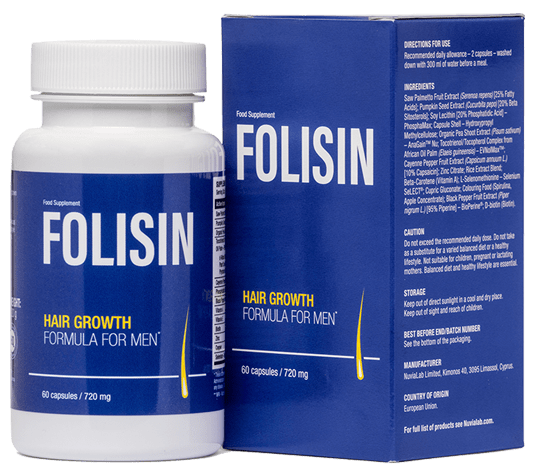
Our Recommendation — Folisin
Score: 5.9/10 · Best for: men with early, diffuse thinning who want a fully disclosed nutritional formula — it supports hair; it does not regrow it. Main caution: the saw palmetto is standardised at 25% fatty acids against 85–95% in the trial extracts, and no money-back guarantee is published. Fair trial: the three-bottle pack at $46.66 a bottle — a fair trial of Folisin is a three-bottle commitment; the six-bottle pack is the cheapest continuation, after a completed trial.
What Trials Recorded at Hair Doses
The most careful safety accounting at the hair dose comes from the STEP trial's dedicated safety analysis (Avins et al. 2008). In 225 men on saw palmetto 320 mg/day or placebo for a year, at least one serious adverse event occurred in 5.4% of the saw palmetto group versus 9.7% on placebo — not a significant difference.
Non-serious symptomatic adverse events were reported by 34.8% of men on saw palmetto versus 30.1% of men on placebo over the same year — again, no significant difference. Sexual functioning and laboratory results showed few significant between-group differences.
The dose-escalation evidence points the same way. CAMUS pushed the dose to 960 mg/day — three times the hair dose — in 369 men over 72 weeks, and its safety analysis found no evidence of toxicity at up to triple the standard dose (Barry et al. 2011). The NCCIH summary agrees: well tolerated, used safely in research for up to three years, with mild effects such as digestive symptoms, dizziness and headache.
One honest limit: the large, long safety datasets are prostate trials in older men. Hair trials at the same dose are smaller and shorter — the dose and ingredient are identical, but the population studied is not the population buying hair products.
The Common Effects
The effects reported most often are unglamorous: stomach upset, nausea, diarrhoea or constipation, headache, dizziness and tiredness — usually mild, often early, and settling.
A measurement caveat applies to the whole category. Most hair trials do not publish per-symptom incidence tables, so "common" in monograph lists means "reported regularly enough to list", not a percentage you can hold. Where percentages exist — the trial data above — rates sit close to placebo, which is the comparison that matters.
Practical handling is plain: follow your product's directions, stop if a symptom persists, and treat anything severe — bleeding, jaundice, severe abdominal pain — as a medical problem rather than a supplement problem.
The Sexual Side-Effect Question, With Numbers
This is the question men actually bring to this article, usually because finasteride's reputation precedes it. The fear is that a "natural DHT blocker" carries the drug's sexual risks in miniature.
The trial record does not show that. In the STEP safety analysis, sexual functioning showed few significant differences between the saw palmetto and placebo groups over a year at 320 mg/day. Decreased libido and erectile complaints appear in the monograph lists, but uncommonly, and without the consistent above-placebo signal that finasteride's trials show.
Pooled prostate data agree: the 2023 Cochrane review found adverse events on saw palmetto at essentially the placebo rate (risk ratio 1.01 across 12 studies with 2,399 participants). A small individual risk can still hide inside a population picture — a new sexual symptom on any anti-androgen product is worth stopping and assessing.
The contrast with finasteride is a matter of degree, honestly stated in our head-to-head comparison: the drug's sexual effects are more frequent, better documented, and the main reason this gentler record has a market.
Rare but Real: Case-Report Territory
Beyond the trials sits a thinner layer: individual case reports linking saw palmetto to liver injury, pancreatitis and bleeding episodes. These are single-patient reports, published because they were unusual — they establish that something can happen, not how often it does.
The correct grading matters in both directions. Dismissing them because they are "only case reports" ignores that rare harms are exactly what case reports exist to catch. Inflating them into expected risks misreads them just as badly. Read the monographs' lists (Drugs.com, WebMD) as a map of what has ever been reported, and the trial data above as the map of what is likely.
Interactions That Matter
Anticoagulants and antiplatelets
Saw palmetto has been reported to affect clotting, and the monographs advise caution alongside warfarin and other anticoagulant or antiplatelet medication. If you take a blood thinner, this ingredient is a clinician conversation before it is a purchase.
Surgery: stop at least 2 weeks before
For the same reason, standard monograph advice is to stop saw palmetto at least two weeks before scheduled surgery, and to tell the surgical team you were taking it. This applies to dental surgery as much as to major procedures.
Hormonal contraception
Monographs flag a theoretical interaction with hormonal contraceptives and hormone therapy: an ingredient taken for hormone signalling should not be assumed neutral for hormone-based medication. No trial has measured the effect; the caution is the point.
Overlap with finasteride and tamsulosin
Stacking saw palmetto on finasteride duplicates an anti-androgen mechanism with no combination trial behind it — see our comparison article. With prostate medication such as tamsulosin, the overlap is the indication itself: urinary symptoms self-treated with a supplement can delay a diagnosis that matters.
Who Should Not Take It
Pregnancy leads this list. Saw palmetto is sold on anti-androgen activity, the drug class that performs that action strongly is contraindicated in pregnancy because of the risk to a male fetus, and there is no safety data for the extract. Women who are or could become pregnant should avoid it.
The same absence of data covers breastfeeding and children: not "known to be dangerous", but unstudied — reason enough for a non-essential supplement. Add anyone on anticoagulants without medical clearance, anyone within two weeks of surgery, and anyone whose urinary symptoms have never been assessed.
The Dose in a Real Product
Safety is dose-shaped, so end with a real label. Folisin delivers saw palmetto at 320 mg/day — the trialled amount — inside a formula whose panel prints its EU caution block: do not exceed the dose, not for children, not for pregnant or lactating mothers.
That printed caution block is rarer in this category than it should be, and we credit it in the product's score. It does not change the interaction list above — and the formula's other ingredients, including 500 µg of biotin with its own blood-test implications, are part of the same purchase.
Our Recommendation — Folisin
Score: 5.9/10 · Best for: men with early, diffuse thinning who want a fully disclosed nutritional formula — it supports hair; it does not regrow it. Main caution: the saw palmetto is standardised at 25% fatty acids against 85–95% in the trial extracts, and no money-back guarantee is published. Fair trial: the three-bottle pack at $46.66 a bottle — a fair trial of Folisin is a three-bottle commitment; the six-bottle pack is the cheapest continuation, after a completed trial.
Frequently Asked Questions
What are the most common saw palmetto side effects?
Digestive upset, headache, dizziness and tiredness — usually mild. In the largest careful accounting, non-serious adverse events were reported by 34.8% of men on 320 mg/day versus 30.1% on placebo over a year (Avins et al. 2008), not a significant difference.
Does saw palmetto cause sexual side effects like finasteride?
Not on the trial record. Sexual functioning showed few significant differences from placebo in the STEP safety analysis, and pooled data put overall adverse events at the placebo rate.
Can I take saw palmetto with blood thinners?
Only with medical clearance. Saw palmetto has been reported to affect clotting, monographs advise caution with anticoagulants and antiplatelets, and the standard advice is to stop it at least two weeks before surgery.
Who should avoid saw palmetto entirely?
Women who are or could become pregnant (anti-androgen activity, no safety data), anyone breastfeeding, children, and anyone on anticoagulants or awaiting surgery without a clinician's agreement.
Who Should Buy Folisin — and Who Should Skip It
Buy it if none of the interaction flags apply to you, you are not pregnant or planning surgery, and you want the trialled 320 mg dose inside a formula that prints its cautions on the panel.
Skip it if you take anticoagulants, finasteride or prostate medication and have not raised the supplement with the prescriber; if surgery is scheduled within two weeks; or if the symptoms you are treating have never been medically assessed. In each case the supplement decision comes second.
Last reviewed: October 2026. This article is educational and is not medical advice.
