
- Quick Answer
- Are Hair Loss Supplements a Waste of Money?
- What Kind of Hair Loss Do You Actually Have?
- What Does the Evidence Actually Say?
- Why Does Deficiency Correction Work When General Supplementation Does Not?
- What Is Actually Inside a Men's Hair Formula?
- Should You Test Before You Buy?
- How Long Should You Give a Supplement — and When Must You Stop?
- Can Supplements Sit Alongside Real Treatment?
- Which Claims Should You Refuse on Sight?
- Who Should Buy Profolan — and Who Should Skip It
- A Stronger Alternative in This Category
- Frequently Asked Questions
- Do any hair loss supplements actually work?
- Are hair supplements a waste of money for men?
- How long should I try a hair supplement before stopping?
- Can a supplement replace minoxidil or finasteride?
- Does Profolan block DHT?
- What blood tests should I get before buying a hair supplement?
- Why doesn't Profolan contain iron or vitamin D if they matter most?
- Read This Next
Disclosure: This article contains affiliate links. If you buy through them, we may earn a commission at no extra cost to you. It never changes our conclusions.
Quick Answer
For most men, no — not in the way the advertising implies. Hair loss supplements do not reverse male pattern baldness, do not block DHT in any clinically meaningful way, and do not regrow hair on areas that have gone slick and bald.
What they can do is narrower and more conditional: where shedding or poor hair quality is being driven or worsened by a genuine nutritional deficiency — low iron stores, low vitamin D, low zinc, or, rarely, another documented shortfall — correcting that deficiency can reduce shedding and allow the hair you still have to grow normally again.
That is the deficiency-only frame, and it is the whole honest case for this category. If your blood tests are normal and your loss follows the classic pattern — a receding hairline, thinning at the crown, widening over years — a supplement is not treating the mechanism that is causing it.
Best for: men with diffuse shedding or declining hair quality who are willing to test first, fill a real gap if one is found, photograph the result honestly, and stop on a deadline if nothing changes — not men looking for a drug replacement or regrowth on bald skin.
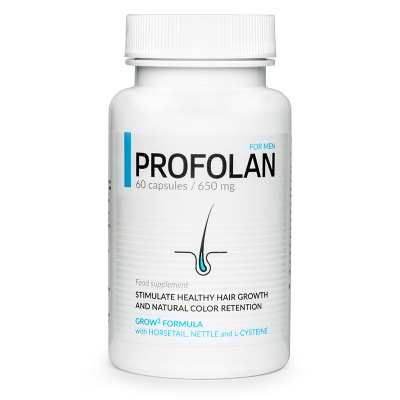
Our Recommendation — Profolan
Score: 5.7/10 · Best for: men with early thinning or increased shedding who want to test the nutritional angle for a full 90 days, photos in hand. Main caution: no ingredient in the bottle has a human trial for male hair loss, and the formula contains neither iron nor vitamin D. Fair trial: the three-bottle pack at $46.66 a bottle — it sits exactly inside the published 90-day money-back guarantee window.
Are Hair Loss Supplements a Waste of Money?
It depends on what you bought them to do, and this is the question most pages in this category dodge.
If you bought a hair supplement expecting it to halt a receding hairline, refill a bald crown, or substitute for minoxidil or a prescription treatment, then yes — for that job, it is almost certainly a waste of money, and no change of brand will fix it, because the job itself is outside what nutritional ingredients have ever been shown to do in humans.
If, on the other hand, you bought one while you were shedding heavily after an illness, a crash diet, a period of severe stress, or months of eating badly, and a blood test later showed low ferritin or low vitamin D, then a targeted correction was not a waste at all — it was treating a contributing cause.
The product did not change; the diagnosis did. That is why the sceptical question deserves a fair answer rather than a sales answer. The sceptics are right about the majority use case — pattern loss in a well-nourished man — and wrong only if their verdict is stretched to cover every kind of shedding. Hair loss is not one condition.
Treating it as one condition is how both the hype pages and the blanket-dismissal pages mislead you, in opposite directions.
There is also a quieter cost to weigh than the price of the bottle. Every month spent hoping a vitamin will reverse genetic thinning is a month in which the treatments that do have evidence — and which work best while follicles are still miniaturising rather than gone — are not being started.
Dermatologists make this point repeatedly: pattern loss is progressive, early intervention preserves more, and late intervention has less to preserve. A supplement trial is therefore only defensible if it has a deadline and runs alongside, not instead of, a proper assessment when the pattern is clearly genetic. The hard stopping rule later in this article exists for exactly that reason.
Money wasted can be re-earned; follicles that miniaturise past the point of recovery while you wait cannot be bought back with a better supplement.
What Kind of Hair Loss Do You Actually Have?
Before any ingredient is worth discussing, the loss itself has to be sorted, because the type of loss decides — almost completely — whether nutrition is even relevant. A receding hairline that creeps back a little each year is a different biological event from handfuls of hair coming out in the shower three months after a fever.
One is driven by genetic sensitivity to dihydrotestosterone (DHT), a hormone that progressively shrinks susceptible follicles. The other is a timing disturbance: a trigger pushes an abnormal share of follicles into the resting phase at once, and they shed together weeks later. Supplements sit in completely different positions relative to those two events. They cannot alter hormone sensitivity.
They may, in specific deficiency cases, remove one of the triggers. The table below is the triage step that the highest-ranking pages on this topic consistently skip, and it is the most useful thing on this page. Find your row first; only then does it make sense to read a label.
| Type of loss | Typical pattern | Usual trigger or driver | Can a supplement help? |
|---|---|---|---|
| Androgenetic alopecia (male pattern loss) | Receding hairline and/or thinning crown, gradual over years; sides and back spared | Genetics plus DHT sensitivity; follicles miniaturise progressively | No, not the mechanism. No supplement has been shown to reverse miniaturisation. At best, nutrition supports the quality of remaining hair. |
| Telogen effluvium (diffuse shedding) | Sudden increase in shedding across the whole scalp, including sides and back; handfuls in brush and shower | Illness, fever, surgery, crash dieting, severe stress, medication change, or a deficiency — typically 2–3 months before shedding starts | Sometimes. If a deficiency is part of the trigger and blood tests confirm it, correcting it can help shedding settle. If the trigger was illness or stress alone, time is usually the treatment. |
| Alopecia areata | Round, smooth bald patches; may involve eyebrows or beard | Autoimmune attack on follicles | No. This is a medical condition needing a dermatologist. Vitamins do not switch off the autoimmune process. |
| Thyroid-related loss | Diffuse thinning, often with fatigue, weight change, temperature sensitivity or other systemic symptoms | Under- or over-active thyroid | No — treat the thyroid. A supplement cannot correct a hormone disorder, and untreated thyroid disease will keep driving the shedding. |
| Deficiency-driven shedding | Diffuse shedding and brittle, poor-quality hair, often alongside other clues (pallor, fatigue, restrictive diet) | Low ferritin/iron, low vitamin D, low zinc, inadequate protein, rarely B-vitamin shortfalls | Yes — this is the one clear case. Correcting a documented deficiency is the legitimate use. Testing comes first, because the deficient nutrient has to be identified, not guessed. |
Two rows deserve emphasis. First, pattern loss and shedding can occur together — a man with early pattern thinning can also go through a bout of telogen effluvium, which suddenly makes the underlying thinning visible as density drops across the whole scalp.
In that mixed picture, fixing a deficiency may restore the shed hair while the pattern component continues underneath, which is why men sometimes report that a supplement "worked for a few months and then stopped". Nothing stopped; two processes were running, and only one of them was nutritional.
Second, patchy loss, scalp pain, burning, heavy scaling or loss of eyebrow hair are not supplement territory at all. Those are referral symptoms, and the correct next step is a clinician, not a checkout page.
What Does the Evidence Actually Say?
The most useful single summary of the nutritional evidence remains Almohanna et al. (2019), a review of the role of vitamins and minerals in hair loss published in Dermatology and Therapy.
Its position is routinely quoted firmer than it reads, so here is the accurate version: micronutrients play an important but not entirely clear role in normal follicle development and in non-scarring hair loss, and deficiency may represent a modifiable risk factor — a factor worth correcting where it exists.
The same paper closes with the caveat that sellers leave off: large, double-blind, placebo-controlled trials are required before firmer recommendations can be made. That sentence is the honest state of the field. The review supports testing and correction; it does not support blanket supplementation of men whose levels were never measured, and it certainly does not support the claim that any particular branded formula regrows hair.
The more recent literature has tightened, not loosened, that conclusion. Yelich et al. (2024), reviewing biotin and other supplements for hair loss in the Journal of Clinical and Aesthetic Dermatology, found no study demonstrating a supplement benefit in healthy, non-deficient individuals, and noted that the best-designed trial in its set found no difference from placebo.
That is a strong sentence, and it is the pivot of this whole category: benefit tracks deficiency, not dose. Giving more of a nutrient to a person who already has enough does not produce more hair; it produces more expensive urine and, for some nutrients at high doses, new risks of its own.
A systematic review by Drake et al. (2023) in JAMA Dermatology, assessing nutritional supplements for hair loss across the available trials, reached a similarly layered picture — some ingredients have small, specific trial signals in defined settings, many have none, and the overall quality of evidence is far thinner than marketing suggests.
Read together, the three reviews describe one consistent landscape: a short list of deficiencies worth finding and fixing, a long list of ingredients sold well past their evidence, and no supplement with a demonstrated effect on the DHT mechanism that drives pattern loss in men.
The deficiency with the longest clinical history behind it illustrates the pattern well.
Trost et al. (2006) reviewed the iron question in Journal of the American Academy of Dermatology and concluded that low iron stores are associated with certain forms of hair loss and that screening is worthwhile in the right patient — while the data remain largely observational, drawn heavily from women with shedding and female pattern loss, and stop short of proving that pushing ferritin to any specific number regrows hair in men.
That is the template for almost every nutrient in this article: a real association, a plausible mechanism, a recommendation to test — and a gap, sometimes a wide one, between "associated" and "shown to work when supplemented". Honest pages print both halves. Pages that print only the association are advertising with citations attached.
Why Does Deficiency Correction Work When General Supplementation Does Not?
The biology is not mysterious once it is stated plainly. Hair follicles are among the most metabolically active structures in the body. Building a hair shaft requires amino acids for keratin, iron-dependent enzymes for cell division, zinc for protein synthesis and cell turnover, vitamin D signalling for normal follicle cycling, and an adequate supply of energy overall.
Starve that system of a required input and it rations: hair growth slows, shafts come out thinner and more brittle, and more follicles drop into the resting phase, because hair is — from the body's point of view — an optional luxury it can pause during a shortage. Restore the missing input and the rationing ends.
That is a real effect, and men who correct a genuine deficiency can see shedding settle and quality improve over the following months. But notice what the mechanism does not contain.
There is no step in it where extra biotin, extra horsetail or extra anything accelerates a follicle that already has everything it needs, and no step where a nutrient shields a genetically sensitive follicle from DHT. A supplement can end a shortage. It cannot upgrade a well-supplied system, and it cannot change the hormonal instruction a pattern-loss follicle is receiving.
Every honest claim in this category is a variation on the first sentence of this paragraph; every dishonest one quietly pretends the second half does not exist.
This also explains the testimonial problem. The men most likely to report dramatic results from a hair supplement are men whose shedding was deficiency- or stress-related and was going to improve as the cause resolved — sometimes because of the supplement, sometimes alongside it.
Their reviews are sincere and still prove almost nothing about pattern loss, which is the condition most readers of those reviews actually have. Conversely, a man with advancing pattern loss who takes the same product for three months, loses a little more hair on schedule, and leaves a one-star review is also reporting his experience accurately.
Both reviews can be genuine while the product did nothing in either case beyond, perhaps, correcting a gap in the first man's diet. Sorting by loss type — the table above — is the only way to know which experience is relevant to you.
What Is Actually Inside a Men's Hair Formula?
The fastest way to cut through this category is to stop reading benefit claims and start auditing labels against the evidence. Three questions do most of the work. Does the formula contain the nutrients linked to the deficiencies that matter most? Does it contain any ingredient with human evidence against pattern loss itself?
And how do its doses compare with what the body actually requires?
The audit below puts Profolan — the product this article set is built around — next to a Nutrafol-type adaptogen blend and a generic high-street hair vitamin, using Profolan's verified published panel: horsetail extract standardised to 7% silica 400 mg, taurine 200 mg, nettle leaf extract 100 mg, L-cysteine 100 mg, biotin 900 µg, vitamin E 24 mg, thiamin 20 mg, zinc 15 mg, vitamin B6 10 mg, vitamin A 800 µg and copper 1 mg per two capsules, taken as two capsules a day, preferably 30 minutes before a meal.
| Label item | Profolan | Nutrafol-type adaptogen blend | Generic hair vitamin / gummy |
|---|---|---|---|
| Iron (ferritin — strongest deficiency case) | Not included | Typically not included | Usually not included |
| Vitamin D (strong association with shedding) | Not included | Sometimes included, dose varies | Sometimes a small dose |
| Saw palmetto (the studied "natural DHT" ingredient) | Not included | Usually the headline ingredient | Rarely included |
| Zinc | 15 mg — a full, sensible dose, paired with copper 1 mg | Often included | Often a token dose |
| Biotin vs requirement (US adequate intake 30 µg/day) | 900 µg = 30× requirement | Often 1,000 µg or more | Commonly 5,000–10,000 µg = 167–333× requirement |
| Botanical lead | Horsetail 400 mg (7% silica) + nettle leaf 100 mg — traditional use, no human hair-loss trial | Adaptogens such as ashwagandha plus saw palmetto — evidence mixed and mostly not in pattern-loss trials | Often none, or token amounts |
| Amino-acid support | L-cysteine 100 mg + taurine 200 mg (keratin building blocks) | Often collagen or keratin peptides | Rarely meaningful amounts |
| Money-back guarantee (published by maker) | 90 days | Varies by seller | Often none published |
| Price anchor | $69.99 for 1 bottle; $139.98 buy 2 get 1 free ($46.66/bottle); $209.97 buy 3 get 3 free ($35.00/bottle); shipping $12 | Premium monthly pricing typical | Cheap monthly pricing typical |
The headline finding of that audit is uncomfortable for the whole shelf, not just for one product: the two deficiencies with the strongest hair evidence — iron and vitamin D — are missing from Profolan entirely, and the first is missing from most men's formulas, in part because supplementing iron blindly is genuinely inadvisable and in part because iron and vitamin D correction is a testing-led medical errand rather than a tidy marketing story.
Meanwhile the ingredient every formula does supply in abundance, biotin, is the one whose deficiency is rare and whose benefit without deficiency has repeatedly failed to appear in trials.
Profolan's formula is not unusually cynical; its full published panel is actually more transparent than most competitors manage, its zinc dose is properly set and correctly paired with copper — a detail many formulas get wrong, since high zinc intakes deplete copper — and its maker publishes a 90-day money-back guarantee, which almost none of its Wave 3 peers do.
But transparency about a panel is not evidence for the panel. No ingredient in it has a human trial for male pattern hair loss: not the horsetail, whose silica reputation borrows from trials of a different silicon compound entirely; not the nettle, where the research that exists concerns the root in prostate contexts, while Profolan uses 100 mg of leaf; and not the cysteine, which is a plausible building block and nothing more.
Our full breakdown sits in the Profolan review, where the product scores 5.7/10 — a mid score for a transparent, guarantee-backed nutritional formula with an empty trial file for the condition it is sold for.
Should You Test Before You Buy?
Yes — and this single step separates a rational purchase from a hopeful one. A basic hair-loss blood panel is cheaper than a few months of the wrong supplement and answers the only question that determines whether a supplement can help you at all: is anything actually low? Do not skip this box; it is the protocol this article exists to deliver.
The test-before-you-buy box. Before spending on any hair supplement, ask a clinician for: ferritin (iron stores — the single most relevant test; a full blood count alongside it), 25-OH vitamin D, thyroid function (TSH, with free T4 if indicated), and serum zinc.
Add B12 and folate if your diet is restrictive, you take medication that affects absorption, or your clinician advises it. Two practical rules travel with the panel.
First, tell the lab and your clinician about any biotin supplement you take — at doses like Profolan's 900 µg, biotin can distort several of the very tests on this list, a problem our biotin article covers in full.
Second, act on the result, not the category: if ferritin is low, the treatment is iron, which this product does not contain; if vitamin D is low, the treatment is vitamin D, which this product does not contain; if everything is normal, you have just saved yourself months of supplementing a system that was never short of anything — and your next conversation should be about pattern-loss treatment, not about a different brand of vitamin.
Expect the timeline to be slower than the marketing even when a deficiency is real.
Blood levels take weeks to months to normalise — ferritin typically climbs gradually over one to three months of correction, vitamin D over a similar span — and hair responds a cycle behind the blood: shedding settles first, then new growth has to emerge and gain length at roughly a centimetre a month before any visible density change is possible.
A man who corrects a deficiency in January and judges his hair in February has not run the experiment. Three months is the minimum fair window for a shedding change; six months is the honest window for a visible one. That timeline is not a reason to avoid testing — it is a reason to start with the test, so the clock that matters begins immediately.
How Long Should You Give a Supplement — and When Must You Stop?
Here is the rule this site applies, stated as a hard rule rather than a suggestion, because a supplement trial without a stopping condition is just a subscription. The hard stopping rule: if, after six months of consistent use, standardised photographs show no change in shedding or density, and a blood panel is normal, stop spending.
Not "switch brands", not "add a second formula", not "give it another six months" — stop. At that point the nutritional hypothesis has been tested properly and has failed: there was no deficiency to correct, or correcting it changed nothing visible, and either way the cause of your loss lies elsewhere.
The money and, more importantly, the remaining treatment window belong to the routes with evidence — a dermatologist's assessment, minoxidil, and a conversation about prescription options if pattern loss is confirmed. Reviews in this category are full of men who spent two years and four figures rotating through formulas; the stopping rule is what prevents that outcome, and it costs nothing to adopt before the first bottle rather than after the tenth.
Inside those six months, judge like a sceptic. Take baseline photographs on day one — hairline, both temples, crown, and a top view — in the same light, at the same angle, with the hair the same length and styling, and repeat them monthly under identical conditions.
Rate shedding loosely (more, same, less in the shower and brush) rather than counting individual hairs daily, which measures anxiety more reliably than hair.
Expect, at best, this sequence: nothing visible in month one; possibly less shedding in months two and three if a deficiency was corrected; texture and breakage improvements before density improvements; and any genuine density change last, at months four to six.
If you are taking Profolan specifically, its maker's 90-day guarantee falls inside this window on purpose: day 90 is your first formal checkpoint, the point by which a shedding change should be visible in your photos if one is coming, and the last point at which the trial can be made cost-free if it is not. A guarantee used as a deadline is buyer protection; a guarantee ignored while bottles auto-ship is decoration.
Can Supplements Sit Alongside Real Treatment?
Yes, with two conditions. The first is honesty about roles: minoxidil and prescription 5-alpha-reductase inhibitors are the treatments with trial evidence against pattern loss; a supplement taken alongside them is nutritional support, and any improvement over the following year should be credited to the treatment doing the documented work, not shared out to the capsule by wishful thinking.
Men routinely start three things at once, improve, and then credit whichever product they liked most — which is how supplement folklore is manufactured. The second condition is disclosure. Tell your clinician everything you take.
Finasteride conversations, thyroid follow-up and blood monitoring all intersect with supplement use — most obviously through high-dose biotin's interference with laboratory assays, which can distort thyroid and cardiac markers that doctors rely on.
A clinician who knows you take 900 µg of biotin a day reads your blood results correctly; one who does not may chase a phantom thyroid problem or, worse, be reassured by a falsely low heart marker. Adjunct use is reasonable; invisible use is not.
One more ingredient-level caution belongs here, because it is the best-studied positive nutritional signal in the entire hair literature and still gets oversold. In a small randomised trial, Beoy et al. (2010) found that a tocotrienol (vitamin E family) supplement increased hair numbers in volunteers with hair loss over eight months compared with placebo.
It is a genuine placebo-controlled finding — and it involved 38 volunteers, a specific tocotrienol formulation, and has never been scaled into the large confirmatory trial this field keeps needing. Profolan contains vitamin E at 24 mg, but not as the studied tocotrienol preparation at the studied specification, so the trial cannot be claimed for it.
We cite the study here for the opposite of the usual reason: to show what a real positive supplement trial looks like — named population, placebo group, defined formulation — and how far even that is from "vitamins regrow hair". If an ingredient cannot clear Beoy's modest bar, its marketing should not clear your wallet.
Which Claims Should You Refuse on Sight?
Because this product attracts a swarm of low-quality review pages, the corrections matter as consumer protection. Profolan is not "FDA approved" — dietary supplements are not approved by the FDA for hair growth, and any page saying so is inventing a credential.
It has not been "clinically tested" or "clinically proven" as a finished product; no trial of the formula exists. It does not contain saw palmetto or minoxidil, whatever spam pages claim — the verified panel above is the panel. And the refund figure circulating on those pages, "60 days", is wrong: the maker publishes a 90-day money-back guarantee.
Notice the pattern: every one of the invented claims points in the same direction, towards making a nutritional supplement sound like a tested drug with drug-style credentials.
A page that will invent an approval will invent results, timelines and testimonials with the same ease, which is why this site treats those sources as zero evidence and works only from the maker's published panel, the order-page prices and the peer-reviewed literature. When a claim cannot survive that filter, it does not appear here as a fact — only, as in this section, as a warning.
Who Should Buy Profolan — and Who Should Skip It
Buy it if you match the one profile this category honestly serves: your shedding has increased or your hair quality has declined, you suspect your diet or a recent rough patch may be part of the story, and you want to run the nutritional experiment properly — blood panel first if you can, photographs from day one, two capsules a day preferably 30 minutes before a meal, and a decision at day 90 under the maker's published 90-day guarantee, with the six-month hard stopping rule behind it. On that plan, the three-bottle pack at $139.98 ($46.66 a bottle, plus $12 shipping) covers exactly the guarantee window, and the six-bottle pack at $209.97 ($35.00 a bottle) is the value route only if you commit to the full six-month test. You are buying a transparent panel, a sensible zinc-and-copper pairing, and a low-risk trial structure — nothing more, and on those terms the purchase is defensible.
Skip it if your loss is clearly patterned and advancing, your hairline has receded substantially, or an area has gone fully bald: no supplement reverses miniaturisation or revives exhausted follicles, and your next step is a dermatologist and the treatments with evidence.
Skip it if your loss is sudden, patchy, painful or accompanied by scalp inflammation or systemic symptoms — that needs a medical workup first. Skip it if a blood test has already identified your deficiency and the deficient nutrient is iron or vitamin D, because this formula contains neither and cannot correct either.
And skip it if what you actually want is a DHT blocker: despite its nettle content, Profolan is not one, and buying it for that job guarantees the disappointment the label audit above predicts.
A Stronger Alternative in This Category
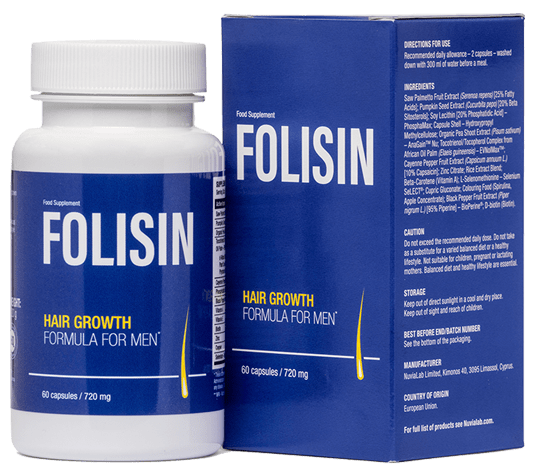
The stronger alternative: Folisin · 5.9/10The other men's hair formula we reviewed publishes every amount — including AnaGain™ Nu at the exact 100 mg dose used in its human study. No Profolan ingredient has a human hair trial behind it.
Our Recommendation — Profolan
Score: 5.7/10 · Best for: men with early thinning or increased shedding who want to test the nutritional angle for a full 90 days, photos in hand. Main caution: no ingredient in the bottle has a human trial for male hair loss, and the formula contains neither iron nor vitamin D. Fair trial: the three-bottle pack at $46.66 a bottle — it sits exactly inside the published 90-day money-back guarantee window.
Frequently Asked Questions
Do any hair loss supplements actually work?
Only in the narrow, deficiency-correcting sense. Where blood tests show a real shortfall — iron, vitamin D and zinc are the credible candidates — correcting it can reduce shedding and restore normal growth of existing hair. No supplement has been shown to reverse male pattern loss, block DHT meaningfully, or regrow hair on bald areas.
Are hair supplements a waste of money for men?
For pattern loss in a man with normal blood levels, yes, in our assessment — the mechanism causing the loss is not nutritional. For documented deficiency-driven shedding, a targeted correction is money well spent, though the correcting product is often a single nutrient, not a branded hair blend.
How long should I try a hair supplement before stopping?
Judge shedding and photographs at 90 days, and apply the hard stopping rule at six months: no visible change plus a normal blood panel means stop spending and move to evidence-based treatment. Profolan's maker publishes a 90-day guarantee — use it as the first checkpoint, not as an afterthought.
Can a supplement replace minoxidil or finasteride?
No. Those treatments have placebo-controlled trial evidence against pattern loss; no supplement does. A supplement can sit alongside them as nutritional support, with your clinician aware — including of any high-dose biotin, which can distort blood-test results.
Does Profolan block DHT?
No. Its panel contains no saw palmetto, no pumpkin seed oil and no beta-sitosterol. Its nettle is 100 mg of leaf extract, and there is no established human evidence that oral nettle — root or leaf — blocks DHT or treats scalp hair loss. We score Profolan 5.7/10 as a nutritional formula, not a DHT product.
What blood tests should I get before buying a hair supplement?
Ferritin with a full blood count, 25-OH vitamin D, thyroid function (TSH, with free T4 if indicated) and serum zinc, plus B12 and folate where diet or medication suggests risk. Disclose any biotin use before the draw, because high-dose biotin can distort several of these assays.
Why doesn't Profolan contain iron or vitamin D if they matter most?
Because they are testing-led corrections, not safe blind additions — excess iron is harmful, and vitamin D dosing depends on how low the level is. Their absence is the honest limitation of the whole men's-formula category: the nutrients with the strongest hair evidence are the ones a fixed blend cannot responsibly supply, which is why the test comes before the purchase.
Last reviewed: October 2026. This article is educational and is not medical advice.
