
- Quick Answer
- How the Interference Works
- The Tests That Matter to Men Taking Hair Supplements
- Troponin: the falsely low result that can hide a heart attack
- Thyroid: the Graves' misdiagnosis pattern
- Testosterone and PSA: the assays this audience actually gets drawn
- The Dose Gradient, Stated Honestly
- What to Do Before a Blood Test
- Where a Real Product Sits
- Frequently Asked Questions
- How long should I stop biotin before a blood test?
- Which tests can biotin falsify?
- Is 500 µg of biotin dangerous before a blood test?
- Does biotin affect every blood test?
- Who Should Buy Folisin — and Who Should Skip It
- Read This Next
Disclosure: This article contains affiliate links. If you buy through them, we may earn a commission at no extra cost to you. It never changes our conclusions.
Quick Answer
Biotin can push blood-test results falsely high or falsely low, depending on the test, because many laboratory assays use biotin in their chemistry. The documented harm concentrates at megadoses — the cases behind the FDA's warning involve intakes far above a normal supplement.
A typical hair formula's 300–1,000 µg of biotin sits well below that zone. The correct response at those doses is not alarm; it is disclosure and a pause: tell the lab what you take, and stop the supplement before the draw as long as the lab advises.
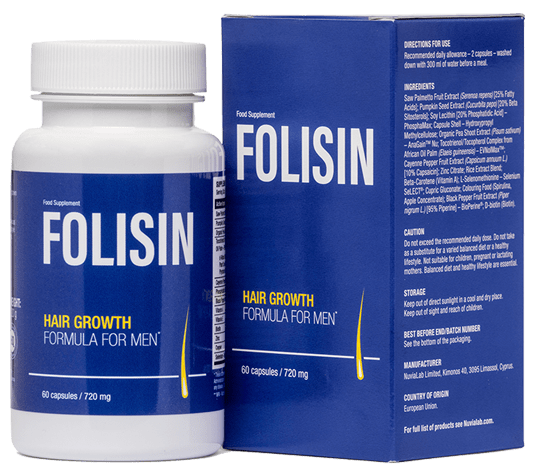
Our Recommendation — Folisin
Score: 5.9/10 · Best for: men with early, diffuse thinning who want a fully disclosed nutritional formula — it supports hair; it does not regrow it. Main caution: the saw palmetto is standardised at 25% fatty acids against 85–95% in the trial extracts, and no money-back guarantee is published. Fair trial: the three-bottle pack at $46.66 a bottle — a fair trial of Folisin is a three-bottle commitment; the six-bottle pack is the cheapest continuation, after a completed trial.
How the Interference Works
Streptavidin and biotin bind with unusual strength, and laboratory science exploits that bond. Many immunoassays — the workhorse tests for hormones, heart markers and more — use biotin-tagged components anchored by streptavidin to capture and measure the target molecule.
Take a large dose and your blood arrives carrying surplus free biotin, which competes for those anchoring sites. The assay's capture chemistry is partially occupied before the test begins, and the measurement shifts.
The direction of the error depends on the assay's design. In sandwich assays — used for large molecules such as TSH and troponin — excess biotin reduces the captured signal, and results read falsely low. In competitive assays — for small molecules such as free T4 and free T3 — the same interference reads falsely high. One supplement, two opposite errors, decided by test architecture.
The Tests That Matter to Men Taking Hair Supplements
Troponin: the falsely low result that can hide a heart attack
Troponin is the blood marker used to diagnose heart attacks, and it is measured with sandwich assays — the falsely-low kind. The FDA's safety communication (28 November 2017, updated 5 November 2019) singles this out: the agency had received a report of a patient taking high levels of biotin who died after a falsely low troponin result on a susceptible assay.
That case involved high-dose intake, and some troponin assays have since been redesigned while others have not. The lesson: in an emergency, nobody asks about your hair supplement — which is why your supplement use belongs in your medical record.
Thyroid: the Graves' misdiagnosis pattern
Thyroid panels combine both assay types, producing a characteristic forgery: TSH reads falsely low while free T4 and free T3 read falsely high — the exact signature of an overactive thyroid. Singapore's Health Sciences Authority, in its advisory on biotin interference, names the consequence: misdiagnosis of Graves' disease, with treatment started for a condition the patient does not have.
For a man whose hair-loss workup includes thyroid function, this is the interference most likely to reach him personally: endocrine case reports describe patients investigated, and sometimes medicated, for hyperthyroidism that vanished when tests were repeated off biotin.
Testosterone and PSA: the assays this audience actually gets drawn
Men investigating hair loss commonly have testosterone measured; men over 40 add PSA. Both are immunoassays on platforms that may use biotin chemistry, and both can be shifted by it — the direction and size varying with the specific analyser and assay generation.
That platform dependence is why no honest page can give you a universal correction factor — and why laboratories publish their own affected-test lists rather than deferring to articles. Your lab knows its analysers; you know your supplements. The protocol below is how those two facts meet.
The Dose Gradient, Stated Honestly
Scale matters, and panic ignores it. The reference intake for biotin is 30 µg/day; a multivitamin sits near that level, and interference is not expected there. Hair, skin and nail formulas typically deliver 300–1,000 µg — ten to thirty times the reference intake, the zone where disclosure and a pause are the prudent protocol.
The documented-harm zone sits higher. The FDA's warning concerns high-level intake, noting beauty supplements containing up to 650 times the recommended daily intake; laboratory guidance treats intakes above 5 mg/day (5,000 µg) as the range where clinically significant interference is expected. At the extreme, multiple sclerosis therapy has used 300 mg/day.
One trap deserves naming. Singapore's advisory cites a labelling threshold — products with 150 µg or more of biotin per dose require interference warnings, following the European regulator. A labelling trigger is a paperwork line, set cautiously; it is not a finding that 150 µg falsifies tests.
What to Do Before a Blood Test
The protocol is short enough to memorise: tell the lab and the clinician what you take, and pause as they advise.
On the pause length, laboratory practice — not the FDA — is the source. The FDA's position, stated in its communication and still true, is that the data are insufficient to set a universal safe interval. Individual laboratories fill the gap themselves: UW Medicine's laboratory guidance, for example, instructs that supplements over 1 mg/day be discontinued at least 24 hours before affected tests.
Common laboratory advice runs from about 48–72 hours at ordinary supplement doses to a week at megadoses, with longer clearance for anyone with impaired kidney function, since biotin is cleared renally.
Follow your own lab's instruction over any article's, including this one.
If the test is urgent — chest pain is the obvious case — do not delay it for a vitamin; tell the team you take biotin and let them choose an unaffected assay.
Where a Real Product Sits
Apply the gradient to the formula this set audits. Folisin contains 500 µg of biotin per daily serving — about seventeen times the reference intake, squarely in the disclose-and-pause zone, far below the megadose territory behind the documented harms.
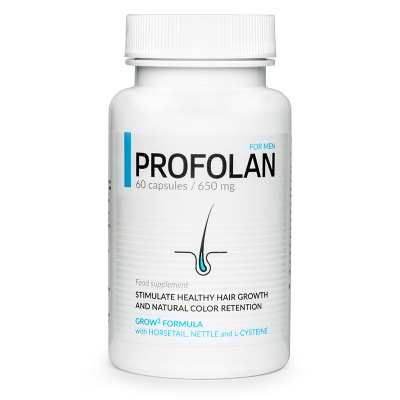
Store readers cross-shopping this set will meet a larger figure elsewhere: the Wave 3 formula Profolan carries 900 µg. The protocol is identical — the dose changes the margin, not the method. What differs between products is whether the dose is printed at all: a formula declaring 500 µg can be managed around a blood draw; one hiding behind a proprietary blend cannot.
Our Recommendation — Folisin
Score: 5.9/10 · Best for: men with early, diffuse thinning who want a fully disclosed nutritional formula — it supports hair; it does not regrow it. Main caution: the saw palmetto is standardised at 25% fatty acids against 85–95% in the trial extracts, and no money-back guarantee is published. Fair trial: the three-bottle pack at $46.66 a bottle — a fair trial of Folisin is a three-bottle commitment; the six-bottle pack is the cheapest continuation, after a completed trial.
Frequently Asked Questions
How long should I stop biotin before a blood test?
The FDA states the data are insufficient to set a universal interval. Laboratory practice fills the gap: UW Medicine advises stopping supplements above 1 mg/day at least 24 hours before affected tests, and common lab guidance runs 48–72 hours at typical hair-formula doses, longer at megadoses. Your lab's instruction governs.
Which tests can biotin falsify?
Any immunoassay built on biotin–streptavidin chemistry. The consequential ones for this audience: troponin (falsely low), TSH (falsely low), free T4 and free T3 (falsely high), and — platform permitting — testosterone and PSA. Not every analyser is affected the same way.
Is 500 µg of biotin dangerous before a blood test?
It is not in the dose zone of the documented harms, which involve intakes above 5 mg/day. It is high enough that the disclose-and-pause protocol applies — tell the lab, follow their timing — converting a potential error into a managed detail.
Does biotin affect every blood test?
No. Only assays using biotin technology are susceptible, and manufacturers have been redesigning them since the FDA's 2017 warning. Routine chemistry panels and blood counts are generally unaffected; hormone, cardiac and tumour-marker immunoassays are the territory.
Who Should Buy Folisin — and Who Should Skip It
Buy it if you want a formula whose biotin dose is declared at 500 µg — manageable around blood work with a disclosure and a short pause — inside the fully disclosed panel our review scores 5.9/10. The transparency that exposes the product's weaker ingredients is what makes this risk manageable.
Skip it if you face frequent or high-stakes blood monitoring — cardiac follow-up, thyroid management, testosterone therapy — and would rather not run a pause protocol around every draw; a biotin-free routine is simpler to keep clean. Skip any product, from any maker, whose biotin content you cannot find out: with this risk, an unknown dose is the only genuinely bad dose.
Last reviewed: October 2026. This article is educational and is not medical advice.
