
- Quick Answer
- Our Findings
- Why You Should Trust This Review
- Our Verdict
- How We Scored It
- What Is Detoxyn?
- The Ingredients
- Choline (180 mg)
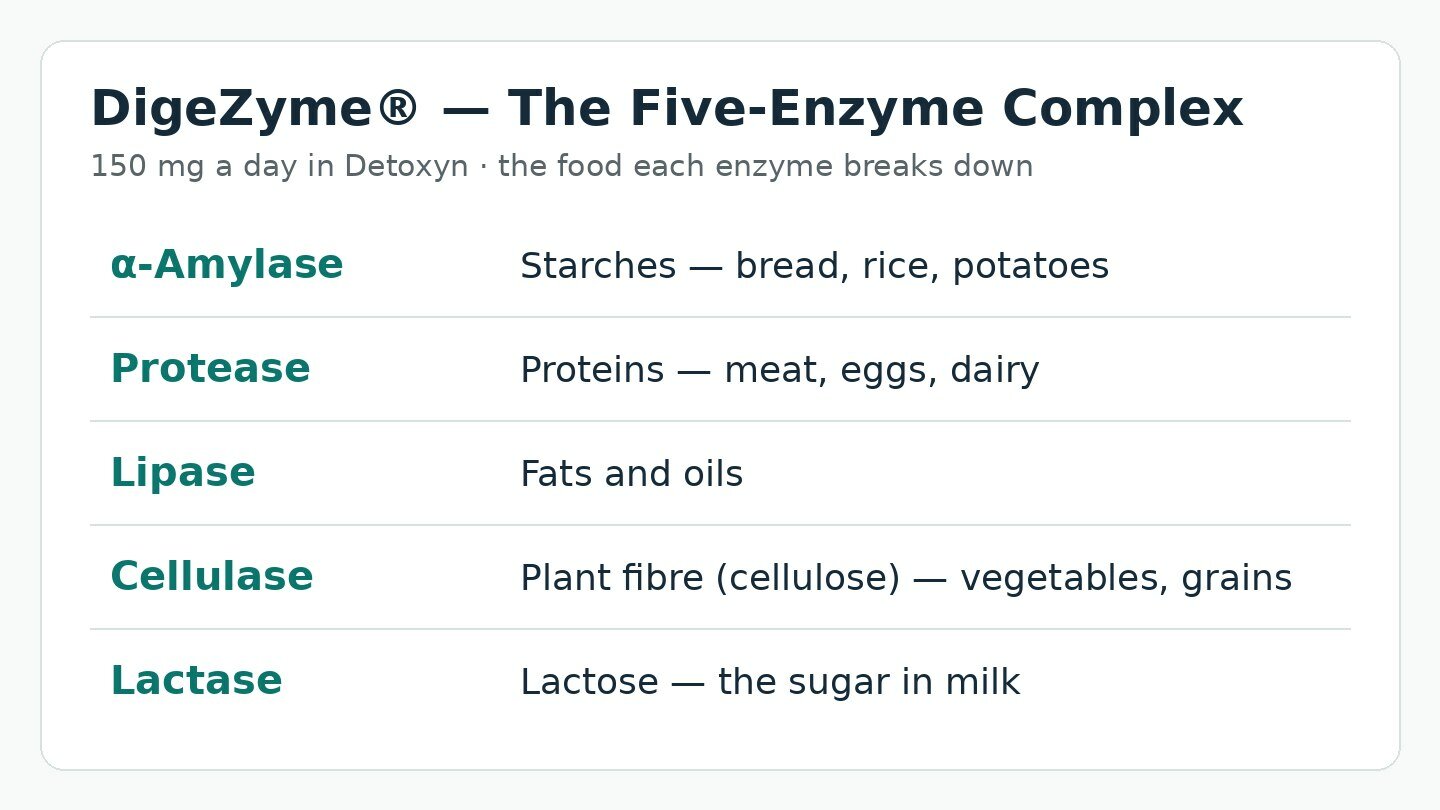
- DigeZyme® Multi-Enzyme Complex (150 mg)
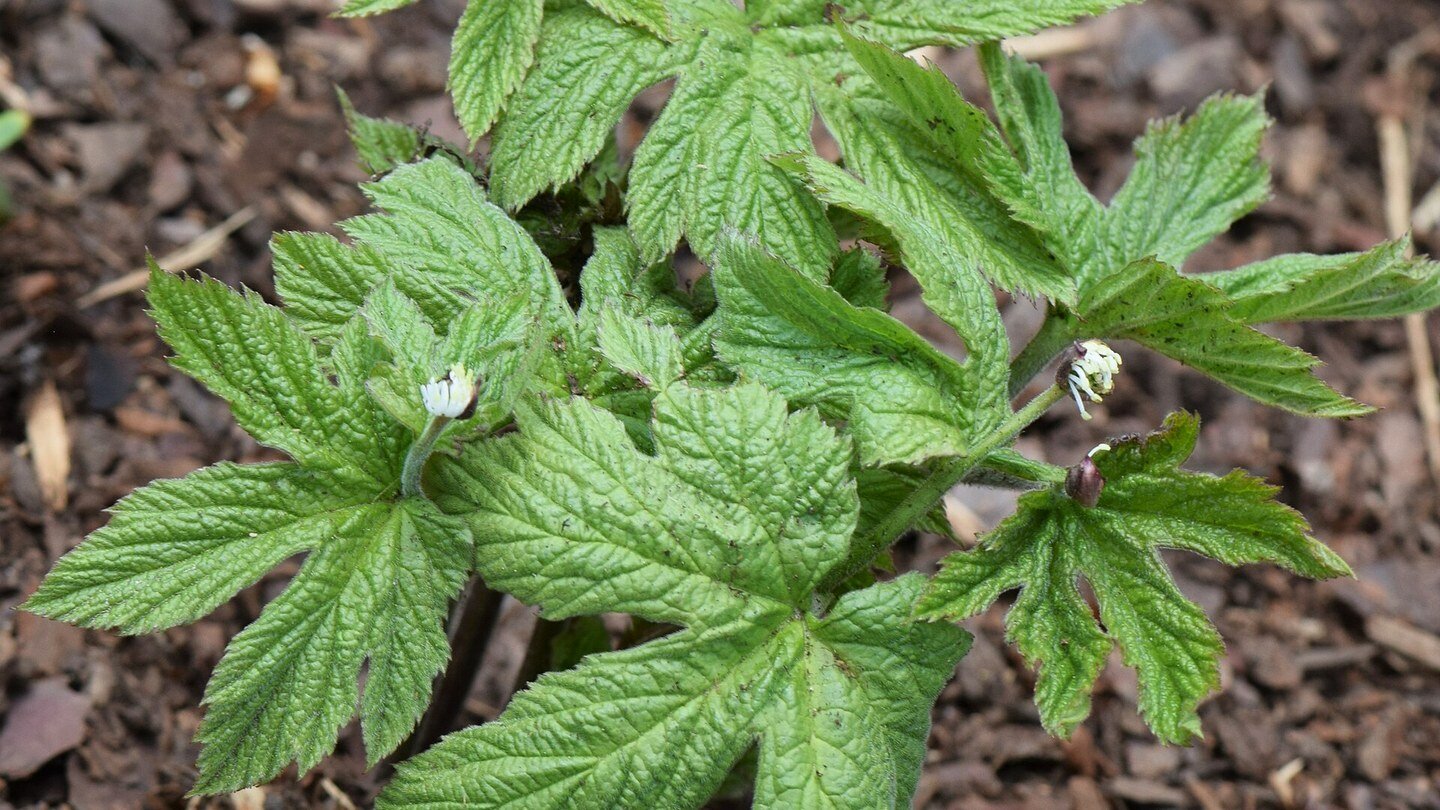
- Goldenseal Root Extract (100 mg)
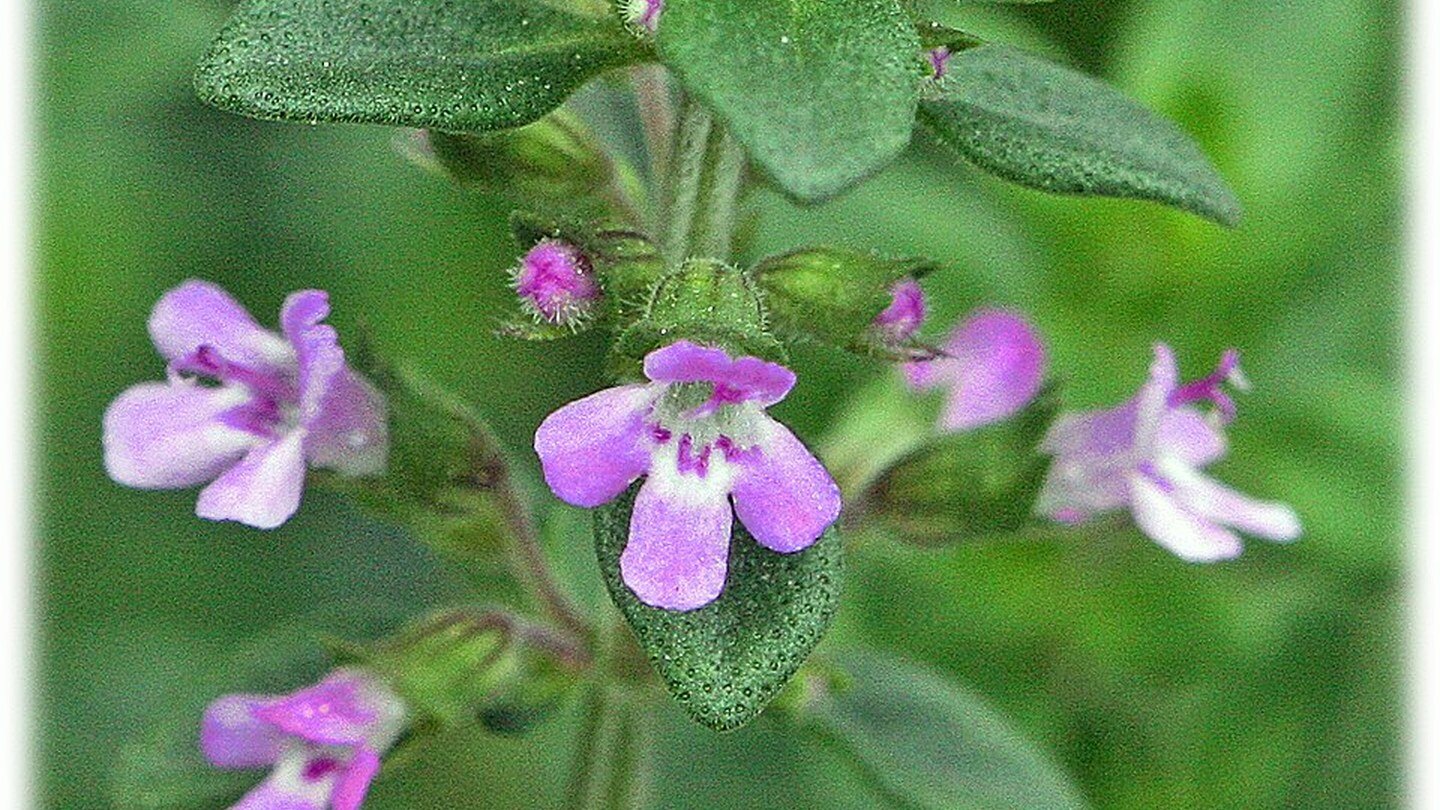
- Thyme Leaf Extract (100 mg)
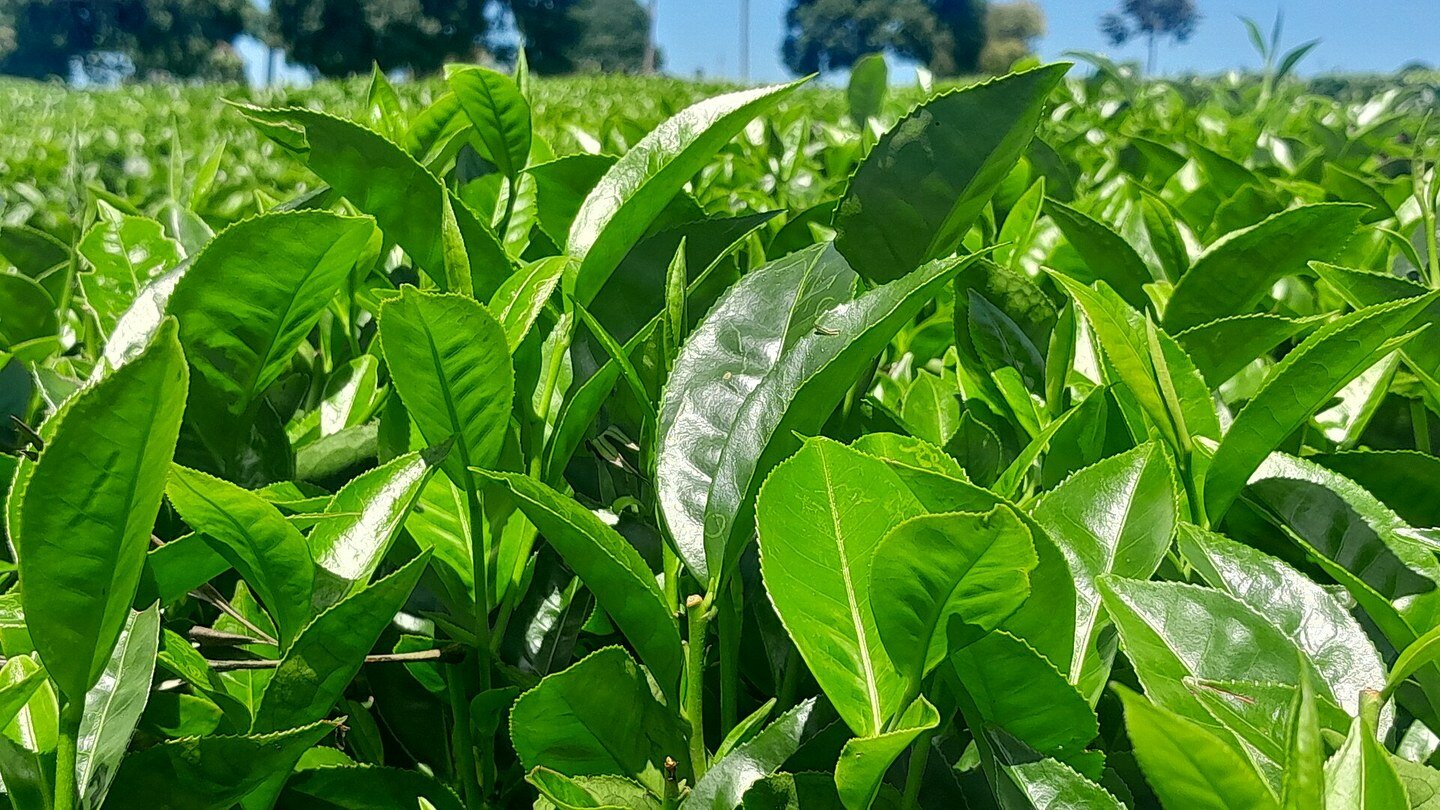
- Green Tea Leaf Extract (80 mg)
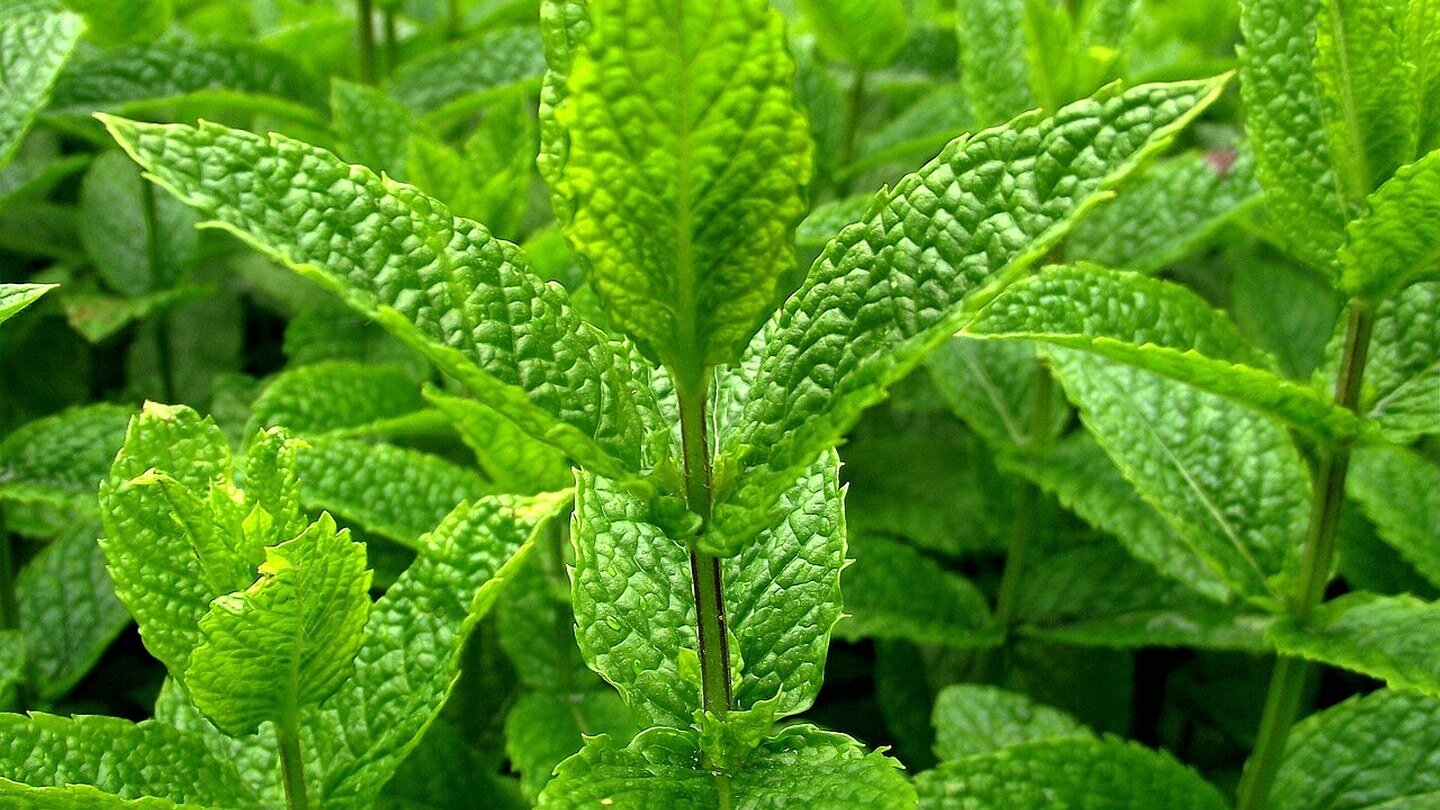
- Peppermint Leaf Extract (80 mg)
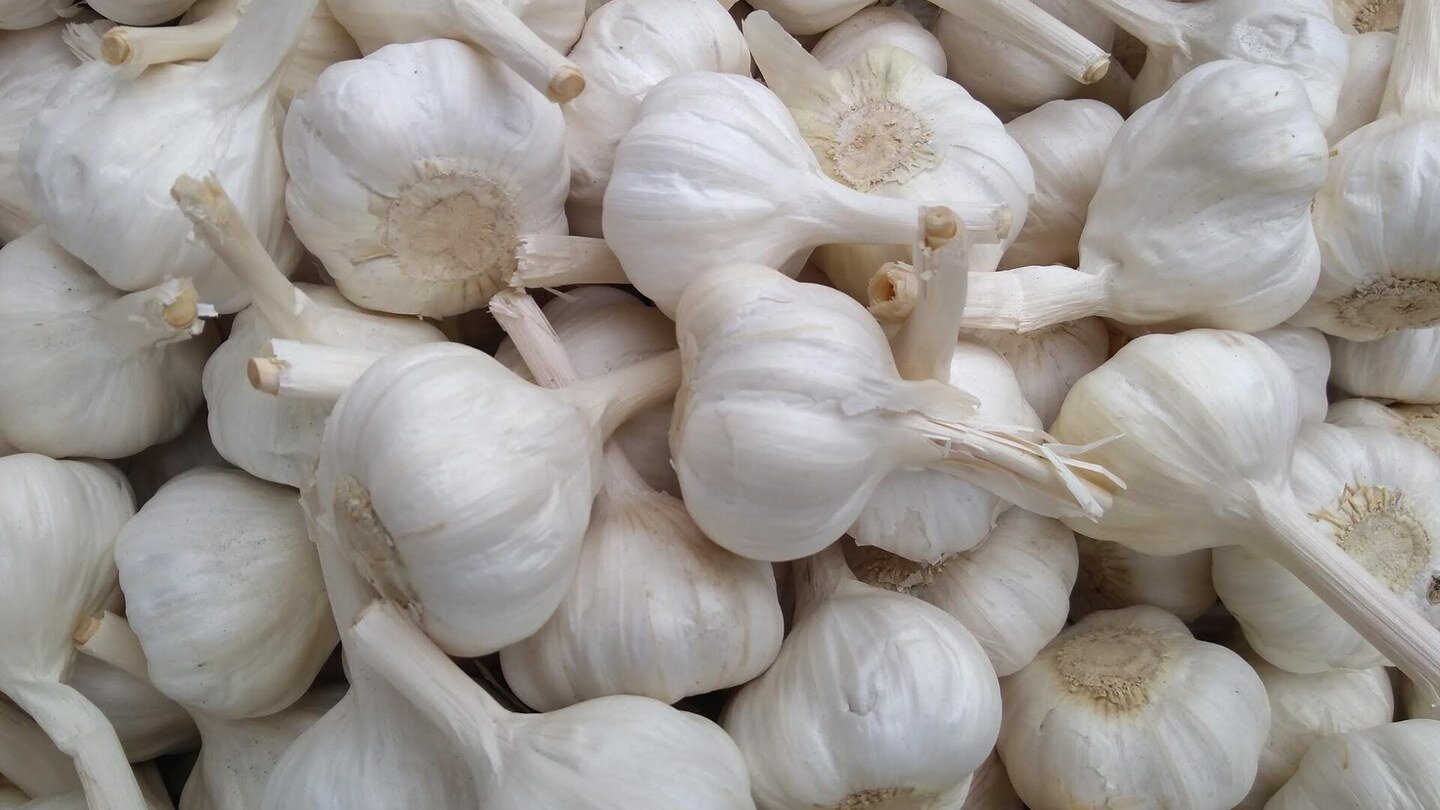
- Garlic Bulb Extract (50 mg)
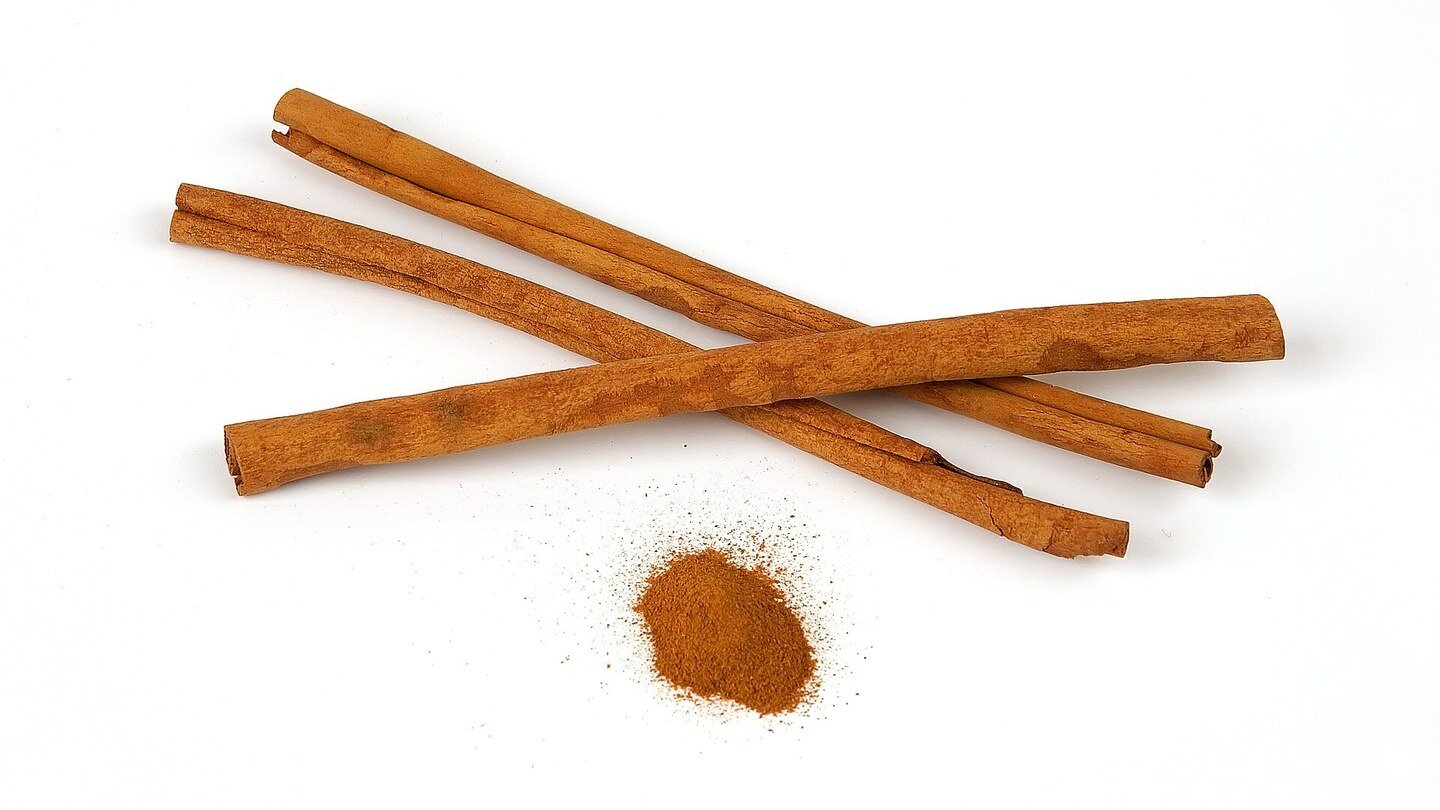
- Cinnamon Bark Extract (50 mg)
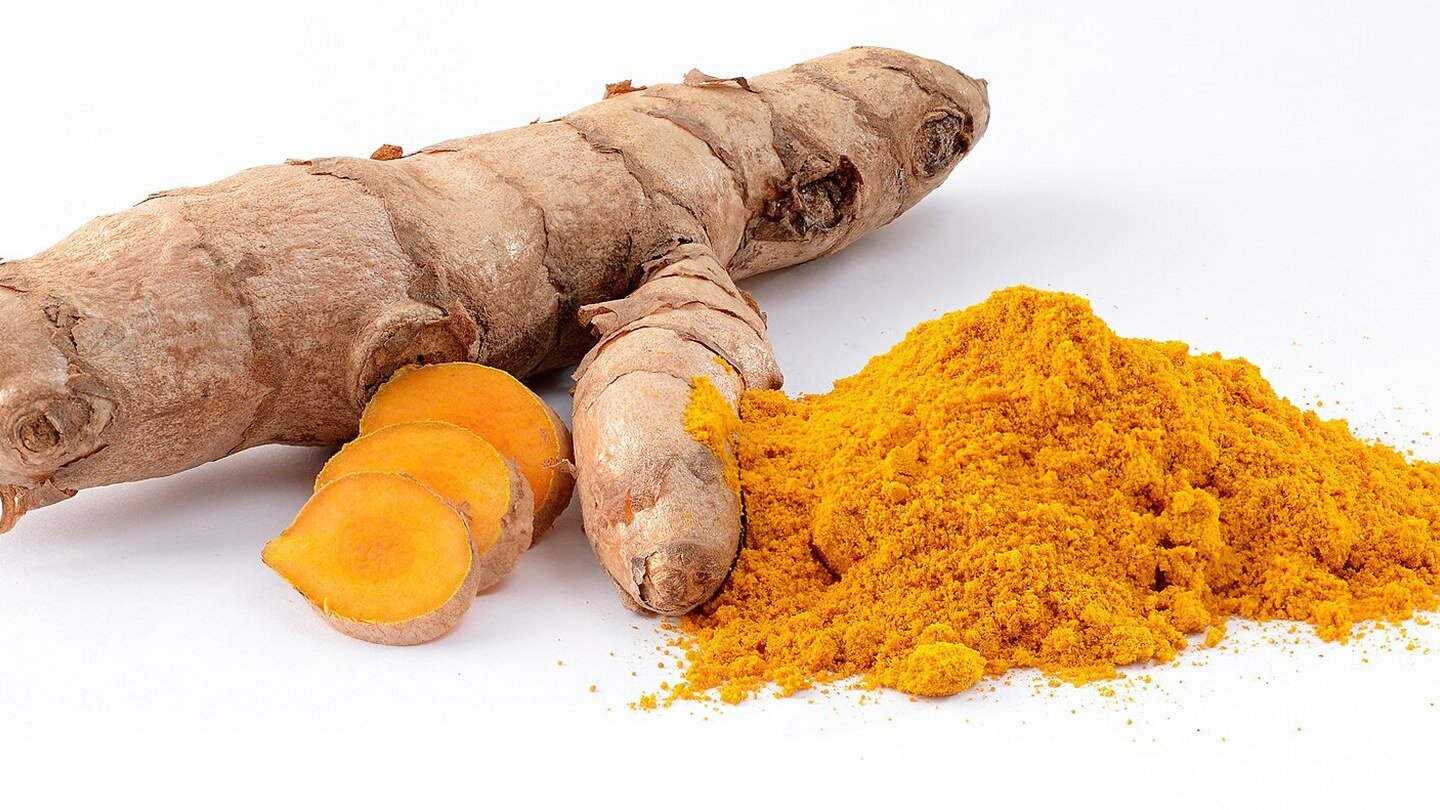
- Turmeric Rhizome Extract (50 mg)
- Aloe Vera Leaf Extract (20 mg)
- BioPerine® Black Pepper Extract (5 mg)
- The Claim Audit: 'Detoxification' on the Box, Digestion in the Evidence
- The Evidence, Read Properly
- The Detox Category: Klein & Kiat (2015)
- The DigeZyme® Dyspepsia Trial: Majeed et al. (2018)
- The Goldenseal Interaction Study: Gurley et al. (2005)
- The Medical Authority Consensus
- Where Digestive Enzymes Actually Fit
- How Long Does It Take to Work?
- Is It Safe?
- Side Effects: What Is Actually Known
- When Digestive Symptoms Need a Doctor, Not a Detox
- Is It a Scam?
- Price and Packs
- Purchase Options
- How It Compares
- Who Should Buy It — and Who Should Skip It
- Who should buy it
- Who should skip it
- Frequently Asked Questions
- Does Detoxyn actually detox your body?
- Does Detoxyn help with bloating and digestive discomfort?
- How long should I take Detoxyn before judging it?
- Is Detoxyn a laxative — will it purge my colon?
- Is Detoxyn safe — what are the side effects?
- Can I take Detoxyn with prescription medication?
- Does Detoxyn have a money-back guarantee?
- Where can I buy Detoxyn — and what does a month actually cost?
- Sources & Method
- Read This Next
SuppChecked is an independent supplement review site. When you buy a product through links on our pages, we may earn a commission at no extra cost to you. Every score, price, and product claim on this page is checked against the maker's official records and the published scientific literature, and brands never pay to change our scores.
Shoppers looking at Detoxyn tend to fall into two camps. One group feels sluggish, heavy, or bloated after meals and wants a simple "reset" capsule to clear them out.
The other group pauses at the word "detox" and asks a sharper question. What does that word actually mean, and can a capsule do work that the liver and kidneys already handle?
This review reads the physical Detoxyn box side by side with the maker's sales claims. It separates the product's honest digestive-support core from its detox framing, and it grades the one real human trial behind its lead ingredient.
Quick Answer
Detoxyn scores 5.9/10. Every ingredient amount is published, including 180 mg of choline and 150 mg a day of the DigeZyme® enzyme complex. That enzyme amount matches the daily dose used in its one human trial, a small, industry-run study in 40 dyspepsia patients.
Judged as a digestive-comfort formula, the label is honest and reasonably dosed. Judged as a "detox", the headline claim has no human trial behind it for this or any commercial product. Your liver and kidneys handle that job.
Two caveats stand out. Goldenseal can change how the liver processes prescription medicines, and the box prints no warning about it. There is also no money-back guarantee. Bottles start at $59.99.
Best for: Adults seeking a fully disclosed digestive-comfort capsule who are not on regular prescription drugs and who judge it on digestion, not a "cleanse".
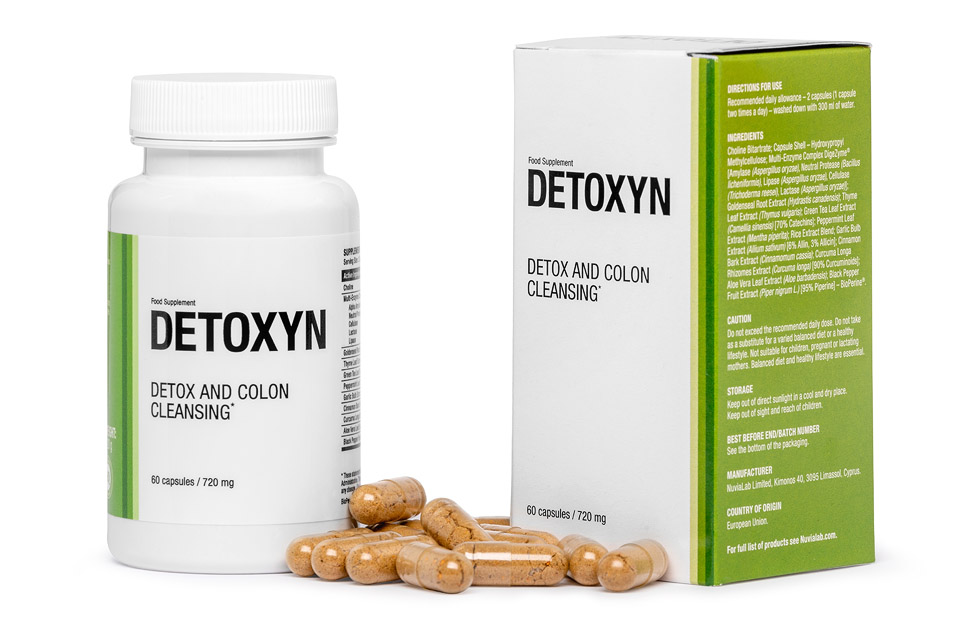
Detoxyn — Our Score: 5.9/10
Score: 5.9/10 · Sub-scores: Ingredients 6.5 · Evidence 4.5 · Safety 6.5 · Value 6.0 · Best for: Buyers who want a digestive-comfort capsule with every amount published — enzymes, choline and traditional botanicals — and who will judge it as digestive support, not as a detox · Main caution: No trial shows this or any commercial formula "detoxifying" the body — your liver and kidneys do that work — and the goldenseal in the formula can change how prescription medicines are processed · Fair trial: Two months (the enzyme trial's length) — two bottles at $119.98
Our Findings
What we like
- Every amount is published: All 11 active lines show exact daily milligrams on the maker's store listing, including the branded DigeZyme® enzyme complex at 150 mg.
- The enzyme dose matches its human trial: Two capsules deliver 150 mg of DigeZyme® a day, matching the total daily amount tested in its one clinical study.
- The maker is named on the box: NuviaLab Limited prints its company name and Cyprus address on the physical carton, which is rarer than it should be in this category.
- No stimulant laxative or purge ingredient: The formula contains no senna, cascara, or aloe-latex purge agent, so it is not a harsh colon-flush product.
- Choline claims stay within authorised lines: The maker's statements linking choline to liver function and fat metabolism mirror authorised nutrient claims.
What gives us pause
- The headline "detox" claim has no trial: No randomised human trial supports any commercial product "detoxifying" the body, and the maker's "2 to 9 kilograms of waste" framing has no clinical basis.
- The enzyme evidence rests on one small industry trial: The DigeZyme® study enrolled 40 patients with diagnosed functional dyspepsia and was run by the ingredient's own manufacturer.
- No drug-interaction warning on the box: Goldenseal measurably slows liver enzymes that process many prescription drugs, yet the printed carton carries no caution for medication users.
- No money-back guarantee: Buyers get only a general 14-day cancellation right after delivery, not a satisfaction guarantee covering a real trial period.
Why You Should Trust This Review
To write this review, we read the maker's sales and order pages in full, inspected the physical box's printed panels from the product's own packaging photos, and read the primary studies behind its claims (Klein & Kiat 2015, PMID 25522674; Majeed et al. 2018, PMID 30156436; Gurley et al. 2005, PMID 15900287). We print the details that complicate the sales pitch alongside the parts that hold up. Every product we review is graded under one fixed scoring standard against verified records rather than sales copy, and brands never pay to place, praise, or change a score.
Our Verdict
Detoxyn earns 5.9/10 because it is a split-personality product. Look only at the label, and you see an unusually open digestive-support blend with 11 published amounts and a real, branded enzyme complex at its trialled daily total. Look at the promise printed across the front, and the evidence falls away.
That mismatch is the main drag on the score. No human trial shows this formula—or any commercial cleanse capsule—removing toxins from a healthy body. Selling a decent digestive-comfort formula under a detox label asks buyers to pay for a claim science does not back.
Maker Credibility lands at 6.0 in our scoring. NuviaLab Limited earns credit for printing its name and Limassol, Cyprus address on the box, publishing every active amount, and showing clear pricing with no hidden checkout shipping fee. Still, the detox pitch oversells the formula, and no satisfaction guarantee backs the bottle.
The fair-trial maths matter here. The one enzyme trial ran 60 days. Two months costs two single bottles at $119.98, or the three-bottle bundle at the same $119.98 with one spare bottle. Because no guarantee protects either option, only buy if digestive comfort—not a detox—is what you want.
How We Scored It
We score Detoxyn across four visible performance pillars alongside Maker Credibility. Every sub-score reflects the published amounts, primary human studies, label warnings, and real cost of a two-month trial.
| Criterion | Score |
|---|---|
| Ingredients | 6.5 |
| Evidence | 4.5 |
| Safety | 6.5 |
| Value | 6.0 |
Ingredients (6.5): Full disclosure lifts this score right away. All 11 active lines publish exact daily amounts, and several plant extracts list their standardisations. DigeZyme® hits 150 mg a day and choline adds 180 mg, while most supporting herbs sit at modest, culinary-style doses rather than clinical ones.
Evidence (4.5): This is the lowest mark because the headline claim has zero human trial support. No study tests the finished Detoxyn capsule. The sole product-relevant digestive trial covers DigeZyme® alone, and it is small, industry-run, and limited to patients with diagnosed dyspepsia.
Safety (6.5): Detoxyn avoids harsh stimulant laxatives, keeps green tea catechins far below regulator alert levels, and prints standard exclusions for children, pregnancy, and breastfeeding. It loses points for one real gap: the formula contains 100 mg of goldenseal plus BioPerine®, yet the box prints no prescription-drug warning.
Value (6.0): A single bottle costs $59.99, or $2.00 a day, which is steep for an unguaranteed trial. Multi-bottle tiers bring the daily cost down to $1.33 on three bottles and $1.00 on six bottles, with no separate checkout shipping charge. The lack of any money-back guarantee caps the value score.
What Is Detoxyn?
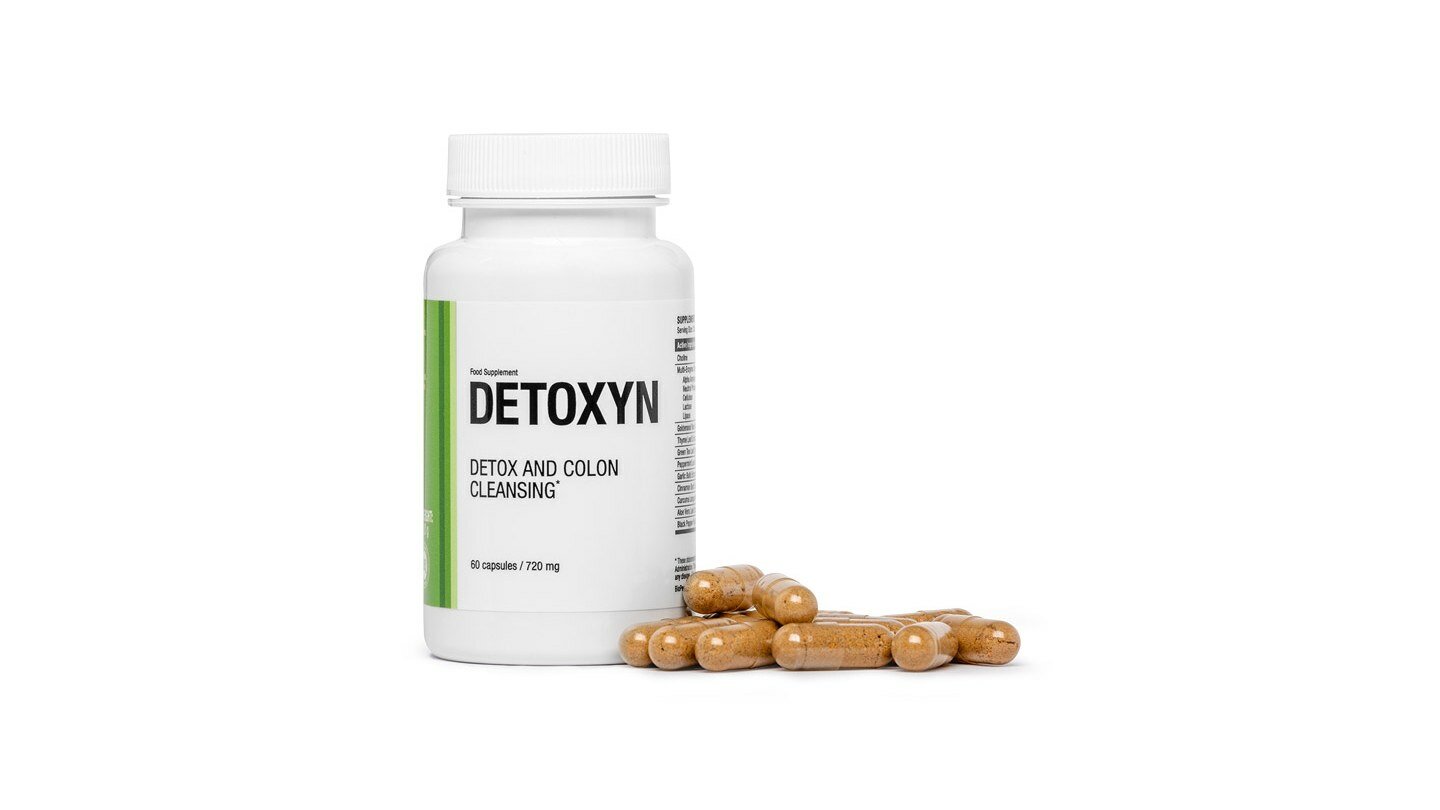
Detoxyn at a Glance
- Our score: 5.9/10
- Brand: Detoxyn (NuviaLab range)
- Company: NuviaLab Limited, Limassol, Cyprus — named on the box
- Product type: Digestive-support capsules — 60 per bottle
- Primary purpose: Marketed for detoxification, liver and digestion support, and defence against pathogens (maker's claims)
- Formula: 11 lines, every amount published per 2-capsule daily serving
- Clinical research: No trial of the finished formula
- Research limitation: The enzyme complex has one small industry-run trial at this daily amount; the "detox" claim itself has no human trial behind it for any commercial product
- Recommended use: 2 capsules a day (1 twice a day) with 300 ml of water
- Money-back guarantee: None published
Detoxyn is a 60-capsule digestive-support supplement from the NuviaLab range. Each bottle holds 720 mg capsules built around choline, the DigeZyme® multi-enzyme complex, and nine plant extracts. The printed directions call for 2 capsules a day—one capsule twice daily, washed down with 300 ml of water.
Unlike many online supplements that hide behind vague storefronts, the physical carton names the manufacturer plainly. It lists NuviaLab Limited, Kimonos 40, 3095 Limassol, Cyprus, and states the European Union as the country of origin.
On its sales page, the maker pitches Detoxyn under the headline "Natural support for detoxification of the body". Its bullet points claim the capsules support detoxification, help eliminate pathogens, protect against harmful microbes, support the liver and digestion, and freshen breath.
Strip away that sales language and look at what sits inside the capsule shell. You are really looking at a digestive-comfort formula wearing a detox label. That gap between the box promise and the ingredient sheet runs through this entire review. Supporting digestion is a modest, plausible job; "detoxifying" a healthy body is not something any capsule has been shown to do.
The Ingredients
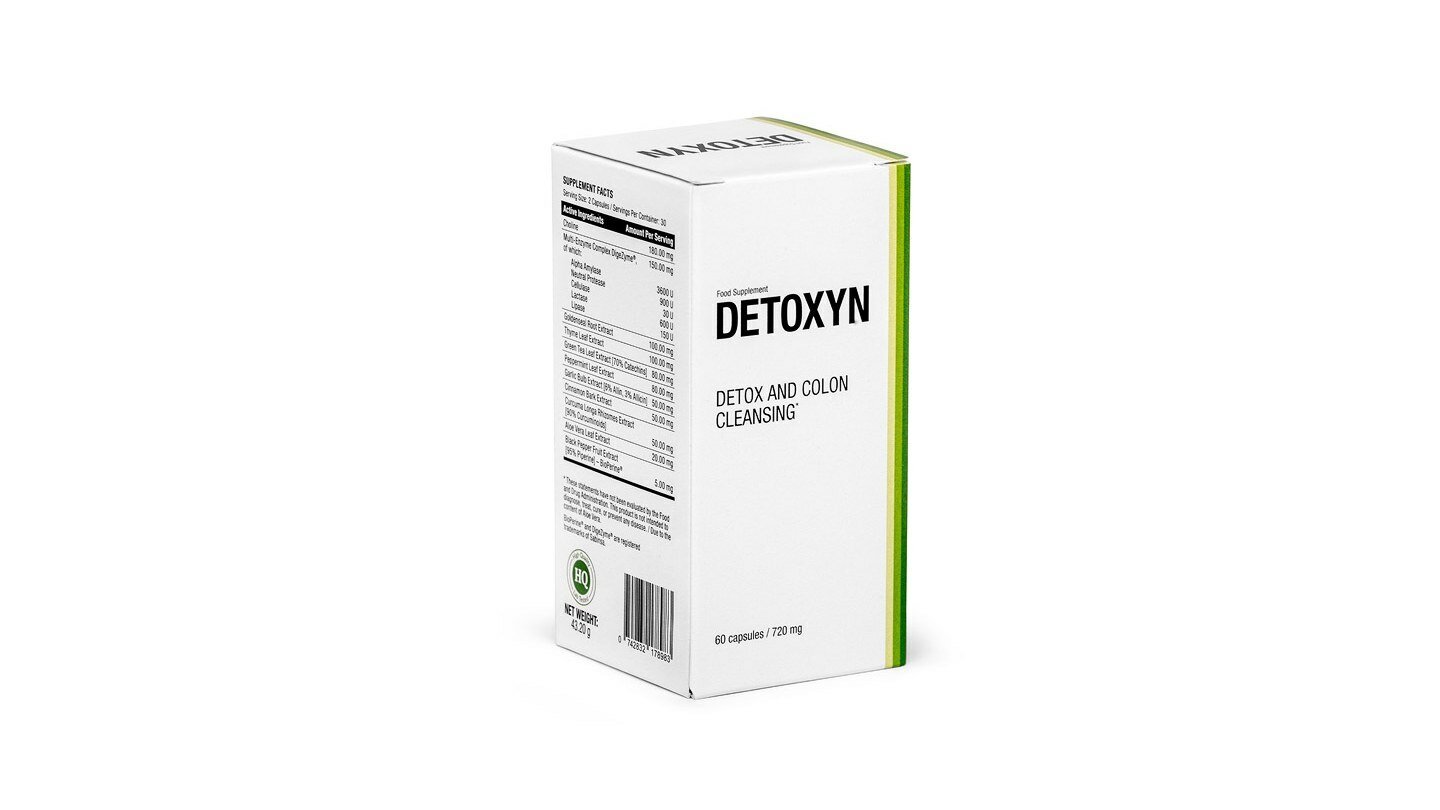
Unusually for the cleanse and digestion aisle, Detoxyn publishes every active amount. The table below follows the maker's store listing for a full 2-capsule daily serving.
We also checked the side panel of the physical box firsthand. The printed carton lists the same 11 active ingredients without individual milligram amounts, adds the plant-based capsule shell (hydroxypropyl methylcellulose) and Rice Extract Blend (an excipient-class entry omitted from the amounts table), and places thyme leaf extract ahead of goldenseal root extract.
| Ingredient | Amount per daily serving |
|---|---|
| Choline (as Choline Bitartrate) | 180 mg |
| DigeZyme® Multi-Enzyme Complex | 150 mg |
| Goldenseal Root Extract (Hydrastis canadensis) | 100 mg |
| Thyme Leaf Extract (Thymus vulgaris) | 100 mg |
| Green Tea Leaf Extract (Camellia sinensis, 70% catechins) | 80 mg |
| Peppermint Leaf Extract (Mentha piperita) | 80 mg |
| Garlic Bulb Extract (Allium sativum, 6% alliin, 3% allicin) | 50 mg |
| Cinnamon Bark Extract (Cinnamomum cassia) | 50 mg |
| Turmeric Rhizome Extract (Curcuma longa, 90% curcuminoids) | 50 mg |
| Aloe Vera Leaf Extract (Aloe barbadensis) | 20 mg |
| BioPerine® Black Pepper Extract (Piper nigrum L., 95% piperine) | 5 mg |
Choline (180 mg)
Choline is an essential nutrient the body needs for normal liver function and fat transport. Detoxyn supplies 180 mg per daily serving from choline bitartrate, making it the single largest line by weight in the formula.
The maker states that choline supports the liver, improves detoxication, and supports fat metabolism. Those liver-function and lipid-metabolism statements closely mirror the authorised European Union nutrient claims for choline, so this is the one part of the sales pitch grounded in accepted nutrition rules.
Context still matters. Adequate intake for adults is about 400 mg of choline a day. At 180 mg, Detoxyn provides a meaningful contribution—nearly half of a daily target—rather than a full day's supply.
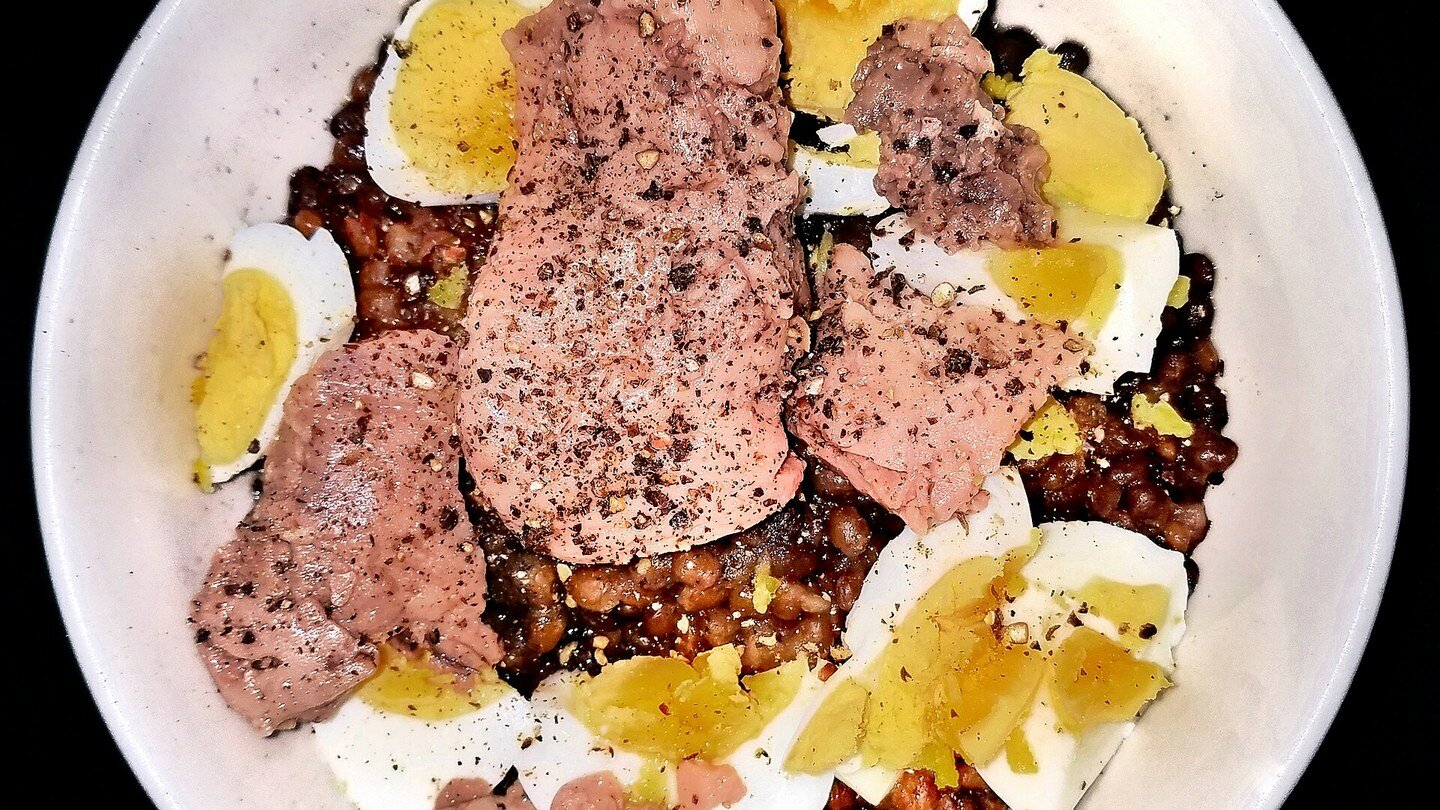
Most people get choline from everyday foods like eggs and liver. Severe choline deficiency is what harms liver fat handling, and no trial tests this choline dose inside Detoxyn for "detox" outcomes. For healthy adults eating a balanced diet, extra choline is a sensible nutrient top-up, not a cleansing cure.
DigeZyme® Multi-Enzyme Complex (150 mg)
DigeZyme® is a branded five-enzyme blend made by Sabinsa. The box panel lists its five enzymes and microbial sources: amylase (Aspergillus oryzae), neutral protease (Bacillus licheniformis), lipase (Aspergillus oryzae), cellulase (Trichoderma reesei), and lactase (Aspergillus oryzae). The maker claims it supports digestion, reduces toxins, and helps remove undigested remains.
This is the only ingredient in Detoxyn with a directly matching human clinical trial. In a double-blind, placebo-controlled trial of 40 patients with functional dyspepsia (20 per group), DigeZyme® at 50 mg three times a day (150 mg daily) for 60 days improved every measured dyspepsia score compared with placebo, with no product-related adverse events reported (Majeed et al. 2018, PMID 30156436).
Four limits belong right next to that result. The trial was small, its authors worked for Sami Labs and Sabinsa (the complex's own maker), participants had diagnosed dyspepsia rather than general "detox" goals, and the study dosed three times a day where Detoxyn splits 150 mg across two capsules. A separate 3-day study in 20 men tested DigeZyme® for post-exercise soreness (Majeed et al. 2016, Sports Nutrition and Therapy, DOI 10.4172/2473-6449.1000113), which is not digestion evidence. Remember also that a healthy pancreas produces its own enzymes; true enzyme replacement is a prescription treatment for diagnosed pancreatic insufficiency.
Goldenseal Root Extract (100 mg)
Goldenseal (Hydrastis canadensis) is a traditional North American root extract known for its berberine content. Detoxyn includes 100 mg per daily serving, and the maker frames it around antibacterial support.
No human trial tests 100 mg of goldenseal inside a blend like this for cleansing or digestive relief. The human evidence that actually matters for buyers is about how goldenseal behaves in the liver.
In a clinical pharmacokinetic study of 12 healthy volunteers, 28 days of goldenseal supplementation inhibited CYP2D6 and CYP3A4/5 enzyme activity by about 40% (Gurley et al. 2005, PMID 15900287). Those two enzyme families break down a large share of common prescription drugs. Slowing them can raise drug blood levels or change how a medicine works.
That makes goldenseal this formula's headline safety concern. Despite including 100 mg every day, the physical Detoxyn box prints no medicine-interaction warning. Anyone taking regular prescription medication should treat goldenseal as the check-first line on this label.
Thyme Leaf Extract (100 mg)
Thyme (Thymus vulgaris) is a familiar culinary herb supplied here as 100 mg of leaf extract per day. On the physical Detoxyn carton, thyme actually appears one slot ahead of goldenseal, even though the store listing prints both at 100 mg.
In herbal traditions, thyme is used for mild digestive comfort and antimicrobial properties. Thymol is its best-known active compound, and it fits the maker's broader framing around digestion and defence against microbes.
When you check the clinical record, though, the evidence stops at traditional use. There are no human outcome trials showing that 100 mg of thyme leaf extract cleanses the gut, clears pathogens, or improves measurable digestive scores on its own.
At this modest amount, thyme is a benign supporting herb rather than a heavy lifter. It adds plant bulk to the digestive-botanical profile without carrying safety baggage for most healthy adults, though people with known allergies to herbs in the mint family should note its presence.
Green Tea Leaf Extract (80 mg)
Detoxyn contains 80 mg of green tea leaf extract (Camellia sinensis) standardised to 70% catechins. That standardisation works out to roughly 56 mg of catechins per daily serving.
Green tea catechins—especially EGCG—are widely studied across metabolism, antioxidant markers, and general health. Printing the 70% standardisation is good practice because it tells you what fraction of the extract is active polyphenols rather than plain leaf powder.
Even so, 80 mg is a small supporting line. It sits well below the doses typically studied in standalone green tea extract trials, and there is no Detoxyn-dose trial linking 56 mg of catechins to detoxification or digestive relief.
On the safety side, that small dose is a clear plus. Regulators flag liver safety concerns around 800 mg of EGCG a day from concentrated extracts. Detoxyn's roughly 56 mg of total catechins sits far below that threshold, avoiding the high-dose green tea extract worries seen in aggressive fat burners.
Peppermint Leaf Extract (80 mg)
Peppermint (Mentha piperita) appears at 80 mg of leaf extract per daily serving. It is one of the oldest traditional digestive herbs, long used for meal-related gas, fullness, and mild cramping.
This is an ingredient where precise reading protects you from overstating the science. Many supplement pages point to clinical studies on peppermint for irritable bowel syndrome. Those trials test concentrated peppermint oil—often in enteric-coated capsules—not an 80 mg dried leaf extract inside a multi-herb blend.
Peppermint oil and peppermint leaf extract are different preparations with different concentrations of volatile oils. Positive IBS results from coated peppermint oil do not transfer automatically to a modest leaf extract swallowed in standard capsules.
No Detoxyn-dose outcome trial tests 80 mg of peppermint leaf extract. It remains a reasonable, traditional digestive-comfort addition, and it is unlikely to bother most healthy users, though people prone to heartburn sometimes find peppermint aggravates reflux symptoms.
Garlic Bulb Extract (50 mg)
Garlic bulb extract (Allium sativum) is dosed at 50 mg a day and standardised to 6% alliin and 3% allicin. That gives roughly 1.5 mg of allicin per daily serving, a detail the box panel confirms alongside the store listing.
In Detoxyn, garlic backs the maker's traditional framing around defence against harmful microbes and general gut support. Printing both the alliin and allicin percentages is a clear disclosure win compared with unstandardised garlic powders.
Still, the human research record on garlic points elsewhere. Garlic's best-studied territory is cardiovascular health, where clinical trials typically use much larger daily doses of aged garlic or standardised extracts over months.
At 50 mg—delivering about 1.5 mg of allicin—this line is too small to carry strong human outcome claims on its own. It functions as a traditional supporting botanical rather than an evidence-backed antimicrobial treatment, and no human trial tests it at this dose for cleansing or pathogen removal.
Cinnamon Bark Extract (50 mg)
Detoxyn adds 50 mg a day of cinnamon bark extract, identified on the physical box as cassia cinnamon (Cinnamomum cassia). Like the other spices here, it plays a background role in the maker's digestive and metabolic positioning.
In the wider supplement literature, cinnamon's popular focus is blood sugar support. Even in that arena, human trial results are mixed, and studies generally use gram-level doses rather than a fraction of a hundred milligrams.
At 50 mg per daily serving, cinnamon bark extract is a minor supporting line with no human outcome trial behind it at this dose. It is not going to drive meaningful blood sugar shifts or "detox" effects on its own.
Because the box specifies cassia cinnamon, one standard safety note applies. Cassia bark naturally contains coumarin, a compound that raises liver concerns at high daily intakes. While coumarin is worth knowing about whenever you see cassia on a label, a 50 mg extract dose is not a unique concern by itself.
Turmeric Rhizome Extract (50 mg)
Turmeric rhizome extract (Curcuma longa) sits at 50 mg a day and is standardised to 90% curcuminoids. That works out to about 45 mg of curcuminoids per daily serving.
Once again, Detoxyn deserves credit for label honesty. Many multi-ingredient capsules list plain turmeric root powder with no standardisation at all, whereas this label tells you both the exact extract weight and the 90% curcuminoid concentration.
When measured against clinical trials, however, 45 mg of curcuminoids is a token supporting dose. Human studies testing curcumin for inflammation, joint comfort, or digestive outcomes typically use hundreds of milligrams to several grams per day, often paired with absorption enhancers.
Detoxyn does include 5 mg of black pepper extract further down the label, which is a common pairing with turmeric. Even with that pairing, 50 mg of extract is far too small to expect clinical curcumin effects, and no human trial supports it for detoxification.
Aloe Vera Leaf Extract (20 mg)
Aloe vera leaf extract (Aloe barbadensis) is the smallest herbal line in Detoxyn at 20 mg per daily serving. Its appearance on a cleanse-marketed label often makes cautious buyers worry about sudden bathroom trips, so the plant distinction matters.
Aloe leaves yield two very different materials. The inner clear gel is a traditional soothing ingredient, whereas aloe latex—the bitter yellow sap just under the rind—contains compounds that act as strong stimulant laxatives.
Detoxyn is not a flush or purge formula. It contains no senna, no cascara, and no latex-style laxative purge ingredient, which is one of the genuine positives in our safety review.
At just 20 mg per day, this leaf extract is a minor supporting line either way. No human trial supports 20 mg of aloe vera leaf extract for cleansing or digestive symptom relief. Even so, if any digestive supplement triggers persistent loose stools or cramping, stopping the product is the sensible move.
BioPerine® Black Pepper Extract (5 mg)
BioPerine® is a branded black pepper fruit extract (Piper nigrum L.) standardised to 95% piperine. Detoxyn supplies 5 mg per daily serving, placing it at the end of both the store list and the box panel.
Formulators include piperine to increase the bioavailability of companion ingredients, particularly botanical compounds like curcuminoids. The classic human pharmacokinetic study showing piperine's boost to curcumin absorption used 20 mg of piperine (Shoba et al. 1998, PMID 9619120)—four times the 5 mg amount found here.
At 5 mg, BioPerine® is a common, standard label addition in multi-ingredient capsules, though its exact absorption impact at this lower dose inside Detoxyn has never been tested.
Its practical importance here is tied directly to safety. An absorption enhancer is designed to alter how the body takes in compounds passing through the gut and liver. Paired with 100 mg of goldenseal, BioPerine® gives anyone taking regular prescription medication one more clear reason to check with a doctor or pharmacist before starting.
The Claim Audit: 'Detoxification' on the Box, Digestion in the Evidence
Detoxyn's biggest problem is not hidden ingredients. It is the gulf between what the sales page promises and what published human research actually supports. Five findings sum up our audit of the claims against the evidence.
-
The headline claim has no human trial behind it. The maker sells Detoxyn as "natural support for detoxification of the body". Yet a critical review of detox diets found very little clinical evidence for the category and no randomised controlled trials testing commercial detox diets in humans (Klein & Kiat 2015, PMID 25522674).
Your liver and kidneys already handle detoxification continuously. Major medical authorities—including the Mayo Clinic, Harvard Health, and the National Center for Complementary and Integrative Health (NCCIH)—reach the same conclusion in their own guidance: commercial detox and cleanse products have no compelling evidence behind them and are not needed for healthy people.
-
The "waste" story is marketing mythology. The maker's sales page states that the average person carries between 2 and 9 kilograms of "waste" inside them at all times. That dramatic figure is attributed sales copy with no clinical basis.
Harvard Health addresses this exact concept directly. Faecal matter does not stick to healthy colon walls as built-up "sludge", the colon removes waste on its own, and the rationale behind intestinal cleansing is fundamentally mistaken.
-
What the evidence actually supports is narrower and real. Strip away the cleanse talk, and Detoxyn's lead branded complex does have one relevant human trial. DigeZyme® at 150 mg a day improved dyspepsia scores over 60 days compared with placebo (Majeed et al. 2018, PMID 30156436).
That result still carries clear boundaries. The study enrolled 40 patients with diagnosed functional dyspepsia, was run by the ingredient's own manufacturer, and split the dose three times daily rather than Detoxyn's twice-daily schedule. It is a modest digestive-comfort signal, not proof of toxin removal.
-
The box under-warns on its one real safety risk. Goldenseal inhibited CYP2D6 and CYP3A4/5 activity by about 40% in 12 healthy volunteers over 28 days (Gurley et al. 2005, PMID 15900287). Those enzymes metabolise many everyday prescription medicines.
Our product page flags that drug-interaction risk clearly, yet the physical Detoxyn box prints no interaction warning at all. For an otherwise transparent carton, leaving out the one caution its own formula earns is a real miss.
-
What is genuinely good here deserves honest credit. Every one of the 11 active ingredients has a published daily amount, directions are printed clearly, the manufacturer lists its Cyprus name and address on the carton, and no harsh laxative purge ingredients appear in the blend.
In other words, our audit's complaint is the detox framing, not label secrecy. Buyers who ignore the cleanse rhetoric and look only at the digestive-support formula see a far more honest product than the headline suggests.
The Evidence, Read Properly
No clinical trial has tested the finished Detoxyn capsule in humans. To judge what this formula can and cannot do, you have to read the published research on the "detox" category, the individual branded complex inside the bottle, and the herb that drives its main safety warning.
The Detox Category: Klein & Kiat (2015)
The clearest starting point is a critical review of detox diets published in the Journal of Human Nutrition and Dietetics (Klein & Kiat 2015, PMID 25522674). The authors examined the clinical literature behind commercial cleansing programmes and reached a blunt verdict.
They found very little clinical evidence supporting detox diets and noted that no randomised controlled trials have tested commercial detox diets in humans. The handful of studies that do exist suffer from small sample sizes and weak designs. For the entire "detox" supplement shelf, the human evidence simply is not there—healthy livers and kidneys already perform that work continuously.
The DigeZyme® Dyspepsia Trial: Majeed et al. (2018)
The strongest product-relevant evidence behind Detoxyn belongs to its DigeZyme® multi-enzyme complex. In a double-blind, placebo-controlled trial published in the Journal of Medicinal Food, 40 patients with diagnosed functional dyspepsia (20 per group) took 50 mg of DigeZyme® three times daily—150 mg a day—or placebo for 60 days (Majeed et al. 2018, PMID 30156436).
Patients taking DigeZyme® showed statistically significant improvements over placebo across every dyspepsia measure tested (SF-LDQ, NDI-SF, VAS, CGI-S, and GDSS; between-group P<.001), with no product-related adverse events reported. That result is real, and Detoxyn matches the trial's 150 mg daily total.
Four caveats must stay attached to that finding. First, the study was small at 40 participants. Second, its authors were staff at Sami Labs and Sabinsa—the manufacturer of DigeZyme®—making it an industry-run trial.
Third, participants had medically diagnosed functional dyspepsia, not healthy shoppers seeking a cleanse. Fourth, the trial split 150 mg across three daily doses, whereas Detoxyn directs one capsule twice daily. A separate 3-day study in 20 men tested DigeZyme® at 50 mg three times a day around eccentric exercise for muscle soreness (Majeed et al. 2016, Sports Nutrition and Therapy 1(3):113, DOI 10.4172/2473-6449.1000113); that tiny, manufacturer-authored soreness paper is not digestion evidence.
The Goldenseal Interaction Study: Gurley et al. (2005)
Detoxyn includes 100 mg of goldenseal root extract, and its most important human study is about safety rather than benefits. In a clinical pharmacokinetic trial published in Clinical Pharmacology & Therapeutics, 12 healthy volunteers took goldenseal supplementation for 28 days (Gurley et al. 2005, PMID 15900287).
Goldenseal inhibited the activity of two major liver enzyme families—CYP2D6 and CYP3A4/5—by about 40%. Those pathways clear a wide range of prescription medicines from the bloodstream. That study does not measure digestive comfort or cleansing; it documents a real medication-interaction risk that the Detoxyn carton fails to mention.
The Medical Authority Consensus
Major clinical institutions align closely with the published trial record. The Mayo Clinic states that colon cleansing is neither recommended nor needed for any medical condition, with no evidence backing its claimed benefits.
Harvard Health states plainly that the colon already removes toxins on its own. It adds that faecal matter does not stick to healthy colon walls and calls the intestinal-cleansing "sludge" rationale fundamentally mistaken. The National Center for Complementary and Integrative Health (NCCIH) reaches the same conclusion, reporting no compelling evidence that detox or cleanse programmes improve health.
Where Digestive Enzymes Actually Fit
Johns Hopkins Medicine frames enzyme supplements clearly. A healthy pancreas produces enough digestive enzymes to handle normal meals on its own. Settled enzyme therapy means prescription pancreatic enzyme replacement for people with diagnosed pancreatic insufficiency.
Outside prescription replacement, the narrow over-the-counter uses with clear backing are targeted single enzymes such as lactase for lactose intolerance and alpha-galactosidase for gas from beans. Put all of these records together and the bottom line is straightforward: no trial of the finished Detoxyn formula exists, and none of the research above measures "toxin elimination"—because no validated human measure of that claim exists to measure.
How Long Does It Take to Work?
Because Detoxyn itself has never been trialled, the only grounded timeline comes from the one human study behind its lead enzyme complex. The DigeZyme® dyspepsia trial ran for 60 days at 150 mg daily (Majeed et al. 2018, PMID 30156436).
A fair test of Detoxyn is therefore about two months of steady daily use, taking one capsule twice a day with 300 ml of water as printed on the box. Expecting a dramatic overnight "cleanse" or sudden flush misunderstands what is in the capsule—there is no laxative purge agent here.
Judge the trial on concrete digestive comfort rather than vague cleansing language. Track meal-related fullness, post-meal bloating, and everyday bowel regularity from week one through week eight. Those are the digestive areas linked to the enzyme study; there is no way to feel or measure "toxins leaving the body".
Run the cost maths before you start that two-month clock. Two months requires two 60-capsule bottles. Bought singly at $59.99 each, two bottles total $119.98.
The three-bottle bundle costs the exact same $119.98 and leaves you with one spare bottle. Neither choice is backed by a money-back satisfaction guarantee. If two full months of consistent daily use changes nothing you can feel or track around meals, the honest conclusion is that Detoxyn is not working for you—stop rather than reordering.
Is It Safe?
Start with what Detoxyn gets right on safety. The formula contains no stimulant laxatives—no senna, no cascara, and no harsh colon-purge agents. For buyers wary of cramping or urgent bathroom trips, that puts Detoxyn in a gentler bracket than aggressive cleanse pills.
Most of the nine botanical extracts sit at modest, moderate daily amounts. Green tea leaf extract is a clear example: 80 mg standardised to 70% catechins supplies roughly 56 mg of catechins a day. That sits far below the 800 mg daily EGCG level regulators flag for liver injury risk from concentrated green tea extracts.
The physical Detoxyn carton also prints standard baseline cautions. Do not exceed the recommended daily dose of two capsules, do not treat the product as a substitute for a varied diet and healthy lifestyle, and do not use it if you are pregnant, breastfeeding, or buying for a child.
Now look at the one material caution that deserves serious attention. Detoxyn delivers 100 mg of goldenseal root extract every day, and human pharmacokinetic data shows goldenseal inhibits CYP2D6 and CYP3A4/5 liver enzymes by about 40% (Gurley et al. 2005, PMID 15900287). Those enzyme systems process a large share of everyday prescription drugs.
Right alongside goldenseal, the formula includes 5 mg of BioPerine® black pepper extract standardised to 95% piperine—an ingredient added specifically to boost absorption. Taken together, goldenseal and piperine make one rule non-negotiable: if you take any regular prescription medication, check with your doctor or pharmacist before touching Detoxyn. That warning belongs on the physical box, yet the carton prints no drug-interaction caution at all.
Two final safety points round out the picture. The 20 mg of aloe vera leaf extract is a small line and not an aloe-latex purge ingredient, though persistent diarrhoea on any digestive supplement is an immediate signal to stop. Cassia cinnamon (50 mg) contains coumarin at high intakes generally, though this small extract dose is not a unique concern by itself. Finally, remember that no product-specific safety trial has been run on the finished Detoxyn blend.
Side Effects: What Is Actually Known
No adverse-event reporting or post-marketing safety data is published for Detoxyn as a finished capsule. That means any realistic expectations have to be drawn from its individual ingredients and general digestive-supplement behaviour.
The closest human safety readout comes from the 60-day DigeZyme® trial in 40 functional-dyspepsia patients taking 150 mg a day, where no product-related adverse events were reported (Majeed et al. 2018, PMID 30156436). That is reassuring for the enzyme blend itself, though a 40-person, two-month trial cannot catch rare reactions or interactions across a nine-herb blend.
For healthy adults not on prescription drugs, the most plausible side effects of an enzyme-and-botanical capsule are mild, category-typical digestive adjustments. Extra gas, stomach rumbling, mild cramping, or slightly looser stools can happen during the first week or two as your gut adjusts. Taking each capsule with the directed 300 ml of water helps you test tolerance cleanly, and stopping the capsule should resolve mild intolerance quickly.
Keep in mind that Detoxyn's most important documented effect is silent. Goldenseal's inhibition of CYP2D6 and CYP3A4/5 enzymes does not announce itself with a stomach ache—it works in the liver by altering how prescription medicines are cleared (Gurley et al. 2005, PMID 15900287). That is why checking your medication list beforehand matters far more than waiting to see how you feel.
When Digestive Symptoms Need a Doctor, Not a Detox
Detoxyn is a dietary supplement, not a medical treatment for underlying gut disease. A persistent change in bowel habits, blood in your stool, unexplained weight loss, persistent bloating, or recurring abdominal pain are warning signs that require clinical investigation, not a cleanse capsule.
Conditions including coeliac disease, inflammatory bowel disease, thyroid disorders, and gallbladder problems can all produce lingering bloating, heaviness, and bowel changes. Likewise, true pancreatic enzyme insufficiency is a medically diagnosed condition managed with prescription pancreatic enzyme replacement therapy, not an over-the-counter supplement. If digestive symptoms persist, worsen, or feel new for you, schedule a proper medical workup first.
Is It a Scam?
No—Detoxyn is not a scam. It is a real supplement made in the European Union with a far more transparent label than most rivals on the cleanse shelf.
The physical carton names the manufacturer and prints a Cyprus street address (NuviaLab Limited, Limassol). The maker's store lists exact daily milligram amounts for all 11 active ingredients, specifies standardisations for key plant extracts, and uses a branded enzyme complex at the same 150 mg daily total studied in humans.
Being legitimate does not make the sales pitch honest, and the criticisms here are concrete. First, "detoxification" has no human trial behind it for this or any commercial product. Second, the sales page's claim that the average person carries 2 to 9 kilograms of "waste" inside them is marketing mythology with no clinical basis.
Third, the one clinical trial backing DigeZyme® is small (40 patients), run by the enzyme's own manufacturer, and tested diagnosed dyspepsia patients on a three-times-daily schedule. Fourth, the carton omits the prescription-drug warning its goldenseal content warrants. Fifth, no money-back satisfaction guarantee stands behind your order.
That leaves a clear verdict: solid label disclosure wrapped in oversold detox marketing. It is not a fake product, just a modest digestive-support capsule asking buyers to believe a bigger story than the evidence supports.
Price and Packs
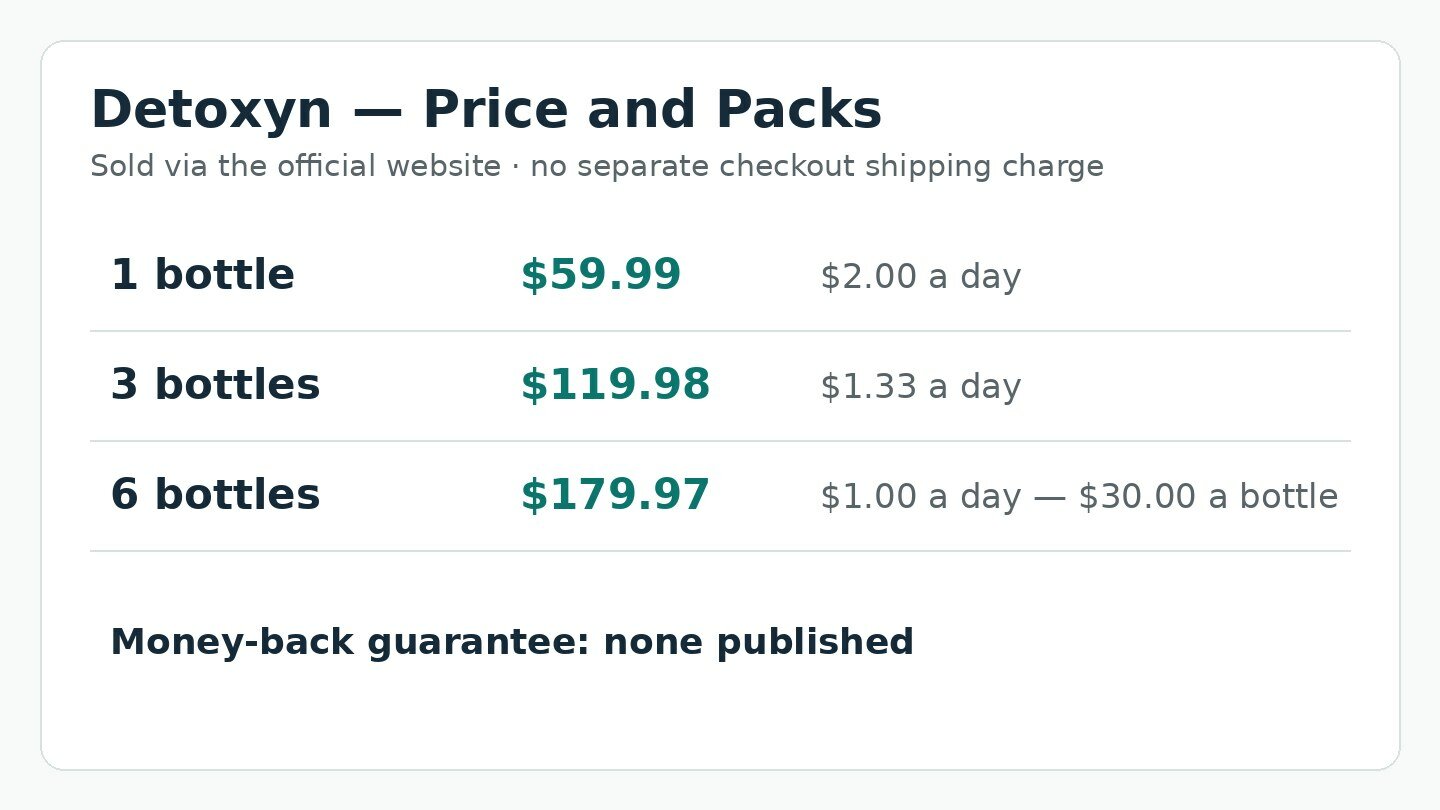
Each bottle of Detoxyn contains 60 capsules, supplying 30 days at the printed dose of two capsules daily. The table below shows the maker's published pricing tiers, verified in October 2026 and re-checked in November 2026.
| Option | Total | Per bottle | Cost per day |
|---|---|---|---|
| 1 bottle | $59.99 | $59.99 | $2.00 |
| 3 bottles (Buy 2, get 1 free) | $119.98 | $39.99 | $1.33 |
| 6 bottles (Buy 3, get 3 free) | $179.97 | $30.00 | $1.00 |
At checkout on the maker's store, no separate shipping charge is shown. Buying a single bottle works out to $2.00 a day, while the three-bottle bundle drops the daily cost by a third to $1.33, and the six-bottle pack brings it down to $1.00 a day.
Check the refund terms carefully before choosing a tier. No money-back satisfaction guarantee is published for Detoxyn. The store's general policy offers only a 14-day right to cancel after receipt, which is a standard statutory-style withdrawal right—not a trial guarantee that lets you finish a bottle or two and ask for a refund if you notice no benefit.
Purchase Options
Detoxyn is sold direct through the maker's official website, which is where the verified bundle prices and checkout terms above apply. Before clicking through to order, run three quick checks against your own plan and budget.
- Match the pack to the 60-day fair trial: The one relevant DigeZyme® study lasted two months. Buying two single bottles costs $119.98, whereas the three-bottle pack ("Buy 2, get 1 free") costs the exact same $119.98 and gives you a third bottle spare. If you decide to test Detoxyn properly, the three-bottle option is the one genuinely smart buy on the pricing ladder.
- Skip the six-bottle tier on a first order: Cutting the per-day cost to $1.00 looks tempting on paper, but there is no satisfaction guarantee protecting that $179.97 spend. Do not lock into six months of capsules until a two-month trial has actually earned a reorder.
- Run the medication check before ordering: Because Detoxyn contains 100 mg of goldenseal plus BioPerine®, anyone taking regular prescription medicines should ask a pharmacist or doctor about CYP2D6 and CYP3A4/5 interactions before placing an order—not after the box lands on the doormat.
How It Compares
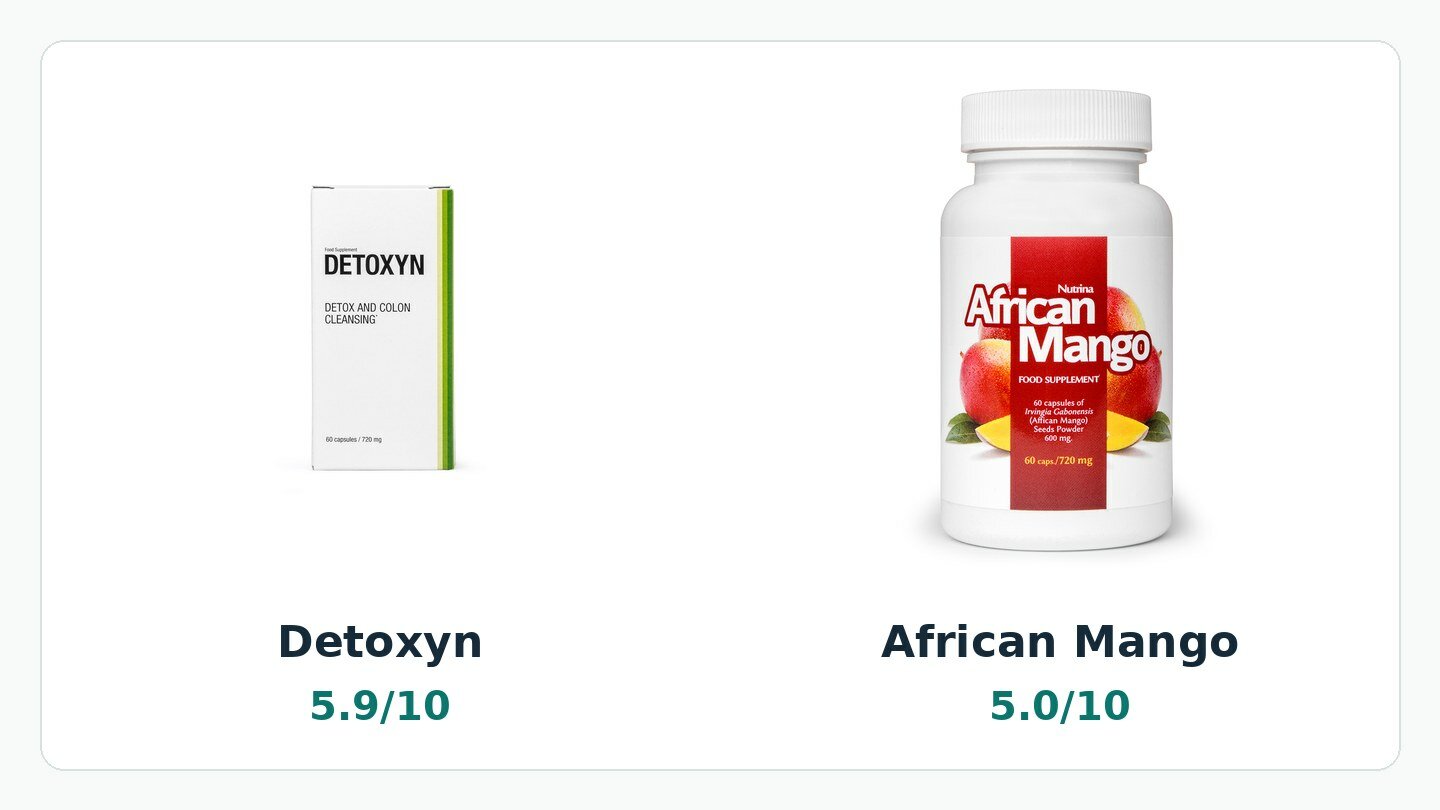
Detoxyn sits next to single-extract "cleanse-adjacent" capsules in the same broader catalogue. Placing it beside African Mango highlights the exact trade-off buyers run into across this shelf.
| Product | Our score | Formula |
|---|---|---|
| Detoxyn | 5.9/10 | 11 published lines — enzymes, choline and botanicals, every amount stated |
| African Mango | 5.0/10 | One named extract, amount per capsule not published |
These two supplements sell adjacent promises—"cleanse" versus fat-burning—under opposite disclosure standards. Detoxyn tells you every single milligram inside its 11-line formula, names its manufacturer on the box, and then oversells what the capsules can accomplish under a detox banner. African Mango makes no detox claim, yet never publishes the extract dose per capsule, leaving buyers completely blind on amount. Neither earns a strong evidence score, though full dose disclosure makes Detoxyn the cleaner label to audit.
There is also a free third route that outperforms both bottles on human evidence. Eating fibre-rich whole foods, drinking enough water, getting consistent sleep, and moderating alcohol are the everyday habits that actually support normal liver, kidney, and bowel function. That baseline costs nothing extra, carries no goldenseal drug-interaction risk, and rests on far stronger science than any capsule on the cleanse shelf.
Who Should Buy It — and Who Should Skip It
Who should buy it
- Buyers seeking a disclosed digestive-comfort formula: Adults who experience mild meal-related heaviness or digestive discomfort, want every ingredient amount published on paper, and are ready to judge the capsule fairly over a two-month trial.
- Buyers who look past the "detox" label: Shoppers who understand that liver and kidney detoxification is not done by a pill, and who are buying Detoxyn strictly as an enzyme, choline, and traditional herb blend for digestion.
- Medication-free adults (or pharmacist-cleared users): Healthy adults taking no regular prescription medicines, or anyone who has specifically cleared goldenseal and BioPerine® with a doctor or pharmacist first.
Who should skip it
- Anyone buying a "detox" or colon flush: No commercial supplement has human trial proof of detoxifying a healthy body, and Detoxyn contains no purge ingredients—if you expect a cleanse, save your money.
- Anyone on regular prescription medication without medical clearance: Goldenseal measurably inhibits CYP2D6 and CYP3A4/5 liver enzymes, and the box omits any interaction warning; skip unless a pharmacist or doctor clears your exact drug list.
- Buyers who want a risk-free trial guarantee: No money-back satisfaction guarantee is published—only a 14-day cancellation right after delivery.
- Children, pregnant women, and breastfeeding mothers: All three groups are explicitly excluded on the physical Detoxyn carton.
- Anyone with persistent or changing gut symptoms: Ongoing bowel changes, unexplained weight loss, recurring pain, persistent bloating, or blood in the stool require a doctor's evaluation, not a supplement.
Frequently Asked Questions
Does Detoxyn actually detox your body?
No human trial shows Detoxyn—or any commercial detox supplement—removing toxins from a healthy body. A critical review of the detox category found no randomised controlled trials of commercial detox diets in humans and very little clinical evidence supporting them (Klein & Kiat 2015, PMID 25522674). Your liver, kidneys, and colon already handle waste and toxin removal continuously. Detoxyn is better understood as a digestive-support capsule with enzymes, choline, and traditional herbs sold under detox marketing.
Does Detoxyn help with bloating and digestive discomfort?
It has a modest, plausible angle for meal-related digestive comfort, though the finished Detoxyn capsule has never been trialled. Its lead branded ingredient, DigeZyme®, improved dyspepsia scores over placebo in 40 diagnosed functional-dyspepsia patients taking 150 mg daily for 60 days (Majeed et al. 2018, PMID 30156436). Keep the limits in mind: that trial was small, industry-run by DigeZyme®'s maker, tested diagnosed patients rather than healthy buyers, and dosed three times daily rather than Detoxyn's twice-daily schedule.
How long should I take Detoxyn before judging it?
Plan on about two months of steady daily use before deciding whether Detoxyn helps you. That 60-day window comes directly from the DigeZyme® dyspepsia trial, the only product-relevant human study behind any ingredient in the formula (Majeed et al. 2018, PMID 30156436). Take one capsule twice a day with 300 ml of water and judge it on post-meal comfort, fullness, and regularity. If two months brings no clear difference you can feel, stop reordering.
Is Detoxyn a laxative — will it purge my colon?
No. Detoxyn is not a stimulant laxative or colon-flush product. Its published ingredient list contains no senna, no cascara, and no aloe-latex purge agent. Although the formula includes 20 mg of aloe vera leaf extract, that is a minor supporting amount rather than a harsh laxative purge. You should not expect forced bathroom trips, though mild digestive shifts such as gas or looser stools can occur when starting any enzyme-and-botanical blend. Persistent diarrhoea is always a reason to stop.
Is Detoxyn safe — what are the side effects?
No safety or adverse-event study exists for the finished Detoxyn capsule. In the 60-day DigeZyme® trial, no product-related adverse events were reported across 40 patients (Majeed et al. 2018, PMID 30156436). Green tea catechins sit around 56 mg a day—far below regulator alert levels—and the box excludes children, pregnancy, and breastfeeding. Plausible mild effects include gas, stomach rumbling, or loose stools early on. The main documented safety issue is goldenseal's drug-interaction risk, which the carton fails to print.
Can I take Detoxyn with prescription medication?
Do not combine Detoxyn with regular prescription medicines without checking with your doctor or pharmacist first. Each daily serving supplies 100 mg of goldenseal root extract, and a 28-day human study in 12 healthy volunteers found goldenseal inhibited CYP2D6 and CYP3A4/5 liver enzymes by about 40% (Gurley et al. 2005, PMID 15900287). Those enzymes process many common prescription drugs. Detoxyn also includes 5 mg of BioPerine® to boost absorption, yet the physical box prints no interaction warning.
Does Detoxyn have a money-back guarantee?
No product-specific money-back satisfaction guarantee is published for Detoxyn. The maker's store offers only a general 14-day right to cancel after receipt of your order. That is a statutory-style withdrawal right for returning an unwanted purchase promptly—not a 60-day trial guarantee that lets you take the capsules for two months and claim a refund if they do nothing for you. Factor that lack of refund protection in before choosing a larger multi-bottle bundle.
Where can I buy Detoxyn — and what does a month actually cost?
Detoxyn is sold direct through the maker's official website. One 60-capsule bottle lasts 30 days at two capsules daily and costs $59.99, or $2.00 a day. A three-bottle pack ("Buy 2, get 1 free") costs $119.98 ($39.99 per bottle, $1.33 a day), which covers a two-month fair trial for the exact price of two single bottles with one spare. Six bottles ("Buy 3, get 3 free") cost $179.97 ($30.00 per bottle, $1.00 a day), with no separate checkout shipping charge shown.
Detoxyn — Our Score: 5.9/10
Score: 5.9/10 · Sub-scores: Ingredients 6.5 · Evidence 4.5 · Safety 6.5 · Value 6.0 · Best for: Buyers who want a digestive-comfort capsule with every amount published — enzymes, choline and traditional botanicals — and who will judge it as digestive support, not as a detox · Main caution: No trial shows this or any commercial formula "detoxifying" the body — your liver and kidneys do that work — and the goldenseal in the formula can change how prescription medicines are processed · Fair trial: Two months (the enzyme trial's length) — two bottles at $119.98
Sources & Method
This review is based on the maker's live sales and order pages and a firsthand inspection of the physical Detoxyn box's printed panels (read November 2026), audited against the primary published literature cited throughout: Klein & Kiat 2015 (PMID 25522674) for the detox category evidence, Majeed et al. 2018 (PMID 30156436) for the DigeZyme® clinical trial, and Gurley et al. 2005 (PMID 15900287) for goldenseal's drug-enzyme interaction record. Detoxyn is scored using the standard SuppChecked scoring method across ingredients, evidence, safety, value, and maker credibility.
Last reviewed: November 2026
