
- Quick Answer
- Our Findings
- Why You Should Trust This Review
- Our Verdict
- How We Scored It
- What Is African Mango?
- The Ingredients
- African Mango Seed Extract (Irvingia gabonensis)
- The 6,000 mg Equivalence, Decoded
- The Dose Audit: A 6,000 mg Headline, an Unpublished Serving, and a Trial Extract This Bottle Never Claims to Be
- The dose is unverifiable
- The headline number is equivalence arithmetic
- The trial extract is a specific, patented preparation
- What is genuinely fair to say
- The Evidence, Read Properly
- Ngondi et al. 2005 — Crude Whole Seed Powder (Cameroon)
- Ngondi et al. 2009 — The Famous IGOB131 Trial (Cameroon)
- Oben et al. 2008 — The Combination Trial (Cameroon)
- Méndez-Del Villar et al. 2018 — Metabolic Syndrome Trial (Mexico)
- Nonsa-Ard et al. 2022 — The Independent Replication (Thailand)
- Onakpoya et al. 2013 — Independent Systematic Review
- Lee et al. 2020 — Five-Trial Meta-Analysis
- The Bottom Line on the Literature — and the Retraction Myth
- How Long Does It Take to Work?
- Is It Safe?
- Side Effects: What Is Actually Known
- When Weight Loss Needs a Doctor, Not a Capsule
- Is It a Scam?
- Price and Packs
- Purchase Options
- How It Compares
- A Stronger Alternative in This Category
- Who Should Buy It — and Who Should Skip It
- Who should buy it
- Who should skip it
- Frequently Asked Questions
- Does African Mango actually work for weight loss?
- How much African mango extract is in each capsule?
- What is IGOB131 — and is that what is in this bottle?
- Were the African mango studies retracted?
- How long should I take it before judging it?
- Is African Mango safe — what are the side effects?
- Does African Mango have a money-back guarantee?
- Where can I buy African Mango — and what does a month actually cost?
- Sources & Method
- Read This Next
SuppChecked is an independent supplement review site. When you buy a product through links on our pages, we may earn a commission at no extra cost to you. Every score, price, and product claim on this page is checked against the maker's official records and the published scientific literature, and brands never pay to change our scores.
There is a certain kind of supplement that sells itself on a single idea. One capsule. One ingredient. One famous name. African Mango is that kind of product. On one side are the buyers drawn to its simplicity — a single named extract, nothing hidden inside a blend, and a trial story that sounds almost too good to be true. On the other side are the buyers who ask a harder question: what is actually in the capsule, and has that famous trial ever been repeated by anyone else?
This review answers both questions. We read the physical bottle against the maker's sales pages. We decode the 6,000 mg headline on the front. And we grade all five human trials of the ingredient, including the independent one that found nothing.
Quick Answer
Our verdict: 5.0/10. African Mango is a genuinely simple product — one named extract, nothing else — but the amount per capsule is not published anywhere on the maker's sales pages, and no serving size or directions are published either. That means the dose cannot be compared with the 300 mg a day used in the best-known trial. The bottle's 6,000 mg headline is an equivalence figure (600 mg of a 10:1 extract), not a dose. The positive trials come almost entirely from one research group, the largest was partly funded by the extract's supplier, and the one independent replication (Thailand, 2022) found no effect. No money-back guarantee is published. Price starts at $49.99 a bottle plus $12 shipping.
Best for: buyers who specifically want a single-ingredient Irvingia gabonensis capsule, understand the dose is unpublished, and are willing to judge the product over a full 10 weeks with scales and a tape measure.
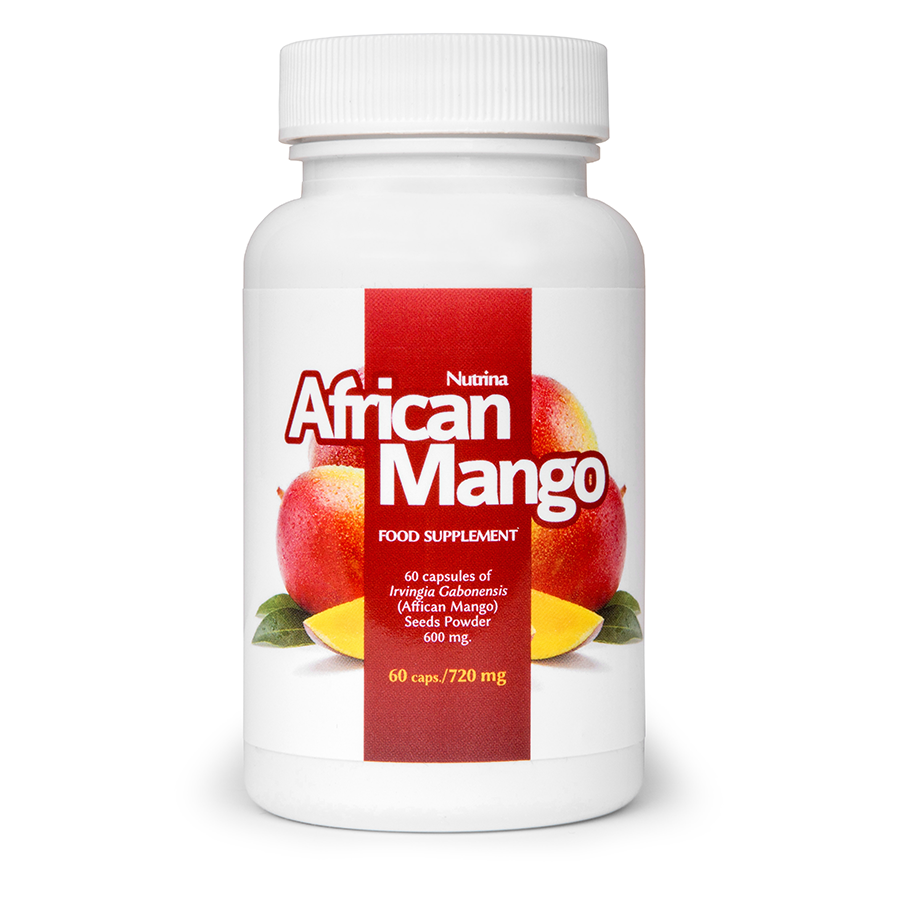
African Mango — Our Score: 5.0/10
Score: 5.0/10 · Sub-scores: Ingredients 5.0 · Evidence 5.0 · Safety 6.0 · Value 5.5 · Best for: Buyers who want a single-ingredient Irvingia capsule, understand the trial record is thin and disputed, and accept that the dose cannot be verified · Main caution: The extract amount per capsule is not published anywhere on the maker's sales pages, so a serving cannot be compared with the 300 mg a day used in the best-known trial — and that trial's headline result comes from one supplier-funded lab · Fair trial: Ten weeks (the best-known trial's length) — three bottles at $146.97 delivered if a bottle lasts a month
Our Findings
What we like
- A genuinely single-ingredient formula — one named extract, nothing hidden inside a proprietary blend.
- The full six-step price ladder is published, from $49.99 down to $37.49 a bottle.
- The ingredient itself has been put through randomised trials at all — many weight-loss botanicals have none.
- Trial-reported side effects were generally mild.
What gives us pause
- The extract amount per capsule is published nowhere on the maker's sales pages, and neither is a serving size — the dose is unverifiable against the 300 mg a day the best-known trial used.
- The bottle's 6,000 mg headline is an equivalence claim, not a dose.
- The positive evidence comes almost entirely from one research group, the biggest trial was partly funded by the extract's supplier and its own waist figures do not add up, and the single independent replication found no effect.
- The maker does not state that its extract is IGOB131, the defined preparation the famous trial used.
- No money-back guarantee.
- No company identified behind the brand.
Why You Should Trust This Review
We read the maker's sales and order pages in full, read the physical bottle's printed front from the product's own packaging photos, and read the primary literature and the independent reviews behind the ingredient's claims (Ngondi et al. 2009, PMID 19254366; Onakpoya et al. 2013, PMID 23419021; Nonsa-Ard et al. 2022, PMID 36364907) — and we score against those records, not the marketing.
Our Verdict
African Mango earns 5.0/10 because it is a recognisable ingredient sold with too little information to judge it. The formula is honestly simple — one named extract, no blend, a clear price ladder — but the single fact a buyer needs most, the dose, is unpublished. An unpublished dose standing behind a one-lab evidence story is the main drag on the score.
The bottom line is that you are being asked to trust a famous ingredient name without being told how much of it you are taking. The best-known trial used 300 mg a day of a defined extract for 10 weeks. This bottle states neither an amount nor that its extract is that defined preparation, so no trial dose can be mapped onto it.
The fair-trial maths make the point concrete. The best-known trial ran 10 weeks. At $49.99 a bottle plus shipping, and if a bottle lasts a month, a 10-week trial costs three bottles at $146.97 delivered. But the maker publishes no serving, so even that arithmetic is conditional. You could spend $146.97 on a 10-week trial of a product whose per-day amount you cannot verify.
Maker Credibility scores 4.5 in our scoring. The brand is named (Nutrina) and the price ladder is fully published, but no company is identified, the dose and directions are unpublished, and no guarantee stands behind the claims.
How We Scored It
We score every product on four criteria — ingredients, evidence, safety and value — against the maker's own records and the published literature. Each sub-score below reflects what the records actually support, not what the marketing claims.
| Criterion | Score |
|---|---|
| Ingredients | 5.0 |
| Evidence | 5.0 |
| Safety | 6.0 |
| Value | 5.5 |
Ingredients — 5.0. The formula names exactly one ingredient, African mango seed extract (Irvingia gabonensis), with no proprietary blend and nothing hidden. But the amount per capsule is published nowhere on the maker's sales pages, and no serving size or directions are published either. A single-ingredient formula you cannot dose-check earns a middling ingredients score.
Evidence — 5.0. The ingredient has five human trials behind it, which is more than most weight-loss botanicals can claim. But the positive results come almost entirely from one research group, the largest trial was partly funded by the extract's supplier, its own waist figures do not add up, and the single independent replication (Thailand, 2022) found no effect at the standard dose. One lab's dramatic result, never independently reproduced, earns a middling evidence score.
Safety — 6.0. In the published trials, reported effects were generally mild — headache, sleep disturbance and digestive effects. The seed is a high-fibre food ingredient with a long traditional use. The score is held back by the unpublished dose: nobody can say what a serving delivers, and the maker's sales pages publish no directions and no exclusions we could verify.
Value — 5.5. The full six-step price ladder is published, from $49.99 down to $37.49 a bottle, and the per-bottle price falls steadily with volume. But cost per day cannot be verified for any tier, because the maker publishes no serving size, and there is no money-back guarantee. A clear price list for a dose you cannot verify earns a middling value score.
What Is African Mango?
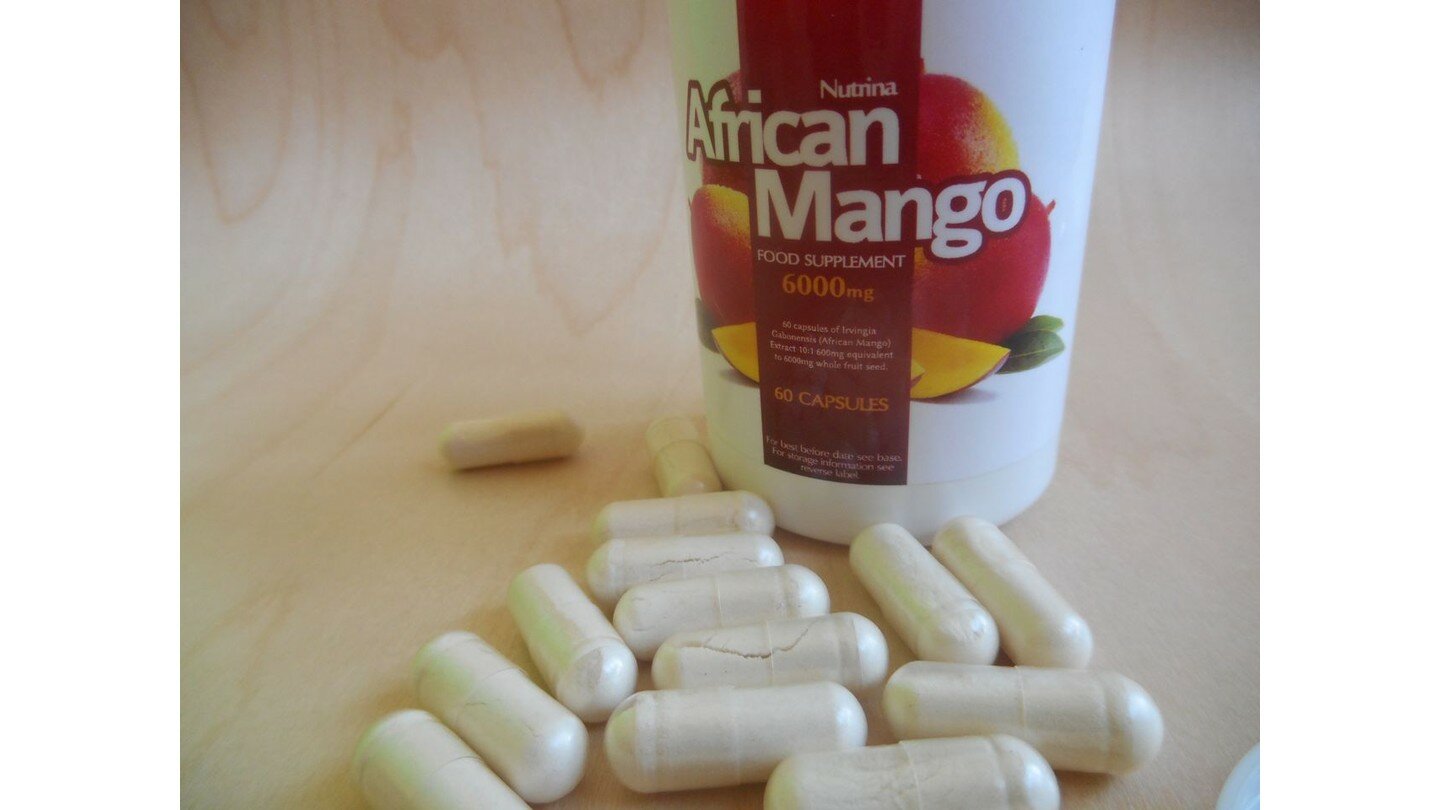
African Mango at a Glance
- Our score: 5.0/10
- Brand: Nutrina (African Mango)
- Company: Not identified on the maker's website
- Product type: Weight-loss capsules — 60 per bottle
- Primary purpose: Marketed for fat burning, appetite reduction and cholesterol support (maker's claims)
- Formula: 1 named extract (Irvingia gabonensis seed); the amount per capsule is not published
- Clinical research: No trial of the finished formula
- Research limitation: The ingredient's positive trials come almost entirely from one research group, the largest was partly funded by the extract's supplier, and the one independent replication found no effect
- Recommended use: Not published on the maker's sales pages
- Money-back guarantee: None published
African Mango is a single-extract capsule. Each bottle holds 60 capsules of African mango seed — Irvingia gabonensis — sold under the Nutrina brand through the maker's official website. No company is identified behind the brand.
The maker positions the capsule around fat burning, appetite reduction and cholesterol support. Those are the maker's claims, attributed to the maker. None of them has been measured in a trial of this finished product.
The fruit itself is a West African fruit whose seed is a traditional, fibre-rich food ingredient. The trials used seed preparations, not the fruit. A traditional food with interesting early trials is not the same as a proven weight-loss product.
The Ingredients
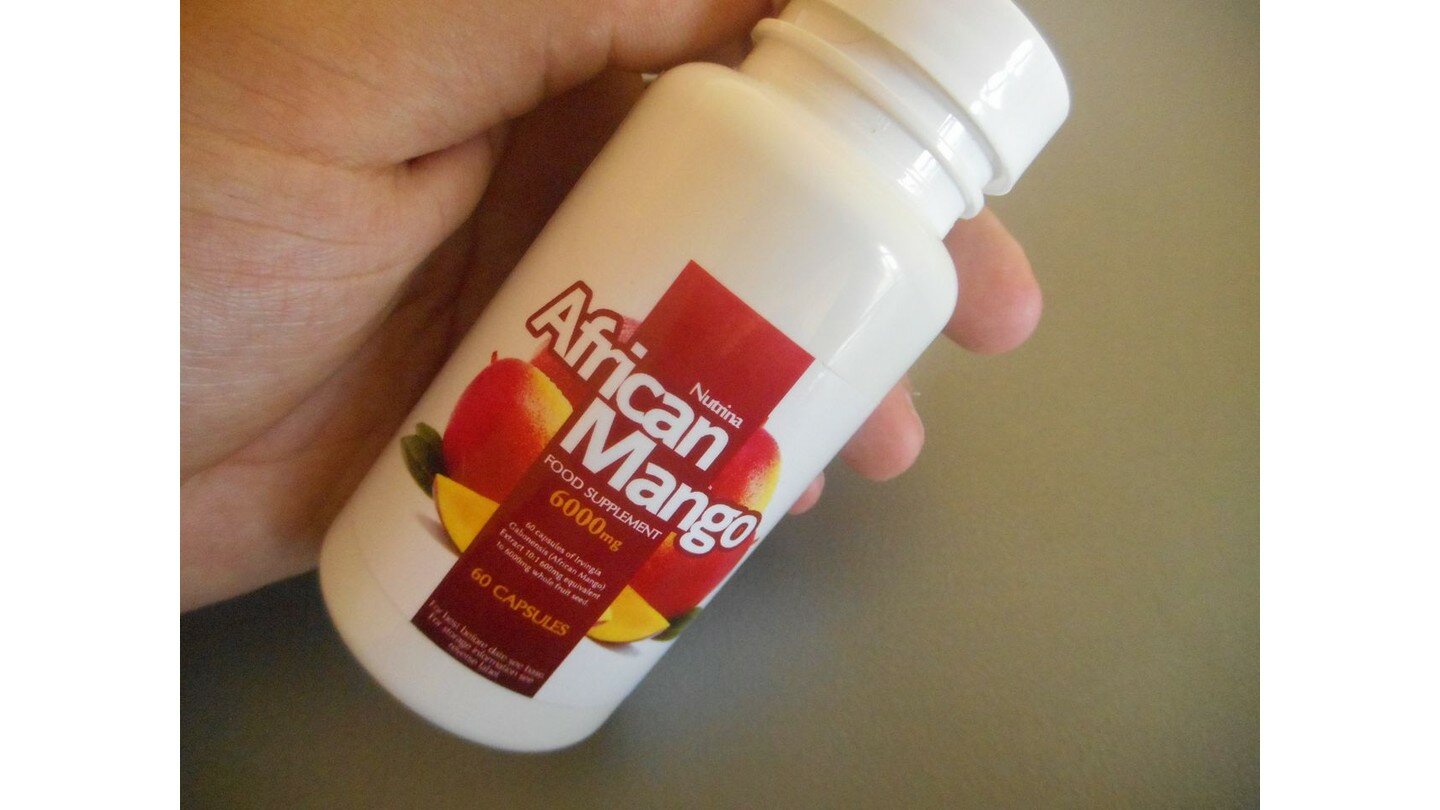
The formula names exactly one ingredient, and the maker's sales pages publish no amount for it. The table below is the whole formula record. There is nothing else to disclose, because there is nothing else in the capsule — and no amount stated for the one ingredient that is there.
| Ingredient | Amount per capsule |
|---|---|
| African Mango Seed Extract (Irvingia gabonensis) | Not published on the maker's sales pages |
African Mango Seed Extract (Irvingia gabonensis)
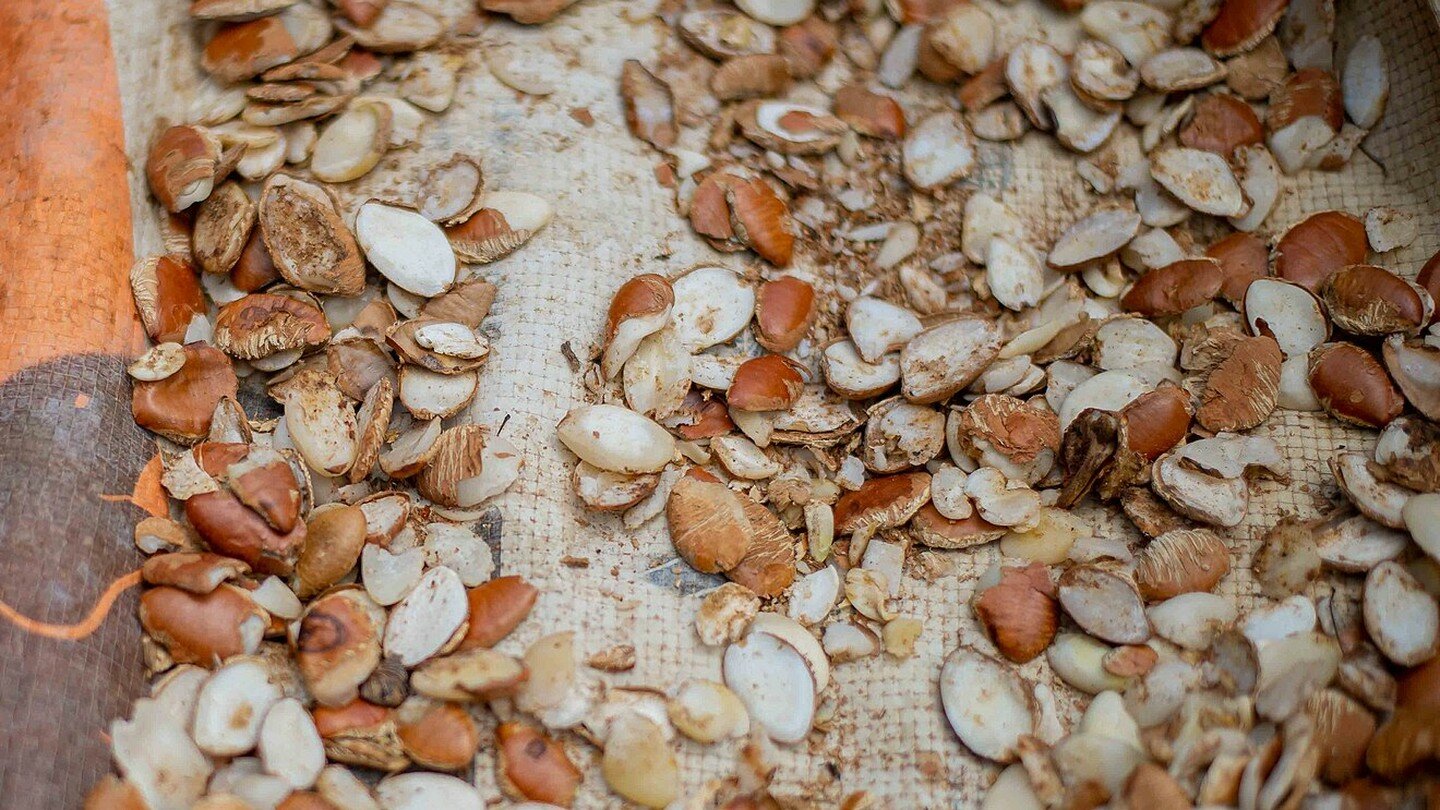
African mango seed extract comes from the seed of the West African bush mango. The seed is a fibre-rich food ingredient, traditionally used as a soup thickener in West African cooking. It is the seed, not the fruit flesh, that the trials studied.
The maker assigns this extract three jobs: fat burning, appetite reduction and cholesterol support. Those are attributed claims from the maker's sales pages. None of them has been measured in a trial of this finished product, and the maker publishes no amount per capsule for the extract.
What the record supports is narrower. The trial preparations were defined: whole seed powder at 3.15 g a day in 2005 (Ngondi et al. 2005, PMID 15916709), and the standardised IGOB131 extract at 300 mg a day in 2009 (Ngondi et al. 2009, PMID 19254366). This bottle states neither an amount nor that its extract is IGOB131, so no trial dose can be mapped onto it. A generic Irvingia extract is not automatically the trialled preparation.
The cleared cautions are modest. Trial-reported effects were generally mild — headache, sleep disturbance and digestive effects. The seed's fibre and the maker's blood-sugar framing mean diabetes medication deserves a check with a doctor before use.
The 6,000 mg Equivalence, Decoded
The bottle front's small print states the claim exactly: 60 capsules of extract 10:1, 600 mg, "equivalent to 6000 mg whole fruit seed". A 10:1 ratio is a concentration claim about the starting material, not a measured dose of anything active. Equivalence to whole seed does not make a capsule equal to eating 6 g of seed.
The front does not even state whether the 600 mg is per capsule or per serving. The claim is the bottle's own wording, printed as marketing arithmetic: a big number built from a ratio, not a dose you can check against a trial.
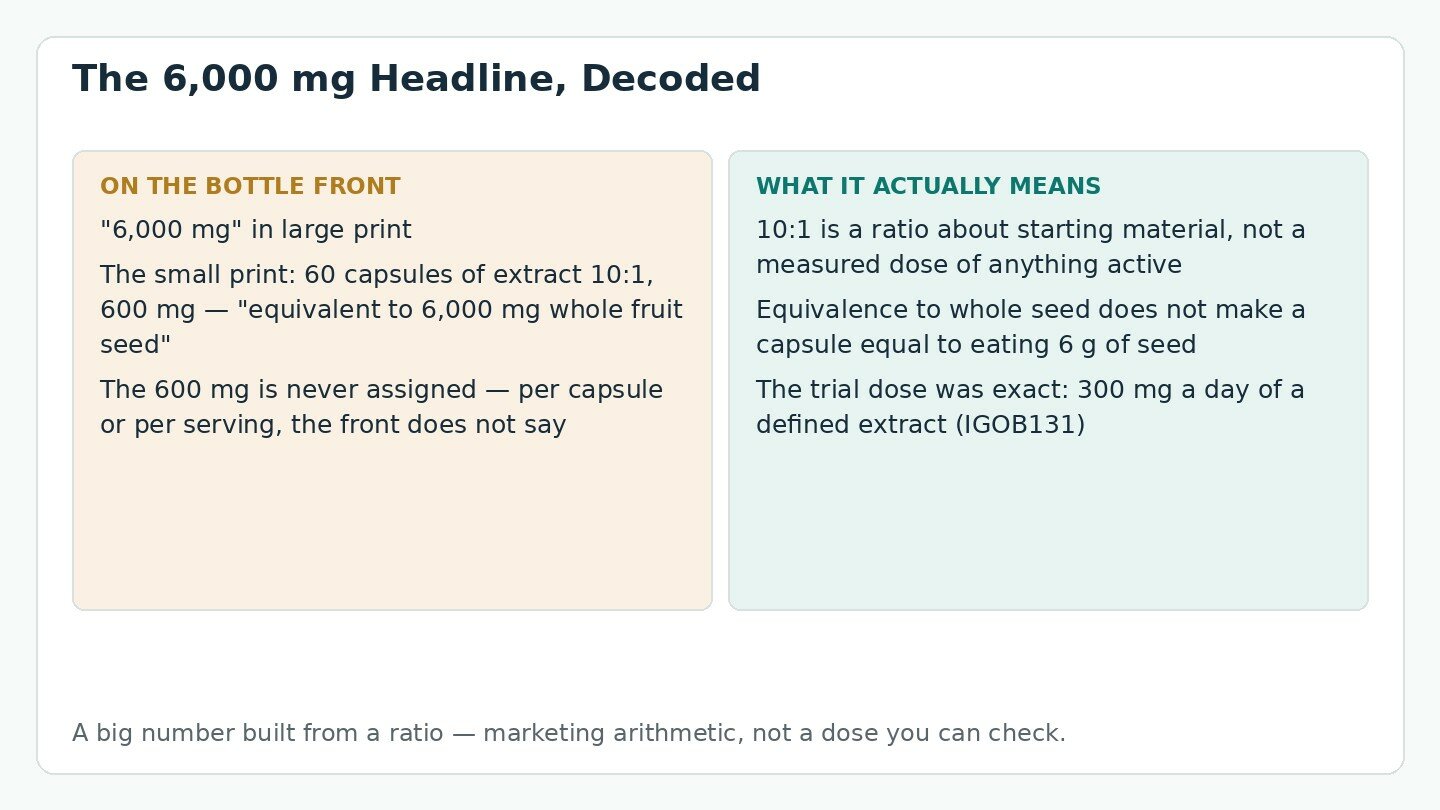
The Dose Audit: A 6,000 mg Headline, an Unpublished Serving, and a Trial Extract This Bottle Never Claims to Be
The dose is unverifiable
No amount per capsule, no serving size, no directions on the maker's sales pages — against a trial literature built on exact amounts (300 mg a day of a defined extract; 3.15 g a day of whole seed). Nothing about this bottle can be dose-checked. A buyer cannot tell whether one capsule, or one serving, matches the amount used in any trial.
The headline number is equivalence arithmetic
6,000 mg describes starting material, not extract. The 600 mg beneath it is itself unassigned — per capsule or per serving, the front does not say. The headline reads like a dose, but it is a ratio converted into a big number.
The trial extract is a specific, patented preparation
IGOB131 is a standardised extract, supplied by its patent holder, and it is the preparation the famous 2009 trial used. This maker never claims its generic Irvingia extract is IGOB131, and a generic extract is not automatically the trialled one. Buying a different extract does not buy the trial result.
What is genuinely fair to say
The formula is honestly simple — one named ingredient, no blend, a full price ladder. The audit's complaint is not complexity or hiding. It is that the single fact a buyer needs most (how much?) is the one fact missing.
The problem here is not complexity or clutter. It is omission. The single piece of information a buyer needs most before paying $49.99 plus shipping — how much extract they are taking each day — is the exact fact left off the sales pages.
The Evidence, Read Properly
Not all human studies carry equal weight. Independent systematic reviews and low-bias randomised trials sit at the top of the evidence ladder. Single-group studies funded by an ingredient supplier sit much lower.
No clinical trial has ever tested Nutrina African Mango as a finished capsule. Every study below tested a defined preparation of Irvingia gabonensis seed at an exact daily dose.
Ngondi et al. 2005 — Crude Whole Seed Powder (Cameroon)
This double-blind, randomised, placebo-controlled trial enrolled 40 obese adults in Cameroon, assigning 28 to African mango and 12 to placebo (Ngondi et al. 2005, PMID 15916709). Participants took 1.05 g of whole Irvingia gabonensis seed three times daily—3.15 g a day—for one month. Both groups followed a normocaloric diet.
Body weight fell by 5.26 ± 2.37% in the seed group versus 1.32 ± 0.41% on placebo (p < 0.01), and blood lipids improved. That looks encouraging on paper, but the material matters. This short one-month pilot tested 3.15 g a day of crude whole seed powder, not a concentrated extract capsule.
Ngondi et al. 2009 — The Famous IGOB131 Trial (Cameroon)
The headline numbers circulating across supplement sites come from this double-blind, randomised trial by the same Cameroon research group (Ngondi et al. 2009, PMID 19254366). It enrolled 120 adults, and 102 completed the 10-week study. Participants took 150 mg of IGOB131—a patented, standardised seed extract—twice daily before meals (300 mg a day) with no prescribed diet change.
As reported, the IGOB131 group lost 12.8 kg compared with 0.7 kg on placebo, and body fat dropped by 6.3 points versus 1.99 points. Blood markers including leptin, adiponectin, and C-reactive protein (CRP) also moved. The paper states a waist reduction of 16.19 cm versus 5.3 cm on placebo, yet the paper's own starting and ending waist values imply a 17.0 cm drop—a mathematical mismatch sitting inside the published report.
Two further facts keep that −12.8 kg figure out of realistic expectations. First, the study was partly funded by Gateway Health Alliances, the company that supplied IGOB131 and holds its patent. Second, it came from the same research group responsible for every early positive result, and Nutrina never claims its bottle contains IGOB131.
Oben et al. 2008 — The Combination Trial (Cameroon)
The same Cameroon research group tested 72 participants using Cissus quadrangularis with and without Irvingia gabonensis (Oben et al. 2008). Because African mango was never tested by itself in that trial, the results cannot credit Irvingia alone. Any weight change could belong to Cissus or to the pairing, which tells a single-ingredient capsule buyer nothing clear.
Méndez-Del Villar et al. 2018 — Metabolic Syndrome Trial (Mexico)
A separate team in Mexico tested 300 mg a day of Irvingia gabonensis for 90 days in 24 adults with metabolic syndrome (Méndez-Del Villar et al. 2018, PMID 29336718). Waist circumference moved from 94.0 cm to 91.0 cm, and triglycerides were lower.
This study is small and single-centre, and it focused on adults with metabolic syndrome rather than general dieters. Even on its own terms, a 3.0 cm waist change over 90 days looks nothing like the 16.19 cm figure reported in 2009.
Nonsa-Ard et al. 2022 — The Independent Replication (Thailand)
An independent research group in Thailand, unrelated to the Cameroon authors, tested 300 mg a day for 12 weeks in overweight and obese adults (Nonsa-Ard et al. 2022, PMID 36364907). It used the standard daily extract dose over a longer window than the 2009 study.
The trial found no significant difference from placebo on body weight, body composition, metabolic markers, or inflammation. Only vitamin C and adiponectin nudged up. When an independent lab put the 300 mg dose to the test, the dramatic weight loss disappeared.
Onakpoya et al. 2013 — Independent Systematic Review
Independent reviewers at the University of Exeter evaluated three randomised controlled trials covering 208 participants (Onakpoya et al. 2013, PMID 23419021). They found major reporting flaws running through the trial record. Their verdict was direct: the weight-loss effect is "unproven," and Irvingia gabonensis "cannot be recommended as a weight-loss aid."
Lee et al. 2020 — Five-Trial Meta-Analysis
A later meta-analysis pooled five randomised trials of Irvingia gabonensis (Lee et al. 2020, PMID 31855111). On the surface, the pooled averages look large—about 9% body weight and about 8% waist reduction compared with placebo.
The bias assessment explains why that pooled average misleads. Four of the five included trials were rated at high risk of bias. The single trial rated at low risk of bias found no significant weight effect at all.
The Bottom Line on the Literature — and the Retraction Myth
The US National Institutes of Health's Office of Dietary Supplements sums up the early record plainly: small, short trials conducted by the same authors, with safety not rigorously studied. No clinical trial exists for Nutrina African Mango itself.
One claim circulating online needs correcting before moving on. You may see articles asserting that the 2005 or 2009 African mango trials were retracted. That is false—no retraction and no expression of concern exist for either study. The honest criticism is bias, supplier funding, reporting quality, and failed independent replication, not retraction.
How Long Does It Take to Work?
Human trials of Irvingia gabonensis ran across four clear windows: 1 month for crude whole seed powder (Ngondi et al. 2005, PMID 15916709), 10 weeks for IGOB131 (Ngondi et al. 2009, PMID 19254366), 90 days in the small Mexican study (Méndez-Del Villar et al. 2018, PMID 29336718), and 12 weeks in the independent Thai replication (Nonsa-Ard et al. 2022, PMID 36364907).
A fair trial is therefore about 10 weeks of steady daily use. Anything shorter leaves you guessing before the best-known study even finished measuring outcomes.
Set expectations using the whole record, not its single largest headline. At the standard 300 mg daily dose, the only independent 12-week trial found no significant difference from placebo on weight or body composition (Nonsa-Ard et al. 2022, PMID 36364907). Taking capsules for 10 to 12 weeks does not guarantee a measurable result.
Supply maths also remain conditional. Because the maker publishes no serving size on its sales pages, we cannot state how many bottles a 10-week run requires. If one 60-capsule bottle lasts a month—following a trial-style two-capsules-a-day pattern, which is the trial's schedule rather than a published Nutrina direction—then 10 weeks takes three bottles at $146.97 delivered.
If you choose to test it, track the full 10-week window with consistent scale readings and a waist tape measure. Do not judge a weight-loss capsule on week-one appetite feelings, which fluctuate day to day with sleep, meal timing, and routine habits.
Is It Safe?
Safety evaluation starts with what the maker actually discloses. Nutrina's sales pages publish no daily directions, no serving size, no extract amount per capsule, and no verified list of exclusions. That absence is part of the safety picture, because a buyer cannot follow directions that are never stated.
Without a published dose per capsule or per day, no reviewer can verify how much Irvingia extract a user consumes. That missing disclosure limits any safety assessment of this finished product before you even open the bottle.
Looking at the ingredient itself, African mango seed is a high-fibre food with a long history of traditional use in West African cooking. Across the published human trials at defined doses, reported side effects were generally mild. Trial participants reported headache, sleep disturbance, and digestive effects, including flatulence and abdominal cramps noted in the 2009 study reports (Ngondi et al. 2009, PMID 19254366).
Even with mild short-term trial reports, safety data remains thin. No safety study has ever tested Nutrina African Mango itself. The US National Institutes of Health's Office of Dietary Supplements states that Irvingia safety has not been rigorously studied.
Our own safety cautions follow both the ingredient profile and the maker's claims:
- Diabetes medication: The seed is fibre-rich, and the maker's own framing touches blood sugar and cholesterol. Treat this as a check-with-your-doctor ingredient if you take prescription glucose-lowering medicine.
- Unpublished dose: Nobody can confirm what a daily serving delivers from the sales pages alone, which makes dose-based safety checks impossible prior to purchase.
- Pregnancy and breastfeeding: No safety data exists for African mango extract during pregnancy or nursing, so the category default is to avoid it.
Because the physical bottle front refers buyers to the reverse label for storage details, read the full printed container carefully upon delivery. If you take regular prescription medicines or manage a chronic condition, show the physical bottle to a doctor or pharmacist before starting it.
Side Effects: What Is Actually Known
No adverse-event data is published for Nutrina African Mango as a finished product. What is known comes strictly from human trials of Irvingia gabonensis seed preparations taken at stated daily doses.
Across those trials, reported side effects were generally mild and fell into three main groups:
- Headache: Reported intermittently among trial participants.
- Sleep disturbance: Noted as a mild side effect in published clinical reports.
- Digestive effects: Including flatulence, cramps, and loose stools—with flatulence and cramps specifically recorded in the 2009 trial reports (Ngondi et al. 2009, PMID 19254366).
Trial dropout figures also belong in the practical picture. In the 2009 IGOB131 trial, 120 participants enrolled and 102 completed the 10 weeks (Ngondi et al. 2009, PMID 19254366). Eighteen people left the study early, including participants who quit because weight was not coming off fast enough.
Because Nutrina does not publish its extract amount per capsule or serving size on its sales pages, you cannot assume its tolerability matches 300 mg a day of IGOB131. Stop taking the capsules and seek advice if persistent stomach discomfort, headaches, or sleep trouble appear.
When Weight Loss Needs a Doctor, Not a Capsule
African Mango is a dietary supplement, not a medical treatment for obesity or metabolic illness. Significant or persistent obesity carries medical causes and health consequences that a capsule cannot answer—including thyroid disease, sleep apnoea, medication-driven weight gain, and diabetes risk—and deserves a proper medical workup first. Clinically tested prescription anti-obesity medicines exist as an approved drug class, including GLP-1 receptor agonists, and belong in a doctor's hands rather than a supplement basket. Rapid, unexplained weight change in either direction calls for a same-month doctor visit, not a supplement purchase.
Is It a Scam?
No. Nutrina African Mango is a real, simple product—one named botanical extract, a published six-step price ladder, and written purchase terms on the official website. It does not conceal stimulants inside a sprawling proprietary blend, and it is not a fake listing.
Even so, "not a scam" is not a recommendation. The legitimate criticisms here are specific and verifiable:
- Unpublished dose: With no extract amount per capsule and no serving size on the maker's sales pages, the bottle cannot be checked against its own ingredient's human trials.
- Equivalence headline: The bottle front's 6,000 mg print is equivalence arithmetic—600 mg of a 10:1 extract presented as equivalent to 6,000 mg of whole fruit seed—that reads like a dose while leaving the 600 mg unassigned per capsule or per serving.
- One-lab evidence story: The sales pitch relies on a single lab's dramatic 2009 result, partly funded by the extract supplier and carrying mismatched waist figures, while the only independent replication found no effect (Nonsa-Ard et al. 2022, PMID 36364907).
- No guarantee and no named company: No money-back guarantee is published behind the claims, and no legal company is identified behind the Nutrina brand.
What you see is honest simplicity missing the one fact that matters most. That makes it a weak, under-disclosed buy—not a scam.
Price and Packs
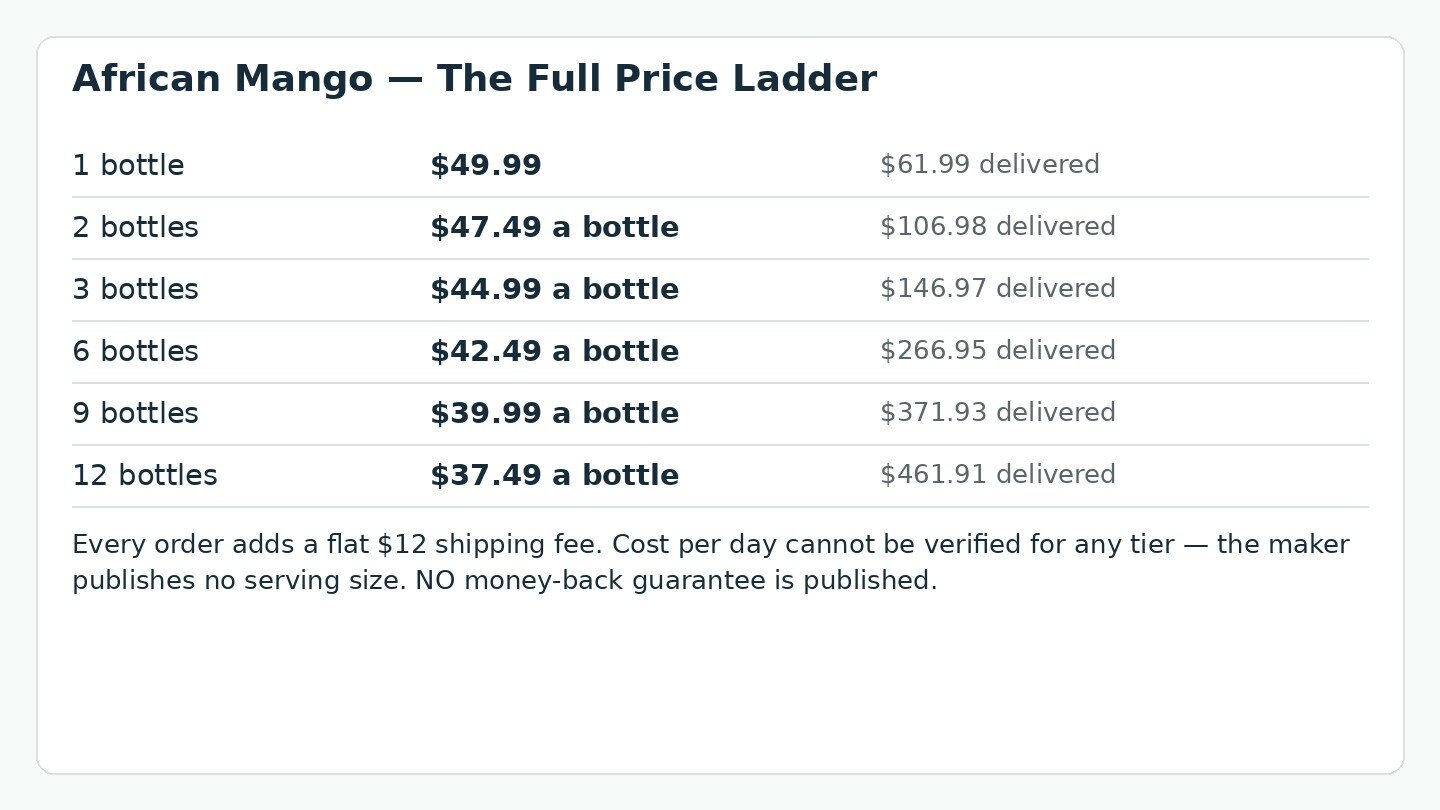
Nutrina publishes a complete six-step price ladder on its official order page. Every order adds a flat $12 shipping fee regardless of bottle count.
| Option | Total | Per bottle | Cost per day |
|---|---|---|---|
| 1 bottle | $49.99 + $12 shipping ($61.99 delivered) | $49.99 | Cannot be verified |
| 2 bottles | $94.98 + $12 shipping ($106.98 delivered) | $47.49 | Cannot be verified |
| 3 bottles | $134.97 + $12 shipping ($146.97 delivered) | $44.99 | Cannot be verified |
| 6 bottles | $254.95 + $12 shipping ($266.95 delivered) | $42.49 | Cannot be verified |
| 9 bottles | $359.93 + $12 shipping ($371.93 delivered) | $39.99 | Cannot be verified |
| 12 bottles | $449.91 + $12 shipping ($461.91 delivered) | $37.49 | Cannot be verified |
Source: The maker's published price ladder on the official website, read October 2026 and re-checked November 2026.
Cost per day cannot be verified for any tier, because the maker publishes no serving size on its sales pages. All a buyer knows before ordering is that each bottle holds 60 capsules.
Multi-bottle tiers lower the per-bottle price by up to 25%, stepping down from $49.99 on a single bottle to $37.49 per bottle on a 12-bottle order. Larger orders also spread the flat $12 shipping charge across more bottles.
That bulk discount carries real downside here because no money-back guarantee is published. Committing $266.95 to $461.91 upfront locks you into a large supply of a product whose daily dose cannot be checked beforehand. Even the 10-week fair-trial figure—three bottles at $146.97 delivered—is conditional on one bottle lasting a month, which the sales pages never confirm.
Purchase Options
Nutrina African Mango is sold direct via the maker's official website. That is the only channel where the verified six-step price ladder and flat $12 shipping rate apply.
Before selecting a bottle count, run through three practical checks based on what the maker discloses—and what it leaves out.
- Start with one bottle to limit risk: With no serving size published on the sales pages and no money-back guarantee behind the order, a single bottle ($49.99 plus $12 shipping, $61.99 delivered) is the only low-risk way to try it at all. That is our standing advice on the product page, and it lets you inspect the physical container before spending more.
- Weigh bulk discounts against an unverifiable dose: Stepping up the official ladder lowers the per-bottle cost by up to 25%, down to $37.49 per bottle on 12 bottles ($461.91 delivered). A volume discount on an unverifiable dose is a real saving only if the capsule actually works for you—and without a guarantee, unopened bottles carry no published refund safety net.
- Keep the 10-week trial maths conditional: The best-known human trial of Irvingia ran 10 weeks (Ngondi et al. 2009, PMID 19254366). If one 60-capsule bottle lasts a month, covering 10 weeks takes the three-bottle tier at $134.97 plus $12 shipping ($146.97 delivered). Only choose that tier with open eyes about the disputed evidence and the missing daily directions.
How It Compares
Label disclosure separates the stronger options in the weight-loss aisle from the weaker ones. Comparing African Mango beside two other products in the same category makes that gap easy to see.
| Product | Our score | Formula |
|---|---|---|
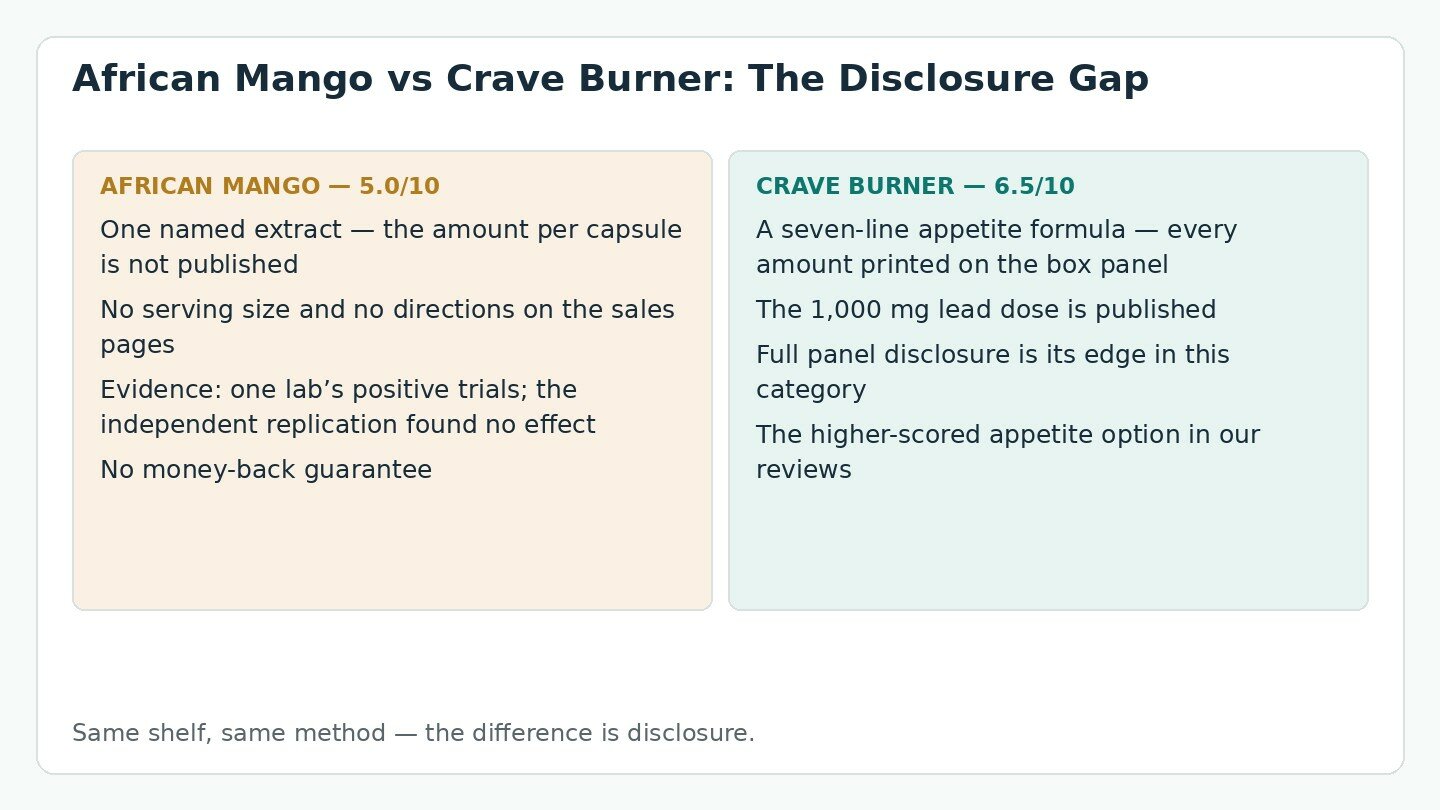
| African Mango | 5.0/10 | One named extract, amount per capsule not published |
| Crave Burner | 6.5/10 | A seven-line appetite formula with every amount published on its box panel |
| Fast Burn Extreme | 5.2/10 | A stimulant fat burner with body-weight dosing and no published amounts |
African Mango and Fast Burn Extreme share the same core weakness: neither publishes its ingredient amounts on the sales pages, leaving buyers unable to verify what a serving delivers. Crave Burner shows what basic disclosure looks like in this category, printing every line item with amounts on its box panel—including its 1,000 mg lead dose. Within the African mango choice itself, the real question is whether a famous ingredient name is worth paying for an unverifiable dose backed by a disputed one-lab trial record.
A Stronger Alternative in This Category
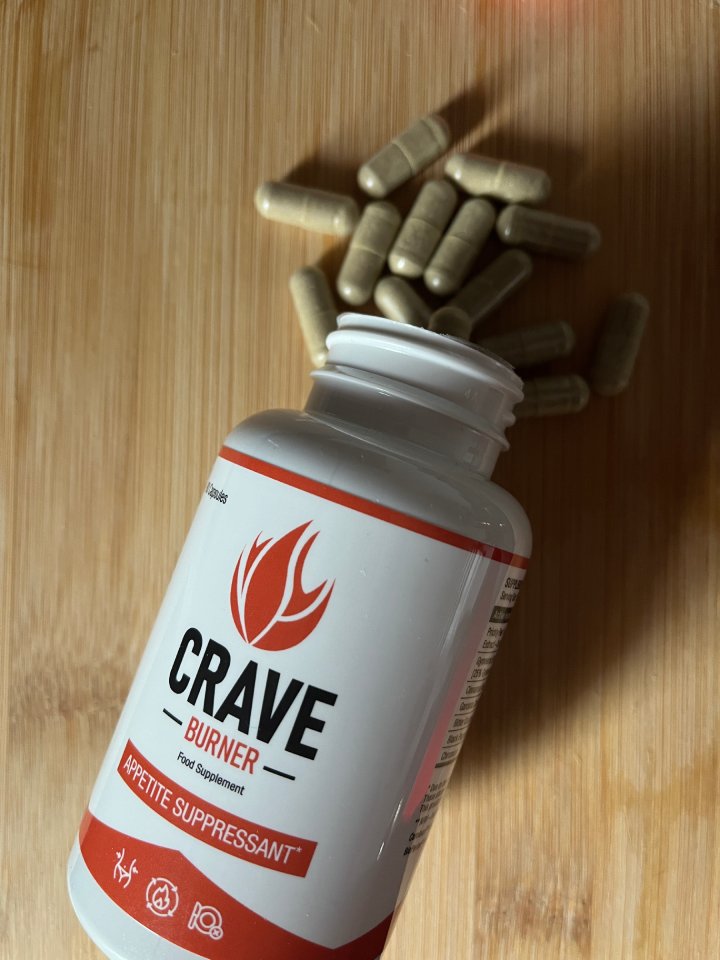
Crave Burner — Our Score: 6.5/10
Crave Burner publishes its full panel with amounts — the 1,000 mg lead dose included — where African Mango never states how much extract is in a capsule.
Who Should Buy It — and Who Should Skip It
Who should buy it
- Single-ingredient shoppers who accept missing dose data: Buyers who specifically want a plain Irvingia gabonensis capsule with no multi-herb blend, and accept that the extract amount per capsule and serving size are not published on the sales pages.
- Evidence-realistic buyers: Buyers who have read the full trial record—one Cameroon lab's positive reports alongside the independent Thai trial that found no effect—and price their order accordingly.
- Patient trackers: Buyers willing to run a steady 10-week test and judge the result using consistent scale readings and a waist tape measure rather than short-term hunger swings.
Who should skip it
- Anyone expecting the 2009 headline result: The −12.8 kg figure came from one supplier-funded lab with mismatched waist numbers inside its own paper, and it has never been reproduced independently.
- Anyone who wants to know their daily dose: This maker does not publish an extract amount per capsule, a serving size, or directions on its sales pages.
- Anyone who wants a money-back guarantee: No refund window or satisfaction guarantee is published behind the product.
- People on diabetes medication without medical advice: The seed is fibre-rich and the maker's own framing touches blood sugar and cholesterol, making a doctor's check essential first.
- Anyone pregnant or breastfeeding: No safety data exists for African mango extract during pregnancy or nursing.
Frequently Asked Questions
Does African Mango actually work for weight loss?
No clinical trial has tested Nutrina African Mango as a finished capsule. For the ingredient itself (Irvingia gabonensis), the human evidence is thin and disputed. One Cameroon group reported a −12.8 kg loss versus −0.7 kg over 10 weeks in 2009, but that trial was partly funded by the extract supplier and contains mismatched waist figures (Ngondi et al. 2009, PMID 19254366). An independent 12-week Thai trial at 300 mg a day found no significant difference from placebo (Nonsa-Ard et al. 2022, PMID 36364907), and independent reviewers call the effect unproven (Onakpoya et al. 2013, PMID 23419021).
How much African mango extract is in each capsule?
The amount per capsule cannot be verified from the maker's website. Nutrina's sales pages name African Mango Seed Extract (Irvingia gabonensis) as the only ingredient, yet publish no milligram figure, no serving size, and no daily directions. Packaging photos of the bottle front print "6000 mg" alongside small print reading "60 capsules of Irvingia Gabonensis (African Mango) Extract 10:1 600mg equivalent to 6000mg whole fruit seed." That 6,000 mg number is an equivalence claim rather than an extract dose, and the front never says whether 600 mg is per capsule or per serving.
What is IGOB131 — and is that what is in this bottle?
IGOB131 is a specific, patented, standardised Irvingia gabonensis seed extract supplied by Gateway Health Alliances. It is the exact material tested at 150 mg twice daily (300 mg a day) in the best-known 2009 trial (Ngondi et al. 2009, PMID 19254366). Nutrina never states on its sales pages or on the physical bottle front that its capsule contains IGOB131. A generic 10:1 extract is not automatically the same preparation as a patented, standardised trial material, so this bottle cannot claim IGOB131's clinical record as its own.
Were the African mango studies retracted?
No. Claims circulating online that the 2005 or 2009 Cameroon African mango trials were retracted are false. No retraction and no expression of concern exist for either paper (Ngondi et al. 2005, PMID 15916709; Ngondi et al. 2009, PMID 19254366). The honest scientific critique is different: high risk of bias, supplier funding, major reporting flaws—including waist values in the 2009 report that imply −17.0 cm while the text states −16.19 cm—and a failed independent replication in Thailand in 2022 (Nonsa-Ard et al. 2022, PMID 36364907).
How long should I take it before judging it?
Plan on about 10 weeks of steady daily use before judging it. Published human studies ran for 1 month with crude whole seed powder, 10 weeks with IGOB131, 90 days in a small Mexican study, and 12 weeks in the independent Thai replication (Ngondi et al. 2009, PMID 19254366; Nonsa-Ard et al. 2022, PMID 36364907). Measure progress with regular scale readings and a waist tape measure over that full window, not week-one hunger impressions. Because Nutrina publishes no serving size, bottle count is conditional: three bottles cover 10 weeks only if one bottle lasts a month.
Is African Mango safe — what are the side effects?
No product-specific safety study or adverse-event report exists for Nutrina African Mango, and the unpublished dose limits any safety assessment before purchase. Across published human trials of Irvingia gabonensis at stated doses, side effects were generally mild: headache, sleep disturbance, and digestive upset such as flatulence, abdominal cramps, and loose stools (Ngondi et al. 2009, PMID 19254366). The US National Institutes of Health's Office of Dietary Supplements notes its safety has not been rigorously studied. Avoid it if pregnant or breastfeeding, and consult a doctor first if you take diabetes medication.
Does African Mango have a money-back guarantee?
No money-back guarantee is published anywhere on the maker's sales or order pages. Unlike weight-loss supplements that back multi-bottle orders with a written refund window, buying Nutrina African Mango leaves the full financial risk with the buyer from day one. That matters most on larger tiers, which run from $106.98 delivered for two bottles up to $461.91 delivered for twelve bottles. Because neither a guarantee nor a serving size is published, ordering a single bottle first ($61.99 delivered) is the only way to keep upfront risk low.
Where can I buy African Mango — and what does a month actually cost?
Nutrina African Mango is sold direct via the official website, where the full six-step price ladder applies. A single bottle costs $49.99 plus $12 shipping ($61.99 delivered), stepping down across 2-, 3-, 6-, and 9-bottle tiers to $37.49 per bottle on 12 bottles ($461.91 delivered). Because the maker publishes no serving size on its sales pages, a verified cost per day or cost per month cannot be confirmed. Each bottle holds 60 capsules; if one bottle lasts a month, a 10-week trial takes three bottles at $146.97 delivered.
African Mango — Our Score: 5.0/10
Score: 5.0/10 · Sub-scores: Ingredients 5.0 · Evidence 5.0 · Safety 6.0 · Value 5.5 · Best for: Buyers who want a single-ingredient Irvingia capsule, understand the trial record is thin and disputed, and accept that the dose cannot be verified · Main caution: The extract amount per capsule is not published anywhere on the maker's sales pages, so a serving cannot be compared with the 300 mg a day used in the best-known trial — and that trial's headline result comes from one supplier-funded lab · Fair trial: Ten weeks (the best-known trial's length) — three bottles at $146.97 delivered if a bottle lasts a month
Sources & Method
This review is based on the maker's sales and order pages and the physical bottle's printed front (read November 2026), together with the published human literature cited above: Ngondi et al. 2005 (PMID 15916709) and Ngondi et al. 2009 (PMID 19254366) for the Cameroon trials, Méndez-Del Villar et al. 2018 (PMID 29336718), Nonsa-Ard et al. 2022 (PMID 36364907) for the independent replication, and Onakpoya et al. 2013 (PMID 23419021) and Lee et al. 2020 (PMID 31855111) for the independent reviews. Every product is scored with the standard SuppChecked scoring method across ingredients, evidence, safety, and value.
Last reviewed: November 2026
