
- Quick Answer
- How Digestive Enzymes Work (and Where Yours Come From)
- Meet the Enzymes: What Each One in a Blend Actually Does
- Enzymes, Probiotics, Prebiotics: Three Categories, Constantly Confused
- Signs of an Enzyme Problem Actually Worth Testing
- The Evidence, Graded Enzyme by Enzyme
- Should I Take Digestive Enzymes?
- The DigeZyme Studies, Up Close
- When and How to Take Them
- Are They Safe? Interactions and the Dependency Myth
- Enzymes and Specific Diets: Protein, Fibre and Fat Loads
- Buying Checks for This Category
- Frequently Asked Questions
- Do I need digestive enzyme supplements?
- When should I take digestive enzymes?
- Are digestive enzymes safe?
- Can your body become dependent on enzyme supplements?
- Read This Next
Disclosure: This article contains affiliate links. If you buy through them, we may earn a commission at no extra cost to you. It never changes our conclusions.
Quick Answer
Most healthy people do not need digestive enzyme supplements — a point Johns Hopkins makes plainly: a healthy pancreas and gut produce enzymes in quantities matched to your meals. The exceptions are real, though. Settled: prescription enzyme replacement for pancreatic insufficiency, a medical treatment with decades of evidence.
Strong: single-purpose enzymes matched to a specific problem — lactase for lactose intolerance, alpha-galactosidase for bean-and-vegetable gas. Modest: general multi-enzyme blends for functional dyspepsia-type discomfort. Small trials, including two on the DigeZyme® complex used in the product this site reviews, Detoxyn.
None: enzymes for "detox", fat burning, or fixing undiagnosed symptoms that deserve a workup first. Timing, safety and the dependency myth are answered below.
Our Recommendation — Detoxyn
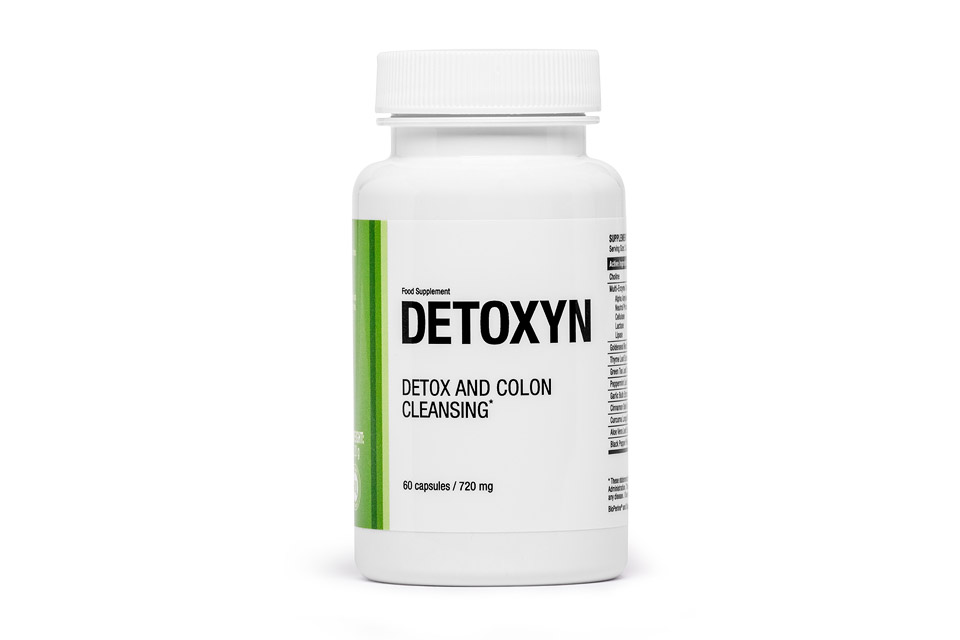
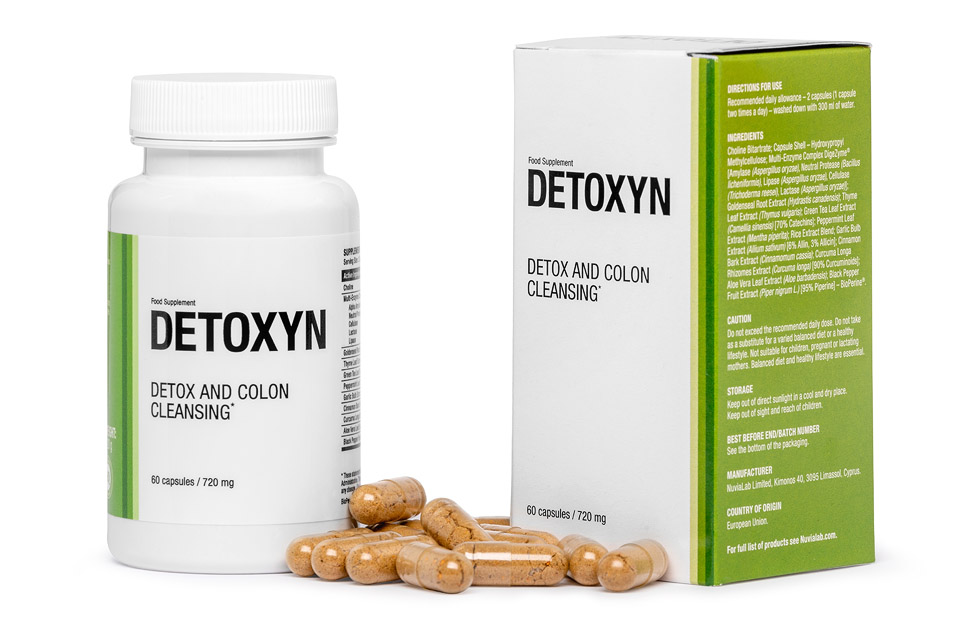
Score: 5.9/10 · Best for: meal-related digestive discomfort — its DigeZyme® enzyme complex is delivered at exactly the 150 mg a day used in the functional-dyspepsia trial, and every ingredient amount is printed. Main caution: it does not detox anything — no capsule does; goldenseal can affect how the liver processes medicines, so anyone on prescription medication should check with a pharmacist first. Fair trial: 4–8 weeks of daily use judged on meal comfort — one bottle (one month) is $59.99, and the maker publishes no money-back guarantee, so a failed trial is not refundable.
How Digestive Enzymes Work (and Where Yours Come From)
Digestive enzymes are proteins that cut food molecules into absorbable pieces: amylase cuts starches, proteases cut proteins, lipase cuts fats, lactase cuts lactose, cellulase (which humans do not make) breaks plant fibre.
Yours come from saliva, the stomach lining, the small-intestinal brush border and — above all — the pancreas, which secretes a potent mixture into the small intestine with every meal. Two implications follow. First, supply normally matches demand automatically: the system senses the meal and doses itself, which is why deficiency in a healthy pancreas is not really a thing.
Second, a supplement capsule faces an engineering problem your pancreas solves elegantly. Enzymes are proteins, stomach acid denatures proteins, and an oral enzyme must survive the stomach to act in the intestine. Good formulations use acid-resistant enzymes or protective delivery.
Cheap ones may deliver little active enzyme past the stomach, which is one reason this category's quality spread is wide and why named, standardised complexes beat anonymous blends.
Meet the Enzymes: What Each One in a Blend Actually Does
A five-enzyme complex like DigeZyme® (α-amylase, protease, lipase, cellulase and lactase) is a small toolkit, and each tool has exactly one job. α-Amylase opens up starches — bread, rice, potatoes — into sugars. Your saliva and pancreas both make it, and it is the least likely enzyme a healthy person is short of. Protease cuts proteins into peptides and amino acids.
Acid-stable fungal proteases are used in blends precisely because the stomach is where protein digestion starts. Lipase is the fat specialist and, clinically, the one that matters most: it is the enzyme whose absence (in pancreatic insufficiency) causes the unmistakable greasy, floating, hard-to-flush stools of fat malabsorption, and the one prescription products are dosed by.
Cellulase is the ringer: humans produce none, because we cannot digest cellulose — a supplemental dose modestly breaks down plant fibre in the gut, which is why blends include it for vegetable-heavy meals. Lactase needs no introduction after the table below: it is the single most validated enzyme in the entire supplement aisle.
The honest summary of the toolkit is that four of its five members duplicate what a healthy gut already secretes generously, and the fifth (cellulase) addresses a substrate your body intentionally passes to its microbes. That is not an argument that blends do nothing — the dyspepsia trial suggests a real effect on comfort in susceptible people.
But it explains why the effect, where it exists, is about comfort rather than any deeper repair.
Enzymes, Probiotics, Prebiotics: Three Categories, Constantly Confused
Because they share shelf space and the word "gut", the three get conflated — including by product marketing that benefits from the blur. Enzymes are tools: non-living proteins that act on the meal they accompany, work within hours, and are gone. Probiotics are tenants: live bacteria intended to take up residence (usually temporarily) and shift the gut's ecology.
Judged over weeks, strain by strain. Prebiotics are groceries: fibres and substrates that feed the bacteria already living in you. The mechanism behind the fibre guidance in our natural-methods guide. A product can legitimately combine them, but the claims must not: an enzyme cannot "rebalance your flora", a probiotic cannot digest your lunch, and neither can detox anything.
When a label blurs the three into one promise, it is telling you the marketing was written before the formula was.
Signs of an Enzyme Problem Actually Worth Testing
Because the self-diagnosis version of this topic is so noisy, the real deficiency state deserves a precise description. Exocrine pancreatic insufficiency (EPI) — the condition prescription enzymes treat — typically announces itself with a cluster: persistently greasy, pale or floating stools that are hard to flush (fat passing undigested). Unintentional weight loss despite eating; bloating and discomfort concentrated after fatty meals.
And, over time, deficiencies of the fat-soluble vitamins A, D, E and K. Its usual causes are chronic pancreatitis, pancreatic surgery, cystic fibrosis and long-standing heavy alcohol use — not stress, age alone, or a "sluggish gut".
Diagnosis is simple and objective (a stool test called faecal elastase-1 is the standard first step), and treatment is supervised, dosed and effective. The reason this paragraph exists in a supplement article: every month, people with exactly this cluster self-prescribe a $40 blend instead of the test that would actually fix them.
If the cluster sounds familiar, the next step is a doctor and a stool test — not a stronger enzyme product, and emphatically not a cleanse.
The Evidence, Graded Enzyme by Enzyme
| Use | Verdict | Why |
|---|---|---|
| Prescription pancreatic enzyme replacement (PERT) for pancreatic insufficiency | Settled — standard medical care | Decades of use; dosed in lipase units under supervision; prevents malabsorption and malnutrition in a diagnosed deficiency |
| Lactase for lactose intolerance | Strong | Replaces the exact missing enzyme for an exact, testable problem; effect verifiable by the user within one meal |
| Alpha-galactosidase (the "Beano" enzyme) for legume/vegetable gas | Moderate-strong | Digests the specific fermentable sugars before gut bacteria can; narrow, mechanistic, plausible and supported |
| Multi-enzyme blends for functional dyspepsia (fullness, discomfort after meals) | Modest | Small RCTs, including the DigeZyme studies boxed below; manufacturer-linked; awaiting independent replication |
| Enzymes after gallbladder removal | Mixed | Bile, not enzymes, is the limiting factor after cholecystectomy; some users report benefit from blends, evidence is anecdotal |
| Enzymes for general "gut health", detox or weight loss | None | No mechanism and no trials; enzymes digest the meal in front of them and do nothing beyond it |
Should I Take Digestive Enzymes?
Work through the decision the way a clinician would. First, is there a diagnosis that enzymes treat? Pancreatic insufficiency, cystic fibrosis and confirmed lactose intolerance are enzyme stories — the first two are doctor-managed, the third self-manageable with lactase.
Second, is there an undiagnosed problem to rule out first? Persistent post-meal pain, unintentional weight loss, fatty or oily stools, blood, anaemia, or new symptoms after 50 are workup-first presentations — enzymes taken over them delay diagnoses that matter. Our safety guide lists the red flags.
Third, the remaining case: a healthy person with meal-related fullness, heaviness and discomfort — the functional-dyspepsia pattern — is the legitimate trial case for a general blend, judged over four to eight weeks on symptom change, and abandoned if the change is not clear.
That is the honest market for products like Detoxyn, and it is smaller than the marketing suggests — which is a compliment to the reader, not an insult to the product.
The DigeZyme Studies, Up Close
Because brand-name complexes are rare in this category, the two trials behind Detoxyn's enzyme complex deserve a full box. Trial one (functional dyspepsia): Majeed and colleagues, Journal of Medicinal Food 2018 — 40 patients, randomised and double-blinded, took 50 mg of the multi-enzyme complex three times daily (150 mg/day) or placebo for 60 days.
The enzyme group improved significantly more across the trial's dyspepsia symptom and severity scales, with no product-related adverse events. Trial two (exercise recovery): a 2016 study of 20 young men found reduced pain and tenderness after eccentric exercise on the same dosing, with blood markers trending but not decisive. The caveats, printed because they matter: both trials are small.
The authors include researchers from the complex's manufacturer (Sami Labs/Sabinsa). The second trial's journal is low-tier; and no independent group has replicated either. The favourable detail: Detoxyn's label delivers exactly the trialled dose — 150 mg per daily serving.
Which is rarer in this industry than it should be, and one of the reasons the product scores as it does in our review (5.9/10, held down by price and the missing guarantee, not by the enzyme evidence).
When and How to Take Them
The timing questions are the most practical in this topic and the answers are mechanical. When: with the meal — enzymes work on food, in contact with it. A capsule taken an hour before eating has largely missed its substrate.
With the first bites or during the meal is the standard instruction (Detoxyn's label: one capsule twice a day, with water, alongside meals). With what: the meal they are meant for — the largest or richest meal of the day is where most users notice any difference. How long to judge: single-purpose enzymes (lactase) judge within one meal.
General blends judge over 4–8 weeks of consistent use, ideally with a simple symptom note, because day-to-day digestion varies enough to fool memory. What not to do: do not escalate doses hunting for a stronger effect — beyond the meal's needs, extra enzyme has nothing to act on. And do not continue indefinitely without the judgement step.
A supplement that has not demonstrably helped in two months is a cost, not a routine.
Are They Safe? Interactions and the Dependency Myth
Over-the-counter enzyme blends have a generally benign safety profile: the reported effects are mild digestive ones (nausea, loose stool, occasional cramping), and the DigeZyme trials reported no product-related adverse events. The exceptions are specific.
Bromelain — a pineapple protease common in blends (not in Detoxyn) — has a real interaction list, including with blood thinners, and allergic potential in the pineapple/latex-sensitive. Animal-derived pancreatin products matter to some users for religious or dietary reasons and can carry their own sensitivities. Pregnancy and childhood are evidence-free zones for blends. Skip unless a clinician directs.
And the dependency myth, asked constantly: there is no evidence that taking oral enzymes suppresses your own production. Pancreatic output is regulated by meal signals (hormones like CCK responding to fat and protein in the gut), not by whether a capsule attended the meal. Your pancreas does not retire because a blend helped.
The full interaction context for cleanse-category products, including Detoxyn's goldenseal and BioPerine cautions, is in the safety guide.
Enzymes and Specific Diets: Protein, Fibre and Fat Loads
Three eating patterns generate most of this topic's remaining questions, and each has a distinct answer.
High-protein diets (including bodybuilding intakes): protease capacity in a healthy pancreas scales with intake, and no study shows healthy lifters absorbing more protein with enzyme help — the discomfort some feel at very high intakes is a meal-size and adaptation issue more than an enzyme one.
Sudden high-fibre diets: the gas and bloating of a fibre jump are fermentation by microbes adapting to new substrate — a prebiotic adjustment measured in one to two weeks (see the ramp in the natural-methods guide). Alpha-galactosidase taken with the specific legume meals is the one enzyme with a genuine supporting role here.
High-fat and ketogenic meals: fat is the slowest-emptying macronutrient and the most common trigger of "heavy meal" discomfort. Lipase-containing blends are marketed hardest here, and the dyspepsia trial's population — discomfort after ordinary meals. Is the closest evidence. The effect to expect, if any, is comfort, not improved fat handling.
Across all three, the pattern repeats: enzymes can smooth the experience of a meal at the margins. They do not upgrade the digestive system processing it.
Buying Checks for This Category
Five checks separate the defensible products. Named complex or anonymous blend? DigeZyme®-type named complexes carry trial doses. Proprietary blends hide amounts. Dose versus trial dose: does a daily serving deliver what the study used (150 mg for DigeZyme)? Acid survival: does the maker say anything about stability through the stomach? Claim discipline: digestive comfort is a claim.
Detox, fat-burning and "reset your gut" are confessions. Recourse: is there a money-back guarantee? (Detoxyn's maker publishes none.
Priced into its score.) A product passing the first four and failing the fifth is exactly Detoxyn's profile, which is why our coverage of it reads the way it does across this whole Detoxyn set: a reasonable enzyme formula, an unreasonable category costume.
Our Recommendation — Detoxyn
Score: 5.9/10 · Best for: meal-related digestive discomfort — its DigeZyme® enzyme complex is delivered at exactly the 150 mg a day used in the functional-dyspepsia trial, and every ingredient amount is printed. Main caution: it does not detox anything — no capsule does; goldenseal can affect how the liver processes medicines, so anyone on prescription medication should check with a pharmacist first. Fair trial: 4–8 weeks of daily use judged on meal comfort — one bottle (one month) is $59.99, and the maker publishes no money-back guarantee, so a failed trial is not refundable.
Frequently Asked Questions
Do I need digestive enzyme supplements?
Only clearly if you have diagnosed pancreatic insufficiency (prescription, supervised) or lactose intolerance (lactase). For functional post-meal discomfort, a 4–8 week trial of a transparent blend is reasonable. For anything else, probably not.
When should I take digestive enzymes?
With the meal they are meant to help digest — first bites or during. Taken away from food, they have nothing to work on.
Are digestive enzymes safe?
Generally yes for healthy adults, with mild digestive effects the most common issue. Watch bromelain interactions, skip blends in pregnancy without medical advice, and check the full formula against any medication.
Can your body become dependent on enzyme supplements?
No evidence supports dependency: pancreatic secretion is driven by meal signals, not suppressed by oral enzymes. If symptoms return on stopping, the supplement was assisting digestion of meals, not replacing an organ that forgot how.
Last reviewed: October 2026. This article is educational and is not medical advice.
